Introduction
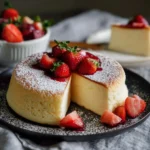
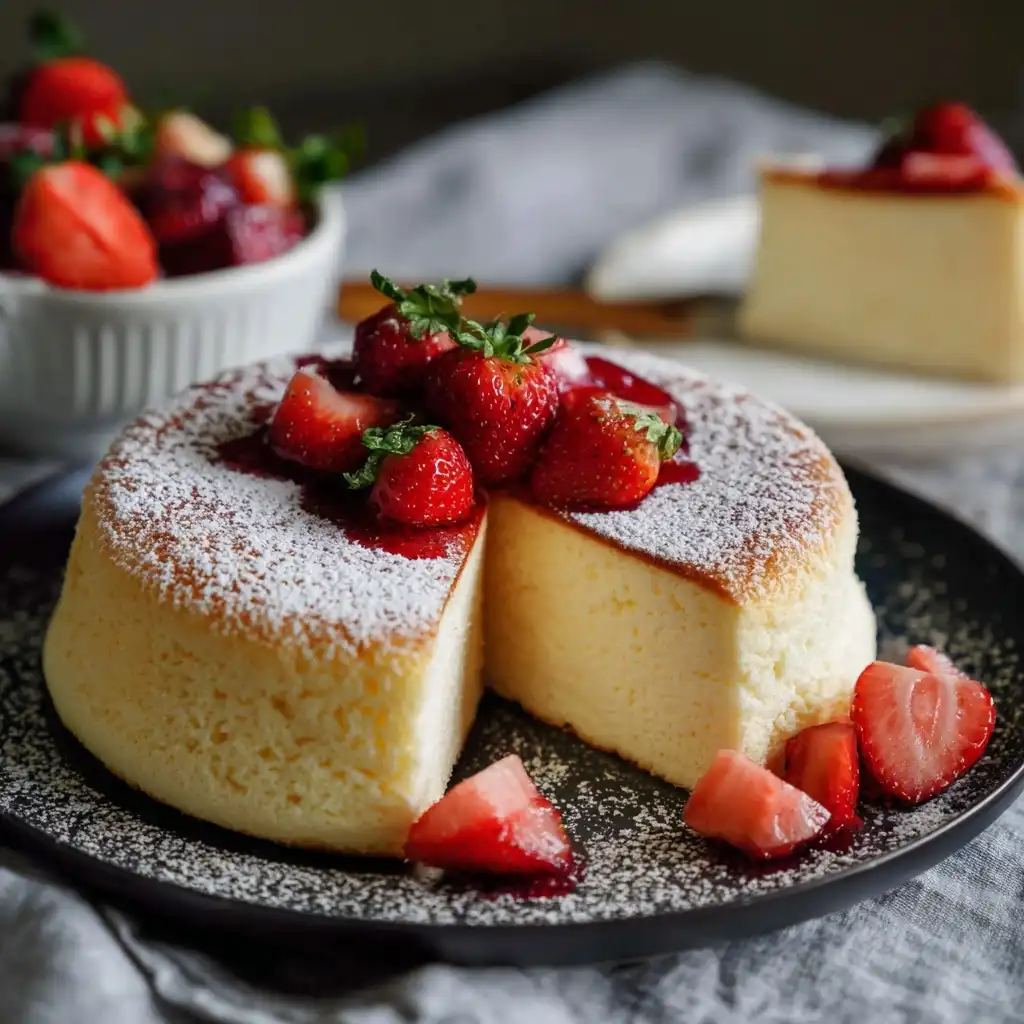
Japanese Cotton Cheesecake—also affectionately known as “jiggly cheesecake,” “soufflé cheesecake,” or “fluffy cheesecake”—is a marvel of modern Japanese confectionery artistry. Unlike its dense, rich, and often intensely tangy Western counterparts, this delicacy is defined by its ethereal lightness, cloud-like texture, delicate sweetness, and signature gentle wobble when gently tapped. Born from a fusion of European baking techniques and Japanese precision, minimalism, and reverence for subtlety, the Japanese Cotton Cheesecake transcends dessert—it’s an experience: a study in balance, patience, and controlled alchemy. Its airy crumb, pale golden crown, and tender, melt-in-the-mouth tenderness make it not only visually stunning but deeply comforting—a testament to how restraint, technique, and quality ingredients can yield extraordinary results.
The History
The origins of Japanese Cotton Cheesecake trace back to the early 1980s in Hiroshima, Japan—specifically to the now-iconic café *Patisserie Monk*, founded by Chef Tomotaka Takeda. Inspired by French soufflé omelets and German cheesecakes—but determined to create something uniquely Japanese—Takeda experimented relentlessly with ingredient ratios, mixing methods, and baking temperatures. His breakthrough came when he adapted the classic soufflé technique to cheesecake batter, incorporating a carefully folded meringue and utilizing a water bath (bain-marie) at low, steady heat. The result was a cake that rose dramatically during baking, then settled into a soft, springy dome with a delicate skin and no cracks—a stark contrast to the fissured, heavy cheesecakes popular elsewhere.
By the late 1990s and early 2000s, the cake gained cult status across Japan, especially among young women drawn to its photogenic texture and “kawaii” aesthetic. Its popularity exploded internationally in the 2010s via social media—particularly Instagram and YouTube—where videos of chefs tapping the finished cake to demonstrate its mesmerizing jiggle went viral. Today, it’s a staple in Tokyo patisseries like *Rikuro’s Cheese Cake* and *Daiwa Department Store’s basement food hall*, and has inspired countless home bakers worldwide to master its delicate science. Though often misattributed to “modern Japanese innovation,” its roots are deeply tied to post-war culinary globalization—Japan’s thoughtful reinterpretation of imported techniques through a lens of harmony (wa), purity (kiyome), and refined simplicity (shibumi).
Ingredients Breakdown
Every ingredient in Japanese Cotton Cheesecake serves a precise functional role—not merely flavor, but structural integrity, aeration, emulsification, and thermal stability. Understanding their purpose is essential to consistent success:
- Cream Cheese (full-fat, room temperature): The backbone of flavor and richness. Must be softened completely (not melted) to ensure smooth emulsification. Low-fat or spreadable cheeses destabilize the batter and compromise rise and texture.
- Granulated Sugar (divided): Used both in the cream cheese mixture (for dissolving and stabilizing emulsion) and the meringue (for strengthening protein structure and delaying collapse). Caster sugar dissolves faster but granulated works well when properly incorporated.
- Whole Eggs (large, room temperature): Provide structure, moisture, and lecithin for emulsification. Egg yolks enrich and thicken; egg whites—when whipped into meringue—supply the primary lift. Cold eggs risk curdling the warm cheese mixture and weaken foam stability.
- Milk (whole, warmed): Adds tenderness and steam for gentle rise. Warm milk (around 40–45°C / 104–113°F) helps melt residual cheese lumps and prevents shocking the eggs during mixing. Skim or plant-based milks lack sufficient fat and protein, leading to dryness or poor setting.
- Unsalted Butter (melted & cooled slightly): Contributes flavor, mouthfeel, and lubrication to inhibit gluten development. Must be cooled to avoid cooking egg yolks or deflating meringue upon folding.
- All-Purpose Flour (low-protein, sifted): Provides minimal structure without toughness. Japanese cake flour (such as “Katakuriko”-blended or “Hakuriku”) is ideal—its lower gluten content (~7–8% protein) ensures tenderness. Overmixing or using bread flour will yield rubberiness.
- Cornstarch (sifted): A critical stabilizer. It interferes with gluten formation, enhances heat-thickening, and improves moisture retention. Also contributes to the cake’s signature “meltaway” finish. Substituting with arrowroot or potato starch alters gelatinization behavior and may cause weeping or collapse.
- Lemon Juice or White Vinegar (fresh, small amount): Acidulates the batter, strengthening egg white foam and enhancing flavor brightness. It also slightly denatures proteins for more even coagulation during slow baking.
- Vanilla Extract (pure, alcohol-based): Enhances aromatic complexity without overpowering. Avoid imitation or glycerin-based versions—they leave a flat, cloying aftertaste.
Note: Salt is intentionally omitted—not because it’s unnecessary, but because high-quality butter and cream cheese contain enough sodium to support flavor balance without risking meringue instability.
Step-by-Step Recipe
This meticulously tested, professional-grade method yields a 7-inch (18 cm) Japanese Cotton Cheesecake with optimal height, crumb, and jiggle. All steps assume room temperature ingredients (68–72°F / 20–22°C) unless otherwise noted.
Preparation Phase (30 minutes)
- Prepare Equipment: Line a 7-inch springform pan with parchment—bottom and full-height sides. Lightly grease the parchment with unsalted butter. Set up a large roasting pan for the water bath. Preheat oven to 320°F (160°C) conventional (not convection).
- Warm Wet Ingredients: In a small saucepan, gently heat whole milk and butter over low heat until butter melts and mixture reaches 104–113°F (40–45°C). Remove from heat and cover to retain warmth.
- Soften & Prep Cheese: Cut full-fat cream cheese into ½-inch cubes. Let sit at room temperature for 45–60 minutes until yielding to gentle pressure (no cold centers). Do not microwave.
Batter Mixing Phase (20 minutes)
- Emulsify Base: Using a stand mixer with paddle attachment (or hand mixer on medium-low), beat cream cheese and ¼ cup sugar for 2–3 minutes until creamy, lump-free, and glossy. Scrape bowl thoroughly.
- Incorporate Yolks: Add egg yolks one at a time, beating 30 seconds after each addition. Mix in lemon juice and vanilla. Scrape bowl.
- Temper with Warm Dairy: With mixer on low, slowly drizzle in warm milk-butter mixture in a thin stream (≈15 seconds). Batter should thicken slightly and appear silky—not separated or grainy.
- Dry Ingredients: Sift together flour and cornstarch twice into a bowl. Gently fold into batter using a silicone spatula in 3 additions—just until no streaks remain. Overmixing develops gluten and causes toughness.
Meringue & Folding Phase (15 minutes)
- Whip Meringue: In a spotlessly clean, grease-free bowl, whip egg whites on medium speed until foamy. Gradually add remaining sugar (⅓ at a time) while increasing speed to high. Whip to stiff, glossy peaks that hold a firm, upright tip when beater is lifted. Do NOT overwhip—grainy, dry peaks will deflate instantly when folded.
- Macaronage Technique: Transfer ⅓ of meringue to base batter. Using a spatula, cut through center, sweep along bottom, and fold upward—rotating bowl ¼ turn each time. Repeat until just combined (~15–20 folds). This loosens batter for easier incorporation.
- Final Fold: Gently add remaining meringue in two batches. Use broad, slow folds—never stirring or swirling. Stop when batter is uniform, shiny, and flows like thick ribbon (≈3–4 seconds to fall from spatula). A few tiny white streaks are acceptable; large pockets indicate undermixing.
Baking & Cooling Phase (2 hours 15 minutes)
- Pour & Tap: Pour batter into prepared pan. Tap pan firmly on counter 3–4 times to release air bubbles. Smooth top with offset spatula.
- Water Bath Setup: Place springform pan inside larger roasting pan. Pour hot (not boiling) water into roasting pan until it reaches halfway up springform’s sides (≈1.5 inches / 4 cm). Cover entire setup tightly with heavy-duty aluminum foil—double-layered, sealed seams—to prevent steam infiltration.
- Bake Strategically:
- Phase 1 (Rise): Bake at 320°F (160°C) for 15 minutes — cake will rise dramatically, nearly doubling in height.
- Phase 2 (Set): Reduce heat to 275°F (135°C) and bake 55 minutes — cake firms, surface dries slightly, edges pull away subtly.
- Phase 3 (Dry-Out & Stabilize): Turn off oven. Crack door open 1 inch with a wooden spoon. Leave cake inside for 60 minutes — gradual cooling prevents collapse and shrinkage.
- Cool Completely: Remove cake from water bath. Run thin knife around edge to loosen. Cool upright in pan on wire rack for 2 hours minimum—preferably overnight—before unmolding. Refrigerate uncovered for at least 4 hours (ideally 12) before slicing—chilling tightens crumb and enhances jiggle.
Tips
- Temperature Discipline Is Non-Negotiable: Room-temp dairy and eggs ensure seamless emulsification. Cold ingredients cause separation, graininess, and poor aeration. Use an instant-read thermometer to verify milk/butter temp (40–45°C).
- Scale, Don’t Scoop: Volume measurements for flour and cornstarch vary wildly. Use a digital scale (grams preferred)—even 5g excess flour causes density.
- Meringue Integrity Matters: Ensure zero trace of yolk, oil, or detergent residue in mixing bowl or whisk. A single drop of fat collapses foam. Add ⅛ tsp cream of tartar if humidity is high (>65%) for extra stability.
- Fold Like You’re Cradling Silk: Use gentle, deliberate strokes—not speed. Overfolding deflates air cells; underfolding leaves dense pockets. Watch for ribbon consistency—not runny, not stiff.
- Oven Thermometer Required: Most ovens run hot or cold. An independent oven thermometer is essential for accurate low-temperature baking.
- No Peeking—Ever: Opening the oven door before the final cooling phase causes immediate, catastrophic collapse due to thermal shock and steam loss.
- Parchment Is Mandatory: Foil alone won’t prevent leakage. Double-layer parchment (bottom + full-height collar) ensures structural support during dramatic rise and prevents water seepage.
- Patience in Cooling Is the Secret Ingredient: Skipping the 1-hour oven cooldown or rushing refrigeration leads to sinking, wrinkling, or rubbery texture. Respect the physics—it’s not optional.
- Knife Hygiene: Wipe blade with hot water and dry thoroughly between every slice. A clean, warm knife ensures flawless cuts and preserves the cake’s delicate architecture.
- Altitude Adjustments: Above 3,000 ft (914 m), reduce sugar by 1 tbsp, increase flour by 1 tsp, and extend Phase 2 baking by 5–8 minutes to compensate for faster evaporation and lower boiling point.
Variations and Customizations
Once mastered, Japanese Cotton Cheesecake becomes a canvas for elegant, restrained innovation. All variations preserve the foundational technique while introducing nuanced flavors and textures:
Flavor Infusions
- Matcha Swirl: Whisk 1½ tsp ceremonial-grade matcha with 1 tbsp warm milk until smooth. After final fold, spoon 3–4 dollops onto batter surface and marble gently with a toothpick—avoid over-swirling.
- Yuzu-Komachi: Replace lemon juice with 1 tsp yuzu zest + 1 tbsp yuzu juice. Garnish with candied yuzu peel and shiso salt.
- Black Sesame: Toast 2 tbsp white sesame seeds until golden, grind finely, and replace 1 tbsp flour with ground seeds. Finish with black sesame brittle.
Textural Twists
- Hokkaido Milk Version: Substitute ¼ cup of whole milk with premium Hokkaido milk (higher butterfat, natural sweetness). Deepens caramel notes and enhances creaminess.
- Uji Green Tea Ganache Layer: After unmolding and chilling, top with a thin layer of white chocolate–matcha ganache (1:1 ratio, infused with ½ tsp matcha) set for 30 minutes.
- Sakura-Infused Syrup Glaze: Simmer 2 tbsp dried sakura blossoms in ¼ cup sugar syrup (1:1) for 5 minutes. Strain, cool, and brush lightly over chilled cake for floral aroma and subtle pink hue.
Dietary Adaptations (with caveats)
- Gluten-Free: Replace flour/cornstarch blend with 30g GF all-purpose blend (certified low-protein, xanthan-free) + 20g tapioca starch. Expect slightly less height and softer jiggle.
- Reduced-Sugar: Replace granulated sugar with erythritol+monk fruit blend (1:1 volume). Note: Meringue stability decreases—add ¼ tsp xanthan gum to egg whites before whipping.
- Vegan Attempt (experimental): Not recommended for authenticity—coconut cream, silken tofu, and aquafaba cannot replicate the precise protein-folding dynamics. Results are fragile, eggy-smelling, and prone to weeping.
Presentation Styles
- Kyoto Kyo-Mizu: Serve at room temperature with a quenelle of yuzu-scented crème fraîche and edible chrysanthemum petals.
- Tokyo Noir: Dust with activated charcoal powder (food-grade, ⅛ tsp) mixed into powdered sugar for dramatic contrast against pale cake.
- Okinawan Umibudo: Top chilled slices with sea grapes (umibudo), pickled ginger slivers, and micro-shiso—saline, crisp, and vibrant.
Health Considerations and Nutritional Value
A standard 1/12th slice (approx. 90g) of traditional Japanese Cotton Cheesecake contains approximately:
- Calories: 240–265 kcal
- Total Fat: 16–18 g (10–11 g saturated)
- Carbohydrates: 19–22 g (17–19 g sugars)
- Protein: 5–6 g
- Sodium: 110–135 mg
- Calcium: ~8% DV (from dairy)
Nutritional Strengths: High-quality dairy provides bioavailable calcium, vitamin B12, and complete protein. The low-heat, long-bake method preserves heat-sensitive nutrients better than high-temperature baking. Minimal added sugar (compared to American cheesecake) supports glycemic moderation.
Considerations: Naturally high in saturated fat and calories due to cream cheese, butter, and eggs. Not suitable for strict low-fat, keto (unless modified), or lactose-intolerant individuals (though fermentation in aged cream cheese reduces lactose to ~0.1g per serving). Contains gluten (from flour) and egg allergens.
Mindful Enjoyment Tips:
- Serve chilled—cold temperature blunts perceived sweetness, allowing smaller portions to satisfy.
- Pair with antioxidant-rich accompaniments: stewed rhubarb compote, roasted plum purée, or goji berry coulis.
- Enjoy as part of a balanced meal—not as a standalone snack—to leverage protein/fat for satiety and blood sugar stability.
- For frequent consumption, consider rotating with fruit-forward versions (e.g., baked apple-cinnamon swirl) to diversify phytonutrient intake.
While not a “health food,” its artisanal composition—free of artificial emulsifiers, hydrogenated oils, or preservatives—and emphasis on whole-food ingredients make it a far more nourishing choice than ultra-processed desserts.
Ingredients
Makes one 7-inch (18 cm) cake (10–12 servings)
- 340 g full-fat cream cheese (2 standard 8-oz blocks), cubed, room temperature
- 100 g granulated sugar, divided (75 g for batter, 25 g for meringue)
- 5 large egg yolks (reserve whites), room temperature
- 120 ml whole milk, warmed to 40–45°C (104–113°F)
- 50 g unsalted butter, melted and cooled to 40°C (104°F)
- 1 tbsp fresh lemon juice (or distilled white vinegar)
- 1½ tsp pure vanilla extract
- 45 g all-purpose flour (preferably low-protein Japanese cake flour)
- 30 g cornstarch
- 5 large egg whites, room temperature, in impeccably clean bowl
- Pinch of cream of tartar (optional, for humidity control)
Directions
- Preheat oven to 320°F (160°C). Line a 7-inch springform pan with parchment paper—cover bottom and wrap full-height sides securely. Lightly butter parchment.
- In a small saucepan, combine milk and butter. Heat over low until butter melts and mixture registers 40–45°C (104–113°F). Remove from heat; cover and keep warm.
- In stand mixer with paddle attachment, beat cream cheese and 75 g sugar on medium speed for 2–3 minutes until smooth, glossy, and lump-free. Scrape bowl.
- Add egg yolks one at a time, beating 30 seconds after each. Mix in lemon juice and vanilla. Scrape bowl thoroughly.
- With mixer on low, slowly drizzle in warm milk-butter mixture. Beat 1 minute until fully emulsified and silky. Scrape bowl.
- Sift flour and cornstarch together twice. Gently fold into batter in 3 additions with silicone spatula—just until no dry streaks remain.
- In clean, grease-free bowl, whip egg whites on medium speed until foamy. Add cream of tartar (if using). Gradually add 25 g sugar in 3 parts, increasing speed to high. Whip to stiff, glossy peaks—do not overwhip.
- Transfer ⅓ of meringue to batter. Fold gently until just combined (~15 folds). Add remaining meringue in 2 batches, folding slowly until batter flows like thick ribbon (≈3 sec drop). Stop immediately when uniform.
- Pour batter into prepared pan. Tap firmly on counter 4 times. Smooth top.
- Place springform pan into larger roasting pan. Carefully pour hot water into roasting pan until halfway up springform sides. Cover entire setup tightly with double-layer heavy-duty foil—seal seams.
- Bake at 320°F (160°C) for 15 minutes. Reduce heat to 275°F (135°C); bake 55 minutes. Turn oven off; crack door open 1 inch with wooden spoon; let cake rest inside 60 minutes.
- Remove from water bath. Run thin knife around edge. Cool upright on wire rack 2+ hours. Refrigerate uncovered ≥4 hours (ideally overnight) before unmolding and slicing.
FAQ
- Why did my cake crack?
- Cracking almost always stems from rapid temperature change—opening the oven too soon, cooling too quickly, or baking at too high a temperature. Ensure oven is calibrated, never open the door before the 60-minute rest, and use the staged temperature method outlined above.
- Why did my cake sink in the center?
- Sinking indicates underbaking or premature removal from oven. The internal temperature must reach 155–160°F (68–71°C) at the center before resting. If cake jiggles excessively (like liquid) at 55-minute mark, extend Phase 2 by 5–8 minutes. Also confirm your water bath had sufficient depth—shallow water causes uneven heating.
- Can I bake this without a water bath?
- Technically yes—but you’ll lose the defining qualities. Without steam, the cake browns excessively, dries out, cracks, and lacks the signature tenderness. A proper bain-marie is non-negotiable for authentic results.
- Why does my cake taste eggy?
- Overcooked egg proteins produce sulfur notes. Ensure your oven temperature is accurate (use thermometer), and do not exceed the recommended baking times—even by 2 minutes. Also, verify your eggs are fresh (older eggs have higher pH, which increases sulfur odor when heated).
- Can I freeze Japanese Cotton Cheesecake?
- Yes—with caveats. Wrap *fully chilled*, unsliced cake tightly in plastic wrap, then in foil. Freeze up to 2 months. Thaw overnight in refrigerator—never at room temperature—to prevent condensation and sogginess. Texture remains excellent; slight moisture migration at edges is normal.
- My meringue collapsed when folded—what went wrong?
- Three likely causes: (1) Batter was too warm when folding—cool base to 24°C (75°F) before adding meringue; (2) Bowl or whisk had trace grease—clean with vinegar before use; (3) Overmixing during fold—stop at ribbon stage, even if a few white streaks remain.
- Can I use a different pan size?
- You may use an 8-inch round pan—but reduce batter volume by 15% (multiply all ingredients by 0.85) and decrease Phase 1 bake time to 12 minutes. A 6-inch pan requires 15% more batter and adds 3 minutes to Phase 2. Never use a non-springform pan—the cake must release cleanly from sides while hot.
- What’s the best way to store leftovers?
- Keep refrigerated, uncovered or loosely covered with parchment (not plastic wrap, which traps moisture and softens crust), for up to 5 days. For longer storage, follow freezing instructions above. Do not store at room temperature beyond 2 hours.
- Is there a substitute for cornstarch?
- Not without trade-offs. Potato starch gels at lower temps and may cause weeping; tapioca creates chewiness. If unavoidable, use 25 g potato starch + 5 g rice flour—but expect 10–15% less height and slightly denser crumb.
- Why does my cake have a dense, rubbery bottom?
- This signals incomplete emulsification—usually from cold cream cheese or rushed mixing. Always allow cheese to soften fully (60+ mins), and beat base mixture for full 3 minutes. Also, ensure milk-butter mixture is warm—not hot—to properly melt residual cheese particles.
Summary
Japanese Cotton Cheesecake is a sublime marriage of Japanese precision and Western technique—achieved through warm emulsification, feather-light meringue folding, and exacting low-temperature water-bath baking to yield an impossibly airy, tender, and delicately sweet dessert with iconic jiggle and zero cracks.
Its mastery demands attention to temperature, timing, and technique—but rewards patience with ethereal texture, clean dairy flavor, and timeless elegance—a dessert that embodies wabi-sabi in every wobble, whisper, and whisper-thin golden crust.