Introduction
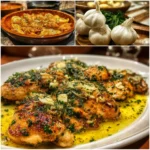
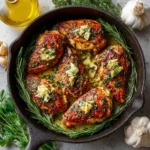
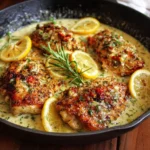
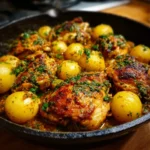
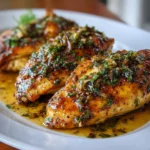
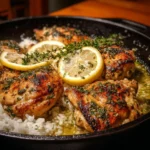
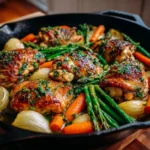
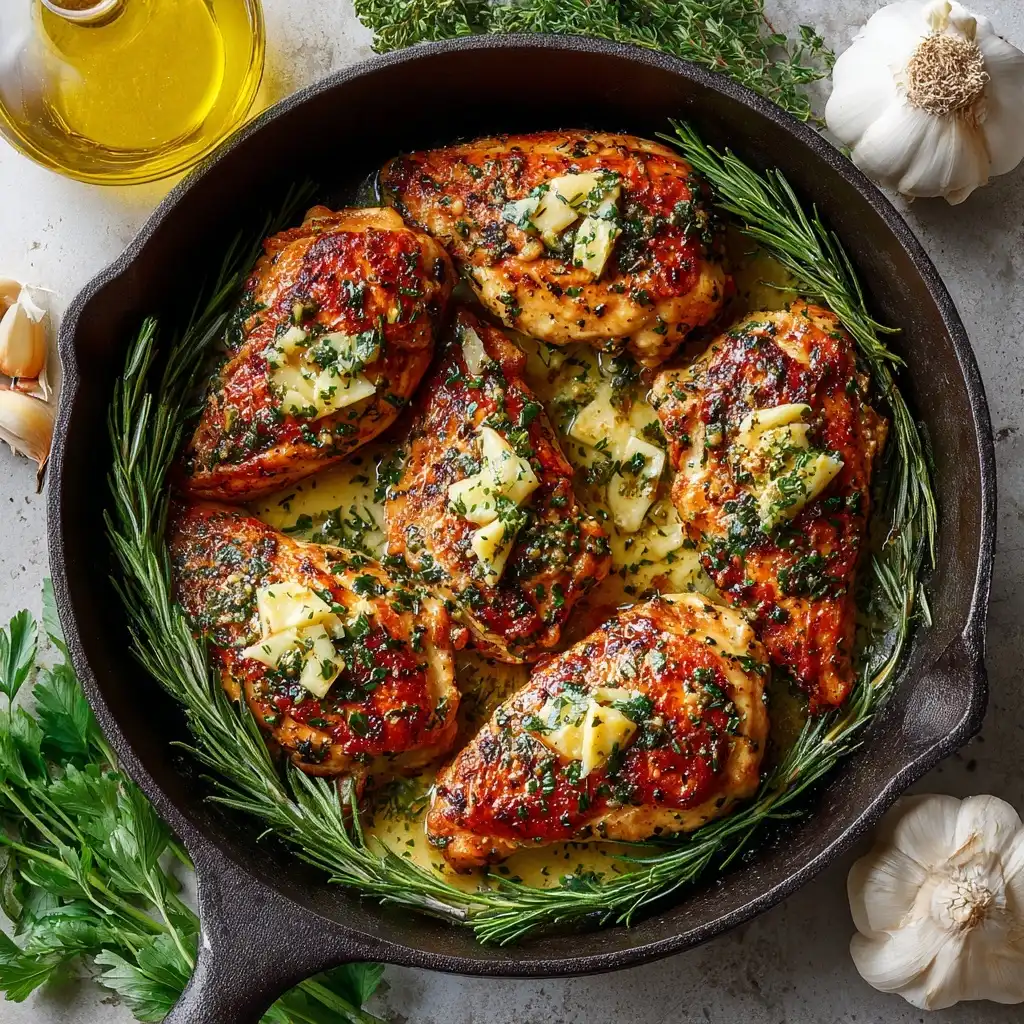
Garlic Butter Chicken with Garlic Butter and Herbs is a timeless, restaurant-quality dish that effortlessly bridges comfort and elegance. With its golden-brown, crispy-edged chicken breasts (or thighs) bathed in a rich, aromatic sauce of melted butter, freshly minced garlic, fragrant herbs, and a subtle tang of lemon, this recipe delivers deep umami, savory-sweet richness, and bright herbal freshness in every bite. Whether you’re preparing a weeknight dinner for the family, hosting an intimate gathering, or seeking a simple yet impressive meal that feels indulgent without being overly complicated, Garlic Butter Chicken stands out for its versatility, reliability, and sheer sensory appeal. Its magic lies not in complexity—but in the careful layering of high-quality, fresh ingredients and thoughtful technique that transforms humble pantry staples into something extraordinary.
The History
While no single origin story defines Garlic Butter Chicken, its roots run deep across multiple culinary traditions. Garlic and butter have been cherished pairing partners since at least medieval Europe—where garlic was prized for both medicinal properties and bold flavor, and cultured butter became a staple of French and Northern European cooking. The concept of pan-searing protein and finishing it in a butter-based sauce echoes classic French techniques like meunière (flour-dusted fish cooked in browned butter, lemon, and parsley) and à la minute sauces prepared tableside in fine dining establishments. In mid-20th-century America, “garlic butter” emerged as a beloved compound butter variation—often served with steaks, seafood, or crusty bread—and gradually found its way into poultry preparations as home cooks sought richer, more aromatic alternatives to basic grilled or baked chicken. By the 1980s and ’90s, food magazines and televised cooking shows popularized herb-infused garlic butter sauces as accessible gourmet touches—leading to widespread adoption in home kitchens. Today, Garlic Butter Chicken embodies a global fusion: the Italian love of fresh herbs and olive oil, the French reverence for proper emulsification and fond development, the American emphasis on approachable execution, and even subtle nods to Mediterranean and Levantine traditions where garlic, lemon, and flat-leaf parsley reign supreme. It’s less a historical artifact and more a living, evolving tradition—one passed down through dog-eared recipe cards, TikTok tutorials, grandmotherly advice, and countless dinner party compliments.
Ingredients Breakdown
Understanding each ingredient’s role unlocks mastery—not just replication—of Garlic Butter Chicken:
- Chicken Breasts or Thighs: Boneless, skin-on chicken breasts offer clean presentation and lean tenderness; boneless, skin-on thighs provide superior juiciness, richer flavor, and forgiveness during cooking. Skin is essential for achieving crispness and rendering fat that flavors the sauce. If using skinless cuts, increase butter slightly and add a splash of olive oil for browning.
- Unsalted Butter: High-fat (82%+), European-style unsalted butter is ideal—it browns beautifully, carries flavor without sodium interference, and emulsifies smoothly into the sauce. Salted butter can be used, but adjust added salt carefully.
- Fresh Garlic: Always use freshly minced or crushed garlic—not jarred or powdered. Fresh garlic contains alliinase enzymes that activate upon cutting, releasing volatile sulfur compounds responsible for its pungent aroma and complex sweetness when cooked gently. Too much heat too fast leads to bitterness; slow infusion in warm butter unlocks depth.
- Fresh Herbs: A dynamic trio—flat-leaf parsley (earthy, clean finish), fresh thyme (woodsy, floral notes), and chives (mild onion essence)—creates multidimensional aroma and texture. Dried herbs lack volatile oils and should only be used as last-resort substitutes (use ⅓ the amount).
- Lemon: Freshly squeezed juice adds vital acidity that cuts through fat, balances richness, and lifts the entire profile. Lemon zest contributes bright, citrusy top notes and essential oils that perfume the sauce.
- Heavy Cream or Full-Fat Coconut Milk (optional but recommended): A small splash (1–2 tbsp) stabilizes the sauce, prevents separation, adds luxurious silkiness, and helps suspend herb particles evenly. Avoid low-fat dairy—it may curdle.
- High-Heat Oil (avocado, grapeseed, or refined olive oil): Used solely for initial searing—its high smoke point ensures golden crust formation without burning before butter is added.
- Flour (all-purpose or rice flour for gluten-free): A light dusting (½ tsp per breast) promotes Maillard reaction, improves browning, and thickens the sauce naturally as it cooks into the fond.
- Quality Sea Salt & Freshly Ground Black Pepper: Kosher salt ensures even distribution; coarse black pepper adds aromatic spice that complements garlic rather than competes with it.
- White Wine or Dry Sherry (optional but transformative): ¼ cup deglazes the pan with acidity and complexity, dissolving caramelized bits (fond) into the base of the sauce. Choose unoaked, dry varieties—avoid “cooking wine.”
Step-by-Step Recipe
- Prep the Chicken: Pat chicken pieces *extremely* dry with paper towels—moisture is the enemy of crisp skin. Using a sharp paring knife, gently loosen the skin from the meat without tearing it. Tuck 1 tsp cold herb-garlic butter (see Tips) under the skin over the thickest part of each breast or thigh. Lightly season the skin side with salt and pepper. Let rest uncovered at room temperature for 20–30 minutes.
- Make Herb-Garlic Butter (Advance Prep Recommended): In a small bowl, combine 4 tbsp softened unsalted butter, 2 minced garlic cloves, 1 tbsp finely chopped parsley, 1 tsp chopped thyme leaves, ½ tsp lemon zest, and a pinch of white pepper. Mix until smooth. Chill for at least 15 minutes (or up to 3 days). This step infuses the chicken from within.
- Preheat & Sear: Heat 1½ tbsp high-heat oil in a heavy-bottomed stainless steel or cast-iron skillet over medium-high heat until shimmering (not smoking). Place chicken skin-side down. Press gently with a spatula for first 15 seconds to ensure full contact. Cook undisturbed for 6–8 minutes until skin is deeply golden, ultra-crisp, and releases easily. Flip and cook meat-side down for 2–3 minutes. Transfer to a wire rack set over a baking sheet; tent loosely with foil. Rest 5 minutes (juices redistribute; skin stays crisp).
- Build the Sauce: Discard excess rendered fat, leaving ~1 tbsp in the pan. Reduce heat to medium-low. Add 1 tbsp cold unsalted butter and swirl until melted. Add 3–4 minced garlic cloves and 1 tsp thyme sprigs; sauté 45 seconds until fragrant but *not browned*. Pour in ¼ cup dry white wine (if using); scrape vigorously with a wooden spoon to lift all browned bits (fond). Simmer 2 minutes until reduced by half.
- Emulsify & Enrich: Whisk in remaining 5 tbsp cold unsalted butter, one tablespoon at a time, allowing each to melt and incorporate fully before adding the next. This creates a stable, velvety emulsion. Stir in 1 tbsp heavy cream or full-fat coconut milk, 1½ tsp fresh lemon juice, and a pinch of sea salt. Simmer gently 1 minute—do not boil vigorously, or butter may separate.
- Finish & Serve: Return rested chicken to pan, skin-side up. Spoon sauce over top. Garnish generously with extra chopped parsley, chives, lemon zest, and a final crack of black pepper. Optional: drizzle with high-quality extra-virgin olive oil just before serving for aromatic lift.
Tips
- Dry Skin Is Non-Negotiable: Even a trace of moisture prevents crisping. Pat twice—once before seasoning, again right before searing.
- Skin-Side Down, No Peeking: Resist flipping early. That first golden crust forms only with uninterrupted contact and gentle pressure.
- Butter Temperature Matters: Cold butter emulsifies best into warm (not hot) sauce. If sauce is too hot (>160°F), butter will “break.” Remove pan from heat briefly while whisking in butter.
- Garlic Timing Is Critical: Raw garlic burns in seconds. Always add it to warm (not scalding) butter/oil—or better yet, infuse it earlier via compound butter under the skin.
- Rest Before Serving: Resting for 5–7 minutes allows juices to reabsorb. Skipping this yields dry chicken—even if perfectly cooked.
- Use a Thermometer: Target 155–160°F internal temp in thickest part. Carryover cooking will bring it to safe 165°F while preserving tenderness.
- Acid Last, Always: Lemon juice added too early loses brightness and can dull herb flavors. Stir in just before serving.
- Sauce Consistency Control: Too thin? Simmer 30 seconds longer. Too thick? Whisk in 1 tsp warm broth or lemon juice. Too greasy? Whisk in ½ tsp Dijon mustard—it acts as an emulsifier.
- Crisp Skin Hack: For *extra* crunch, place seared chicken skin-side up on a wire rack under a preheated broiler for 60–90 seconds before saucing.
- Make-Ahead Magic: Herb-garlic butter can be frozen in parchment logs for up to 3 months. Slice off rounds as needed.
Variations and Customizations
This recipe is a canvas—adaptable to dietary needs, seasonal produce, global influences, and personal taste:
- Low-Carb/Keto: Skip flour; serve over cauliflower mash, zucchini noodles, or roasted broccoli rabe. Boost fats with extra butter or a dollop of crème fraîche.
- Gluten-Free: Ensure all ingredients (e.g., broth, wine) are certified GF. Use rice flour or arrowroot for dredging if desired.
- Dairy-Free/Vegan Option: Substitute high-quality vegan butter (Miyoko’s or Naturli’), full-fat coconut milk, and nutritional yeast (½ tsp) for umami depth. Use king oyster mushrooms or pressed tofu as chicken alternative.
- Mediterranean Twist: Add 2 tbsp chopped sun-dried tomatoes (oil-packed, drained), ¼ tsp crumbled dried oregano, and 2 tbsp crumbled feta cheese stirred into sauce at the end.
- Spicy Arrabbiata Style: Infuse oil with ½ tsp red pepper flakes before searing; stir in 1 tsp tomato paste with garlic; finish with basil ribbons.
- Asian-Inspired: Replace thyme with 1 tsp grated ginger and 1 star anise pod (remove before serving); swap lemon for yuzu or rice vinegar; garnish with scallions and toasted sesame seeds.
- Herbaceous Spring Version: Use tarragon + chervil + chives; replace lemon with 1 tbsp verjus; add blanched asparagus tips and English peas to sauce.
- Smoky Depth: Add ¼ tsp smoked paprika to seasoning rub; finish with a whisper of liquid smoke in the sauce (½ drop only—potent!).
- Creamy Mushroom Upgrade: Sauté 1 cup sliced cremini mushrooms in same pan after searing chicken; proceed with garlic step. Adds earthy luxury.
- Brunch or Sandwich Style: Slice cooled chicken thinly; layer on brioche with arugula, heirloom tomatoes, and extra herb butter. Or serve warm over creamy polenta with poached eggs.
Health Considerations and Nutritional Value
A 6-oz serving of Garlic Butter Chicken (made with skin-on chicken breast, 6 tbsp butter, herbs, lemon, and minimal wine) provides approximately:
- Calories: ~520 kcal
- Protein: 42g (excellent complete protein source; supports muscle maintenance and satiety)
- Fat: 36g (primarily monounsaturated and saturated from butter and chicken skin; includes beneficial butyric acid and conjugated linoleic acid [CLA] from grass-fed butter)
- Carbohydrates: <1g (naturally low-carb)
- Vitamin B6 & B12: Abundant from chicken—critical for nervous system function and red blood cell formation
- Selenium: One serving delivers >100% DV—powerful antioxidant supporting thyroid health and DNA repair
- Allicin Precursors: Raw garlic (especially when crushed and allowed to sit 10 minutes pre-cooking) yields allicin—a compound studied for cardiovascular and immune support
- Polyphenols & Flavonoids: Parsley is exceptionally rich in apigenin and luteolin; thyme contains rosmarinic acid—both exhibit anti-inflammatory and neuroprotective properties
- Lemon Bioactives: Contains hesperidin and diosmin—citrus flavonoids linked to improved vascular integrity and reduced oxidative stress
Considerations: While nutrient-dense, the dish is calorie- and fat-concentrated. For heart-health focus, use half butter/half olive oil, opt for skinless thighs (still moist due to higher fat content), and emphasize herb volume over butter. Those managing cholesterol should consult their healthcare provider regarding saturated fat intake—but recent research suggests dietary cholesterol has less impact on serum levels than once believed, especially when consumed alongside fiber-rich vegetables and polyphenol-rich herbs. Sodium remains low if unsalted butter and minimal added salt are used—making it suitable for many hypertension-conscious diets. Always prioritize organic, pasture-raised chicken and grass-fed butter when possible to maximize omega-3s, vitamin K2, and reduced antibiotic exposure.
Ingredients
- 2 large boneless, skin-on chicken breasts (about 10–12 oz each) OR 4 boneless, skin-on chicken thighs (about 6 oz each)
- 8 tbsp (1 stick) unsalted butter, divided — 4 tbsp cold & cubed, 4 tbsp cold & for compound butter
- 6 garlic cloves, minced (3 for compound butter, 3 for sauce)
- ¼ cup finely chopped fresh flat-leaf parsley (plus extra for garnish)
- 1 tbsp fresh thyme leaves (plus 1 tsp whole sprigs for sauce)
- 2 green onions or chives, finely sliced
- 1 large lemon — zested and juiced (you’ll need 1½ tsp zest and 1½ tbsp juice)
- ¼ cup dry white wine (Sauvignon Blanc or Pinot Grigio) or low-sodium chicken broth
- 1 tbsp heavy cream or full-fat coconut milk
- 1½ tbsp high-heat oil (avocado, grapeseed, or refined olive oil)
- ½ tsp kosher salt (plus more to taste)
- Freshly ground black pepper
- Optional: ¼ tsp white pepper, pinch of red pepper flakes, 1 tsp Dijon mustard (for emulsion insurance)
Directions
- Prepare Herb-Garlic Butter: In a small bowl, combine 4 tbsp softened unsalted butter, 3 minced garlic cloves, 2 tbsp chopped parsley, 1 tsp thyme leaves, 1 tsp lemon zest, ¼ tsp white pepper, and a pinch of salt. Mix until smooth. Transfer to parchment paper, roll into a log, twist ends, and refrigerate at least 15 minutes (up to 3 days).
- Prep Chicken: Using fingers, gently loosen skin from chicken breast/thigh without tearing. Tuck 1 tsp chilled herb-garlic butter under skin over thickest part. Rub skin lightly with oil; season generously with salt and pepper. Let sit at room temperature 20–30 minutes.
- Sear Chicken: Heat oil in 12-inch stainless or cast-iron skillet over medium-high heat until shimmering. Place chicken skin-side down. Press gently for 15 seconds. Cook 6–8 minutes without moving until skin is deep golden and releases easily. Flip; cook meat-side 2–3 minutes. Transfer to wire rack; tent loosely. Rest 5 minutes.
- Make Sauce Base: Discard all but 1 tbsp fat from pan. Reduce heat to medium-low. Add 1 tbsp cold butter; swirl until melted. Add 3 minced garlic cloves and 1 tsp thyme sprigs; sauté 45 seconds until fragrant. Pour in wine; scrape pan vigorously. Simmer 2 minutes until reduced by half.
- Emulsify Sauce: Reduce heat to low. Whisk in remaining 5 tbsp cold butter, one piece at a time, waiting until fully incorporated before adding next. Stir in heavy cream, 1½ tsp lemon juice, and a pinch of salt. Simmer gently 1 minute.
- Combine & Finish: Return rested chicken to pan, skin-side up. Spoon sauce over. Garnish with remaining parsley, chives, lemon zest, and black pepper. Optional: drizzle with ½ tsp extra-virgin olive oil. Serve immediately.
FAQ
- Can I use skinless chicken?
- Yes—but expect less flavor, less crispness, and drier results. To compensate: dredge lightly in flour, use higher butter ratio (add 1 extra tbsp), and reduce cooking time by 1–2 minutes per side. Consider brining (½ cup salt + 4 cups water, 30 min) for moisture retention.
- Why does my garlic butter sauce break or look greasy?
- Common causes: sauce too hot when adding butter, butter added too quickly, or vigorous boiling after emulsification. Fix: Remove from heat, let cool 30 seconds, then slowly whisk in 1 tsp cold cream or Dijon mustard. Next time, keep heat low and add butter incrementally.
- Can I make this ahead of time?
- The herb-garlic butter and sauce base (without final butter) can be made 2 days ahead and refrigerated. Reheat sauce base gently, then whisk in cold butter off-heat. Chicken is best cooked fresh—but fully cooked chicken reheats well in sauce at low temp (300°F oven, covered, 10–12 min).
- What sides pair best with Garlic Butter Chicken?
- Classic: buttered egg noodles, garlic mashed potatoes, or crusty sourdough for soaking sauce. Lighter options: roasted asparagus, lemon-herb quinoa, farro salad with cherry tomatoes, or massaged kale with apple slices. For keto: sautéed spinach with pine nuts or roasted radishes.
- Is there a way to make it lower in calories?
- Absolutely. Use skinless thighs (more forgiving than breast), reduce butter to 4 tbsp total, substitute 2 tbsp Greek yogurt for cream, and double the herbs and lemon. Serve over roasted vegetables instead of starches—cuts ~200 calories without sacrificing satisfaction.
- Can I cook this in the oven?
- Yes—use the “reverse sear” method: Roast chicken at 275°F until internal temp reaches 150°F (~25–30 min), then sear skin-side down in hot skillet 2 minutes. Proceed with sauce. Ensures even doneness and ultra-tender meat.
- My sauce is too garlicky—how do I fix it?
- Balance with acid and fat: whisk in ½ tsp lemon juice + ½ tsp honey or maple syrup + 1 tsp cold butter. The sweetness softens pungency; acid lifts it; fat mellows sharp edges. Next time, use 1 clove less and infuse garlic into butter ahead of time instead of raw addition.
- Can I freeze leftovers?
- Yes—but texture changes. Freeze sauce separately (up to 2 months) and chicken separately (up to 3 months). Thaw overnight in fridge. Reheat sauce gently on stove; warm chicken in sauce at low temp—never boil. Stir in fresh herbs and lemon juice after reheating to revive brightness.
- What wine pairs well with this dish?
- A crisp, mineral-driven white: Chablis, Albariño, or unoaked Chardonnay. Their acidity mirrors the lemon in the sauce, while subtle stone fruit notes complement the herbs. For red lovers, try a lighter Pinot Noir with bright acidity and low tannins.
- Why use both parsley AND thyme?
- Parsley offers clean, grassy freshness and visual pop; thyme contributes warm, woodsy depth and holds up to cooking better than delicate herbs. Together, they create harmonic contrast—like bass and treble in music. Omitting either flattens the flavor architecture.
Summary
Garlic Butter Chicken with Garlic Butter and Herbs is a masterclass in simplicity elevated by intention—where every element, from dry-brined skin to cold-emulsified butter, serves a precise sensory purpose. It honors centuries of culinary wisdom while remaining vibrantly adaptable to modern kitchens, dietary frameworks, and global palates.
At its heart, this dish is not just food—it’s warmth, memory, celebration, and care, all concentrated into golden crispness, velvety richness, and the unmistakable, soul-stirring fragrance of garlic and herbs blooming in butter.