Introduction
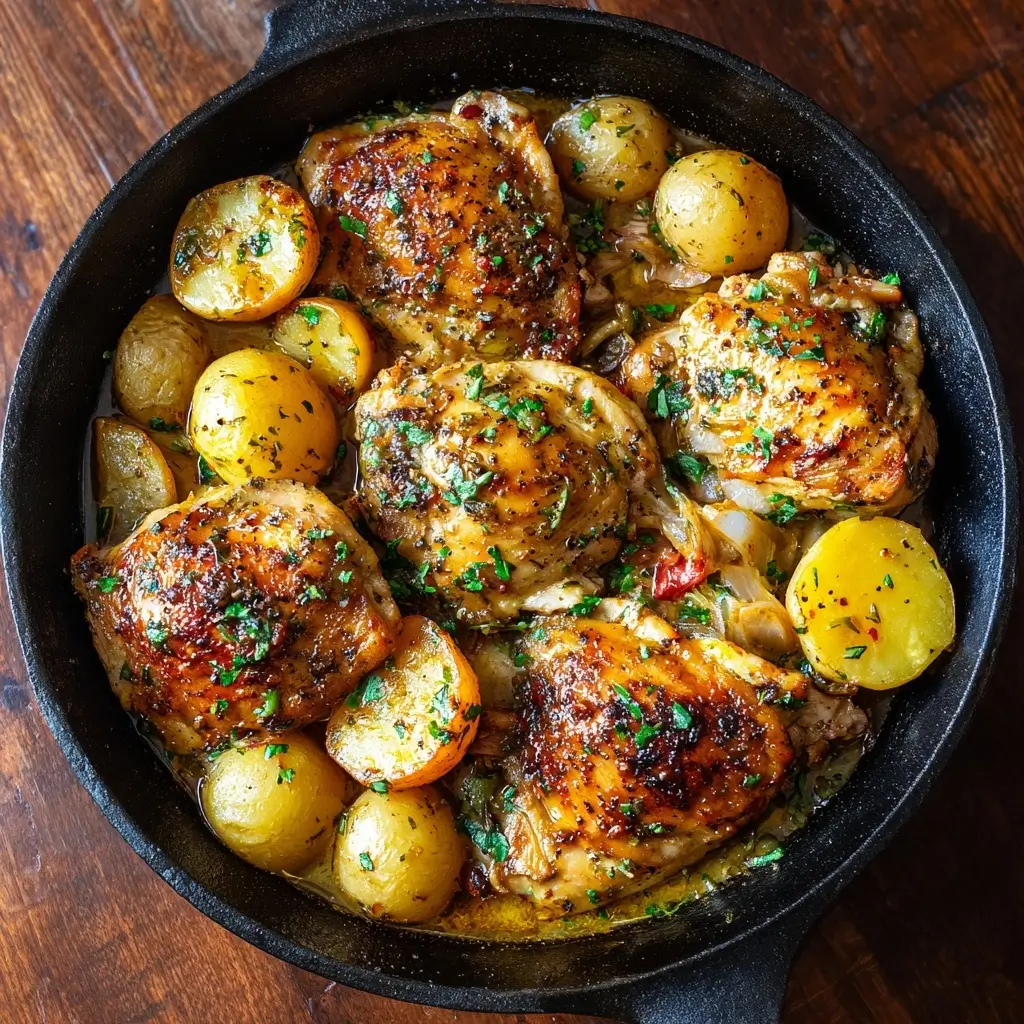
Garlic Butter Chicken and Potatoes is a beloved, soul-satisfying one-pan dinner that marries tender, golden-brown chicken breasts with crispy-on-the-outside, fluffy-on-the-inside roasted potatoes — all luxuriously coated in a rich, aromatic garlic butter sauce infused with fresh herbs and savory depth. This dish transcends mere weeknight convenience: it’s a culinary embrace of comfort, simplicity, and bold flavor — where minimal prep yields maximum reward. Whether you’re feeding a busy family, hosting casual friends, or simply treating yourself to a restaurant-quality meal at home, this recipe delivers restaurant-worthy results with pantry-friendly ingredients and straightforward techniques. Its magic lies not in complexity, but in the careful layering of flavors — the sizzle of butter browning the chicken, the slow-roasted sweetness of caramelizing potatoes, the pungent warmth of freshly minced garlic, and the bright lift of parsley or thyme that ties it all together. More than just food, it’s a sensory experience — golden crusts crackling under the fork, steam rising with garlicky perfume, and every bite delivering harmony between protein, starch, and sauce.
The History
While no single documented origin claims Garlic Butter Chicken and Potatoes as its exclusive creation, the dish is a modern American interpretation rooted in centuries-old culinary traditions across Europe and the Mediterranean. The technique of pan-searing chicken in butter echoes classic French chicken à la provençale and chicken meunière, where proteins are finished with browned butter, lemon, and parsley. Roasting potatoes in fat dates back to 17th-century Belgium and France, where soldiers allegedly fried potato strips in beef tallow — a practice that evolved into today’s beloved roasted potatoes. Garlic, long revered in Mediterranean, Middle Eastern, and Asian cuisines for both medicinal and flavor-enhancing properties, became widely popularized in American home cooking post–World War II, especially as immigrant communities shared their garlic-forward techniques. The fusion of these elements — butter-browned chicken, herb-infused roasted spuds, and abundant garlic — gained momentum in the 1980s and 1990s through cooking shows, glossy food magazines, and early internet recipe forums. It surged again in the 2010s with the rise of “sheet-pan” and “one-pan” cooking trends, praised for its minimal cleanup and reliable, crowd-pleasing results. Today, it stands as a timeless staple — less a historical artifact and more a living tradition, constantly adapted across kitchens from Portland to Prague, always retaining its core identity: deeply savory, unapologetically garlicky, and profoundly comforting.
Ingredients Breakdown
Understanding each ingredient’s role unlocks consistency and mastery — this isn’t just a list; it’s a flavor architecture.
- Chicken Breasts (boneless, skinless): Opt for uniform, 6–8 oz cuts (about 1-inch thick) for even cooking. Pounding them gently to ¾-inch thickness prevents dryness and ensures rapid, caramelized searing. High-quality, air-chilled, or organic chicken yields superior texture and richer flavor absorption.
- Yukon Gold Potatoes: The undisputed gold standard — their medium starch content delivers crisp exteriors and creamy, buttery interiors without turning gluey. Russets work for extra crispness (but may dry out); red potatoes offer waxy resilience and vibrant color (though less creamy). Always use small-to-medium whole potatoes (1.5–2 inches) or evenly cubed (1-inch pieces) for consistent roasting.
- Unsalted Butter: Essential for control over sodium and for achieving proper browning (milk solids caramelize beautifully). European-style (82–86% butterfat) adds luxurious mouthfeel and nutty depth. Avoid salted butter unless adjusting other seasonings precisely.
- Fresh Garlic: Non-negotiable. Pre-minced jarred garlic lacks brightness and can taste metallic or sour when heated. Fresh cloves, finely minced or pressed, release allicin — the compound responsible for that signature pungent aroma and healthful compounds — which mellows perfectly into sweetness during roasting.
- Extra-Virgin Olive Oil: Used for initial roasting and searing, it raises the smoke point of butter and contributes fruity, peppery notes. Choose a mid-range, robust EVOO (not delicate finishing oil) that can withstand high heat without bitterness.
- Dry White Wine (optional but highly recommended): A ¼ cup of Sauvignon Blanc or Pinot Grigio deglazes the pan, lifts fond, and adds bright acidity and subtle fruitiness that balances the butter’s richness. Substitute with low-sodium chicken broth if avoiding alcohol — though wine’s complexity is unmatched.
- Fresh Herbs: Flat-leaf parsley adds fresh, grassy contrast; fresh thyme leaves (stripped from stems) contribute earthy, floral notes; rosemary (used sparingly) lends piney intensity. Dried herbs lack volatile oils and can taste dusty — reserve them only for long-simmered sauces, never here.
- Lemon Juice (freshly squeezed): The final flourish — added off-heat to preserve brightness. Its citric acid cuts through fat, enhances garlic’s aroma, and lifts the entire dish. Bottled juice lacks vibrancy and often contains preservatives that dull flavor.
- High-Quality Sea Salt & Freshly Cracked Black Pepper: Kosher salt (like Diamond Crystal) adheres evenly and seasons deeply; freshly ground Tellicherry or Malabar black pepper delivers complex, floral heat far beyond pre-ground alternatives.
Step-by-Step Recipe
- Prep & Marinate (15 minutes): Pat chicken breasts *extremely* dry with paper towels — moisture is the enemy of browning. Place in a bowl and toss with 1 tbsp olive oil, ½ tsp salt, ¼ tsp black pepper, and 1 minced garlic clove. Let sit at room temperature for 10–15 minutes while prepping potatoes. Meanwhile, wash, scrub, and dry Yukon Golds thoroughly. Leave whole if small (<1.75"), or cut into uniform 1-inch cubes. Toss potatoes in a large bowl with 2 tbsp olive oil, 1 tsp salt, ½ tsp pepper, 1 tsp dried thyme (or 1 tbsp fresh), and 2 minced garlic cloves.
- Roast Potatoes (35–40 minutes): Preheat oven to 425°F (220°C) with rack in middle position. Line a heavy-duty rimmed baking sheet (18″x13″) with parchment paper (not foil — butter sticks). Spread potatoes in a single, uncrowded layer. Roast for 25 minutes. Remove, flip/stir gently, and rotate pan front-to-back. Return to oven for 10–15 more minutes until deeply golden, fork-tender at edges, and crisping on multiple sides. Reduce oven temp to 400°F (200°C) after removing potatoes.
- Sear Chicken (6–8 minutes): While potatoes roast, heat a large, heavy-bottomed stainless steel or cast-iron skillet over medium-high heat. Add 1 tbsp butter and 1 tbsp olive oil. When butter foams and just begins to turn golden (not browned yet), add chicken in a single layer — do not crowd. Sear undisturbed for 4–5 minutes until deeply golden and easily releases from pan. Flip and sear second side for 3–4 minutes until internal temp reaches 155–160°F (68–71°C) — carryover cooking will bring it to safe 165°F. Transfer chicken to a clean plate; tent loosely with foil.
- Build the Sauce (5 minutes): Reduce heat to medium-low. In same skillet, add remaining 3 tbsp butter. Once melted, add 3–4 minced garlic cloves and sauté 30–60 seconds until fragrant but *not browned* (burnt garlic turns bitter). Pour in white wine (or broth), scraping vigorously with a wooden spoon to lift all browned bits (fond) — this is pure flavor gold. Simmer 2–3 minutes until reduced by half. Stir in lemon juice, 2 tbsp chopped parsley, and optional 1 tsp fresh thyme leaves. Taste and adjust salt/pepper.
- Combine & Finish (5 minutes): Gently return roasted potatoes to skillet with sauce. Toss carefully to coat without breaking. Nestle seared chicken on top of potatoes. Spoon extra sauce over chicken. Sprinkle with remaining 1 tbsp parsley and a final grind of black pepper. For optional finish: broil on high for 1–2 minutes until chicken surface glistens and sauce bubbles gently — watch closely!
- Rest & Serve (5 minutes): Let dish rest off heat for 5 minutes before serving. This allows juices to redistribute into chicken and sauce to thicken slightly. Garnish with lemon wedges and extra parsley.
Tips
- Dry Chicken is Key: Wet chicken steams instead of sears. Pat *twice*: once before seasoning, once right before hitting the pan.
- Don’t Rush the Sear: Let chicken develop a full golden crust before flipping — premature movement causes tearing. Use tongs, not a fork, to avoid piercing and losing juices.
- Garlic Timing is Critical: Add garlic to hot butter *only after* searing chicken and reducing wine. Raw garlic burns instantly in hot fat — toasted garlic loses nuance, burnt garlic ruins the dish.
- Use a Thermometer: Visual cues mislead. Insert an instant-read thermometer into the thickest part of chicken — 165°F is safe, but pulling at 160°F + resting gives juicier results.
- Rotate Your Pan: Ovens have hot spots. Rotating the sheet pan halfway ensures even browning — especially vital for potatoes.
- Acid Last, Always: Lemon juice added during cooking evaporates and loses brightness. Stir in *off heat* for maximum zing and aroma.
- Embrace the Fond: That dark, sticky residue in the skillet? That’s concentrated umami. Deglazing with wine/broth transforms it into the soul of your sauce.
- Potato Size Matters: Small potatoes roast faster and crisper. If cubing, ensure uniformity — uneven pieces cook at different rates, leading to mushy or hard bits.
- Butter Clarification Hack: For ultra-crispy potatoes without burning, replace 1 tbsp of the olive oil with clarified butter (ghee) — higher smoke point, richer flavor.
- Resting is Non-Negotiable: Skipping rest means dry chicken and runny sauce. Those 5 minutes allow muscle fibers to relax and reabsorb juices.
- Make-Ahead Friendly: Roast potatoes up to 24 hours ahead. Cool completely, refrigerate in airtight container. Re-crisp in 425°F oven for 10 minutes before finishing.
- Skillet Choice: Stainless steel or cast iron retains heat best for searing. Non-stick won’t develop fond — skip it for this recipe.
Variations and Customizations
This recipe is a canvas — adaptable to dietary needs, seasonal produce, global flavors, and pantry constraints:
- Spicy Kick: Add ¼ tsp crushed red pepper flakes to potatoes before roasting, or stir 1 tsp harissa paste into the finished sauce.
- Creamy Version: Stir in 2–3 tbsp full-fat Greek yogurt or crème fraîche *off heat* for a luxurious, tangy sauce — perfect with grilled asparagus.
- Herb Garden Edition: Swap parsley for 1 tbsp each chopped chives, dill, and tarragon — vibrant, delicate, and spring-like.
- Mediterranean Twist: Add ½ cup halved Kalamata olives and 2 tbsp capers with the sauce; finish with crumbled feta and lemon zest.
- Smoky Depth: Rub chicken with ½ tsp smoked paprika before searing; add 1 tsp chipotle in adobo (minced) to the sauce.
- Vegan Adaptation: Replace chicken with extra-firm tofu (pressed & marinated in soy/tamari, maple, garlic), potatoes with sweet potatoes or fingerlings, butter with vegan butter + 1 tsp nutritional yeast, and use vegetable broth.
- Low-Carb/Keto: Swap potatoes for cauliflower florets or radish “potatoes” (cut into 1-inch chunks, roasted same time/temp). Increase healthy fats with avocado oil and extra butter.
- Sheet-Pan Simplified: Skip stovetop searing — toss seasoned chicken and potatoes on one parchment-lined sheet, drizzle with oil/butter mixture, roast at 425°F for 35–40 mins, then broil 2 mins. Sauce made separately and poured over.
- Breakfast-for-Dinner: Top finished dish with 2–3 poached eggs and a sprinkle of everything bagel seasoning.
- Meal-Prep Powerhouse: Double the batch. Store portions (chicken + potatoes + sauce) separately in airtight containers for up to 4 days. Reheat gently in skillet with splash of broth to refresh sauce.
- Gourmet Upgrade: Use bone-in, skin-on chicken thighs for unparalleled richness and juiciness (increase roasting time by 10–15 mins); garnish with microgreens and edible flowers.
- Kid-Friendly Mild: Omit garlic in the sauce (keep in potatoes only), use mild herbs like basil or oregano, and serve with a side of honey-mustard dip.
Health Considerations and Nutritional Value
Garlic Butter Chicken and Potatoes, when prepared mindfully, offers a balanced, nutrient-dense meal — far from the “unhealthy comfort food” stereotype. A standard serving (1 chicken breast, 1 cup potatoes, 2 tbsp sauce) provides approximately 480–520 calories, 32–36g protein, 28–32g carbohydrates (mostly complex from potatoes), and 24–28g total fat (predominantly unsaturated from olive oil and butter’s natural fats). The chicken delivers complete protein, B vitamins (B6, B12, niacin), selenium, and phosphorus. Yukon Golds are a notable source of potassium (more than a banana per cup), vitamin C, B6, and resistant starch — especially when cooled slightly, which feeds beneficial gut bacteria. Garlic contributes allicin, linked in research to cardiovascular support, immune modulation, and anti-inflammatory effects. Butter, often vilified, contains butyrate (a gut-health fatty acid), vitamin K2 (critical for calcium metabolism), and conjugated linoleic acid (CLA) — especially in grass-fed varieties. To optimize health impact: choose pasture-raised or air-chilled chicken, organic potatoes when possible (lower pesticide load), cold-pressed EVOO, and unsalted butter. Limit added sodium by using herbs/spices instead of excess salt. For those managing cholesterol, moderate butter intake (1–2 tbsp total) and emphasize olive oil as the primary fat. Diabetics benefit from the low glycemic index of roasted potatoes (especially when paired with protein/fat) and the blood-sugar-stabilizing effect of garlic and vinegar (lemon juice). Gluten-free, dairy-free adaptations (using ghee or vegan butter) make it inclusive. Overall, it’s a meal that nourishes physically *and* emotionally — a powerful reminder that wellness isn’t deprivation, but intentional, joyful eating.
Ingredients
- 2 (6–8 oz) boneless, skinless chicken breasts, pounded to ¾-inch thickness
- 1 lb Yukon Gold potatoes (small whole or 1-inch cubes)
- ¼ cup extra-virgin olive oil, divided
- 4 tbsp unsalted butter, divided
- 6–7 large garlic cloves, minced (3 for potatoes, 4 for sauce)
- ¼ cup dry white wine (e.g., Sauvignon Blanc) or low-sodium chicken broth
- 2 tbsp fresh lemon juice (from ~1 lemon)
- ¼ cup finely chopped fresh flat-leaf parsley, divided
- 1 tbsp fresh thyme leaves, plus extra for garnish (optional)
- 1 tsp kosher salt, plus more to taste
- ½ tsp freshly ground black pepper, plus more to taste
- Lemon wedges, for serving
Directions
- Pat chicken breasts extremely dry with paper towels. In a bowl, toss chicken with 1 tbsp olive oil, ½ tsp salt, ¼ tsp pepper, and 1 minced garlic clove. Set aside at room temperature for 10–15 minutes.
- Preheat oven to 425°F (220°C). Scrub potatoes; leave whole if small (<1.75") or cut into 1-inch cubes. In a large bowl, toss potatoes with remaining 3 tbsp olive oil, 1 tsp salt, ½ tsp pepper, 2 minced garlic cloves, and 1 tbsp fresh thyme. Spread in single layer on parchment-lined rimmed baking sheet. Roast 25 minutes. Flip/stir, rotate pan, and roast 10–15 more minutes until golden and tender. Reduce oven to 400°F (200°C).
- Heat heavy skillet over medium-high heat. Add 1 tbsp butter and 1 tbsp olive oil. When butter foams, add chicken. Sear 4–5 minutes per side until golden and internal temp reaches 155–160°F. Transfer to plate; tent with foil.
- Reduce heat to medium-low. In same skillet, melt remaining 3 tbsp butter. Add 3–4 minced garlic cloves; sauté 30–60 sec until fragrant. Pour in wine/broth, scraping up browned bits. Simmer 2–3 min until reduced by half.
- Add lemon juice, 2 tbsp parsley, and optional thyme. Stir well. Gently return potatoes to skillet; toss to coat. Nestle chicken on top. Spoon sauce over chicken.
- Let rest 5 minutes. Garnish with remaining parsley, lemon wedges, and extra black pepper. Serve immediately.
FAQ
- Can I use chicken thighs instead of breasts?
- Absolutely — boneless, skinless thighs are more forgiving and flavorful. Increase oven time by 5–8 minutes; cook to 175°F internal temp. Skin-on, bone-in thighs add incredible richness (roast 45–55 mins at 425°F).
- Why do my potatoes stick to the pan?
- Three culprits: wet potatoes (dry thoroughly!), insufficient oil (coat every surface), or disturbing too soon (let roast 20+ mins before stirring). Parchment paper is essential for non-stick success.
- Can I make this dairy-free?
- Yes. Replace butter with high-quality vegan butter (Miyoko’s or Earth Balance) and use olive oil exclusively. Ensure broth is dairy-free. Flavor remains robust.
- How do I prevent garlic from burning?
- Burnt garlic = bitter disaster. Always add minced garlic to warm (not smoking-hot) butter, and sauté only 30–60 seconds until fragrant — never let it sizzle violently or turn brown.
- Can I prepare this ahead for a dinner party?
- Yes! Roast potatoes and sear chicken up to 1 day ahead. Store separately, chilled. Reheat potatoes in oven, chicken in skillet with splash of broth, then combine with fresh sauce just before serving.
- What wine should I use if cooking with alcohol?
- Choose a dry, high-acid white you’d actually drink: Sauvignon Blanc, Pinot Grigio, or unoaked Chardonnay. Avoid “cooking wine” — its salt and preservatives ruin flavor.
- My sauce is too thin — how do I thicken it?
- Simmer 1–2 minutes longer to reduce. For instant thickening, whisk in 1 tsp cornstarch slurry (cornstarch + cold water) and simmer 30 seconds. Avoid flour — it clouds flavor.
- Can I freeze leftovers?
- Yes, but texture changes. Freeze chicken and potatoes separately in airtight containers for up to 2 months. Thaw overnight in fridge. Reheat gently in skillet with broth to revive sauce — avoid microwaving sauce alone.
- Is this recipe gluten-free?
- Yes — all core ingredients are naturally gluten-free. Verify broth/wine labels for hidden gluten (rare, but possible in some flavored broths).
- What sides pair well with this dish?
- Its richness pairs beautifully with freshness: simple arugula salad with lemon vinaigrette, steamed broccoli with lemon zest, roasted asparagus, or crusty whole-grain bread for soaking up sauce.
Summary
Garlic Butter Chicken and Potatoes is a masterclass in rustic elegance — where perfectly seared, juicy chicken and irresistibly crispy-yet-creamy potatoes unite under a glossy, herb-flecked sauce infused with the deep warmth of fresh garlic and the bright kiss of lemon. It’s a versatile, nutritionally balanced, and deeply satisfying one-pan meal that honors time-honored techniques while embracing modern flexibility — proving that extraordinary flavor doesn’t require complexity, just care, quality ingredients, and a little patience.