Introduction
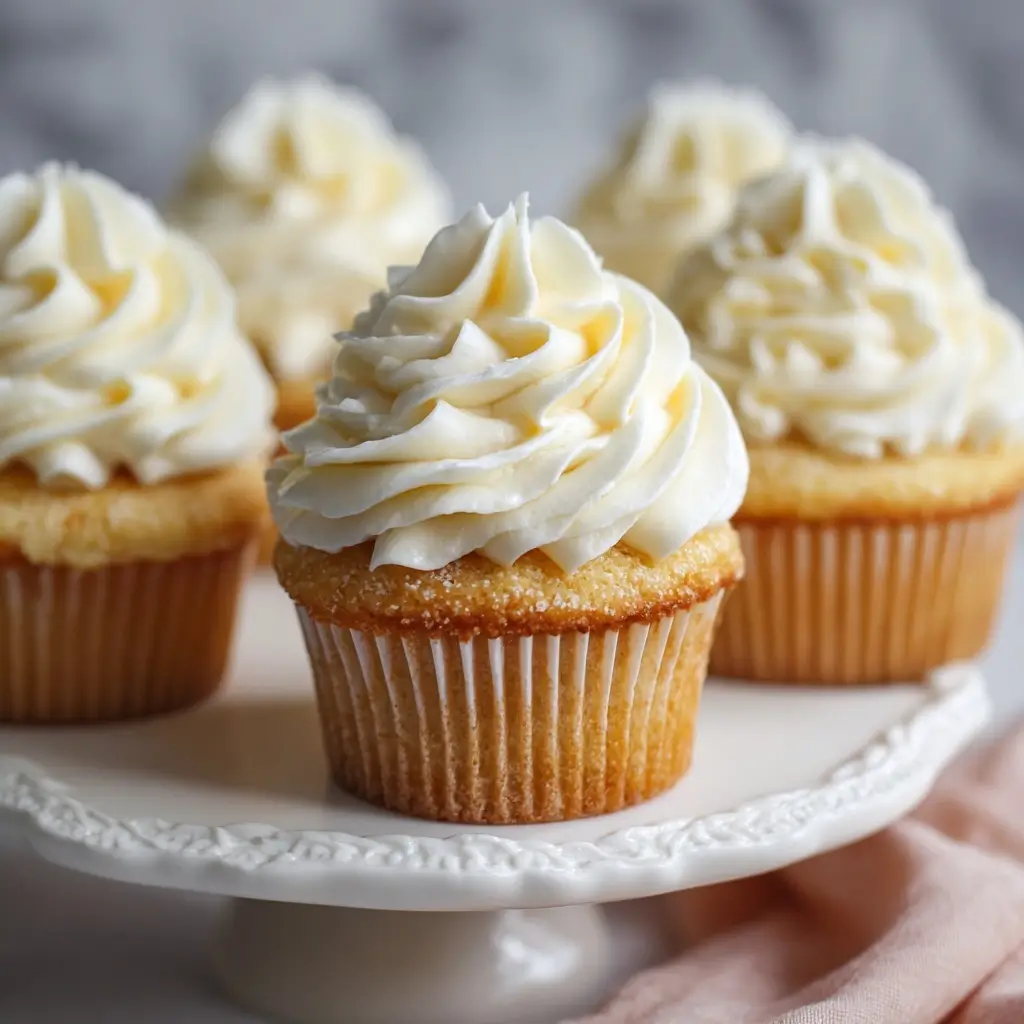
French Vanilla Bean Cupcakes represent the elegant, sophisticated evolution of classic vanilla cupcakes—elevated by the unmistakable depth, floral sweetness, and aromatic complexity of real Madagascar Bourbon vanilla beans. Unlike standard vanilla extract-based versions, French vanilla embraces a richer, custard-inspired profile rooted in traditional French pastry techniques: think crème anglaise, vanilla-infused pastry cream, and baked custards where egg yolks, warm dairy, and scraped vanilla seeds meld into a luxuriously smooth, golden-hued flavor foundation. These cupcakes are not merely sweet—they’re aromatic, velvety, and deeply comforting, with a tender crumb that’s moist without being dense, and a fragrance so intoxicating it fills your kitchen like a Parisian pâtisserie at dawn. Whether served plain with a dusting of powdered sugar, crowned with silky vanilla bean buttercream, or paired with seasonal fruit compotes, French Vanilla Bean Cupcakes embody timeless refinement—ideal for bridal showers, afternoon tea service, holiday dessert tables, or simply as a soul-soothing treat on an ordinary Tuesday.
The History
The term “French vanilla” does not refer to a botanical variety of vanilla orchid—but rather to a centuries-old culinary tradition originating in 17th- and 18th-century France, where pastry chefs began enriching custard-based desserts with whole vanilla beans and egg yolks to achieve unparalleled richness and aroma. While Mexico remains the birthplace of *Vanilla planifolia*, it was French colonists in Réunion (then Bourbon Island) who pioneered large-scale cultivation in the early 1800s—giving rise to the prized “Bourbon vanilla” known today for its creamy, woody, and slightly rum-like notes. In French patisseries, “vanille française” historically described preparations wherein vanilla pods were steeped in warm milk or cream along with egg yolks—a technique foundational to crème brûlée, crème pâtissière, and îles flottantes. When American bakers adopted this method in the mid-20th century—especially post-WWII, amid rising interest in gourmet baking and imported ingredients—the label “French vanilla” became synonymous with a warmer, more complex, eggy-custard nuance compared to the sharper, alcohol-forward profile of standard pure vanilla extract. The cupcake format itself gained prominence in the 1950s and 60s as home baking surged, but it wasn’t until the artisanal baking renaissance of the 2000s—fueled by farm-to-table movements, single-origin spice advocacy, and social media’s visual celebration of texture and speckled detail—that French Vanilla Bean Cupcakes emerged as a signature item: celebrated not just for taste, but for their visible flecks of black vanilla seeds, golden batter hue, and unmistakable olfactory allure.
Ingredients Breakdown
Every ingredient in authentic French Vanilla Bean Cupcakes serves both functional and sensory purposes—no component is arbitrary. Below is a meticulous, chef-level breakdown:
- Madagascar Bourbon Vanilla Beans (2–3 plump, 6–7″ pods): The heart and soul. Look for beans with high moisture content (plump, oily, slightly sticky), rich mahogany-brown color, and visible crystalline vanillin deposits (“vanilla frost”). Each pod contains ~500–700 tiny black seeds; scraping yields intense floral, honeyed, and subtly smoky top notes. Avoid “vanilla powder” or “ground vanilla” unless certified 100% pure—many contain fillers or synthetic vanillin.
- Whole Milk (1 cup, full-fat, room temperature): Provides lactose for gentle browning, casein for tenderness, and fat-soluble flavor carriers that bind with vanilla compounds. Skim or low-fat milk compromises mouthfeel and reduces aromatic diffusion.
- Heavy Cream (¼ cup, room temperature): Adds luxury-level fat (36–40%), enhancing crumb softness, prolonging moisture retention, and amplifying the custard illusion. Ultra-pasteurized cream works but fresh-pasteurized yields superior emulsification.
- Unsalted Butter (10 tbsp / 1¼ sticks, European-style preferred): High-butterfat (82–86%) butter—like Plugrá or Kerrygold—delivers superior flakiness in shortening and deeper nuttiness when browned (optional step). Salted butter introduces unpredictable sodium levels; unsalted allows precise control.
- Large Egg Yolks (4, room temperature): Critical for French vanilla identity. Yolks contribute lecithin (emulsifier), fat (richness), and natural yellow pigment—deepening the golden crumb and reinforcing custard character. Whole eggs dilute this effect; extra yolks intensify it.
- Granulated Sugar (1½ cups): Not just sweetener—sugar aerates butter during creaming, stabilizes egg foams, and caramelizes at edges for subtle crust formation. Caster sugar dissolves faster but isn’t essential.
- All-Purpose Flour (2 cups, measured by weight: 250g): Balanced protein (10–11.7%) ensures structure without toughness. Sifted twice to eliminate lumps and incorporate air. Avoid bread flour (too chewy) or cake flour alone (too fragile); for ultra-tender results, substitute ¼ cup (30g) with cornstarch.
- Baking Powder (2 tsp, aluminum-free): Double-acting formula provides reliable lift without metallic aftertaste. Test freshness by mixing ½ tsp with ¼ cup hot water—if it bubbles vigorously within 30 seconds, it’s active.
- Fine Sea Salt (1 tsp): Enhances all other flavors, balances sweetness, and strengthens gluten minimally. Kosher salt varies in volume—use fine sea or table salt for consistency.
- Pure Vanilla Extract (1 tbsp, Madagascar or Tahitian): Reinforces and extends the bean’s aroma, especially volatile top notes lost during baking. Alcohol acts as a flavor solvent. Never use imitation—synthetic ethyl vanillin lacks complexity and can taste medicinal.
- Optional: 1 tbsp Bourbon or Dark Rum (room temperature): Complements vanilla’s inherent warmth and adds subtle caramelized depth. Alcohol fully bakes off; non-alcoholic substitute: 1 tsp maple extract + ½ tsp toasted almond extract.
Step-by-Step Recipe
- Prep the Vanilla Infusion (Start 1 Hour Ahead): Split 2–3 vanilla beans lengthwise with a paring knife. Using the back of the knife, scrape out all seeds into a small saucepan. Add seeds, pods, milk, and heavy cream. Warm over medium-low heat—do not boil—until steaming gently (170°F/77°C). Remove from heat, cover, and steep for 60 minutes. Strain through a fine-mesh sieve into a heatproof bowl, pressing on pods to extract maximum essence. Discard pods or reserve for vanilla sugar. Cool infusion to room temperature (≈70°F) before using—warm liquid will melt butter or cook eggs.
- Prepare Equipment & Pan: Preheat oven to 350°F (177°C) with rack positioned in center. Line two standard 12-cup muffin tins with premium parchment liners (not wax paper)—they prevent sticking better and lend a polished look. Lightly grease wells if using silicone liners.
- Cream Butter & Sugar: In a stand mixer fitted with paddle attachment, beat softened (65–68°F) butter and granulated sugar on medium-high for 5–7 minutes until pale, fluffy, and nearly doubled in volume. Scrape bowl thoroughly with silicone spatula every 2 minutes. This step incorporates air critical for lift and tenderness.
- Incorporate Yolks & Flavorings: Add egg yolks one at a time, beating on medium speed for 30 seconds after each addition until fully emulsified. Add reserved vanilla infusion, pure vanilla extract, and optional bourbon/rum. Mix 1 minute on low until homogenous. Batter will appear slightly curdled—this is normal and will resolve with flour.
- Combine Dry Ingredients: In a separate bowl, whisk together sifted flour, baking powder, and fine sea salt until fully blended and aerated. Whisk for 30 seconds to ensure even distribution.
- Alternate Dry & Wet Incorporation: With mixer on low speed, add ⅓ of dry mixture; mix 15 seconds until just combined. Add ½ of remaining liquid mixture; mix 15 seconds. Repeat, ending with final ⅓ dry mixture. Do NOT overmix—batter should be smooth but may have a few faint streaks of flour. Overmixing develops gluten = dense, tunnelled cupcakes. Total mixing time after dry ingredients begin: ≤60 seconds.
- Portion & Bake: Use a 2-tablespoon ice cream scoop (or ¼-cup measure) to portion batter evenly into lined cups—fill each ¾ full (≈3.5 oz / 100g per cup). Tap tray firmly on counter 3 times to release air bubbles. Bake 18–22 minutes, rotating pans front-to-back at 12 minutes. Cupcakes are done when tops spring back lightly when touched, a toothpick inserted in center emerges with moist crumbs (not wet batter), and edges pull slightly from liner.
- Cool Completely: Let cupcakes cool in pans on wire racks for 10 minutes. Then carefully lift each cupcake by base of liner and transfer to rack. Cool fully (≥1 hour) before frosting—warm cupcakes melt buttercream and trap steam = soggy bottoms.
Tips
- Room Temperature Is Non-Negotiable: Butter must be cool to the touch but yield to gentle pressure (like ripe avocado); eggs and dairy must be 68–72°F. Cold ingredients cause curdling, poor emulsion, and uneven baking. To warm eggs quickly: submerge in warm (not hot) water for 5 minutes.
- Scrape Every Last Seed: Run the knife tip along the pod interior several times—tiny residual seeds add visual charm and aromatic potency. Save spent pods: bury in granulated sugar for 2 weeks to make vanilla sugar, or infuse in vodka for homemade extract.
- Don’t Skip the Steep: 60 minutes unlocks vanillin and related phenolics that alcohol alone cannot extract. Shorter steep = weaker flavor; longer (beyond 2 hours) may introduce grassy or bitter notes.
- Measure Flour Correctly: Spoon flour into measuring cup and level with straight edge—never scoop directly from bag (compacts flour, adding up to 25% excess). Better yet: weigh it (250g).
- Rotate Pans Mid-Bake: Home ovens have hot spots. Rotating ensures even browning and rise—especially crucial for uniform domes.
- Underbake Slightly, Not Overbake: Pull cupcakes at the first sign of doneness. Carryover heat continues cooking for 2–3 minutes out of oven. Overbaked cupcakes dry out irreversibly—even with frosting.
- Use a Digital Thermometer: For precision, insert probe into center of a cupcake at 18 minutes—ideal internal temp is 205–209°F. Below 203°F = underbaked; above 212°F = dry.
- Freeze for Longevity: Unfrosted, completely cooled cupcakes freeze beautifully for up to 3 months. Wrap individually in plastic, then place in airtight freezer bag. Thaw overnight in fridge, then bring to room temperature before frosting.
Variations and Customizations
French Vanilla Bean Cupcakes are a master canvas—elegant enough to shine solo, yet versatile enough to inspire endless creativity. Here are chef-curated adaptations, each preserving the core custard-vanilla integrity:
- Vanilla Bean & Brown Butter Cupcakes: Brown 10 tbsp butter in a saucepan until nutty and amber (≈5–7 min), cooling completely before creaming with sugar. Adds deep toffee, roasted almond notes that harmonize with vanilla’s warmth.
- Lavender-Vanilla Bean: Infuse the milk-cream mixture with 1 tsp culinary-grade dried lavender buds (remove before straining). Complements vanilla’s floral facets without overpowering—add only ¼ tsp dried buds to avoid soapy bitterness.
- Vanilla Bean & Cardamom: Toast and grind 6 green cardamom pods; add ½ tsp freshly ground seed to dry ingredients. Earthy, citrusy, and slightly menthol—elevates sophistication for adult palates.
- Vanilla Bean & Roasted Pear: Fold ¾ cup finely diced, roasted Bosc pear (tossed in 1 tsp brown sugar + pinch cinnamon) into batter after final mix. Adds juicy tenderness and autumnal nuance.
- Earl Grey Vanilla Bean: Steep 2 Earl Grey tea bags in the warm milk-cream infusion for 5 minutes before straining. Bergamot oil marries beautifully with vanilla’s richness—subtle, fragrant, and unforgettable.
- Gluten-Free French Vanilla: Substitute 250g (2 cups) certified GF all-purpose blend containing xanthan gum (like King Arthur Measure for Measure or Bob’s Red Mill 1-to-1). Add 1 extra egg yolk for binding. Rest batter 15 minutes before portioning to hydrate flours.
- Vegan French Vanilla Bean: Replace butter with refined coconut oil (10 tbsp, solid), milk/cream with full-fat canned coconut milk (1¼ cups), and eggs with flax “eggs” (4 tbsp ground flax + 10 tbsp water, rested 10 min). Use vanilla bean paste for reliable seed dispersion.
- Mini French Vanilla Bean Cupcakes: Portion 1 tablespoon batter per cavity in mini muffin tin. Bake 10–12 minutes. Perfect for weddings, buffets, or portion-controlled indulgence.
- Stuffed French Vanilla Bean: Pipe 1 tsp lemon curd, raspberry jam, or salted caramel into center of each cupcake well before adding batter. Creates a molten surprise core.
Health Considerations and Nutritional Value
While French Vanilla Bean Cupcakes are inherently celebratory—not diet food—their composition offers nuanced nutritional attributes worth acknowledging. A standard unfrosted cupcake (without icing) weighs ≈65g and contains approximately:
- Calories: 245 kcal — moderate for a baked good, driven primarily by butter, sugar, and eggs.
- Total Fat: 12g (7g saturated) — from butter and egg yolks. Contains heart-healthy monounsaturated fats and fat-soluble vitamins A, D, E, and K.
- Carbohydrates: 31g (23g sugars) — mostly from sucrose and lactose. No added fructose or HFCS if using pure cane sugar.
- Protein: 4g — complete protein from eggs and dairy, supporting muscle maintenance and satiety.
- Fiber: 0.3g — minimal unless whole-grain flour or added psyllium is used.
- Sodium: 160mg — well within daily limits (2,300mg), especially given absence of processed sodium sources.
Wellness Notes:
- Vanilla’s Phytonutrients: Real vanilla beans contain vanillin, vanillic acid, and antioxidants like catechins and epicatechins—shown in vitro to exhibit anti-inflammatory and neuroprotective properties.
- No Artificial Additives: When made from scratch with whole ingredients, these cupcakes contain zero artificial colors, preservatives, hydrogenated oils, or synthetic flavors—unlike many commercial versions.
- Modulation Options: Reduce sugar by ¼ cup (to 1¼ cups) without compromising structure. Substitute ¼ cup flour with almond flour for added protein/fiber. Use organic, pasture-raised eggs and grass-fed butter for higher omega-3s and CLA.
- Mindful Enjoyment: Pair with herbal tea (chamomile, rooibos) instead of sugary beverages. Savor slowly—one cupcake delivers profound sensory satisfaction, reducing urge to overconsume.
- Allergen Awareness: Contains dairy, eggs, and gluten. Vegan/GF versions require careful cross-contamination controls for sensitive individuals.
Ingredients
- 2–3 plump Madagascar Bourbon vanilla beans
- 1 cup (240ml) full-fat whole milk
- ¼ cup (60ml) heavy cream (36–40% fat)
- 10 tablespoons (142g) unsalted butter, European-style preferred, softened to 65–68°F
- 1½ cups (300g) granulated cane sugar
- 4 large egg yolks, room temperature
- 2 cups (250g) all-purpose flour, sifted twice
- 2 teaspoons aluminum-free baking powder
- 1 teaspoon fine sea salt
- 1 tablespoon (15ml) pure Madagascar vanilla extract
- 1 tablespoon (15ml) bourbon or dark rum (optional, but highly recommended)
Directions
- Split vanilla beans lengthwise and scrape seeds into a small saucepan. Add pods, milk, and heavy cream. Warm over medium-low heat until steaming (do not boil), about 5 minutes. Remove from heat, cover, and steep 60 minutes. Strain through a fine-mesh sieve, pressing on pods. Cool infusion to room temperature (≈70°F).
- Preheat oven to 350°F (177°C). Line two 12-cup muffin tins with parchment cupcake liners.
- In stand mixer with paddle attachment, beat butter and sugar on medium-high 5–7 minutes until pale, fluffy, and voluminous. Scrape bowl thoroughly.
- Add egg yolks one at a time, beating 30 seconds after each. Add cooled vanilla infusion, vanilla extract, and bourbon (if using). Mix 1 minute on low until combined.
- In separate bowl, whisk together sifted flour, baking powder, and salt.
- With mixer on low, add ⅓ dry mixture; mix 15 seconds. Add ½ remaining liquid; mix 15 seconds. Repeat, ending with last ⅓ dry mixture. Mix only until no dry streaks remain—≤60 seconds total.
- Portion 3.5 oz (100g) batter per liner (¾ full). Tap pan firmly 3 times. Bake 18–22 minutes, rotating at 12 minutes, until tops spring back and toothpick shows moist crumbs.
- Cool in pans 10 minutes, then transfer to wire racks. Cool completely (≥1 hour) before frosting.
FAQ
- Can I use vanilla extract instead of beans?
- Yes—but you’ll lose the hallmark visual speckling, textural depth, and layered aromatic complexity. For best results, use 2 tbsp pure extract + 1 scraped bean. Never use imitation.
- Why do my cupcakes sink in the center?
- Most common causes: opening oven door too early (before 15 min), underbaking, overmixing batter, or incorrect oven temperature. Use an oven thermometer to verify calibration.
- Can I make the batter ahead?
- Yes—refrigerate covered for up to 24 hours. Bring to room temperature (65–70°F) and stir gently before portioning. Do not freeze unbaked batter.
- What’s the best frosting pairing?
- Vanilla Bean Swiss Meringue Buttercream (made with same infused milk and scraped seeds) is ideal. Alternatives: Brown Butter Frosting, Crème Anglaise Glaze, or Lemon Curd Swirl.
- How do I store frosted cupcakes?
- At room temperature, under a cake dome, for up to 2 days. Refrigerate only if filling is perishable (e.g., fresh fruit, custard). Bring to room temp 1 hour before serving.
- Why use egg yolks instead of whole eggs?
- Yolks provide fat, emulsifiers, and color critical to the French vanilla custard profile. Whole eggs add excess water and protein, yielding a cakier, less rich crumb.
- My batter looks curdled—did I ruin it?
- No. Curdling occurs when cold eggs hit warm fat or when liquids are added too fast. It resolves completely upon adding flour. As long as you didn’t overheat the infusion, the structure remains intact.
- Can I bake these in a loaf pan?
- Absolutely. Pour into greased 9×5-inch loaf pan. Bake 50–65 minutes at 350°F until tester comes clean. Cool 20 minutes in pan, then turn out. Makes exquisite vanilla bean pound cake.
Summary
French Vanilla Bean Cupcakes are a masterclass in restrained luxury—built on slow-steeped Madagascar vanilla beans, enriched with egg yolks and cream, and executed with precise technique to yield an exquisitely tender, golden crumb redolent of crème anglaise and warm brioche.
They honor centuries of French pastry tradition while inviting modern customization—from lavender and cardamom to brown butter and roasted fruit—proving that true elegance lies not in excess, but in intention, ingredient integrity, and the quiet magic of a single, perfectly scraped vanilla pod.