Introduction
Earl Grey Vanilla Cupcakes are a sophisticated, aromatic twist on the classic vanilla cupcake—elevating everyday baking into an elegant, tea-infused experience. Melding the bold, citrusy floral notes of bergamot-laced Earl Grey tea with the creamy richness of Madagascar bourbon vanilla, these cupcakes strike a perfect balance between refined sophistication and comforting familiarity. Whether served at afternoon tea, bridal showers, literary-themed gatherings, or simply as a weekend indulgence, they offer a multi-sensory journey: delicate crumb, fragrant steam rising from warm batter, subtle tannic brightness cutting through sweetness, and a lingering, perfumed aftertaste that invites slow savoring. More than just a dessert, they represent a harmonious fusion of British tea culture and artisanal American baking—where tradition meets innovation in every bite.
The History
The origins of the Earl Grey Vanilla Cupcake are not rooted in a single documented moment but rather evolved organically through culinary cross-pollination over the past three decades. Earl Grey tea itself dates back to early 19th-century England—legend attributes its creation to Charles Grey, 2nd Earl Grey, who allegedly received a bergamot-scented tea blend as a diplomatic gift from China (though historical evidence points more plausibly to British tea blenders like Twinings refining the formula in the 1830s). Meanwhile, the cupcake—originally “1234 cake” (1 cup butter, 2 cups sugar, 3 cups flour, 4 eggs) in 19th-century American cookbooks—gained modern popularity with the rise of portion-controlled, oven-friendly desserts in the mid-20th century. The intentional marriage of Earl Grey and vanilla emerged gradually: first in gourmet tea shops offering bergamot-vanilla shortbread in the 1990s; then in high-end patisseries like Dominique Ansel’s London outpost experimenting with tea-infused batters circa 2012; and later popularized by food bloggers and Instagram bakers who recognized how vanilla’s creamy depth perfectly buffers Earl Grey’s natural astringency. Notably, Martha Stewart’s 2015 *Baking Handbook* included a variation using steeped tea leaves in buttercream—a pivotal moment that cemented Earl Grey as a legitimate, versatile baking ingredient beyond mere infusion. Today, the Earl Grey Vanilla Cupcake stands as a testament to global flavor dialogue: a British tea tradition reimagined through the lens of New World pastry science, artisanal vanilla sourcing, and contemporary texture obsession.
Ingredients Breakdown
Every element in this recipe is chosen for functional synergy and layered sensory impact—not merely flavor, but chemistry, mouthfeel, and aroma release:
- Earl Grey Tea Leaves (food-grade, loose-leaf): The cornerstone. High-quality, bergamot-oil-rich leaves (e.g., Harney & Sons, Fortnum & Mason, or Simpson & Vail) provide volatile citrus esters (limonene, linalool) and floral terpenes that survive gentle heating. Avoid dust or fannings—they over-extract bitterness. Caffeine content is minimal post-baking but contributes subtle complexity.
- Whole Milk (not skim or ultra-pasteurized): Fat (3.25%) emulsifies bergamot oils; lactose caramelizes for golden crust; proteins strengthen crumb structure. Scalding (heating to 180°F/82°C) denatures whey proteins, preventing curdling when mixed with hot tea-infused butter.
- Unsalted Butter (European-style, 82–84% fat): Higher butterfat yields tender, velvety crumb and carries fat-soluble bergamot compounds more effectively than American butter. Cold butter ensures proper creaming aeration; melted-and-cooled butter creates denser, moister texture—this recipe uses both techniques for optimal lift and richness.
- Madagascar Bourbon Vanilla Bean Paste (not extract alone): Contains real scraped seeds + concentrated extract + thickening agents (xanthan gum, invert sugar). Seeds provide visual speckling and slow-release aroma; paste’s viscosity stabilizes batter and prevents “vanilla sinkage.” Pure extract lacks the nuanced vanillin-isoeugenol balance of whole-bean paste.
- Large Eggs (Grade AA, room temperature): Yolks add emulsifying lecithin and richness; whites provide structural protein. Room temperature ensures uniform emulsion—cold eggs cause butter to seize and create lumpy batter.
- Granulated Sugar (fine-grain, not confectioners’): Dissolves fully during creaming, feeding yeast if fermented (not used here), but crucially, forms microscopic syrup pockets that caramelize during baking—creating moistness and subtle nuttiness.
- All-Purpose Flour (bleached, soft-wheat like Softasilk or Gold Medal): Lower protein (8–9%) than bread flour prevents gluten overdevelopment. Bleaching slightly weakens starch, yielding softer crumb. Sifted twice to aerate and prevent dense pockets.
- Baking Powder (double-acting, aluminum-free): Reacts twice—first when hydrated (initial rise), second when heated (oven spring). Aluminum-free avoids metallic aftertaste that clashes with bergamot’s delicacy.
- Fine Sea Salt (e.g., Diamond Crystal): Enhances all flavors, suppresses bitterness, and balances bergamot’s acidity. Non-iodized to avoid medicinal off-notes.
- Heavy Cream (36–40% fat) & Cream Cheese (full-fat, block-style): For frosting—cream adds fluidity and sheen; cream cheese provides tangy counterpoint to sweetness and stabilizes whipped texture. Both must be cold (40°F/4°C) for optimal whipping.
Each ingredient interacts dynamically: bergamot oils bind to butterfat; vanilla compounds hydrogen-bond with milk proteins; sugar’s hygroscopic nature retains moisture even after days; salt ions modulate taste receptor response to floral notes. This isn’t just mixing—it’s edible biochemistry.
Step-by-Step Recipe
- Prepare Tea-Infused Milk: In a small saucepan, combine 1 cup whole milk and 2 tablespoons loose-leaf Earl Grey tea. Heat over medium-low until steaming (180°F/82°C)—do not boil. Remove from heat, cover, and steep 15 minutes. Strain through a fine-mesh sieve lined with cheesecloth, pressing gently on leaves to extract maximum oil. Discard leaves. Cool infused milk to 70°F (21°C)—refrigerate uncovered 20 minutes if needed. Measure exactly ¾ cup strained liquid (discard excess).
- Cream Butter & Sugar: In a stand mixer fitted with paddle attachment, beat 1 cup (2 sticks) unsalted butter (cut into ½-inch cubes, 65°F/18°C) and 1¼ cups granulated sugar on medium speed 4–5 minutes until pale, fluffy, and doubled in volume. Scrape bowl thoroughly with silicone spatula every 90 seconds.
- Incorporate Vanilla & Eggs: Add 2 tablespoons Madagascar bourbon vanilla bean paste and beat 30 seconds. Add 3 large room-temperature eggs one at a time, beating 45 seconds after each addition until fully emulsified (no streaks). Scrape bowl after each egg.
- Alternate Dry & Wet Ingredients: In a separate bowl, whisk together 2 cups (260g) sifted bleached all-purpose flour, 1½ teaspoons aluminum-free baking powder, and ½ teaspoon fine sea salt. With mixer on low, add ⅓ dry mixture → beat 15 seconds. Add ½ of cooled tea-infused milk → beat 15 seconds. Repeat (dry → milk → dry), ending with dry ingredients. Beat only until *just* combined—no more than 20 seconds total after last addition. Overmixing develops gluten = tough cupcakes.
- Rest Batter: Cover bowl with plastic wrap and refrigerate 30 minutes. This hydrates flour fully, relaxes gluten, and chills batter for even oven spring.
- Prep Pans: Line standard muffin tin with premium parchment liners (not wax paper). Fill each liner with 3.5 oz (100g) batter using a #20 ice cream scoop—level tops with offset spatula. Tap pan firmly on counter 3 times to release air bubbles.
- Bake Strategically: Preheat oven to 350°F (177°C) with convection OFF. Place rack in center position. Bake 18–21 minutes: rotate pan 180° at 12 minutes. Cupcakes are done when tops spring back when lightly pressed, a toothpick inserted in center comes out with *moist crumbs* (not wet batter), and internal temperature reaches 205–208°F (96–98°C) on instant-read thermometer.
- Cool Completely: Let cupcakes cool in pan 5 minutes. Transfer to wire rack, peel liners partially to vent steam, and cool upright 1 hour minimum. Frosting applied to warm cupcakes will melt and slide off.
Tips
- Bergamot Oil Sensitivity: Bergamot’s volatile oils degrade above 212°F (100°C). Never boil tea infusion—scalding preserves aroma. If your kitchen is >75°F (24°C), chill bowl/mixer attachments before creaming to prevent butter from overheating.
- Vanilla Paste Hack: If using pure extract, add 1 extra teaspoon AND scrape 1 whole vanilla bean into sugar before creaming—let sugar sit 10 minutes to absorb seeds’ oils.
- Altitude Adjustments: At 3,000+ ft: reduce sugar by 1 tbsp, increase baking powder by ¼ tsp, add 1 tbsp extra infused milk, and bake at 360°F (182°C) for 16–19 minutes.
- Uniform Baking: Use an oven thermometer—many ovens run 25°F hot/cold. Rotate pans mid-bake, but avoid opening door before 15 minutes (heat loss causes sinking).
- Crumb Test Mastery: “Moist crumbs” ≠ wet batter. Crumbs should cling together when pressed—not dissolve or feel soupy. Underbaked cupcakes collapse; overbaked become crumbly and dry.
- Liner Adhesion Trick: Lightly spray parchment liners with non-stick spray *before* filling—prevents lifting during cooling.
- Frosting Temperature Precision: Buttercream must be 68–72°F (20–22°C) for piping. Too cold = grainy; too warm = droopy. Chill bowl 10 minutes if frosting feels soft.
- Storage Wisdom: Unfrosted cupcakes freeze beautifully for 3 months (wrap individually in plastic + foil). Thaw overnight in fridge, then bring to room temp before frosting. Frosted cupcakes keep 3 days refrigerated—but serve at room temp for best texture.
Variations and Customizations
This base recipe is a canvas for creativity—each variation maintains structural integrity while introducing new dimensions:
- Earl Grey Lavender Cupcakes: Add ½ teaspoon culinary-grade dried lavender buds to tea infusion (steep with leaves). Reduce vanilla paste to 1 tbsp. Pair with honey-lavender buttercream.
- Black Tea–Orange Zest Cupcakes: Replace 1 tbsp Earl Grey with 1 tsp finely grated navel orange zest in batter. Use orange-infused simple syrup (1:1 orange juice:sugar) brushed onto cooled cupcakes before frosting.
- Gluten-Free Earl Grey Vanilla: Substitute 2 cups (280g) King Arthur GF Measure-for-Measure flour. Add 1 tsp xanthan gum. Increase infused milk to ⅞ cup. Rest batter 45 minutes.
- Vegan Adaptation: Use Miyoko’s European-style vegan butter, flax eggs (3 tbsp ground flax + 9 tbsp water), oat milk infused with tea, and aquafaba-based vanilla “cream cheese” frosting. Bake 20–23 minutes.
- Mini Cupcakes (12–24 count): Fill liners ⅔ full. Bake 11–13 minutes. Yield increases to 24; reduce frosting per cupcake to 1 tbsp.
- Earl Grey Chai Spice Cupcakes: Add 1 tsp ground cardamom, ½ tsp ground ginger, and ¼ tsp ground cloves to dry ingredients. Garnish with crystallized ginger.
- Deconstructed “Tea Sandwich” Cupcakes: Frost with lemon-thyme Swiss meringue buttercream, top with miniature cucumber ribbon and dill sprig.
- Boozy Earl Grey: Add 1 tbsp Earl Grey–infused vodka (steep 2 tbsp leaves in ¼ cup vodka 2 hours, strain) to batter with eggs. Optional: brush cooled cupcakes with 1 tsp infusion.
Pro Tip: Always test one cupcake first when trialing a variation—note texture, rise, and aroma intensity before committing to full batch.
Health Considerations and Nutritional Value
A single unfrosted Earl Grey Vanilla Cupcake (standard size, ~65g) contains approximately:
- Calories: 220 kcal
- Total Fat: 11g (7g saturated)
- Carbohydrates: 28g (20g sugars)
- Protein: 3g
- Fiber: 0.3g
- Sodium: 140mg
Nutritional Highlights & Considerations:
- Antioxidant Boost: Bergamot polyphenols (neoeriocitrin, naringin) possess anti-inflammatory properties studied for cardiovascular support. While baking reduces some compounds, significant amounts remain heat-stable.
- Caffeine Content: ~12–15mg per cupcake (vs. 47mg in 8oz brewed Earl Grey). Negligible for most, but sensitive individuals may notice mild alertness.
- Sugar Consciousness: Granulated sugar provides structure and browning. For reduction: replace up to ¼ cup sugar with erythritol + ¼ tsp stevia glycerite (maintains volume/browning). Do not omit entirely—structure collapses.
- Dairy Notes: Lactose-intolerant? Use lactose-free milk (same fat %) and lactose-free butter. Vegan versions use fortified plant milks for calcium/vitamin D.
- Gluten Sensitivity: Certified GF flours prevent cross-contamination. Note: “gluten-removed” beers are unsafe for celiacs—only certified GF flours are guaranteed.
- Portion Mindfulness: These are celebratory treats—not daily staples. Pair with herbal tea (peppermint, chamomile) to aid digestion and balance sweetness.
- No Artificial Additives: This recipe avoids preservatives, colors, or artificial flavors—relying on whole ingredients for clean-label integrity.
While not a “health food,” these cupcakes offer mindful indulgence: real tea, real vanilla, no fillers. Nutrition is holistic—joy, ritual, and shared moments contribute meaningfully to well-being.
Ingredients
- 2 tbsp high-quality loose-leaf Earl Grey tea (food-grade)
- 1 cup whole milk (3.25% fat), divided
- 1 cup (2 sticks / 227g) unsalted European-style butter, cubed, 65°F (18°C)
- 1¼ cups (250g) granulated sugar
- 2 tbsp Madagascar bourbon vanilla bean paste
- 3 large eggs, room temperature
- 2 cups (260g) bleached all-purpose flour, sifted twice
- 1½ tsp aluminum-free double-acting baking powder
- ½ tsp fine sea salt (e.g., Diamond Crystal)
For Earl Grey Vanilla Buttercream:
- 1 cup (2 sticks / 227g) unsalted butter, room temperature
- 8 oz (227g) full-fat block cream cheese, cold
- 3–4 cups (360–480g) powdered sugar, sifted
- 2 tbsp Earl Grey–infused heavy cream (steep 1 tsp leaves in 2 tbsp cream 10 min, strain)
- 1 tbsp Madagascar bourbon vanilla bean paste
- Pinch fine sea salt
Directions
- Infuse Milk: Combine 1 cup milk and 2 tbsp Earl Grey in saucepan. Heat to 180°F (82°C)—small bubbles at edges, no rolling boil. Remove from heat, cover, steep 15 min. Strain through cheesecloth-lined sieve; press leaves. Cool to 70°F (21°C). Measure ¾ cup; refrigerate excess.
- Cream Butter & Sugar: In stand mixer, beat butter and sugar on medium 4–5 min until pale and fluffy. Scrape bowl.
- Add Flavorings: Beat in vanilla paste 30 sec. Add eggs one at a time, beating 45 sec after each. Scrape bowl.
- Combine Dry Ingredients: Whisk flour, baking powder, and salt.
- Alternate Mixing: On low, add ⅓ dry mix → 15 sec. Add ½ infused milk → 15 sec. Repeat (dry → milk → dry), ending with dry. Mix *just* until combined (max 20 sec).
- Chill Batter: Cover, refrigerate 30 min.
- Prep & Fill: Line muffin tin. Scoop 3.5 oz (100g) batter per liner. Tap pan to settle.
- Bake: 350°F (177°C) for 18–21 min. Rotate at 12 min. Done when sprung back and toothpick shows moist crumbs.
- Cool: 5 min in pan → transfer to rack. Cool completely (1 hr min) before frosting.
- Make Buttercream: Beat room-temp butter 3 min until creamy. Beat in cold cream cheese 2 min until smooth. Gradually add powdered sugar on low. Add infused cream, vanilla paste, salt. Whip 4 min on high until light and airy.
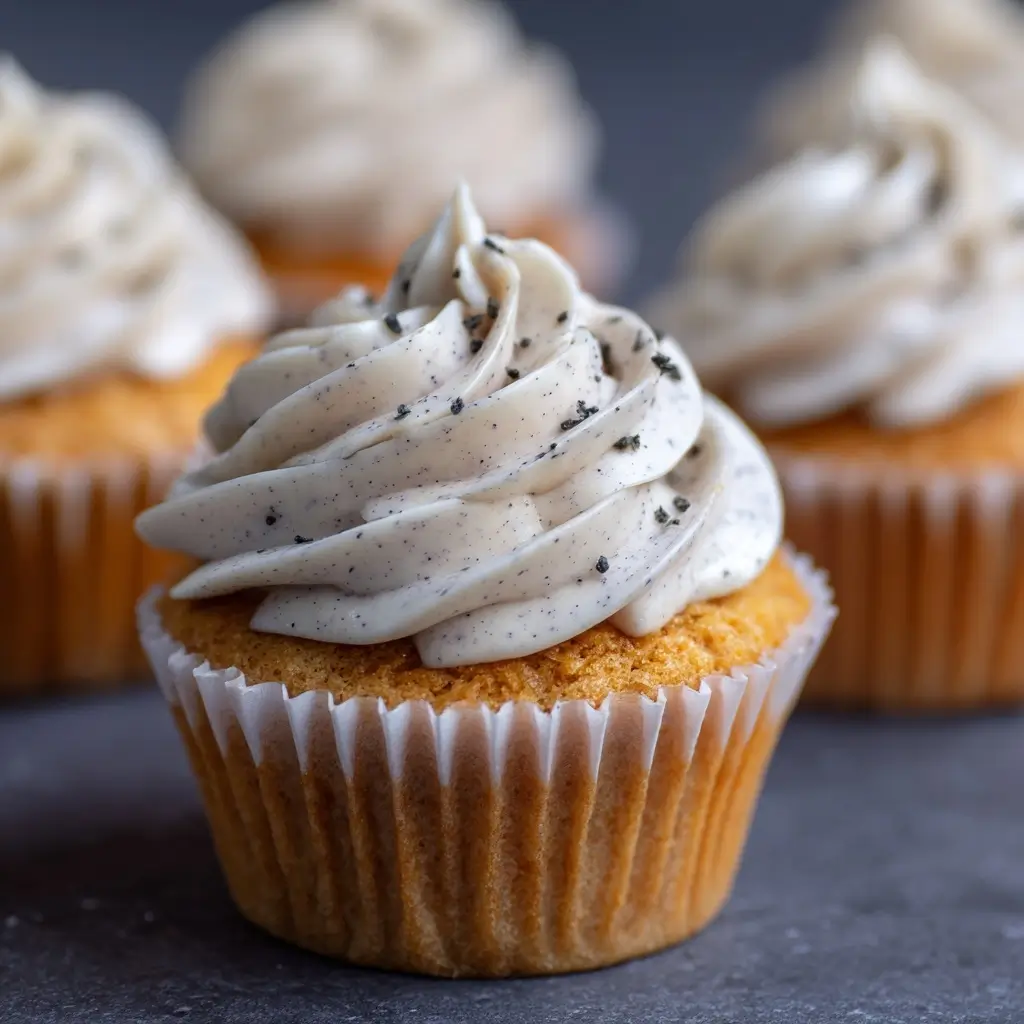
- Frost: Pipe or spread generously. Optional garnish: edible dried bergamot peel, vanilla bean flecks, or candied violet.
FAQ
- Can I use tea bags instead of loose-leaf?
- Yes—but use 3 high-quality pyramid bags (e.g., Fortnum & Mason, Harney) and increase steep time to 20 minutes. Snip open bags and steep leaves directly for better extraction. Avoid standard paper bags (low bergamot oil, added fillers).
- Why does my cupcake taste bitter?
- Bitterness comes from over-steeping tea (>20 min), boiling infusion (degrades oils), or using stale/dusty tea. Also check salt measurement—too little fails to balance tannins.
- My batter looks curdled after adding eggs. Is it ruined?
- No—curdling occurs if eggs are cold or butter is too warm. Keep eggs at 70°F (21°C) and butter at 65°F (18°C). Continue beating—the emulsion will re-form within 30 seconds.
- Can I make these ahead for an event?
- Absolutely. Bake cupcakes 2 days ahead; store unfrosted, airtight at room temp. Frost day-of. Buttercream keeps 1 week refrigerated or 3 months frozen—re-whip before use.
- What’s the best way to store frosted cupcakes?
- Refrigerate uncovered 1 hour to set frosting, then cover loosely with inverted cake dome or ventilated container. Consume within 3 days. Bring to room temp 45 minutes before serving.
- Can I substitute Earl Grey with another tea?
- For similar profile: Lady Grey (bergamot + Seville orange) works beautifully. Avoid green teas (delicate flavors vanish) or smoky lapsang souchong (overpowers vanilla). Jasmine can work but use half quantity—its florals compete.
- Why did my cupcakes sink in the center?
- Common causes: underbaking (check internal temp), opening oven too early, overmixing batter, expired baking powder, or drastic temperature shifts (e.g., placing hot cupcakes on cold marble).
- Is there caffeine in the finished cupcake?
- Yes—approximately 12–15mg per cupcake (1/4 the amount in a cup of tea). Most is retained in the infused milk and butterfat matrix.
- Can I make a sheet cake version?
- Yes! Pour batter into greased 9×13″ pan. Bake at 350°F (177°C) for 32–38 minutes. Check with toothpick at 30 minutes. Cool completely before slicing.
- How do I achieve bakery-perfect swirls?
- Use a large star tip (Wilton 1M). Fill piping bag ⅔ full. Hold vertically, apply steady pressure while swirling upward in concentric circles. Release pressure at peak and lift straight up.
Summary
Earl Grey Vanilla Cupcakes are a masterclass in balanced flavor architecture—where the bright, citrus-floral bergamot of premium loose-leaf tea harmonizes with the deep, creamy warmth of Madagascar vanilla bean, all enrobed in a tender, golden crumb that’s equal parts nostalgic and elevated.
From precise tea infusion and temperature-controlled creaming to mindful resting and strategic baking, every step honors the ingredient’s integrity—transforming humble pantry staples into an unforgettable, aromatic celebration of craft, culture, and conscious indulgence.