Introduction
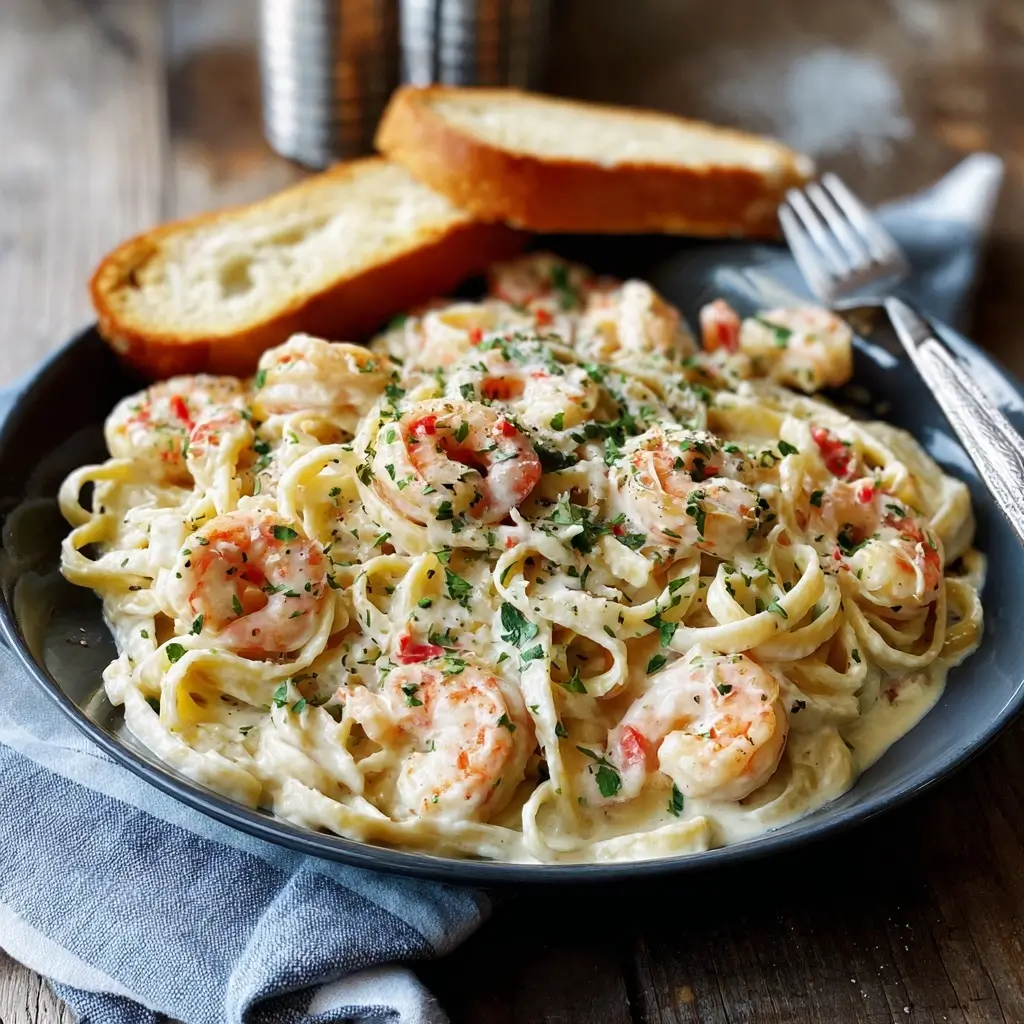
Creamy Shrimp Alfredo is a luxurious, restaurant-quality pasta dish that brings the rich, velvety indulgence of classic Alfredo sauce together with the delicate sweetness of succulent shrimp. This comforting yet elegant meal is perfect for weeknight dinners, date nights at home, or impressing guests at dinner parties. With its silky sauce clinging to tender fettuccine and plump, perfectly cooked shrimp, every bite offers a harmonious blend of textures and flavors. While traditionally associated with Italian-American cuisine, Creamy Shrimp Alfredo has evolved into a modern favorite, thanks to its simplicity and bold taste. Whether you’re a seasoned chef or a beginner in the kitchen, this recipe delivers gourmet results with straightforward techniques and accessible ingredients.
The History
Alfredo sauce traces its origins back to early 20th century Rome, where it was created by Alfredo di Lelio, a restaurateur who wanted to make a simple yet satisfying dish for his pregnant wife who had lost her appetite. His original creation—fettuccine tossed with butter and Parmesan cheese—became known as “Fettuccine all’Alfredo” and quickly gained popularity among tourists and celebrities visiting Italy. Over time, American interpretations transformed the dish, adding heavy cream to create a richer, smoother sauce—what we now commonly refer to as Alfredo sauce. The addition of protein like chicken or shrimp came later, particularly in the United States during the mid-to-late 1900s when fusion dishes became trendy. Creamy Shrimp Alfredo emerged as a popular variation, combining the elegance of seafood with the decadence of creamy pasta. Today, it’s a staple on countless Italian-American menus and a beloved comfort food across North America, often customized with herbs, garlic, and various cheeses for enhanced flavor.
Ingredients Breakdown
To achieve the perfect balance of richness, flavor, and texture in Creamy Shrimp Alfredo, each ingredient plays a crucial role:
- Fettuccine Pasta: A flat, thick noodle that holds the creamy sauce exceptionally well due to its surface area and slight chewiness.
- Shrimp: Medium to large peeled and deveined shrimp are ideal—they cook quickly and add a sweet, delicate seafood element. Fresh or high-quality frozen shrimp work best.
- Heavy Cream: Provides the luxurious base for the sauce, contributing to its thick, velvety consistency.
- Butter: Adds richness and helps emulsify the sauce while enhancing mouthfeel and depth of flavor.
- Garlic: Fresh minced garlic brings aromatic warmth and a subtle pungency that complements both the shrimp and cheese.
- Grated Parmesan Cheese: Authentic Parmigiano-Reggiano melts smoothly into the cream, adding saltiness, umami, and a nutty complexity.
- Salt and Black Pepper: Essential seasonings that enhance all other components without overpowering them.
- Nutmeg (optional): A tiny pinch can elevate the sauce with a warm, slightly sweet undertone that pairs beautifully with dairy.
- White Wine (optional): Deglazes the pan and adds acidity and brightness, balancing the richness of the cream.
- Fresh Parsley: Used as a garnish, it adds a pop of color and a fresh herbal note that cuts through the heaviness.
- Olive Oil: Used for sautéing shrimp and garlic, providing a fruity base layer of flavor.
Using high-quality ingredients—especially freshly grated Parmesan instead of pre-grated versions (which contain anti-caking agents that hinder melting)—makes a significant difference in achieving a smooth, cohesive sauce.
Step-by-Step Recipe
- Prepare Ingredients: Before cooking, peel and devein the shrimp if not already done. Pat them dry with paper towels to ensure proper searing. Mince the garlic, grate the Parmesan cheese, and chop the fresh parsley. Measure out all other ingredients so they’re ready to go—this dish comes together quickly.
- Cook the Pasta: Bring a large pot of salted water to a rolling boil. Add the fettuccine and cook according to package instructions until al dente (usually 8–10 minutes). Reserve about 1 cup of pasta water before draining. Do not rinse the pasta; the starch helps the sauce cling better.
- Sauté the Shrimp: While the pasta cooks, heat 1 tablespoon of olive oil in a large skillet over medium-high heat. Season shrimp lightly with salt and pepper. Add them to the pan in a single layer and cook for 1–2 minutes per side, just until opaque and pink. Avoid overcooking, as shrimp become rubbery. Remove shrimp from the skillet and set aside.
- Build the Sauce Base: In the same skillet, reduce the heat to medium. Add 2 tablespoons of butter and let it melt. Stir in 2–3 cloves of minced garlic and sauté for about 30 seconds until fragrant—do not let it brown. If using white wine, pour in ¼ cup and simmer for 1–2 minutes to reduce and remove raw alcohol taste.
- Add Cream: Slowly pour in 1½ cups of heavy cream, stirring constantly. Let the mixture come to a gentle simmer (not a boil), then lower the heat slightly and let it cook for 3–4 minutes to thicken slightly.
- Incorporate Cheese: Gradually whisk in 1 cup of freshly grated Parmesan cheese, a handful at a time, stirring continuously until fully melted and smooth. The sauce should coat the back of a spoon. If too thick, add a splash of reserved pasta water.
- Season the Sauce: Add salt and pepper to taste. For extra depth, include a small pinch of ground nutmeg. Taste and adjust seasoning—you may want more garlic, cheese, or black pepper.
- Combine Everything: Return the cooked shrimp to the skillet and stir gently to reheat. Add the drained fettuccine directly into the sauce. Toss everything together using tongs or two forks, adding splashes of reserved pasta water as needed to loosen the sauce and help it evenly coat the noodles.
- Final Touches: Cook for an additional 1–2 minutes over low heat to allow flavors to meld. Turn off the heat. Stir in an extra tablespoon of butter for added shine and silkiness (optional).
- Serve Immediately: Plate the pasta, garnish generously with chopped fresh parsley and additional grated Parmesan. Serve hot with garlic bread or a crisp green salad.
Tips
- Don’t Overcook the Shrimp: Shrimp cook very fast—overcooking leads to toughness. They’re done when they turn pink and form a loose “C” shape. A tight “O” means they’re overdone.
- Use Freshly Grated Cheese: Pre-shredded cheese contains cellulose, which prevents smooth melting and can result in a grainy sauce.
- Reserve Pasta Water: The starchy liquid is key for adjusting sauce consistency and helping it adhere to the pasta.
- Low and Slow for the Sauce: Keep the heat moderate when adding cream and cheese to prevent curdling or separation.
- Taste As You Go: Adjust seasoning gradually—especially salt, since Parmesan is naturally salty.
- One-Pan Option: For deeper flavor, cook the shrimp, remove, then use the same pan to build the sauce, allowing the fond (browned bits) to infuse the cream.
- Rest Before Serving: Let the dish sit for 1–2 minutes after tossing—it allows the sauce to settle and cling better to the pasta.
- Keep Warm: Serve immediately; Alfredo sauce thickens as it cools.
Variations and Customizations
Creamy Shrimp Alfredo is highly adaptable to different tastes, dietary needs, and pantry availability:
- Dairy-Free Version: Use coconut cream instead of heavy cream, vegan butter, and nutritional yeast or plant-based Parmesan for a non-dairy alternative.
- Gluten-Free Option: Substitute regular fettuccine with gluten-free pasta made from rice, corn, or quinoa. Ensure all other ingredients are certified gluten-free.
- Add Vegetables: Boost nutrition by incorporating sautéed spinach, sun-dried tomatoes, roasted red peppers, broccoli, mushrooms, or asparagus.
- Protein Swaps: Replace shrimp with grilled chicken, scallops, lobster, crab meat, or even smoked salmon for different gourmet twists.
- Herb Variations: Try basil, chives, thyme, or tarragon for unique flavor profiles. Lemon zest adds brightness and cuts richness.
- Cream Alternatives: Half-and-half or whole milk can be used, but the sauce will be thinner. To compensate, add a slurry of cornstarch and water or increase cheese content.
- Spicy Kick: Add red pepper flakes, cayenne pepper, or a dash of hot sauce for heat lovers.
- Bacon or Pancetta: Crispy bacon bits add smoky saltiness that contrasts beautifully with the creamy sauce and sweet shrimp.
- Luxury Upgrade: Stir in a splash of truffle oil or top with shaved truffles for a decadent twist.
- Pasta Shapes: While fettuccine is traditional, try penne, linguine, tagliatelle, or farfalle for fun variations in texture and sauce retention.
Health Considerations and Nutritional Value
Creamy Shrimp Alfredo is undeniably rich and calorie-dense, but it also offers several nutritional benefits when consumed in moderation:
- Shrimp: Low in calories and fat, high in protein, and rich in selenium, iodine, omega-3 fatty acids, and vitamin B12. It supports heart and brain health.
- Cheese: Provides calcium, protein, and fat-soluble vitamins (A, D, K), though it’s also high in saturated fat and sodium.
- Cream: High in saturated fat and calories, but also contributes vitamin A and energy-dense nutrients. Moderation is key.
- Pasta: A source of carbohydrates for energy. Whole wheat or legume-based pastas increase fiber and protein content.
A typical serving (about 1.5 cups) may contain approximately:
- Calories: 600–750
- Protein: 25–30g
- Fat: 30–40g (mostly saturated)
- Carbohydrates: 50–60g
- Fiber: 2–4g (depending on pasta type)
- Sodium: 800–1200mg (can be reduced by using less salt and cheese)
To make a healthier version:
- Use low-fat milk or evaporated milk instead of heavy cream.
- Opt for light butter or olive oil.
- Choose whole grain or chickpea pasta.
- Add more vegetables to increase fiber and volume without many calories.
- Reduce cheese quantity and enhance flavor with garlic, herbs, and lemon juice.
- Serve in smaller portions alongside a large salad.
Note: Individuals with lactose intolerance, shellfish allergies, or cardiovascular concerns should consume this dish cautiously or modify ingredients accordingly.
Ingredients
- 12 oz (340g) fettuccine pasta
- 1 lb (450g) large shrimp, peeled and deveined
- 2 tbsp olive oil
- 3 cloves garlic, minced
- 2 tbsp unsalted butter (plus 1 tbsp for finishing)
- 1½ cups heavy cream
- 1 cup freshly grated Parmesan cheese (preferably Parmigiano-Reggiano)
- ¼ cup dry white wine (optional)
- Salt and freshly ground black pepper, to taste
- Pinch of ground nutmeg (optional)
- ¼ cup chopped fresh parsley, for garnish
- Red pepper flakes (optional, for heat)
Directions
- Bring a large pot of salted water to a boil. Cook fettuccine according to package directions until al dente. Reserve 1 cup of pasta water, then drain and set aside.
- Heat olive oil in a large skillet over medium-high heat. Season shrimp with salt and pepper. Sear for 1–2 minutes per side until pink and cooked through. Transfer to a plate and set aside.
- In the same skillet, melt 2 tablespoons of butter over medium heat. Add garlic and sauté for 30 seconds until fragrant.
- If using wine, pour it in and simmer for 1–2 minutes until slightly reduced.
- Stir in heavy cream and bring to a gentle simmer. Cook for 3–4 minutes to slightly thicken.
- Gradually whisk in Parmesan cheese until smooth and creamy. Do not boil vigorously.
- Season with salt, pepper, and nutmeg. Adjust to taste.
- Add cooked shrimp back into the sauce and stir to combine.
- Add cooked fettuccine to the skillet. Toss thoroughly, adding reserved pasta water as needed (¼ cup at a time) to reach desired creaminess.
- Remove from heat. Stir in an additional tablespoon of butter for glossiness (optional).
- Garnish with fresh parsley and extra Parmesan. Serve immediately.
FAQ
Can I make Creamy Shrimp Alfredo ahead of time?
It’s best served fresh, as the sauce tends to thicken upon cooling. However, you can prep ingredients in advance—peel shrimp, grate cheese, and measure spices. Reheat gently on the stove with a splash of milk or cream to revive the texture.
Can I freeze Creamy Shrimp Alfredo?
Freezing is not recommended due to the dairy-based sauce, which may separate or become grainy when thawed. The shrimp can also become tough. If necessary, freeze before adding cheese and cream, then finish upon reheating.
Why is my Alfredo sauce grainy?
This usually happens when the cheese is added to a sauce that’s too hot or when pre-shredded cheese (with additives) is used. Always use freshly grated cheese and remove the pan from direct high heat when incorporating it.
Can I use milk instead of heavy cream?
Yes, but the sauce will be much thinner. Simmer longer to reduce, or use a roux (butter + flour) or cornstarch slurry to thicken. Evaporated milk is a good middle-ground substitute.
Is it safe to eat shrimp every day?
While shrimp are nutritious, eating them daily may lead to excessive cholesterol intake for some individuals. Moderation is advised, especially for those with specific health conditions.
How do I store leftovers?
Store in an airtight container in the refrigerator for up to 3 days. Reheat gently on the stove with a bit of milk or broth to restore creaminess. Avoid microwaving at high power to prevent curdling.
Can I use frozen shrimp?
Absolutely. Thaw frozen shrimp in the refrigerator overnight or under cold running water. Pat dry before cooking to ensure proper searing.
What wine pairs well with Creamy Shrimp Alfredo?
A crisp white wine such as Pinot Grigio, Sauvignon Blanc, or unoaked Chardonnay balances the richness. Alternatively, a light-bodied red like Pinot Noir works if you prefer red wine.
Can I make this recipe vegetarian?
Yes! Omit the shrimp and add sautéed mushrooms, artichokes, zucchini, or plant-based shrimp alternatives for a satisfying meatless version.
How do I prevent the sauce from breaking?
Avoid boiling the sauce after adding dairy. Use room-temperature cheese, add it gradually, and keep the heat low. If the sauce separates, whisk in a spoonful of cold cream or a pat of butter to re-emulsify.
Summary
Creamy Shrimp Alfredo combines tender fettuccine, plump shrimp, and a luxuriously smooth Parmesan cream sauce into one unforgettable dish. Easy to customize and perfect for special occasions or cozy nights in, it’s a timeless favorite that satisfies every palate.