Introduction
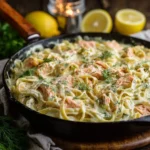
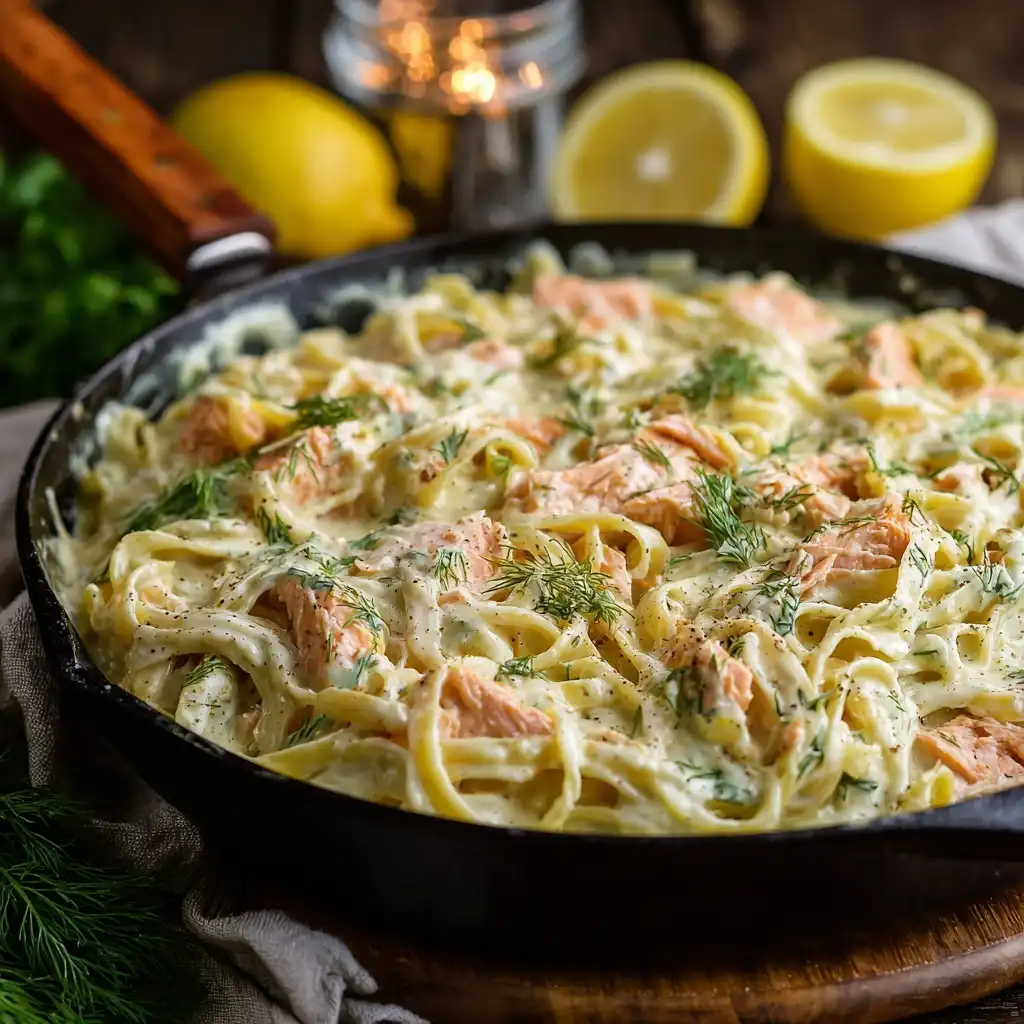
Creamy Lemon Dill Salmon Pasta is a harmonious fusion of elegance and ease—a restaurant-worthy dish that comes together in under 30 minutes with minimal cleanup. This vibrant, nutrient-dense meal marries the rich, buttery tenderness of wild-caught salmon with the bright acidity of fresh lemon, the aromatic earthiness of dill, and a luxuriously smooth, velvety sauce that clings perfectly to al dente pasta. Whether you’re preparing a sophisticated weeknight dinner for two, hosting a relaxed summer brunch, or seeking a protein-packed, omega-3-rich meal that satisfies both taste buds and wellness goals, this recipe delivers on every front. Its balance of zesty, herbal, savory, and creamy notes makes it endlessly adaptable—and irresistibly memorable.
The History
While no single “origin story” exists for Creamy Lemon Dill Salmon Pasta—as it’s a modern culinary composition rather than a centuries-old tradition—its roots trace across multiple foodways. The pairing of salmon and dill has deep Nordic and Eastern European heritage: Scandinavian cooks have long preserved and enhanced salmon with dill-infused gravlaks and dill-heavy sauces, while Russian and Polish home cooks traditionally serve baked or poached salmon with sour cream–dill dressings. Lemon’s role gained prominence in mid-20th-century American and Mediterranean cooking, where chefs began leveraging citrus to cut through richness and add vibrancy. The creamy pasta element reflects the broader evolution of Italian-American cuisine, where classic preparations like fettuccine Alfredo inspired countless riffs incorporating seafood and fresh herbs. By the early 2000s, food blogs and lifestyle magazines popularized “gourmet pantry meals”—quick, whole-food-based dishes featuring high-quality proteins and seasonal accents—and Creamy Lemon Dill Salmon Pasta emerged as a standout favorite: a celebration of clean flavors, conscious sourcing, and effortless sophistication.
Ingredients Breakdown
Every component in this dish plays a purposeful role—not just for flavor, but for texture, nutrition, and balance:
- Salmon fillet (skin-on or skinless): Opt for sustainably sourced, wild-caught Pacific salmon (e.g., sockeye or coho) for superior omega-3 content, firmer texture, and richer flavor. Farmed Atlantic salmon works but may yield a milder taste and higher fat content.
- Pasta: A medium-short shape with surface texture—such as fusilli, casarecce, gemelli, or linguine—holds the creamy sauce best. Whole wheat, lentil-based, or chickpea pasta adds fiber and plant-based protein without compromising mouthfeel.
- Fresh lemon: Both zest and juice are essential. Zest contributes volatile citrus oils for aromatic lift; juice provides acidity to balance fat and enhance salmon’s natural sweetness.
- Fresh dill: Non-negotiable for authenticity. Dried dill lacks complexity and can taste medicinal—fresh dill offers grassy, anise-like brightness that complements salmon uniquely. Use stems when making broth or infusing oil; reserve delicate fronds for finishing.
- Heavy cream or full-fat coconut milk (for dairy-free): Provides luxurious body and silkiness. Lower-fat alternatives (half-and-half, whole milk) can be used—but require careful reduction and thickening (e.g., with a cornstarch slurry) to prevent splitting.
- Aromatics: Shallots (preferred over onions for subtlety), garlic, and a touch of white wine (dry Sauvignon Blanc or Pinot Grigio) build foundational depth. The wine deglazes the pan, lifts fond, and evaporates cleanly—leaving only nuanced acidity and fruitiness.
- Butter & olive oil: A dual-fat approach ensures optimal searing (olive oil’s higher smoke point) and finishing richness (butter’s milk solids add nutty aroma and emulsifying power).
- Grated Parmesan or Pecorino Romano: Adds umami, saltiness, and subtle tang. Vegan options include nutritional yeast + cashew parmesan blend.
- Salt, white pepper, and optional red pepper flakes: White pepper offers warmth without visual distraction; flaky sea salt (like Maldon) is ideal for finishing.
Step-by-Step Recipe
- Prep & Marinate (5 minutes): Pat salmon fillets *very* dry with paper towels. Season both sides generously with kosher salt and freshly ground white pepper. Optional: lightly brush with ½ tsp olive oil and rest 10 minutes at room temperature for even cooking.
- Cook Pasta (10–12 minutes): Bring 4–6 quarts well-salted water (it should taste like the sea) to a rolling boil. Add pasta and cook 1–2 minutes shy of package’s al dente time. Reserve 1 cup starchy cooking water before draining—do *not* rinse.
- Seal the Salmon (4–5 minutes): Heat 1 tbsp olive oil in a large, heavy-bottomed skillet (preferably stainless steel or cast iron) over medium-high heat until shimmering. Place salmon skin-side down (if skin-on) and press gently with a spatula for 15 seconds to prevent curling. Cook undisturbed for 4 minutes (for 1-inch fillets) until skin is ultra-crisp and golden. Flip and cook 1–2 minutes more until center is just opaque and flakes easily. Transfer to a clean plate, loosely tent with foil, and let rest 3 minutes. Flake into large, tender pieces—discard skin if desired.
- Build the Sauce Base (4 minutes): In the same skillet, reduce heat to medium-low. Add 1 tbsp butter and swirl to melt. Add 2 finely minced shallots; sauté 2 minutes until translucent. Add 2 minced garlic cloves and ¼ tsp red pepper flakes; cook 30 seconds until fragrant—do not brown. Pour in ¼ cup dry white wine, scraping vigorously with a wooden spoon to release all browned bits (fond). Simmer 1 minute until alcohol evaporates and liquid reduces by half.
- Emulsify & Enrich (3 minutes): Reduce heat to low. Whisk in ¾ cup cold heavy cream (or full-fat coconut milk), stirring constantly. Let warm gently—do not boil. Stir in 2 tbsp grated Parmesan and 1 tbsp lemon juice. Simmer 1–2 minutes, stirring, until sauce thickens slightly and coats the back of a spoon.
- Combine & Finish (2 minutes): Add drained pasta and reserved starchy water (¼–½ cup, as needed) to the sauce. Toss over low heat for 60–90 seconds until glossy and cohesive. Gently fold in flaked salmon, 1 tbsp lemon zest, and 3 tbsp finely chopped fresh dill. Taste and adjust: more lemon juice for brightness, salt for savoriness, white pepper for warmth, or a final knob of cold butter for sheen.
- Serve Immediately: Portion into warmed bowls. Garnish with extra dill fronds, lemon zest curls, flaky sea salt, and a drizzle of high-quality extra-virgin olive oil or lemon-infused oil.
Tips
- Salmon Perfection Secret: For foolproof flakiness, never overcook. Pull salmon from heat when internal temperature reaches 120–125°F (49–52°C)—carryover cooking will bring it to ideal 125–130°F (52–54°C).
- Sauce Consistency Control: If sauce thickens too much, whisk in hot pasta water 1 tbsp at a time. If too thin, simmer 30–60 seconds longer—or stir in 1 tsp cold butter off-heat to emulsify.
- No-Split Guarantee: Keep cream cold before adding; never let sauce boil after cream is introduced. Acid (lemon juice) and heat are enemies of dairy emulsions—add lemon juice *after* cream warms, and avoid prolonged high heat.
- Dill Timing Matters: Add ⅔ of dill with the salmon; reserve the rest for garnish. Heat dulls dill’s volatile oils—adding at the end preserves its signature freshness.
- Pasta Water Is Liquid Gold: That starchy, salty water isn’t just for thickening—it contains gluten proteins and minerals that help bind fat and acid, creating a stable, velvety sauce matrix.
- Make-Ahead Friendly: Cook pasta and sear salmon up to 1 day ahead. Store separately, refrigerated. Reheat salmon gently in sauce (don’t microwave solo), and finish sauce fresh.
- Skillet Choice: Avoid nonstick for searing salmon—it won’t develop proper fond. Stainless or cast iron creates the flavorful base your sauce depends on.
- Lemon Zest Hack: Use a microplane *before* juicing—the peel is drier and easier to grate, and you’ll get maximum oil yield.
Variations and Customizations
This recipe is a canvas—here’s how to make it your own:
- Dietary Adaptations: Dairy-Free: Swap heavy cream for full-fat coconut milk + 1 tsp cornstarch; use vegan butter and nutritional yeast instead of Parmesan. Gluten-Free: Use certified GF pasta (brown rice, quinoa, or lentil blends hold up best). Keto/Low-Carb: Replace pasta with spiralized zucchini (“zoodles”), shirataki noodles, or roasted cauliflower florets.
- Protein Swaps: Try seared scallops, grilled shrimp, smoked trout (reduce added salt), or pan-seared cod (adjust cook time to 2–3 minutes per side). For vegetarian: marinated and roasted king oyster mushrooms or crispy chickpeas add satisfying umami and texture.
- Herb & Citrus Twists: Substitute tarragon for dill for a French bistro vibe; add orange zest + juice for a Mediterranean twist; fold in chopped chives or parsley for added green complexity.
- Veggie Boosters: Sauté asparagus tips, baby spinach, cherry tomatoes, or artichoke hearts in the skillet before building the sauce. Roasted fennel or sautéed leeks add elegant anise sweetness.
- Sauce Elevations: Infuse cream with a sprig of fresh thyme or dill while warming. Stir in 1 tsp Dijon mustard for tangy depth. Finish with a spoonful of crème fraîche for extra richness and subtle sourness.
- Global Inspirations: Mediterranean: Add kalamata olives, capers, and sun-dried tomatoes. Asian-Fusion: Swap dill for cilantro and mint; use yuzu or lime; add toasted sesame oil and pickled ginger. Scandinavian: Include pickled red onion, juniper berries (crushed), and lingonberry compote on the side.
- Texture Play: Top with toasted pine nuts, crushed walnuts, or panko breadcrumbs sautéed in herb butter for crunch contrast.
Health Considerations and Nutritional Value
Creamy Lemon Dill Salmon Pasta is not only delicious—it’s a powerhouse of functional nutrition. A standard serving (approx. 1.5 cups) delivers approximately:
- Calories: 580–650 kcal (varies by pasta type, cream volume, and salmon portion)
- Protein: 32–40g — primarily from wild salmon (complete amino acid profile) and pasta (especially legume-based options)
- Healthy Fats: 28–35g total, with 3–4g saturated fat — dominated by anti-inflammatory omega-3 fatty acids (EPA/DHA): ~1,800–2,200mg per 5-oz salmon fillet. These support cardiovascular health, brain function, joint mobility, and cellular repair.
- Fiber: 4–8g — significantly increased with whole grain, lentil, or chickpea pasta; supports gut microbiome diversity and glycemic control.
- Vitamins & Minerals: Exceptionally high in vitamin D (nearly 100% DV), selenium (antioxidant enzyme cofactor), B12 (nerve health), potassium (blood pressure regulation), and folate (cellular regeneration). Lemon contributes vitamin C (immune support and iron absorption enhancer); dill offers flavonoids and apigenin (anti-inflammatory compounds).
- Low Glycemic Impact: When made with whole-grain or legume pasta and balanced with healthy fats/protein, this dish promotes steady blood sugar response—ideal for metabolic health.
- Considerations: Those monitoring sodium should opt for low-sodium broth (if using), skip added table salt during cooking, and rely on herbs, lemon, and quality finishing salt. Individuals with dairy sensitivities can fully adapt using plant-based fats and thickeners without sacrificing creaminess or nutrition.
This dish exemplifies the “nutrient density per calorie” principle—every bite delivers measurable bioactive benefits, making it as nourishing as it is indulgent.
Ingredients
- 1 lb (450g) high-quality wild-caught salmon fillet, skin-on or skinless, pin bones removed
- 12 oz (340g) pasta (fusilli, linguine, or casarecce recommended)
- 3 tbsp extra-virgin olive oil, divided
- 2 tbsp unsalted butter, divided
- 2 medium shallots, finely minced (about ½ cup)
- 4 garlic cloves, finely minced
- ¼ tsp red pepper flakes (optional, for gentle heat)
- ¼ cup dry white wine (Sauvignon Blanc or Pinot Grigio)
- ¾ cup cold heavy cream (or full-fat canned coconut milk for dairy-free)
- ¼ cup grated Parmesan or Pecorino Romano cheese (or vegan alternative)
- Zest of 1 large lemon + 3 tbsp fresh lemon juice (about 1½ lemons)
- ⅓ cup fresh dill fronds, finely chopped (plus extra for garnish)
- Kosher salt and freshly ground white pepper, to taste
- Flaky sea salt (e.g., Maldon), for finishing
- Optional garnishes: lemon wedges, extra-virgin olive oil, toasted pine nuts
Directions
- Bring a large pot of water to a rolling boil. Add 2 tbsp kosher salt. Cook pasta according to package instructions, reducing time by 1–2 minutes. Reserve 1 cup starchy pasta water, then drain pasta—do not rinse.
- Pat salmon fillets extremely dry with paper towels. Season both sides generously with salt and white pepper. Heat 1 tbsp olive oil in a large stainless steel or cast iron skillet over medium-high heat until shimmering. Carefully place salmon skin-side down (if skin-on) and press gently for 15 seconds. Cook undisturbed for 4 minutes until skin is golden and crisp. Flip and cook 1–2 minutes more until just opaque. Transfer to a plate, tent loosely with foil, and rest 3 minutes. Flake into large pieces, discarding skin if desired.
- In the same skillet, reduce heat to medium-low. Add 1 tbsp butter and swirl until melted. Add shallots and sauté 2 minutes until soft and translucent. Add garlic and red pepper flakes; cook 30 seconds until fragrant.
- Pour in white wine, scraping bottom thoroughly to lift all browned bits. Simmer 1 minute until reduced by half and alcohol evaporates.
- Reduce heat to low. Whisk in cold heavy cream and Parmesan. Stir constantly until warmed through and slightly thickened (1–2 minutes)—do not boil.
- Add drained pasta and ½ cup reserved pasta water. Toss over low heat 60–90 seconds until sauce is glossy and clings to noodles.
- Gently fold in flaked salmon, lemon zest, lemon juice, and 2 tbsp chopped dill. Taste and adjust seasoning—add more lemon juice for brightness, salt for balance, or white pepper for warmth.
- Remove from heat. Stir in remaining 1 tbsp butter (for extra richness and shine) and remaining 1 tbsp dill.
- Divide among warmed bowls. Garnish with flaky sea salt, extra dill, lemon zest curls, and a drizzle of olive oil. Serve immediately.
FAQ
- Can I use frozen salmon?
- Yes—but thaw it properly: refrigerate overnight or submerge sealed fillets in cold water for 30–45 minutes. Pat *extremely* dry before seasoning and searing—excess moisture causes steaming, not crisping.
- Why does my sauce break or look curdled?
- Most often due to overheating after adding cream or adding acidic lemon juice too early. Always add lemon juice *after* cream warms, and keep heat low. If separation occurs, remove from heat, whisk in 1 tsp cold butter or 1 tbsp cold pasta water, and gently re-emulsify off-heat.
- Can I make this ahead for meal prep?
- Absolutely. Cook pasta and sear salmon separately up to 3 days ahead. Store chilled in airtight containers. To reheat: warm salmon gently in a skillet with 1 tbsp cream and a splash of pasta water; toss with freshly warmed pasta and finish with fresh dill and lemon.
- Is there a way to reduce the calorie count without losing creaminess?
- Yes. Substitute half the cream with whole milk + 1 tsp cornstarch (whisked into milk before adding); use less butter (replace with olive oil); choose leaner salmon cuts; increase non-starchy vegetables (spinach, asparagus, zucchini); and opt for high-fiber pasta.
- What wine pairs best with this dish?
- A crisp, mineral-driven white—think Chablis, Albariño, or Grüner Veltliner. Their bright acidity mirrors the lemon, while subtle stone-fruit notes complement the salmon’s richness without overwhelming the dill.
- My dill tastes bitter—what went wrong?
- Fresh dill turns bitter when overcooked or exposed to prolonged high heat. Always add most dill at the very end—just before serving—and use only tender, bright green fronds (avoid woody stems or yellowing leaves).
- Can I freeze leftovers?
- Not recommended. Cream-based sauces separate upon freezing/thawing, and salmon becomes mealy. Best enjoyed fresh—but leftovers keep beautifully refrigerated for up to 2 days.
- How do I know when salmon is perfectly cooked?
- Use a thermometer: target 125°F (52°C) at the thickest part. Visually, the flesh should be opaque pink with slight translucence near the bone, and separate easily into flakes with gentle pressure. It will continue cooking 5°F as it rests.
Summary
Creamy Lemon Dill Salmon Pasta is a masterclass in balanced, elegant home cooking—where vibrant citrus, aromatic dill, tender wild salmon, and velvety sauce unite over perfectly textured pasta in under 30 minutes.
Nutritionally profound and endlessly customizable, it’s a dish that nourishes the body, delights the senses, and adapts seamlessly to dietary needs, seasonal produce, and global flavor inspirations—proving that wholesome, restaurant-caliber meals are always within reach.