Introduction
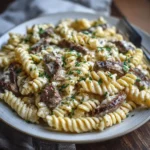
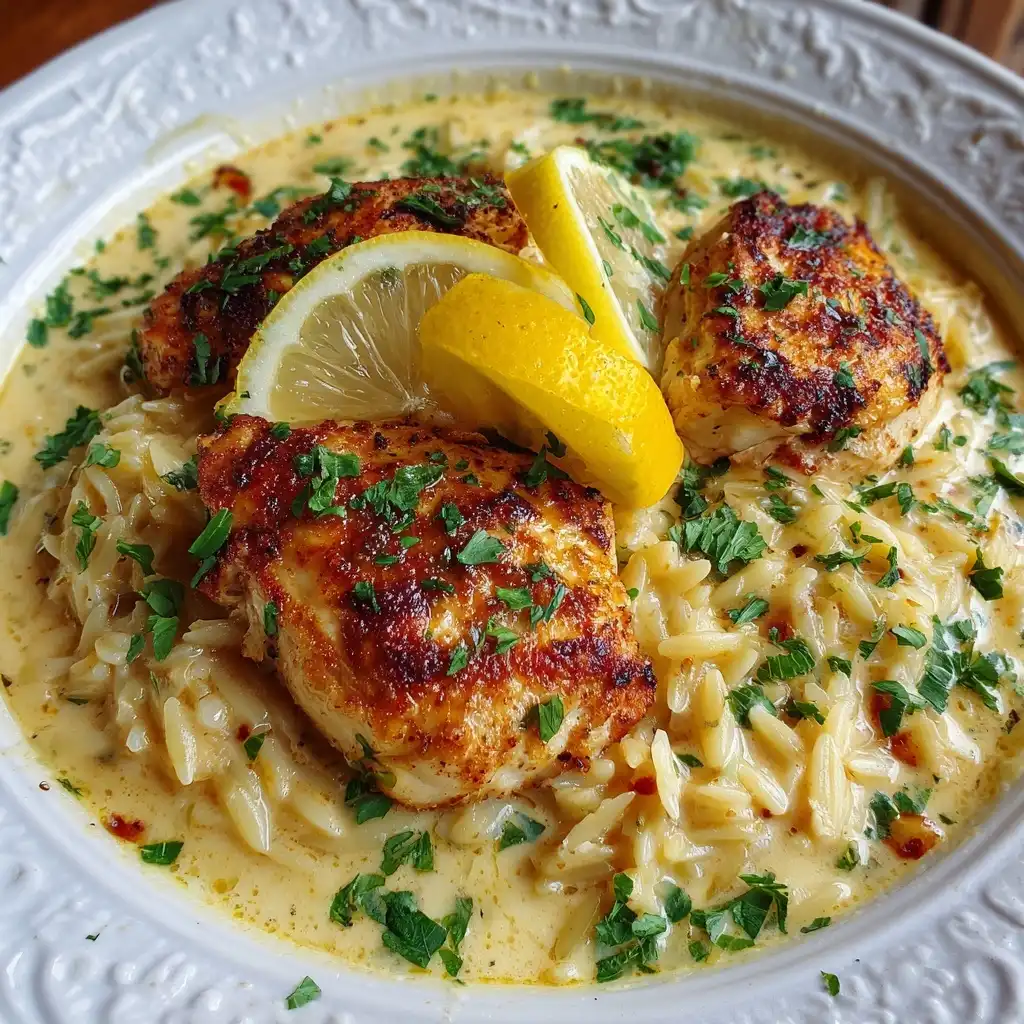
Creamy Lemon Chicken Orzo is a vibrant, restaurant-worthy dish that effortlessly marries bright citrus notes with rich, velvety comfort. It’s the kind of meal that feels both indulgent and nourishing—tender pan-seared chicken nestled in a silky, lemon-infused orzo pasta bathed in a luscious, herb-flecked sauce. With its harmonious balance of tang, creaminess, umami, and subtle herbal freshness, this dish transcends weeknight simplicity without demanding gourmet technique. Whether you’re cooking for a cozy family dinner, prepping a make-ahead lunch, or impressing guests with minimal effort, Creamy Lemon Chicken Orzo delivers extraordinary flavor, elegant aroma, and satisfying texture—all in one pot (or skillet). Its adaptability, pantry-friendly ingredients, and forgiving preparation make it a beloved staple across kitchens from coastal California to suburban Ohio—and now, quite possibly, yours.
The History
While no single origin story anchors Creamy Lemon Chicken Orzo in ancient culinary texts, its evolution reflects broader trends in modern American and Mediterranean-inspired home cooking over the past four decades. Orzo—a rice-shaped pasta traditionally used in Greek avgolemono soup and Turkish pilafs—gained widespread popularity in U.S. supermarkets in the 1980s and ’90s as consumers sought versatile, quick-cooking grains and pastas. Simultaneously, the “lemon chicken” motif surged in mid-century American-Italian and California cuisine, inspired by classic Italian pollo al limone and Levantine preparations like Lebanese chicken bil laymoun. The creamy iteration—often enriched with heavy cream, mascarpone, or crème fraîche—emerged alongside the rise of food media in the 2000s, championed by chefs like Ina Garten (“The Barefoot Contessa”) and bloggers emphasizing approachable elegance. Food Network specials, Martha Stewart Living features, and viral Pinterest recipes in the early 2010s cemented the dish’s status: a symbolic bridge between rustic Mediterranean soul food and contemporary American comfort cooking. Today, it appears on menus from Brooklyn bistros to Portland farm-to-table cafés—not as fusion, but as an organic, globally fluent expression of how home cooks reinterpret tradition using accessible ingredients and intuitive technique.
Ingredients Breakdown
Every element in Creamy Lemon Chicken Orzo plays a deliberate role—no filler, no afterthought. Below is a meticulous analysis of each component, including function, sourcing guidance, and why substitutions matter:
- Chicken Breasts or Thighs (boneless, skinless): Provides lean protein and a neutral canvas for lemon-herb infusion. Breasts yield firmer texture and milder flavor; thighs offer superior juiciness, richer mouthfeel, and greater forgiveness during cooking—ideal for beginners. Always pat dry before seasoning to ensure proper sear and Maillard development.
- Orzo Pasta: Not rice—but tiny, toasted semolina pasta. Its starch content is critical: when cooked directly in the sauce (a “risotto-style” method), orzo releases just enough amylose to thicken the liquid into a cohesive, spoon-coating emulsion. Opt for bronze-die extruded orzo for superior sauce adhesion; avoid “instant” or pre-cooked varieties.
- Fresh Lemons: Non-negotiable. Bottled juice lacks volatile citrus oils essential for aromatic lift and balanced acidity. Use both zest (bright top notes) and juice (tart backbone). A microplane grater captures aromatic oils without bitter pith; roll lemons on the counter before zesting to maximize yield.
- Garlic & Shallots: The aromatic foundation. Shallots lend delicate sweetness and nuanced allium depth distinct from onions; garlic adds savory warmth. Minced—not powdered—to preserve enzymatic brightness and prevent bitterness from overheating.
- Dry White Wine (e.g., Sauvignon Blanc or Pinot Grigio): Adds complexity, acidity, and subtle fruitiness while deglazing fond. Alcohol evaporates, leaving only flavor. Substitute with additional low-sodium chicken broth + ½ tsp white wine vinegar if avoiding alcohol—but don’t skip the acid component.
- Low-Sodium Chicken Broth: Builds savory depth (umami) without oversalting. Homemade or high-quality store-bought preferred; avoid bouillon cubes with excessive MSG or fillers that cloud flavor clarity.
- Heavy Cream (or Full-Fat Coconut Milk for dairy-free): Delivers unctuous body and luxurious mouthfeel. Fat content is key: lower-fat alternatives (half-and-half, whole milk) risk curdling and lack richness. For vegan versions, use chilled full-fat coconut milk (stirred well) and add ¼ tsp xanthan gum for stability.
- Grated Parmesan Cheese (freshly grated): Adds salty, nutty, umami punch and helps emulsify the sauce. Pre-grated cheese contains anti-caking agents (e.g., cellulose) that inhibit melting and create graininess. Use Parmigiano-Reggiano DOP for authenticity and crystalline complexity.
- Fresh Herbs (Parsley, Dill, or Basil): Added at the end to preserve volatile oils and color. Flat-leaf parsley offers clean, grassy finish; dill enhances lemon affinity; basil introduces summery sweetness. Never substitute dried herbs here—they lack vibrancy and introduce dusty notes.
- Olive Oil & Unsalted Butter: Olive oil for high-heat searing (high smoke point); butter added at the end for aromatic richness and silkiness. Clarified butter (ghee) works for higher heat tolerance without browning.
- Salt & Freshly Cracked Black Pepper: Sea salt or kosher salt for even dissolution; freshly ground pepper for floral, spicy top notes. Season in layers—not just at the end—for dimensional flavor.
Step-by-Step Recipe
- Prep & Marinate (10 minutes): Slice chicken into uniform ½-inch thick cutlets (pound gently if uneven). Pat *extremely* dry. Toss with 1 tbsp olive oil, 1 tsp lemon zest, ½ tsp salt, and ¼ tsp black pepper. Let rest at room temperature 10–15 minutes for even cooking.
- Sear the Chicken (6–7 minutes): Heat 1.5 tbsp olive oil in a large, heavy-bottomed skillet or Dutch oven over medium-high heat until shimmering. Add chicken in a single layer—do not crowd. Sear undisturbed 3–4 minutes until deeply golden and easily releases from pan. Flip; cook 2–3 minutes more until internal temp reaches 155°F (it will carryover to 165°F). Transfer to a plate, tent loosely with foil.
- Sauté Aromatics (3 minutes): Reduce heat to medium. Add 1 tbsp unsalted butter. Once foaming subsides, add 3 minced shallots and 3 garlic cloves. Sauté 1–2 minutes until fragrant and softened—but *not browned*. Stir constantly to prevent scorching.
- Toast the Orzo (2 minutes): Stir in 1 cup orzo. Cook, stirring continuously, 1.5–2 minutes until grains turn pale gold and smell nutty. This step deepens flavor and prevents mushiness by sealing starch.
- Deglaze & Simmer Base (5 minutes): Pour in ½ cup dry white wine, scraping vigorously with a wooden spoon to lift all golden fond. Simmer 1 minute until alcohol evaporates. Add 2.5 cups warm low-sodium chicken broth, ½ tsp salt, and a pinch of red pepper flakes (optional). Bring to gentle simmer.
- Simmer Orzo (12–14 minutes): Reduce heat to low-medium. Cover partially (leave 1-inch gap). Simmer, stirring every 3 minutes, until orzo is al dente and liquid is mostly absorbed (~80% gone), about 12 minutes. Sauce should be loose but cohesive—not watery or stiff.
- Incorporate Chicken & Lemon (4 minutes): Slice rested chicken into thin strips or bite-sized pieces. Gently fold into orzo along with any accumulated juices. Stir in ¼ cup fresh lemon juice, 2 tbsp cold butter, and ½ cup grated Parmesan. Cook 1–2 minutes until butter melts and sauce begins to emulsify.
- Finish & Rest (3 minutes): Remove from heat. Stir in ⅓ cup heavy cream, remaining 1 tbsp lemon zest, and ¼ cup chopped fresh parsley. Taste and adjust: more lemon for brightness, salt for balance, black pepper for warmth. Let rest uncovered 2–3 minutes—the sauce will thicken slightly and flavors will marry.
- Plate & Garnish: Spoon into warmed shallow bowls. Top with extra lemon zest, a drizzle of high-quality extra-virgin olive oil, flaky sea salt (like Maldon), and additional parsley or dill. Serve immediately.
Tips
- Temperature Control Is Everything: High heat for searing, medium for aromatics, low-medium for simmering—never rush the orzo. Boiling causes starch explosion and gluey texture.
- Warm Your Broth: Cold broth shocks the pan, lowers temperature, and stalls starch release. Heat broth in a small saucepan or microwave until steaming (not boiling) before adding.
- Resist Over-Stirring: Stir just enough to prevent sticking—excessive agitation breaks down orzo and releases too much starch, leading to gummy consistency.
- Acid Last, Acid Always: Lemon juice added too early can “cook” herbs and mute brightness. Always stir in juice *after* orzo is tender and *just before* finishing.
- Cheese Timing Matters: Add Parmesan off-heat or at lowest simmer. High heat causes separation and graininess. For ultra-smooth sauce, whisk cheese into a slurry with 1 tbsp cold cream first.
- Rest Before Serving: Allowing the dish to sit 2–3 minutes off-heat lets residual heat distribute evenly, thickens sauce naturally, and allows flavors to bloom.
- Skillet Choice Counts: Use stainless steel or enameled cast iron—not nonstick—for optimal fond development during searing. Nonstick inhibits caramelization crucial for depth.
- Double the Recipe? Double the Pan: Avoid overcrowding. Use a 5–6 quart Dutch oven for doubled batches—never try to scale up in the same pan.
- Leftover Magic: Reheat gently with a splash of broth or cream. Stir constantly over low heat—never microwave uncovered, which dries out chicken and splits sauce.
- Taste Like a Chef: Season in stages: salt the chicken, season the broth, adjust final balance. Your tongue is your best tool—taste after each major step.
Variations and Customizations
This recipe is a master template—infinitely adaptable to seasons, dietary needs, pantries, and cravings. Explore these thoughtfully curated variations:
- Mediterranean Twist: Add ⅓ cup chopped sun-dried tomatoes (oil-packed, drained), ¼ cup kalamata olives, and 2 tbsp crumbled feta in the final step. Swap dill for oregano.
- Spring Vegetable Edition: Fold in 1 cup blanched asparagus tips, ½ cup thawed peas, and ¼ cup sautéed leeks with the chicken. Finish with chives and lemon thyme.
- Spicy Harissa Infusion: Whisk 1 tbsp harissa paste into warm broth before adding to orzo. Garnish with cilantro and a dollop of labneh.
- Herb-Forward “Green Goddess”: Blend ½ cup parsley, ¼ cup basil, 2 tbsp mint, 1 garlic clove, 2 tbsp lemon juice, and 3 tbsp olive oil into a vibrant pesto. Swirl in at the end instead of plain herbs.
- Seafood Upgrade: Replace chicken with 12 oz wild-caught shrimp (peeled, deveined) and 6 oz scallops. Sear separately; add at the very end with lemon juice to avoid overcooking.
- Whole30 / Paleo Version: Omit orzo; substitute with 1.5 cups cauliflower rice (sautéed 5 min first). Use coconut milk + 1 tsp arrowroot slurry instead of cream. Skip cheese; boost umami with nutritional yeast or miso paste.
- Vegan Wonder: Use pressed & marinated extra-firm tofu or chickpeas (roasted for texture). Replace broth with vegetable stock, cream with coconut milk + ½ tsp lemon zest, and cheese with cashew “parm” (soaked cashews + nutritional yeast + garlic powder + lemon juice, blended smooth).
- Kid-Friendly Mild: Omit garlic and red pepper flakes. Add 2 tbsp cream cheese for extra silkiness and mild tang. Stir in ¼ cup shredded mozzarella at the end for melty appeal.
- Meal-Prep Power Bowls: Divide into 4 airtight containers. Top each with 2 tbsp pesto, 1 tbsp toasted pine nuts, and lemon wedges. Reheat individual portions with 1 tsp water per container.
- Brunch Reinvention: Add 4 poached eggs on top. Sprinkle with everything bagel seasoning and microgreens. Serve with grilled sourdough.
Health Considerations and Nutritional Value
A single 1.5-cup serving (approx. 520g) of Creamy Lemon Chicken Orzo provides a balanced macronutrient profile and meaningful micronutrients—when prepared mindfully. Here’s a detailed nutritional snapshot (based on USDA data and standard prep):
- Calories: ~580 kcal — substantial yet satiating, ideal for active individuals or hearty lunch portions.
- Protein: ~38g — complete protein from chicken and Parmesan supports muscle maintenance, satiety, and metabolic health.
- Carbohydrates: ~42g (of which ~2g fiber) — primarily complex carbs from orzo; pairing with lemon and fat slows glucose response.
- Fat: ~28g (16g saturated) — largely from cream and cheese. Opt for grass-fed dairy or reduce cream to 2 tbsp + add 1 tbsp avocado oil for heart-healthier monounsaturated fats.
- Vitamin C: ~45mg (50% DV) — from fresh lemon juice and zest, supporting immunity and iron absorption.
- Calcium & Vitamin D: ~220mg calcium (22% DV), plus trace vitamin D from fortified dairy — vital for bone health.
- Potassium & B Vitamins: Moderate levels from chicken, broth, and herbs aid electrolyte balance and energy metabolism.
Considerations for Specific Diets:
- Gluten Sensitivity: Orzo is wheat-based. Use certified gluten-free orzo (made from brown rice, corn, or quinoa) — note texture may differ slightly.
- Lactose Intolerance: Heavy cream contains minimal lactose (<2g/serving), often tolerable. For strict avoidance, use lactose-free cream or coconut milk.
- Low-Sodium Needs: Use no-salt-added broth, omit added salt, rely on lemon, herbs, and garlic for flavor. Rinsing canned broth isn’t effective—choose labeled “low sodium” or homemade.
- Diabetes-Friendly Tweaks: Reduce orzo to ¾ cup; increase non-starchy veggies (spinach, zucchini ribbons) by 1 cup. Use lemon zest liberally to enhance perception of sweetness without sugar.
- Weight Management: Prioritize portion control (1 cup max), use ½ cup cream + 2 tbsp Greek yogurt (stirred in at end), and load up on volume-rich vegetables.
- Pregnancy & Food Safety: Ensure chicken reaches 165°F internally. Use pasteurized dairy and avoid raw sprouts or unpasteurized cheeses if substituting.
This dish aligns beautifully with Mediterranean, DASH, and anti-inflammatory eating patterns—especially when centered around whole ingredients, vibrant produce, and mindful preparation.
Ingredients
- 1.5 lbs boneless, skinless chicken breasts or thighs, sliced into ½-inch cutlets
- 1 tbsp extra-virgin olive oil (for marinating)
- 1 tsp finely grated lemon zest (from ~1 large lemon)
- ½ tsp kosher salt (plus more to taste)
- ¼ tsp freshly cracked black pepper
- 1.5 tbsp extra-virgin olive oil (for searing)
- 1 tbsp unsalted butter
- 3 medium shallots, finely minced (~½ cup)
- 3 garlic cloves, minced
- 1 cup orzo pasta (regular or gluten-free)
- ½ cup dry white wine (Sauvignon Blanc or Pinot Grigio)
- 2.5 cups warm low-sodium chicken broth
- ¼ tsp red pepper flakes (optional)
- ¼ cup fresh lemon juice (from ~1.5 lemons)
- 2 tbsp cold unsalted butter
- ½ cup freshly grated Parmesan cheese (Parmigiano-Reggiano preferred)
- ¼ cup heavy cream (or full-fat coconut milk)
- ⅓ cup fresh flat-leaf parsley, finely chopped
- Flaky sea salt and extra lemon zest for garnish
- High-quality extra-virgin olive oil for finishing drizzle
Directions
- Pat chicken cutlets extremely dry with paper towels. In a bowl, combine chicken with 1 tbsp olive oil, 1 tsp lemon zest, ½ tsp salt, and ¼ tsp black pepper. Toss to coat evenly. Let sit at room temperature 10–15 minutes.
- Heat 1.5 tbsp olive oil in a large heavy-bottomed skillet or Dutch oven over medium-high heat until shimmering. Add chicken in a single layer without crowding. Sear undisturbed 3–4 minutes until deeply golden. Flip and cook 2–3 minutes more until internal temperature reaches 155°F. Transfer to a plate, tent loosely with foil, and rest.
- Reduce heat to medium. Add 1 tbsp butter. Once melted and foaming, add shallots and garlic. Sauté 1–2 minutes until soft and fragrant—do not brown.
- Add orzo. Toast, stirring constantly, 1.5–2 minutes until pale golden and nutty smelling.
- Pour in wine, scraping bottom thoroughly to release all browned bits. Simmer 1 minute until alcohol evaporates.
- Stir in warm broth, ½ tsp salt, and red pepper flakes (if using). Bring to a gentle simmer.
- Cover partially and reduce heat to low-medium. Simmer 12–14 minutes, stirring every 3 minutes, until orzo is al dente and ~80% of liquid is absorbed.
- Slice rested chicken into thin strips or bite-sized pieces. Gently fold into orzo with any juices. Stir in lemon juice, 2 tbsp cold butter, and ½ cup Parmesan. Cook 1–2 minutes until butter melts and sauce begins to thicken.
- Remove from heat. Stir in heavy cream, remaining 1 tbsp lemon zest, and parsley. Taste and adjust seasoning with salt, pepper, or extra lemon juice.
- Let rest 2–3 minutes. Serve warm in shallow bowls, garnished with flaky salt, extra lemon zest, a drizzle of olive oil, and additional parsley.
FAQ
- Can I make this ahead of time?
- Yes—with caveats. Prepare components separately up to 2 days ahead: cook chicken, cool, and refrigerate; cook orzo al dente, rinse under cold water, toss with 1 tsp olive oil, and chill. Reheat chicken gently in broth; warm orzo in skillet with splash of broth and cream, then combine. Avoid fully assembling and refrigerating—it becomes gummy.
- Why does my sauce break or look greasy?
- Common causes: adding cream or cheese while sauce is boiling hot (curdle risk); using low-fat dairy (insufficient fat to emulsify); or over-reducing before adding dairy. Fix: remove from heat, whisk in 1 tsp cold butter or cream off-heat, then gently re-warm.
- Can I freeze Creamy Lemon Chicken Orzo?
- Not recommended. Dairy-based sauces separate upon freezing/thawing, and orzo becomes excessively soft and mushy. Freeze *uncooked* components instead: portion raw chicken, pre-measure dry orzo/aromatics, and freeze broth in ice cube trays.
- What’s the best wine to cook with?
- Choose a dry, high-acid white you’d drink: Sauvignon Blanc (crisp, citrusy), Pinot Grigio (light, neutral), or unoaked Chardonnay. Avoid “cooking wine”—it’s salt-laden and bitter. If skipping wine, use broth + 1 tsp white vinegar + ½ tsp sugar to mimic brightness and depth.
- My orzo turned out mushy—what went wrong?
- Overcooking, overcrowded pan (steams instead of toasts), cold broth (shocks starch), or stirring too aggressively. Next time: toast longer, use warm broth, stir minimally, and check doneness at 12 minutes.
- Is orzo healthier than rice?
- Nutritionally similar in calories/carbs, but orzo (semolina wheat) offers more protein and B vitamins than white rice. Brown rice has more fiber; whole-wheat orzo offers comparable fiber. Choose based on gluten tolerance and dietary goals—not inherent “healthiness.”
- Can I use pre-cooked chicken?
- Absolutely—great for leftovers! Add shredded rotisserie or grilled chicken in Step 8 (with lemon juice) and reduce simmer time to 1 minute just to warm through. Avoid boiling, which dries out meat.
- How do I reheat leftovers without drying them out?
- Stovetop is best: Place in skillet with 2–3 tbsp broth or water. Cover and warm over low heat 4–5 minutes, stirring gently. Add a splash of cream or lemon juice before serving to refresh.
- What sides pair well with this dish?
- It’s a complete meal—but complements simple green salads (arugula + lemon vinaigrette), roasted asparagus, garlicky sautéed spinach, crusty bread for sopping, or a chilled cucumber-dill yogurt salad.
- Can I cook this in an Instant Pot?
- Yes—with adjustments. Use Sauté mode for searing and aromatics. Add orzo, broth, wine, and seasonings. Pressure cook on High for 5 minutes, natural release 5 minutes. Stir in chicken, lemon, cream, cheese, and herbs. Use “Keep Warm” to meld flavors 5 minutes before serving.
Summary
Creamy Lemon Chicken Orzo is a luminous, deeply comforting dish where zesty lemon, tender chicken, and silken orzo unite in a velvety, herb-kissed sauce—crafted for both ease and elegance.
With smart techniques, flexible variations, and thoughtful nutrition in mind, it transforms humble pantry staples into a memorable, restaurant-caliber experience that nourishes the body and uplifts the spirit—every single time.