Introduction
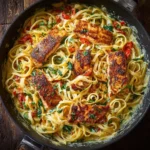
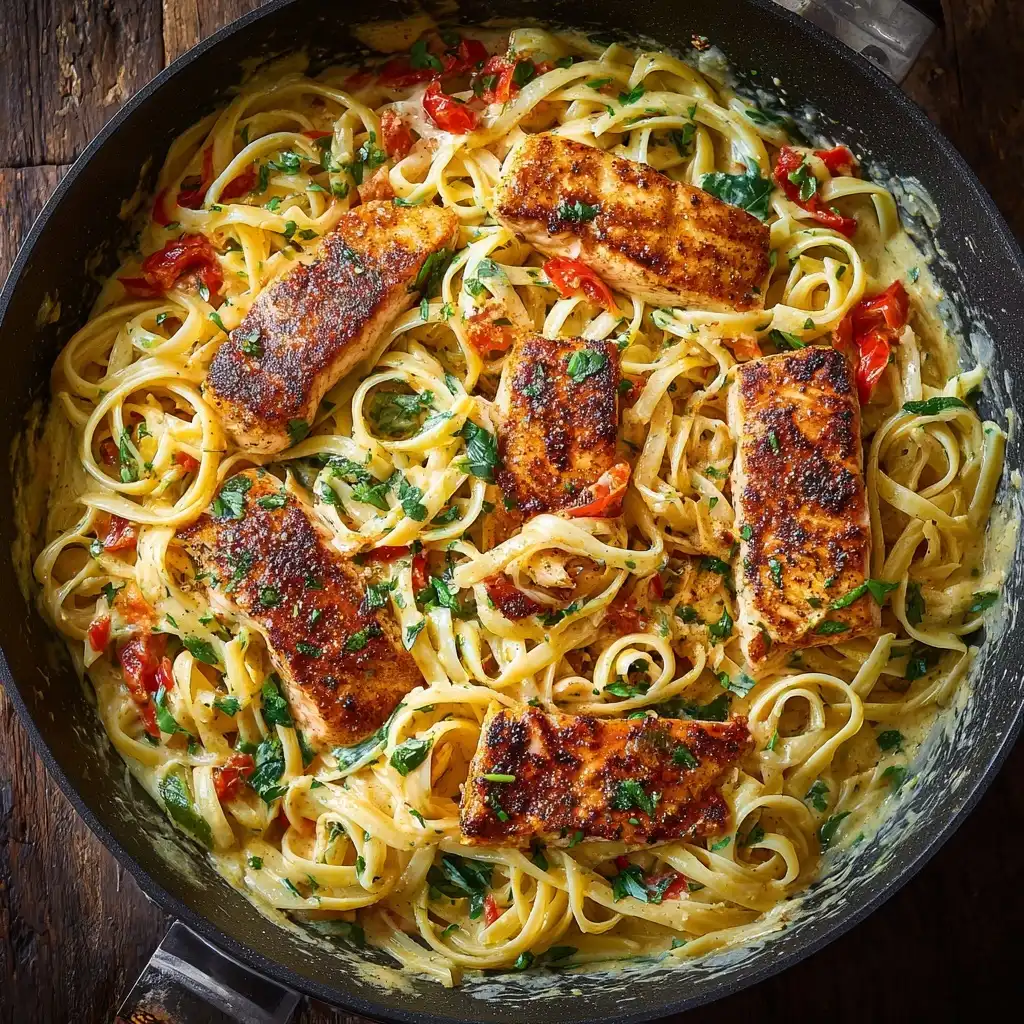
Creamy Cajun Salmon Pasta is a vibrant, restaurant-worthy dish that marries the bold, smoky heat of Cajun seasoning with the luxurious richness of a velvety cream sauce—and the delicate, nutrient-dense elegance of wild-caught salmon. This one-pan (or minimal-pan) wonder delivers layers of flavor and texture in every bite: tender-crisp asparagus or spinach, al dente pasta ribbons like linguine or fettuccine, flaky salmon fillets with golden-edged sear, and a luscious, herb-kissed sauce that clings beautifully to every strand. Whether you’re cooking for a weeknight dinner, impressing guests at a casual gathering, or seeking a protein-packed, omega-3-rich meal that feels indulgent yet nourishing, this dish checks every box—without requiring culinary expertise. Its balance of spice, creaminess, umami, and freshness makes it endlessly adaptable, deeply satisfying, and consistently memorable.
The History
The origins of Creamy Cajun Salmon Pasta lie at the crossroads of regional American cuisine and modern fusion cooking. Cajun seasoning itself traces back to 18th-century Acadian settlers in Louisiana—French-speaking exiles from Canada who adapted their culinary traditions using indigenous and colonial pantry staples: paprika, cayenne, garlic powder, onion powder, oregano, thyme, black pepper, and salt. Over centuries, this robust spice blend evolved into the now-iconic commercial blends popularized in the mid-to-late 20th century.
Salmon, meanwhile, has long been celebrated on both coasts—the Pacific Northwest for its wild King and Sockeye, and the Atlantic for farmed and seasonal runs—but didn’t become widely accessible and affordable across the U.S. until refrigeration, air freight, and aquaculture advances of the 1970s–1990s. Pasta—particularly creamy, cheese-enriched preparations—has Italian roots but was enthusiastically adopted and reinvented in American home kitchens beginning in the postwar era, especially with the rise of convenience ingredients like heavy cream, cream cheese, and pre-grated Parmesan.
Creamy Cajun Salmon Pasta emerged organically in the early 2000s within food blogs and cable cooking shows as chefs and home cooks began experimenting with “Cajun” as a versatile flavor profile—not just for blackened fish or jambalaya, but as a dynamic rub for proteins paired with rich, European-inspired sauces. Its popularity surged alongside the farm-to-table movement, the wellness trend emphasizing omega-3s, and the demand for 30-minute meals that don’t sacrifice depth or sophistication. Today, it stands as a hallmark of contemporary American comfort food: rooted in tradition, elevated by technique, and endlessly customizable to dietary preferences and seasonal availability.
Ingredients Breakdown
Every element in Creamy Cajun Salmon Pasta plays a distinct and essential role—no ingredient is merely filler. Understanding *why* each is included deepens your mastery of the dish:
- Salmon Fillets (skin-on or skinless): The star protein—rich in anti-inflammatory omega-3 fatty acids (EPA & DHA), high-quality protein, vitamin D, and selenium. Wild-caught Alaskan salmon is preferred for its firmer texture, deeper flavor, and superior sustainability credentials (MSC-certified). Skin-on fillets provide structural integrity during searing and render delicious crispness; skinless offers convenience and gentler texture.
- Cajun Seasoning: A complex, layered spice blend where heat (cayenne), sweetness (smoked paprika), earthiness (oregano/thyme), pungency (garlic/onion powders), and warmth (black/white pepper) harmonize. Homemade versions avoid anti-caking agents and excess sodium found in many store-bought blends—and allow full control over heat level and freshness. Toasting whole spices before grinding intensifies aroma and depth.
- Pasta: Long, slender cuts like linguine, spaghetti, or tagliatelle offer ideal surface area for sauce adhesion and textural contrast against flaky salmon. Whole wheat or legume-based pastas (lentil, chickpea) add fiber and plant protein without compromising structure—if cooked precisely to avoid mushiness.
- Heavy Cream (or Full-Fat Coconut Milk for dairy-free): Provides unctuous body, mouth-coating richness, and emulsifying power. Its high fat content prevents curdling when heated with acid (lemon juice) or wine and stabilizes the sauce’s velvety suspension. Light cream or half-and-half will thin the sauce and increase risk of separation.
- Aromatics (shallots, garlic, fresh thyme): Shallots offer nuanced sweetness and sharpness without raw onion harshness; garlic delivers foundational umami and pungency when sautéed gently; fresh thyme contributes floral, slightly minty complexity that bridges Cajun spice and seafood delicacy.
- Liquid Enhancers (dry white wine, lemon juice, low-sodium chicken or vegetable broth): Wine adds acidity and fruit-forward brightness while deglazing fond; lemon juice imparts zesty lift and balances fat; broth contributes savory depth (gelatin-rich if homemade) without overpowering. All three work synergistically to prevent the sauce from tasting cloying or one-dimensional.
- Finishing Touches (fresh dill, parsley, green onions, grated Parmesan or Pecorino): Fresh herbs add aromatic freshness and visual pop; aged cheeses contribute salty, nutty umami and subtle granular texture. These are added *off-heat* to preserve volatile oils and delicate flavors.
- Vegetables (asparagus, cherry tomatoes, baby spinach, zucchini ribbons): Add color, nutrients, textural contrast, and natural sweetness. Asparagus brings grassy crunch; tomatoes burst with acidity and juiciness; spinach wilts into silky tenderness. Chosen for quick-cooking compatibility and flavor synergy—not just nutrition.
Step-by-Step Recipe
- Prep & Season: Pat salmon fillets *extremely dry* with paper towels—this ensures a flawless sear, not steam. Generously coat all sides with 1½ tsp homemade Cajun seasoning per 6-oz fillet. Let rest 5–10 minutes at room temperature while prepping other ingredients.
- Cook Pasta Al Dente: Bring a large pot of heavily salted water (2 tbsp kosher salt per gallon) to a rolling boil. Add pasta and cook 1–2 minutes *less* than package instructions. Reserve 1 cup starchy pasta water before draining—this liquid is liquid gold for thickening and binding the sauce.
- Sear the Salmon: Heat 1½ tbsp high-smoke-point oil (avocado or grapeseed) in a large, heavy-bottomed skillet or Dutch oven over medium-high heat until shimmering. Place salmon skin-side down (if skin-on) and press gently with a spatula for 15 seconds to prevent curling. Cook undisturbed for 4–5 minutes until skin is ultra-crisp and golden-brown. Flip carefully and cook 1–2 minutes more until center is just opaque and yields slightly to gentle pressure. Transfer to a clean plate, loosely tented with foil. Do not wipe the pan—those browned bits are flavor gold.
- Sauté Aromatics: Reduce heat to medium. Add 1 tbsp butter and 1 finely minced shallot to the same skillet. Sauté 2 minutes until translucent. Add 3 minced garlic cloves and 1 tsp fresh thyme leaves; stir 30 seconds until fragrant—do not brown garlic.
- Build the Sauce Base: Pour in ½ cup dry white wine (e.g., Sauvignon Blanc or Pinot Grigio). Use a wooden spoon to vigorously scrape up all browned bits (fond) from the pan bottom—this unlocks deep, roasted, savory notes. Simmer 2 minutes until wine reduces by half and alcohol evaporates.
- Enrich & Thicken: Whisk in 1 cup heavy cream, ¼ cup low-sodium broth, and 2 tbsp grated Parmesan. Bring to a gentle simmer—not a boil—to prevent cream from breaking. Stir constantly for 3–4 minutes until sauce thickens slightly and coats the back of a spoon.
- Incorporate Vegetables: Stir in 1 cup trimmed, 1-inch-asparagus pieces (or 1 cup baby spinach). Cook 2–3 minutes until asparagus is bright green and tender-crisp (or spinach is just wilted). For tomatoes, add ½ cup halved cherry tomatoes in the last 60 seconds—just enough to warm and release subtle sweetness.
- Combine & Finish: Add drained pasta to the skillet. Toss gently with tongs, adding reserved pasta water 2 tbsp at a time until sauce becomes glossy, cohesive, and clings luxuriously. Gently fold in flaked salmon (break into large, intact pieces—don’t stir aggressively). Off heat, stir in 1 tbsp fresh lemon juice, 2 tbsp chopped fresh dill, 2 tbsp chopped flat-leaf parsley, and optional 1 tbsp sliced green onions.
- Rest & Serve: Let stand 2 minutes—this allows flavors to marry and sauce to settle. Taste and adjust: a pinch of flaky sea salt (if needed), extra lemon for brightness, or a dusting of smoked paprika for visual and aromatic appeal. Serve immediately in warmed bowls.
Tips
- Dry Salmon = Crisp Skin: Moisture is the enemy of searing. Pat fillets dry *twice*: once before seasoning, again right before hitting the pan. Even a damp spot causes splattering and steaming instead of browning.
- Don’t Crowd the Pan: Cook salmon in batches if necessary. Overcrowding drops pan temperature, steams the fish, and prevents caramelization. Use the largest skillet you own—or cook pasta first, then use same pan for salmon and sauce.
- Reserve That Pasta Water: Its starch acts as a natural emulsifier and thickener. Adding it gradually gives you total control over sauce consistency—too thick? Add more water. Too thin? Simmer 30 seconds longer.
- Low & Slow for Garlic: Garlic burns in under 60 seconds at medium-high heat. Always add it *after* shallots soften, stir constantly, and remove from heat if it begins to sizzle aggressively.
- Cheese Timing Matters: Add hard cheeses *while the sauce simmers*, not after—heat helps them melt smoothly and integrate. Fresh soft herbs (dill, parsley) go in *off-heat* to preserve brightness and volatile oils.
- Acid Is Your Ally: Lemon juice isn’t just garnish—it cuts through fat, lifts heaviness, and balances the spice. Add it at the end so its vibrant top note shines through, not cooks off.
- Salmon Doneness Cue: Insert a paring knife into the thickest part. It should slide in with slight resistance and the center should be just translucent—not raw, not chalky. Carryover cooking will add ~5°F internally as it rests.
- Use Fresh Herbs Liberally: Dried dill or parsley lacks the bright, grassy essence needed here. If substituting, use 1 tsp dried dill *in addition to* fresh—but never instead of. Fresh thyme is irreplaceable for its floral depth.
- Wine Substitution Tip: No wine? Use ¼ cup unsweetened apple cider vinegar + ¼ cup broth. Or skip entirely and boost lemon juice to 1½ tbsp + add 1 tsp Dijon mustard for tang and emulsification.
- Reheat Gently: Leftovers taste great—but never microwave the full dish. Reheat sauce base separately over low heat with a splash of broth or cream, then fold in cooled pasta and salmon at the end to avoid overcooking the fish.
Variations and Customizations
This recipe is a canvas—not a rigid formula. Here’s how to make it your own:
Protein Swaps
- Shrimp: Substitute 1 lb peeled, deveined large shrimp. Sear 1–2 min per side until pink and curled—add *after* sauce is made and just before folding in pasta to avoid rubberiness.
- Chicken Breast or Thighs: Thinly slice and marinate 30 min in Cajun seasoning + 1 tsp olive oil. Sear until golden and cooked through (165°F internal), then slice and add with pasta.
- Scallops: Dry-sear dry-packed sea scallops in same pan (2 min per side). Their natural sweetness pairs beautifully with the smoky-creamy base.
- Tofu (Vegan Option): Use extra-firm tofu, pressed 30 min, cubed, and pan-fried until golden. Marinate in Cajun blend + tamari + maple syrup for depth.
Pasta Alternatives
- Gluten-Free: Brown rice linguine, quinoa pasta, or lentil spaghetti—all hold up well. Cook according to package, but check 2 minutes early—GF pastas often overcook faster.
- Low-Carb/Zoodle Style: Replace half or all pasta with spiralized zucchini, yellow squash, or shirataki noodles. Sauté zoodles 2–3 minutes *after* sauce is ready—just until tender but not watery.
- Whole Grain Power: Farro, barley, or freekeh add chewy texture and nutty flavor. Cook separately, cool slightly, then toss in at the end.
Sauce Twists
- Dairy-Free Creaminess: Substitute full-fat coconut milk (canned, stirred well) + 1 tbsp nutritional yeast for cheesy depth + 1 tsp white miso for umami. Avoid light coconut milk—it lacks body.
- Lighter Version: Replace half the heavy cream with whole-milk ricotta or Greek yogurt (stirred in *off heat* to prevent curdling). Add extra lemon and herbs to compensate for richness.
- Cheesy Upgrade: Stir in ¼ cup crumbled goat cheese or feta at the end for tangy, briny contrast—or 2 tbsp cream cheese while simmering for extra silkiness.
- Spice Level Control: Mild? Use sweet paprika + ¼ tsp cayenne. Medium? Stick to classic blend. Fiery? Add ½ tsp chipotle powder or 1 minced jalapeño (seeds removed) with aromatics.
Veggie & Flavor Boosters
- Roasted Veggies: Toss diced bell peppers, red onion, or cauliflower with olive oil, salt, and Cajun seasoning. Roast at 425°F for 20–25 min until caramelized—fold in at the end.
- Umami Bomb: Add 1 tsp tomato paste with shallots and cook 1 minute before wine; or stir in 1 rehydrated dried porcini mushroom (finely chopped) with garlic.
- Herb Garden Fresh: Swap dill for tarragon (anise-like elegance) or chives (mild oniony freshness). Add edible flowers like nasturtiums for visual drama and peppery nuance.
- Smoky Depth: A ¼ tsp smoked paprika (in addition to regular) or 1 tsp liquid smoke (use sparingly!) enhances the “grilled” dimension—especially lovely with salmon skin.
Health Considerations and Nutritional Value
Creamy Cajun Salmon Pasta is not only delicious—it’s a nutritionally intelligent meal when prepared mindfully. Here’s a detailed breakdown per serving (based on 4 servings, using wild salmon, whole wheat pasta, and moderate cream):
- Omega-3 Fatty Acids (EPA & DHA): ~1,800–2,200 mg per 6-oz wild salmon fillet—clinically shown to reduce triglycerides, support brain health (BDNF production), lower systemic inflammation, and improve endothelial function. Farmed salmon contains omega-3s too—but often at lower ratios and with higher omega-6 due to feed composition.
- High-Quality Protein: ~38g per serving—supports muscle protein synthesis, satiety, blood sugar regulation, and thermogenesis. Salmon’s protein is highly bioavailable (PDCAAS score = 1.0), meaning your body utilizes nearly all of it.
- Fiber & Complex Carbs: Whole wheat pasta contributes ~6g fiber per serving—feeding beneficial gut microbiota (producing butyrate), slowing glucose absorption, and promoting digestive regularity. Pairing with vegetables boosts total fiber to 9–12g/serving.
- Vitamins & Minerals: Rich in vitamin D (nearly 100% DV per serving), selenium (antioxidant enzyme cofactor), B12 (nerve health), potassium (blood pressure modulation), and magnesium (muscle/nerve function). Lemon juice enhances non-heme iron absorption from greens like spinach.
- Cream Considerations: Heavy cream contributes saturated fat (~10g/serving), but emerging research suggests dairy fat—especially in whole-food context—may not carry the cardiovascular risks once assumed. Its richness also promotes satiety, reducing overall calorie intake later. For lower saturated fat, substitute with cashew cream (soaked + blended raw cashews) or silken tofu purée.
- Sodium Awareness: Store-bought Cajun blends can contain 300–500mg sodium per tsp. Homemade versions cut sodium by 60–80%. Using low-sodium broth and limiting added salt keeps total sodium ~550–650mg/serving—well within AHA guidelines (<1,500mg).
- Allergen Notes: Naturally gluten-free if using GF pasta and verifying spice blend (some contain wheat-derived anti-caking agents). Dairy-free versions are easily achieved (see Variations). Nut-free, soy-free, and egg-free with appropriate substitutions.
- Balancing Indulgence: This dish exemplifies the “nutrient density per calorie” principle. While creamy, it delivers concentrated micronutrients, anti-inflammatory compounds, and satiating macronutrients—making it far more health-supportive than similarly caloric processed meals.
Ingredients
- 1½ lbs skin-on or skinless wild-caught salmon fillets (4–6 oz each), pin bones removed
- 2 tbsp high-smoke-point oil (avocado, grapeseed, or refined coconut)
- 2 tbsp unsalted butter
- 1 large shallot (about ½ cup), finely minced
- 4 garlic cloves, finely minced
- 1 tsp fresh thyme leaves (or ½ tsp dried)
- ½ cup dry white wine (Sauvignon Blanc, Pinot Grigio, or unoaked Chardonnay)
- 1 cup heavy cream (or full-fat coconut milk for dairy-free)
- ¼ cup low-sodium chicken or vegetable broth
- ¼ cup freshly grated Parmesan or Pecorino Romano cheese
- 12 oz linguine, spaghetti, or fettuccine (whole wheat, gluten-free, or legume-based as desired)
- 1½ cups trimmed asparagus, cut into 1-inch pieces (or 2 cups baby spinach, or 1 cup halved cherry tomatoes)
- 2 tbsp fresh lemon juice (plus extra wedges for serving)
- ¼ cup fresh dill, chopped (plus extra for garnish)
- ¼ cup fresh flat-leaf parsley, chopped
- 2 green onions, thinly sliced (for garnish)
- Flaky sea salt and freshly ground black pepper, to taste
For Homemade Cajun Seasoning (makes ~½ cup):
3 tbsp smoked paprika, 1 tbsp garlic powder, 1 tbsp onion powder, 2 tsp dried oregano, 2 tsp dried thyme, 1½ tsp freshly ground black pepper, 1½ tsp cayenne pepper (adjust to taste), 1 tsp white pepper, 1 tsp celery seed (optional but recommended), 1 tsp kosher salt.
Directions
- Prepare the Cajun seasoning by thoroughly whisking all spices in a small bowl. Set aside.
- Pat salmon fillets extremely dry with paper towels. Rub generously on all sides with 1½ tsp seasoning per fillet. Let rest 5–10 minutes at room temperature.
- Bring 4–5 quarts of water to a rolling boil in a large pot. Add 2 tbsp kosher salt. Cook pasta 1–2 minutes shy of package directions for al dente. Reserve 1 cup starchy cooking water, then drain pasta—do not rinse.
- Heat oil in a large, heavy-bottomed skillet or Dutch oven over medium-high heat until shimmering. Place salmon skin-side down (if skin-on) and press gently with a spatula for 15 seconds. Cook 4–5 minutes undisturbed until skin is deeply golden and crisp. Flip and cook 1–2 minutes more until center is just opaque. Transfer to a plate, tent loosely with foil. Do not wipe pan.
- Reduce heat to medium. Add butter, shallot, and a pinch of salt to the same skillet. Sauté 2 minutes until softened. Add garlic and thyme; stir 30 seconds until fragrant.
- Pour in wine. Scrape up all browned bits with a wooden spoon. Simmer 2 minutes until reduced by half.
- Whisk in heavy cream, broth, and grated cheese. Bring to gentle simmer. Cook 3–4 minutes, stirring constantly, until sauce thickens slightly and coats spoon.
- Add asparagus (or spinach/tomatoes). Cook 2–3 minutes until vibrant and tender-crisp.
- Add drained pasta and toss. Gradually add reserved pasta water (2 tbsp at a time), tossing continuously, until sauce is glossy and clings to pasta.
- Gently fold in flaked salmon. Remove from heat. Stir in lemon juice, dill, parsley, and green onions. Taste and adjust seasoning.
- Let rest 2 minutes. Serve warm, garnished with extra herbs, lemon wedges, flaky salt, and additional grated cheese.
FAQ
- Can I use frozen salmon?
- Yes—but thaw *completely* in the refrigerator overnight (never at room temperature or in warm water). Pat *extremely dry* before seasoning. Frozen-thawed salmon may release more moisture, so sear over slightly higher heat and avoid moving it too soon.
- Why does my sauce break or look greasy?
- This usually happens from overheating (boiling the cream), adding cold cream to a hot pan, or using low-fat dairy. Always warm cream slightly before adding, maintain a gentle simmer (not a rolling boil), and whisk constantly. If it breaks, remove from heat, let cool 1 minute, then whisk vigorously—or blend with 1 tsp cold butter to re-emulsify.
- Can I make this ahead of time?
- The sauce base (without pasta or salmon) can be made 2 days ahead and refrigerated. Reheat gently before adding pasta and fish. Fully assembled dish is best served fresh—the salmon texture degrades upon reheating. However, leftovers reheat beautifully if done carefully (see Tips).
- What wine pairs best with this dish?
- A crisp, high-acid white complements the richness and spice: try Albariño, Grüner Veltliner, or an Oregon Pinot Gris. For red lovers, a light-bodied, low-tannin option like Beaujolais Villages works surprisingly well—its red fruit and earthiness bridge the Cajun and seafood elements.
- Is there a shortcut for homemade Cajun seasoning?
- Yes—but read labels carefully. Many commercial blends contain MSG, excessive sodium, or fillers like silicon dioxide. Look for brands with ≤100mg sodium per ¼ tsp and no artificial additives. Our homemade version takes 90 seconds to mix and tastes infinitely fresher and brighter.
- My salmon stuck to the pan! What went wrong?
- Three culprits: (1) Pan wasn’t hot enough before adding fish, (2) Salmon wasn’t dry enough, or (3) You tried to flip too soon. Wait for the edges to turn opaque and pull away naturally—then slide spatula fully underneath before lifting. A well-seasoned cast iron or stainless steel pan performs best.
- Can I grill the salmon instead of pan-searing?
- Absolutely! Preheat grill to medium-high. Oil grates well. Grill skin-side down 4–5 minutes until grill marks appear and skin releases easily. Flip and cook 1–2 minutes more. Proceed with sauce as directed—grilled salmon adds irresistible smokiness.
- How do I store and reheat leftovers?
- Store in an airtight container for up to 3 days. To reheat: Warm sauce base in skillet over low heat with 1–2 tbsp broth or cream. Separately, warm pasta in microwave with splash of water (30 sec). Gently combine, then fold in salmon and fresh herbs. Never reheat salmon in sauce—heat separately at low temp just until warmed through (120–130°F).
- Can kids enjoy this dish?
- Yes—with easy modifications: omit cayenne or reduce to ¼ tsp, add 1 tsp honey or maple syrup to sauce for mild sweetness, serve with extra lemon wedges (kids love squeezing), and choose milder veggies like peas or zucchini. The