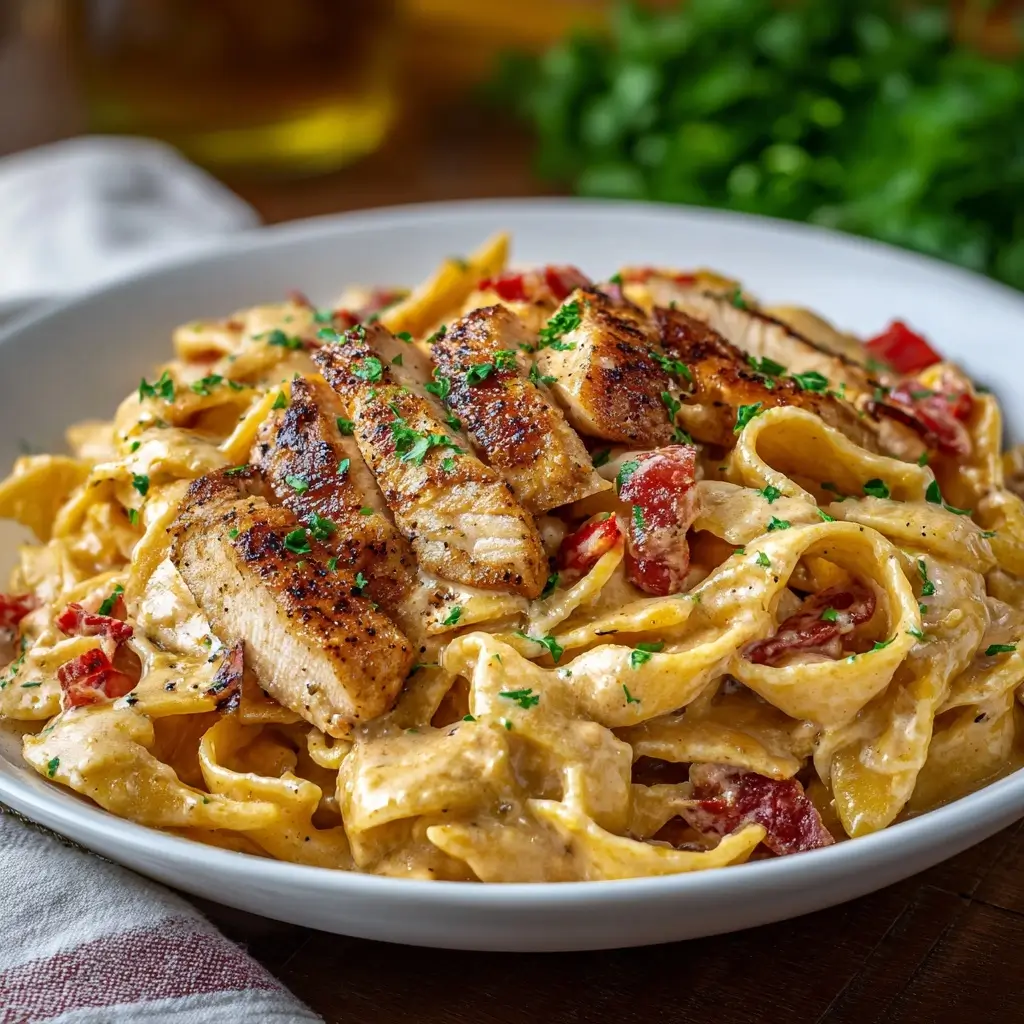
Creamy Cajun Chicken Pasta
The History
Creamy Cajun Chicken Pasta is a modern culinary fusion that brings together the bold, spicy flavors of Southern Louisiana cuisine with the comforting richness of Italian pasta dishes. While traditional Cajun cooking originated in rural Louisiana among Acadian settlers—French colonists expelled from Canada in the 18th century—this particular dish is a relatively recent invention popularized in American home kitchens and restaurants during the late 20th and early 21st centuries.
Cajun seasoning, known for its robust blend of paprika, garlic powder, onion powder, cayenne, black pepper, and oregano, was traditionally used to flavor meats, seafood, and one-pot dishes like jambalaya and gumbo. As American palates began embracing bolder flavors and quick weeknight meals, chefs and home cooks alike started experimenting by incorporating these seasonings into non-traditional formats—such as creamy pasta dishes. The result? A hearty, flavorful meal that combines tender chicken, al dente pasta, and a velvety cream sauce infused with smoky, spicy Cajun notes.
This recipe gained even greater popularity through food blogs, social media, and viral videos, particularly on platforms like Pinterest and TikTok, where one-pot creamy pasta recipes dominate trending content. Its appeal lies not only in its explosive taste but also in its ease of preparation, minimal cleanup, and adaptability to various dietary needs. Today, Creamy Cajun Chicken Pasta stands as a beloved example of American comfort food evolution—a delicious bridge between regional heritage and contemporary convenience.
Ingredients Breakdown
The magic of Creamy Cajun Chicken Pasta lies in the harmony of its ingredients—each playing a crucial role in building layers of flavor, texture, and aroma. Let’s break them down:
- Chicken Breast (or Thighs): Boneless, skinless chicken breasts are most commonly used for their lean texture and ability to absorb seasoning. However, chicken thighs can be substituted for a juicier, more flavorful result due to their higher fat content.
- Cajun Seasoning: This is the soul of the dish. Homemade or store-bought, it typically includes smoked paprika, garlic powder, onion powder, dried oregano, thyme, cayenne pepper, salt, black pepper, and sometimes mustard powder or celery seed. The balance of heat and earthiness defines the dish’s character.
- Pasta: Fettuccine is a favorite choice because its flat, thick strands hold onto creamy sauces beautifully. Penne, rigatoni, or farfalle also work well, offering nooks and crannies for sauce retention.
- Heavy Cream: Provides the luxurious, silky base for the sauce. It emulsifies with cheese and seasonings to create a rich coating for both the chicken and pasta.
- Butter: Used initially to sear the chicken, adding depth and nuttiness. Unsalted butter is preferred so you can control the salt level.
- Olive Oil: Often combined with butter for searing—it raises the smoke point and adds a subtle fruitiness.
- Garlic: Freshly minced garlic is essential. It’s sautéed briefly to release its aromatic compounds without burning, infusing the entire dish with warmth.
- Onion: Yellow or white onions add sweetness and complexity when softened. Some versions use shallots for a more delicate flavor.
- Diced Tomatoes (with juice): Canned fire-roasted diced tomatoes are often used to introduce acidity, brightness, and a slight tang that cuts through the richness of the cream.
- Chicken Broth: Adds moisture and enhances savory umami notes. Low-sodium broth allows better control over seasoning.
- Cheese (optional): Parmesan or cream cheese is sometimes added for extra creaminess and a salty, nutty finish.
- Vegetables (common additions): Bell peppers (especially red and green), mushrooms, spinach, zucchini, or cherry tomatoes are frequently folded in for color, nutrition, and texture contrast.
- Herbs: Fresh parsley or chives are usually sprinkled on top before serving for freshness and visual appeal.
Step-by-Step Recipe
Creating the perfect Creamy Cajun Chicken Pasta involves careful layering of flavors and attention to timing. Follow these detailed steps for restaurant-quality results at home:
- Prepare Ingredients: Before turning on the heat, dice the onion, mince the garlic, slice the bell peppers, and cut the chicken into evenly sized bite-sized pieces (about 1-inch cubes). Measure out your Cajun seasoning, heavy cream, broth, and other liquids. Cook your pasta separately according to package instructions until al dente; drain and set aside, reserving about ½ cup of pasta water.
- Season the Chicken: Place the cubed chicken in a bowl and generously coat it with Cajun seasoning—use about 1–2 tablespoons depending on quantity and desired spice level. Toss thoroughly to ensure every piece is evenly covered.
- Sear the Chicken: Heat a large skillet or Dutch oven over medium-high heat. Add 1 tablespoon each of olive oil and butter. Once shimmering hot, add the seasoned chicken in a single layer (work in batches if needed to avoid overcrowding). Sear for 5–6 minutes, turning occasionally, until golden brown and cooked through (internal temperature should reach 165°F). Remove chicken and set aside.
- Sauté Aromatics: In the same pan, reduce heat to medium. Add another tablespoon of butter if needed, then add chopped onions and bell peppers. Sauté for 4–5 minutes until softened and slightly caramelized. Stir in minced garlic and cook for an additional 30 seconds until fragrant—be careful not to burn it.
- Add Liquids and Simmer: Pour in the diced tomatoes (with juice) and chicken broth, scraping up any browned bits from the bottom of the pan—these fond deposits are packed with flavor. Bring the mixture to a gentle simmer and let it reduce slightly for 3–4 minutes.
- Incorporate Cream: Slowly stir in the heavy cream, whisking continuously to combine. If using cream cheese or grated Parmesan, add it now and stir until fully melted and smooth. Allow the sauce to warm through but do not boil vigorously, as this may cause the cream to separate.
- Return Chicken to Pan: Add the seared chicken back into the sauce along with any accumulated juices. Stir gently and let everything simmer together for 3–5 minutes to allow the chicken to absorb the sauce flavors.
- Combine with Pasta: Add the cooked pasta to the skillet and toss well to coat every strand. If the sauce is too thick, gradually add reserved pasta water, one tablespoon at a time, until the desired consistency is reached.
- Taste and Adjust: Season with additional salt, black pepper, or Cajun seasoning if needed. For extra heat, a dash of hot sauce like Tabasco or Crystal can be stirred in.
- Finish and Serve: Remove from heat. Stir in fresh spinach if using—it will wilt instantly from residual heat. Garnish generously with chopped fresh parsley or chives. Optionally, top with extra Parmesan shavings or a drizzle of olive oil for elegance.
Tips
- Don’t Overcook the Chicken: Since the chicken returns to the sauce later, avoid overcooking during the searing stage. Juicy, tender bites make all the difference.
- Use Fresh Garlic and Herbs: Pre-minced garlic or dried parsley won’t deliver the same vibrant flavor. Always opt for fresh whenever possible.
- Reserve Pasta Water: The starchy liquid helps bind the sauce to the pasta and adjust thickness naturally—don’t skip this step!
- Control the Heat: Keep the flame moderate when adding cream to prevent curdling. High heat can cause dairy to split.
- Bloom the Spices: Consider toasting the Cajun seasoning in the pan with the vegetables for 20–30 seconds before adding liquids—this intensifies the flavor profile.
- Homemade Cajun Seasoning: Store-bought blends vary widely in salt and heat. Making your own ensures balanced flavor. Try: 2 tsp smoked paprika, 1 tsp garlic powder, 1 tsp onion powder, ½ tsp dried oregano, ½ tsp black pepper, ¼ tsp cayenne, ¼ tsp thyme, and ½ tsp salt.
- One-Pan Option: For easier cleanup, cook the pasta directly in the sauce using slightly more broth and cream, absorbing the liquid gradually—similar to a risotto method.
- Rest Before Serving: Let the dish sit off the heat for 2–3 minutes after mixing. This allows the sauce to settle and cling better to the pasta.
Variations and Customizations
Creamy Cajun Chicken Pasta is highly adaptable to personal preferences, dietary restrictions, and seasonal ingredients. Here are some creative twists:
- Seafood Version: Replace chicken with shrimp or a mix of shrimp and crawfish. Add shellfish near the end since they cook quickly—just 2–3 minutes in the sauce.
- Vegetarian Option: Omit the meat entirely and boost flavor with portobello mushrooms, eggplant, artichoke hearts, or cauliflower. Use vegetable broth instead of chicken broth.
- Vegan Adaptation: Use coconut milk (full-fat) or cashew cream instead of heavy cream, plant-based butter, and vegan Parmesan. Choose tofu or tempeh as protein sources, marinated and pan-seared with Cajun spices.
- Low-Carb/Keto Friendly: Swap traditional pasta for spiralized zucchini (zoodles), spaghetti squash, or shirataki noodles. Increase healthy fats with avocado slices or a dollop of sour cream.
- Dairy-Free: Substitute heavy cream with unsweetened almond milk blended with cornstarch or cashew cream. Use dairy-free cheese alternatives if desired.
- Spice Level Adjustments: Mild version? Reduce or omit cayenne pepper. Extra fiery? Add sliced jalapeños, crushed red pepper flakes, or a splash of Louisiana-style hot sauce.
- Italian-Inspired Fusion: Add sun-dried tomatoes, kalamata olives, and mozzarella pearls for a Mediterranean twist.
- Creamier Texture: Blend part of the sauce (especially tomatoes and veggies) before adding pasta for a smoother, velvety mouthfeel.
- Smoked Flavor Boost: Use smoked gouda, smoked paprika, or a touch of liquid smoke to deepen the complexity.
- Breakfast-for-Dinner Style: Top with a poached or fried egg—the runny yolk creates an ultra-rich sauce when broken.
Health Considerations and Nutritional Value
While undeniably indulgent, Creamy Cajun Chicken Pasta can be enjoyed as part of a balanced diet with mindful modifications. Here’s a general nutritional overview per serving (approx. 1.5 cups, based on fettuccine, chicken breast, heavy cream, and standard vegetables):
- Calories: ~550–700 kcal (varies significantly with ingredients and portion size)
- Protein: ~35–40g – Excellent source from chicken, supporting muscle repair and satiety.
- Fat: ~25–35g – Mostly saturated from cream and butter. Can be reduced using lower-fat dairy alternatives.
- Carbohydrates: ~45–60g – Primarily from pasta; whole grain or legume-based pastas increase fiber content.
- Fiber: ~4–6g – Enhanced by vegetables like bell peppers, onions, and spinach.
- Sodium: ~800–1200mg – Highly dependent on seasoning, broth, and added cheese. Opt for low-sodium options and homemade spice blends to manage intake.
- Vitamins & Minerals: Rich in B vitamins (niacin, B6 from chicken), vitamin C (from peppers), vitamin A (from paprika), and antioxidants from herbs and vegetables.
Health Tips:
- To reduce calorie density, substitute half the cream with whole milk or evaporated milk.
- Increase vegetable volume to boost nutrients while lowering the calorie-to-volume ratio.
- Limits portions to 1–1.5 cups and pair with a side salad or steamed greens for a complete meal.
- Avoid excessive cheese and butter if managing cholesterol or cardiovascular health.
- For weight management, focus on lean proteins, high-fiber carbs, and controlled fat portions.
Ingredients
- 1.5 lbs (680g) boneless, skinless chicken breasts, cubed
- 2–3 tbsp Cajun seasoning (store-bought or homemade)
- 12 oz (340g) fettuccine or penne pasta
- 3 tbsp butter, divided
- 2 tbsp olive oil
- 1 medium yellow onion, diced
- 1 red bell pepper, sliced
- 1 green bell pepper, sliced
- 4 cloves garlic, minced
- 1 (14.5 oz) can fire-roasted diced tomatoes, with juice
- 1 cup (240ml) chicken broth (low-sodium preferred)
- 1 cup (240ml) heavy cream
- ½ cup grated Parmesan cheese (optional)
- 2 cups fresh baby spinach (optional)
- Salt and black pepper to taste
- Chopped fresh parsley, for garnish
- Reserved pasta water, as needed
Directions
- Cook pasta in salted boiling water according to package directions until al dente. Drain, reserve ½ cup of pasta water, and set aside.
- Season cubed chicken with Cajun seasoning, tossing to coat evenly.
- In a large deep skillet or Dutch oven, heat 1 tbsp olive oil and 1 tbsp butter over medium-high heat. Add chicken in a single layer and sear for 5–6 minutes until golden and cooked through. Transfer to a plate and set aside.
- Melt another 1 tbsp butter in the same pan. Add onions and bell peppers; sauté for 4–5 minutes until soft.
- Add remaining 1 tbsp butter, then stir in garlic; cook for 30 seconds until fragrant.
- Pour in diced tomatoes with juice and chicken broth. Scrape the bottom of the pan to lift any browned bits. Simmer for 3–4 minutes.
- Stir in heavy cream and Parmesan (if using). Whisk until smooth and warmed through—do not boil.
- Return chicken and any juices to the pan. Simmer gently for 3–5 minutes to blend flavors.
- Add cooked pasta and toss to coat. Gradually add reserved pasta water to loosen the sauce as needed.
- Stir in fresh spinach until wilted. Taste and adjust seasoning with salt, pepper, or extra Cajun spice.
- Remove from heat. Garnish with chopped parsley and extra Parmesan. Serve immediately.
FAQ
Can I make this ahead of time?
Yes, though best served fresh. Reheat gently on the stove with a splash of broth or cream to restore creaminess. Avoid microwaving at high power, which can separate the sauce.
How long does leftovers last?
Store in an airtight container in the refrigerator for up to 3–4 days. Freeze for up to 2 months—though dairy-based sauces may separate slightly upon thawing. Reheat slowly with stirring.
Why did my sauce separate?
High heat, acidic ingredients, or sudden temperature changes can cause dairy to curdle. Always warm cream gradually and avoid boiling. Adding starch (like pasta water) helps stabilize the emulsion.
Can I use frozen chicken?
It’s not recommended. Thaw chicken completely before cooking for even searing and safe internal temperatures.
Is Cajun seasoning the same as Creole seasoning?
They’re similar but not identical. Cajun seasoning tends to be spicier with more garlic and pepper, while Creole seasoning includes more herbs like basil and thyme. They can often be used interchangeably.
Can I bake this instead?
Not typically. This dish relies on stovetop techniques for sauce development. However, you can assemble and bake as a casserole with breadcrumbs on top for crunch—adjust liquid amounts accordingly.
What wine pairs well with this dish?
A crisp white like Sauvignon Blanc or unoaked Chardonnay complements the richness. For red lovers, a light Pinot Noir works if not too tannic.
Summary
Creamy Cajun Chicken Pasta is a bold, comforting dish that unites the fiery depth of Southern spices with the lusciousness of a classic cream sauce. Perfect for weeknights or impressing guests, it’s a versatile, satisfying meal that celebrates flavor, texture, and culinary creativity.