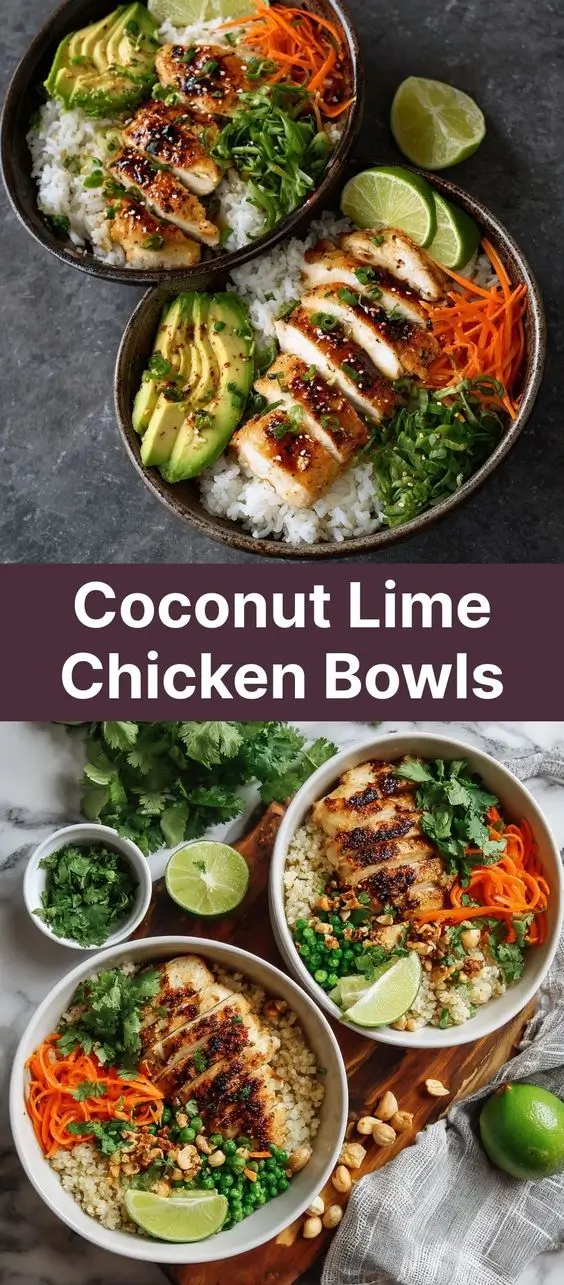
Coconut Lime Chicken Bowls: A Tropical Fusion of Flavor and Nutrition
Introduction
Imagine a dish that combines the creamy richness of coconut with the bright, zesty tang of fresh lime, all served atop a bed of fluffy rice and vibrant vegetables. That’s exactly what Coconut Lime Chicken Bowls offer—a harmonious fusion of tropical flavors, satisfying textures, and wholesome ingredients. Perfect for weeknight dinners, meal prep, or impressing guests at a summer gathering, these bowls are as nutritious as they are delicious. Whether you’re a fan of Thai-inspired cuisine or simply love dishes that transport your taste buds to a beachside paradise, this recipe is a must-try. With its balance of protein, healthy fats, and complex carbohydrates, it’s a complete meal that satisfies both body and soul.
The History
While there isn’t a single documented origin for “Coconut Lime Chicken Bowls” as a standalone dish, its roots can be traced back to Southeast Asian culinary traditions—particularly Thai, Indonesian, and Filipino cuisines—where coconut milk and citrus are staples in savory cooking. Coconut milk has been used for centuries across tropical regions to add creaminess and depth to curries, stews, and marinades. Limes, abundant in coastal areas, have long been valued not only for their tart flavor but also for their ability to enhance digestion and preserve food in warm climates.
The concept of serving marinated, grilled proteins over rice with vegetables likely evolved from traditional rice bowl meals common throughout Asia, such as Japanese donburi or Filipino silog plates. In modern times, the popularity of grain bowls exploded in Western cuisine during the 2010s, driven by health-conscious eaters and foodies seeking balanced, customizable meals. The Coconut Lime Chicken Bowl emerged as a creative adaptation—merging tropical flavors with contemporary bowl trends—showcasing how global ingredients can come together in innovative, accessible ways.
Ingredients Breakdown
To create the perfect Coconut Lime Chicken Bowl, each ingredient plays a crucial role in building layers of flavor, texture, and nutrition. Here’s an in-depth look at the components:
- Chicken Breast or Thighs: Boneless, skinless chicken breasts provide lean protein and a neutral base for absorbing marinade flavors. For juicier results, boneless thighs work wonderfully due to their higher fat content.
- Coconut Milk (Full-Fat): This rich, creamy liquid extracted from grated mature coconuts adds luscious mouthfeel and subtle sweetness. It tenderizes the chicken while contributing healthy medium-chain triglycerides (MCTs).
- Fresh Lime Juice: Adds brightness and acidity, balancing the richness of the coconut. Its citric acid helps break down proteins slightly, enhancing tenderness.
- Lime Zest: Packed with aromatic oils, zest intensifies the citrus flavor without adding extra liquid.
- Garlic and Ginger: Freshly minced garlic and grated ginger lend pungency and warmth, forming the aromatic backbone of the marinade.
- Fish Sauce: A fermented condiment made from fish and salt, commonly used in Southeast Asian cooking. It adds umami depth and complexity—use sparingly as it’s potent!
- Honey or Maple Syrup: A touch of natural sweetener balances the tartness and saltiness, promoting caramelization when grilled or seared.
- Red Pepper Flakes or Sriracha: Optional heat elements that elevate the dish with a gentle kick.
- Coconut Oil or Neutral Oil: Used for cooking; coconut oil enhances tropical notes, while avocado or grapeseed oil works well for high-heat searing.
- Jasmine Rice or Brown Rice: Fragrant jasmine rice complements the flavors beautifully, though brown rice offers more fiber and a nuttier profile.
- Vegetables (e.g., bell peppers, red cabbage, cucumber, mango, avocado): Provide color, crunch, freshness, and essential vitamins. Feel free to customize based on seasonality and preference.
- Herbs (Cilantro, Mint): Bright, fragrant herbs finish the bowl with a burst of aroma and flavor.
- Lime Wedges: Served on the side for squeezing over the finished dish.
- Optional Toppings: Toasted coconut flakes, chopped peanuts, sesame seeds, pickled red onions, or a drizzle of sriracha mayo.
Step-by-Step Recipe
- Marinate the Chicken: In a large bowl or resealable bag, combine 1 cup full-fat coconut milk, juice of 2 limes, 1 tablespoon lime zest, 3 cloves minced garlic, 1 tablespoon grated ginger, 1 tablespoon fish sauce, 1 tablespoon honey, ½ teaspoon red pepper flakes, and a pinch of black pepper. Add 1.5 pounds of chicken pieces, ensuring they’re fully coated. Seal and refrigerate for at least 2 hours, preferably overnight for maximum flavor infusion.
- Cook the Rice: While the chicken marinates, rinse 1 cup of jasmine rice under cold water until the water runs clear. In a saucepan, bring 1¾ cups water to a boil, add rice and a pinch of salt, reduce heat to low, cover, and simmer for 15–18 minutes until tender and water is absorbed. Remove from heat and let it steam, covered, for 10 minutes. Fluff with a fork before serving. Alternatively, use a rice cooker for hands-off preparation.
- Prepare the Vegetables: Thinly slice ½ red cabbage, dice 1 bell pepper (any color), chop 1 ripe avocado, slice ½ cucumber into matchsticks, and dice 1 ripe mango. Place each vegetable in separate bowls for assembly. If desired, quick-pickle red onions by soaking thin slices in lime juice with a pinch of sugar and salt for 20 minutes.
- Cook the Chicken: Heat 1–2 tablespoons of coconut oil in a grill pan, skillet, or outdoor grill over medium-high heat. Remove chicken from marinade (shake off excess) and cook for 6–8 minutes per side, depending on thickness, until golden brown and internal temperature reaches 165°F (74°C). Let rest for 5 minutes before slicing into strips.
- Make the Sauce (Optional Enhancement): While chicken rests, simmer the leftover marinade in a small saucepan for 5–7 minutes until slightly thickened (do not consume raw marinade due to raw chicken contact). Stir in 1 tablespoon cornstarch slurry if desired for a glossy glaze.
- Toast Coconut (Optional): In a dry skillet over medium heat, toast ¼ cup unsweetened shredded coconut for 2–4 minutes, stirring frequently, until golden brown. Watch closely to avoid burning.
- Assemble the Bowls: Start with a base of warm rice. Arrange sliced chicken and an assortment of prepared vegetables attractively over the rice. Drizzle with reduced marinade or a homemade coconut-lime dressing (mix coconut milk, lime juice, honey, and fish sauce). Garnish generously with chopped cilantro, mint, toasted coconut, and crushed peanuts. Serve with lime wedges on the side.
Tips
- Marinating Time Matters: For deeper flavor and more tender chicken, marinate for 8–12 hours. Avoid exceeding 24 hours as the acidity may begin to “cook” the meat, leading to a mushy texture.
- Use Full-Fat Coconut Milk: Light coconut milk lacks the richness needed for authentic flavor and proper searing. Shake the can well before opening or stir thoroughly if using carton-packaged.
- Don’t Overcook the Chicken: Use a meat thermometer to ensure precision. Overcooked chicken becomes dry, especially breast cuts.
- Baste for Extra Flavor: During the last few minutes of cooking, brush the chicken with reserved (and boiled) marinade for a sticky, flavorful crust.
- Rice Texture Tip: Rinsing rice removes surface starch, preventing gummy results. For extra fragrance, cook rice with a pandan leaf or lemongrass stalk.
- Prep Ahead: Chop vegetables and make the marinade up to two days in advance. Cook rice and chicken ahead for easy reheating during busy weeks.
- Grill Option: For smoky depth, grill the marinated chicken outdoors. Soak wooden skewers first if making kebabs.
- Budget-Friendly Swap: Use frozen mango or pre-shredded cabbage to save time and money without sacrificing quality.
Variations and Customizations
One of the greatest strengths of Coconut Lime Chicken Bowls is their adaptability. Here are several ways to personalize the dish:
- Protein Swaps: Replace chicken with shrimp, salmon fillets, tofu, tempeh, or chickpeas for vegetarian/vegan versions. Adjust cooking times accordingly.
- Grain Alternatives: Substitute rice with quinoa, farro, cauliflower rice, or soba noodles for lower-carb or gluten-free options.
- Tropical Twists: Add pineapple chunks, papaya, or star fruit for additional sweetness and exotic flair.
- Spice Levels: Control heat by adjusting red pepper flakes, adding fresh chili slices, or omitting spicy elements entirely for mild palates.
- Dairy-Free & Vegan Version: Ensure fish sauce is replaced with soy sauce or tamari (for gluten-free), and skip any dairy-based toppings. Use maple syrup instead of honey.
- Mediterranean Fusion: Incorporate olives, feta cheese, cherry tomatoes, and oregano for a cross-cultural twist.
- Kid-Friendly Version: Reduce spices, add banana slices, and serve with a mild coconut dipping sauce.
- Meal Prep Style: Portion ingredients separately in containers for up to 4 days. Reheat chicken and rice, then assemble with fresh veggies and herbs just before eating.
Health Considerations and Nutritional Value
Coconut Lime Chicken Bowls can be a well-balanced, nutrient-dense meal when prepared thoughtfully. Here’s a breakdown of key nutritional aspects:
- Protein Power: Chicken provides high-quality protein (about 25–30g per 4 oz serving), supporting muscle repair and satiety.
- Healthy Fats: Coconut milk contains MCTs, which are metabolized quickly for energy. However, it’s calorie-dense—moderation is key, especially for weight management goals.
- Fiber-Rich Veggies: Colorful vegetables contribute dietary fiber, antioxidants, vitamin C, and anti-inflammatory compounds.
- Low Added Sugar: By using natural sweeteners like honey or limiting added sugars, this dish avoids blood sugar spikes common in processed foods.
- Sodium Awareness: Fish sauce and store-bought coconut milk can be high in sodium. Opt for low-sodium versions or reduce quantities, balancing flavor with herbs and citrus.
- Gluten-Free Friendly: Naturally gluten-free if using tamari instead of soy sauce and verifying all ingredient labels.
- Portion Control: Serving sizes matter—aim for 4–6 oz of chicken, ½ cup cooked rice, and plenty of non-starchy vegetables per bowl.
- Digestive Benefits: Ginger aids digestion, while lime supports liver function and detoxification pathways.
A typical serving (excluding optional toppings) contains approximately:
- Calories: 550–650
- Protein: 35g
- Fat: 28g (mostly saturated from coconut, but includes heart-healthy monounsaturated from avocado)
- Carbohydrates: 50g
- Fiber: 6g
- Sugar: 12g (naturally occurring)
- Sodium: 600–800mg (adjustable)
Ingredients
- 1.5 lbs boneless, skinless chicken breasts or thighs, cut into even-sized pieces
- 1 cup full-fat coconut milk (canned or carton)
- Juice of 2 limes (about ¼ cup)
- 1 tbsp finely grated lime zest
- 3 cloves garlic, minced
- 1 tbsp fresh ginger, grated
- 1 tbsp fish sauce (or tamari for soy-based option)
- 1 tbsp honey or pure maple syrup
- ½ tsp red pepper flakes (optional)
- Pinch of black pepper
- 2 tbsp coconut oil or avocado oil, for cooking
- 1 cup jasmine rice or brown rice
- 1¾ cups water (for rice)
- ½ red cabbage, thinly sliced
- 1 bell pepper, diced
- 1 ripe avocado, cubed
- ½ cucumber, julienned
- 1 ripe mango, diced
- ¼ cup fresh cilantro, chopped
- 2 tbsp fresh mint, chopped (optional)
- 2 tbsp unsweetened shredded coconut, toasted
- 2 tbsp chopped peanuts or cashews
- Lime wedges, for serving
- Optional: pickled red onions, sriracha, coconut-lime dressing
Directions
- In a large mixing bowl or zip-top bag, whisk together coconut milk, lime juice, lime zest, garlic, ginger, fish sauce, honey, red pepper flakes, and black pepper. Add chicken pieces and toss to coat evenly. Seal and refrigerate for at least 2 hours, or up to 12 hours for best results.
- Rinse rice under cold water until water runs clear. In a medium saucepan, bring 1¾ cups water to a boil. Add rice and a pinch of salt. Reduce heat to low, cover, and simmer for 15 minutes (jasmine) or 35–40 minutes (brown rice), or until water is absorbed and rice is tender. Remove from heat, keep covered, and let stand for 10 minutes. Fluff with a fork before serving.
- While rice cooks, prepare all vegetables: slice cabbage, dice bell pepper, chop avocado, julienne cucumber, and dice mango. Store in separate containers or on a platter.
- Heat coconut oil in a large skillet or grill pan over medium-high heat. Remove chicken from marinade (discard unused marinade or boil separately for safety). Cook chicken for 6–8 minutes per side, until golden and cooked through (165°F internal temperature). Transfer to a plate, tent with foil, and let rest for 5 minutes before slicing.
- If desired, pour remaining marinade into a small saucepan and bring to a rolling boil for 5–7 minutes to thicken into a glaze.
- Toast shredded coconut in a dry skillet over medium heat, stirring constantly, for 2–4 minutes until lightly golden.
- To assemble each bowl: place ¾ cup warm rice at the bottom. Top with sliced chicken, followed by generous portions of cabbage, bell pepper, avocado, cucumber, and mango. Drizzle with reduced marinade or a fresh coconut-lime dressing. Garnish with cilantro, mint, toasted coconut, and chopped nuts. Serve immediately with lime wedges on the side.
FAQ
Can I make this recipe ahead of time?
Yes! Marinate the chicken up to 24 hours in advance. Cook rice and chicken, then store separately in airtight containers for up to 4 days. Chop vegetables fresh before serving for optimal crunch.
Is canned coconut milk healthy?
Full-fat canned coconut milk is high in saturated fat but contains beneficial MCTs. Use in moderation as part of a balanced diet. Shake well before measuring, as separation is natural.
Can I freeze Coconut Lime Chicken Bowls?
You can freeze the marinated or cooked chicken for up to 3 months. Thaw in the refrigerator before cooking. Freeze rice flat in portions for easy reheating. Avoid freezing avocado or fresh herbs.
What can I use instead of fish sauce?
For a vegan alternative, substitute with soy sauce, tamari, or coconut aminos. While the umami will differ slightly, it still adds savory depth.
Why did my coconut milk separate when cooking?
This is normal! Coconut milk naturally separates into solids and liquid when heated. Stirring continuously will reincorporate it. Some recipes intentionally “crack” the coconut milk for richer curries.
Are these bowls spicy?
Not inherently. The red pepper flakes add mild heat, but you can omit them completely for a family-friendly version.
Can I cook this in a slow cooker?
Absolutely! Place marinated chicken in the slow cooker and cook on low for 4–5 hours or high for 2–3 hours. Shred or slice before serving over rice.
How do I prevent soggy bowls?
Keep wet ingredients like sauces and juicy fruits separate until ready to eat. Assemble just before serving, especially if prepping for lunchboxes.
Summary
Coconut Lime Chicken Bowls blend creamy coconut, zesty lime, and tender grilled chicken over a colorful array of fresh vegetables and fluffy rice, creating a nourishing and vibrant meal bursting with tropical flavor.
Easily customizable, meal-prep friendly, and rich in protein and healthy fats, this dish brings the essence of island cuisine straight to your kitchen with minimal effort and maximum satisfaction.