Introduction
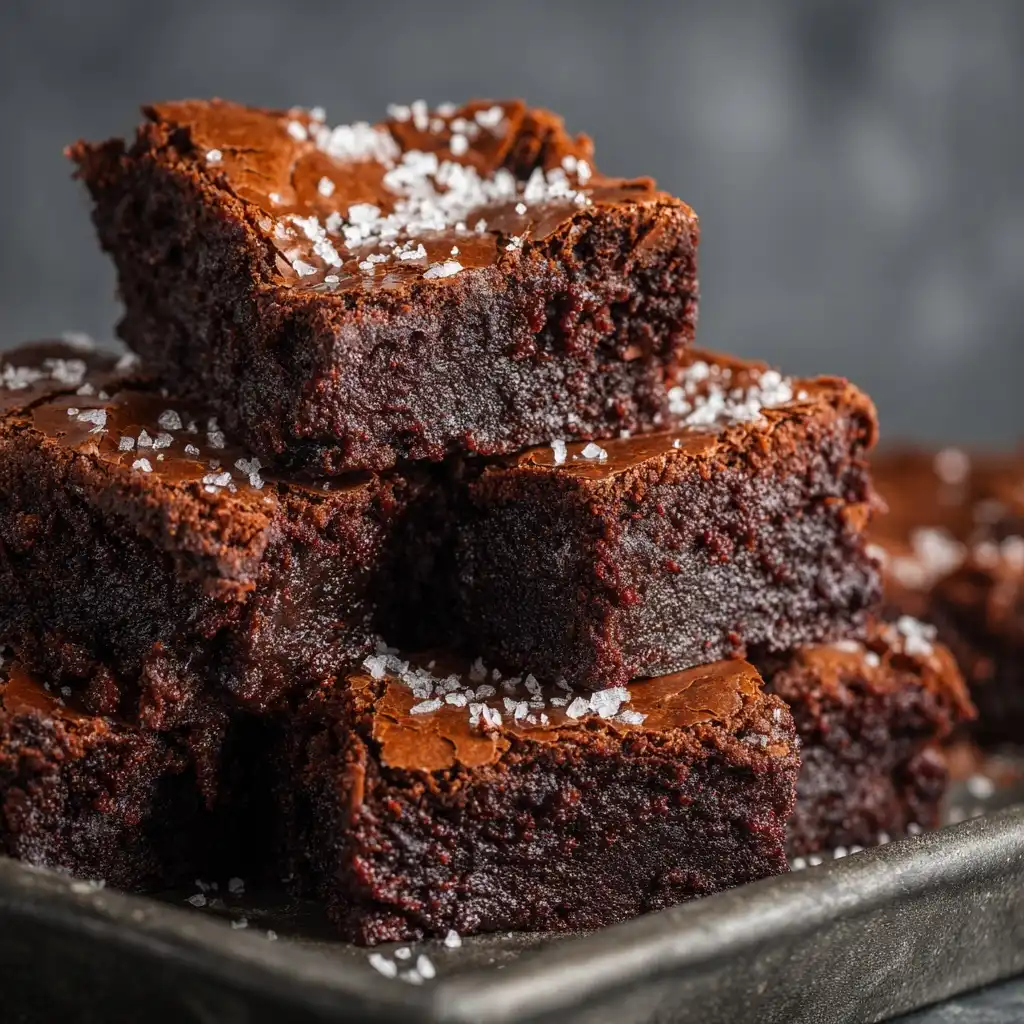
Classic Fudgy Chocolate Brownies are the undisputed royalty of dessert baking — rich, dense, deeply chocolatey, and irresistibly moist with a delicate crackled top that glistens like edible treasure. More than just a simple treat, they’re a nostalgic embrace: the scent of melting chocolate and butter filling the kitchen, the quiet anticipation as they cool in the pan, the first bite yielding a tender, almost pudding-like crumb that dissolves into pure cocoa luxury. Unlike cakey brownies that lean on leavening and air, fudgy brownies celebrate decadence through density — achieved not by compromise, but by precise ratios, controlled mixing, and intentional restraint. This recipe is not merely instructions; it’s a time-tested, science-informed homage to what makes a brownie truly legendary: a glossy, paper-thin crust giving way to a molten, velvety interior that clings lovingly to the fork — and lingers long after the last crumb is gone.
The History
The humble brownie’s origin story is delightfully contested — a delicious mystery wrapped in parchment and baked in a square pan. Most food historians trace its roots to the late 19th century in the United States, emerging as a happy accident or clever adaptation during a transitional era in American baking. One widely accepted theory credits Chicago’s Palmer House Hotel, which reportedly created a walnut-studded, jelly-filled chocolate square for the 1893 World’s Columbian Exposition — a portable, elegant confection designed for ladies who lunched (and didn’t want crumbs on their gloves). Around the same time, home cooks began experimenting with “blond brownies” (made with brown sugar and no chocolate) before evolving them into cocoa- or chocolate-enhanced versions. The first printed recipe for a chocolate brownie appeared in the 1896 edition of Fannie Farmer’s Boston Cooking-School Cookbook, though it bore little resemblance to today’s fudgy ideal — more akin to a dense chocolate cookie bar. It wasn’t until the 1930s and ’40s, with the mass availability of reliable baking chocolate (like Baker’s), granulated sugar, and standardized oven thermostats, that the modern fudgy brownie began to crystallize — aided by wartime rationing, which encouraged resourceful, egg-and-butter-conscious recipes that naturally favored denser textures. The iconic “fudgy vs. cakey” divide became a cultural touchstone by the 1950s, cemented in community cookbooks and Betty Crocker ads. Today, the fudgy brownie stands as a benchmark of American comfort baking — a globally beloved standard that continues to inspire chefs, home bakers, and food scientists alike, all striving to replicate that perfect alchemy of fat, sugar, chocolate, and minimal flour.
Ingredients Breakdown
Every ingredient in a fudgy brownie plays a non-negotiable, structural, and sensory role — nothing is filler, and substitutions require deep understanding. Here’s why each component matters:
- Unsweetened Chocolate (200g / 7 oz): The soul of depth and bitterness. High-cocoa-content unsweetened chocolate (preferably 99% or 100% if available) delivers intense, unadulterated cocoa solids without added sugar or milk solids that dilute flavor. Melting it with butter ensures even dispersion and contributes essential cocoa butter fat for melt-in-the-mouth richness.
- Granulated Sugar (300g / 1 ¼ cups): Far more than just sweetness — it’s the architect of texture. Sugar crystals cut into the butter-chocolate mixture during creaming, creating tiny air pockets that expand slightly when heated, then collapse into dense tenderness. It also delays starch gelatinization and protein coagulation, extending the “fudge window” and contributing to that signature shiny, crackled top via surface crystallization.
- Brown Sugar (100g / ½ cup, packed): Adds moisture-retaining molasses, subtle caramel notes, and acidity that enhances chocolate flavor. Its hygroscopic nature keeps brownies supple for days and contributes to chewiness without compromising fudginess.
- Unsalted Butter (227g / 1 cup / 2 sticks): The primary fat carrier — responsible for mouth-coating richness, tenderness (by coating gluten proteins), and flavor. Unsalted allows full control over sodium levels. European-style butter (82–86% fat) yields even more luxurious results due to less water content.
- Eggs (4 large, room temperature): Act as emulsifiers, binders, and moisture reservoirs. Room temperature eggs incorporate more evenly and reduce risk of seizing the melted chocolate. The yolks add fat and lecithin for silkiness; whites provide minimal structure — but overbeating introduces too much air, risking cakeyness. We use whole eggs here for optimal balance.
- Vanilla Extract (2 tsp, pure): Not optional — it’s a flavor amplifier that lifts and rounds out chocolate’s complexity, adding warmth and aromatic nuance without competing.
- All-Purpose Flour (95g / ¾ cup + 1 tbsp, spooned & leveled): The *only* source of gluten — and used sparingly. Too much flour = cakey; too little = fragile, greasy sludge. This precise weight provides just enough structure to hold the dense batter together while remaining tender. Never scoop flour directly from the bag — aerate first, then spoon into measuring cup and level.
- Pinch of Fine Sea Salt (⅛ tsp): A critical flavor enhancer that suppresses bitterness and heightens sweetness and chocolate nuance. Do not omit — it transforms the experience.
- Optional but Highly Recommended Add-In: 150g (5.3 oz) High-Quality Semi-Sweet or Bittersweet Chocolate Chunks (60–70% cacao): For textural contrast and pockets of molten chocolate. Use chopped bars (not chips) for superior melt and flavor integrity.
Step-by-Step Recipe
This method prioritizes control, consistency, and reverence for the chemistry at play — every step serves a purpose beyond tradition:
- Mise en Place & Prep (15 minutes): Preheat oven to 325°F (165°C) — lower heat ensures slow, even baking crucial for fudgy texture. Grease a 9×13-inch metal baking pan *generously* with unsalted butter or high-fat shortening (not oil), then line bottom and two long sides with parchment paper, leaving generous overhangs (critical for clean removal). Whisk flour and salt together in a small bowl; set aside. Chop unsweetened chocolate into uniform ½-inch pieces; measure sugars, butter, eggs, and vanilla. Ensure eggs are truly room temperature (1 hour out of fridge).
- Melt Chocolate & Butter (5–7 minutes): Combine unsweetened chocolate and butter in a heatproof bowl set over a saucepan of barely simmering water (double boiler), ensuring bowl doesn’t touch water. Stir constantly with a silicone spatula until *just* melted and smooth — do not overheat or let water splash in. Remove from heat, stir in granulated and brown sugars until fully dissolved and mixture is glossy. Let cool slightly (2–3 minutes) — it should be warm to the touch but not hot (≈110°F/43°C), to avoid cooking eggs.
- Emulsify Eggs (3 minutes): Add eggs one at a time, whisking vigorously with a hand whisk (not electric mixer) for 30–45 seconds *after each addition* until fully incorporated and mixture thickens slightly and becomes glossy. This mechanical aeration creates a stable emulsion and develops viscosity — key for that dense yet tender crumb. Whisk in vanilla until combined.
- Incorporate Dry Ingredients (1 minute): Gently fold in the flour-salt mixture with a silicone spatula using 10–12 slow, sweeping strokes — just until *no dry streaks remain*. Overmixing activates gluten, leading to toughness and chewiness instead of fudginess. Batter will be thick, glossy, and heavy.
- Add Chocolate Chunks (30 seconds): Fold in chocolate chunks until evenly distributed — do not overfold.
- Pan & Bake (35–42 minutes): Pour batter into prepared pan, smoothing top with offset spatula. Tap pan firmly on counter twice to release large air bubbles. Bake on center rack. Begin checking at 35 minutes: brownies are done when edges are set and *just beginning* to pull away from pan, top is set with a thin, shiny, crackled crust, and a toothpick inserted 1 inch from edge comes out with *moist crumbs* (not wet batter, not clean). The center should still look soft and slightly underbaked — it will continue to set as it cools. Total bake time varies by oven; trust visual cues over timer.
- Cool Completely (2+ hours): This is non-negotiable. Place pan on a wire rack. Cool *completely* at room temperature — minimum 2 hours, ideally 3–4. Rushing this step causes crumbling, loss of structure, and prevents the starches and fats from fully setting into that signature fudgy matrix. For best texture and clean cuts, refrigerate for 1 hour after cooling (optional but recommended).
- Cut & Serve: Using parchment overhangs, lift brownies from pan onto cutting board. Trim uneven edges (a baker’s treat!). Cut into 16 even squares (or 24 smaller bites) using a sharp, hot knife (dip blade in hot water and wipe dry between cuts). Serve at cool room temperature for optimal texture and flavor release.
Tips
- Oven Thermometer Essential: Most home ovens run hot or cold. An accurate oven thermometer ensures your 325°F is truly 325°F — a 25-degree variance can mean the difference between fudgy and dry.
- Room Temperature Eggs Are Non-Negotiable: Cold eggs cause the warm chocolate-butter mixture to seize into grainy lumps. If rushed, place eggs in warm (not hot) water for 5 minutes.
- No Electric Mixers: Hand-whisking eggs controls aeration precisely. Stand or hand mixers introduce too much air, risking cakey texture and uneven crumb.
- Underbake Strategically: Pull them out when the center looks *definitely* underdone — it will firm up perfectly during cooling. Err on the side of underdone rather than overdone.
- Parchment Is Your Lifeline: Aluminum foil tears; wax paper melts. Heavy-duty parchment ensures flawless release and clean, professional-looking bars every time.
- Cooling Is Part of Baking: Cutting warm brownies = mushy, greasy, crumbly disaster. Patience rewards you with clean edges and cohesive texture.
- Knife Technique Matters: A dull knife squishes; a cold knife drags. Use a sharp chef’s knife, heated under hot tap water, wiped *completely* dry, and re-heated/wiped between every cut.
- Storage Secret: Keep cooled brownies in an airtight container at room temperature for up to 3 days, or layered between parchment in the fridge for up to 1 week. They taste even richer on Day 2 as flavors meld.
- Freezing for Longevity: Wrap tightly in plastic wrap, then aluminum foil, and freeze for up to 3 months. Thaw overnight in fridge or at room temperature for 2 hours — texture remains indistinguishable from fresh.
- Resist the “Just One More Minute”: Set a timer and walk away. Opening the oven door drops temperature dramatically and disrupts the delicate setting process.
Variations and Customizations
While the classic formula is perfection itself, thoughtful variations can elevate or adapt the experience without sacrificing fudginess:
- Espresso-Enhanced Fudgy Brownies: Add 2 tsp finely ground espresso powder (not instant coffee) to dry ingredients. Deepens chocolate flavor without tasting like coffee — a pro pastry chef secret.
- Sea Salt & Dark Chocolate: Sprinkle flaky Maldon sea salt over batter immediately after pouring into pan. Pair with 70% dark chocolate chunks for sophisticated bitterness and crunch.
- Nutty Depth: Fold in 1 cup toasted walnuts or pecans (cooled completely) with chocolate chunks. Toasting removes raw tannins and adds buttery aroma that complements chocolate.
- Orange-Zest Brilliance: Add 1 tbsp finely grated orange zest (avoid white pith) with vanilla. Citrus oils cut richness and brighten cocoa notes — especially stunning with bittersweet chocolate.
- Stout-Infused Luxury: Replace ¼ cup of the melted butter with room-temperature, reduced stout beer (simmer ½ cup stout until reduced to ¼ cup, cool completely). Adds malty complexity and incredible moisture.
- Gluten-Free Fudgy Brownies: Substitute AP flour with 95g (¾ cup) certified gluten-free 1:1 baking blend (like King Arthur or Bob’s Red Mill) + ½ tsp xanthan gum. Ensure all other ingredients are GF-certified. Texture remains remarkably close.
- Vegan Fudgy Brownies (Advanced): Replace butter with refined coconut oil (227g), eggs with “flax eggs” (4 tbsp ground flax + 10 tbsp water, chilled 15 min), and use dairy-free chocolate. Requires precise timing and may yield slightly less glossy top — but deeply fudgy nonetheless.
- Peppermint Swirl: After pouring batter, dollop 3 tbsp melted white chocolate mixed with ¼ tsp peppermint extract. Swirl gently once with a knife — creates stunning marbling and cool contrast.
- Chili-Chocolate Heat: Add ¼ tsp ancho chili powder and a pinch of cayenne to dry ingredients. Warm, smoky heat that intensifies chocolate’s earthiness — start low, adjust to preference.
- Luxury Ganache Topper: After cooling, spread a thin layer of 50/50 dark chocolate ganache (equal parts chopped chocolate and hot heavy cream) over surface. Chill 20 minutes before cutting for glossy, restaurant-worthy finish.
Health Considerations and Nutritional Value
While Classic Fudgy Chocolate Brownies are inherently indulgent — designed for pleasure, celebration, and mindful enjoyment — understanding their nutritional profile empowers informed choices:
Per Standard Serving (1 of 16 squares, approx. 60g):
- Calories: ~280–310 kcal
- Total Fat: 18–20g (Saturated Fat: 11–13g)
- Carbohydrates: 28–31g (Dietary Fiber: 2–3g, Sugars: 22–25g)
- Protein: 3–4g
- Key Micronutrients: Iron (from cocoa), Magnesium (cocoa is exceptionally rich), Small amounts of Zinc, Copper, and Manganese. Dark chocolate contributes flavonoid antioxidants linked to cardiovascular and cognitive benefits in moderation.
Considerations for Mindful Enjoyment:
- Sugar Content: Significant, primarily from added sucrose and molasses. Those managing blood sugar should enjoy mindfully and consider pairing with protein/fat (e.g., a handful of almonds) to slow absorption.
- Saturated Fat: Primarily from cocoa butter and butter. While recent research nuances saturated fat’s role, moderation remains prudent within overall dietary patterns. Using high-quality, grass-fed butter adds beneficial CLA and omega-3s.
- Caffeine: Unsweetened chocolate contains ~20mg caffeine per ounce — less than coffee but notable for sensitive individuals or evening consumption.
- Gluten & Allergens: Naturally gluten-free if using certified GF flour (though traditional version contains wheat). Contains dairy (butter, chocolate) and eggs — major allergens.
- Not a Health Food, But a Health-Conscious Choice: Made with real, whole-food ingredients (no artificial flavors, colors, or preservatives), high in antioxidant-rich cocoa, and free from hydrogenated oils or trans fats. Its richness means smaller portions satisfy deeply — supporting intuitive eating.
- Portion Awareness: Cutting into 24 smaller squares instead of 16 increases perceived value and reduces per-serving calories/fat/sugar without sacrificing satisfaction.
- Homemade Advantage: Full control over ingredients — no hidden sodium, corn syrup, or low-quality fats common in commercial versions. You decide the chocolate quality, sugar type, and purity.
Ingredients
- 200g (7 oz) unsweetened chocolate (100% cacao preferred), finely chopped
- 227g (1 cup / 2 sticks) unsalted butter, cut into tablespoons
- 300g (1 ¼ cups) granulated sugar
- 100g (½ cup, packed) light or dark brown sugar
- 4 large eggs, room temperature
- 2 tsp pure vanilla extract
- 95g (¾ cup + 1 tbsp, spooned & leveled) all-purpose flour
- ⅛ tsp fine sea salt
- 150g (5.3 oz) high-quality semi-sweet or bittersweet chocolate chunks (60–70% cacao), optional but recommended
Directions
- Preheat oven to 325°F (165°C). Grease a 9×13-inch metal baking pan with butter or shortening. Line bottom and two long sides with parchment paper, leaving 2-inch overhangs on all sides. Set aside.
- In a heatproof bowl set over a saucepan of barely simmering water (double boiler), combine unsweetened chocolate and butter. Stir constantly until fully melted and smooth, about 5–7 minutes. Remove from heat. Whisk in granulated and brown sugars until dissolved and mixture is glossy. Let cool 2–3 minutes until warm (≈110°F/43°C) but not hot.
- Add eggs one at a time, whisking vigorously with a hand whisk for 30–45 seconds after each addition until thick, glossy, and well-emulsified. Whisk in vanilla.
- Sift flour and salt together into a small bowl. Gently fold into chocolate-egg mixture with a silicone spatula using 10–12 slow, sweeping strokes — stop as soon as no dry flour is visible. Do not overmix.
- Fold in chocolate chunks until evenly distributed.
- Pour batter into prepared pan. Smooth top with an offset spatula. Tap pan firmly on counter twice to release air bubbles.
- Bake on center rack for 35–42 minutes, rotating pan halfway through. Brownies are done when edges are set and *just* pulling away from pan, top is set with a thin, shiny, crackled crust, and a toothpick inserted 1 inch from edge comes out with moist crumbs (not wet batter, not clean). Center will look soft.
- Place pan on a wire rack. Cool *completely* at room temperature — minimum 2 hours, ideally 3–4. For cleanest cuts, refrigerate for 1 additional hour.
- Using parchment overhangs, lift brownies from pan onto cutting board. Trim edges. Cut into 16 (or 24) even squares using a sharp, hot, dry knife (reheat and dry between cuts).
- Store in an airtight container at room temperature up to 3 days, or refrigerated up to 1 week. Freeze up to 3 months, wrapped tightly in plastic and foil.
FAQ
- Why did my brownies turn out cakey instead of fudgy?
- Most common causes: using too much flour (scooping instead of spooning/leveling), overmixing the batter after adding flour (activating gluten), using too many eggs or egg whites, baking at too high a temperature, or overbaking past the “moist crumbs” stage. Also check if your baking powder or soda was accidentally added — classic fudgy brownies contain *no leaveners*.
- Can I use cocoa powder instead of unsweetened chocolate?
- You can, but it will significantly alter texture and flavor. Replace 200g unsweetened chocolate with 60g (½ cup) unsweetened cocoa powder + 140g (⅔ cup) additional butter. However, cocoa lacks cocoa butter’s richness and emulsifying power, often yielding drier, less glossy, and less complex results. Stick with solid chocolate for authenticity.
- My brownies sank in the middle. What happened?
- Sinking usually indicates underbaking (removed too soon before structure sets) or drastic temperature shock (opening oven too early, placing hot pan on cold surface). Ensure you bake until edges are set and toothpick shows *moist crumbs*, and always cool in the pan on a wire rack — never on a cold countertop.
- How do I get that perfect crackled top?
- It’s all about sugar dissolution and surface drying. Whisk sugars thoroughly into the warm chocolate-butter mixture until fully dissolved and glossy. Then, ensure your oven is at true 325°F and avoid opening the door early. The crust forms as surface moisture evaporates and sugar recrystallizes during the final minutes of baking.
- Can I make these ahead for an event?
- Absolutely — and they improve! Bake 1–2 days ahead. Cool completely, store airtight at room temperature. Flavor deepens, texture mellows, and cutting becomes even easier. Bring to cool room temperature before serving.
- Why do you specify room temperature eggs?
- Cold eggs cause the warm chocolate-butter mixture to seize into stiff, grainy lumps, preventing proper emulsification. Room temperature eggs blend smoothly, creating the stable, viscous base essential for fudgy texture and glossy sheen.
- Can I use a glass or ceramic pan?
- Not recommended for this recipe. Glass and ceramic retain and radiate heat differently than metal, leading to overbaked, dry edges and inconsistent doneness. A light-colored aluminum pan ensures even, controlled baking — the gold standard for fudgy brownies.
- My brownies are greasy/oily on top. What went wrong?
- This signals separation — usually caused by overheating the chocolate-butter mixture (causing cocoa butter to separate) or adding cold eggs to a mixture that’s still too hot. Always melt gently over low heat and cool sufficiently before adding eggs.
- How do I prevent sticking to the knife when cutting?
- Use a *sharp*, *hot*, and *completely dry* knife. Dip blade in hot water, wipe *thoroughly* with a clean towel, cut, then repeat. A dull or damp knife will drag and tear. Refrigerating brownies for 1 hour before cutting also minimizes smearing.
- Are these brownies suitable for mailing or gifting?
- Yes! Their dense, moist texture travels beautifully. Cool completely, wrap each square individually in parchment, then place in a rigid box with cushioning. Include a silica packet to absorb moisture if shipping >2 days. They’ll arrive tasting freshly baked.
Summary
Classic Fudgy Chocolate Brownies are a masterclass in minimalist decadence — where premium unsweetened chocolate, slow-melted butter, precisely measured sugars, and restrained flour converge under gentle heat to create a dense, moist, intensely chocolatey square crowned with a delicate, crackled gloss.
Success hinges not on complexity, but on reverence for fundamentals: accurate measurements, strict temperature control, patient cooling, and unwavering commitment to the “moist crumbs” cue — transforming simple pantry staples into timeless, universally beloved dessert perfection.