Introduction
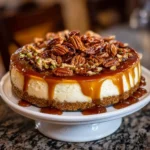
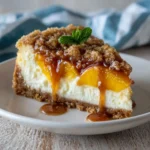
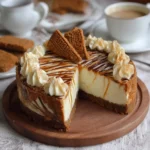
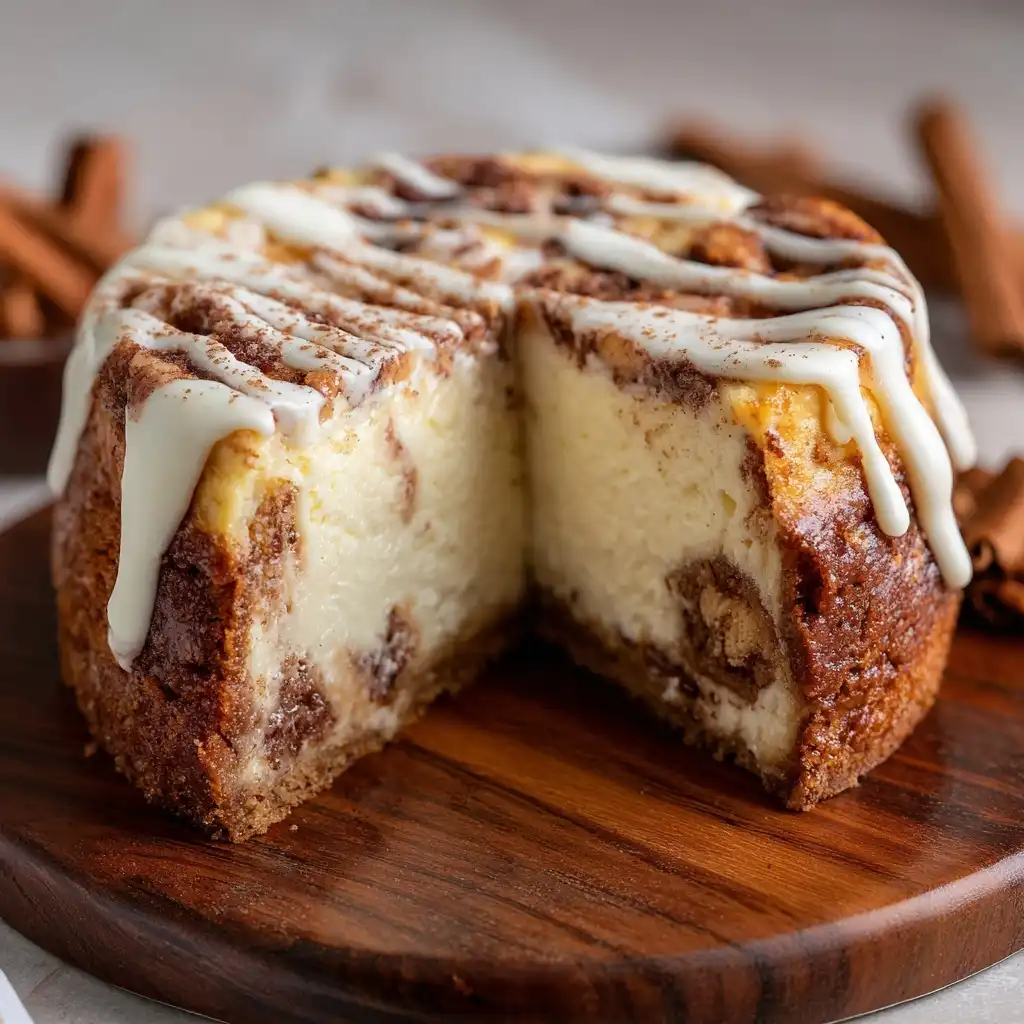
Imagine the warm, buttery nostalgia of a freshly baked cinnamon roll—swirled with fragrant cinnamon sugar, draped in creamy glaze—now elevated to decadent, velvety perfection: welcome to the Cinnamon Roll Cheesecake. This isn’t just a fusion dessert; it’s a harmonious marriage of two beloved American classics—the tender, spiced richness of a cinnamon bun and the luxuriously smooth, dense elegance of New York–style cheesecake. Every bite delivers layers of contrasting textures and complementary flavors: a crisp, golden-brown graham cracker–cinnamon crust, a luscious, tangy-sweet cream cheese filling infused with real ground cinnamon and brown sugar, a dramatic marbled ribbon of gooey cinnamon-sugar swirl (often enhanced with molasses or caramelized butter), and a crown of glossy, vanilla-laced cream cheese glaze finished with a delicate dusting of cinnamon sugar or toasted pecans. Whether served at holiday gatherings, Sunday brunches, or as a showstopping centerpiece for birthdays, this dessert satisfies both comfort-food cravings and gourmet expectations—with an unmistakable aroma that fills your kitchen like a bakery on Main Street.
The History
The Cinnamon Roll Cheesecake is a relatively modern culinary innovation rooted in the broader evolution of “swirled” or “marbled” cheesecakes that gained traction in the late 20th century. While traditional cheesecake dates back to ancient Greece—and American versions flourished post–World War II with the rise of cream cheese brands like Philadelphia—the cinnamon roll itself traces its origins to Swedish kardemummabullar, brought to North America by Scandinavian immigrants in the 19th century. The iconic American cinnamon roll, with its soft yeast dough, generous cinnamon-sugar filling, and thick cream cheese icing, became a staple in diners and bakeries by the 1950s.
The first documented recipes resembling today’s Cinnamon Roll Cheesecake appeared in regional food magazines and early food blogs around the mid-2000s—often inspired by viral “cinnamon roll bars” and “cinnamon roll cake” hybrids. A pivotal moment came in 2012 when a viral Pinterest post featuring a “cinnamon roll cheesecake loaf” from a Minnesota home baker sparked widespread replication and adaptation. By 2015–2016, major test kitchens—including those of Bon Appétit, Food Network Magazine, and King Arthur Baking Company—began publishing refined, scalable versions emphasizing structural integrity (preventing cracking), optimal swirl definition (using cold, stiff cinnamon paste rather than runny fillings), and balanced sweetness. Today, it appears in artisanal bakeries from Portland to Charleston, frequently featured on Food Network’s Best Baker in America and crowned with accolades for its nostalgic resonance and technical ingenuity—proving that tradition doesn’t have to be static to be sacred.
Ingredients Breakdown
Every exceptional Cinnamon Roll Cheesecake relies on precision, quality, and purpose-driven ingredients. Below is a comprehensive, function-based breakdown—not just a list, but a masterclass in why each component matters:
- Graham Cracker Crust Base: 1 ½ cups finely crushed graham crackers (about 10 full sheets) provide structure and subtle honeyed sweetness; 6 tbsp unsalted butter (melted) binds and enriches; ¼ cup light brown sugar (packed) adds molasses depth and promotes caramelization; ½ tsp ground cinnamon and a pinch of fine sea salt enhance warmth and balance.
- Cream Cheese Filling: 24 oz (three 8-oz blocks) full-fat, brick-style cream cheese at room temperature ensures smooth emulsification and prevents lumps; 1 cup granulated sugar contributes sweetness and aids aeration; ⅔ cup sour cream adds tang and moisture without thinning; ⅔ cup heavy cream (not half-and-half or milk) imparts luxurious silkiness and improves freeze-thaw stability; 3 large eggs + 1 large egg yolk (room temperature) deliver richness and binding power—the extra yolk enhances tenderness and sheen; 2 tsp pure vanilla extract (preferably Madagascar bourbon) provides aromatic complexity; ¼ tsp fine sea salt deepens all flavors; 1 tbsp all-purpose flour (or cornstarch) acts as a gentle stabilizer to prevent curdling and promote clean slicing.
- Cinnamon Swirl: ½ cup light brown sugar (packed) for moisture and molasses notes; 2 tbsp ground cinnamon (Ceylon preferred for floral nuance, or Saigon for bold heat); ¼ tsp ground nutmeg and ⅛ tsp ground cloves for layered spice; 3 tbsp unsalted butter (softened but cool); 1 tbsp molasses (unsulphured) for depth and chew; 1 tbsp heavy cream to adjust consistency; optional: 2 tbsp finely chopped toasted walnuts or pecans for textural contrast.
- Cream Cheese Glaze: 4 oz full-fat cream cheese (room temperature); ¼ cup unsalted butter (room temperature); 1 ¼ cups powdered sugar (sifted); 1 tsp pure vanilla extract; 1–2 tbsp heavy cream or whole milk (to reach drizzling consistency); pinch of salt; optional: ½ tsp ground cinnamon whisked in at the end for aromatic lift.
- Finishing Touches: Extra cinnamon-sugar blend (2:1 brown sugar to cinnamon); flaky sea salt (Maldon) for sweet-savory contrast; edible gold leaf (for special occasions); candied ginger bits; or a drizzle of salted caramel sauce.
Note: Ingredient temperatures matter profoundly—cold cream cheese yields lumps; warm eggs cause premature cooking; melted butter in the swirl must be cooled to avoid melting the batter. Always use full-fat dairy—low-fat or whipped cream cheese will destabilize texture and cause weeping.
Step-by-Step Recipe
- Prep & Preheat: Position oven rack in center position. Preheat oven to 325°F (163°C). Wrap exterior of a 9-inch springform pan *tightly* with two overlapping layers of heavy-duty aluminum foil (to prevent water seepage during the critical water bath step). Lightly grease the foil and pan interior with butter or nonstick spray.
- Make the Crust: In a food processor or zip-top bag with rolling pin, crush graham crackers into fine crumbs. Transfer to a bowl; stir in brown sugar, cinnamon, and salt. Add melted butter and mix with a fork until evenly moistened and clumping together. Press firmly and evenly into bottom and 1 inch up sides of prepared pan using the flat bottom of a measuring cup. Chill crust in freezer for 15 minutes while preparing filling.
- Bake the Crust: Bake chilled crust at 325°F for 10 minutes. Remove, tap gently on counter to settle, and cool completely on wire rack (do not skip cooling—hot crust causes filling separation).
- Prepare Cream Cheese Filling: Using a stand mixer fitted with paddle attachment (or hand mixer), beat room-temperature cream cheese on medium speed for 2 minutes until completely smooth and glossy—scraping bowl and paddle frequently. Gradually add granulated sugar; beat 2 more minutes until fluffy and lump-free. Add sour cream and heavy cream; mix 1 minute until homogenous. One at a time, add eggs and yolk, mixing *just until incorporated* after each (overmixing introduces air → cracks). Mix in vanilla, salt, and flour until no streaks remain. Scrape down bowl thoroughly. Set aside.
- Make the Cinnamon Swirl: In small bowl, combine brown sugar, cinnamon, nutmeg, cloves, and salt. Add softened butter and molasses; beat with fork or small whisk until a thick, spreadable paste forms (like stiff peanut butter). Stir in heavy cream ½ tsp at a time until swirl holds shape but is pliable. Fold in nuts if using. Refrigerate 10 minutes to firm slightly.
- Assemble & Swirl: Pour ~⅔ of cheesecake batter into cooled crust. Smooth top. Dollop chilled cinnamon swirl mixture evenly over batter in 8–10 mounds. Carefully pour remaining batter over swirls. Using a thin knife or skewer, gently drag through batter in figure-eight or zigzag patterns—no more than 10 passes—to create defined, marbled ribbons (avoid over-swirling, which blends instead of defines). Tap pan sharply 3 times on counter to release air bubbles.
- Water Bath Setup: Place springform pan inside a larger roasting pan. Carefully pour hot (not boiling) water into roasting pan until it reaches halfway up sides of springform pan (~1.5 inches deep). Cover *top only* of springform pan tightly with heavy-duty foil (shiny side up) to prevent water intrusion. Alternatively, use a slow cooker liner or silicone lid designed for water baths.
- Bake Low & Slow: Bake at 325°F for 1 hour 25 minutes–1 hour 40 minutes. Cheesecake is done when edges are set and puffed slightly, center still jiggles *just* 2 inches in diameter (like Jell-O) when gently shaken. Turn off oven, crack door open 1 inch with wooden spoon, and let cheesecake cool inside oven for 1 hour—this gradual cooling prevents thermal shock and cracking.
- Chill & Set: Remove from water bath; discard foil. Run thin knife around edge to loosen. Cool completely at room temperature (≈2 hours), then refrigerate *uncovered* for minimum 12 hours—or ideally 24–48 hours—for optimal texture, sliceability, and flavor melding.
- Make Glaze & Finish: While cheesecake chills, beat cream cheese and butter until smooth. Gradually add powdered sugar, then vanilla and salt. Beat in cream 1 tsp at a time until glossy and drizzle-consistency. Refrigerate until ready to use. Just before serving, remove side of springform pan. Drizzle glaze artfully over top using a spoon or piping bag. Sprinkle generously with cinnamon-sugar and flaky salt. Optional: garnish with candied pecans or a dusting of edible cinnamon powder.
Tips
- Room Temperature Is Non-Negotiable: All dairy and eggs must be truly room temperature (68–72°F)—leave out for 2–3 hours, not just 30 minutes. Cold ingredients cause lumps, uneven mixing, and poor emulsion.
- Scrape Relentlessly: Scrape bowl, paddle, and spatula after *every* addition—even between eggs. Unincorporated streaks lead to cracked surfaces or grainy texture.
- Swirl Smart: Use a chilled swirl paste—not warm, not runny. Warm swirl melts into batter; runny swirl sinks. If paste softens while working, return to fridge for 5 minutes.
- Water Bath Mastery: Use hot (160°F) water—not boiling—to avoid violent steam bursts. Ensure foil seal is watertight. If water seeps in, don’t panic—just bake 10 minutes longer and accept a slightly denser rim.
- No Rushing the Chill: Under-chilled cheesecake is gummy, slices poorly, and lacks flavor clarity. Overnight is minimum; 48 hours is ideal. Freezing (wrapped in plastic + foil) for up to 2 months is excellent—thaw overnight in fridge.
- Slicing Secrets: Use a long, thin, non-serrated knife dipped in hot water and wiped dry before *each* cut. For ultra-clean slices, chill knife in freezer 5 minutes before cutting.
- Crack Prevention Trio: (1) Water bath, (2) Oven cooling cooldown, (3) Flour/cornstarch stabilizer—all three dramatically reduce cracking risk.
- Flavor Depth Hack: Toast your cinnamon in a dry skillet over medium-low heat for 1 minute before grinding—releases volatile oils and intensifies aroma without bitterness.
- Glaze Timing: Apply glaze no more than 2 hours before serving. Earlier application may soften crust or cause glaze to soak in.
- Altitude Adjustment: Above 3,000 ft? Reduce sugar by 1 tbsp, increase flour to 2 tbsp, and extend water bath baking by 5–8 minutes.
Variations and Customizations
This recipe is a canvas—adaptable for dietary needs, seasonal ingredients, global influences, and creative flair. Here’s how to make it uniquely yours:
- Gluten-Free: Substitute gluten-free graham crackers (like Schar or Pamela’s) and certified GF oats in crust; replace flour stabilizer with 1 tbsp GF cornstarch or tapioca starch.
- Vegan: Use high-fat vegan cream cheese (Kite Hill or Miyoko’s), coconut cream instead of sour cream/heavy cream, flax eggs (3 tbsp ground flax + 9 tbsp water), and vegan butter. Swirl with date paste + cinnamon. Glaze with coconut cream + powdered sugar + lemon juice.
- Lower-Sugar: Replace granulated sugar with ¾ cup monk fruit–erythritol blend (like Lakanto Golden); use sugar-free graham crackers; omit glaze or use stevia-sweetened version. Note: Texture will be slightly denser.
- Maple Pecan Swirl: Swap cinnamon swirl for ½ cup pure maple syrup + ¼ cup toasted pecan pieces + 1 tbsp maple sugar + pinch of cayenne.
- Pumpkin Spice Edition: Add ½ cup pumpkin purée (well-drained) + 1 tsp pumpkin pie spice to filling; swirl with spiced brown sugar + roasted pepitas.
- Apple Cider Caramel: Infuse heavy cream with 2 tbsp apple cider reduction before adding to filling; swirl with salted caramel + diced dried apples.
- Boozy Twist: Add 2 tbsp bourbon or spiced rum to cinnamon swirl; infuse glaze with 1 tsp orange liqueur (Cointreau).
- Mini Mason Jar Versions: Scale down for 4-oz jars—reduce bake time to 35–40 mins in water bath; serve chilled with dollop of crème fraîche and candied ginger.
- Breakfast Cheesecake Bars: Bake in 9×13 pan; omit water bath; reduce bake time to 50–60 mins; cut into squares and top with maple-pecan crumble.
- Global Inspirations: Cardamom–rosewater swirl (Swedish influence); matcha–black sesame swirl (Japanese); chai-spiced swirl with almond milk reduction (Indian); or guava–coconut swirl (Caribbean).
Health Considerations and Nutritional Value
A single standard slice (1/12th of a 9-inch cheesecake) contains approximately 580–650 calories, with 42–48g total fat (24–28g saturated), 52–58g carbohydrates (38–42g sugars), and 8–10g protein. While undeniably indulgent, thoughtful modifications can meaningfully shift its nutritional profile without sacrificing satisfaction:
- Heart-Healthy Swaps: Replace half the butter in crust with avocado oil; use low-sodium cream cheese; add 2 tbsp ground flaxseed to crust for omega-3s and fiber.
- Sugar Impact Awareness: The majority of added sugar comes from brown sugar (crust + swirl) and powdered sugar (glaze). Reducing brown sugar in swirl by 25% cuts ≈12g sugar per slice with minimal flavor loss due to cinnamon’s natural sweetness-enhancing effect.
- Digestive Benefits: Cinnamon has been studied for potential blood sugar modulation and anti-inflammatory properties. Pairing it with probiotic-rich full-fat dairy may support gut microbiome diversity—though therapeutic doses far exceed culinary use.
- Allergen Notes: Contains dairy, eggs, wheat (unless GF version used), and tree nuts (if garnished). Always label clearly for guests with allergies.
- Mindful Serving: Serve smaller portions (1/16th slice) alongside fresh berries and Greek yogurt for balanced macros. The rich density means smaller servings satisfy more completely than lighter desserts.
- Not a Health Food—but Not Empty Calories Either: Full-fat dairy provides bioavailable calcium, vitamin D (fortified), and conjugated linoleic acid (CLA). Eggs contribute choline (vital for brain health) and lutein. Cinnamon offers polyphenols. Enjoy as part of a varied, whole-food diet—not daily, but meaningfully.
Ingredients
Makes one 9-inch cheesecake (12–16 servings)
- For the Crust: 1 ½ cups graham cracker crumbs (about 10 full sheets); 6 tablespoons unsalted butter, melted; ¼ cup light brown sugar, packed; ½ teaspoon ground cinnamon; ⅛ teaspoon fine sea salt
- For the Cheesecake Filling: 24 ounces full-fat brick-style cream cheese, room temperature (3 (8-oz) blocks); 1 cup granulated sugar; ⅔ cup full-fat sour cream; ⅔ cup heavy cream (36–40% fat); 3 large eggs + 1 large egg yolk, room temperature; 2 teaspoons pure vanilla extract; ¼ teaspoon fine sea salt; 1 tablespoon all-purpose flour or cornstarch
- For the Cinnamon Swirl: ½ cup light brown sugar, packed; 2 tablespoons ground cinnamon; ¼ teaspoon ground nutmeg; ⅛ teaspoon ground cloves; 3 tablespoons unsalted butter, softened to cool room temperature; 1 tablespoon unsulphured molasses; 1 tablespoon heavy cream; 2 tablespoons finely chopped toasted pecans or walnuts (optional)
- For the Cream Cheese Glaze: 4 ounces full-fat cream cheese, room temperature; ¼ cup unsalted butter, room temperature; 1 ¼ cups powdered sugar, sifted; 1 teaspoon pure vanilla extract; 1–2 tablespoons heavy cream or whole milk; Pinch of fine sea salt
- For Garnish: 2 tablespoons light brown sugar + 1 teaspoon ground cinnamon, mixed; Flaky sea salt (e.g., Maldon); Additional toasted pecans (optional)
Directions
- Preheat oven to 325°F (163°C). Prepare a 9-inch springform pan: wrap exterior tightly with two overlapping layers of heavy-duty aluminum foil. Lightly grease foil and pan interior.
- In food processor, pulse graham crackers into fine crumbs. In bowl, combine crumbs, melted butter, brown sugar, cinnamon, and salt. Mix with fork until mixture resembles wet sand and holds together when pressed. Press firmly into bottom and 1 inch up sides of pan. Freeze 15 minutes.
- Bake crust 10 minutes. Cool completely on wire rack (≈45 minutes).
- Using stand mixer with paddle attachment, beat cream cheese on medium 2 minutes until smooth. Add sugar; beat 2 minutes until fluffy. Add sour cream and heavy cream; mix 1 minute. Add eggs and yolk one at a time, mixing just until incorporated after each. Mix in vanilla, salt, and flour until no streaks remain. Scrape bowl thoroughly.
- In small bowl, combine brown sugar, cinnamon, nutmeg, cloves, and salt. Add softened butter and molasses; beat with fork until thick paste forms. Stir in heavy cream until pliable but cool. Fold in nuts if using. Refrigerate 10 minutes.
- Pour ⅔ of batter into cooled crust. Dollop cinnamon swirl evenly over top. Pour remaining batter over swirls. Drag thin knife gently in figure-eights to marble—no more than 10 passes. Tap pan sharply 3 times.
- Place springform pan inside larger roasting pan. Carefully pour hot water (160°F) into roasting pan until halfway up springform sides. Cover *top only* of springform tightly with heavy-duty foil.
- Bake 1 hour 25 minutes–1 hour 40 minutes, until edges are set and center jiggles slightly. Turn off oven, crack door open 1 inch, and cool inside 1 hour.
- Remove from water bath; discard foil. Run thin knife around edge. Cool completely at room temperature (≈2 hours), then refrigerate uncovered ≥12 hours (ideally 24–48 hours).
- Make glaze: beat cream cheese and butter until smooth. Gradually add powdered sugar, then vanilla and salt. Beat in cream 1 tsp at a time until glossy and drizzle-thin. Refrigerate until needed.
- Just before serving, remove springform side. Drizzle glaze artfully over top. Sprinkle generously with cinnamon-sugar and flaky salt. Garnish with toasted pecans if desired. Slice with hot, wiped knife.
FAQ
- Can I make this without a water bath?
- Technically yes—but strongly discouraged. Without it, you’ll likely encounter severe cracking, uneven baking (dense edges, undercooked center), and a drier, grainier texture. If absolutely necessary, reduce oven temp to 300°F, place pan on lowest rack, and bake in preheated oven with a shallow pan of hot water on rack below. Expect longer bake time and higher crack risk.
- Why did my swirl sink to the bottom?
- Your swirl was too warm or too thin. Always refrigerate swirl paste for 10+ minutes before dolloping. It should hold its shape like stiff frosting—not run or melt when touched. Also ensure batter is at room temperature—not warm—before swirling.
- Can I freeze Cinnamon Roll Cheesecake?
- Absolutely—and it freezes beautifully! Once fully chilled and sliced, wrap individual portions tightly in plastic wrap, then in foil. Freeze up to 2 months. Thaw overnight in refrigerator. Glaze *after* thawing for best appearance.
- My cheesecake cracked. Can I fix it?
- Yes—cosmetically and deliciously! Spread glaze generously over cracks to camouflage. Top with extra cinnamon-sugar, toasted nuts, or a drizzle of caramel. Cracks don’t affect flavor or texture—only appearance.
- What’s the best way to store leftovers?
- Keep covered tightly with plastic wrap or in an airtight container in refrigerator for up to 5 days. Avoid storing with strong-smelling foods—the cheesecake readily absorbs odors.
- Can I use low-fat cream cheese?
- Not recommended. Low-fat or whipped cream cheese contains added gums, stabilizers, and air, leading to weeping, graininess, and poor structure. Full-fat is essential for authentic texture and stability.
- Is there a substitute for sour cream?
- Full-fat Greek yogurt (not regular yogurt) is the closest substitute—use same volume. Avoid dairy-free yogurts unless specifically formulated for baking (they often contain enzymes that destabilize proteins).
- How do I know when it’s perfectly baked?
- Look for visual cues: edges puffed and lightly golden, surface matte (not shiny/wet), and center 2-inch circle jiggling *just slightly* like firm Jell-O when gently shaken—not sloshing or wobbling broadly. An instant-read thermometer inserted 1 inch from edge should read 150–155°F; center should be ≈145°F.
- Can I make this in advance for a party?
- Yes—it’s ideal for make-ahead! Bake and chill 2–3 days ahead. Glaze no more than 2 hours before serving. Store covered in fridge. For holidays, bake 5 days ahead and freeze (un-glazed); thaw in fridge 24 hours, then glaze.
- Why does the recipe call for both eggs and egg yolk?
- The extra yolk adds fat, emulsifiers (lecithin), and richness—yielding a smoother, silkier, more tender crumb and enhancing the glossy surface. Whole eggs alone produce a slightly firmer, more cake-like texture.
Summary
The Cinnamon Roll Cheesecake is a masterful, deeply comforting fusion dessert that honors the soul-warming essence of the classic cinnamon bun while delivering the elegant, velvety sophistication of artisanal cheesecake—achieved through meticulous technique, premium ingredients, and patient chilling.
With its cinnamon-kissed graham crust, luxuriously spiced cream cheese filling, dramatic molasses-enriched swirl, and cloud-like cream cheese glaze, it’s not merely a dessert—it’s a multisensory experience that evokes nostalgia, invites celebration, and rewards every step of careful craftsmanship.