Introduction
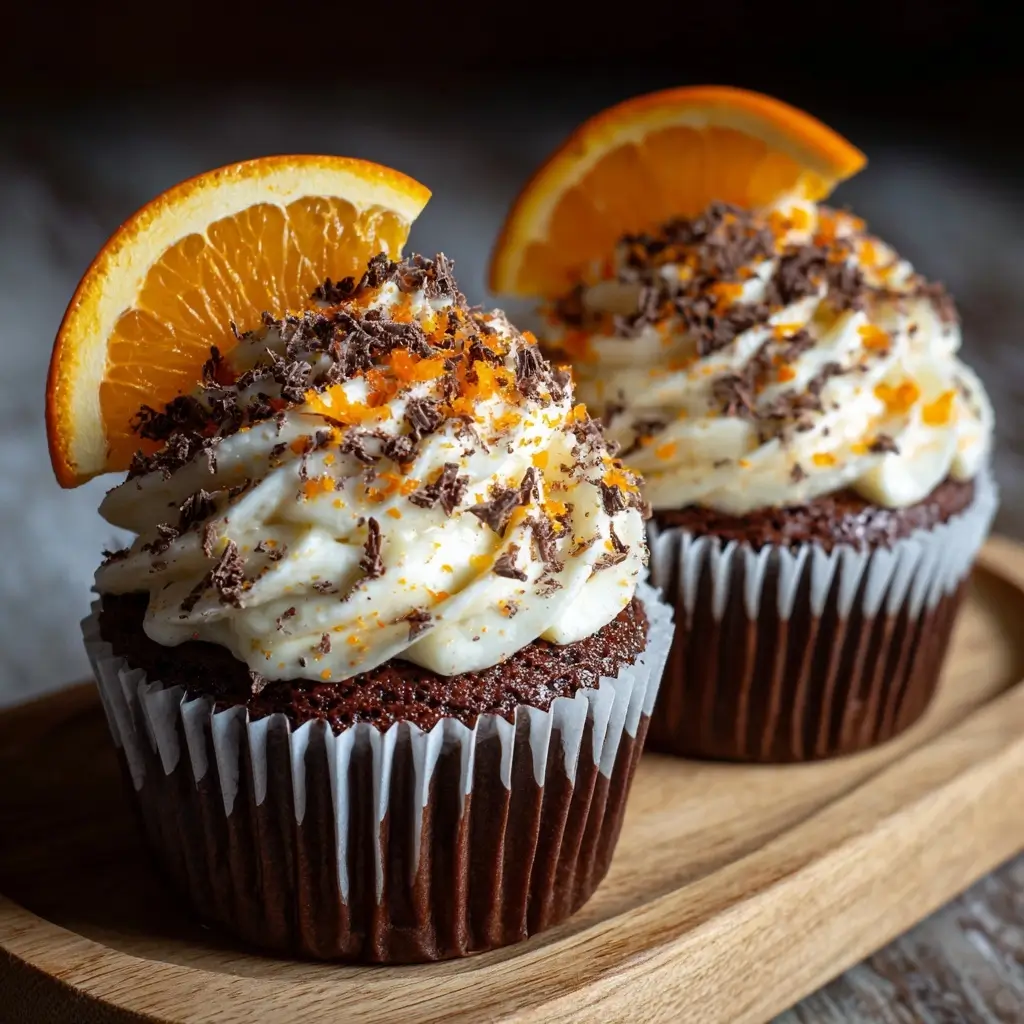
Indulge in the vibrant, sophisticated marriage of rich cocoa and bright citrus with Chocolate Orange Zest Cupcakes — a dessert that transcends the ordinary cupcake experience. These aren’t just moist, tender treats; they’re an aromatic symphony where deep, velvety chocolate forms the perfect canvas for the zesty, floral, and subtly bitter notes of freshly grated orange zest. Each bite delivers a luxurious contrast — warm, earthy, and comforting from the premium cocoa, then lifted and refreshed by the unmistakable perfume of cold-pressed orange oil released from the zest. Ideal for holiday gatherings, spring brunches, afternoon tea, or simply elevating your everyday baking repertoire, these cupcakes strike a rare balance between decadence and brightness — satisfying chocolate lovers while delighting those who crave complexity and freshness in their sweets. Whether you’re a seasoned home baker or a curious beginner, this recipe is thoughtfully engineered to deliver consistent, professional-quality results with approachable techniques and accessible ingredients.
The History
The fusion of chocolate and citrus has ancient roots, but its evolution into the modern Chocolate Orange Zest Cupcake reflects centuries of culinary cross-pollination and innovation. Cacao was revered by Mesoamerican civilizations like the Maya and Aztecs, who consumed it as a spiced, frothy beverage often flavored with chili, vanilla, and sometimes citrus leaves — though true orange cultivation wasn’t widespread in the Americas until post-Columbian exchange. Oranges, native to Southeast Asia, traveled westward via Persian traders and Arab horticulturists, reaching Mediterranean Europe by the 10th century. By the Renaissance, Italian confectioners began pairing dark chocolate (imported from the New World) with candied citrus peels — a tradition immortalized in recipes like *Cioccolato all’Arancia* from 17th-century Florence. The cupcake itself emerged in early 19th-century America as a practical adaptation of layer cake batter portioned into small tins — a response to limited oven technology and rising interest in individualized desserts. The specific chocolate-orange cupcake gained prominence in the late 20th century, buoyed by the popularity of British confectionery brand Terry’s Chocolate Orange (launched in 1932), whose iconic segmented, orange-oil-infused chocolate disc inspired countless bakers to experiment with zest-infused batters. Today, Chocolate Orange Zest Cupcakes stand at the intersection of global flavor history, artisanal baking revival, and contemporary demand for bold yet balanced profiles — a testament to how tradition, migration, and creativity continually reshape our sweetest rituals.
Ingredients Breakdown
Every ingredient in this recipe serves a precise functional and sensory purpose — no component is arbitrary. Let’s explore them in depth:
- Unsalted Butter (1 cup / 2 sticks / 227g, room temperature): Provides richness, tenderness, and emulsification. Room temperature ensures optimal creaming with sugar to trap air — critical for lift and crumb structure. Unsalted butter gives full control over sodium levels and avoids off-flavors from salted varieties.
- Granulated Sugar (1¼ cups / 250g): Sweetens, aids in creaming to incorporate air, stabilizes egg foams, and contributes to browning and caramelization during baking. A slightly higher ratio than standard chocolate cupcakes enhances moisture retention without compromising texture.
- Eggs (3 large, room temperature): Act as binders, leaveners (when whipped), and emulsifiers. Room temperature eggs integrate more evenly into the batter, preventing curdling and ensuring uniform aeration. Extra-large eggs are not recommended here — size consistency matters for hydration balance.
- Whole Milk (1 cup / 240ml, room temperature): Adds moisture, fat, and lactose (which promotes browning and tenderness). Whole milk is non-negotiable — low-fat or skim versions yield drier, less flavorful cupcakes due to insufficient fat content.
- Pure Vanilla Extract (2 tsp): Enhances depth and rounds out sharp cocoa notes. Real Madagascar bourbon vanilla — not imitation — provides essential phenolic complexity that harmonizes with both chocolate and citrus oils.
- Orange Zest (from 2–3 medium organic navel oranges, finely grated): The heart of the recipe. Only the vibrant outer peel (flavedo) is used — never the bitter white pith (albedo). Organic oranges are strongly advised to avoid pesticide residue on the zest. Use a microplane grater for ultra-fine, even shreds that disperse seamlessly without clumping or bitterness. The volatile citrus oils (limonene, myrcene, pinene) infuse the entire batter with aromatic lift — far superior to orange extract alone.
- All-Purpose Flour (1¾ cups / 210g, spooned & leveled): Provides gluten structure. Spooned-and-leveled prevents compaction and over-measuring — a common cause of dense cupcakes. For gluten-free adaptation, a 1:1 certified GF blend with xanthan gum is required (see Variations).
- Natural Unsweetened Cocoa Powder (¾ cup / 65g, Dutch-processed preferred): Imparts intense chocolate flavor and color. Dutch-processed cocoa (alkalized) offers smoother, less acidic, more mellow notes that complement citrus beautifully. If only natural cocoa is available, add ¼ tsp baking soda to neutralize acidity — though flavor profile shifts toward sharper tang.
- Baking Powder (1½ tsp) & Baking Soda (½ tsp): Dual-acting leaveners. Baking powder provides most lift during baking, while baking soda reacts instantly with the acid in cocoa (and trace citric acid in zest) to create early expansion and improved browning. Their synergy yields tall, domed cupcakes with fine, even crumb.
- Fine Sea Salt (1 tsp): Not merely for seasoning — salt heightens sweetness perception, suppresses bitterness in cocoa, and amplifies the aromatic compounds in orange zest. It’s a critical flavor catalyst.
- Dark Chocolate (4 oz / 113g, 60–70% cacao, finely chopped): Folded in for melty pockets of intense chocolate. High-cocoa dark chocolate balances sweetness and adds nuanced fruitiness and tannic structure that echoes citrus complexity. Avoid milk chocolate — its dairy solids can seize when folded in.
Note on Substitutions: Vegetable oil cannot replace butter — it lacks emulsifying lecithin and aromatic compounds. Buttermilk may be used instead of whole milk (reduce baking soda to ¼ tsp to account for acidity), but expect a slightly tangier, denser crumb. Freshly squeezed orange juice is not recommended in the batter — its water content disrupts gluten formation and dilutes zest’s aromatic potency; save it for glaze or syrup infusions.
Step-by-Step Recipe
- Prep & Preheat: Line a standard 12-cup muffin tin with high-quality paper liners (greaseproof or foil-lined recommended for easy release). Position oven rack in the center third. Preheat oven to 350°F (177°C). Allow all wet ingredients (butter, eggs, milk) to reach true room temperature — ~68–72°F — for 60+ minutes before starting. Cold ingredients cause separation and poor aeration.
- Zest the Oranges: Wash oranges thoroughly under warm water with a soft brush. Pat dry. Using a stainless-steel microplane, zest only the brightly colored outer skin — rotating the orange frequently to avoid cutting into the bitter white pith. Gather zest in a small bowl; set aside. Do not juice the oranges at this stage — juice is reserved for optional glaze.
- Cream Butter & Sugar: In a large bowl of a stand mixer fitted with the paddle attachment (or use a hand mixer), beat softened butter on medium speed for 1 minute until smooth and glossy. Gradually add granulated sugar, about ¼ cup at a time, beating on medium-high for 3–4 minutes total until mixture is very light, pale yellow, and fluffy — it should hold soft peaks when the paddle is lifted. Scrape down bowl and paddle thoroughly with a silicone spatula.
- Incorporate Eggs: Add eggs one at a time, beating on medium speed for 45–60 seconds after each addition until fully incorporated and glossy. Do not rush — each egg must be emulsified before adding the next. After the final egg, beat for another 30 seconds. Scrape bowl again.
- Combine Dry Ingredients: In a separate medium bowl, whisk together flour, cocoa powder, baking powder, baking soda, and salt until absolutely uniform — no streaks of cocoa or clumps visible. Sift once for guaranteed even distribution.
- Alternate Wet & Dry: Reduce mixer speed to low. Add ⅓ of the dry ingredients; mix just until no flour remains. Add ½ of the room-temperature milk and vanilla; mix until just combined. Repeat: ⅓ dry, remaining milk, final ⅓ dry. Mix each addition only until incorporated — never more than 10–15 seconds per addition. Overmixing develops gluten → toughness.
- Fold in Zest & Chocolate: Remove bowl from mixer. Using a silicone spatula, gently fold in the reserved orange zest and chopped dark chocolate in two additions. Use a “cut-and-fold” motion — slicing down through center, scraping along bottom, and folding over top — until evenly distributed. Do not stir or swirl vigorously. Batter will be thick, shiny, and speckled with orange and chocolate.
- Portion & Bake: Divide batter evenly among 12 lined cups using a 2-tablespoon ice cream scoop (≈¼ cup per cupcake). Smooth tops lightly with damp fingertip. Tap pan firmly twice on counter to release air bubbles. Bake 18–22 minutes — begin checking at 17 minutes. Cupcakes are done when a toothpick inserted ½ inch from edge comes out with moist crumbs (not wet batter) and centers spring back when lightly pressed. Rotate pan front-to-back at 12 minutes for even baking.
- Cool Completely: Let cupcakes cool in pan on a wire rack for 15 minutes. Then, carefully lift each liner and transfer cupcakes directly onto the rack. Cool completely — minimum 60 minutes — before frosting. Warm cupcakes melt frosting and absorb condensation, causing sogginess.
Tips
- Zest Smart: Freeze whole unwashed oranges for 15 minutes before zesting — cold peel is firmer and yields finer, more abundant zest with less pith.
- Butter Temperature Test: Press fingertip gently into butter — it should yield slowly with slight resistance, leaving a clean, smooth indentation. If it collapses or oozes, it’s too warm. If it doesn’t indent, it’s too cold.
- No Overmixing Rule: Once dry ingredients hit the batter, switch from mixer to spatula. Your wrist should do the work — not the motor. Undermixed > overmixed any day.
- Oven Thermometer Essential: Built-in oven thermostats are notoriously inaccurate. A standalone oven thermometer ensures precise 350°F — critical for proper rise and crust formation.
- High Altitude Adjustment (3,000+ ft): Reduce baking powder to 1 tsp, increase flour to 1¾ + 2 tbsp, reduce sugar to 1¼ − 2 tbsp, and add 1 extra Tbsp milk. Increase oven temp to 360°F and decrease bake time by 1–2 minutes.
- Consistent Portioning: Use a digital kitchen scale — target 85–90g batter per cupcake for uniform size and bake time.
- Crumb Coat First: Before applying final frosting, chill fully cooled cupcakes for 15 minutes, then apply a thin “crumb coat” of frosting and refrigerate 10 minutes. This traps loose crumbs and creates a flawless base for decorative piping.
- Storage Wisdom: Unfrosted cupcakes stay fresh 3 days at room temperature in an airtight container. Frosted cupcakes (with buttercream) last 4 days refrigerated — bring to room temp 30 minutes before serving for optimal texture.
Variations and Customizations
This foundational recipe is incredibly versatile — here are chef-tested, crowd-pleasing adaptations:
- Gluten-Free: Substitute 1:1 gluten-free all-purpose flour blend (e.g., Bob’s Red Mill or King Arthur) + ½ tsp xanthan gum (if not included in blend). Add 2 Tbsp ground psyllium husk to improve elasticity and moisture retention. Bake 1–2 minutes longer.
- Vegan: Replace butter with vegan butter (Miyoko’s or Earth Balance), eggs with flax eggs (3 Tbsp ground flax + 9 Tbsp water, rested 10 mins), and milk with full-fat canned coconut milk. Use vegan dark chocolate. Expect slightly denser crumb — add 1 tsp apple cider vinegar to batter to boost lift.
- Orange-Infused Ganache Frosting: Heat ½ cup heavy cream with 1 Tbsp finely grated orange zest until simmering; steep 10 minutes, strain. Pour over 8 oz chopped dark chocolate, wait 3 minutes, then stir to silky gloss. Chill 2 hours, then whip to pipeable consistency.
- Espresso-Orange Fusion: Add 1½ tsp instant espresso powder to dry ingredients — deepens chocolate, highlights orange’s floral notes without tasting “coffee-forward.”
- Spiced Citrus: Add ½ tsp ground cardamom + ¼ tsp ground ginger to dry ingredients. Complements orange’s brightness with warm, resinous complexity.
- Stout-Enhanced: Replace ¼ cup milk with room-temperature oatmeal stout (e.g., Guinness) — adds malty depth and subtle bitterness that mirrors cocoa’s tannins.
- Lemon-Lime Twist: Swap orange zest for equal parts lemon + lime zest (1.5 oranges + 1 lime). Reduce salt to ¾ tsp to accommodate increased acidity.
- Mini Cupcakes: Fill mini muffin tin ⅔ full. Bake 10–13 minutes. Yields 36–48. Perfect for parties or portion control.
- Layer Cake Version: Double recipe; bake in three 6-inch or two 8-inch round pans (30–35 mins). Cool fully before leveling and filling.
Health Considerations and Nutritional Value
While inherently a celebratory treat, mindful preparation allows for thoughtful nutritional awareness without sacrificing joy:
- Sugar Awareness: This recipe uses 250g granulated sugar for 12 servings — ~21g per cupcake, well below many commercial versions (often 30–40g). To reduce further: substitute ¼ cup of sugar with 2 Tbsp monk fruit-erythritol blend (no aftertaste, 1:1 volume). Avoid stevia alone — it intensifies bitterness in cocoa.
- Heart-Healthy Fats: Butter contains saturated fat, but also butyrate and vitamin K2 — beneficial for gut and vascular health. For lower-sat options, replace half the butter (½ stick) with unrefined avocado oil — maintains moisture and adds monounsaturated fats.
- Antioxidant Powerhouse: Dark chocolate (70%+) and orange zest are rich in flavonoids (epicatechin, hesperidin) and vitamin C — shown in clinical studies to support endothelial function and reduce oxidative stress. One cupcake delivers ~15% DV of manganese and 8% DV of copper — essential for collagen synthesis and energy metabolism.
- Fiber Boost: Add 2 Tbsp unsweetened cocoa nibs (not chocolate chips) to the batter — increases fiber by 2g per cupcake and adds crunch and intense chocolate notes.
- Allergen Notes: Contains dairy, eggs, and wheat. For nut-free assurance, verify cocoa powder and chocolate are processed in dedicated nut-free facilities (many brands now label this clearly).
- Glycemic Impact: With moderate sugar, high fat, and fiber from cocoa, these cupcakes have a lower glycemic load (~15) than vanilla cupcakes (~25). Pairing with a handful of almonds further slows glucose absorption.
- Mindful Indulgence Tip: Serve one cupcake with a small square of 85% dark chocolate and a segment of fresh orange — extends satisfaction, reduces overall intake, and honors the flavor triad intentionally.
Nutrition Facts (per standard cupcake, unfrosted): Calories: 295 • Total Fat: 15g (Saturated: 9g) • Cholesterol: 65mg • Sodium: 210mg • Total Carbohydrates: 37g (Dietary Fiber: 2g • Sugars: 21g) • Protein: 4g • Iron: 12% DV • Magnesium: 10% DV • Antioxidant ORAC Value: ~1,800 µmol TE
Ingredients
- 1 cup (2 sticks / 227g) unsalted butter, room temperature
- 1¼ cups (250g) granulated sugar
- 3 large eggs, room temperature
- 1 cup (240ml) whole milk, room temperature
- 2 tsp pure vanilla extract
- Zest of 2–3 medium organic navel oranges (≈3 Tbsp finely grated)
- 1¾ cups (210g) all-purpose flour, spooned & leveled
- ¾ cup (65g) natural or Dutch-processed unsweetened cocoa powder
- 1½ tsp baking powder
- ½ tsp baking soda
- 1 tsp fine sea salt
- 4 oz (113g) high-quality dark chocolate (60–70% cacao), finely chopped
Directions
- Preheat oven to 350°F (177°C). Line a 12-cup muffin tin with parchment or foil-lined cupcake liners.
- Using a microplane, finely grate zest from washed, dried oranges. Set aside.
- In a stand mixer with paddle attachment, beat butter on medium for 1 minute. Gradually add sugar; beat on medium-high 3–4 minutes until pale, fluffy, and voluminous.
- Add eggs one at a time, beating 45–60 seconds after each until fully incorporated and glossy. Scrape bowl thoroughly.
- In a separate bowl, whisk together flour, cocoa, baking powder, baking soda, and salt until uniform.
- With mixer on low, add ⅓ dry mix; mix until just combined. Add ½ milk + vanilla; mix until just combined. Repeat with remaining dry and wet in order, mixing minimally.
- Fold in orange zest and chopped chocolate with silicone spatula until evenly distributed — no streaks.
- Divide batter evenly (≈¼ cup each) into liners. Tap pan firmly twice. Bake 18–22 minutes until toothpick shows moist crumbs and centers spring back.
- Cool in pan 15 minutes, then transfer to wire rack. Cool completely (60+ minutes) before frosting.
FAQ
- Can I make these cupcakes ahead of time?
- Yes! Unfrosted cupcakes freeze beautifully for up to 3 months. Wrap individually in plastic wrap, then place in a freezer bag. Thaw overnight at room temperature before frosting. Frosted cupcakes (with buttercream) refrigerate well for 4 days — bring to room temp before serving.
- Why did my cupcakes sink in the middle?
- Sinking is usually caused by one of three issues: (1) Underbaking — pull them at the first sign of doneness (toothpick with moist crumbs); (2) Opening the oven door before 16 minutes — causes thermal shock; (3) Overcreaming butter/sugar — incorporates too much unstable air that collapses before structure sets. Always use an oven thermometer and resist peeking!
- Can I use orange extract instead of zest?
- We strongly advise against it. Extracts contain alcohol and artificial or isolated compounds that lack the full spectrum of volatile citrus oils found in fresh zest. They often taste medicinal or one-dimensional. If zest is truly unavailable, use 1 tsp high-quality orange oil (not extract) — but zest remains irreplaceable for authenticity.
- My batter looks lumpy — did I do something wrong?
- A few tiny, harmless cocoa streaks are normal and disappear during baking. True lumps indicate either improperly sifted cocoa (always sift cocoa with dry ingredients) or cold milk/butter causing partial solidification. Ensure all ingredients are truly room temperature — especially butter and milk — and whisk dry ingredients thoroughly before adding.
- What’s the best frosting pairing?
- Our top recommendation is Orange Swiss Meringue Buttercream: whip 3 egg whites + 1 cup sugar over simmering water to 160°F, then beat into stiff, cool peaks. Gradually beat in 1½ cups softened butter, then 2 Tbsp orange zest + 1 tsp orange oil. Luxuriously stable, silky, and perfectly balanced. Other stellar options include dark chocolate ganache, espresso-orange cream cheese, or a light orange mascarpone.
- Can I add orange juice to the batter for more flavor?
- No — juice adds excess water, disrupting gluten development and leavener chemistry, resulting in gummy, sunken, or coarse-textured cupcakes. Reserve juice for a simple syrup brushed onto cooled cupcakes (2 Tbsp juice + 1 Tbsp sugar, warmed), or for glazes and fillings.
- Why do you recommend Dutch-processed cocoa?
- Dutch processing neutralizes cocoa’s natural acidity, yielding a smoother, mellower, more nuanced chocolate flavor that harmonizes elegantly with bright citrus. Natural cocoa’s sharper, fruitier acidity can clash with orange’s own acidity, creating a jarring, sour note. If only natural cocoa is available, add ¼ tsp baking soda to dry ingredients to mitigate this.
- How do I prevent the chocolate from sinking to the bottom?
- Toss chopped chocolate in 1 tsp of the measured flour before folding in — the light coating helps suspension. Also, avoid overmixing after folding; gentle, even strokes preserve batter viscosity that holds inclusions aloft.
Summary
Chocolate Orange Zest Cupcakes are a masterclass in contrast and harmony — where deeply resonant, velvety cocoa meets the exhilarating, sun-drenched perfume of freshly grated orange zest, all baked into a tender, moist, and flawlessly risen crumb.
With meticulous attention to ingredient temperature, precise leavening balance, and the irreplaceable magic of real citrus zest, this recipe delivers restaurant-worthy results in your home kitchen — elegant enough for celebrations, comforting enough for Tuesday night.