Introduction
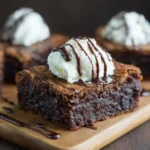
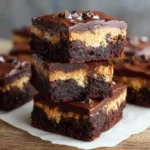
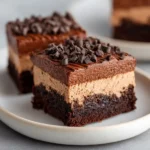
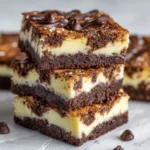
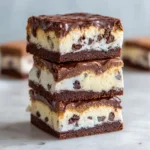
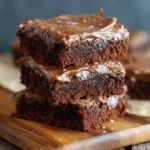
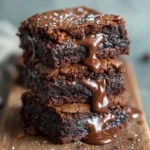
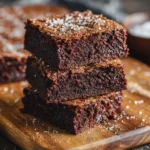
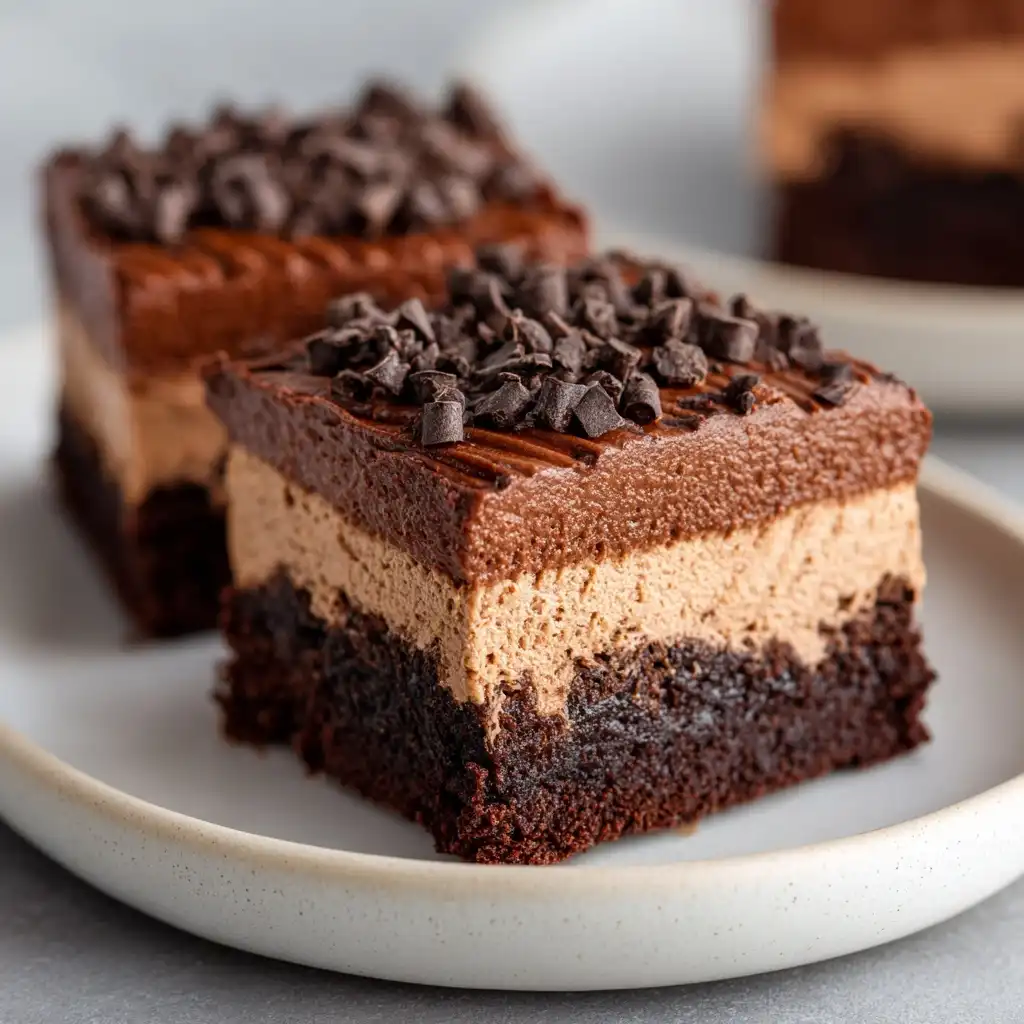
Chocolate Mousse Brownie Bars are the ultimate dessert fusion—a luxurious marriage of dense, fudgy brownie base and airy, velvety chocolate mousse topping that delivers an unforgettable textural contrast in every bite. These decadent bars combine the nostalgic comfort of homemade brownies with the elegant sophistication of classic French mousse, all elegantly layered, chilled to perfection, and effortlessly sliceable. Whether served at holiday gatherings, dinner parties, or as a weekend treat for the family, they strike a rare balance: indulgent yet refined, rich yet refreshingly light on top—and infinitely customizable to suit dietary preferences, seasonal ingredients, or creative flair. More than just a dessert, they’re an experience—deep cocoa aroma, glossy surface sheen, clean knife cuts, and that signature “give” of mousse yielding to chewy, crinkly-topped brownie beneath.
The History
The Chocolate Mousse Brownie Bars represent a delicious evolution born from two iconic American and European confections with rich, intertwined legacies. Brownies trace their origins to late 19th-century America—first appearing in cookbooks like the 1896 Boston Cooking-School Cook Book by Fannie Farmer—evolving from “brownie cake” into the fudgy, gooey, or cakey squares we know today. Meanwhile, chocolate mousse emerged from 18th-century France, where chefs like Marie-Antoine Carême elevated it from rustic whipped chocolate preparations into a delicate, air-infused delicacy stabilized with eggs and cream. The convergence of these traditions into a single bar format gained momentum in the 1980s and ’90s, fueled by home baking magazines, cable cooking shows, and the rise of “gourmet convenience”—bakers sought showstopping desserts that required minimal plating but delivered maximum impact. Early iterations appeared in publications like Bon Appétit and Martha Stewart Living, often under names like “Mousse-Topped Brownies” or “Chocolatier Bars.” The modern version—with its precise layering, stabilizer-enhanced mousse (often using gelatin or cornstarch), and emphasis on high-cacao chocolate—has been further refined by food scientists, pastry chefs, and viral baking influencers who prioritize both stability and sensory harmony. Today, Chocolate Mousse Brownie Bars stand as a testament to culinary cross-pollination: a globally beloved hybrid that honors tradition while embracing innovation, accessibility, and Instagram-worthy presentation.
Ingredients Breakdown
Understanding each ingredient’s functional role is essential to mastering these bars—not only for flavor, but for texture, structure, emulsification, and shelf stability.
- Unsweetened Cocoa Powder (Dutch-processed preferred): Provides deep, non-acidic chocolate flavor and rich color; Dutch-processing neutralizes acidity, allowing smoother integration with dairy and enhancing mousse glossiness.
- Granulated Sugar: Sweetens both layers and aids in creaming butter for the brownie base; also helps stabilize egg whites in mousse by increasing viscosity and delaying collapse.
- Brown Sugar (light or dark): Adds moisture, chewiness, and molasses depth to the brownie layer; its hygroscopic nature retains water, preventing drying during baking and chilling.
- Unsalted Butter: Delivers richness, tenderness, and flakiness in the brownie crust; melted and cooled butter ensures even distribution without cooking eggs prematurely.
- Eggs (large, room temperature): Act as emulsifiers and leaveners—yolks enrich and bind the brownie batter, while whole eggs and additional yolks in the mousse provide structure, fat content, and smooth mouthfeel.
- Vanilla Extract (pure, not imitation): Enhances chocolate’s aromatic complexity and rounds out bitterness; alcohol-based extract disperses more evenly than paste or powder.
- All-Purpose Flour: Provides gluten structure—just enough to hold the brownie together without making it cakey; overmixing or excess flour yields toughness.
- Espresso Powder (instant, optional but highly recommended): Doesn’t make the dessert taste like coffee—it intensifies chocolate notes via umami synergy and balances sweetness without adding liquid.
- Salt (fine sea salt or kosher): Critical for flavor modulation; suppresses bitterness, heightens sweetness perception, and deepens overall savoriness—especially vital in high-cocoa desserts.
- Heavy Cream (36–40% milkfat): The backbone of the mousse—its high fat content creates lushness and allows for stable whipping; ultra-chilled cream whips faster and holds peaks longer.
- Dark Chocolate (60–72% cacao, finely chopped or high-quality chips): Determines mousse intensity and texture—higher cocoa solids yield deeper flavor but require careful tempering to avoid graininess; couverture chocolate is ideal for superior snap and shine.
- Gelatin (unflavored, powdered) or Cornstarch (for vegetarian option): A crucial stabilizer—gelatin sets the mousse firmly without refrigeration “weeping,” while cornstarch offers a softer set and works well for vegan or gelatin-free versions (though with slightly less elasticity).
- Water (for blooming gelatin): Must be cold to hydrate gelatin granules before dissolving—prevents lumps and ensures seamless incorporation into warm chocolate.
- Pinch of Cream of Tartar (optional, for mousse): Stabilizes whipped cream by lowering pH, improving volume and resistance to separation—especially helpful in humid climates or when preparing ahead.
Each ingredient interacts dynamically: sugar and fat delay gluten formation in the brownie; cocoa and espresso form colloidal suspensions in melted butter; gelatin forms thermoreversible networks with chocolate proteins and cream fats. Precision in selection and proportion is what separates a spectacular bar from one that cracks, slides, or lacks definition.
Step-by-Step Recipe
- Prep & Preheat: Line a 9×13-inch metal baking pan with parchment paper, leaving 2-inch overhangs on all sides for easy lifting. Lightly grease exposed edges. Preheat oven to 350°F (175°C). Position rack in center third of oven.
- Make the Brownie Base: In a medium heatproof bowl, melt ¾ cup unsalted butter with 1¼ cups granulated sugar, ½ cup brown sugar, ¾ cup unsweetened Dutch-process cocoa powder, 1 tsp espresso powder, and 1 tsp fine sea salt over a double boiler (or in microwave in 20-sec bursts, stirring between), until smooth and glossy (~110°F). Remove from heat; cool 5 minutes. Whisk in 3 large eggs, one at a time, fully incorporating after each. Stir in 2 tsp pure vanilla extract. Gently fold in 1 cup all-purpose flour (sifted) until *just* combined—do not overmix. Batter will be thick, shiny, and slightly airy.
- Bake the Foundation: Pour batter into prepared pan and spread evenly with an offset spatula. Tap pan sharply twice on counter to release air bubbles. Bake 22–25 minutes—edges should be set and pulling slightly from pan, center should look moist but not liquid (a toothpick inserted 1 inch from edge should have moist crumbs; center may appear underbaked but will firm as it cools). Cool completely in pan on wire rack—minimum 1 hour, preferably 90 minutes. Do NOT refrigerate at this stage—chilling too soon causes condensation and mousse adhesion issues.
- Prepare Gelatin (if using): Sprinkle 1 tsp unflavored gelatin over 2 tbsp cold water in a small bowl. Let bloom 5 minutes until spongy. Meanwhile, heat ¼ cup heavy cream in a small saucepan over medium-low until steaming (170°F), then remove from heat. Whisk bloomed gelatin into hot cream until fully dissolved (no granules). Set aside to cool to room temperature—do not let it set.
- Melt Chocolate for Mousse: Place 12 oz finely chopped 65% dark chocolate in a heatproof bowl. Heat remaining 1 cup heavy cream in same saucepan until scalding (small bubbles around edges, ~180°F). Immediately pour hot cream over chocolate. Cover bowl with plate and let sit 3 minutes. Gently whisk from center outward until smooth, glossy, and fully emulsified—no streaks. Cool mixture to 90°F (use instant-read thermometer); if too warm, mousse will melt the brownie layer; if too cool, chocolate will seize.
- Combine & Temper: Whisk room-temp gelatin mixture into warm chocolate–cream ganache until fully incorporated. Let cool another 5–7 minutes, stirring occasionally, until mixture reaches 80–85°F—slightly thicker but still fluid.
- Whip the Cream: In a chilled stainless-steel bowl with chilled beaters, whip 1½ cups heavy cream (cold, 40% fat preferred) with ¼ tsp cream of tartar and 2 tbsp powdered sugar until soft peaks form—do not overwhip to stiff or grainy stage.
- Fold Gently: Using a large silicone spatula, add one-third of whipped cream to chocolate mixture and fold vigorously to lighten. Then gently fold in remaining cream in two additions, rotating bowl and using slow, sweeping motions from bottom up—stop as soon as no white streaks remain. Overfolding deflates air and yields dense mousse.
- Layer & Chill: Carefully pour mousse over cooled brownie layer. Tilt pan to level; use offset spatula to smooth top. Tap pan once to pop air bubbles. Refrigerate uncovered for minimum 4 hours—or ideally overnight (8–12 hours)—until mousse is fully set and cold throughout (40°F core temp). For cleanest cuts, freeze 30 minutes before slicing.
- Portion & Serve: Use parchment overhangs to lift entire slab onto cutting board. With a sharp chef’s knife dipped in hot water and wiped dry between cuts, slice into 12–16 uniform bars (2×3 inches). Wipe blade thoroughly before each cut. Serve chilled—but allow bars to sit at room temperature 5 minutes for optimal mousse texture and aroma release.
Tips
- Temperature Is Non-Negotiable: Every component—eggs, butter, cream, chocolate, even your mixing bowls—should be at specified temperatures. Room-temp eggs incorporate air better; cold cream whips higher; warm (not hot) ganache accepts whipped cream without melting it. Use an instant-read thermometer for precision.
- Parchment Is Your Best Friend: Do not skip the full parchment sling—even if you grease the pan. It prevents sticking, enables clean removal, protects the fragile mousse layer from tearing, and allows for effortless transfer to serving platters or decorative boards.
- Underbake the Brownie—Strategically: The brownie should look *just barely* set at the center when removed. Residual heat continues cooking as it cools. Overbaking leads to a dry, crumbly base that cannot support the mousse’s weight or absorb its subtle moisture.
- Whip Cream to “Soft Peaks,” Not Stiff: Overwhipped cream collapses when folded, causing mousse to separate or become rubbery. Soft peaks hold their shape briefly when beater is lifted, then curl over at tips—this provides loft without instability.
- Use a Silicone Spatula, Not a Wire Whisk: Folding requires gentle incorporation—not agitation. A flexible silicone spatula allows you to scrape the bottom fully while minimizing air loss. Rotate the bowl—not your wrist—for even distribution.
- Cut with Hot, Dry Knives: Dip knife in boiling water, wipe *completely* dry with a clean towel, then slice. Repeat before each cut. This prevents dragging, smearing, or cracking the mousse layer and gives glassy, professional edges.
- Chill Before Freezing (If Storing): Fully chill bars (4+ hours) before freezing. Wrap tightly in plastic wrap, then in aluminum foil, and place in a rigid airtight container. Freeze up to 3 months. Thaw overnight in refrigerator—never at room temperature—to prevent condensation and layer separation.
- Rest Before Serving: Cold mousse can mute aroma and dull chocolate flavor. Let bars sit at cool room temperature (65–68°F) for 4–5 minutes pre-slicing or plating—just long enough to soften surface tension without melting.
- Scale Up or Down Confidently: This recipe scales linearly. For 8×8 pan: reduce all ingredients by ~30% and bake brownie 18–20 min. For 9×9: reduce by ~15%. Always adjust chilling time—smaller pans set faster.
- Test Mousse Consistency Before Pouring: Spoon a small amount onto chilled plate—if it holds shape and doesn’t run after 30 seconds, it’s ready. If too thin, refrigerate 5 minutes and retest. If too thick, gently warm over double boiler 5 seconds and stir.
Variations and Customizations
These bars serve as a versatile canvas—elevated with global flavors, dietary adaptations, seasonal twists, and textural surprises—all while preserving structural integrity and balanced sweetness.
Flavor Infusions
- Orange-Cardamom: Add 1 tbsp finely grated orange zest + ½ tsp ground cardamom to brownie batter; replace 1 tsp vanilla in mousse with orange blossom water.
- Peppermint Crunch: Fold ½ cup crushed candy canes or peppermint bark into mousse before folding in cream; garnish with edible silver dragées.
- Espresso Martini: Replace 2 tbsp brewed espresso in brownie with 1 oz vodka + 1 oz coffee liqueur (cooled); swirl 1 tsp Kahlúa into mousse pre-folding.
- Chai-Spiced: Steep 2 chai tea bags in warm cream for ganache; steep 1 bag in brownie butter-sugar mixture. Add ¼ tsp ginger + ⅛ tsp clove to dry ingredients.
Dietary Adaptations
- Vegan: Use flax eggs (3 tbsp water + 1 tbsp ground flaxseed per egg) in brownie; swap butter for refined coconut oil; use full-fat coconut milk (canned, chilled) for mousse base; replace gelatin with 1 tsp agar-agar (bloomed in 2 tbsp water, boiled 1 min, cooled).
- Gluten-Free: Substitute 1:1 gluten-free all-purpose flour blend (with xanthan gum); verify cocoa and chocolate are GF-certified. Add ¼ tsp xanthan gum to dry mix if blend lacks it.
- Lower-Sugar: Replace granulated sugar with erythritol-based 1:1 blend in both layers; use 85% dark chocolate; omit brown sugar in brownie and increase unsweetened applesauce by 2 tbsp for moisture.
- Keto-Friendly: Brownie: almond flour (1 cup), erythritol (¾ cup), cocoa (½ cup), butter (½ cup), eggs (3), vanilla, salt. Mousse: heavy cream (1½ cups), unsweetened chocolate (4 oz), gelatin (1 tsp), stevia drops to taste, MCT oil (1 tsp) for satiety.
Textural & Visual Upgrades
- Crunch Layer: Press ½ cup toasted hazelnuts, crushed pretzels, or feuilletine into brownie *immediately* after baking—before cooling. Creates a delightful crackle between layers.
- Swirled Ganache: After pouring mousse, drizzle 2 tbsp warm white chocolate ganache across top and pull through with toothpick for marbled effect.
- Edible Gold Leaf: Apply tiny sheets to chilled, sliced bars using tweezers and food-grade adhesive (a drop of corn syrup on brush). Adds luxury without altering flavor.
- Layered Jam Core: After brownie cools, spread ⅓ cup seedless raspberry or blackberry jam (simmered 2 min with ½ tsp lemon juice + 1 tsp cornstarch slurry) before adding mousse.
Occasion-Specific Twists
- Valentine’s Edition: Heart-shaped mini bars (use silicone mold); garnish with rose petal sugar and dark chocolate-dipped strawberries on side.
- Holiday Spice: Brownie with 1 tsp cinnamon + ¼ tsp nutmeg; mousse infused with star anise; top with candied ginger and crushed pistachios.
- Summer Berry: Fold ½ cup macerated fresh raspberries (tossed with 1 tsp sugar + ½ tsp lemon juice, strained) into mousse just before folding.
- Boozy Brunch Bar: Add 1 tbsp bourbon to brownie batter; top chilled bars with bourbon-vanilla whipped cream and candied pecans.
Health Considerations and Nutritional Value
While undeniably indulgent, Chocolate Mousse Brownie Bars can be contextualized within a balanced diet—especially when crafted mindfully. A standard 2×3-inch bar (1/16th of full recipe) contains approximately:
- Calories: 320–360 kcal (varies with chocolate %, sugar type, and cream fat content)
- Total Fat: 20–23 g (12–14 g saturated; primarily from cocoa butter and dairy fat)
- Carbohydrates: 34–38 g (28–32 g sugars; naturally occurring lactose + added sucrose)
- Fiber: 2–3 g (from cocoa solids and optional additions like almond flour or psyllium)
- Protein: 4–5 g (from eggs, dairy, and cocoa)
- Key Micronutrients: Iron (15% DV), Magnesium (12% DV), Copper (25% DV), Manganese (30% DV), and flavonoid antioxidants (epicatechin, procyanidins) — especially abundant in dark chocolate ≥70% cacao.
Functional Benefits:
- Antioxidant-Rich Cocoa: Flavonoids in dark chocolate support endothelial function, modestly improve blood flow, and exhibit anti-inflammatory activity—particularly when minimally processed and consumed regularly in moderate portions (1–2 small servings weekly).
- Healthy Fats: Cocoa butter contains stearic acid (a saturated fat metabolized like a monounsaturated fat) and oleic acid (heart-healthy MUFA), contributing to stable energy and satiety.
- Minimal Additives: This from-scratch version avoids artificial emulsifiers (soy lecithin overload), preservatives, hydrogenated oils, and high-fructose corn syrup common in commercial desserts.
Considerations & Mitigations:
- Sugar Load: High glycemic impact due to refined sugars. Mitigate by using half brown sugar/half coconut sugar (lower GI), adding 1 tbsp ground flax or chia seeds to brownie batter (slows glucose absorption), or serving with Greek yogurt to buffer insulin response.
- Saturated Fat: While cocoa butter’s fatty acid profile is favorable, portion control remains key—especially for those managing LDL cholesterol. Opt for 60–65% chocolate instead of 85%+ if fat sensitivity is a concern.
- Caffeine Content: ~12–18 mg per bar (equivalent to 1 oz dark chocolate)—safe for most, but consider decaf espresso powder and low-caffeine chocolate for evening service or children.
- Allergens: Contains dairy, eggs, soy (in most chocolate), and wheat. Vegan/GF versions address multiple allergen concerns simultaneously.
- Digestive Sensitivity: Some individuals report bloating from high-fat, high-fiber desserts. Adding digestive-friendly spices (ginger, fennel seed in brownie) or serving with peppermint tea may ease discomfort.
Ultimately, nutritional value is deeply tied to ingredient quality and intentionality—not just quantity. Choosing organic cocoa, grass-fed butter, pasture-raised eggs, and ethically sourced chocolate enhances phytonutrient density and reduces pesticide load. When enjoyed consciously—as part of a varied, whole-foods pattern—these bars transcend “guilty pleasure” to become a nourishing, celebratory ritual.
Ingredients
For the Brownie Base:
- ¾ cup (170g) unsalted butter, cubed
- 1¼ cups (250g) granulated sugar
- ½ cup (100g) light or dark brown sugar, packed
- ¾ cup (75g) unsweetened Dutch-process cocoa powder
- 1 teaspoon (2g) instant espresso powder
- 1 teaspoon (6g) fine sea salt
- 3 large eggs, room temperature
- 2 teaspoons (10ml) pure vanilla extract
- 1 cup (125g) all-purpose flour, spooned & leveled
For the Chocolate Mousse Layer:
- 12 ounces (340g) high-quality dark chocolate (60–72% cacao), finely chopped
- 1¼ cups (300ml) heavy cream (36–40% fat), divided
- 1 teaspoon (2.5g) unflavored powdered gelatin (or 1 tablespoon cornstarch for vegetarian version)
- 2 tablespoons (15g) powdered sugar
- ¼ teaspoon (0.5g) cream of tartar (optional, but recommended)
- ¼ teaspoon (1g) fine sea salt
- 1 teaspoon (5ml) pure vanilla extract
Directions
- Prepare Pan: Line a 9×13-inch metal baking pan with parchment paper, ensuring full coverage and 2-inch overhangs on all sides. Lightly grease exposed edges with butter or non-stick spray.
- Bake Brownie Base: Preheat oven to 350°F (175°C). In a medium heatproof bowl set over simmering water (double boiler), melt butter with granulated sugar, brown sugar, cocoa powder, espresso powder, and salt, stirring constantly until smooth and glossy (~5 minutes). Remove from heat; cool 5 minutes. Whisk in eggs one at a time, then vanilla. Gently fold in flour until *just* combined. Pour into prepared pan, spread evenly, and tap pan sharply twice. Bake 22–25 minutes until edges are set and center is moist but not wet. Cool completely on wire rack—minimum 90 minutes.
- Bloom Gelatin: Sprinkle gelatin over 2 tablespoons cold water in small bowl. Let sit 5 minutes until spongy.
- Heat Cream for Gelatin: In small saucepan, heat ¼ cup heavy cream over medium-low until steaming (170°F). Whisk in bloomed gelatin until fully dissolved. Cool to room temperature (~70°F).
- Make Chocolate Ganache: Place chopped chocolate in heatproof bowl. Heat remaining 1 cup heavy cream in same saucepan until scalding (180°F). Pour over chocolate. Cover and let sit 3 minutes. Whisk gently from center until smooth and glossy. Cool to 90°F.
- Temper Ganache: Whisk room-temp gelatin mixture into warm ganache until fully blended. Cool, stirring occasionally, to 80–85°F (about 5–7 minutes).
- Whip Cream: In chilled bowl with chilled beaters, whip remaining ½ cup heavy cream (reserve ¼ cup if using cornstarch method) with powdered sugar, cream of tartar, and salt until soft peaks form.
- Fold Mousse: Whisk one-third of whipped cream into ganache to lighten. Gently fold in remaining cream in two batches until uniform and airy—no streaks. Do not overmix.
- Layer & Chill: Pour mousse over cooled brownie. Smooth top with offset spatula. Refrigerate uncovered for at least 4 hours—or preferably overnight (8–12 hours)—until firm and cold.
- Cut & Serve: Lift slab using parchment. Slice with hot, dry knife into 12–16 bars. Serve chilled. Store covered in refrigerator up to 5 days.
FAQ
- Can I make these bars ahead of time?
- Absolutely—these bars improve with time! Prepare up to 3 days in advance and store covered in the refrigerator. For longer storage, freeze for up to 3 months (wrap tightly in plastic + foil). Thaw overnight in fridge before serving.
- Why did my mousse slide off the brownie?
- This usually occurs when the brownie wasn’t fully cooled before adding mousse, or the brownie was overbaked and too dry to create a tacky surface. Ensure brownie is at room temperature—not cold—and has a slightly moist, tacky top before pouring mousse. A light dust