Introduction
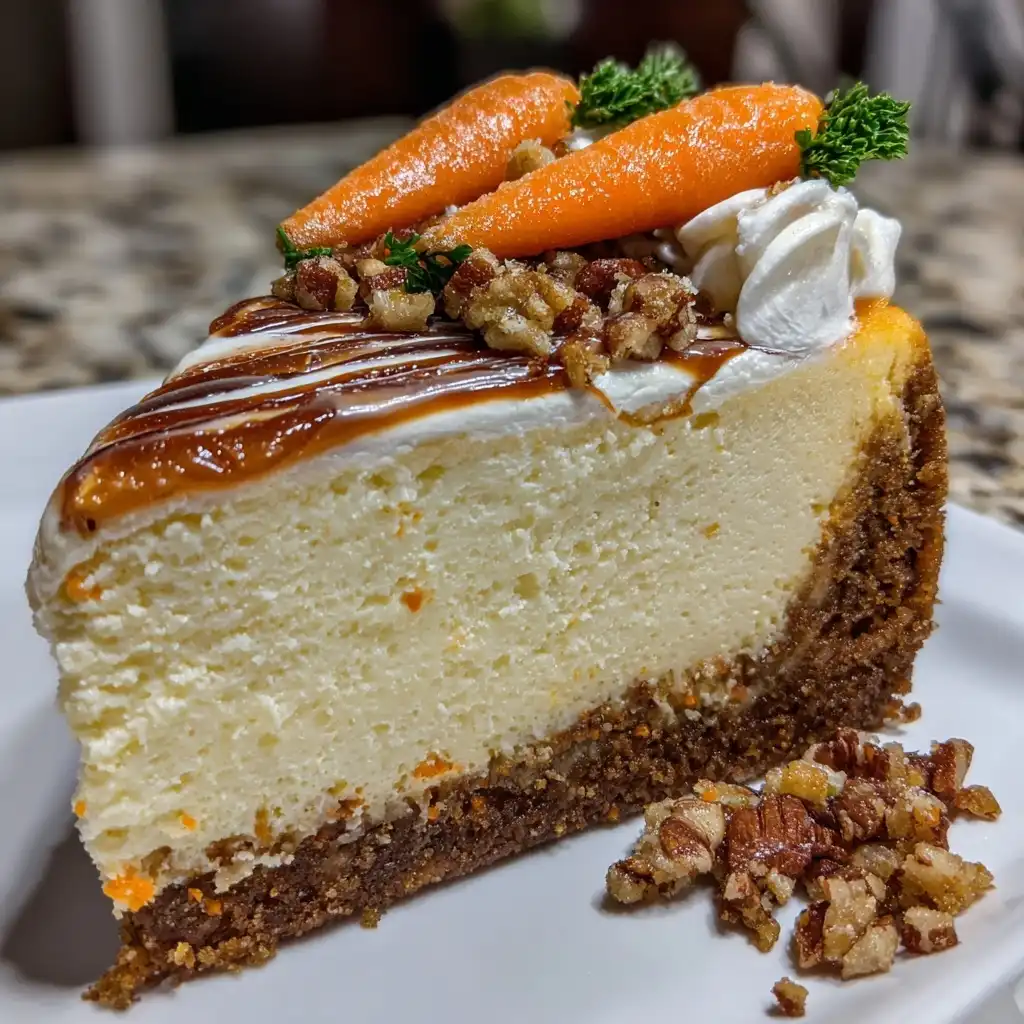
Carrot Cake Cheesecake is the ultimate fusion dessert—a luxurious marriage of two beloved classics: the warmly spiced, moist richness of traditional carrot cake and the velvety, tangy elegance of New York–style cheesecake. This decadent hybrid delivers the best of both worlds: the earthy sweetness of grated carrots, the aromatic warmth of cinnamon and nutmeg, the satisfying crunch of walnuts or pecans, and the luscious, creamy density of a perfectly baked cheesecake layer—often crowned with a cloud-like cream cheese frosting or a glossy maple-cream cheese glaze. Whether served at holiday gatherings, birthday celebrations, or as an indulgent weekend treat, Carrot Cake Cheesecake transcends seasonal expectations—it’s comforting yet sophisticated, nostalgic yet inventive, and endlessly adaptable to dietary preferences and flavor affinities.
The History
The origins of Carrot Cake Cheesecake are delightfully modern and deeply rooted in American dessert evolution. Carrot cake itself traces back to medieval Europe, where carrots were used as a natural sweetener during sugar shortages; by the 19th century, it had evolved into a spiced, moist cake popularized in the U.S. during WWII due to wartime rationing and government promotion of homegrown vegetables. Cheesecake boasts even older roots—dating to ancient Greece—and entered American kitchens via Eastern European Jewish immigrants who brought dense, cream cheese–based versions to New York City in the late 1800s. The fusion concept began gaining traction in the 1980s and 1990s, as home bakers and café chefs experimented with layered “cake-and-cheesecake” hybrids—think red velvet cheesecake or pumpkin spice cheesecake. Carrot Cake Cheesecake emerged prominently in the early 2000s, boosted by food blogs, cooking shows, and social media platforms that celebrated over-the-top, texturally complex desserts. Its rise reflects broader culinary trends: the desire for comfort food reinvention, the celebration of vegetable-forward sweets, and the growing appetite for desserts that balance nostalgia with artisanal craftsmanship.
Ingredients Breakdown
Understanding each ingredient’s role ensures structural integrity, balanced flavor, and optimal texture:
- Carrots: Freshly grated (not pre-shredded) provide moisture, natural sweetness, fiber, and subtle earthiness. Their high water content helps keep the cake layer tender while contributing to the overall density and color of the dessert.
- Spices (cinnamon, nutmeg, ginger, allspice): These warm, aromatic spices enhance the carrots’ natural sugars and add complexity without overpowering. Cinnamon dominates, while freshly grated nutmeg adds depth and ginger lends a gentle zing—essential for balancing the richness of cream cheese.
- Nuts (walnuts or pecans): Toasted and coarsely chopped, they contribute essential crunch, buttery richness, and a toasted aroma that contrasts beautifully with the smooth cheesecake layer. They also improve mouthfeel and prevent the cake from feeling cloyingly soft.
- Pineapple (crushed or finely diced): A classic addition in many carrot cake recipes, pineapple adds bright acidity, extra moisture, and natural enzymes that tenderize the crumb—though it’s optional in some cheesecake iterations for stability.
- Shredded coconut: Unsweetened or lightly toasted, it introduces subtle tropical notes, chewy texture, and additional fiber—especially valued in vegan or gluten-free adaptations.
- Cream cheese (full-fat, brick-style): The cornerstone of the cheesecake layer. Must be at room temperature to ensure smooth blending and prevent lumps. High fat content yields creaminess and prevents cracking; low-fat versions often result in a rubbery or grainy texture.
- Sour cream & heavy cream: These dairy additions increase moisture, soften the protein structure, and lend a subtle tang and luxurious mouthfeel—critical for preventing dryness in the cheesecake layer.
- Eggs: Act as both binder and leavening agent. Added one at a time and thoroughly incorporated, they help create a stable, velvety custard base. Overmixing after egg addition can introduce excess air and cause cracking.
- Granulated & brown sugar: Granulated sugar provides structure and sweetness, while brown sugar (light or dark) contributes molasses notes, moisture retention, and caramel undertones—especially important in the cake layer.
- Vegetable oil (or melted coconut oil): Unlike butter-based cakes, carrot cake relies on oil for superior moisture retention and tenderness. Oil remains liquid at room temperature, ensuring the cake stays supple for days.
- Flour (all-purpose or gluten-free blend): Provides gluten structure—but only enough to hold shape without toughness. Overmixing or excess flour leads to gummy layers. For gluten-free versions, a certified GF 1:1 blend with xanthan gum is ideal.
- Baking powder & baking soda: Leavening agents that work synergistically—baking soda reacts with acidic ingredients (brown sugar, pineapple, sour cream), while baking powder offers secondary lift. Too much causes doming or collapse.
- Salt: A small but vital amount enhances all other flavors and balances sweetness—never omit.
- Vanilla extract (pure, not imitation): Adds floral warmth and rounds out spice notes. Bourbon vanilla or Madagascar beans yield superior aromatic depth.
- Cream cheese frosting (optional but traditional): Made with softened cream cheese, unsalted butter, powdered sugar, vanilla, and a touch of lemon juice or cream for consistency—provides contrast in temperature, texture, and acidity.
Step-by-Step Recipe
- Prepare Equipment & Preheat Oven: Position oven rack in center position. Preheat to 325°F (163°C) for gentle, even baking. Grease and line a 9-inch springform pan with parchment paper—bottom and sides—ensuring overhang for easy removal. Wrap the *outside* of the pan tightly with two layers of heavy-duty aluminum foil to prevent water seepage during the water bath.
- Make the Carrot Cake Layer: In a large bowl, whisk together 1¾ cups all-purpose flour, 2 tsp ground cinnamon, ½ tsp ground nutmeg, ¼ tsp ground ginger, ¼ tsp ground allspice, 1 tsp baking powder, ½ tsp baking soda, and 1 tsp fine sea salt. In another bowl, whisk 1 cup granulated sugar, 1 cup packed light brown sugar, 1 cup neutral oil (e.g., grapeseed or canola), 4 large eggs (room temperature), 2 tsp pure vanilla extract, 2 cups finely grated carrots (about 4 medium), 1 cup crushed pineapple (well-drained), ½ cup toasted walnuts (chopped), and ½ cup unsweetened shredded coconut. Gradually fold dry ingredients into wet until *just combined*—do not overmix. Batter should be thick, glossy, and uniformly speckled with orange and brown flecks.
- Prepare the Cheesecake Layer: In a stand mixer fitted with paddle attachment (or large bowl + hand mixer), beat 24 oz (three 8-oz bricks) full-fat cream cheese (room temperature) on medium speed for 2 minutes until fluffy and completely smooth—scraping bowl frequently. Add 1 cup granulated sugar and beat 2 more minutes until pale and airy. Add 1 cup full-fat sour cream and ½ cup heavy cream; beat 1 minute until homogenous. Add 4 large eggs (room temperature), one at a time, beating *just until yolk disappears* after each addition—approximately 20 seconds per egg. Scrape bowl thoroughly. Stir in 2 tsp pure vanilla and ¼ tsp fine sea salt. Mixture should be silky, pourable, and free of streaks or lumps.
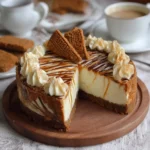
- Layer & Swirl (Optional but Recommended): Pour the carrot cake batter into the prepared pan and spread evenly using an offset spatula. Gently spoon the cheesecake batter over top in large dollops. Using a butter knife or skewer, gently swirl the two batters together 8–10 times in a figure-eight motion—*do not over-swirl*, or layers will fully merge and lose definition. Alternatively, for distinct layers, carefully spread the cheesecake batter over the cake layer without swirling.
- Water Bath Setup: Place the foil-wrapped springform pan into a larger roasting pan. Carefully pour hot (not boiling) water into the roasting pan until it reaches halfway up the sides of the springform pan (~1.5 inches deep). This gentle steam environment prevents cracking, ensures even heat distribution, and yields ultra-creamy texture.
- Bake with Precision: Carefully transfer the roasting pan to the preheated oven. Bake for 1 hour and 20 minutes—rotating pan halfway through. The cheesecake layer should be set around the edges with a 2-inch wobbly center (like firm Jell-O); the cake layer should spring back when lightly pressed. Avoid opening the oven door before 1 hour—the temperature shock can cause collapse.
- Cool Gradually (Critical Step): Turn off oven. Crack oven door open 1 inch with a wooden spoon handle. Let cake cool inside oven for 1 hour. Then remove from water bath, carefully unwrap foil, and run a thin knife around inner edge of pan to loosen. Cool on wire rack at room temperature for 2 more hours.
- Chill Overnight: Refrigerate uncovered for *at least 12 hours*, preferably 24 hours. This slow, cold setting allows the cheesecake to fully firm, the flavors to meld, and the cake layer to hydrate evenly. Do not rush this step—cutting too soon guarantees smearing and layer separation.
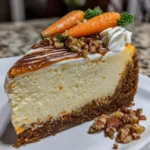
- Unmold & Frost: Run warm knife around pan edge again. Release springform clasp and carefully lift off outer ring. Slide offset spatula under parchment to lift cake onto serving plate. Peel off parchment. Prepare cream cheese frosting (16 oz softened full-fat cream cheese, ½ cup unsalted butter, 4 cups powdered sugar, 2 tsp vanilla, 1 tbsp fresh lemon juice, 2–3 tbsp heavy cream) and pipe or spread generously over chilled cake. Optional garnishes: candied carrots, crystallized ginger, toasted walnut halves, edible flowers, or a drizzle of maple syrup reduction.
Tips
- Grate carrots finely using the small holes of a box grater—or a food processor with shredding disc. Large shreds won’t integrate well and may sink or create uneven texture.
- Always use room-temperature dairy and eggs. Cold ingredients cause lumps in the cheesecake batter and inhibit proper emulsification.
- Drain pineapple thoroughly—even squeeze in a clean kitchen towel. Excess moisture weakens structure and encourages weeping or sogginess.
- To toast nuts perfectly: Spread on a parchment-lined baking sheet and bake at 350°F for 8–10 minutes, stirring once, until fragrant and golden. Cool completely before folding in.
- For crack-free cheesecake: Avoid overmixing after adding eggs, use a water bath, cool gradually in oven, and chill *fully*. If cracks appear, embrace them—frosting hides everything, and flavor remains impeccable.
- Prevent soggy crust (if using one): While traditional carrot cake cheesecake omits a crust, some bakers add a graham cracker or speculoos base. If doing so, pre-bake it for 8 minutes and cool completely before adding batter.
- Measure flour correctly: Spoon flour into measuring cup and level with a straight edge—don’t scoop directly from bag, which compacts flour and adds up to 25% excess.
- Use a digital oven thermometer. Ovens often run hot or cold—accuracy is non-negotiable for delicate cheesecakes.
- When slicing, dip knife in hot water and wipe dry between cuts. This ensures clean, professional slices with defined layers.
- Store leftovers covered in refrigerator for up to 5 days. Freeze unfrosted cake (well-wrapped) for up to 3 months—thaw overnight in fridge before frosting and serving.
Variations and Customizations
This recipe is gloriously versatile—ideal for holidays, dietary needs, or playful experimentation:
- Gluten-Free: Substitute 1:1 gluten-free all-purpose flour blend (with xanthan gum) and verify all spices and baking powders are certified GF. Add 1 tsp psyllium husk powder to enhance binding and moisture retention.
- Vegan: Replace eggs with flax eggs (4 tbsp ground flax + 10 tbsp water, rested 15 min); use full-fat coconut cream instead of sour cream/heavy cream; swap cream cheese for high-quality cultured cashew or almond-based cream cheese; replace oil with refined coconut oil; and use maple syrup or coconut sugar (adjust liquid accordingly).
- Lower-Sugar: Reduce granulated sugar in both layers by 25%, use monk fruit–erythritol blend (1:1), and rely on carrots, pineapple, and cinnamon for perceived sweetness. Add 1 tsp stevia glycerite for depth if desired.
- Spice-Forward: Add ¼ tsp cardamom, a pinch of black pepper, or 1 tbsp freshly grated orange zest to the cake batter for aromatic brightness.
- Boozy Twist: Infuse 2 tbsp bourbon or rum into the cream cheese layer—add with vanilla. Or soak chopped dates or raisins in Grand Marnier before folding into cake batter.
- Layered Presentation: Bake cake and cheesecake separately in two pans, then stack with a thin layer of apricot jam or orange curd as “glue”—creates dramatic height and clean separation.
- Mini Version: Use a 9×13-inch pan for a bar-style version or line a muffin tin with parchment for individual servings—reduce bake time to 25–32 minutes.
- Chocolate-Carrot Fusion: Fold ½ cup mini dark chocolate chips into the cake batter—or add a thin layer of ganache between cake and cheesecake layers.
- Maple-Pecan Swirl: Before swirling, drizzle ¼ cup pure maple syrup mixed with 2 tbsp toasted pecan butter over cheesecake batter for ribbons of autumnal luxury.
- Protein-Boosted: Add 2 scoops unflavored collagen peptides or vanilla whey isolate to dry ingredients—no taste impact, added satiety and structure.
Health Considerations and Nutritional Value
While Carrot Cake Cheesecake is inherently indulgent, thoughtful modifications can elevate its nutritional profile without sacrificing satisfaction. Per standard slice (1/16 of a 9-inch cake, frosted), estimates range as follows: ~420–510 calories, 28–36g total fat (15–20g saturated), 42–52g carbohydrates (32–40g sugars), 5–7g protein, and 1–2g dietary fiber. However, key functional nutrients shine through:
- Vitamin A (as beta-carotene): Carrots supply over 200% DV per slice—supporting eye health, immune function, and skin integrity. Cooking and oil pairing significantly increase carotenoid bioavailability.
- Calcium & Vitamin D: Full-fat dairy contributes calcium, while fortified cream cheese or added vitamin D drops (in vegan versions) support bone health.
- Healthy Fats: Walnuts and oils provide heart-healthy monounsaturated and omega-3 fatty acids (ALA), linked to reduced inflammation and improved lipid profiles.
- Antioxidants: Cinnamon contains cinnamaldehyde and polyphenols; ginger offers gingerols; and walnuts contain ellagic acid—collectively combating oxidative stress.
- Dietary Fiber: Whole carrots, coconut, and optional additions like ground flaxseed or oat bran boost soluble and insoluble fiber—aiding digestion and glycemic regulation.
That said, mindful enjoyment is key. Those managing diabetes should prioritize lower-sugar versions and pair with a protein-rich snack (e.g., Greek yogurt or almonds) to mitigate blood sugar spikes. Individuals with lactose sensitivity may opt for lactose-free cream cheese or fermented nut-based alternatives. For those monitoring sodium, reduce added salt and skip salted nuts. Always consult a registered dietitian for personalized guidance—especially when adapting for conditions like PCOS, hypertension, or gastrointestinal disorders. Remember: nutrient density matters, but joy in eating is also foundational to holistic wellness.
Ingredients
For the Carrot Cake Layer:
- 1¾ cups (220g) all-purpose flour (or certified gluten-free 1:1 blend)
- 2 tsp ground cinnamon
- ½ tsp freshly grated nutmeg
- ¼ tsp ground ginger
- ¼ tsp ground allspice
- 1 tsp baking powder
- ½ tsp baking soda
- 1 tsp fine sea salt
- 1 cup (200g) granulated sugar
- 1 cup (220g) packed light brown sugar
- 1 cup (240ml) neutral oil (grapeseed, canola, or refined coconut oil)
- 4 large eggs, room temperature
- 2 tsp pure vanilla extract
- 2 cups (225g) finely grated carrots (4–5 medium, peeled)
- 1 cup (240g) crushed pineapple, drained *very* well (squeeze in towel)
- ½ cup (60g) toasted walnuts or pecans, coarsely chopped
- ½ cup (40g) unsweetened shredded coconut
For the Cheesecake Layer:
- 24 oz (680g) full-fat brick-style cream cheese, room temperature (3 (8-oz) packages)
- 1 cup (200g) granulated sugar
- 1 cup (240g) full-fat sour cream
- ½ cup (120ml) heavy cream or full-fat coconut cream (for vegan)
- 4 large eggs, room temperature
- 2 tsp pure vanilla extract
- ¼ tsp fine sea salt
For the Cream Cheese Frosting (Optional but Traditional):
- 16 oz (450g) full-fat cream cheese, room temperature
- ½ cup (115g) unsalted butter, room temperature
- 4 cups (480g) powdered sugar, sifted
- 2 tsp pure vanilla extract
- 1 tbsp fresh lemon juice
- 2–3 tbsp heavy cream or whole milk (as needed for consistency)
Garnish Suggestions:
- Extra toasted walnuts or pecans
- Candied carrot ribbons
- Crispy crystallized ginger
- Edible dried rose petals or violets
- Maple syrup reduction (simmer ½ cup maple syrup + 1 tsp lemon juice until slightly thickened)
Directions
- Preheat oven to 325°F (163°C). Position rack in center. Grease bottom and sides of a 9-inch springform pan; line bottom with parchment and grease parchment. Wrap *outside* of pan tightly with two layers of heavy-duty foil.
- In a medium bowl, whisk together flour, cinnamon, nutmeg, ginger, allspice, baking powder, baking soda, and salt. Set aside.
- In a large bowl, whisk sugars, oil, eggs, and vanilla until smooth and slightly thickened (~1 min). Stir in carrots, pineapple, walnuts, and coconut until evenly distributed.
- Gradually add dry ingredients to wet, folding gently with spatula just until no flour streaks remain. Do not overmix.
- Transfer carrot cake batter to prepared pan and spread evenly. Tap pan firmly on counter twice to release air bubbles.
- Prepare cheesecake batter: In stand mixer with paddle, beat cream cheese on medium 2 min until smooth. Add sugar; beat 2 min until light. Add sour cream and heavy cream; beat 1 min. Add eggs one at a time, beating *just until incorporated* after each (20 sec). Stir in vanilla and salt. Batter should be smooth and pourable.
- Spoon cheesecake batter over cake layer. Gently swirl with knife 8–10 times for marbled effect—or spread smoothly for clean layers.
- Place springform pan in large roasting pan. Carefully pour hot water into roasting pan until halfway up springform sides (~1.5 inches).
- Bake 1 hr 20 min—rotating pan halfway—until edges are set and center jiggles slightly. Do NOT open oven before 1 hr.
- Turn off oven. Crack door open 1 inch with spoon handle. Cool cake in oven 1 hr.
- Remove from water bath. Carefully unwrap foil. Run thin knife around edge. Cool on wire rack 2 hrs.
- Refrigerate uncovered *minimum 12 hours*, ideally 24 hrs.
- Unmold: Run warm knife around edge. Release clamp. Lift off ring. Slide cake onto plate. Peel off parchment.
- Prepare frosting: Beat cream cheese and butter until smooth. Gradually add powdered sugar. Mix in vanilla, lemon juice, and cream until spreadable. Frost cake generously.
- Garnish as desired. Slice with hot, wiped knife. Store covered in fridge up to 5 days.
FAQ
- Can I make this ahead of time?
- Absolutely—and highly recommended! The flavors deepen and textures harmonize during the 24-hour chill. Bake up to 3 days ahead; frost day-of serving for best appearance.
- Why did my cheesecake crack?
- Common causes: overmixing after eggs, rapid temperature changes (opening oven too soon), cooling too quickly, or overbaking. The water bath and gradual cooling minimize risk—but even cracked cakes taste divine under frosting!
- Can I freeze Carrot Cake Cheesecake?
- Yes! Unfrosted cake freezes exceptionally well for up to 3 months. Wrap tightly in plastic + foil. Thaw overnight in fridge before frosting and serving. Frosted cake can be frozen but may weep slightly upon thawing.
- What if I don’t have a springform pan?
- You may use a 9-inch regular cake pan lined with *extra-long* parchment sling (overhang on two sides). However, unmolding is trickier—chill thoroughly and invert onto plate, then lift off pan. Springform is strongly advised.
- Can I omit the pineapple?
- Yes—replace with ½ cup unsweetened applesauce or mashed banana for similar moisture and binding. Note: flavor and tang will shift subtly.
- Is there a way to make it egg-free?
- Yes—substitute each egg with 1 tbsp ground flaxseed + 2.5 tbsp warm water (rest 10 min), or use commercial egg replacer (follow package for 4 eggs). Texture will be slightly denser but still delicious.
- How do I prevent a soggy bottom?
- Ensure pineapple is *thoroughly* drained (press in towel), avoid overmixing batter, and never skip the parchment lining. If using a crust, pre-bake and cool completely first.
- Can I use store-bought frosting?
- You can—but homemade cream cheese frosting tastes fresher, less sweet, and holds up better structurally. If using store-bought, choose full-fat, refrigerated varieties—not shelf-stable tubs.
- Why does my cake layer seem underbaked after chilling?
- It’s not—it’s perfectly hydrated. The cake layer absorbs moisture from the cheesecake during chilling, yielding a uniquely tender, almost pudding-like crumb. Trust the process!
- Can I add raisins or dates?
- Yes! Soak ½ cup raisins in warm water or tea for 10 min, drain well. Or finely chop ½ cup pitted Medjool dates and pulse with 1 tsp flour to prevent sinking.
Summary
Carrot Cake Cheesecake is a masterclass in dessert alchemy—melding the soul-warming spices and garden-fresh sweetness of carrot cake with the silken opulence of a properly executed, water-bathed cheesecake, all elevated by thoughtful technique, premium ingredients, and endless customization potential.
Whether you’re honoring tradition with a maple-glazed, walnut-studded classic or innovating with vegan, gluten-free, or protein-enriched variations, this showstopping hybrid delivers unforgettable texture, layered flavor, and heartfelt joy—making every slice a celebration of craft, comfort, and culinary creativity.