Introduction
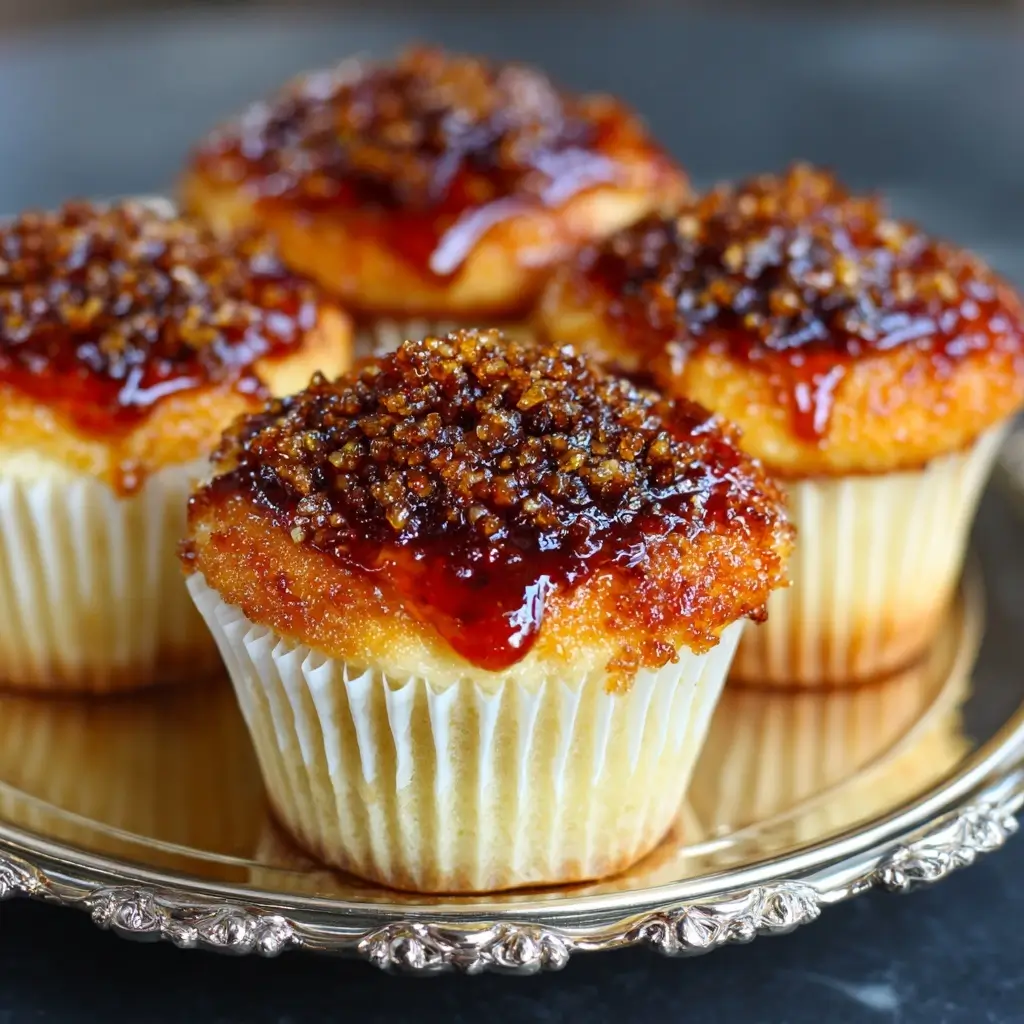
Burnt Sugar Crème Brûlée Cupcakes are a luxurious, multi-sensory dessert that marries the nostalgic comfort of classic cupcakes with the sophisticated elegance of French crème brûlée. Each cupcake features a tender, moist vanilla bean cake infused with deep, complex notes of caramelized sugar—achieved through a carefully controlled “burnt sugar” (or *caramel noir*) technique—and crowned with a rich, velvety crème brûlée filling. The pièce de résistance? A crisp, glassy, golden-brown sugar crust torched to perfection just before serving—delivering that iconic *crack* and contrasting textures that define the crème brûlée experience. These aren’t just cupcakes—they’re miniature edible theatre: delicate, decadent, and deeply flavorful, ideal for special occasions, dinner parties, or as a show-stopping treat for discerning bakers and dessert lovers alike.
The History
The origins of Burnt Sugar Crème Brûlée Cupcakes lie at the intersection of three rich culinary traditions: French haute pâtisserie, Caribbean and Latin American burnt sugar techniques, and American cupcake culture. Crème brûlée itself traces back to 17th-century France (with documented versions appearing in François Pierre La Varenne’s 1651 *Le Cuisinier François*), though similar custard-and-caramelized-sugar desserts appear earlier in English and Spanish texts—including the Spanish *crema catalana*, which uses burnt sugar syrup (*melado*) for depth. “Burnt sugar,” or *caramel de caña*, has long been a foundational flavoring agent across the Caribbean, Mexico, and the Philippines—used not only in beverages like *café de olla* and *sangría*, but also in sauces, stews, and desserts for its bittersweet umami richness and molasses-like complexity. Meanwhile, the cupcake—as a portioned, decorated, and highly customizable baked good—exploded in popularity during the early 2000s, especially after the rise of bakeries like Magnolia Bakery and shows like *Cupcake Wars*. Burnt Sugar Crème Brûlée Cupcakes emerged organically in the late 2010s within avant-garde bakery circles and food blogs as chefs sought to elevate the cupcake beyond frosting-heavy confections—replacing buttercream with layered, temperature-sensitive fillings and introducing *deconstructed fine-dining elements* into handheld format. Today, they represent a thoughtful fusion: the precision of French custard science, the soulful depth of traditional caramelization, and the joyful accessibility of the American cupcake.
Ingredients Breakdown
Every component is deliberately chosen for function, flavor synergy, and textural integrity:
- Granulated Sugar (for burnt sugar syrup): Not merely sweetener—it’s the star. When heated to 340–350°F (171–177°C), sucrose undergoes pyrolysis, breaking down into hundreds of aromatic compounds (diacetyl, hydroxymethylfurfural, furanones) that lend notes of toasted nuts, dark rum, roasted coffee, and subtle smoke. This is *true* burnt sugar—not overcooked, not bitter, but deeply amber and fragrant.
- Whole Milk & Heavy Cream: The fat content (≥36% in heavy cream) ensures a luxuriously thick, spoonable crème brûlée filling that sets firmly yet melts on the tongue. Whole milk balances richness and adds lactose for gentle sweetness and browning potential during torching.
- Egg Yolks (pastured, if possible): Provide emulsification, structure, and velvety mouthfeel. Their lecithin binds water and fat; their natural carotenoids deepen the golden hue of both cake and custard.
- Vanilla Bean Paste (not extract): Contains real scraped seeds and concentrated pod solids, delivering flecks, floral top notes, and earthy undertones far superior to alcohol-based extracts—especially critical when competing with bold burnt sugar.
- Unbleached All-Purpose Flour: Offers reliable gluten development for structure without toughness. Bleached flour can mute flavor and destabilize custard emulsions due to added chlorine.
- Full-Fat Sour Cream: Adds acidity to tenderize gluten, moisture for tenderness, and subtle tang that cuts through sweetness—essential for balance in such a rich dessert.
- Pure Cane Turbinado Sugar (for topping): Larger crystals melt slower and caramelize more evenly under the torch than superfine sugar, yielding a shatteringly crisp, uniformly glossy crust with nuanced caramelized flavor.
- Sea Salt (flaky Maldon or Fleur de Sel): A tiny pinch in both cake and custard enhances all other flavors via sodium ion interaction with taste receptors—elevating sweetness, rounding bitterness, and amplifying aroma volatility.
Step-by-Step Recipe
- Prepare Burnt Sugar Syrup (Start 2 days ahead for optimal flavor maturation): In a heavy-bottomed stainless steel or copper saucepan, combine 1 cup granulated sugar and ¼ cup water. Heat over medium-low flame—do NOT stir—until sugar dissolves and mixture begins to bubble. Swirl pan gently if needed. Continue heating until syrup reaches deep amber (approx. 345°F on a candy thermometer). Immediately remove from heat and carefully whisk in ½ cup boiling water (stand back—steam will erupt). Return to low heat and stir until smooth. Cool completely, then refrigerate in an airtight jar for up to 2 weeks. Yield: ~1¼ cups rich, viscous syrup.
- Bake Vanilla Burnt Sugar Cupcakes: Preheat oven to 350°F (177°C). Line standard muffin tin with premium parchment liners. Whisk together 1¾ cups unbleached all-purpose flour, 1½ tsp baking powder, ½ tsp fine sea salt, and ¼ tsp ground nutmeg (optional, for warmth). In stand mixer, beat ¾ cup unsalted butter (room temp), 1 cup granulated sugar, and ½ tsp flaky sea salt until light and fluffy (3–4 min). Add 3 large egg yolks (reserve whites for custard), 1 tbsp vanilla bean paste, and 2 tsp burnt sugar syrup; mix until fully incorporated. Alternate adding dry ingredients and ⅔ cup full-fat sour cream + ¼ cup whole milk (combined), beginning and ending with dry mix. Divide batter evenly among 12 liners (fill ⅔ full). Bake 18–21 min, until toothpick inserted comes out clean and tops spring back. Cool in pan 5 min, then transfer to wire rack to cool completely (minimum 2 hours).
- Prepare Crème Brûlée Filling: In heavy saucepan, heat 1 cup heavy cream, ½ cup whole milk, 1 tsp vanilla bean paste, and ¼ tsp fine sea salt until steaming (180°F, do not boil). Meanwhile, whisk 6 large egg yolks, ⅓ cup granulated sugar, and 2 tbsp burnt sugar syrup in bowl until pale and ribbony. Slowly pour hot cream mixture into yolk mixture while whisking constantly. Strain through fine-mesh sieve into clean saucepan. Cook over LOW heat, stirring constantly with silicone spatula, until mixture thickens enough to coat back of spoon (170–175°F)—about 8–12 min. Do NOT let boil or curdle. Remove from heat, stir in 2 tbsp cold unsalted butter (cut into pieces) until melted and glossy. Cool to room temp, then cover surface directly with plastic wrap and refrigerate minimum 4 hours (preferably overnight) to fully set and chill.
- Frost & Fill: Fit piping bag with wide round tip (#12). Pipe 2 tbsp chilled crème brûlée filling into center of each cooled cupcake—press tip gently into cake to create a well, then pipe upward to form slight dome. Refrigerate filled cupcakes for 1 hour to firm filling.
- Torch & Serve: Just before serving, evenly sprinkle 1 tsp turbinado sugar over each cupcake. Use a professional kitchen torch held 2–3 inches away, moving in slow, concentric circles until sugar melts, bubbles, and turns deep amber-gold (30–60 sec per cupcake). Let rest 1–2 minutes for crust to harden. Serve immediately.
Tips
- Candy Thermometer Is Non-Negotiable: Burnt sugar is measured by temperature—not color alone. Amber varies under lighting; 340–350°F is the precise window for complex flavor without acrid bitterness.
- Chill Everything: Custard must be thoroughly chilled before piping—warm filling will soak into cake and leak. Cupcakes should be at fridge-cold temp (38–40°F) pre-torching for optimal crust adhesion.
- No Torch? No Problem—But Adapt: Broil on high for 60–90 seconds—but watch *constantly*. Rotate pan every 20 sec. For best results, chill cupcakes on a metal baking sheet first—metal conducts heat faster, helping sugar caramelize before cake warms.
- Prevent Crust Weeping: Always torch *immediately* before serving. Humidity, ambient warmth, or refrigeration post-torching causes condensation, softening the crust. If prepping ahead, store unfilled cupcakes and chilled custard separately; assemble and torch within 5 minutes of service.
- Flour Matters: Avoid “soft wheat” or cake flour—the lower protein won’t support the weight of the custard. King Arthur Unbleached All-Purpose (11.7% protein) is ideal for structure + tenderness.
- Yolk Temperature: Use cold egg yolks straight from the fridge—they temper better into hot cream and reduce risk of scrambling.
- Sugar Sprinkle Technique: Use tweezers or small spoon to place sugar *only* on the custard dome—not on cake sides. Excess sugar on liner or cake will burn and taste bitter.
- Torch Safety First: Work on non-flammable surface (stone countertop, not wood). Keep torch upright; never invert. Have baking soda nearby to smother accidental flare-ups.
Variations and Customizations
- Spiced Burnt Sugar: Infuse burnt sugar syrup with 1 cinnamon stick, 3 cardamom pods, and 1 star anise during cooling. Strain before use. Pairs beautifully with orange zest in cake batter.
- Coconut-Crème Brûlée: Replace ¼ cup heavy cream with full-fat coconut milk (canned, stirred well). Add 1 tbsp toasted coconut flakes to custard before chilling.
- Espresso Burnt Sugar: Dissolve 1½ tsp instant espresso powder into hot cream/milk mixture. Complement with dark chocolate shavings folded into cake batter.
- Smoked Sea Salt Crust: Mix ¼ tsp flaky smoked sea salt into turbinado sugar before sprinkling—adds savory intrigue against caramel sweetness.
- Boozy Infusion: Stir 1 tbsp aged rum, bourbon, or dark cachaca into warm custard just before chilling. Alcohol volatilizes during torching, leaving only aromatic depth.
- Gluten-Free Version: Substitute 1:1 GF flour blend (Bob’s Red Mill or King Arthur) + ½ tsp xanthan gum. Increase sour cream to ¾ cup for moisture retention. Verify all extracts/syrups are GF-certified.
- Vegan Adaptation (Advanced): Replace burnt sugar syrup with date-caramel reduction (soaked Medjool dates + water + lemon juice, blended smooth). Use silken tofu + coconut cream + agar-agar (0.75 tsp dissolved in hot liquid) for custard base. Torch with organic cane sugar—texture differs but flavor remains stunning.
- Miniature Format: Bake in 24 mini-muffin cups (12–14 min bake time). Pipe 1 tsp custard each. Torch with micro-torch or careful broiling—ideal for tasting menus or bridal showers.
Health Considerations and Nutritional Value
While undeniably indulgent, Burnt Sugar Crème Brûlée Cupcakes offer surprising nuance when viewed through a holistic nutrition lens. Per standard-size cupcake (1/12th recipe, approx. 285 kcal):
- Calories: ~285 kcal — moderate for a specialty dessert (vs. 420+ kcal in many buttercream-topped cupcakes)
- Fat: 16g total (9g saturated) — primarily from whole dairy and butter, providing fat-soluble vitamins (A, D, K2) and satiety signals that reduce subsequent snacking.
- Sugar: 24g total (18g added) — significantly less than commercial cupcakes (often 35–45g added sugar). Burnt sugar contributes antioxidants (melanoidins) formed during Maillard reaction, shown in vitro to have anti-inflammatory properties.
- Protein: 5g — from egg yolks and dairy, supporting muscle maintenance and increasing thermic effect of food.
- Nutrients: Rich in choline (from egg yolks—critical for brain health and liver function), calcium (12% DV), riboflavin (B2), and selenium. Vanilla beans contain vanillin, studied for potential neuroprotective and anti-anxiety effects.
- Glycemic Considerations: The high fat and protein content slows gastric emptying, blunting blood glucose spikes versus simple-sugar desserts. Pairing with black coffee or herbal tea further moderates glycemic response.
- Mindful Indulgence Notes: These cupcakes are intentionally portion-controlled, emphasize whole-food ingredients (no HFCS, artificial colors, or preservatives), and prioritize flavor density over volume—encouraging slower, more intentional consumption. For those managing diabetes or insulin resistance, enjoy one as part of a balanced meal with fiber and protein (e.g., alongside grilled salmon and roasted vegetables) rather than as a standalone snack.
Ingredients
For Burnt Sugar Syrup (Makes ~1¼ cups):
- 1 cup granulated sugar (organic cane preferred)
- ¼ cup filtered water
- ½ cup boiling water (for deglazing)
For Vanilla Burnt Sugar Cupcakes (Makes 12):
- 1¾ cups unbleached all-purpose flour (spooned & leveled)
- 1½ tsp aluminum-free baking powder
- ½ tsp fine sea salt
- ¼ tsp freshly grated nutmeg (optional)
- ¾ cup unsalted butter, cubed, room temperature
- 1 cup granulated sugar
- ½ tsp flaky sea salt (e.g., Maldon)
- 3 large egg yolks (reserve whites for custard)
- 1 tbsp pure vanilla bean paste
- 2 tsp burnt sugar syrup (from above)
- ⅔ cup full-fat sour cream
- ¼ cup whole milk
For Crème Brûlée Filling (Makes ~2 cups):
- 1 cup heavy cream (min. 36% fat)
- ½ cup whole milk
- 1 tsp pure vanilla bean paste
- ¼ tsp fine sea salt
- 6 large egg yolks (from eggs used above)
- ⅓ cup granulated sugar
- 2 tbsp burnt sugar syrup
- 2 tbsp unsalted butter, cold, cubed
For Torched Crust:
- ¼ cup turbinado sugar (e.g., Sugar in the Raw or Demerara)
- Pinch flaky sea salt (optional, for finishing)
Directions
- Make Burnt Sugar Syrup: In heavy-bottomed saucepan, combine sugar and ¼ cup water. Heat over medium-low without stirring until dissolved and bubbling. Swirl gently if sugar crystals cling to sides. Continue heating until deep amber (345°F on candy thermometer—12–15 min). Immediately remove from heat. Carefully whisk in boiling water (steam will billow). Return to low heat; stir until smooth and homogenous. Cool 10 min, then pour into heatproof jar. Refrigerate uncovered until cold (~2 hours), then seal. Store up to 2 weeks.
- Prepare Cupcake Batter: Preheat oven to 350°F (177°C). Line 12-cup muffin tin with parchment liners. Whisk flour, baking powder, salt, and nutmeg in medium bowl. In stand mixer fitted with paddle, beat butter, 1 cup sugar, and ½ tsp flaky salt on medium-high 3–4 min until pale and fluffy. Reduce speed to low; add egg yolks one at a time, beating 30 sec after each. Add vanilla paste and 2 tsp burnt sugar syrup; mix 1 min. Alternately add dry ingredients (in 3 parts) and sour cream/milk mixture (in 2 parts), beginning and ending with dry. Mix only until just combined—do not overmix. Batter will be thick and glossy.
- Bake Cupcakes: Divide batter evenly (≈65g per liner). Tap pan sharply on counter 3 times to release air bubbles. Bake 18–21 min, rotating pan halfway, until tops are golden and spring back when lightly pressed. Cool in pan 5 min, then transfer to wire rack. Cool completely (2+ hours).
- Prepare Crème Brûlée Filling: In saucepan, combine cream, milk, vanilla paste, and ¼ tsp salt. Heat over medium until tiny bubbles form at edges (180°F), ~5 min. Do not boil. Meanwhile, whisk egg yolks, ⅓ cup sugar, and 2 tbsp burnt sugar syrup in heatproof bowl until pale and thickened (~2 min). Slowly drizzle hot cream into yolk mixture while whisking vigorously. Pour mixture back into saucepan. Cook over LOW heat, stirring constantly with silicone spatula, until thickened to nappe consistency (coats back of spoon, 170–175°F), 8–12 min. Remove from heat; whisk in cold butter until melted and silky. Strain through fine-mesh sieve into bowl. Press plastic wrap directly onto surface. Chill minimum 4 hours (overnight preferred).
- Assemble: Fit piping bag with #12 tip. Spoon chilled custard into bag. Pipe 2 tbsp into center of each cupcake, creating a slight dome. Refrigerate 1 hour to firm.
- Torch & Serve: Sprinkle 1 tsp turbinado sugar evenly over each custard dome. Torch with even, circular motion until sugar melts, bubbles, and turns deep amber-gold (30–60 sec). Rest 90 sec for crust to harden. Serve immediately.
FAQ
- Q: Can I make the burnt sugar syrup in advance?
- A: Absolutely—and strongly recommended. Flavors deepen and mellow over 24–48 hours. Store refrigerated in sealed jar up to 3 weeks.
- Q: Why does my custard weep or separate?
- A: Most commonly due to overheating (curdling above 175°F) or insufficient straining (undissolved egg bits). Always use low heat, constant stirring, and strain before chilling. Also ensure custard is fully chilled before piping—warm filling breaks emulsion.
- Q: Can I use brown sugar instead of granulated for the burnt sugar syrup?
- A: Not recommended. Brown sugar contains molasses and moisture, causing unpredictable bubbling, scorching, and inconsistent caramelization. Granulated cane sugar gives clean, controllable pyrolysis.
- Q: My crust isn’t crackling—is it under-torched?
- A: Likely yes—or humidity is interfering. Ensure cupcakes are fridge-cold, sugar is dry and evenly applied, and torch distance is 2–3″. If still soft, re-torch briefly. Avoid refrigerating after torching.
- Q: Can I freeze these?
- A: Unfilled cupcakes freeze well for up to 3 months (wrap individually in foil, then place in freezer bag). Thaw overnight in fridge, then fill and torch fresh. Custard filling freezes poorly—texture becomes grainy upon thawing.
- Q: What if I don’t have a candy thermometer?
- A: Use the “cold water test”: Drop ½ tsp syrup into ice water. At correct stage (340–350°F), it forms a hard, brittle thread that cracks when bent. But a thermometer is vastly more reliable and safe.
- Q: Can I make these dairy-free?
- A: Yes—with caveats. Use full-fat coconut milk + cashew cream blend for custard; oat milk + vegan butter for cake. Expect texture differences—custard will be softer, crust less shatter-prone. Test small batch first.
- Q: How far in advance can I assemble?
- A: Assemble custard-filled cupcakes up to 8 hours ahead and keep refrigerated. Torch *only* within 5 minutes of serving. Never torch ahead.
- Q: Why use egg yolks only—not whole eggs?
- A: Yolks provide richer fat content, smoother emulsification, and deeper color. Whole eggs introduce excess water and weaker structure, risking weeping and poor set.
- Q: Can I add alcohol to the custard?
- A: Yes—add up to 2 tbsp liquor (rum, bourbon, Grand Marnier) to warm custard *after* cooking and *before* straining. Alcohol evaporates partially during torching, leaving aroma without harshness.
Summary
Burnt Sugar Crème Brûlée Cupcakes are a masterclass in layered sophistication—featuring a tender vanilla cake steeped in deeply aromatic caramelized sugar, luxuriously smooth crème brûlée filling, and a dramatic, glassy torched crust that delivers that unforgettable crisp-crack contrast.
They honor centuries-old techniques—from French custard craftsmanship to Caribbean burnt sugar alchemy—while reimagining dessert tradition through modern precision, mindful ingredient choices, and unforgettable sensory theatre.