Introduction
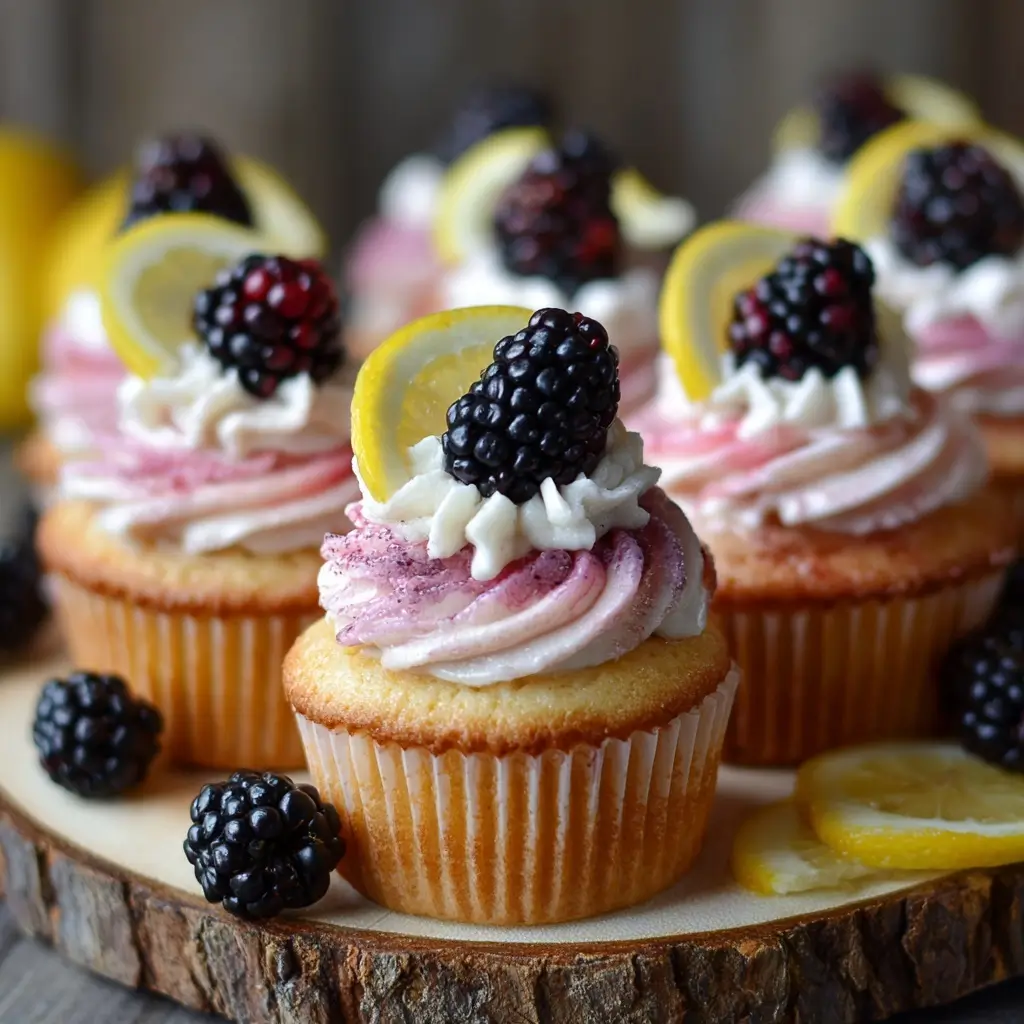
Blackberry Lemonade Cupcakes are a vibrant, sun-drenched fusion of summer’s boldest flavors—tart, zesty lemon and sweet-tart, jammy blackberries—transformed into irresistibly moist, tender cupcakes crowned with a luscious, tangy frosting. These aren’t just seasonal treats; they’re an experience: a burst of citrus brightness balanced by the deep, earthy sweetness of ripe blackberries, all wrapped in a delicate vanilla-lemon cake base. Whether served at backyard barbecues, bridal showers, graduation parties, or simply as a joyful midweek indulgence, these cupcakes evoke nostalgia and freshness in equal measure. With their jewel-toned batter, speckled with ruby-black berry bursts, and glossy lemon glaze or whipped blackberry buttercream finish, they’re as visually stunning as they are delicious—proof that sophistication and simplicity can coexist in one perfectly portioned bite.
The History
While cupcakes themselves trace back to 19th-century American “number cakes” (so named for the ratio-based recipes like “1-2-3-4 cake”), the modern cupcake renaissance began in the early 2000s—fueled by boutique bakeries, reality TV baking shows, and social media’s appetite for photogenic desserts. Blackberry lemonade, meanwhile, has deeper roots: blackberries have been foraged and preserved across North America, Europe, and Asia for millennia, while lemonade dates to medieval Egypt and Persia, where citron-based drinks were prized for their cooling, medicinal properties. The pairing of blackberry and lemon emerged organically in Southern U.S. kitchens, where wild blackberries grew abundantly alongside lemon trees, inspiring cobblers, shrubs, and preserves. By the 2010s, artisanal bakers began experimenting with fruit-infused batters and compound frostings—leading to the rise of the Blackberry Lemonade Cupcake as a signature summer dessert. Its popularity surged further with the farm-to-table movement, as chefs highlighted hyper-seasonal, locally sourced berries and cold-pressed citrus. Today, it stands as a beloved cross-generational favorite—honoring tradition while embracing innovation, from heirloom blackberry varietals to cold-fermented lemon curd swirls.
Ingredients Breakdown
Every exceptional Blackberry Lemonade Cupcake begins with intentionality—not just in measurement, but in ingredient quality and function. Below is a detailed, purpose-driven breakdown:
- All-Purpose Flour (unbleached, preferably organic): Provides structure without toughness. A small amount of cornstarch (or cake flour substitution) can be added for extra tenderness.
- Granulated Sugar: Not only sweetens but also aids in creaming, moisture retention, and browning. For refined texture, superfine sugar is ideal.
- Brown Sugar (light or dark): Adds subtle molasses depth, moisture, and caramel notes that complement blackberries’ tannins.
- Unsalted Butter (European-style, 82–84% fat preferred): Delivers richness, flakiness in crumb, and superior emulsification. Must be at cool room temperature (65–68°F) for optimal creaming.
- Eggs (large, pasture-raised): Act as binders, leaveners, and emulsifiers. Room-temperature eggs incorporate more air and prevent batter splitting.
- Full-Fat Sour Cream or Greek Yogurt: Critical for moisture, acidity (which activates baking soda), and tender crumb. Adds subtle tang that bridges lemon and blackberry profiles.
- Freshly Grated Lemon Zest (from 2–3 organic lemons): Contains volatile citrus oils—the soul of lemon flavor. Never skip; bottled zest lacks nuance and potency.
- Fresh Lemon Juice (strained, ~¼ cup): Provides bright acidity and balances sweetness. Avoid bottled juice—it oxidizes and tastes flat.
- Real Vanilla Extract (Grade B Madagascar bourbon or Tahitian): Adds warmth and complexity; avoids artificial aftertaste. Optional: ½ tsp pure vanilla bean paste for visual flecks and aromatic depth.
- Baking Powder & Baking Soda: Dual-acting leaveners—baking powder provides lift, while baking soda reacts with sour cream/lemon acid for fine, even crumb and golden color.
- Pinch of Fine Sea Salt: Enhances all other flavors and tempers sweetness.
- Fresh Blackberries (ripe, plump, deeply purple-black): Used in three ways: folded whole into batter (for juicy bursts), simmered into reduction (for concentrated flavor and natural pectin), and reserved for garnish. Frozen berries (unsweetened, thawed & patted dry) work well when fresh are out of season—but never use canned, syrup-packed, or jammed berries in the batter.
- Heavy Cream or Whole Milk (for frosting & glaze): Adjusts consistency without diluting flavor. Heavy cream yields sturdier, richer buttercream; milk works for lighter glazes.
- High-Quality Powdered Sugar (sifted): Essential for smooth, lump-free frosting. Confectioners’ sugar with cornstarch helps stabilize buttercream.
- Optional Flavor Enhancers: A splash of elderflower liqueur (St-Germain) in the frosting, a pinch of lavender buds infused into warm cream, or a drop of rose water for floral elegance.
Step-by-Step Recipe
- Prep & Preheat: Line two standard 12-cup muffin tins with premium parchment liners (not paper—they resist grease bleed). Preheat oven to 350°F (175°C). Position racks in upper and lower thirds for even baking. Weigh or measure all ingredients precisely—especially flour (spoon-and-level method) and lemons (zest before juicing).
- Make Blackberry Reduction: In a small nonreactive saucepan, combine 1 cup fresh blackberries, 2 tbsp granulated sugar, and 1 tsp lemon juice. Simmer over medium-low heat 8–10 minutes, stirring gently, until berries break down and liquid reduces by half. Strain through a fine-mesh sieve, pressing pulp with a spatula to extract maximum juice and flavor. Discard seeds. Cool completely (≈15 min). Reserve ¼ cup reduction for batter; refrigerate remainder for frosting.
- Cream Butter & Sugars: In a large bowl using a stand mixer fitted with paddle attachment (or hand mixer), beat unsalted butter, granulated sugar, and brown sugar on medium-high for 4–5 minutes until pale, fluffy, and nearly doubled in volume. Scrape bowl thoroughly.
- Incorporate Eggs & Flavorings: Add eggs one at a time, beating 1 minute after each addition until fully emulsified. Beat in lemon zest, vanilla, and lemon juice. Mixture may look slightly curdled—this is normal and will resolve with dry ingredients.
- Combine Dry Ingredients: In a separate bowl, whisk together flour, baking powder, baking soda, and salt. Sift once for uniformity.
- Alternate Wet & Dry: On low speed, add ⅓ dry mixture → mix until just combined. Add ½ sour cream → mix until incorporated. Repeat: ⅓ dry → ½ sour cream → remaining dry. Do not overmix—stop as soon as no streaks remain. Batter will be thick and glossy.
- Fold in Blackberries & Reduction: Gently fold in ¾ cup fresh blackberries (lightly tossed in 1 tsp flour to prevent sinking) and ¼ cup cooled blackberry reduction using a silicone spatula. Fold just until evenly distributed—no more than 12–15 strokes.
- Portion & Bake: Fill lined cups ⅔ full (≈3 tbsp per cup). Tap pans firmly on counter twice to release air bubbles. Bake 18–22 minutes, rotating pans top-to-bottom and front-to-back at 12 minutes. Cupcakes are done when tops spring back to touch and a toothpick inserted near center comes out with *moist* crumbs (not wet batter). Avoid overbaking—lemon and blackberry both dry out quickly.
- Cool Completely: Let cupcakes cool in pans 5 minutes. Transfer to wire racks and cool *fully* (minimum 1 hour) before frosting. Warm cupcakes will melt frosting and cause condensation.
- Prepare Frosting: While cupcakes cool, make blackberry lemon buttercream: beat 1½ cups (3 sticks) softened unsalted butter until creamy. Gradually add 4 cups sifted powdered sugar, 1 cup at a time, beating on low then increasing to medium. Add 3–4 tbsp reserved blackberry reduction, 1 tbsp lemon juice, 1 tsp zest, and pinch of salt. Beat 4–5 minutes until ultra-light and airy. Adjust consistency with 1 tsp heavy cream if too stiff, or extra powdered sugar if too soft.
- Frost & Finish: Pipe or spread frosting generously. Garnish with fresh blackberries, lemon zest curls, edible flowers (violets, borage), or a drizzle of reduced blackberry syrup. Chill 15 minutes before serving for cleaner slices.
Tips
- Flour Matters: If using bleached all-purpose flour, reduce by 1 tbsp per cup—it absorbs less liquid and can yield denser crumb.
- Lemon Zest Like a Pro: Freeze lemons for 15 minutes before zesting—they grate more easily and yield finer, oil-rich zest. Use a microplane, not a box grater.
- Blackberry Prep Secret: Toss berries in flour *just before folding*—not earlier—to prevent premature bleeding and gray batter.
- No Overmixing Zone: Once flour is added, mix only until incorporated. Overmixing develops gluten = tough, rubbery cupcakes.
- Oven Thermometer Required: Most home ovens run hot or cold. An oven thermometer ensures accurate 350°F—critical for proper rise and moisture retention.
- Altitude Adjustments: Above 3,000 ft: decrease sugar by 1 tbsp per cup, increase liquid by 1–2 tsp, raise oven temp 15–25°F, and reduce baking powder by ⅛ tsp.
- Frosting Texture Rescue: If buttercream looks greasy or curdled, chill bowl 10 minutes, then re-beat on medium. If too soft, add 1 tbsp powdered sugar + ½ tsp meringue powder and beat until stable.
- Storage Wisdom: Unfrosted cupcakes freeze beautifully for up to 3 months (wrap individually in plastic + foil). Frosted cupcakes keep 3 days refrigerated in airtight container—but bring to room temperature 30 minutes before serving for best texture and flavor bloom.
- Moisture Lock Trick: Brush cooled cupcakes lightly with simple syrup (1:1 sugar:water, cooled + 1 tsp lemon juice) before frosting—adds shine and prevents drying.
- Consistent Sizing: Use a #20 ice cream scoop (¼ cup) for uniform batter portions—ensures even baking and professional appearance.
Variations and Customizations
These cupcakes are a canvas—adaptable to dietary needs, seasonal shifts, and creative whims:
- Gluten-Free: Substitute 1:1 GF baking blend (with xanthan gum) + 1 tsp psyllium husk powder for elasticity. Add 1 extra tbsp sour cream for moisture.
- Vegan: Replace butter with vegan butter (Miyoko’s or Earth Balance), eggs with flax eggs (2 tbsp ground flax + 6 tbsp water, rested 10 min), and sour cream with coconut yogurt. Use maple syrup instead of brown sugar.
- Low-Sugar: Swap granulated sugar with erythritol-monk fruit blend (1:1), reduce total sugar by 25%, and boost lemon/blackberry intensity with extra zest and reduction.
- Blackberry-Lemon Curd Filling: Hollow centers with a cupcake corer and pipe in homemade lemon curd or blackberry-lime curd for a luxurious surprise.
- Prosecco-Infused: Replace 2 tbsp lemon juice with chilled Prosecco in batter; add 1 tbsp to frosting for effervescent lightness.
- Herbal Twist: Infuse cream with fresh thyme or basil (steep 20 min, strain, cool) for frosting—or fold 1 tsp finely chopped herbs into batter.
- Spiced Version: Add ½ tsp freshly grated ginger + ¼ tsp cardamom to dry ingredients for warm, aromatic contrast.
- Nutty Crunch: Top with toasted sliced almonds, pistachios, or black sesame seeds—adds texture and visual drama.
- Mini Cupcakes: Bake in 48-cup mini tin for 10–12 minutes—perfect for weddings or tasting menus.
- Layered Cake Adaptation: Double recipe and bake in three 6-inch round pans (25–28 min) for an elegant Blackberry Lemonade Layer Cake with Swiss meringue buttercream.
Health Considerations and Nutritional Value
While inherently indulgent, thoughtful modifications can elevate the nutritional profile of Blackberry Lemonade Cupcakes without sacrificing joy:
- Nutrient Highlights: Fresh blackberries are rich in anthocyanins (potent antioxidants linked to cognitive and cardiovascular health), vitamin C (immune support), fiber (digestive regularity), and manganese (bone metabolism). Lemon contributes additional vitamin C, flavonoids (hesperidin, eriocitrin), and citric acid (supports kidney stone prevention).
- Sugar Awareness: A standard frosted cupcake contains ≈28–32g added sugar. To reduce: cut granulated sugar by 20%, rely on blackberry’s natural sweetness, and use unsweetened reduction instead of jam.
- Fat Quality: Choosing grass-fed butter or avocado oil (in oil-based variation) increases omega-3s and CLA (conjugated linoleic acid). Vegan versions benefit from heart-healthy monounsaturated fats in almond or cashew buttercreams.
- Flour Options: Whole wheat pastry flour adds B vitamins and fiber; oat flour boosts soluble beta-glucan (cholesterol-lowering); almond flour increases protein and vitamin E—but requires recipe recalibration.
- Portion Mindfulness: Serving mini cupcakes (≈120–140 calories each vs. 280–320 for standard) supports intuitive eating and reduces caloric load per serving.
- Allergen Notes: Naturally nut-free and soy-free (if using dairy butter). For egg allergy, flax or aquafaba substitutes work well—though texture may be slightly denser.
- Glycemic Impact: The combination of fiber (blackberries), acid (lemon), and fat (butter) slows glucose absorption—making these moderately lower glycemic than plain vanilla cupcakes.
- Notable Absences: No artificial colors, preservatives, or hydrogenated oils—when made from scratch with whole ingredients, these cupcakes align with clean-label principles.
- Mindful Enjoyment Tip: Pair with herbal tea (chamomile or mint) or sparkling water with lemon wedge—enhances digestion and extends the sensory pleasure without added sugar.
Ingredients
Makes 24 standard cupcakes
- 2¼ cups (280g) unbleached all-purpose flour, spooned & leveled
- 1½ tsp aluminum-free baking powder
- ½ tsp baking soda
- 1 tsp fine sea salt
- 1 cup (227g) unsalted butter, cool room temperature
- 1¼ cups (250g) granulated sugar
- ½ cup (100g) light brown sugar, packed
- 4 large eggs, room temperature
- 2 tbsp finely grated lemon zest (from 3 organic lemons)
- ¼ cup (60ml) fresh lemon juice, strained
- 1½ tsp pure vanilla extract
- 1 cup (240g) full-fat sour cream, room temperature
- 1 cup (145g) fresh blackberries, plus extra for garnish
- 1 cup (145g) fresh blackberries, for reduction
- 2 tbsp granulated sugar (for reduction)
- 1 tsp lemon juice (for reduction)
- 4 cups (480g) powdered sugar, sifted
- 3–4 tbsp reserved blackberry reduction (cooled)
- 1 tbsp fresh lemon juice (for frosting)
- 1 tsp lemon zest (for frosting)
- Heavy cream or whole milk, as needed for consistency
Directions
- Prepare Blackberry Reduction: In a small saucepan, combine 1 cup blackberries, 2 tbsp sugar, and 1 tsp lemon juice. Bring to a gentle simmer over medium-low heat. Cook 8–10 minutes, stirring occasionally, until berries collapse and liquid reduces by half. Press through a fine-mesh sieve into a heatproof bowl; discard seeds. Cool completely (≈15–20 min). Measure out ¼ cup for batter; refrigerate remainder.
- Preheat & Prep: Preheat oven to 350°F (175°C). Line two 12-cup muffin tins with parchment liners. Set aside.
- Cream Butter & Sugars: In a large bowl, beat butter, granulated sugar, and brown sugar with a stand mixer on medium-high for 4–5 minutes until pale, voluminous, and fluffy. Scrape bowl.
- Add Eggs & Flavorings: Add eggs one at a time, beating 1 minute after each. Beat in lemon zest, lemon juice, and vanilla until combined (mixture may appear slightly broken).
- Mix Dry Ingredients: In a medium bowl, whisk flour, baking powder, baking soda, and salt. Sift once.
- Alternate Mixing: On low speed, add ⅓ dry mixture → mix until just incorporated. Add ½ sour cream → mix until smooth. Repeat: ⅓ dry → ½ sour cream → remaining dry. Stop immediately when no dry streaks remain.
- Fold in Berries: Gently fold in 1 cup fresh blackberries (tossed in 1 tsp flour) and ¼ cup cooled blackberry reduction until just distributed—do not overfold.
- Fill & Bake: Portion batter evenly into liners (⅔ full). Tap pans sharply twice. Bake 18–22 minutes, rotating halfway, until tops spring back and toothpick shows moist crumbs. Cool in pans 5 min, then transfer to racks to cool completely (≥1 hour).
- Make Frosting: Beat butter until smooth. Gradually add powdered sugar on low. Increase speed; beat 2 minutes. Add 3 tbsp blackberry reduction, lemon juice, zest, and salt. Beat 3–4 more minutes until light and spreadable. Adjust with cream or extra sugar as needed.
- Frost & Serve: Pipe or spread frosting generously. Garnish with fresh blackberries, lemon zest, or edible flowers. Refrigerate 15 minutes before serving for set frosting.
FAQ
- Can I use frozen blackberries?
- Yes—unsweetened, frozen blackberries work well. Thaw completely, drain excess liquid in a fine-mesh strainer, and pat *very* dry with paper towels before folding in. For reduction, cook frozen berries directly (no thawing needed) but extend simmer time by 2–3 minutes.
- Why did my cupcakes sink in the middle?
- Common causes: underbaking (toothpick test isn’t enough—spring-back test is essential), opening oven door too early, overmixing batter, or expired leaveners. Always test baking powder/soda by mixing ½ tsp with ¼ cup hot water—if it doesn’t bubble vigorously, replace.
- Can I make these ahead of time?
- Absolutely. Unfrosted cupcakes freeze flawlessly for 3 months. Thaw overnight in fridge, then bring to room temp before frosting. Frosted cupcakes keep 3 days refrigerated—but texture peaks within 24 hours.
- My frosting is too runny—how do I fix it?
- Chill bowl and beaters for 10 minutes, then re-beat on medium. If still soft, add 2 tbsp sifted powdered sugar + ¼ tsp meringue powder and beat until stiff peaks form. Never add more liquid.
- Is there a way to intensify the lemon flavor without adding more juice?
- Yes! Add ½ tsp lemon oil (food-grade) to frosting, or infuse butter by heating 1 cup butter with 2 tbsp lemon zest over low heat for 5 minutes—cool, strain, and use. Also, double the zest quantity and let it macerate in sugar for 10 minutes before creaming.
- Can I substitute sour cream?
- Yes—full-fat Greek yogurt (same amount), buttermilk (reduce by 2 tbsp and add 2 tbsp extra flour), or crème fraîche. Avoid low-fat or non-dairy yogurts—they lack sufficient fat for tender crumb.
- How do I prevent blackberry bleeding in the batter?
- Lightly toss berries in 1 tsp flour before folding. Use firm, ripe (not overripe) berries. And crucially—don’t overmix after adding them. 12–15 gentle folds is the sweet spot.
- Can I make a non-alcoholic version if I want to add Prosecco?
- Absolutely. Replace Prosecco with equal parts chilled sparkling apple cider or lemon-lime seltzer (drained well) for effervescence without alcohol.
- What’s the best way to store leftover blackberry reduction?
- Store in an airtight glass jar in the refrigerator for up to 10 days, or freeze in ice cube trays for up to 6 months. Great stirred into sparkling water, oatmeal, or yogurt.
- Are these cupcakes suitable for kids?
- Yes—naturally free of common allergens (nuts, soy, dairy optional), low in artificial additives, and packed with real fruit nutrients. The bright flavor appeals to young palates, and the fun appearance encourages healthy curiosity about whole foods.
Summary
Blackberry Lemonade Cupcakes are a masterclass in balance—where the vibrant tartness of sun-ripened lemons meets the deep, jammy sweetness of wild-harvested blackberries, all enveloped in a tender, moist crumb and crowned with luxuriously tangy buttercream. They celebrate seasonality, craftsmanship, and joyful simplicity—transforming humble pantry staples into unforgettable moments of shared delight.
Whether you’re a novice baker seeking approachable elegance or a seasoned pro craving a showstopping twist, these cupcakes deliver extraordinary flavor, stunning visual appeal, and endless adaptability—all while honoring the integrity of real, whole-food ingredients from orchard, vine, and garden.