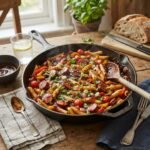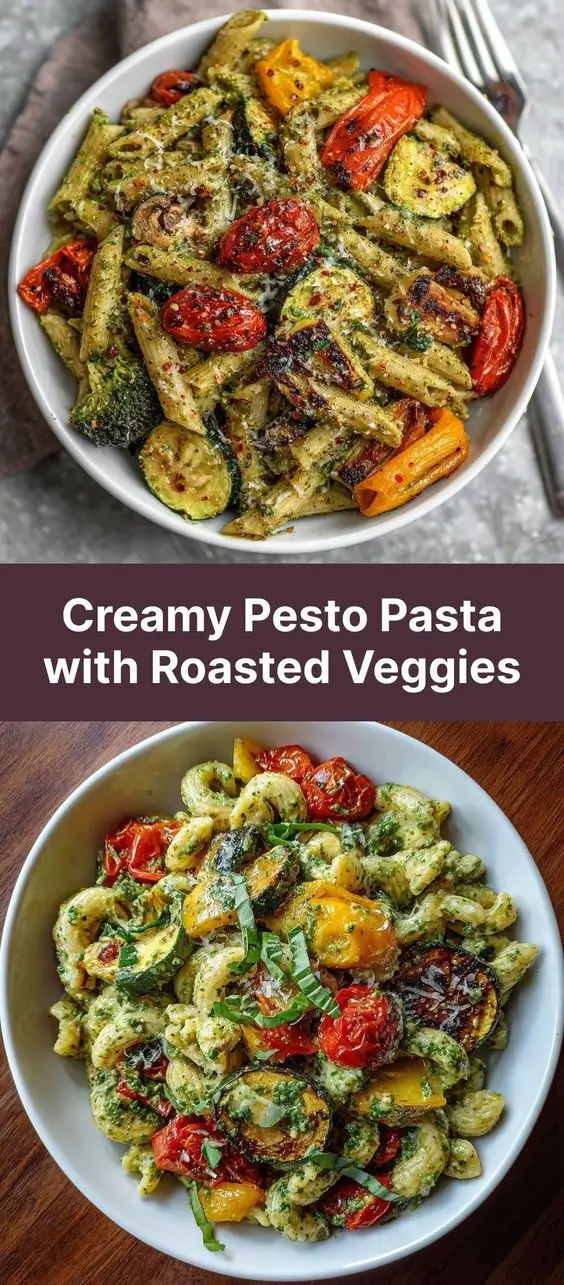
Creamy Pesto Pasta with Roasted Veggies
Introduction
Creamy Pesto Pasta with Roasted Veggies is a harmonious fusion of rich, herbaceous pesto, velvety creaminess, and the natural sweetness of oven-roasted vegetables. This dish effortlessly bridges the gap between comfort food and healthy eating, making it an ideal choice for busy weeknights, elegant dinners, or meal prepping. Whether you’re a vegetarian, vegan (with simple swaps), or simply looking to incorporate more plant-based meals into your diet, this recipe delivers bold flavors, vibrant colors, and satisfying textures in every bite.
Its versatility allows home cooks of all skill levels to experiment with ingredients based on seasonal availability and personal taste. From the first whiff of garlic-infused olive oil to the final forkful of tender pasta coated in creamy pesto sauce, this dish promises a sensory journey that celebrates fresh produce and culinary creativity. Let’s dive deep into what makes this recipe not just delicious, but truly unforgettable.
The History
The origins of pesto trace back to Genoa, Italy—a port city in the Liguria region—where traditional pasta al pesto has been enjoyed since at least the 19th century. The word “pesto” comes from the Italian verb pestare, meaning “to crush or pound,” referring to the original method of preparing the sauce using a mortar and pestle. Classic Genovese pesto consists of fresh basil, pine nuts, garlic, Parmesan cheese, and extra-virgin olive oil, creating a vibrant green sauce bursting with Mediterranean flavor.
Pasta itself has roots stretching back even further, with evidence of noodle-like foods found in ancient Etruscan civilizations and later refined during the Middle Ages through Arab influence in Sicily. Over time, regional variations emerged across Italy, incorporating local herbs, cheeses, and cooking techniques.
The concept of combining pesto with roasted vegetables is a modern twist, popularized in the late 20th and early 21st centuries as global palates began embracing fusion cuisine and health-conscious eating. Chefs and home cooks alike started layering textures and temperatures—adding roasted veggies for depth, sweetness, and nutrition—while enriching the sauce with cream for indulgence. This evolution reflects broader culinary trends: celebrating whole ingredients, minimizing waste, and balancing richness with freshness.
Creamy Pesto Pasta with Roasted Veggies, as we know it today, is a testament to how tradition can adapt without losing its soul. It honors the essence of Italian cooking while embracing contemporary lifestyles focused on wellness, convenience, and bold flavor combinations.
Ingredients Breakdown
To create the perfect Creamy Pesto Pasta with Roasted Veggies, each ingredient plays a crucial role in building layers of flavor, texture, and nutrition. Here’s a detailed breakdown:
- Pasta: Use high-quality dried or fresh pasta such as fettuccine, penne, fusilli, or linguine. These shapes hold the creamy sauce well and pair beautifully with chunky roasted vegetables. Whole wheat or legume-based pastas offer higher fiber and protein content for a healthier twist.
- Fresh Basil: The star of any authentic pesto, fresh basil provides a sweet, slightly peppery aroma that defines the sauce. Always use bright green leaves—avoid wilted or darkened ones—for optimal flavor.
- Garlic: Adds pungency and depth. Raw garlic in pesto gives a sharp kick, which mellows when mixed into warm pasta. For a gentler taste, roast the cloves before blending.
- Pine Nuts: Traditionally used for their buttery richness and delicate crunch. Toast them lightly before use to enhance nuttiness. Substitute with walnuts, almonds, or cashews for cost-effective or allergy-friendly versions.
- Parmesan Cheese: Aged Parmigiano-Reggiano brings umami, saltiness, and creaminess. Grate it finely for smooth integration into the sauce. For a vegan option, use nutritional yeast or plant-based Parmesan alternatives.
- Olive Oil: Extra-virgin olive oil forms the base of the pesto, contributing fruitiness and silkiness. Choose cold-pressed, high-quality oil for best results.
- Lemon Juice: Freshly squeezed lemon juice brightens the dish, cutting through the richness and preserving the vibrant green color of the basil.
- Heavy Cream or Half-and-Half: Used to enrich the pesto into a luscious, creamy sauce. Alternatives include coconut milk (for vegan creaminess), Greek yogurt, or cashew cream.
- Roasted Vegetables: A colorful medley enhances both flavor and nutrition. Common choices include:
- Zucchini: Tender and mild, absorbs flavors well.
- Yellow Squash: Slightly sweeter than zucchini, adds visual appeal.
- Red Bell Pepper: Roasting intensifies its natural sugars, adding smokiness.
- Cherry Tomatoes: Burst with juicy acidity when roasted.
- Eggplant: Becomes creamy inside, lending body to the dish.
- Red Onion: Caramelizes beautifully, offering a tangy-sweet contrast.
- Broccoli: Provides crunch and earthy notes; roasts to golden perfection.
- Mushrooms: Such as cremini or shiitake, add meaty texture and umami.
- Salt and Black Pepper: Essential seasonings. Sea salt enhances overall flavor, while freshly cracked black pepper adds subtle heat and complexity.
- Optional Add-Ins:
- Sun-Dried Tomatoes: Intense, chewy bursts of tomato flavor.
- Kalamata Olives: Briny accents that elevate the Mediterranean profile.
- Spinach or Arugula: Wilted into the finished dish for added greens.
- Premium Proteins: Grilled chicken, shrimp, salmon, chickpeas, or white beans for extra protein.
Step-by-Step Recipe
- Preheat Oven & Prepare Vegetables:
Preheat your oven to 425°F (220°C). Line two large baking sheets with parchment paper or lightly grease them.
Wash and chop 3–4 cups of mixed vegetables (e.g., zucchini, bell peppers, cherry tomatoes, broccoli, eggplant) into uniform 1-inch pieces for even roasting.
Place chopped veggies in a large bowl. Drizzle with 3 tablespoons of olive oil, ½ teaspoon sea salt, ¼ teaspoon black pepper, and 1 minced garlic clove (optional). Toss thoroughly to coat.
Spread the vegetables in a single layer on the prepared baking sheets—do not overcrowd, or they’ll steam instead of roast.
Roast for 20–25 minutes, flipping halfway through, until tender and caramelized at the edges. Remove from oven and set aside. - Cook the Pasta:
Bring a large pot of salted water to a boil (use about 1 tablespoon of salt per 4 quarts of water).
Add 12 oz (340g) of pasta and cook according to package instructions until al dente—usually 8–12 minutes.
Reserve 1 cup of starchy pasta water before draining. Drain the pasta and set aside. - Make Fresh Pesto Sauce:
While the pasta cooks, prepare the pesto. In a food processor or blender, combine:
– 2 packed cups fresh basil leaves (stems removed)
– ⅓ cup toasted pine nuts (or walnuts)
– 3 garlic cloves
– ½ cup grated Parmesan cheese
– Juice of half a lemon (about 1–2 tbsp)
– ½ teaspoon salt
– ¼ teaspoon black pepper
Pulse several times to chop.
With the motor running, slowly drizzle in ½ cup of extra-virgin olive oil until the mixture becomes smooth and emulsified. Scrape down the sides as needed.
Transfer pesto to a small bowl. Taste and adjust seasoning—add more lemon for brightness or cheese for richness. - Create the Creamy Sauce:
In a large skillet or saucepan over medium-low heat, pour ¾ cup heavy cream (or coconut milk/yogurt). Warm gently—do not boil.
Stir in ½ cup of the prepared pesto (reserve the rest for later). Mix well until fully combined and slightly thickened, about 2–3 minutes.
Optional: Add 2 tablespoons unsalted butter for extra silkiness. - Combine Everything:
Add the drained pasta to the creamy pesto sauce. Toss gently to coat every strand.
Gradually add reserved pasta water, one ladle at a time (start with ¼ cup), stirring continuously until the sauce reaches a silky, restaurant-quality consistency.
Fold in the roasted vegetables carefully to maintain their shape.
If using additional ingredients like spinach or arugula, stir them in now—they’ll wilt slightly from the heat. - Final Touches & Serve:
Remove from heat. Stir in an extra spoonful of pesto for freshness.
Taste and adjust seasoning—more salt, pepper, lemon juice, or grated cheese if desired.
Garnish with shaved Parmesan, toasted pine nuts, red pepper flakes, or microgreens.
Serve immediately while hot, ideally with crusty bread and a crisp white wine.
Tips
- Uniform Chopping: Cut vegetables into similar sizes so they roast evenly. Larger chunks like potatoes or carrots may need a head start (roast for 10 minutes before adding softer veggies).
- Don’t Skip Toasting Nuts: Lightly toast pine nuts or walnuts in a dry pan over low heat for 3–5 minutes until fragrant. This dramatically boosts flavor.
- Reserve Pasta Water: The starchy liquid is gold—it helps bind the sauce and improves texture. Never drain without saving some!
- Use Fresh Garlic: Avoid jarred minced garlic in pesto; fresh delivers superior taste and aroma.
- Prevent Browning Basil: To keep pesto bright green, blanch basil leaves briefly in boiling water, then shock in ice water before blending (optional but effective).
- Double the Pesto: Make extra and store it in an airtight container with a thin layer of olive oil on top. It keeps for up to 1 week in the fridge or 3 months frozen.
- Avoid Overcooking: Keep pasta al dente—soft mushy noodles ruin the dish’s texture.
- Low Heat for Cream: Never let cream boil vigorously, or it may curdle. Keep the temperature moderate.
- Season in Layers: Season vegetables before roasting, salt the pasta water generously, and taste again at the end. Layered seasoning creates balanced flavor.
- Customize Roasting Time: Denser veggies (carrots, cauliflower) take longer than soft ones (tomatoes, spinach). Roast denser items first, then add delicate ones later.
Variations and Customizations
This recipe is highly adaptable. Here are creative ways to tailor it to your preferences:
- Vegan Version: Replace Parmesan with ¼ cup nutritional yeast or vegan Parmesan. Use full-fat coconut milk or cashew cream instead of dairy cream. Ensure pasta is egg-free.
- Gluten-Free Option: Use gluten-free pasta made from rice, corn, quinoa, or lentils. Cook according to package directions and reserve starchy water as usual.
- Dairy-Free Creamy Sauce: Blend soaked raw cashews with vegetable broth and lemon juice for a luxuriously creamy, nut-based sauce.
- Protein-Packed: Add grilled chicken breast, seared shrimp, baked tofu, tempeh, hard-boiled eggs, or canned chickpeas for a complete meal.
- Herb Variations: Swap some basil with fresh parsley, cilantro, arugula, or spinach for different flavor profiles. Arugula adds peppery notes; cilantro lends a citrusy kick.
- Nut-Free Pesto: Replace pine nuts with sunflower seeds or pumpkin seeds (pepitas). They’re affordable, allergen-friendly, and still delicious.
- Spicy Kick: Infuse heat with red pepper flakes, Calabrian chili paste, or a dash of sriracha in the sauce.
- Creamy Sun-Dried Tomato Twist: Blend ¼ cup oil-packed sun-dried tomatoes into the pesto for a deeper, tangy flavor.
- Seafood Lover’s Edition: Stir in sautéed scallops, mussels, or flaked smoked salmon after combining pasta and sauce.
- Cold Pasta Salad: Cool the dish completely and serve chilled as a summer pasta salad. Add olives, artichoke hearts, and capers for a Mediterranean flair.
- One-Pan Baked Version: Combine uncooked pasta, veggies, pesto, cream, and enough broth to cover in a casserole dish. Bake covered at 375°F for 30–35 minutes, stirring halfway.
Health Considerations and Nutritional Value
Creamy Pesto Pasta with Roasted Veggies can be both indulgent and nutritious, depending on ingredient choices and portion control. Let’s examine its health aspects:
Nutritional Highlights:
- Fiber-Rich Vegetables: Roasted veggies contribute dietary fiber, vitamins (A, C, K), antioxidants, and phytonutrients. For example, bell peppers are high in vitamin C, while eggplant contains nasunin—an antioxidant that supports brain health.
- Healthy Fats: Olive oil and nuts provide monounsaturated fats and omega-3s (especially walnuts), supporting heart and cognitive function.
- Basil Benefits: Contains anti-inflammatory compounds like eugenol and flavonoids that may support immune health.
- Calcium & Protein: Parmesan cheese offers calcium and protein, though in moderation due to sodium content.
- Complex Carbohydrates: Whole grain or legume-based pasta increases fiber and protein intake, helping stabilize blood sugar.
Potential Concerns:
- Calorie Density: Heavy cream, cheese, and olive oil make this dish energy-dense. A single serving can range from 500–800 calories depending on ingredients.
- Sodium Levels: Store-bought pesto, cheese, and canned goods often contain high sodium. Making pesto from scratch allows better control.
- Saturated Fat: Cream and cheese contribute saturated fat. Those managing cholesterol should opt for reduced-fat dairy or plant-based substitutes.
- Allergens: Contains common allergens: tree nuts (pine nuts), dairy, gluten (unless substituted), and sometimes eggs (in fresh pasta).
Ways to Make It Healthier:
- Reduce cream by half and replace with low-fat milk or Greek yogurt.
- Increase vegetable-to-pasta ratio—use 2 cups veggies per ½ cup dry pasta.
- Use whole wheat, chickpea, or lentil pasta for added protein and fiber.
- Limit cheese or choose stronger-flavored aged varieties so less is needed.
- Roast veggies without excess oil—use spray or minimal coating.
- Add leafy greens like baby spinach or kale at the end for extra nutrients.
Approximate Nutritional Values (per serving, serves 4):
| Nutrient | Amount |
|---|---|
| Calories | ~650 kcal |
| Total Fat | 38g |
| Saturated Fat | 10g |
| Carbohydrates | 58g |
| Dietary Fiber | 6g |
| Sugars | 7g |
| Protein | 18g |
| Sodium | 600mg |
| Vitamin A | 70% DV |
| Vitamin C | 90% DV |
| Calcium | 20% DV |
| Iron | 18% DV |
Note: Values vary significantly based on specific ingredients and portion size.
Ingredients
- 12 oz (340g) pasta (fettuccine, penne, or fusilli)
- 3–4 cups mixed vegetables (zucchini, bell pepper, cherry tomatoes, broccoli, eggplant, red onion)
- 3 tbsp olive oil (divided)
- ½ tsp sea salt (divided)
- ¼ tsp black pepper (divided)
- 1 garlic clove, minced (optional, for veggies)
- 2 cups fresh basil leaves, packed
- ⅓ cup pine nuts or walnuts, toasted
- 3 garlic cloves
- ½ cup grated Parmesan cheese
- Juice of ½ lemon
- ½ cup extra-virgin olive oil (for pesto)
- ¾ cup heavy cream (or coconut milk/alternative)
- Optional: 2 tbsp butter
- Reserved pasta water (up to 1 cup)
- Additional toppings: shaved Parmesan, red pepper flakes, extra nuts, microgreens
Directions
- Preheat oven to 425°F (220°C). Line two baking sheets with parchment paper.
- Chop vegetables into 1-inch pieces. In a bowl, toss with 3 tbsp olive oil, ¼ tsp salt, ⅛ tsp pepper, and minced garlic. Spread evenly on baking sheets.
- Roast for 20–25 minutes, flipping once, until tender and golden. Set aside.
- Bring a large pot of salted water to a boil. Cook pasta according to package directions until al dente. Reserve 1 cup of pasta water, then drain.
- Make pesto: In a food processor, blend basil, nuts, garlic, Parmesan, lemon juice, remaining salt and pepper. With motor running, slowly add ½ cup olive oil until smooth.
- In a large skillet, warm cream over medium-low heat. Stir in ½ cup pesto until combined. Add butter if using.
- Add cooked pasta to the skillet. Toss to coat. Gradually add reserved pasta water until sauce is creamy and clings to pasta.
- Fold in roasted vegetables. Adjust seasoning. Stir in extra pesto for freshness if desired.
- Divide into bowls. Top with Parmesan, pine nuts, red pepper flakes, or herbs. Serve warm.
FAQ
- Can I make this ahead of time?
- Yes! Roast the veggies and make the pesto up to 3 days in advance. Store separately in airtight containers in the fridge. Reheat veggies briefly before tossing with freshly cooked pasta and sauce.
- How do I store leftovers?
- Cool completely and store in an airtight container in the refrigerator for up to 4 days. Reheat gently on the stove with a splash of water or broth to loosen the sauce.
- Can I freeze creamy pesto pasta?
- Not recommended—the cream may separate upon thawing, affecting texture. However, plain pesto freezes beautifully for up to 3 months.
- Why did my pesto turn brown?
- Basil oxidizes when exposed to air. To prevent this, store pesto with a layer of olive oil on top or press plastic wrap directly onto the surface.
- My sauce is too thick—how do I fix it?
- Add more reserved pasta water, a tablespoon at a time, until desired consistency is reached. The starch helps emulsify the sauce.
- What can I use instead of pine nuts?
- Walnuts, almonds, cashews, sunflower seeds, or pepitas work great and are often more budget-friendly.
- Is this dish suitable for meal prep?
- Absolutely! Portion into containers with a squeeze of lemon juice on top to preserve color. Reheat gently and enjoy within 4 days.
- Can I use store-bought pesto?
- Yes, though homemade tastes fresher and lets you control ingredients. Use about 1 cup store-bought pesto, adjusting cream accordingly.
- Can I roast the vegetables with oil substitutes?
- You can use avocado oil or a light spray, but avoid non-stick sprays with additives. Olive oil contributes flavor, so it’s preferred.
- How do I make this kid-friendly?
- Reduce garlic, skip spicy elements, and involve kids in mixing or choosing veggies. Try fun pasta shapes like rotini or farfalle.
Summary
Creamy Pesto Pasta with Roasted Veggies blends the aromatic richness of homemade basil pesto with the sweet, caramelized depth of oven-roasted seasonal vegetables, all enveloped in a luxuriously smooth cream sauce.
This versatile, nutrient-rich dish satisfies comfort cravings while inviting endless customization—from vegan swaps to protein boosts—making it a modern classic for every table.