Introduction
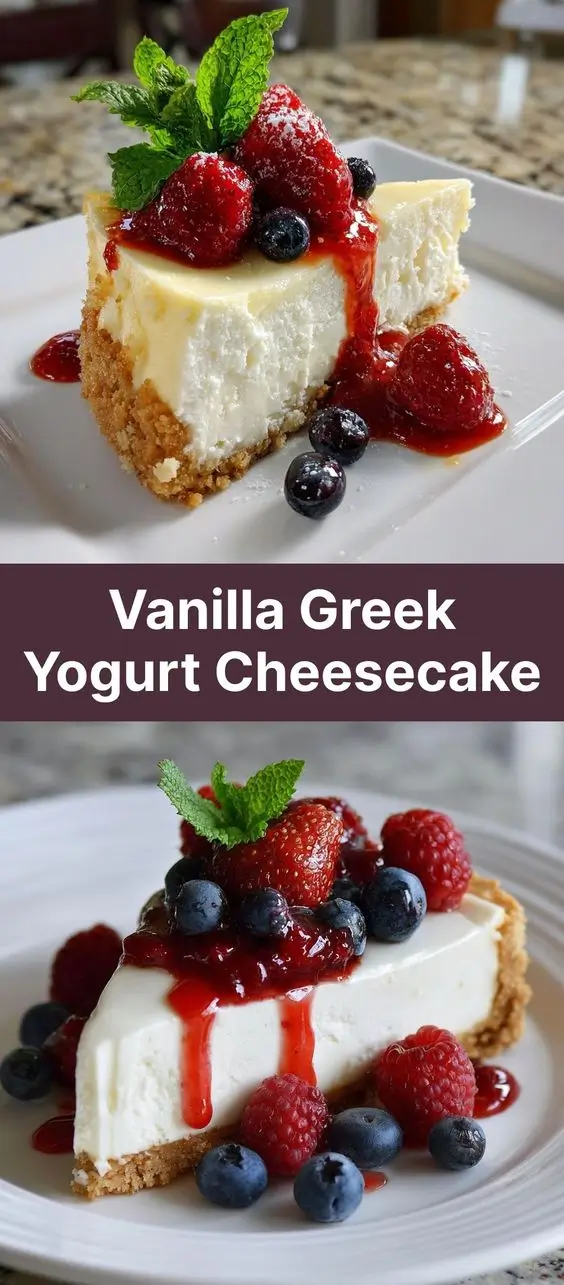
Welcome to the ultimate guide for creating a luxurious, creamy, and refreshingly tangy Vanilla Greek Yogurt Cheesecake. This modern twist on a classic dessert combines the rich tradition of New York-style cheesecake with the health-conscious benefits of high-protein Greek yogurt. Unlike traditional cheesecakes that rely heavily on heavy cream cheese and sour cream, this version uses Greek yogurt as the star ingredient, offering a lighter texture without sacrificing indulgence. Whether you’re hosting a dinner party, celebrating a special occasion, or simply treating yourself, this cheesecake delivers elegance in every bite—smooth, velvety, and delicately sweet with a hint of vanilla warmth.
The History
Cheesecake has a surprisingly ancient lineage, dating back over 4,000 years to the Greeks on the island of Samos, who served it to athletes during the first Olympic Games in 776 BCE as a source of energy. The Romans later adopted the recipe, spreading variations across Europe. However, the version we recognize today—rich, dense, and baked—originated in New York in the early 20th century, thanks to German immigrant Arnold Reuben, who popularized the modern style at his deli. Over time, cheesecake evolved into countless regional and cultural variations, from Japanese soufflé cheesecake to Italian ricotta-based versions.
The use of Greek yogurt in cheesecake is a more recent innovation, emerging in the late 2000s alongside the global surge in popularity of Greek yogurt itself. Brands like Fage and Chobani brought thick, protein-rich yogurt into mainstream kitchens, inspiring bakers to experiment with healthier substitutions. The result? A cheesecake that maintains all the luxurious mouthfeel but with fewer calories, less fat, and added probiotics and protein. The vanilla element has long been a favorite flavor enhancer in desserts, originating from Mesoamerican civilizations who used vanilla beans to flavor chocolate drinks. Today, vanilla remains one of the most beloved flavors worldwide, making this Vanilla Greek Yogurt Cheesecake a harmonious fusion of ancient roots and contemporary wellness trends.
Ingredients Breakdown
Every great dessert begins with exceptional ingredients, and this Vanilla Greek Yogurt Cheesecake is no exception. Let’s explore each component and its role in achieving the perfect balance of texture, taste, and nutrition:
- Full-Fat Greek Yogurt (32 oz / 907g): The cornerstone of this recipe. Full-fat Greek yogurt provides a luxuriously creamy texture, natural tanginess, and high protein content (about 20g per cup). It also helps create a moist crumb and reduces the need for extra cream or butter.
- Cream Cheese (16 oz / 454g, softened): While we’re using yogurt for lightness, cream cheese still plays a crucial role in structure and richness. Softened to room temperature, it blends smoothly and prevents lumps in the batter.
- Granulated Sugar (¾ cup / 150g): Provides sweetness that balances the tartness of the yogurt. You can adjust this based on your preference or substitute with coconut sugar for a lower glycemic option.
- Eggs (4 large): Act as a binder and leavening agent. They give the cheesecake its slight rise and custard-like consistency. Be sure to add them one at a time and avoid overmixing to prevent cracking.
- Pure Vanilla Extract (2 tablespoons): High-quality extract enhances the overall aroma and flavor. For an even deeper profile, consider adding a scraped vanilla bean pod.
- Lemon Zest (1 tablespoon) and Juice (1 teaspoon): Brightens the flavor and cuts through richness. The acidity also helps stabilize the proteins in the yogurt and eggs.
- All-Purpose Flour (2 tablespoons) or Cornstarch: A small amount helps bind the mixture and improve texture without making it dense.
- Salt (¼ teaspoon): Enhances all other flavors and rounds out the sweetness.
For the Crust:
- Graham Crackers (1 ½ cups / 150g, crushed): Classic base with a slightly sweet, honeyed flavor. You can use cinnamon graham crackers for warmth.
- Melted Butter (⅓ cup / 75g): Binds the crumbs together and adds richness. Unsalted butter is preferred for better control over salt levels.
- Brown Sugar (2 tablespoons): Deepens the caramel notes in the crust. Omit if you prefer a less sweet base.
- Ground Cinnamon (½ teaspoon, optional): Adds warmth and complements the vanilla beautifully.
Step-by-Step Recipe
- Preheat the Oven: Set your oven to 325°F (163°C). Position the rack in the center. Lightly grease a 9-inch springform pan and wrap the outside bottom and sides tightly with two layers of heavy-duty aluminum foil to prevent water from seeping in during the water bath.
- Prepare the Crust: In a medium bowl, combine graham cracker crumbs, melted butter, brown sugar, and cinnamon (if using). Mix until the crumbs are evenly coated and resemble wet sand. Press the mixture firmly into the bottom and slightly up the sides of the springform pan using the back of a spoon or a flat-bottomed glass. Chill in the refrigerator for 15 minutes while you prepare the filling.
- Begin the Filling: In a large mixing bowl, beat the softened cream cheese with an electric mixer on medium speed until smooth and creamy (about 2 minutes). Scrape down the sides as needed.
- Add Sweetener: Gradually add granulated sugar and continue beating until fully incorporated and fluffy (another 2 minutes).
- Incorporate Eggs: Add eggs one at a time, beating just until each is blended. Do not overmix—this can introduce too much air and lead to cracks.
- Introduce Greek Yogurt: Gently fold in the full-fat Greek yogurt using a spatula or mix on low speed. Add vanilla extract, lemon zest, lemon juice, flour (or cornstarch), and salt. Mix until just combined. Overmixing at this stage can cause the cheesecake to puff and crack.
- Fill the Pan: Pour the batter over the chilled crust. Smooth the top with a spatula. Tap the pan gently on the counter to release any air bubbles.
- Create a Water Bath: Place the wrapped springform pan inside a larger roasting pan. Carefully pour hot water into the outer pan until it reaches halfway up the sides of the springform (about 1 inch deep). This steamy environment prevents drying and cracking.
- Bake: Transfer to the oven and bake for 65–75 minutes. The cheesecake is done when the edges are set but the center still jiggles slightly like Jell-O when gently shaken.
- Cool Gradually: Turn off the oven, crack the door open with a wooden spoon, and let the cheesecake cool inside for 1 hour. This slow cooling prevents sudden temperature changes that cause cracks.
- Chill Thoroughly: Remove from the water bath, run a knife around the edge (not cutting through), and refrigerate uncovered for at least 6 hours, preferably overnight. This allows the texture to fully set and flavors to meld.
- Serve: Release the springform clamp, lift off the ring, and slice with a warm, clean knife for neat pieces. Garnish as desired.
Tips
- Room Temperature Ingredients: Ensure cream cheese, eggs, and yogurt are at room temperature before mixing. Cold ingredients don’t blend well and can lead to a lumpy batter.
- Avoid Overmixing: Once eggs are added, mix only until just combined. Overbeating incorporates excess air, which expands and collapses during baking, causing cracks.
- Use Full-Fat Yogurt: Low-fat or non-fat yogurt contains more liquid and stabilizers, increasing the risk of a soggy or grainy texture.
- Water Bath Is Essential: Don’t skip the water bath—it ensures even, gentle heat distribution and prevents surface cracks.
- No Peek Rule: Resist opening the oven door during baking. Sudden temperature drops can ruin the rise and cause collapse.
- Cool Slowly: The gradual cooling process in the turned-off oven is critical for structural integrity.
- Chill Overnight: Patience pays off. A longer chill results in cleaner slices and a firmer, silkier texture.
- Sharp Knife Technique: Dip your knife in hot water and wipe it dry between each cut for pristine slices.
Variations and Customizations
This Vanilla Greek Yogurt Cheesecake is incredibly versatile. Here are some delicious ways to personalize it:
- Fruit Swirls: Before baking, drop spoonfuls of raspberry puree, blueberry compote, or mango coulis onto the batter and swirl with a toothpick for a marbled effect.
- Crust Alternatives: Swap graham crackers for digestive biscuits, Oreo cookies (remove filling), almond meal, or gluten-free crumbs for dietary needs.
- Dairy-Free Version: Use dairy-free cream cheese (like Kite Hill), coconut yogurt (thick variety), and vegan butter in the crust.
- Lower Sugar Options: Replace granulated sugar with monk fruit sweetener, erythritol, or stevia. Adjust ratios according to package instructions.
- Protein Boost: Stir in 1–2 scoops of unflavored or vanilla whey or collagen protein powder into the batter (add an extra tablespoon of yogurt if too thick).
- Flavor Twists: Add orange zest, cinnamon, espresso powder, or almond extract for new dimensions. Try a layer of peanut butter or Nutella beneath the filling.
- Mini Cheesecakes: Bake in muffin tins lined with parchment cups for individual servings. Reduce baking time to 25–30 minutes.
- No-Bake Option: For a quicker version, omit eggs and cream cheese, increase yogurt, and use gelatin or agar-agar to set. Chill for 4+ hours.
Health Considerations and Nutritional Value
This Vanilla Greek Yogurt Cheesecake isn’t just delicious—it’s a smarter dessert choice. Here’s why:
- High in Protein: Greek yogurt contributes approximately 20–25 grams of protein per serving (depending on brand), supporting muscle repair and satiety.
- Probiotics: Live cultures in Greek yogurt promote gut health, aiding digestion and boosting immunity.
- Lower in Fat and Calories: Compared to traditional cheesecake, this version can have up to 30% fewer calories and half the saturated fat, especially when made with moderate amounts of cream cheese.
- Calcium-Rich: Both yogurt and cream cheese provide calcium for strong bones and teeth.
- Better Blood Sugar Control: The protein and fat content help slow glucose absorption, preventing spikes—ideal for those managing insulin sensitivity.
- Allergen Notes: Contains dairy and eggs. Can be adapted for gluten-free diets by using certified GF graham crackers or alternative crusts.
- Portion Awareness: Even healthy desserts should be enjoyed in moderation. One slice (1/12 of the cake) is satisfying due to its richness.
Nutritional Estimate (per slice, 1/12th of cake):
Calories: ~320 | Protein: 12g | Fat: 18g (Saturated: 10g) | Carbohydrates: 28g | Fiber: 1g | Sugar: 20g | Calcium: 15% DV | Sodium: 220mg
Ingredients
For the Crust:
• 1 ½ cups (150g) graham cracker crumbs
• ⅓ cup (75g) unsalted butter, melted
• 2 tablespoons brown sugar (optional)
• ½ teaspoon ground cinnamon (optional)
For the Filling:
• 32 oz (907g) full-fat Greek yogurt (e.g., Fage Total 10%)
• 16 oz (454g) cream cheese, softened
• ¾ cup (150g) granulated sugar
• 4 large eggs, room temperature
• 2 tablespoons pure vanilla extract
• 1 tablespoon lemon zest (from about 1 large lemon)
• 1 teaspoon lemon juice
• 2 tablespoons all-purpose flour or cornstarch
• ¼ teaspoon salt
Directions
- Preheat oven to 325°F (163°C). Grease and foil-wrap a 9-inch springform pan.
- Make the crust: Combine graham cracker crumbs, melted butter, brown sugar, and cinnamon. Press into the pan and chill for 15 minutes.
- In a large bowl, beat softened cream cheese until smooth. Add sugar and beat until fluffy.
- Add eggs one at a time, mixing just until blended after each addition.
- Fold in Greek yogurt, then add vanilla, lemon zest, lemon juice, flour, and salt. Mix until smooth and uniform.
- Pour batter over crust and smooth the top. Place in a roasting pan and add hot water halfway up the sides.
- Bake for 65–75 minutes until edges are set and center jiggles slightly.
- Turn off oven, crack the door, and let cool inside for 1 hour.
- Remove, loosen edges with a knife, and refrigerate for at least 6 hours or overnight.
- Release springform, slice with a warm knife, and serve with fresh berries, honey, or whipped cream if desired.
FAQ
Can I use low-fat Greek yogurt?
It’s not recommended. Low-fat versions contain more water and stabilizers, which can lead to a watery or rubbery texture. Full-fat ensures creaminess and proper setting.
Why did my cheesecake crack?
Common causes include overmixing, baking at too high a temperature, rapid cooling, or opening the oven too soon. The water bath and gradual cooling help prevent this.
Can I freeze this cheesecake?
Yes! Wrap tightly in plastic and foil. Freeze for up to 2 months. Thaw overnight in the refrigerator before serving.
How long does it last in the fridge?
Up to 5 days when stored covered in the refrigerator.
Can I make it ahead of time?
Absolutely. This cheesecake actually improves after 24 hours as flavors deepen and texture firms up.
Is it safe to eat raw eggs?
The eggs are fully cooked during baking. If concerned, use pasteurized eggs.
Can I use plain yogurt instead of Greek?
No—regular yogurt is too thin and will make the cheesecake runny. Strain it first (8 hours in cheesecloth) to thicken, or stick with authentic Greek yogurt.
What size pan should I use?
A 9-inch springform pan is ideal. Using a different size may alter baking time and depth.
Summary
The Vanilla Greek Yogurt Cheesecake redefines indulgence by blending velvety richness with nutritional wisdom—offering a high-protein, probiotic-rich dessert that satisfies without compromise. With its delicate vanilla essence, buttery graham crust, and silky-smooth texture, it’s a showstopping treat that’s as wholesome as it is delicious.