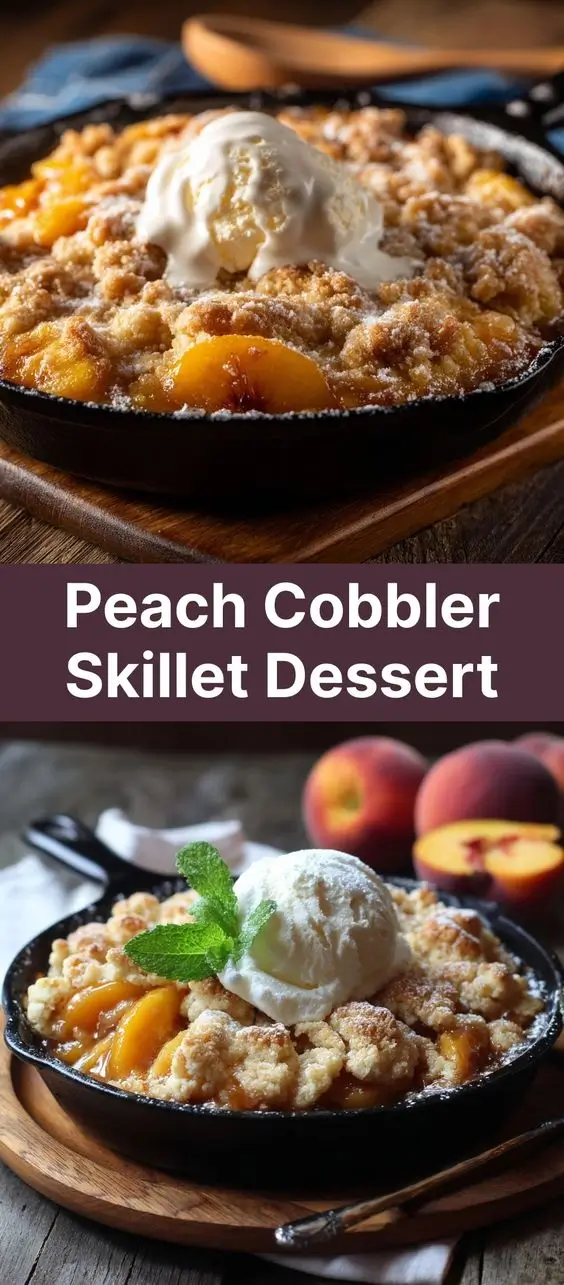
Peach Cobbler Skillet Dessert: A Southern Classic Reimagined
The History of Peach Cobbler: A Slice of American Heritage
Peach cobbler is more than just a dessert—it’s a cherished piece of American culinary history. Originating in the late 18th century, when British settlers brought their fruit-based pie traditions to the American colonies, the cobbler evolved out of necessity. Without access to proper pie tins or all the ingredients for traditional pastry crusts, early Americans adapted by using simple pantry staples and baking their desserts in cast-iron skillets over open fires or on wood stoves.
The name “cobbler” likely comes from the rough, “cobbled” appearance of the biscuit or cake-like topping that is dropped or spooned over the fruit filling—uneven and rustic, yet deliciously comforting. Over time, peach cobbler became especially popular in the Southern United States, where peaches thrive in the warm, humid climate. Georgia and South Carolina proudly call themselves the “Peach States,” and their bounty inspired generations of home bakers to perfect this humble dessert.
By the 20th century, peach cobbler had become a staple at family dinners, church potlucks, county fairs, and summer barbecues. Its nostalgic aroma—sweet peaches bubbling with cinnamon and sugar under a golden-brown crust—is synonymous with warmth, hospitality, and homemade comfort. Today, the skillet version has seen a resurgence thanks to its ease, visual appeal, and even heat distribution, making it ideal for both stovetop-to-oven cooking and serving straight from the pan.
Ingredients Breakdown: What Makes This Skillet Cobbler Shine
The beauty of peach cobbler lies in its simplicity, but each ingredient plays a vital role in creating the perfect balance of sweetness, texture, and aroma. Here’s a detailed look at what goes into an exceptional Peach Cobbler Skillet Dessert:
- Fresh Peaches: The star of the show. Ripe, juicy peaches provide natural sweetness and a soft, jammy consistency when baked. Their vibrant orange-yellow flesh adds color and freshness to the dish. If fresh peaches aren’t available, frozen or canned peaches (drained) can be substituted, though fresh offers superior flavor.
- Granulated Sugar: Enhances the natural sweetness of the peaches. The amount can be adjusted based on the ripeness of the fruit and personal preference.
- Brown Sugar: Adds depth and a hint of molasses richness, contributing to the caramelized edges of the filling.
- Lemon Juice: Brightens the flavor profile, cutting through the sweetness and enhancing the peach aroma. It also helps prevent browning during prep.
- Cinnamon: A classic spice that pairs beautifully with peaches, adding warmth and complexity.
- Nutmeg (optional): A pinch enhances the spiced notes without overpowering—complements cinnamon well.
- Cornstarch: Acts as a thickening agent to ensure the fruit juices don’t run off into a watery mess. It creates a luscious, syrupy sauce that clings to the peaches.
- Butter: Used both in the batter and melted into the skillet before adding the topping. It adds richness, promotes browning, and contributes to a tender crumb.
- All-Purpose Flour: Provides structure to the cobbler topping, helping it rise slightly and hold together while remaining light.
- Baking Powder: The leavening agent that gives the topping a slight lift, creating a fluffy, cake-like layer instead of a dense crust.
- Salt: Balances the sweetness and enhances all the other flavors.
- Milk or Buttermilk: Adds moisture to the batter. Buttermilk introduces a subtle tang and tenderness due to its acidity.
- Vanilla Extract: Deepens the overall flavor with a warm, aromatic note that complements the peaches perfectly.
- Heavy Cream or Ice Cream (for serving): Optional, but highly recommended. A scoop of vanilla ice cream melting over hot cobbler creates the iconic “peach cobbler à la mode” experience.
Step-by-Step Recipe: How to Make the Perfect Peach Cobbler in a Skillet
Follow these detailed steps to create a mouthwatering Peach Cobbler Skillet Dessert that will impress your family and guests alike.
Ingredients
- 6 cups peeled, pitted, and sliced fresh peaches (about 6–8 medium peaches)
- 1/2 cup granulated sugar
- 1/4 cup brown sugar, packed
- 1 tablespoon lemon juice
- 1 teaspoon ground cinnamon
- 1/4 teaspoon ground nutmeg (optional)
- 2 tablespoons cornstarch
- 1/4 teaspoon salt
- 1/2 cup (1 stick) unsalted butter, cold
- 1 cup all-purpose flour
- 1 tablespoon baking powder
- 1/4 teaspoon salt
- 3/4 cup milk (whole or buttermilk preferred)
- 1 teaspoon vanilla extract
- Optional: additional sugar for sprinkling on top
Directions
- Preheat Oven: Preheat your oven to 375°F (190°C). Position the rack in the center for even baking.
- Prepare the Filling: In a large bowl, combine the sliced peaches, granulated sugar, brown sugar, lemon juice, cinnamon, nutmeg, cornstarch, and 1/4 teaspoon salt. Gently toss until the peaches are evenly coated. Set aside to macerate for 10–15 minutes, allowing the flavors to meld and juices to release.
- Heat the Skillet: Place a 10-inch cast-iron skillet over medium heat. Add the 1/2 cup (1 stick) of butter and let it melt completely, swirling to coat the bottom and sides of the pan. Be careful not to burn it—this step enhances flavor and prevents sticking.
- Add the Filling: Pour the peach mixture into the hot, buttered skillet. Stir gently to combine with the melted butter. Let it simmer for 3–5 minutes, just until the mixture begins to bubble and thicken slightly around the edges. Remove from heat—do not bake at this stage.
- Make the Batter: In a medium mixing bowl, whisk together the flour, baking powder, and 1/4 teaspoon salt. Add the milk and vanilla extract. Stir with a fork or whisk until just combined—small lumps are okay; do not overmix.
- Top the Skillet: Carefully pour the batter over the hot peaches in the skillet. It will spread naturally. Do not stir—the batter will rise to the top during baking. For a golden, slightly sweet crust, sprinkle a little extra sugar or coarse turbinado sugar on top.
- Bake: Transfer the skillet to the preheated oven. Bake for 35–40 minutes, or until the topping is golden brown, a toothpick inserted into the center comes out clean, and the filling is bubbling vigorously around the edges.
- Cool Slightly: Remove from oven and let rest for 10–15 minutes. This allows the filling to set slightly for easier serving.
- Serve Warm: Serve directly from the skillet with a generous scoop of vanilla ice cream or a drizzle of heavy cream. Garnish with fresh mint or a dusting of powdered sugar if desired.
Tips for the Best Peach Cobbler Skillet Every Time
- Use Ripe, In-Season Peaches: The better the peaches, the better the cobbler. Choose fruit that yields slightly to pressure and has a fragrant, sweet smell.
- Don’t Skip the Maceration Step: Letting the peaches sit with sugar and cornstarch draws out juice and ensures a thick, flavorful filling.
- Cast Iron is Key: A seasoned cast-iron skillet distributes heat evenly and retains it well, giving you a crisp bottom edge and consistent bake.
- Melt Butter Before Adding Filling: This creates a rich, caramelized base and helps prevent sticking.
- Don’t Overmix the Batter: Overmixing develops gluten, which can make the topping tough. Mix until just combined for a tender, cake-like texture.
- Bake Until Bubbling: Make sure the center is fully cooked and the edges are actively bubbling. Underbaked cobbler can be soupy.
- Let It Rest: Allow the cobbler to cool slightly before serving so the filling sets and doesn’t run off the plate.
- Reheat Leftovers Properly: Warm in the oven at 325°F for 10–15 minutes to maintain texture. Microwaving can make the topping gummy.
Variations and Customizations: Make It Your Own
While classic peach cobbler is timeless, feel free to experiment with flavors and textures to suit your taste or dietary needs:
- Fruit Variations: Try mixed berries, nectarines, plums, apples, or a peach-raspberry blend. Adjust sugar and thickener as needed based on fruit juiciness.
- Gluten-Free Option: Substitute the all-purpose flour with a 1:1 gluten-free baking blend. Ensure the baking powder is gluten-free as well.
- Dairy-Free Version: Use plant-based butter (like coconut oil or vegan margarine) and almond, oat, or soy milk. Full-fat options work best for richness.
- Vegan Cobbler: Combine dairy-free butter and milk with a flax egg (1 tbsp ground flax + 3 tbsp water) to replace eggs if needed (though traditional cobbler often doesn’t use eggs).
- Spice It Up: Add cardamom, ginger, or allspice for a more complex flavor profile. A splash of bourbon or vanilla bean paste also elevates the dessert.
- Biscuit-Style Topping: For a more traditional southern cobbler, drop spoonfuls of biscuit dough over the peaches instead of pouring a batter.
- Crumble Topping Alternative: Swap the cake-like topping for a streusel made with oats, flour, brown sugar, butter, and chopped nuts for a crunchier texture.
- Mini Skillets: Divide the recipe into small cast-iron skillets for individual servings—perfect for dinner parties or portion control.
Health Considerations and Nutritional Value
Peach cobbler is undeniably indulgent, but understanding its nutritional profile can help you enjoy it mindfully:
Nutritional Highlights per Serving (1/8 of recipe, without ice cream):
- Calories: ~320–360
- Total Fat: ~12–15g (mostly from butter)
- Saturated Fat: ~7–8g
- Carbohydrates: ~55–60g
- Sugars: ~35–40g (naturally occurring and added)
- Protein: ~4–5g
- Fiber: ~2–3g (from peaches and flour)
- Vitamins & Minerals: Peaches contribute vitamin C, vitamin A, potassium, and antioxidants like chlorogenic acid and beta-carotene.
Health Tips:
- Reduce Sugar: Cut the sugar by 25–30% if your peaches are very ripe. You can also use natural sweeteners like maple syrup or coconut sugar, though results may vary.
- Increase Fiber: Add a tablespoon of oats or whole wheat flour to the batter for a heartier texture and more fiber.
- Portion Control: Serve smaller slices with a dollop of Greek yogurt instead of ice cream to reduce fat and add protein.
- Enjoy Occasionally: Best treated as an occasional dessert rather than a daily treat, especially for those managing blood sugar levels.
- Kid-Friendly: Children love the sweet taste and soft texture, making it a great way to introduce them to fruit-forward desserts.
FAQ: Frequently Asked Questions About Peach Cobbler Skillet
Can I make peach cobbler ahead of time?
Yes! Assemble the filling and store it in the fridge for up to 24 hours. Prepare the batter just before baking. You can also bake the entire cobbler, refrigerate it, and reheat before serving.
Can I freeze peach cobbler?
Absolutely. Cool completely, cover tightly with foil or place in an airtight container, and freeze for up to 3 months. Thaw in the refrigerator overnight and reheat in the oven at 350°F for 20–25 minutes.
Why is my cobbler runny?
This usually happens if the fruit was too juicy, insufficient thickener was used, or it wasn’t baked long enough. Always use cornstarch and bake until the center is set and bubbling.
Can I use canned peaches?
Yes, but drain them well and reduce added sugar since canned peaches are often packed in syrup. Fresh peaches yield the best flavor and texture.
Do I have to use a cast-iron skillet?
While not mandatory, cast iron is ideal because it heats evenly and goes from stove to oven seamlessly. A ceramic or oven-safe deep dish can work, but avoid non-oven-safe materials.
Can I add nuts or spices?
Definitely! Chopped pecans or almonds add crunch. Spices like ginger, allspice, or even a pinch of black pepper can deepen the flavor profile.
Is peach cobbler the same as peach crisp?
No. Cobbler has a poured or dropped batter topping that bakes into a cake-like layer, while crisp typically has a crumbly oat-based topping with butter and brown sugar.
Summary
Peach Cobbler Skillet Dessert is a timeless, comforting classic that combines juicy, spiced peaches with a golden, cake-like topping baked to perfection in a cast-iron skillet.
Easy to customize, rich in flavor, and perfect for sharing, this dessert brings warmth and nostalgia to any table—best served warm with a scoop of vanilla ice cream.