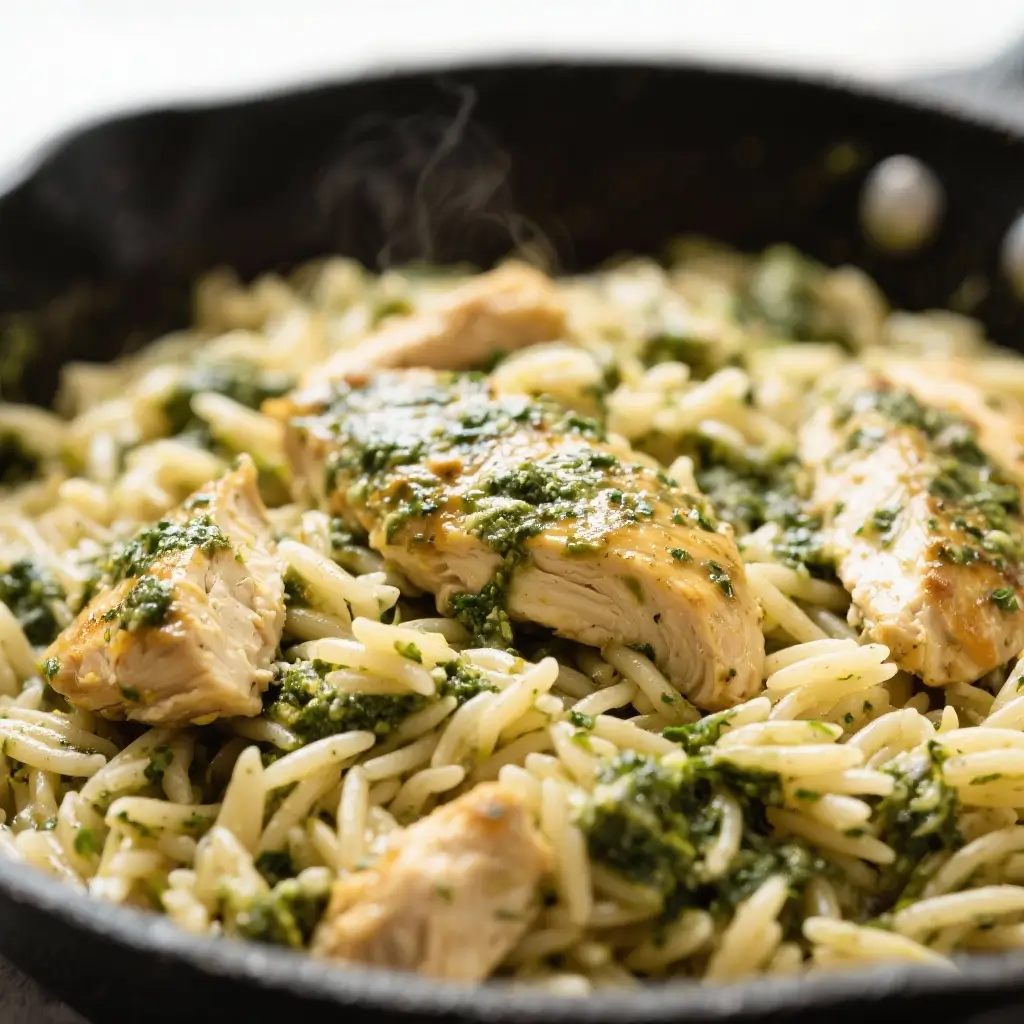
Pesto Chicken Orzo Skillet
Introduction
Welcome to a culinary delight that brings together the creamy, herby richness of pesto with the comforting texture of tender chicken and orzo pasta — the Pesto Chicken Orzo Skillet. This one-pan wonder is not only quick and easy to prepare but also bursting with Mediterranean flavors that will have your taste buds dancing. Whether you’re cooking for a busy weeknight dinner, meal prepping for the week ahead, or simply craving something warm, satisfying, and full of freshness, this dish delivers on all fronts. It’s a harmonious blend of protein, carbohydrates, and healthy fats, making it a well-rounded meal that feels indulgent yet nourishing.
The History
The roots of this dish lie in the fusion of Italian and modern American home cooking traditions. Orzo, a rice-shaped pasta originating from Italy, has long been a staple in Mediterranean cuisine, often used in soups, salads, and baked casseroles. Pesto, another Italian classic hailing from Genoa, traditionally consists of fresh basil, garlic, pine nuts, Parmesan cheese, and olive oil — a vibrant green sauce that captures the essence of summer gardens. Chicken, as a lean and versatile protein, has become a global favorite, especially in family-style American meals where convenience and flavor go hand in hand.
The Pesto Chicken Orzo Skillet emerged as part of the modern trend toward one-pot meals that minimize cleanup while maximizing flavor. Inspired by rustic Italian pastas and elevated by the ease of stovetop preparation, this skillet dish combines all these elements into a cohesive, comforting meal. Its popularity soared with food bloggers and home cooks who embraced its simplicity, bold taste, and adaptability across dietary preferences. Today, it stands as a beloved example of how traditional ingredients can be reimagined into fast, flavorful, and family-friendly fare.
Ingredients Breakdown
The magic of the Pesto Chicken Orzo Skillet lies in its carefully balanced ingredients, each contributing to the overall depth of flavor, texture, and nutrition:
- Chicken Breast or Thighs: Boneless, skinless chicken breasts are most commonly used for their lean profile and mild flavor, though thighs offer more juiciness and richness.
- Orzo Pasta: This small, rice-shaped pasta absorbs flavors beautifully and provides a soft yet slightly al dente bite when cooked properly.
- Pesto Sauce: Store-bought or homemade, pesto infuses the entire dish with herbal brightness, garlicky punch, and nutty undertones.
- Chicken Broth: Used as the cooking liquid, it enhances savory depth and helps cook the orzo without drying out the pan.
- Olive Oil: A high-quality extra virgin olive oil adds richness and supports sautéing while enhancing the overall Mediterranean character.
- Garlic: Fresh minced garlic amplifies the aroma and complements the pesto’s pungency.
- Cherry Tomatoes: These add a pop of color, acidity, and natural sweetness, balancing the richness of the pesto and chicken.
- Sun-Dried Tomatoes (optional): For an intensified umami kick and chewy contrast.
- Spinach or Arugula: Leafy greens contribute freshness, nutrients, and a slight peppery note, especially arugula.
- Parmesan Cheese: Grated Parmesan adds saltiness, creaminess, and a nutty finish; freshly shaved is ideal.
- Lemon Juice (optional): A splash brightens the dish and cuts through the fat, adding vibrancy.
- Salt and Black Pepper: Essential seasonings to round out the flavor profile.
- Red Pepper Flakes (optional): For those who enjoy a hint of heat.
These components work together to create a layered, satisfying dish that feels both hearty and fresh — perfect for any season.
Step-by-Step Recipe
- Prep Ingredients: Slice 1 pound of chicken into bite-sized cubes. Mince 3 cloves of garlic. Measure out 1 cup of uncooked orzo, 2 cups of chicken broth, 1/2 cup of pesto (homemade or store-bought), 1 cup of halved cherry tomatoes, 2 cups of fresh spinach, and 1/2 cup of grated Parmesan cheese.
- Sear the Chicken: Heat 2 tablespoons of olive oil in a large, deep skillet or Dutch oven over medium-high heat. Add the chicken pieces in a single layer, seasoning them with salt and pepper. Cook for 5–6 minutes, turning occasionally, until golden brown and cooked through (internal temperature should reach 165°F). Remove chicken and set aside.
- Sauté Aromatics: In the same skillet, add another drizzle of olive oil if needed. Reduce heat to medium and add minced garlic. Sauté for about 30 seconds until fragrant — do not let it burn.
- Add Orzo and Broth: Stir in the orzo pasta and toast for 1–2 minutes, allowing it to absorb some oil and develop a nutty flavor. Pour in the chicken broth, scraping up any browned bits from the bottom of the pan for extra flavor.
- Cook Orzo: Bring the mixture to a simmer. Cover and reduce heat to low. Cook for 8–10 minutes, stirring occasionally, until orzo is tender and most of the liquid is absorbed.
- Incorporate Greens and Tomatoes: Stir in the cherry tomatoes and fresh spinach. Cook for another 2–3 minutes until spinach wilts and tomatoes begin to soften.
- Return Chicken: Add the cooked chicken back into the skillet and stir to combine.
- Stir in Pesto: Remove the skillet from heat and stir in the pesto sauce until evenly distributed. The residual heat will preserve the fresh flavor of the herbs.
- Finish with Cheese: Sprinkle in the grated Parmesan and gently fold it in. Taste and adjust seasoning with salt, pepper, lemon juice, or red pepper flakes as desired.
- Serve Warm: Garnish with additional Parmesan, fresh basil leaves, or a drizzle of olive oil before serving.
Tips
- Toasting the Orzo: Don’t skip toasting the orzo in oil before adding liquid — it enhances flavor and prevents mushiness.
- Avoid Overcooking: Keep an eye on the orzo; overcooking leads to a gummy texture. It should be tender with a slight bite.
- Use Homemade Pesto When Possible: Freshly made pesto offers superior taste and vibrancy. Try blending basil, garlic, pine nuts, olive oil, and Parmesan for best results.
- Reserve Some Pesto: For presentation, swirl a spoonful of pesto on top of each serving for a restaurant-quality look.
- Rest Before Serving: Let the skillet sit off heat for 5 minutes after mixing in pesto — this allows flavors to meld and texture to stabilize.
- Prevent Sticking: Stir frequently during orzo cooking and add a splash more broth or water if the mixture seems too dry.
- Batch Cooking Tip: Double the recipe and store portions for up to 4 days in the fridge or freeze for later use.
- Reheating: Reheat gently on the stove with a splash of broth or water to restore creaminess.
Variations and Customizations
This Pesto Chicken Orzo Skillet is incredibly versatile and welcomes endless adaptations based on dietary needs, pantry availability, or personal taste:
- Vegetarian Version: Omit chicken and add chickpeas, white beans, or roasted vegetables like zucchini, bell peppers, and eggplant.
- Vegan Option: Use dairy-free pesto (without cheese) and nutritional yeast instead of Parmesan. Replace chicken with tofu or tempeh.
- Gluten-Free Adaptation: Substitute orzo with quinoa, brown rice, or gluten-free pasta shapes like mini penne.
- Seafood Twist: Replace chicken with grilled shrimp or flaked salmon for a lighter, coastal-inspired dish.
- Creamy Upgrade: Stir in a dollop of mascarpone, ricotta, or heavy cream for a richer, silkier texture.
- Different Herbs: Swap basil pesto for sun-dried tomato pesto, kale-walnut pesto, or cilantro-lime variation for a unique twist.
- Nut Variations: Use walnuts, almonds, or pistachios instead of pine nuts in homemade pesto to alter flavor and cost.
- Add More Veggies: Include peas, artichoke hearts, asparagus, or roasted red peppers for added color and nutrition.
- Spice It Up: Add sliced jalapeños, chili oil, or harissa paste for a bolder, spicier kick.
- Cheese Lovers’ Boost: Mix in mozzarella pearls or crumbled feta for melty, tangy pockets throughout.
Health Considerations and Nutritional Value
The Pesto Chicken Orzo Skillet is a nutritionally balanced dish that provides a good mix of macronutrients and essential micronutrients:
- Protein: Chicken breast supplies high-quality protein, supporting muscle repair and satiety (about 30g per 6 oz serving).
- Carbohydrates: Orzo offers complex carbs for sustained energy. Whole grain orzo increases fiber content significantly.
- Fats: Olive oil and pesto provide heart-healthy monounsaturated fats and omega-3s (especially if made with walnuts or flaxseed).
- Vitamins & Minerals: Spinach contributes iron, vitamin K, and folate; tomatoes add vitamin C and lycopene; garlic offers immune-boosting compounds.
- Calcium: Parmesan cheese delivers calcium for bone health, though in moderation due to sodium content.
Dietary Notes:
- Heart-Healthy: Rich in unsaturated fats and antioxidants from olive oil and fresh herbs.
- Weight Management: High in protein and fiber (especially with added greens and whole grains), promoting fullness and reducing overeating.
- Low Sugar: Naturally low in added sugars, relying on vegetables for sweetness.
- Sodium Watch: Store-bought pesto and broth can be high in sodium — opt for low-sodium versions or make your own.
- Allergen Alert: Contains dairy and tree nuts (if using pine nuts or other nuts in pesto); substitute accordingly for allergies.
On average, a serving contains approximately 450–550 calories, depending on ingredients and portion size, making it suitable for active adults and balanced diets.
Ingredients
- 1 lb boneless, skinless chicken breasts or thighs, cut into 1-inch cubes
- 2 tbsp olive oil (plus more if needed)
- 3 cloves garlic, minced
- 1 cup uncooked orzo pasta
- 2 cups low-sodium chicken broth
- 1/2 cup prepared basil pesto (store-bought or homemade)
- 1 cup cherry tomatoes, halved
- 1/4 cup sun-dried tomatoes, chopped (optional)
- 2 cups fresh baby spinach or arugula
- 1/2 cup grated Parmesan cheese (plus extra for garnish)
- 1 tbsp fresh lemon juice (optional)
- Salt and freshly ground black pepper, to taste
- Red pepper flakes, to taste (optional)
- Fresh basil leaves, for garnish
Directions
- Heat olive oil in a large, oven-safe skillet or deep sauté pan over medium-high heat.
- Add chicken pieces, season with salt and pepper, and cook for 5–6 minutes until golden and cooked through. Transfer to a plate and set aside.
- Reduce heat to medium, add a touch more oil if needed, then sauté garlic for 30 seconds until aromatic.
- Stir in orzo and toast for 1–2 minutes until lightly golden.
- Pour in chicken broth, scraping the bottom of the pan to release flavorful bits. Bring to a simmer.
- Cover and cook for 8–10 minutes, stirring occasionally, until orzo is tender and liquid is mostly absorbed.
- Stir in cherry tomatoes, sun-dried tomatoes (if using), and spinach. Cook for 2–3 minutes until spinach wilts.
- Return cooked chicken to the skillet and mix well.
- Remove from heat. Stir in pesto and Parmesan until fully incorporated.
- Add lemon juice, extra black pepper, or red pepper flakes to taste.
- Let rest for 5 minutes to allow flavors to meld.
- Garnish with additional Parmesan, fresh basil, or a drizzle of pesto before serving.
FAQ
Can I use frozen chicken?
It’s best to use thawed chicken for even cooking and better searing. If using frozen, ensure it’s fully defrosted and patted dry to avoid steaming.
How long does it keep in the fridge?
Store in an airtight container for up to 4 days. Reheat on the stove with a splash of broth or water to refresh texture.
Can I freeze this skillet?
Yes, though dairy-based sauces may separate slightly upon thawing. Freeze in portions for up to 3 months. Thaw overnight in the fridge and reheat gently.
Is this dish gluten-free?
Not unless you substitute orzo with a gluten-free alternative like quinoa or GF pasta.
Can I make it ahead of time?
Yes! Prepare up to the point of adding pesto and cheese, then refrigerate. Finish with pesto and Parmesan just before serving.
What can I serve with this?
Pair with a crisp green salad, garlic bread, roasted vegetables, or a chilled glass of white wine like Pinot Grigio.
Why is my orzo mushy?
Overcooking or using too little liquid can cause mushiness. Follow timing closely and check orzo texture early.
Can I use jarred pesto?
Absolutely. Quality varies, so choose a brand with simple ingredients or make your own for best flavor.
Summary
The Pesto Chicken Orzo Skillet is a flavorful, one-pan meal that combines tender chicken, creamy pesto, and perfectly cooked orzo with fresh vegetables. Quick to make, endlessly customizable, and packed with Mediterranean goodness, it’s sure to become a weekly favorite.