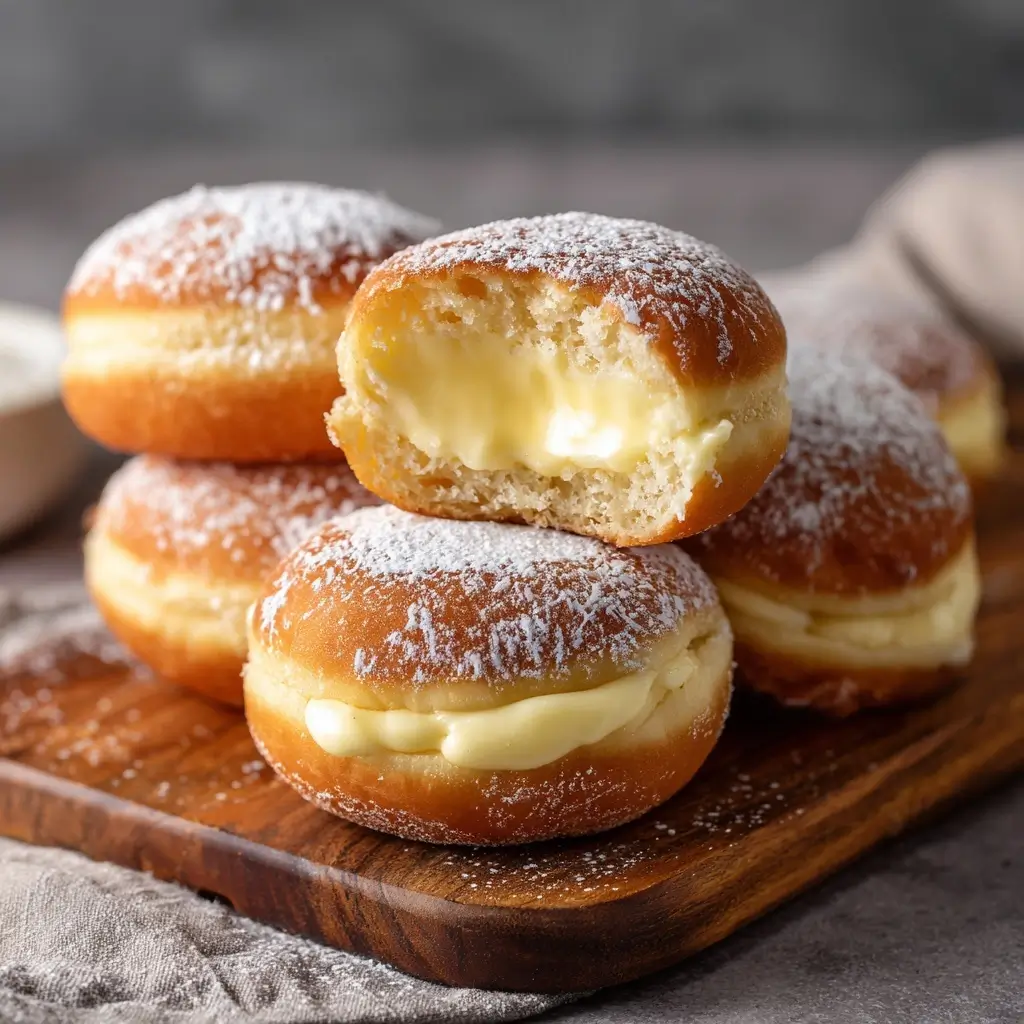
Vanilla Custard Filled Donuts: A Decadent Delight
Introduction
There’s something undeniably magical about biting into a soft, pillowy donut only to be met with a rich burst of smooth vanilla custard. Vanilla custard filled donuts are the epitome of indulgence—perfect for breakfast, dessert, or an afternoon treat with coffee. These golden-brown beauties combine the best of two worlds: a light, airy fried dough exterior and a luxuriously creamy center that melts in your mouth. Whether you’re a seasoned baker or just starting out, this recipe offers a rewarding challenge that results in bakery-quality confections right from your own kitchen.
Beyond their irresistible flavor and texture, homemade custard-filled donuts allow you full control over ingredients, freshness, and customization. Forget preservatives and stale pastries from the store—these donuts are made fresh, warm, and served at peak perfection. In this comprehensive guide, we’ll walk you through every step—from understanding the history of the donut to crafting the perfect custard filling, troubleshooting common issues, exploring variations, and even considering health-conscious alternatives. Get ready to elevate your baking game with one of the most beloved treats in dessert history.
The History
The story of the donut is as rich and layered as its custard filling. While its exact origins are debated, fried doughs have existed across cultures for centuries. Ancient Romans enjoyed fry bread called “scriblita,” while Dutch settlers brought olykoeks (“oily cakes”) to early America. These early versions were simple balls of fried dough, often containing nuts or raisins.
The modern ring-shaped donut is commonly credited to Hanson Gregory, an American sailor, who claimed in 1847 that he punched a hole in the center of the dough to ensure even cooking. This innovation not only improved texture but also created the iconic shape we know today. By the late 19th and early 20th centuries, donuts gained popularity in the U.S., especially during World War I when Salvation Army volunteers—known as “Doughnut Girls”—served them to soldiers on the front lines.
Filled donuts emerged later, inspired by European pastries like French cream puffs and Italian sfinge. The custard-filled variety likely evolved from éclairs and Boston cream pie, both of which feature rich vanilla pastry cream. As commercial bakeries expanded in the 20th century, machines were developed to inject fillings efficiently, making custard-filled donuts widely accessible.
Today, artisanal donut shops around the world celebrate the craft with innovative flavors, but the classic vanilla custard filled donut remains a timeless favorite—a delicious fusion of tradition, technique, and taste.
Ingredients Breakdown
Creating perfect vanilla custard filled donuts requires attention to detail, starting with high-quality ingredients. Each component plays a crucial role in texture, flavor, and structure. Let’s break them down:
Dough Ingredients:
- All-Purpose Flour: Provides structure and gluten development. Bread flour can be used for a chewier texture, but all-purpose yields a softer crumb.
- Granulated Sugar: Adds sweetness and aids in browning during frying.
- Instant Yeast (or Active Dry): Leavens the dough, giving it lift and airiness. Instant yeast dissolves faster and doesn’t require proofing.
- Warm Milk (110°F): Activates the yeast and adds tenderness. Whole milk enriches the dough; low-fat milk may result in drier donuts.
- Eggs: Contribute richness, color, and structure. Room temperature eggs blend more smoothly into the dough.
- Butter (Unsalted): Adds flavor and softness. Melted and cooled butter integrates better than cold.
- Salt: Balances sweetness and controls yeast activity.
- Vanilla Extract: Enhances aroma and complements the custard filling.
Vanilla Custard Filling Ingredients:
- Whole Milk: Forms the base of the custard. Higher fat content leads to creamier texture.
- Egg Yolks: Thicken the custard and add silkiness. Avoid using whole eggs to prevent curdling.
- Granulated Sugar: Sweetens the custard. Can be adjusted to taste.
- Cornstarch: Acts as a thickener, stabilizing the custard and preventing runniness.
- Butter (Cold, Cubed): Added at the end for shine and luxurious mouthfeel.
- Pure Vanilla Extract or Vanilla Bean Paste: Imparts deep vanilla flavor. Real vanilla is far superior to imitation.
Frying and Finishing:
- Neutral Oil (Vegetable, Canola, or Peanut): High smoke point oils are ideal for frying without imparting flavor.
- Powdered Sugar (Optional Glaze): For dusting or glazing. Mixed with milk or vanilla for a sweet finish.
- Vanilla Glaze (Optional): Combines powdered sugar, milk, vanilla, and sometimes corn syrup for shine.
Step-by-Step Recipe
Making the Vanilla Custard Filling
- In a medium saucepan, heat 2 cups of whole milk over medium heat until steaming (do not boil).
- Meanwhile, whisk together 4 large egg yolks, 1/2 cup granulated sugar, and 1/4 cup cornstarch in a bowl until pale and smooth.
- Slowly pour about 1/2 cup of hot milk into the egg mixture, whisking constantly to temper the yolks.
- Pour the tempered mixture back into the saucepan with the remaining milk, whisking continuously.
- Cook over medium heat, stirring constantly with a wooden spoon or silicone spatula, until the mixture thickens and coats the back of the spoon (about 5–7 minutes). It should reach 170–175°F.
- Remove from heat and stir in 2 tablespoons of cold unsalted butter and 1 tablespoon of pure vanilla extract.
- Transfer to a bowl, press plastic wrap directly onto the surface to prevent a skin from forming, and refrigerate for at least 2 hours or overnight.
Preparing the Donut Dough
- In the bowl of a stand mixer fitted with a paddle attachment, combine 1 cup warm milk, 1/4 cup sugar, 2 1/4 tsp instant yeast, and 1 large egg. Mix on low for 1 minute.
- Add 3 1/2 cups all-purpose flour, 1/4 tsp salt, 1 tsp vanilla extract, and 1/4 cup melted and cooled unsalted butter.
- Mix on low until combined, then switch to a dough hook and knead on medium speed for 5–7 minutes until smooth and elastic. If too sticky, add 1–2 tbsp more flour.
- Place dough in a lightly greased bowl, cover with a damp towel or plastic wrap, and let rise in a warm place for 1–1.5 hours or until doubled in size.
Shaping and Frying the Donuts
- Turn risen dough onto a floured surface and roll out to 1/2-inch thickness.
- Use a round donut cutter (3-inch outer, 1-inch center) to cut shapes. Re-roll scraps once for best texture.
- Place donuts and holes on parchment-lined trays, cover loosely, and proof for 30–45 minutes until puffy.
- Heat 2–3 inches of oil in a heavy pot (Dutch oven works well) to 350–360°F. Use a thermometer for accuracy.
- Fry 2–3 donuts at a time, flipping once, for about 1–2 minutes per side until golden brown.
- Drain on a wire rack set over paper towels. Cool completely before filling.
Filling with Custard
- Fit a piping bag with a Bismarck tip (long narrow nozzle) or a small round tip.
- Fill the bag with chilled vanilla custard.
- Insert the tip into the side of each donut and gently squeeze, injecting about 1–2 tablespoons of custard. You should feel the donut expand slightly.
- Wipe off any excess and repeat. Optional: dust with powdered sugar or dip in glaze.
Tips
- Temperature Control: Keep milk between 105–115°F when activating yeast. Too hot kills yeast; too cold slows activation.
- Don’t Overproof: Over-risen dough collapses easily. Proof until just puffy—not doubled again after cutting.
- Fry at the Right Temp: Below 350°F makes greasy donuts; above 375°F browns too fast with raw centers. Adjust heat as needed.
- Chill Custard Thoroughly: Warm custard will melt and leak. Refrigerate at least 2 hours or use an ice bath to cool faster.
- Use Proper Piping Tip: A Bismarck or jelly tip ensures clean injection without tearing.
- Fresh Is Best: These donuts are best eaten within 12–24 hours. Store unfilled donuts at room temp; filled ones should be refrigerated.
- Oil Reuse: Cool oil completely, strain through cheesecloth, and store in a sealed container for future frying (up to 3 uses).
Variations and Customizations
While classic vanilla custard is heavenly, feel free to experiment with creative twists:
- Chocolate Custard: Add 2 tbsp cocoa powder to the custard base or melt 2 oz dark chocolate into the warm custard.
- Coffee Custard: Dissolve 1 tbsp instant espresso in the warm milk for a mocha twist.
- Fruit-Infused Custard: Fold in 1/4 cup raspberry or strawberry compote after cooling.
- Coconut Custard: Replace half the milk with coconut milk and add 1/2 tsp coconut extract.
- Lemon Curd Swirl: Fill with lemon curd or swirl into vanilla custard for tangy contrast.
- Glaze Varieties: Try chocolate ganache, maple glaze, or a rosewater-powdered sugar mix.
- Stuffed & Filled: Add a surprise center—like a chocolate chip or caramel nugget—before frying.
- Mini Donut Popcorn: Make bite-sized donut holes, fill with custard, and serve in a cone for parties.
- Vegan Version: Use plant-based milk, flax eggs, and vegan butter. For custard, use cornstarch and silken tofu blended smooth.
- Gluten-Free: Substitute with a quality GF flour blend containing xanthan gum for elasticity.
Health Considerations and Nutritional Value
Vanilla custard filled donuts are undeniably decadent, so it’s wise to enjoy them in moderation. Here’s a general nutritional breakdown per serving (1 filled donut, approx. 3.5 oz / 100g):
| Nutrient | Amount (Approx.) |
|---|---|
| Calories | 320–380 |
| Total Fat | 14–18g |
| Saturated Fat | 6–8g |
| Cholesterol | 80–100mg |
| Sodium | 180–220mg |
| Total Carbohydrates | 45–50g |
| Sugars | 20–25g |
| Protein | 5–7g |
Considerations:
- High in Sugar and Fat: Due to frying and custard, these are calorie-dense. Limit consumption if managing weight or blood sugar.
- Dairy and Eggs: Not suitable for those with allergies or strict vegan diets unless modified.
- Gluten Content: Traditional donuts contain gluten. Celiac patients must use certified GF alternatives.
- Make Healthier Swaps:
- Bake instead of fry: Use a donut pan and bake at 350°F for 10–12 minutes.
- Reduce sugar: Cut sugar by 25% in both dough and custard.
- Use low-fat milk and skip butter in custard (though texture will be less rich).
- Portion control: Make mini donuts to satisfy cravings with fewer calories.
Ingredients
For the Vanilla Custard Filling:
- 2 cups whole milk
- 4 large egg yolks
- 1/2 cup granulated sugar
- 1/4 cup cornstarch
- 2 tablespoons unsalted butter, cold and cubed
- 1 tablespoon pure vanilla extract or 1 tsp vanilla bean paste
For the Donut Dough:
- 1 cup warm whole milk (110°F)
- 1/4 cup granulated sugar
- 2 1/4 teaspoons (1 packet) instant yeast
- 1 large egg, room temperature
- 3 1/2 cups all-purpose flour, plus extra for dusting
- 1/4 teaspoon salt
- 1 teaspoon pure vanilla extract
- 1/4 cup unsalted butter, melted and cooled
For Frying and Finishing:
- 4–6 cups neutral oil (vegetable, canola, or peanut)
- Powdered sugar, for dusting
- Optional: Vanilla glaze (1 cup powdered sugar + 2 tbsp milk + 1/2 tsp vanilla extract)
Directions
- Make the Custard: Heat milk in a saucepan until steaming. Whisk egg yolks, sugar, and cornstarch in a bowl. Temper yolks with hot milk, return to pan, and cook until thickened. Stir in butter and vanilla. Chill with plastic wrap on surface for 2+ hours.
- Prepare Dough: In a stand mixer, combine warm milk, sugar, yeast, and egg. Let sit 1 minute. Add flour, salt, vanilla, and melted butter. Mix with paddle, then knead with dough hook for 5–7 minutes until smooth. Place in greased bowl, cover, and rise 1–1.5 hours until doubled.
- Shape Donuts: Roll dough to 1/2-inch thickness on floured surface. Cut with donut cutter. Place on lined tray, cover, and proof 30–45 minutes until puffy.
- Fry: Heat oil to 350–360°F. Fry 2–3 donuts at a time for 1–2 minutes per side until golden. Drain on wire rack. Cool completely.
- Fill: Fit piping bag with Bismarck tip. Fill with chilled custard. Inject 1–2 tbsp into the side of each donut.
- Finish: Dust with powdered sugar or dip in glaze. Serve immediately or refrigerate filled donuts for up to 2 days.
FAQ
- Can I bake these instead of frying?
- Yes! Use a donut pan, portion dough, and bake at 350°F for 10–12 minutes. Note: texture will be cake-like, not fried.
- Why did my custard curdle?
- You likely heated it too quickly or didn’t whisk constantly. Always use medium heat and stir nonstop. If slightly lumpy, blend with an immersion blender.
- Can I make the dough ahead?
- Yes. After first rise, refrigerate overnight. Bring to room temp and roll next day.
- How do I store leftover donuts?
- Unfilled: room temp, airtight, up to 2 days. Filled: refrigerate, consume within 2 days. Reheat slightly before serving.
- Can I freeze custard-filled donuts?
- Not recommended. Custard may separate and become watery upon thawing. Freeze unfilled donuts, then fill after reheating.
- What oil is best for frying?
- Peanut, canola, or vegetable oil—neutral flavor and high smoke point.
- My donuts absorbed too much oil—why?
- Oil was too cool, or donuts weren’t drained properly. Maintain 350°F and use a wire rack to drain.
- Can I use store-bought custard?
- Yes, but homemade tastes fresher and thicker. Avoid pudding cups—they’re too runny.
Summary
Indulge in homemade vanilla custard filled donuts—fluffy, golden rings of fried perfection filled with silky, aromatic custard.
A timeless treat combining rich history, careful technique, and endless customization, perfect for sharing or savoring solo.