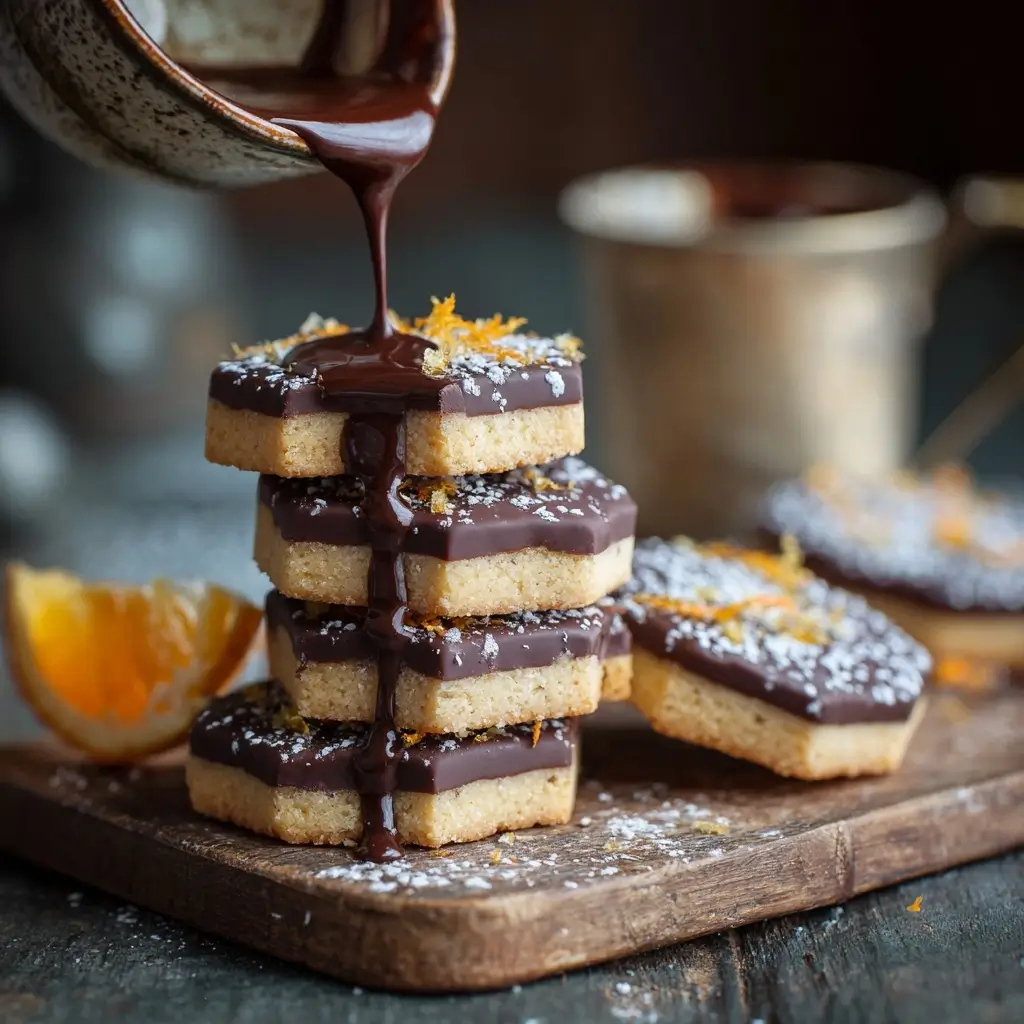
Chocolate Orange Shortbread: A Decadent Fusion of Citrus and Cocoa
The History of Chocolate Orange Shortbread
The story of shortbread begins in medieval Scotland, where it evolved from a simple biscuit called “biscuit bread” — a twice-baked piece of dough made from leftover bread dough enriched with butter. By the 12th century, Scottish bakers began refining the recipe, increasing the butter content and reducing the moisture, which gave rise to what we now recognize as traditional shortbread. The term “short” refers to the high fat content, which produces a crumbly, tender texture.
Originally a luxury item due to the cost of butter, shortbread became associated with special occasions such as Christmas, Hogmanay (Scottish New Year), and weddings. Over time, regional variations emerged, including petticoat tails, shortbread fingers, and rounds.
The chocolate orange twist is a more modern innovation, blending two beloved flavor profiles: the bright, zesty tang of citrus and the deep, velvety richness of chocolate. While oranges were not native to Scotland and had to be imported, they became symbols of indulgence and festivity, especially during winter holidays. In the 20th century, British confectioners began experimenting with chocolate-covered orange candies, most famously Terry’s Chocolate Orange, launched in 1932. This cultural love affair with chocolate and orange eventually inspired home bakers and pastry chefs alike to infuse classic recipes like shortbread with this dynamic duo.
Today, Chocolate Orange Shortbread stands as a luxurious evolution of a centuries-old tradition — a perfect marriage of heritage and modern taste, ideal for dessert platters, holiday gifting, or afternoon tea.
Ingredients Breakdown
Understanding each ingredient in Chocolate Orange Shortbread helps ensure the perfect balance of flavor, texture, and structure. Here’s a detailed look at what goes into this delightful treat:
- Unsalted Butter (1 cup, 2 sticks / 226g): The cornerstone of any shortbread. High-fat, unsalted butter provides richness and that signature melt-in-your-mouth texture. Using unsalted butter allows you to control the salt level precisely.
- Granulated Sugar (1/2 cup / 100g): Adds sweetness without adding moisture. Unlike brown sugar, granulated sugar keeps the cookies crisp and prevents spread.
- All-Purpose Flour (2 cups / 250g): Provides the structural base. It’s important to measure accurately—spoon and level the flour to avoid dry, crumbly cookies.
- Cocoa Powder (1/4 cup / 20g, unsweetened): Use natural or Dutch-processed cocoa powder depending on preference. Natural cocoa offers a sharper chocolate flavor, while Dutch-processed is smoother and darker.
- Finely Grated Orange Zest (from 1–2 large oranges): The essence of citrus flavor. Only the colored part of the peel should be used—avoid the bitter white pith. Freshly grated zest delivers the most vibrant aroma.
- Orange Extract (1/2 teaspoon) or Fresh Orange Juice (1 tablespoon): Enhances the citrus notes. Extract gives a concentrated punch; juice adds moisture and brightness but should be used sparingly to maintain dough consistency.
- Salt (1/4 teaspoon): Balances sweetness and enhances all flavors. Fine sea salt or kosher salt works best.
- Semi-Sweet or Dark Chocolate (8 oz / 225g), melted: Used for dipping or drizzling. Choose high-quality chocolate with at least 60% cocoa solids for depth of flavor.
- Optional Additions: Finely chopped dark chocolate chunks in the dough, a sprinkle of flaky sea salt on top after chocolate coating, or a dusting of powdered sugar before serving.
Step-by-Step Recipe
Ingredients:
- 1 cup (2 sticks / 226g) unsalted butter, softened
- 1/2 cup (100g) granulated sugar
- 2 cups (250g) all-purpose flour
- 1/4 cup (20g) unsweetened cocoa powder
- Zest of 1–2 large oranges (about 1 tablespoon)
- 1/2 teaspoon orange extract (or 1 tbsp fresh orange juice)
- 1/4 teaspoon salt
- 8 oz (225g) semi-sweet or dark chocolate, finely chopped
- Optional: flaky sea salt, powdered sugar, or edible gold dust for garnish
Directions:
- Preheat Oven: Set your oven to 325°F (165°C). Line a large baking sheet with parchment paper or a silicone baking mat.
- Cream Butter and Sugar: In a large mixing bowl, beat the softened butter and granulated sugar together using a hand mixer or stand mixer until light and fluffy — about 2–3 minutes. The mixture should turn pale yellow and have a creamy consistency.
- Add Flavorings: Mix in the orange zest, orange extract (or juice), and salt. Beat for another 30 seconds to fully incorporate the citrus oils into the butter.
- Combine Dry Ingredients: In a separate bowl, sift together the flour, cocoa powder, and a pinch of salt (if not already added). Sifting ensures no lumps and even distribution of cocoa.
- Mix Dough: Gradually add the dry ingredients to the butter mixture, mixing on low speed until just combined. Do not overmix — stop as soon as the dough comes together. It will be soft and slightly sticky, resembling playdough.
- Shape the Dough: Turn the dough out onto a lightly floured surface. Gently knead it a few times to bring it together, then flatten into a rectangular slab about 1 inch thick. Alternatively, roll into a log (9×2 inches) for slice-and-bake cookies.
- Chill (Important Step): Wrap the dough in plastic wrap and refrigerate for at least 1 hour, or up to 2 days. Chilling firms the butter, prevents spreading, and intensifies the flavor.
- Roll and Cut: After chilling, roll the dough to 1/4–1/2 inch thickness on a floured surface. Use round cutters (2–3 inches) to cut shapes. For rustic appeal, press a fork gently across the top of each piece.
- Arrange and Bake: Place cookies 1 inch apart on the prepared baking sheet. Bake for 18–22 minutes. They are done when the edges are firm and the centers no longer look wet. Avoid overbaking — shortbread should be tender, not crunchy.
- Cool Completely: Let cookies cool on the baking sheet for 5 minutes, then transfer to a wire rack to cool completely before decorating.
- Melt Chocolate: Place chopped chocolate in a heatproof bowl. Melt using a double boiler or microwave in 20-second bursts, stirring frequently until smooth.
- Decorate: Dip half of each cookie into melted chocolate or use a spoon to drizzle generously. Place on a parchment-lined tray. For elegance, sprinkle with flaky sea salt, extra zest, or a dusting of powdered sugar while the chocolate is still wet.
- Set Chocolate: Allow chocolate to harden at room temperature (1–2 hours) or speed up the process by placing in the refrigerator for 15 minutes.
- Serve and Store: Serve at room temperature. Store in an airtight container at room temperature for up to 1 week, or freeze for up to 3 months.
Tips for Perfect Chocolate Orange Shortbread
- Use Room-Temperature Butter: Softened butter creams better with sugar, creating air pockets that contribute to a delicate crumb. However, don’t let it get greasy or melt.
- Don’t Skip the Chill: Chilling the dough is non-negotiable. It solidifies the butter, helping the cookies hold their shape and preventing them from turning into puddles in the oven.
- Grate Zest Before Juicing: Always zest the orange before juicing — it’s much harder to zest a squeezed orange!
- Measure Flour Correctly: Spoon flour into the measuring cup and level off with a knife. Scooping directly compacts the flour and leads to dry cookies.
- Watch Baking Time Closely: Shortbread continues to firm up as it cools. Pull them from the oven when they appear set around the edges but still look slightly underdone in the center.
- Temper the Chocolate (Optional): For a professional shine and snap, temper the chocolate before dipping. Otherwise, add 1 teaspoon of coconut oil to melted chocolate for smoother drizzling.
- Uniform Thickness = Even Baking: Roll the dough between two sheets of parchment or wax paper to achieve consistent thickness.
- Double Batch Friendly: This recipe scales well. Double the batch and freeze half the unbaked dough for later.
Variations and Customizations
One of the joys of baking is making a recipe your own. Here are creative ways to personalize your Chocolate Orange Shortbread:
- Lemon or Lime Twist: Swap orange zest and extract for lemon or lime for a different citrus profile. Pair with white chocolate for contrast.
- Gluten-Free Version: Replace all-purpose flour with a 1:1 gluten-free baking blend. Add 1/2 teaspoon xanthan gum if not included in the mix.
- Vegan Adaptation: Use plant-based butter (like Miyoko’s or Earth Balance) and dairy-free chocolate. Ensure sugar is vegan-certified.
- Spiced Orange: Add a pinch of ground cinnamon, cardamom, or star anise to evoke a warm, festive aroma.
- Chocolate Swirl: Instead of mixing cocoa into the entire dough, divide it in half — leave one plain, mix the other with cocoa and zest. Roll together for marbled effect.
- Filled Shortbread: Sandwich cooled cookies with orange marmalade or chocolate ganache for an elegant touch.
- Mini Cookies: Use smaller cutters or roll into tiny balls, flatten, and bake as petits fours. Ideal for parties or gift boxes.
- Boozy Boost: Add 1 teaspoon of Grand Marnier, Cointreau, or orange liqueur to deepen the citrus flavor. Reduce liquid elsewhere if needed.
- Rustic Crust Style: Press dough into a tart pan, bake as a single slab, then cut into squares after cooling — great for serving crowds.
Health Considerations and Nutritional Value
While Chocolate Orange Shortbread is undeniably a treat, understanding its nutritional profile can help you enjoy it mindfully:
Nutritional Estimate per Cookie (1/24th of recipe, approx. 30g):
- Calories: ~140 kcal
- Total Fat: 9g (Saturated Fat: 5g)
- Cholesterol: 20mg
- Sodium: 55mg
- Total Carbohydrates: 15g
- Dietary Fiber: 1g
- Sugars: 8g
- Protein: 1g
Health Notes:
- Butter Content: High in saturated fat, so consume in moderation, especially for those monitoring heart health.
- Sugar Level: Moderate sugar content. Can be reduced slightly (to 1/3 cup) without sacrificing texture, though flavor may dull.
- Cocoa Benefits: Dark chocolate contains antioxidants like flavonoids, which may support cardiovascular health in moderation.
- Gluten and Allergens: Contains gluten, dairy, and potential soy (depending on chocolate). Always check labels for allergens.
- Portion Control: These cookies are rich — a little goes a long way. Serve with tea or coffee to extend enjoyment.
- Better-for-You Tweaks: Substitute half the butter with unsweetened applesauce (not recommended for traditional texture), use coconut sugar, or opt for high-cacao chocolate (70%+) to reduce sugar.
Frequently Asked Questions (FAQ)
Can I make Chocolate Orange Shortbread without a mixer?
Yes! You can mix the dough by hand using a wooden spoon and some elbow grease. Cream the butter and sugar with a fork first, then stir in the remaining ingredients until a soft dough forms.
Why did my shortbread spread in the oven?
Most likely, the butter was too soft or the dough wasn’t chilled enough. Always use properly softened (not melted) butter and chill the shaped dough before baking.
Can I freeze Chocolate Orange Shortbread?
Absolutely. Freeze unbaked dough logs for up to 3 months — slice and bake straight from frozen, adding 1–2 minutes to baking time. Fully baked (undipped) cookies also freeze well. Dip in chocolate after thawing.
How do I store these cookies?
Keep in an airtight container at room temperature, separated by parchment paper, for up to 1 week. Avoid humid environments to prevent chocolate bloom.
Can I use orange marmalade instead of zest?
You can, but marmalade adds sugar and moisture. Use 1–2 teaspoons finely chopped rind-free marmalade and reduce other liquids slightly. Zest is preferred for intense flavor without altering texture.
Is there a difference between orange zest and orange peel?
Yes. Zest refers only to the thin, colorful outer layer rich in essential oils. The white pith underneath is bitter and should be avoided unless specified.
Can I make these ahead of time for holidays?
Definitely. Prepare and freeze the dough weeks in advance. Bake and dip cookies 3–4 days before serving for peak freshness.
What kind of chocolate works best?
High-quality couverture chocolate or gourmet baking bars (e.g., Ghirardelli, Valrhona, Callebaut) provide the best flavor and texture. Avoid chocolate chips, which contain stabilizers and don’t melt smoothly.
Summary
Chocolate Orange Shortbread blends the buttery elegance of Scottish tradition with the vibrant zing of citrus and sumptuous depth of chocolate for an unforgettable treat.
Perfect for gifting, holiday trays, or quiet moments with tea, this sophisticated cookie balances rich and bright in every delicate bite.