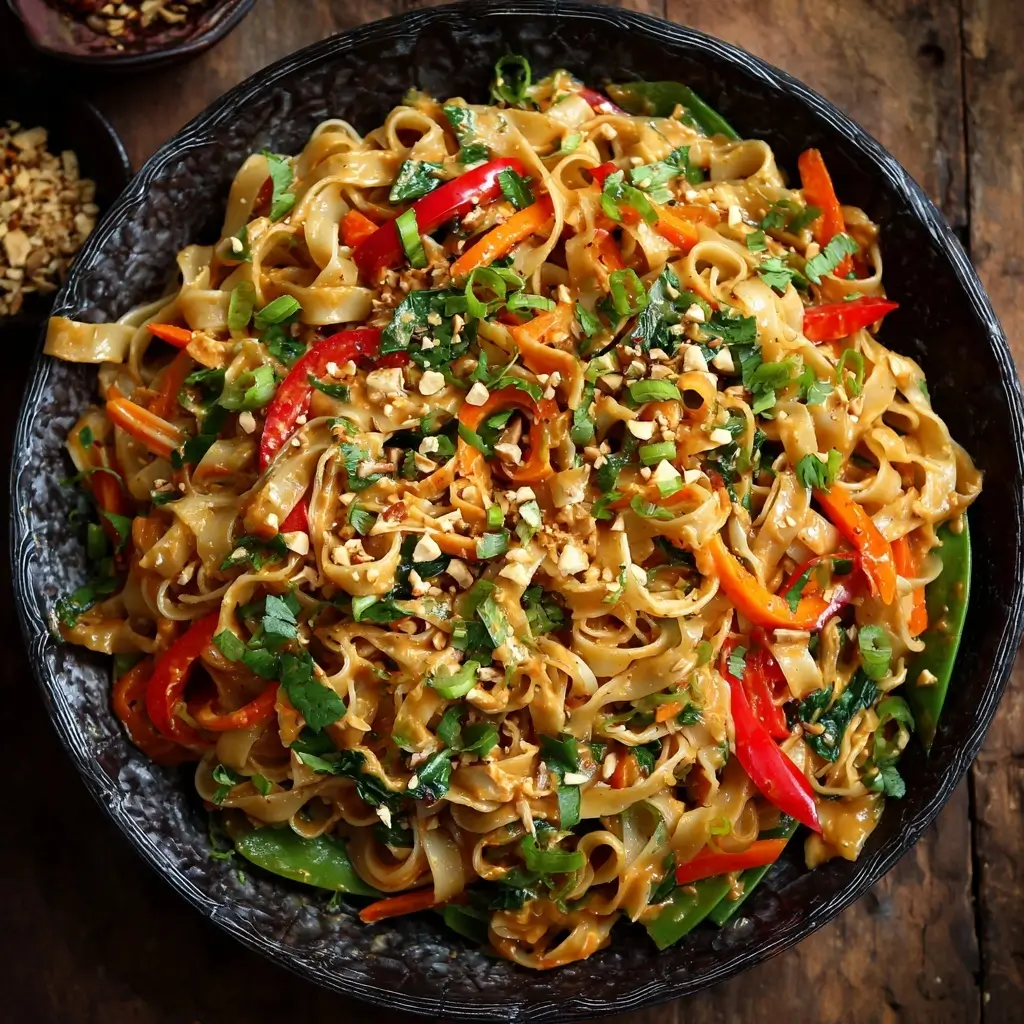
Spicy Peanut Noodles with Vegetables
The History
Spicy Peanut Noodles with Vegetables is a modern fusion dish that draws inspiration from various culinary traditions across Asia, particularly Chinese, Thai, and Vietnamese cuisines. While peanut-based sauces have been used for centuries in Southeast Asian cooking—especially in dishes like Thai kuay teow kua gai (stir-fried rice noodles with chicken) and Indonesian gado-gado (vegetable salad with peanut sauce)—the concept of combining spicy peanut sauce with noodles and fresh vegetables as a quick, satisfying meal gained global popularity in the late 20th and early 21st centuries.
The rise of plant-based eating, quick weeknight dinners, and flavor-forward vegetarian meals helped propel this dish into mainstream food culture, especially in North America and Europe. Food bloggers, health-conscious cooks, and vegan chefs embraced the versatility of peanut sauce, adapting it to include chili heat, tangy lime, soy-based umami, and a medley of colorful vegetables. Today, Spicy Peanut Noodles are celebrated not only for their bold taste but also for their adaptability—suitable for vegans, vegetarians, gluten-free diets (with substitutions), and busy home cooks looking for a flavorful one-bowl meal.
Ingredients Breakdown
The beauty of Spicy Peanut Noodles lies in the harmony between creamy, spicy, savory, and tangy elements. Each ingredient plays a crucial role in building depth and balance:
- Peanut Butter: The star of the sauce, providing richness, creaminess, and nutty depth. Natural, unsweetened peanut butter is ideal to control sugar content and avoid additives.
- Soy Sauce or Tamari: Delivers saltiness and umami. Tamari is a gluten-free alternative with a slightly smoother, richer flavor.
- Rice Vinegar or Apple Cider Vinegar: Adds brightness and acidity to cut through the richness of the peanut butter.
- Chili Garlic Sauce or Sriracha: Brings the heat. Adjust according to spice tolerance—these condiments also contribute garlicky and slightly sweet notes.
- Maple Syrup or Honey: A touch of sweetness balances the spice and acid. Use maple syrup for a vegan option.
- Garlic and Fresh Ginger: Freshly minced or grated for aromatic intensity and zing.
- Sesame Oil: A small amount adds a deep, toasty aroma that complements the peanuts.
- Warm Water: Thins the sauce to a pourable consistency without diluting flavor.
- Noodles: Traditionally soba, udon, rice noodles, or spaghetti. Whole wheat or legume-based noodles boost fiber and protein.
- Vegetables: A vibrant mix such as bell peppers, carrots, broccoli, snap peas, cabbage, mushrooms, spinach, or zucchini—raw, sautéed, or blanched for texture contrast.
- Toppings: Chopped peanuts, green onions, cilantro, lime wedges, sesame seeds, or crushed red pepper flakes for garnish and crunch.
Step-by-Step Recipe
- Cook the Noodles: Bring a large pot of salted water to a boil. Add your choice of noodles and cook according to package instructions until al dente. If using rice noodles, soak in hot water instead. Once cooked, drain and rinse under cold water to stop the cooking process. Toss with a tiny drizzle of oil to prevent sticking. Set aside.
- Prepare the Vegetables: While the noodles cook, wash and slice your vegetables thinly for quick incorporation. Options include julienned carrots, shredded purple cabbage, sliced bell peppers, halved broccoli florets, and snow peas. You can serve them raw for crunch, or briefly blanch or stir-fry for tenderness. For stir-frying, heat 1 tsp sesame or vegetable oil in a pan over medium-high heat and cook vegetables for 3–4 minutes until crisp-tender. Set aside.
- Make the Peanut Sauce: In a medium bowl, whisk together ½ cup natural peanut butter, 3 tbsp soy sauce (or tamari), 2 tbsp rice vinegar, 1–2 tbsp maple syrup, 1 tbsp chili garlic sauce (adjust to taste), 1 tsp toasted sesame oil, 2 cloves minced garlic, and 1 tbsp freshly grated ginger. Gradually add ¼ to ½ cup warm water, whisking continuously, until the sauce reaches a smooth, pourable consistency—similar to heavy cream.
- Combine Everything: In a large mixing bowl, add the cooled noodles and prepared vegetables. Pour the peanut sauce over the top and toss thoroughly using tongs or two forks to ensure even coating. Taste and adjust seasoning—add more soy sauce for saltiness, vinegar for tang, maple syrup for sweetness, or chili sauce for heat.
- Garnish and Serve: Divide the noodles into serving bowls. Top generously with chopped roasted peanuts, sliced green onions, fresh cilantro, a sprinkle of sesame seeds, and a squeeze of fresh lime juice. Serve immediately at room temperature or chilled.
Tips
- Prevent Peanut Butter Separation: Stir natural peanut butter well before measuring. If the sauce thickens upon standing, loosen it with a splash of warm water or lime juice.
- Noodle Texture Matters: Avoid overcooking noodles—they should be springy and firm. Rinsing stops residual heat from making them mushy.
- Balancing Flavors: Always taste the sauce before adding it to the noodles. It should be bolder than you think—it will mellow when mixed with ingredients.
- Meal Prep Friendly: This dish keeps well. Store components separately: noodles, veggies, and sauce. Combine just before eating to maintain texture.
- Add Protein Easily: Boost the meal with tofu, tempeh, edamame, shredded chicken, or boiled eggs.
- Use Fresh Aromatics: Pre-minced garlic or powdered ginger won’t deliver the same punch. Fresh is best here.
- Customize Heat Level: Start with less chili sauce and add gradually. You can always increase the heat, but you can’t take it away!
Variations and Customizations
One of the greatest strengths of Spicy Peanut Noodles is their adaptability. Here are some creative twists to suit different tastes and dietary needs:
- Vegan & Plant-Based: Ensure all ingredients are plant-derived—use maple syrup instead of honey and tamari instead of regular soy sauce if avoiding gluten.
- Gluten-Free: Use rice noodles, buckwheat soba (check label for 100% buckwheat), or gluten-free pasta. Confirm soy sauce substitute is certified GF.
- Low-Carb/Keto Option: Substitute noodles with spiralized zucchini (zoodles), shirataki noodles, or kelp noodles. Reduce or omit sweeteners and use almond butter instead of peanut butter for lower carbs.
- Different Nut/Seed Butters: Swap peanut butter for almond butter, cashew butter, sunflower seed butter (great for nut allergies), or tahini for varied flavor profiles.
- Asian-Inspired Twists:
- Thai Style: Add coconut milk to the sauce for creaminess, and garnish with Thai basil and crushed peanuts.
- Korean Influence: Use gochujang instead of sriracha and add kimchi on top.
- Chinese-Inspired: Toss in Szechuan peppercorns for numbing heat and add shredded cucumber and scallions.
- Seasonal Variations:
- Spring: Add pea shoots, radishes, and asparagus.
- Summer: Incorporate cherry tomatoes, avocado, and fresh herbs.
- Fall/Winter: Roast sweet potatoes, Brussels sprouts, or mushrooms before mixing in.
- Protein-Packed Versions: Add marinated baked tofu, grilled shrimp, seared salmon, or shredded rotisserie chicken for a heartier meal.
- Cold Noodle Salad: Chill the entire dish and serve as a no-cook summer lunch. Great for picnics or packed lunches.
Health Considerations and Nutritional Value
Spicy Peanut Noodles with Vegetables can be a nutritious, balanced meal when prepared thoughtfully. Here’s a breakdown of key nutritional aspects:
- Healthy Fats: Peanut butter contains monounsaturated and polyunsaturated fats, which support heart health and help absorb fat-soluble vitamins.
- Plant-Based Protein: Peanut butter and legume-based noodles or added tofu/edamame provide substantial protein, making this a satisfying meatless option.
- Fiber-Rich: Whole grain noodles and a variety of raw or lightly cooked vegetables contribute dietary fiber, promoting digestive health and satiety.
- Vitamins & Minerals: Colorful vegetables supply essential nutrients—carrots offer beta-carotene, broccoli provides vitamin C and K, and leafy greens contribute iron and folate.
- Sodium Watch: Soy sauce and store-bought chili sauces can be high in sodium. Opt for low-sodium versions and control portions. Tamari often has less salt than traditional soy sauce.
- Sugar Content: Some peanut butters and sauces contain added sugars. Choose natural, unsweetened varieties and limit added sweeteners in the recipe.
- Allergies: Peanuts are a common allergen. For allergy-safe versions, use sunflower seed butter or tahini and clearly label when serving to others.
- Portion Control: While nutrient-dense, peanut sauce is calorie-rich. Use moderate amounts—about 2–3 tablespoons per serving is often sufficient.
A typical serving (without added meat) ranges from 450–600 calories depending on noodle type, sauce quantity, and toppings. It offers a balanced macronutrient profile: ~20–25g fat, 50–60g carbohydrates (higher with whole grains), and 12–18g protein.
Ingredients
- 8 oz (225g) noodles (soba, udon, rice, or whole wheat spaghetti)
- ½ cup natural creamy peanut butter (unsweetened)
- 3 tbsp soy sauce or tamari
- 2 tbsp rice vinegar (or apple cider vinegar)
- 1–2 tbsp maple syrup (or honey)
- 1 tbsp chili garlic sauce or sriracha (adjust to taste)
- 1 tsp toasted sesame oil
- 2 cloves garlic, finely minced
- 1 tbsp fresh ginger, grated
- ¼ to ½ cup warm water
- 2 cups mixed vegetables (e.g., carrots, bell peppers, broccoli, snap peas, cabbage)
- 1 tbsp neutral oil (if stir-frying veggies)
- For Garnish: Chopped roasted peanuts, sliced green onions, fresh cilantro, sesame seeds, lime wedges
Directions
- Cook the noodles in a large pot of salted boiling water according to package directions until al dente. Drain, rinse under cold water, and set aside.
- If using fresh vegetables that benefit from light cooking, heat 1 tsp oil in a skillet over medium-high heat. Add harder vegetables like broccoli, carrots, and bell peppers. Stir-fry for 3–4 minutes until bright and crisp-tender. Remove from heat and let cool slightly.
- In a medium bowl, combine peanut butter, soy sauce, rice vinegar, maple syrup, chili garlic sauce, sesame oil, minced garlic, and grated ginger. Whisk vigorously while slowly adding warm water until the sauce is smooth and creamy.
- In a large mixing bowl, combine the cooked noodles and prepared vegetables. Pour the peanut sauce over the top and toss until everything is evenly coated.
- Taste and adjust seasoning—add more vinegar for tang, soy sauce for saltiness, or sweetener for balance.
- Divide into bowls and top with chopped peanuts, green onions, cilantro, sesame seeds, and a generous squeeze of fresh lime juice.
- Serve immediately, either at room temperature or chilled.
FAQ
Can I make this recipe ahead of time?
Yes! Prepare the sauce and chop vegetables up to 3 days in advance. Store separately in airtight containers. Cook noodles just before serving or rinse and refrigerate for up to 2 days. Reheat gently with a splash of water or serve cold.
Why is my peanut sauce too thick or clumpy?
Peanut butter can seize when mixed with acidic ingredients. To prevent this, ensure all components are at room temperature and add warm water gradually while whisking. If clumping occurs, blend with an immersion blender or shake in a jar.
Can I freeze Spicy Peanut Noodles?
It’s not recommended to freeze the assembled dish—noodles become mushy upon thawing. However, the sauce freezes well for up to 3 months. Thaw in the refrigerator and thin with water before using.
What can I do if I don’t like peanuts?
Substitute with almond butter, sunflower seed butter, or tahini. Sunflower seed butter gives a similar flavor profile without tree nuts.
Are these noodles spicy?
The level of spiciness depends on how much chili sauce you use. Start with 1 tsp and add more after tasting. You can also serve extra sriracha on the side for individual preferences.
Can I turn this into a soup?
Absolutely! Turn it into a warm noodle soup by heating vegetable broth and stirring in the peanut sauce. Add cooked noodles and vegetables, then simmer gently without boiling to prevent curdling.
How long do leftovers last?
Stored in an airtight container in the refrigerator, leftovers will keep for 3–4 days. The flavors often deepen overnight, but the noodles may absorb more sauce—revive with a splash of water or lime juice before serving.
Summary
Spicy Peanut Noodles with Vegetables are a vibrant, flavor-packed dish that combines creamy peanut sauce, chewy noodles, and crisp fresh vegetables in one satisfying bowl. Highly customizable, healthy, and quick to prepare, they’re perfect for weeknight dinners, meal prep, or impressing guests with minimal effort.