Introduction
Welcome to a culinary journey that brings the vibrant, savory-sweet essence of Japan straight into your kitchen—the Teriyaki Salmon Bowl. This dish is more than just a meal; it’s an experience that combines rich umami flavors, tender flaky salmon, and a harmonious blend of fresh vegetables and perfectly seasoned rice. Loved by food enthusiasts around the world, Teriyaki Salmon Bowls offer a balance of taste, nutrition, and visual appeal that makes them ideal for weeknight dinners, meal prepping, or even impressing guests at a casual dinner party.
What sets this bowl apart is its simplicity paired with elegance. With minimal ingredients and straightforward preparation, you can create a restaurant-quality dish in under 30 minutes. Whether you’re a seasoned home cook or just beginning your culinary adventure, this recipe is approachable, customizable, and deeply satisfying. Let’s dive deep into everything there is to know about crafting the perfect Teriyaki Salmon Bowl—every flavorful detail, health benefit, and creative twist included.
The History
The roots of teriyaki trace back to traditional Japanese cooking methods developed during the Edo period (1603–1868), where “teri” refers to the lustrous shine given by the sugar-rich sauce, and “yaki” means grilled or broiled. Originally used for fish such as salmon and yellowtail, teriyaki was a way to preserve and enhance flavor through grilling with a glaze made from soy sauce, mirin, and sugar. The technique became widely popular across Japan and eventually spread globally through Japanese immigration and the rise of Japanese cuisine abroad.
In Western countries, particularly in the United States, teriyaki evolved beyond its traditional form. While still honoring its origins, modern interpretations often include thicker sauces, additional aromatics like garlic and ginger, and serving styles adapted to local tastes—such as serving over steamed rice in a bowl format, commonly known today as a “bowl meal.” This fusion trend surged alongside the popularity of poke bowls, grain bowls, and bento-style meals, making dishes like the Teriyaki Salmon Bowl a staple in health-conscious and flavor-driven diets.
Today, teriyaki remains one of the most beloved Japanese-inspired preparations worldwide. Its global adaptation reflects both cultural exchange and the universal craving for balanced, delicious food. The Teriyaki Salmon Bowl stands as a modern homage to tradition while embracing innovation, convenience, and nutritional awareness.
Ingredients Breakdown
To craft an authentic yet adaptable Teriyaki Salmon Bowl, understanding each ingredient’s role is key. Below is a detailed breakdown of every component, including why they matter and what alternatives may work:
- Fresh Salmon Fillets: The star of the dish. Look for wild-caught Atlantic or sockeye salmon when possible, as they offer superior flavor, texture, and omega-3 fatty acid content. Skin-on fillets are preferred for added moisture during cooking and crispiness if pan-seared.
- Soy Sauce (or Tamari): Provides saltiness and depth. Regular soy sauce works well, but tamari (gluten-free) is excellent for those avoiding gluten. Low-sodium versions help control salt intake without sacrificing flavor.
- Mirin: A sweet rice wine essential for authentic teriyaki sauce. It adds subtle sweetness and gloss. If unavailable, substitute with dry sherry or a mix of rice vinegar and sugar, though the result won’t be identical.
- Brown Sugar or Honey: Balances the saltiness of soy sauce. Brown sugar gives a deeper molasses note, while honey offers floral undertones and natural sweetness. Maple syrup also works for a vegan option.
- Fresh Ginger: Grated ginger infuses the sauce with warmth and zesty brightness, enhancing digestion and cutting through richness.
- Garlic: Minced garlic contributes aromatic complexity and pairs beautifully with ginger and soy.
- Sesame Oil: Used sparingly for finishing oil or in marinades, it imparts nutty depth. Toasted sesame oil has a stronger flavor and should not be used for high-heat cooking.
- Rice Vinegar: Often used in rice seasoning or slaw components to add tang and balance heaviness.
- Steamed White or Brown Rice: Sushi rice, jasmine, or short-grain white rice are classic bases. For extra fiber and nutrients, brown rice or cauliflower rice (low-carb) are excellent substitutes.
- Vegetables: Common additions include:
- Broccoli florets – steamed or roasted for crunch and color.
- Carrots – julienned raw or lightly sautéed.
- Snap peas or edamame – for freshness and plant-based protein.
- Red cabbage – thinly sliced for vibrant contrast and antioxidants.
- Avocado – creamy texture and healthy fats.
- Green onions – sliced for garnish and mild onion flavor.
- Toppings:
- Toasted sesame seeds – nutty finish and visual appeal.
- Crushed nori sheets – sea-like umami and crunch.
- Wasabi or pickled ginger – optional side condiments for heat and palate cleansing.
- Chili flakes or sriracha mayo – for spice lovers.
Step-by-Step Recipe
Follow these meticulous steps to prepare a flawless Teriyaki Salmon Bowl from start to finish:
- Prepare the Rice: Rinse 1 cup of jasmine or sushi rice until water runs clear. Combine with 1¼ cups water in a pot or rice cooker. Bring to a boil, then reduce heat, cover, and simmer for 15–18 minutes. Once cooked, let rest for 10 minutes, then fluff with a fork. Optionally, stir in 1 tsp rice vinegar, ½ tsp sugar, and a pinch of salt for sushi-style seasoning.
- Make the Teriyaki Sauce: In a small saucepan, combine ¼ cup soy sauce, 2 tbsp mirin, 2 tbsp brown sugar, 1 tbsp water, 1 tsp grated ginger, and 1 minced garlic clove. Simmer over medium-low heat for 5–7 minutes, stirring frequently, until slightly thickened. Remove from heat and set aside. (Optional: thicken further with ½ tsp cornstarch mixed with 1 tsp water.)
- Marinate the Salmon (Optional): Place salmon fillets in a shallow dish and pour half the teriyaki sauce over them. Let sit for 15–30 minutes in the refrigerator for enhanced flavor (do not exceed 30 mins due to acidity).
- Cook the Salmon: Heat 1 tsp neutral oil (like avocado or canola) in a non-stick skillet over medium-high heat. Remove salmon from marinade (reserve leftover sauce) and place skin-side down (if applicable). Cook for 4–5 minutes until skin is crispy, then flip and cook another 3–4 minutes depending on thickness. The internal temperature should reach 125°F–130°F for medium doneness.
- Glaze the Salmon: In the last minute of cooking, pour reserved teriyaki sauce over the salmon, spooning it continuously to build a sticky, glossy coating. Avoid burning by reducing heat if needed.
- Prepare the Vegetables: While salmon cooks, steam broccoli for 3–4 minutes or roast at 400°F for 15 minutes. Julienne carrots, slice green onions, halve edamame, and dice avocado.
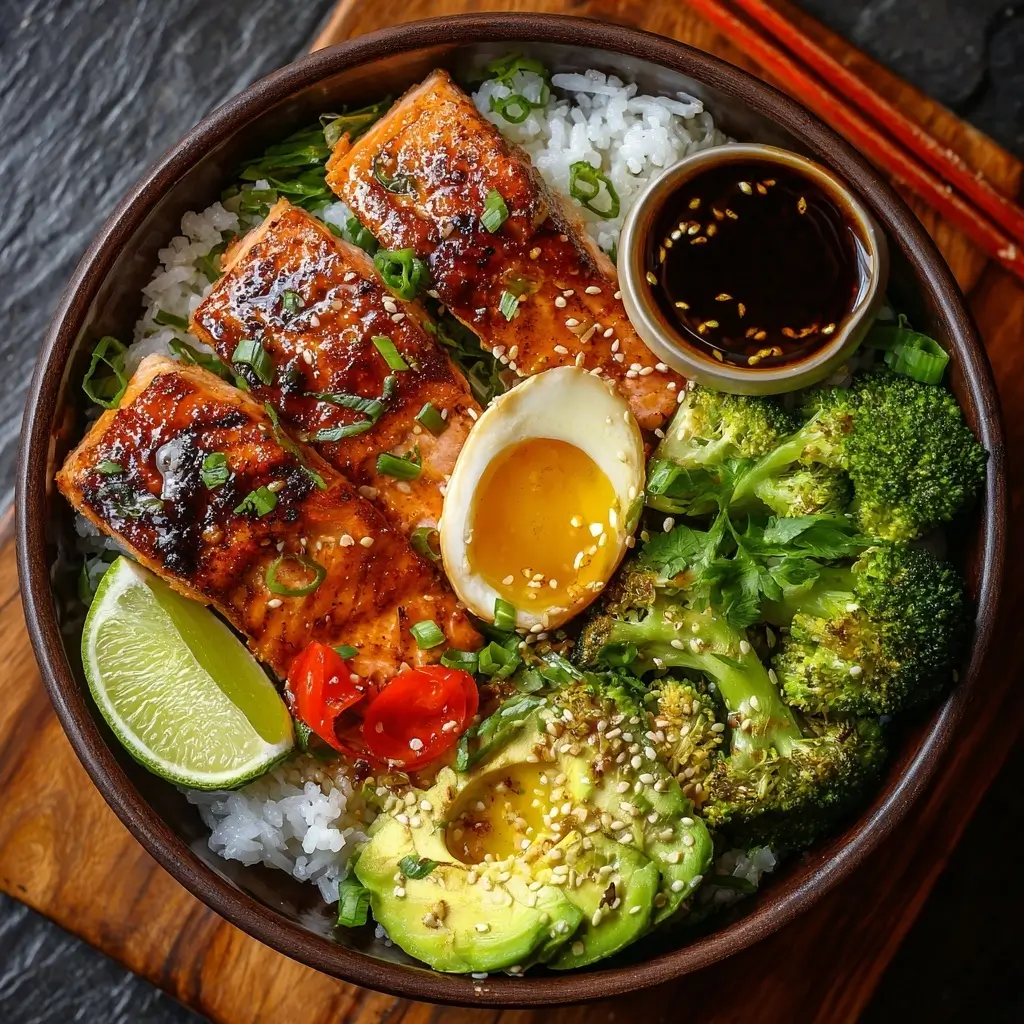
- Assemble the Bowls: Divide rice among bowls. Arrange salmon fillet off-center. Surround with colorful vegetables. Drizzle extra warm teriyaki sauce over the top if desired.
- Garnish and Serve: Sprinkle with toasted sesame seeds, chopped green onions, crushed nori, and a dash of sriracha or wasabi. Serve immediately with chopsticks and a spoon.
Tips
- Don’t Overcook the Salmon: Salmon dries out quickly. Aim for opaque pink flesh with slight translucency in the center—it will continue cooking slightly after removal from heat.
- Use Fresh Aromatics: Freshly grated ginger and minced garlic make a significant difference compared to powdered versions.
- Reserve Extra Sauce: Always save some teriyaki sauce for drizzling after cooking—it enhances presentation and boosts flavor upon serving.
- Crispy Skin Hack: Pat salmon skin dry before cooking and ensure the pan is hot enough before adding the fillet to prevent sticking and promote crispiness.
- Batch Cooking Tip: Double the teriyaki sauce and freeze in ice cube trays for future quick meals.
- Rest the Rice: Letting rice sit covered allows moisture distribution, resulting in fluffier grains.
- Prevent Soggy Bowls: Serve vegetables slightly warm or room temperature; avoid piling wet ingredients directly onto rice.
- Balance Textures: Include a variety of textures—creamy avocado, crunchy cabbage, chewy rice, and tender salmon—for maximum enjoyment.
Variations and Customizations
The beauty of the Teriyaki Salmon Bowl lies in its versatility. Here are numerous ways to personalize your bowl based on dietary needs, preferences, or seasonal ingredients:
- Protein Swaps: Replace salmon with grilled chicken, shrimp, tofu, tempeh, or even scallops for different textures and proteins.
- Low-Carb/Keto Version: Use cauliflower rice instead of regular rice and increase healthy fats with extra avocado and sesame oil.
- Vegan Option: Substitute salmon with marinated baked tofu or king oyster mushrooms. Use maple syrup instead of honey and ensure all other ingredients are plant-based.
- Spicy Teriyaki: Add 1–2 tsp gochujang (Korean chili paste), a few dashes of chili oil, or sriracha to the sauce for heat.
- Pineapple Twist: Incorporate pineapple juice into the teriyaki sauce for tropical sweetness and tenderizing enzymes.
- Grain Variations: Try quinoa, forbidden black rice, or farro for alternative grain bases with unique textures and nutrients.
- Roasted Vegetable Upgrade: Roast Brussels sprouts, bell peppers, or sweet potatoes for deeper flavor and caramelization.
- Sushi-Inspired Bowl: Add cucumber ribbons, imitation crab, tobiko (fish roe), and a sheet of nori cut into strips for a sushi bowl hybrid.
- Breakfast Bowl: Top with a soft-poached egg for added richness and protein—perfect for brunch!
- Meal Prep Friendly: Assemble components separately and store in airtight containers for up to 4 days. Reheat gently and assemble before eating.
Health Considerations and Nutritional Value
A typical Teriyaki Salmon Bowl is packed with essential nutrients, but mindful preparation ensures optimal health benefits:
Nutritional Highlights per Serving (approximate, based on average portion):
- Calories: ~550–700 kcal (varies by rice type, oil, and toppings)
- Protein: 35–40g – supports muscle repair and satiety
- Omega-3 Fatty Acids: 2,000–3,000mg – vital for heart and brain health
- Healthy Fats: ~20g – primarily from salmon and avocado
- Carbohydrates: 60–80g – mostly complex carbs from rice and vegetables
- Fiber: 6–9g – from vegetables, edamame, and whole grains
- Sodium: 800–1,200mg – primarily from soy sauce; can be reduced using low-sodium options
Health Benefits:
- Heart Health: Omega-3s in salmon reduce inflammation and lower triglyceride levels.
- Brain Function: DHA, a type of omega-3, supports cognitive performance and mental clarity.
- Antioxidant-Rich: Colorful veggies provide vitamins A, C, K, and phytonutrients that combat oxidative stress.
- Digestive Support: Fiber from plants and fermented soy aids gut health.
- Balanced Blood Sugar: Pairing protein, fat, and complex carbohydrates helps stabilize glucose levels.
Considerations:
- Sodium Content: Traditional teriyaki sauce can be high in sodium. Opt for reduced-sodium soy sauce and limit added salt.
- Sugar Levels: Store-bought or overly sweetened sauces may spike blood sugar. Control sugar by making your own with less sweetener or using monk fruit alternatives.
- Mercury Concerns: While salmon is generally low in mercury, vary seafood sources if consuming frequently.
- Allergens: Contains fish, soy, and sesame. Adapt accordingly for allergies using substitutes like chickpeas, coconut aminos, and sunflower seeds.
Ingredients
- 4 fresh salmon fillets (5–6 oz each), skin-on preferred
- 1 cup uncooked jasmine or sushi rice
- 1¼ cups water (for rice)
- ¼ cup low-sodium soy sauce (or tamari for gluten-free)
- 2 tablespoons mirin (sweet rice wine)
- 2 tablespoons brown sugar (or honey/maple syrup)
- 1 tablespoon water
- 1 teaspoon freshly grated ginger
- 1 clove garlic, minced
- 1 teaspoon toasted sesame oil (plus more for drizzling)
- 1 teaspoon avocado or canola oil (for searing)
- 1 cup broccoli florets
- 1 large carrot, julienned or shredded
- ½ cup shelled edamame (cooked)
- 1 avocado, sliced
- 2 green onions, thinly sliced
- 1 tablespoon sesame seeds, toasted
- Optional: nori strips, sriracha, wasabi, pickled ginger
Directions
- Cook the Rice: Rinse rice under cold water until the water runs clear. In a saucepan, combine rinsed rice and 1¼ cups water. Bring to a boil, then reduce heat to low, cover, and simmer for 15–18 minutes. Remove from heat and let stand, covered, for 10 minutes. Fluff with a fork. Stir in a splash of rice vinegar and a pinch of salt if desired.
- Prepare Teriyaki Sauce: In a small saucepan, whisk together soy sauce, mirin, brown sugar, water, grated ginger, and minced garlic. Bring to a gentle simmer over medium heat. Cook for 5–7 minutes, stirring occasionally, until the sauce reduces and coats the back of a spoon. Remove from heat and set aside. (For a thicker glaze, mix ½ tsp cornstarch with 1 tsp water and stir into the sauce during the last minute of cooking.)
- Marinate Salmon (Optional): Place salmon fillets in a shallow dish and pour half of the teriyaki sauce over them. Cover and refrigerate for 15–30 minutes.
- Cook the Salmon: Heat 1 tsp of oil in a non-stick or cast-iron skillet over medium-high heat. Remove salmon from marinade (shake off excess) and place skin-side down in the pan. Sear for 4–5 minutes until skin is golden and crisp. Flip carefully and cook for another 3–4 minutes, depending on thickness. In the final minute, spoon the remaining teriyaki sauce over the fillets to glaze. Transfer to a plate and tent loosely with foil.
- Prepare Vegetables: Steam broccoli for 3–4 minutes until bright green and tender-crisp. Julienne the carrot, halve edamame, slice avocado, and chop green onions.
- Assemble Bowls: Divide rice evenly among four serving bowls. Place a salmon fillet in each bowl. Arrange broccoli, carrots, edamame, avocado, and green onions around the rice.
- Finish and Serve: Drizzle with warm teriyaki sauce. Sprinkle with toasted sesame seeds and nori strips. Add a dollop of sriracha mayo or a dab of wasabi if desired. Serve immediately.
FAQ
Can I bake the salmon instead of pan-searing?
Yes! Preheat oven to 400°F. Place salmon on a lined baking sheet, brush with teriyaki sauce, and bake for 12–15 minutes until flaky. Broil for the last 2 minutes to caramelize the glaze.
Is teriyaki sauce gluten-free?
Traditional soy sauce contains wheat, but you can use tamari or coconut aminos for a gluten-free version.
Can I make this ahead for meal prep?
Absolutely. Cook rice, prepare sauce, and chop veggies in advance. Store components separately. Cook salmon fresh or reheat gently to maintain texture.
Can I freeze teriyaki salmon?
Yes, cooked or uncooked marinated salmon freezes well for up to 3 months. Thaw overnight in the fridge before cooking.
What can I use instead of mirin?
Substitute with 1 tbsp rice vinegar + 1 tsp sugar + 1 tbsp water. Dry sherry also works in a pinch.
Why is my teriyaki sauce too thin?
Simmer longer to reduce or add a cornstarch slurry (½ tsp cornstarch + 1 tsp water) and cook for 1 minute until thickened.
Can I use frozen salmon?
Yes, but thaw completely in the refrigerator first to ensure even cooking and better texture.
Are teriyaki salmon bowls kid-friendly?
Definitely! Kids love the sweet-savory flavor. Serve with mild veggies and cut salmon into smaller pieces.
Summary
The Teriyaki Salmon Bowl is a nutrient-dense, flavor-packed meal that blends Japanese tradition with modern wellness, offering a perfect harmony of omega-3-rich salmon, vibrant vegetables, and glossy homemade teriyaki glaze over fluffy rice.
Quick to prepare, endlessly customizable, and suitable for meal prepping, this bowl delivers gourmet satisfaction in every bite—ideal for busy weeknights, healthy eating goals, or sharing a comforting, beautiful meal with loved ones.