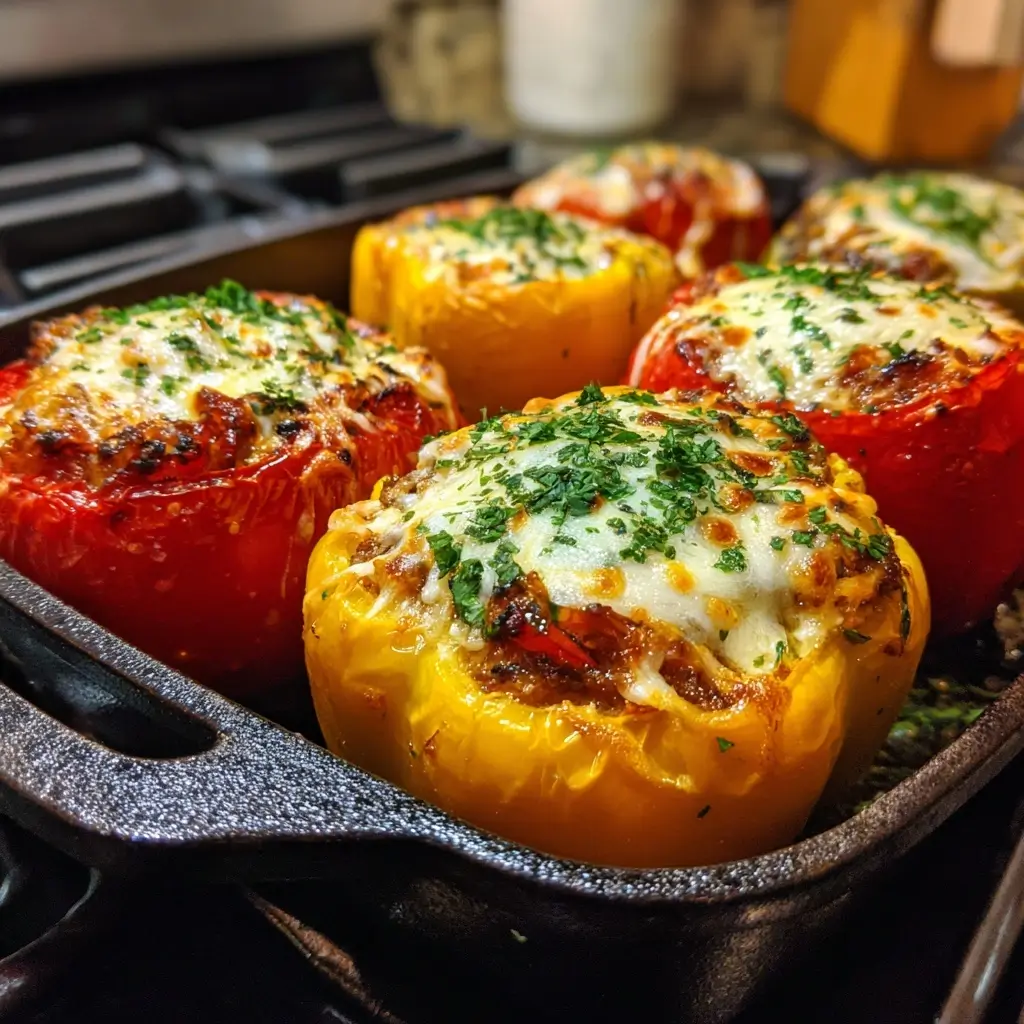
Vegetarian Stuffed Bell Peppers: A Flavorful, Nutritious Delight
Introduction
Vegetarian stuffed bell peppers are a vibrant, wholesome dish that combines the natural sweetness of bell peppers with a hearty and savory filling made entirely from plant-based ingredients. These colorful peppers—available in red, yellow, orange, and green—are not only visually appealing but also packed with essential nutrients, making them a favorite among vegetarians, health enthusiasts, and home cooks alike. Whether you’re preparing a comforting weeknight dinner or an elegant meal for guests, stuffed bell peppers offer versatility, flavor, and nutrition in one beautiful package.
This recipe is naturally gluten-free (with appropriate ingredient choices), easily customizable, and can be adapted to suit various dietary preferences such as vegan, low-carb, or high-protein lifestyles. Baked to perfection, each bite delivers a satisfying blend of textures and flavors—from the tender roasted pepper walls to the robust, spiced grain and vegetable filling. With roots in Mediterranean, Middle Eastern, and American cuisines, vegetarian stuffed bell peppers have evolved into a global comfort food classic.
The History
The tradition of stuffing vegetables dates back centuries and spans numerous cultures around the world. In the Ottoman Empire, dishes like “dolma” featured grape leaves, zucchini, tomatoes, and peppers filled with rice, herbs, and spices. This culinary practice spread across Eastern Europe, the Balkans, and the Middle East, where each region developed its own variation based on local ingredients and tastes.
Bell peppers, originally native to Central and South America, were introduced to Europe after the Columbian Exchange. By the 18th century, they had become a popular ingredient in Spanish, Hungarian, and Italian cooking. The idea of stuffing hollowed-out bell peppers likely emerged in the late 19th or early 20th century, particularly in countries like Hungary (where stuffed peppers are known as “töltött paprika”) and Greece. In the United States, stuffed peppers gained popularity during the mid-20th century as part of the casserole culture, often made with ground beef and rice.
Over time, vegetarian versions began gaining traction, especially as plant-based diets became more mainstream. Today, vegetarian stuffed bell peppers are celebrated not just for their taste but also for their ability to showcase seasonal produce, whole grains, legumes, and bold spices. They represent a fusion of old-world techniques and modern nutritional awareness, making them a timeless addition to any kitchen repertoire.
Ingredients Breakdown
The magic of vegetarian stuffed bell peppers lies in the harmony of fresh, wholesome ingredients. Each component plays a vital role in building layers of flavor, texture, and nutrition. Below is a detailed look at the key ingredients and why they matter:
- Bell Peppers: Choose large, firm peppers with flat bottoms so they sit upright during baking. Red, yellow, and orange peppers are sweeter and more nutrient-dense than green ones, which are less ripe and slightly bitter. They provide vitamin C, antioxidants, and a crisp-tender texture when roasted.
- Quinoa or Brown Rice: These whole grains serve as the base of the stuffing, adding fiber, protein, and a satisfying chewiness. Quinoa is a complete protein, while brown rice offers a nutty flavor and holds up well in baked dishes.
- Black Beans or Lentils: Legumes boost the protein and fiber content, making the dish filling and blood-sugar-friendly. Black beans add creaminess, while lentils (especially brown or green) blend seamlessly into the mixture.
- Onion and Garlic: Sautéed until fragrant, these aromatics form the flavor foundation of the stuffing, enhancing depth and complexity.
- Tomatoes: Fresh diced tomatoes or canned crushed tomatoes add moisture, acidity, and umami. Sun-dried tomatoes can be used sparingly for an intense, tangy kick.
- Vegetable Broth: Used to cook the grains or moisten the filling, it enhances savoriness without animal products.
- Spices: Cumin, smoked paprika, chili powder, oregano, and black pepper lend warmth, earthiness, and a subtle smokiness. Adjust according to your heat preference.
- Fresh Herbs: Cilantro, parsley, or basil add brightness and freshness. They’re typically stirred in at the end or used as garnish.
- Cheese (optional): For vegetarians who consume dairy, shredded mozzarella, feta, or Parmesan adds creaminess and richness. Vegan cheese alternatives work perfectly for a dairy-free version.
- Olive Oil: Used for sautéing and drizzling, it contributes heart-healthy fats and helps develop rich flavor.
- Lime Juice or Lemon Zest: A splash of citrus brightens the entire dish and balances heavier elements.
- Corn, Zucchini, or Mushrooms (optional): These add-ins increase volume, nutrition, and texture variety. Corn brings sweetness, mushrooms add umami, and zucchini blends in subtly when pre-cooked.
Step-by-Step Recipe
Follow this detailed guide to create delicious, restaurant-quality vegetarian stuffed bell peppers right in your own kitchen.
- Prepare the Peppers: Preheat your oven to 375°F (190°C). Select 4 large bell peppers (any color), slice off the tops, and remove the seeds and membranes. Lightly brush the outside with olive oil and place them cut-side-up in a baking dish. Parboil them in salted boiling water for 5 minutes to soften slightly, then drain and set aside. Alternatively, skip blanching and bake them empty for 15 minutes before stuffing for a firmer texture.
- Cook the Grain: In a saucepan, combine 1 cup quinoa (or brown rice) with 2 cups vegetable broth. Bring to a boil, reduce heat, cover, and simmer for 15 minutes (quinoa) or 40–45 minutes (rice) until liquid is absorbed and grains are fluffy. Let cool slightly.
- Sauté the Aromatics: In a large skillet over medium heat, warm 2 tablespoons olive oil. Add 1 diced onion and cook until translucent (about 5 minutes). Stir in 3 minced garlic cloves and cook for 30 seconds until fragrant.
- Add Vegetables and Spices: Toss in 1 diced zucchini (optional), 1 cup corn kernels (fresh or frozen), and cook for 5–7 minutes until softened. Stir in 1 teaspoon ground cumin, ½ teaspoon smoked paprika, ½ teaspoon dried oregano, and a pinch of chili flakes. Mix well.
- Incorporate Tomatoes and Beans: Add 1 cup diced tomatoes (or ¾ cup crushed tomatoes) and 1 can (15 oz) rinsed black beans or lentils. Cook for another 5 minutes, allowing flavors to meld. Season with salt and pepper to taste.
- Combine with Grains: Transfer the cooked grain to the skillet and mix thoroughly with the vegetable-bean mixture. Stir in ¼ cup chopped fresh cilantro or parsley. Squeeze in juice from half a lime for brightness. Taste and adjust seasoning.
- Stuff the Peppers: Spoon the filling generously into each par-cooked bell pepper, pressing down lightly to pack. Mound extra filling on top. If desired, sprinkle ½ cup shredded mozzarella or crumbled feta over the tops. For a vegan option, use dairy-free cheese or omit entirely.
- Bake Until Tender: Cover the baking dish with foil and bake for 25 minutes. Remove foil and bake for another 10–15 minutes until peppers are tender and cheese is golden and bubbling.
- Garnish and Serve: Let rest for 5 minutes. Garnish with extra herbs, a drizzle of olive oil, avocado slices, or a dollop of Greek yogurt (or vegan sour cream). Serve warm with a side salad or crusty bread.
Tips
- Prevent Sogginess: To avoid mushy peppers, don’t over-boil them before stuffing. Par-roasting instead of boiling preserves more texture.
- Stabilize for Baking: If peppers wobble in the pan, slice a tiny bit off the bottom to create a flat surface—but be careful not to pierce the cavity.
- Use a Deep Dish: Choose a snug-fitting baking dish so the peppers support each other and don’t tip over.
- Make Ahead: Prepare the filling up to 2 days in advance and store in the fridge. Assemble and bake when ready.
- Freeze for Later: Unbaked stuffed peppers can be frozen individually. Thaw overnight in the fridge before baking. Alternatively, bake, cool, and freeze for up to 3 months.
- Boost Umami: Add a tablespoon of tomato paste, soy sauce, or nutritional yeast to deepen savory flavor, especially in vegan versions.
- Toast the Spices: Bloom spices in oil for 30 seconds before adding liquids to intensify their aroma and taste.
- Add Crunch: Top with toasted pine nuts, pumpkin seeds, or crushed tortilla chips before serving.
- Check Doneness: Peppers are done when easily pierced with a fork and skin begins to wrinkle slightly.
- Double the Batch: This recipe reheats beautifully and makes excellent leftovers for lunch the next day.
Variations and Customizations
One of the greatest strengths of vegetarian stuffed bell peppers is their adaptability. Here are some creative twists to keep the dish exciting:
- Mediterranean Style: Use bulgur wheat or couscous as the base, add chopped spinach, sun-dried tomatoes, Kalamata olives, and feta cheese. Season with oregano and lemon zest.
- Mexican-Inspired: Fill with seasoned brown rice, black beans, corn, jalapeños, and taco spices. Top with avocado, salsa, and a sprinkle of cheddar. Serve with tortilla chips on the side.
- Thai Curry Version: Mix coconut milk into the filling, use jasmine rice, and stir in red or green curry paste, edamame, and shredded carrots. Garnish with Thai basil and crushed peanuts.
- Italian-Style: Use farro or orzo, add marinara sauce, sautéed mushrooms, spinach, and ricotta cheese. Top with Parmesan and bake until bubbly.
- Low-Carb/Keto-Friendly: Replace grains with finely chopped cauliflower rice. Sauté with onions, garlic, and Italian seasonings. Mix in plenty of cheese and ground meat substitute (like textured vegetable protein).
- Vegan Protein Powerhouse: Combine lentils, quinoa, tempeh crumbles, hemp seeds, and nutritional yeast for a complete amino acid profile.
- Breakfast Stuffed Peppers: Use cooked hash browns or steel-cut oats as a base, mix in sautéed kale, mushrooms, and onions. Top with a vegan cheese sauce or dairy-free hollandaise.
- Sweet Version (Dessert!): Stuff halved mini bell peppers with a mixture of mascarpone, honey, walnuts, and berries for an unexpected appetizer or party snack.
- Global Fusion: Try Indian flavors with basmati rice, peas, curry powder, and cashews. Or go Middle Eastern with freekeh, chickpeas, mint, and pomegranate seeds.
- Kid-Friendly: Make milder versions with mild cheese, sweet corn, and minimal spices. Let children help stuff the peppers—it’s a fun family activity!
Health Considerations and Nutritional Value
Vegetarian stuffed bell peppers are not only delicious but also a powerhouse of nutrition. When thoughtfully prepared, they offer a balanced meal rich in macronutrients and micronutrients.
Nutritional Highlights (per serving, approximate):
- Calories: 350–450 kcal depending on ingredients and portion size
- Protein: 12–18g (from legumes, grains, and optional cheese)
- Fiber: 10–15g (supports digestion and satiety)
- Healthy Fats: 8–12g (mainly from olive oil, avocado, nuts, or seeds)
- Carbohydrates: 50–60g (complex carbs from whole grains and vegetables)
- Vitamin C: Over 200% of the Daily Value (DV) from bell peppers alone
- Vitamin A: High from beta-carotene in red and orange peppers
- Folate, Iron, Magnesium, Potassium: Significant amounts from beans, greens, and whole grains
- Antioxidants: Capsanthin (in red peppers), lutein, and zeaxanthin promote eye and heart health
Health Benefits:
- Heart-Healthy: Low in saturated fat and cholesterol, high in fiber and potassium—ideal for cardiovascular wellness.
- Blood Sugar Control: The combination of fiber, protein, and complex carbohydrates results in a low glycemic index, helping maintain stable energy levels.
- Weight Management: High-volume, low-calorie density makes this dish perfect for those looking to lose or maintain weight.
- Digestive Health: Abundant fiber supports gut microbiome balance and regularity.
- Immune Support: Exceptionally high vitamin C content boosts immune function and collagen production.
- Anti-Inflammatory: Ingredients like turmeric (if added), garlic, olive oil, and colorful vegetables contain natural anti-inflammatory compounds.
Dietary Modifications:
- Gluten-Free: Ensure all ingredients (especially broth and spices) are certified gluten-free. Use quinoa, rice, or certified GF oats.
- Vegan: Skip dairy and eggs; use plant-based cheese, tofu, or nutritional yeast for creaminess.
- Low-Sodium: Use no-salt-added beans, homemade broth, and limit added salt. Boost flavor with herbs and citrus.
- Allergen-Friendly: Avoid common allergens like nuts, dairy, and soy by selecting safe alternatives.
Ingredients
- 4 large bell peppers (red, yellow, or orange preferred)
- 1 cup uncooked quinoa or brown rice
- 2 cups vegetable broth (for cooking grains)
- 2 tbsp olive oil (plus extra for brushing)
- 1 medium onion, finely diced
- 3 garlic cloves, minced
- 1 medium zucchini, diced (optional)
- 1 cup corn kernels (fresh, frozen, or canned)
- 1 cup diced tomatoes (or ¾ cup crushed tomatoes)
- 1 (15 oz) can black beans or lentils, rinsed and drained
- 1 tsp ground cumin
- ½ tsp smoked paprika
- ½ tsp dried oregano
- ¼ tsp chili flakes (adjust to taste)
- Salt and black pepper to taste
- ¼ cup fresh cilantro or parsley, chopped
- Juice of ½ lime
- ½ cup shredded mozzarella, feta, or vegan cheese (optional)
- Additional toppings: avocado, green onions, sour cream (dairy or non-dairy), hot sauce
Directions
- Preheat oven to 375°F (190°C). Grease a 9×13-inch baking dish with olive oil.
- Cut the tops off the bell peppers and remove seeds and membranes. Lightly brush the outsides with olive oil and place upright in the dish. Parboil in salted water for 5 minutes, then drain and return to the dish.
- In a saucepan, bring 2 cups vegetable broth to a boil. Add quinoa or rice, reduce heat, cover, and simmer until tender and liquid is absorbed (15 min for quinoa, 40–45 min for rice). Set aside.
- In a large skillet, heat 2 tbsp olive oil over medium heat. Sauté onion for 5 minutes until soft. Add garlic and cook 30 seconds.
- Add zucchini and corn; cook 5–7 minutes until vegetables are tender. Stir in cumin, smoked paprika, oregano, chili flakes, salt, and pepper.
- Mix in tomatoes and black beans. Cook 5 minutes more. Remove from heat.
- Fluff cooked grains and fold into the vegetable mixture. Stir in fresh herbs and lime juice. Adjust seasoning.
- Spoon the filling into each bell pepper, packing gently and mounding on top. Sprinkle with cheese if using.
- Cover dish with aluminum foil and bake for 25 minutes. Remove foil and bake 10–15 minutes more until peppers are tender and cheese is golden.
- Let rest 5 minutes. Garnish with avocado, herbs, or other toppings. Serve warm.
FAQ
Can I make stuffed bell peppers ahead of time?
Yes! Prepare the filling and store it separately in the fridge for up to 2 days. Assemble just before baking. You can also fully assemble and refrigerate unbaked peppers for up to 24 hours—just add 5–10 minutes to baking time.
Can I freeze vegetarian stuffed bell peppers?
Absolutely. Freeze unbaked or baked peppers in airtight containers for up to 3 months. Thaw in the refrigerator overnight and bake (if unbaked) or reheat in the oven at 350°F until warmed through.
Are stuffed bell peppers healthy?
Yes, especially when made with whole grains, legumes, and minimal added fats. They’re rich in fiber, vitamins, and plant-based protein while being low in saturated fat.
What can I use instead of quinoa or rice?
You can substitute with farro, bulgur, couscous, millet, cauliflower rice, or even mashed sweet potatoes for different textures and flavors.
Can I cook them in an air fryer?
Yes! After stuffing, place peppers in the air fryer basket (may need to do in batches). Air fry at 360°F for 12–15 minutes until heated through and peppers are tender.
Why are my peppers watery after baking?
This can happen if the filling is too moist or peppers release excess liquid. To prevent this, drain tomatoes well, sauté vegetables thoroughly, and avoid overfilling. Placing a small piece of bread at the bottom can absorb extra moisture.
Can I use canned lentils or beans?
Yes, canned legumes are convenient and work perfectly. Just be sure to rinse them well to remove excess sodium and starch.
How do I pick the best bell peppers?
Look for firm, glossy peppers with tight skins and heavy weight for their size. Avoid those with wrinkles, soft spots, or dull coloring.
Can I make this spicy?
Definitely! Add diced jalapeños, serrano peppers, cayenne pepper, or hot sauce to the filling. Offer hot sauce on the side for customization.
Are these suitable for meal prep?
Yes! Stuffed peppers reheat well in the oven or microwave and can be part of a weekly meal plan. Store in individual containers for easy grab-and-go lunches.
Summary
Vegetarian stuffed bell peppers are a nutritious, flavorful, and visually stunning dish that celebrates the best of plant-based eating. Packed with whole grains, legumes, and fresh vegetables, they offer a satisfying and wholesome meal for any occasion.
Easily customized for vegan, gluten-free, or high-protein diets, these colorful peppers bring together global flavors and home-cooked comfort in every bite—perfect for family dinners, meal prep, or impressing guests.