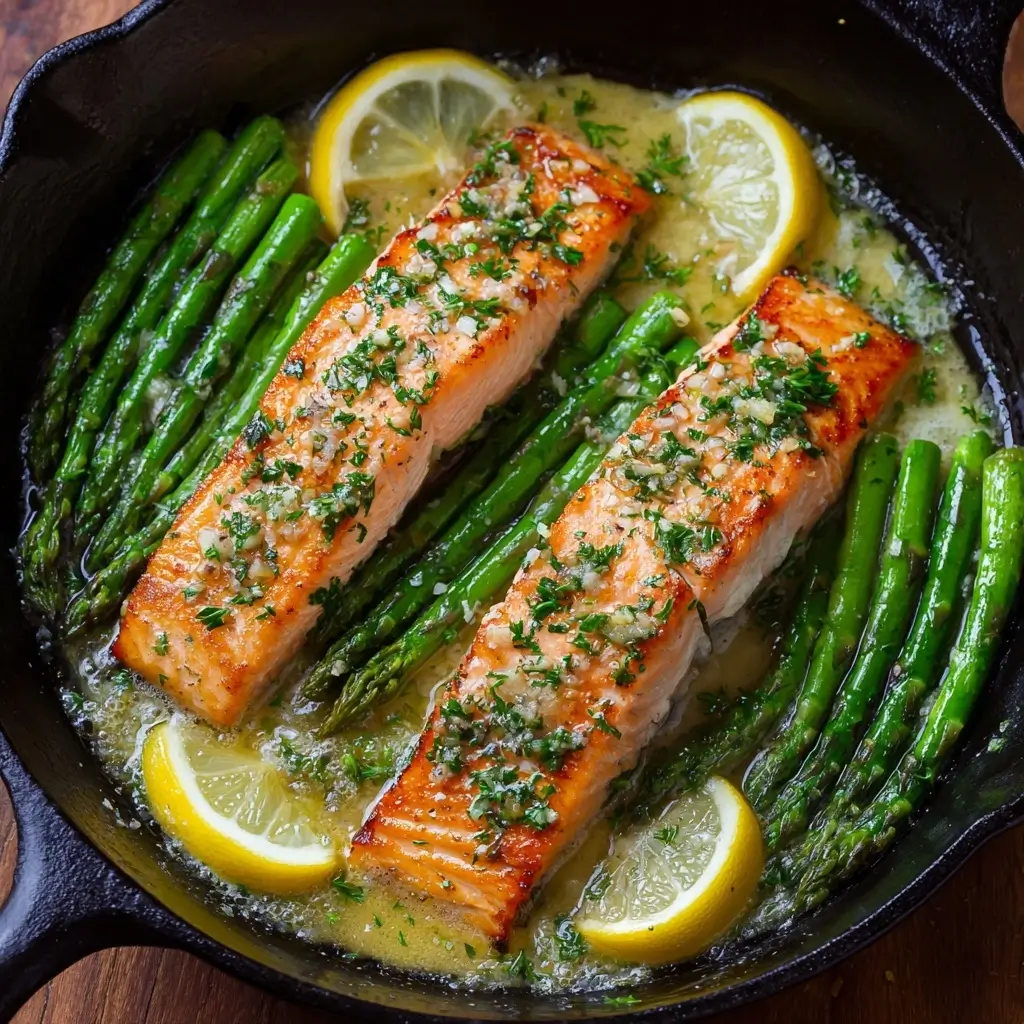
Garlic Butter Salmon Skillet: A Flavorful, Quick, and Nutritious One-Pan Meal
Introduction
Garlic Butter Salmon Skillet is a culinary masterpiece that combines the rich, buttery flavor of salmon with the bold aroma of garlic and herbs. This dish has become a favorite among home cooks and food enthusiasts alike for its simplicity, elegance, and health benefits. Perfectly seared salmon fillets are bathed in a luxurious sauce made from butter, fresh garlic, lemon juice, and aromatic herbs, all cooked in a single skillet for minimal cleanup and maximum flavor infusion. Whether you’re preparing a weeknight dinner or entertaining guests, this recipe delivers restaurant-quality results without requiring advanced cooking skills.
The beauty of Garlic Butter Salmon Skillet lies not only in its taste but also in its versatility. It can be customized to suit various dietary preferences—whether you’re following a keto, paleo, low-carb, or gluten-free lifestyle. With nutrient-dense ingredients and heart-healthy fats, it’s a meal that supports both wellness and indulgence. In this comprehensive guide, we’ll explore everything you need to know about making the perfect Garlic Butter Salmon Skillet—from its historical roots to ingredient breakdowns, detailed cooking instructions, variations, nutritional insights, and frequently asked questions.
The History
Salmon has been a dietary staple for coastal communities around the world for thousands of years. Indigenous peoples of the Pacific Northwest, Scandinavia, and parts of Russia have long relied on wild-caught salmon as a primary source of protein and essential nutrients. These cultures developed traditional methods of preserving and cooking salmon, including smoking, grilling over open fires, and baking in clay ovens.
The concept of combining salmon with butter and garlic likely emerged from European culinary traditions, particularly French and Mediterranean cuisines, where butter-based sauces are central to many dishes. The French technique of beurre blanc—a warm emulsified butter sauce often flavored with white wine and shallots—laid the foundation for modern garlic butter preparations. As global trade expanded in the 18th and 19th centuries, ingredients like garlic and imported butter became more accessible, leading to new fusion-style recipes.
In the 20th century, American home cooking began embracing one-pan meals for their convenience and efficiency. The rise of stovetop cooking and non-stick skillets allowed for easier searing and sauce-making, giving birth to popular dishes like Garlic Butter Salmon Skillet. Today, this dish represents a harmonious blend of ancient seafood traditions and contemporary culinary innovation—a testament to how simple, high-quality ingredients can create something truly extraordinary.
Ingredients Breakdown
To achieve the best possible result when preparing Garlic Butter Salmon Skillet, it’s important to understand the role each ingredient plays in building flavor, texture, and nutrition:
- Salmon Fillets (6–8 oz each): Choose wild-caught salmon if possible, as it tends to have a richer flavor and better omega-3 fatty acid profile than farmed salmon. Look for fillets with firm flesh, bright color (ranging from pink to deep orange), and no fishy odor. Skin-on fillets are ideal because the skin helps protect the delicate meat during cooking and can crisp up beautifully in the skillet.
- Unsalted Butter (4 tablespoons): Using unsalted butter gives you full control over the salt content of the dish. High-quality European-style butter with a higher fat content will produce a silkier, more flavorful sauce.
- Fresh Garlic (4–5 cloves, minced): Freshly minced garlic provides a pungent, aromatic base for the sauce. Avoid pre-minced jarred garlic, which often contains preservatives and lacks vibrancy.
- Lemon Juice (2 tablespoons fresh): Adds brightness and acidity to balance the richness of the butter. Always use freshly squeezed juice rather than bottled for optimal flavor.
- Lemon Zest (1 teaspoon): Intensifies the citrus notes and adds a fragrant top note to the sauce.
- Fresh Parsley (¼ cup chopped): Offers a pop of color and a mild herbal freshness. Flat-leaf parsley is preferred for its superior flavor and texture.
- Salt (½ to 1 tsp, to taste): Enhances all the other flavors in the dish. Use kosher or sea salt for even seasoning.
- Black Pepper (½ tsp freshly ground): Adds subtle heat and complexity. Freshly ground pepper is always recommended.
- Olive Oil (1 tablespoon): Used to sear the salmon without burning the butter. Olive oil has a higher smoke point than butter alone, ensuring a perfect golden crust.
- Optional Additions: Red pepper flakes (for heat), capers (for brininess), Dijon mustard (for depth), heavy cream (for a creamy variation), or white wine (to deglaze the pan).
Step-by-Step Recipe
- Prepare the Ingredients: Pat the salmon fillets dry with paper towels—this ensures a good sear. Season both sides generously with salt and freshly ground black pepper. Mince the garlic, chop the parsley, zest and juice the lemon, and set aside.
- Heat the Skillet: Place a large oven-safe skillet (such as cast iron or stainless steel) over medium-high heat. Add the olive oil and allow it to heat until shimmering but not smoking—about 1–2 minutes.
- Sear the Salmon: Carefully place the salmon fillets skin-side down (if skin-on) into the hot skillet. Press gently with a spatula for even contact. Cook undisturbed for 4–5 minutes, or until the skin is crispy and the fish releases easily from the pan.
- Flip and Finish Cooking: Gently flip the fillets using a thin metal spatula. Transfer the skillet to a preheated oven at 375°F (190°C) and bake for 6–8 minutes, depending on thickness, until the internal temperature reaches 125–130°F (52–54°C) for medium doneness. Alternatively, cook entirely on the stovetop over reduced heat if you don’t have an oven-safe pan.
- Remove Salmon: Once cooked, transfer the salmon to a plate and cover loosely with foil to rest while you prepare the sauce.
- Make the Garlic Butter Sauce: Reduce the heat to medium-low. To the same skillet (now containing flavorful browned bits), add the butter. Once melted, stir in the minced garlic and sauté for 30–60 seconds until fragrant—do not let it brown.
- Add Citrus and Herbs: Stir in the lemon juice, lemon zest, and optional red pepper flakes. Simmer gently for 1 minute. Remove from heat and stir in most of the chopped parsley, reserving some for garnish.
- Return Salmon to Skillet: Carefully place the salmon fillets back into the skillet, spooning the warm garlic butter sauce over the top to coat thoroughly.
- Serve Immediately: Plate the salmon, drizzling extra sauce from the pan over each portion. Garnish with remaining parsley and serve with your choice of side dishes.
Tips
- Don’t Overcook the Salmon: Salmon continues to cook slightly after removal from heat due to residual warmth. Aim for slightly underdone when checking internal temperature—it should be flaky but still moist inside.
- Use Fresh Ingredients: Fresh garlic, lemon, and herbs make a dramatic difference compared to dried or processed alternatives.
- Crispy Skin Tip: Ensure the salmon skin is completely dry before placing it in the pan. You can also sprinkle a tiny bit of salt on the skin side before cooking to help draw out moisture.
- Avoid Crowding the Pan: Cook in batches if necessary. Overcrowding lowers the pan temperature and leads to steaming instead of searing.
- Control Garlic Burn: Garlic burns quickly. Keep the heat low when adding it to the butter and stir constantly.
- Enhance Flavor with Deglazing: After removing the salmon, splash in a few tablespoons of dry white wine or chicken broth to lift the fond (browned bits) from the pan before adding the butter—this deepens the sauce’s flavor profile.
- Rest Before Serving: Letting the salmon rest for 2–3 minutes allows juices to redistribute, resulting in a more succulent bite.
Variations and Customizations
One of the greatest strengths of Garlic Butter Salmon Skillet is its adaptability. Here are several creative twists to keep the dish exciting:
- Creamy Garlic Butter Salmon: Stir in ¼ cup of heavy cream or coconut milk after the lemon juice for a lusher, more decadent sauce. Ideal for serving over pasta or rice.
- Mediterranean Style: Add sun-dried tomatoes, Kalamata olives, artichoke hearts, and a pinch of oregano to the sauce for a Greek-inspired version.
- Asian Fusion: Replace lemon with yuzu or rice vinegar, add grated ginger, soy sauce (or tamari), and a touch of honey. Garnish with green onions and sesame seeds.
- Herb Crusted: Before cooking, press a mixture of chopped herbs (parsley, dill, thyme) and breadcrumbs onto the top of the salmon fillets for added texture.
- Spicy Kick: Add ½ teaspoon crushed red pepper flakes or a dash of hot sauce to the butter sauce for those who enjoy heat.
- Dill and Capers: Incorporate 1 tablespoon of drained capers and 1 tablespoon of fresh dill into the sauce for a classic “salmon piccata” effect.
- Wine-Infused Sauce: After removing the salmon, deglaze the pan with ¼ cup of dry white wine (like Sauvignon Blanc or Pinot Grigio), reduce by half, then proceed with the butter and garlic.
- Vegetable-Packed Skillet: Sauté sliced mushrooms, asparagus, cherry tomatoes, or spinach in the skillet before or after cooking the salmon for a complete one-pan meal.
Health Considerations and Nutritional Value
Garlic Butter Salmon Skillet isn’t just delicious—it’s packed with health-promoting nutrients:
- Omega-3 Fatty Acids: Salmon is one of the best natural sources of EPA and DHA omega-3s, which support brain function, reduce inflammation, and lower the risk of heart disease.
- High-Quality Protein: Each 6-ounce fillet provides approximately 34 grams of protein, essential for muscle repair, immune function, and satiety.
- Vitamins and Minerals: Rich in vitamin D, selenium, B vitamins (especially B12 and niacin), and potassium—all vital for energy metabolism, thyroid health, and nerve function.
- Heart-Healthy Fats: While butter contains saturated fat, moderate consumption within a balanced diet is acceptable. Pairing it with omega-3-rich salmon creates a favorable lipid profile.
- Antioxidant Benefits: Garlic contains allicin, a compound known for its antimicrobial and cardiovascular protective properties. Lemon contributes vitamin C and flavonoids.
- Low Carb & Keto-Friendly: Naturally low in carbohydrates, this dish fits well into ketogenic, Atkins, and low-glycemic diets.
- Dietary Modifications: For dairy-free versions, substitute butter with ghee (clarified butter) or a plant-based butter alternative. Use olive oil as the primary fat and enhance creaminess with avocado or tahini if desired.
Nutritional estimate per serving (one 6 oz salmon fillet with garlic butter sauce):
| Nutrient | Amount |
|---|---|
| Calories | ~450 kcal |
| Total Fat | 32g |
| Saturated Fat | 11g |
| Cholesterol | 120mg |
| Protein | 34g |
| Carbohydrates | 2g |
| Fiber | 0.5g |
| Sugar | 1g |
| Sodium | ~400–600mg (depending on added salt) |
| Omega-3 Fatty Acids | ~3,000–4,000mg |
Ingredients
- 4 salmon fillets (6–8 ounces each), skin-on preferred
- 1 tablespoon olive oil
- 4 tablespoons unsalted butter
- 4–5 garlic cloves, finely minced
- 2 tablespoons fresh lemon juice (from about 1 lemon)
- 1 teaspoon lemon zest
- ¼ cup fresh parsley, finely chopped (plus extra for garnish)
- ½ to 1 teaspoon kosher salt (adjust to taste)
- ½ teaspoon freshly ground black pepper
- Optional: ¼ teaspoon red pepper flakes, 1 tablespoon capers, 1 teaspoon Dijon mustard
Directions
- Premeat the oven to 375°F (190°C). Ensure your skillet is oven-safe if finishing in the oven.
- Dry the salmon fillets thoroughly with paper towels. Season both sides with salt and pepper.
- Heat olive oil in a large skillet over medium-high heat until shimmering.
- Place salmon fillets skin-side down in the skillet. Press lightly with a spatula to ensure full contact. Cook for 4–5 minutes until skin is crispy and golden.
- Flip the fillets carefully using a thin spatula. Transfer the skillet to the preheated oven and bake for 6–8 minutes, or until the salmon flakes easily with a fork and reaches an internal temperature of 125–130°F (52–54°C).
- Remove salmon from the skillet and place on a serving plate. Cover loosely with foil to keep warm.
- Reduce heat to medium-low. Add butter to the same skillet and melt completely.
- Add minced garlic and sauté for 30–60 seconds until fragrant—do not brown.
- Stir in lemon juice, lemon zest, and any optional ingredients (pepper flakes, capers, etc.). Simmer for 1 minute.
- Remove from heat and stir in most of the chopped parsley.
- Return salmon fillets to the skillet, spooning the garlic butter sauce over each piece to coat generously.
- Serve immediately, garnished with reserved parsley and lemon slices if desired.
FAQ
Can I use frozen salmon?
Yes, but thaw it first in the refrigerator overnight for best texture. Never cook frozen salmon directly in a skillet—it won’t sear properly and may release too much water.
How do I prevent the butter from burning?
Always combine butter with a higher-smoke-point oil (like olive oil) when searing. When making the sauce, keep the heat at medium-low and add garlic only after the butter has melted.
What sides go well with Garlic Butter Salmon Skillet?
Excellent pairings include roasted vegetables (asparagus, broccoli, Brussels sprouts), mashed cauliflower, quinoa, wild rice, garlic sautéed spinach, or a crisp green salad.
Can I make this ahead of time?
The sauce is best made fresh, but you can prep ingredients (chop herbs, mince garlic, measure seasonings) up to a day in advance. Cook the salmon just before serving for optimal texture.
Is this recipe gluten-free?
Yes, as written, this recipe contains no gluten-containing ingredients. Just ensure all additives (like butter or seasonings) are certified gluten-free if needed.
How long does leftover salmon last?
Store leftovers in an airtight container in the refrigerator for up to 2 days. Reheat gently in a skillet over low heat or enjoy cold in salads. Do not microwave, as it can make the salmon rubbery.
Can I grill the salmon instead?
Absolutely! Grill the salmon over medium heat for 4–5 minutes per side, then finish with the garlic butter sauce off the heat.
Why is my salmon sticking to the pan?
This usually happens if the pan isn’t hot enough before adding the fish, or if you try to move it too soon. Wait until the edges turn opaque and the salmon lifts easily before flipping.
Summary
Garlic Butter Salmon Skillet is a quick, elegant, and nutritious one-pan meal that brings together the richness of salmon with the aromatic depth of garlic and butter. Packed with omega-3s and bursting with flavor, it’s perfect for busy weeknights or special dinners.