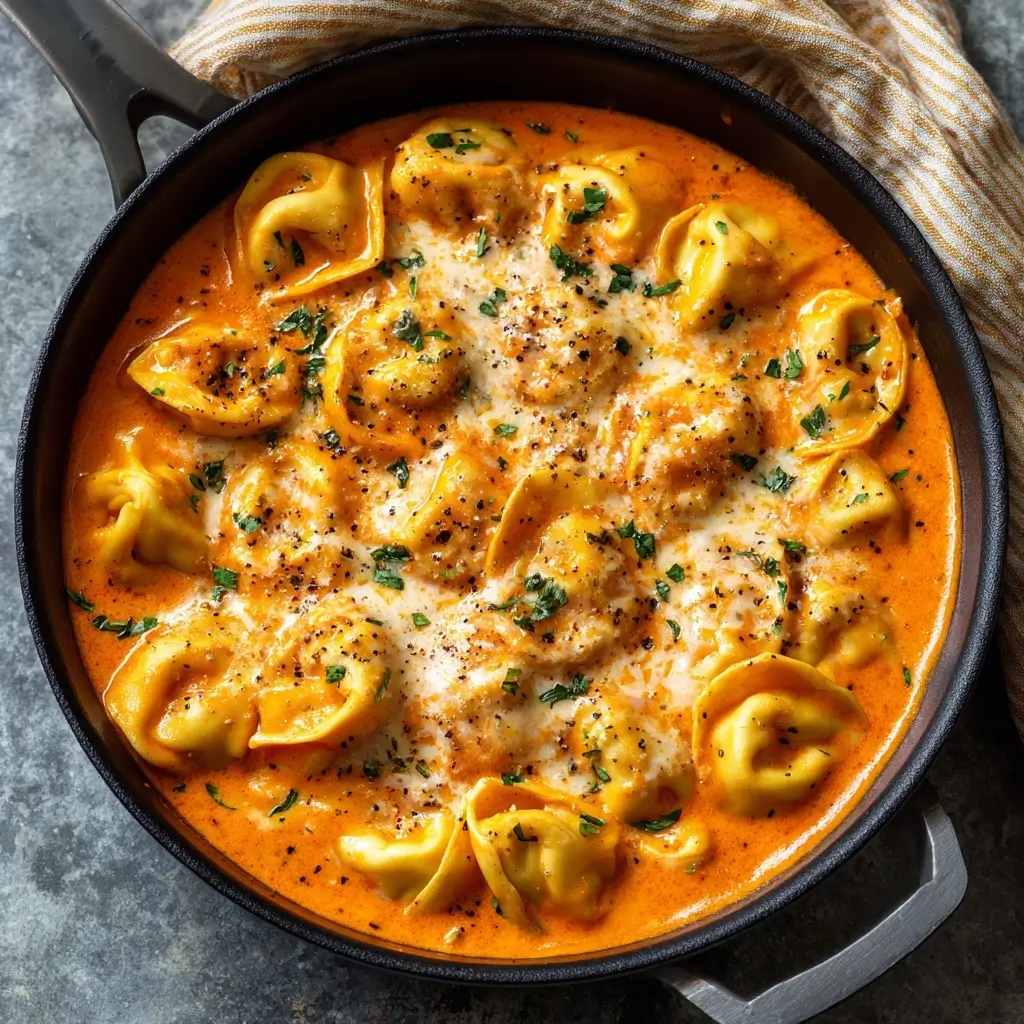
Creamy Tomato Tortellini: A Comforting, Flavor-Packed Pasta Dish
The History of Creamy Tomato Tortellini
The origins of creamy tomato tortellini lie at the intersection of Italian culinary tradition and modern American comfort food innovation. Tortellini itself hails from the Emilia-Romagna region of Italy, particularly associated with Bologna and Modena. Legend has it that the shape of tortellini was inspired by Venus’s navel—a tale rooted in local folklore where an innkeeper, peeking through a keyhole at the goddess, was so struck by her beauty that he recreated her navel in pasta form.
Originally, tortellini were served in brodo (a rich capon broth), showcasing their delicate meat filling and handmade craftsmanship. However, over time, as Italian cuisine evolved and spread globally—especially to North America—tortellini began appearing in richer, cream-based sauces. The marriage of tomatoes and cream, while not traditional in classical Italian cooking, became popular in Italian-American kitchens during the 20th century. Dishes like vodka sauce and pink sauce laid the foundation for creamy tomato combinations, which eventually led to creations such as creamy tomato tortellini.
This dish embodies the fusion of rustic Italian ingredients with contemporary, indulgent preparation methods. It reflects how immigrant communities adapted traditional recipes using locally available ingredients, ultimately creating new classics loved worldwide. Today, creamy tomato tortellini is a staple in weeknight dinners, restaurant menus, and family gatherings—a testament to its comforting appeal and ease of preparation.
Ingredients Breakdown: What Makes This Dish Shine
The magic of creamy tomato tortellini lies in its balance of rich, tangy, savory, and slightly sweet flavors. Each ingredient plays a crucial role in building layers of taste and texture:
- Tortellini (fresh or frozen): Typically stuffed with ricotta, Parmesan, and sometimes spinach or meat. Fresh tortellini cook quickly and have a tender bite, while frozen offers convenience without sacrificing too much quality.
- Heavy cream: Provides the luxurious mouthfeel and richness essential to the sauce. It emulsifies well with tomato and holds herbs and seasonings beautifully.
- Crushed tomatoes or tomato puree: Adds acidity and depth. Using high-quality canned San Marzano tomatoes elevates the flavor significantly compared to generic brands.
- Garlic: Sautéed gently to release its aroma without burning, garlic forms the aromatic base of the sauce.
- Onion (optional): Yellow or white onion adds sweetness and complexity when finely diced and softened before adding other ingredients.
- Butter and olive oil: A combination of both enhances flavor—butter for richness, olive oil for a fruity undertone and higher smoke point.
- Fresh herbs: Basil is classic, lending a bright, slightly peppery note. Parsley can also be used for freshness. Add toward the end to preserve flavor.
- Grated Parmesan cheese: Boosts umami and saltiness. Stirred into the sauce, it helps thicken and enrich it further.
- Red pepper flakes (optional): For a subtle kick that cuts through the creaminess.
- Salt and black pepper: Essential for seasoning each layer of the dish.
- Pasta water: Often overlooked but vital—it contains starch that helps bind the sauce to the tortellini.
Optional additions include sun-dried tomatoes, mushrooms, spinach, grilled chicken, or shrimp, making this dish infinitely customizable depending on dietary preferences and pantry availability.
Step-by-Step Recipe: How to Make Creamy Tomato Tortellini
Follow this detailed guide to create a restaurant-quality creamy tomato tortellini dish right in your home kitchen.
- Prepare Your Ingredients: Mise en place is key. Chop garlic, grate Parmesan, measure out cream and tomatoes, and if using fresh herbs, slice them thinly. If adding vegetables or protein, prep those now.
- Cook the Tortellini: Bring a large pot of salted water to a boil. Add tortellini and cook according to package instructions until al dente (usually 3–5 minutes for fresh, 7–10 for frozen). Reserve about ½ cup of pasta water before draining. Do not rinse the tortellini—starch helps the sauce cling.
- Start the Sauce Base: While the pasta cooks, heat 1 tablespoon of olive oil and 1 tablespoon of butter in a large skillet over medium heat. Add 1 small diced onion (if using) and sauté for 3–4 minutes until translucent. Add 3–4 minced garlic cloves and red pepper flakes (¼ to ½ tsp) and cook for another 30 seconds until fragrant—do not let garlic brown.
- Add Tomatoes: Pour in 1 can (14 oz) of crushed San Marzano tomatoes. Stir well, bring to a gentle simmer, and let cook for 8–10 minutes, allowing the liquid to reduce slightly and flavors to meld. Season lightly with salt and black pepper.
- Incorporate Cream: Lower the heat to medium-low. Slowly pour in 1 cup of heavy cream, stirring continuously. Allow the sauce to warm through and begin thickening—about 3–4 minutes. Avoid boiling vigorously to prevent curdling.
- Add Cheese: Stir in ½ cup of freshly grated Parmesan cheese until melted and smooth. Taste and adjust seasoning—add more salt, pepper, or a pinch of sugar if the tomatoes are too acidic.
- Combine Pasta and Sauce: Add the cooked tortellini to the skillet. Toss gently to coat every piece in the creamy tomato sauce. If the sauce is too thick, add reserved pasta water one tablespoon at a time until desired consistency is reached.
- Finish with Freshness: Remove from heat. Stir in a handful of torn fresh basil leaves. Optionally, drizzle with a touch of extra virgin olive oil for gloss and flavor.
- Serve Immediately: Plate the creamy tomato tortellini hot, garnished with additional Parmesan, cracked black pepper, and a few whole basil leaves for presentation.
Tips for Perfect Creamy Tomato Tortellini Every Time
- Don’t Overcook the Tortellini: Since they’ll continue to cook slightly in the hot sauce, aim for just al dente when boiling.
- Use Full-Fat Dairy: Skim milk or half-and-half won’t provide the same richness. Heavy cream is essential for authentic texture.
- Low and Slow for the Sauce: High heat can cause the cream to separate. Keep temperatures moderate and stir frequently.
- Bloom the Garlic: Cooking garlic briefly in fat releases its essential oils without bitterness. Burnt garlic ruins the entire dish.
- Reserve Pasta Water: This starchy liquid is gold—it helps unify the sauce and improves adhesion to the pasta.
- Taste as You Go: Balance is everything. Adjust acidity with a pinch of sugar, saltiness with cheese, and heat with red pepper flakes.
- Fresh Cheese Matters: Pre-grated Parmesan often contains anti-caking agents and lacks flavor. Grate your own for superior results.
- Let It Rest Briefly: After combining, let the dish sit off heat for 1–2 minutes. The sauce will thicken naturally as it cools slightly.
Variations and Customizations
Creamy tomato tortellini is incredibly versatile. Here are some creative ways to personalize the dish:
Vegetarian & Vegan Options
- Use plant-based tortellini filled with cashew ricotta or tofu.
- Substitute heavy cream with coconut cream or cashew cream for a vegan version.
- Replace Parmesan with nutritional yeast or vegan Parmesan alternative.
- Add roasted vegetables like zucchini, bell peppers, eggplant, or artichokes.
Protein-Packed Upgrades
- Grilled Chicken: Slice seasoned, grilled chicken breast and serve on top or mix in.
- Shrimp: Sear peeled shrimp in garlic butter and fold into the finished dish.
- Italian Sausage: Brown crumbled spicy or mild sausage before starting the sauce base for heartier flavor.
- Pepperoni or Bacon: Crispy bits add saltiness and crunch.
Dietary Adaptations
- Gluten-Free: Use gluten-free tortellini made from rice or corn flour.
- Lighter Version: Swap heavy cream with evaporated milk or Greek yogurt (add off heat to avoid curdling).
- Dairy-Free: Use dairy-free cheese and non-dairy cream alternatives like oat or almond-based creams (choose barista blends for better stability).
Flavor Twists
- Vodka Sauce Twist: Add ¼ cup of vodka after sautéing garlic, let it reduce by half before adding tomatoes.
- Pesto Swirl: Fold in 2 tablespoons of basil pesto at the end for a vibrant herbal boost.
- Roasted Red Pepper Cream Sauce: Blend roasted red peppers into the tomato mixture for a sweeter, smokier profile.
- Lemon Zest: Brighten the dish with a teaspoon of lemon zest added at the end.
Health Considerations and Nutritional Value
While creamy tomato tortellini is undeniably indulgent, understanding its nutritional makeup allows for mindful consumption and healthier adaptations.
Nutrient Profile (Approximate per serving, based on 4 servings):
- Calories: 450–600 kcal (varies with additions)
- Fat: 25–35g (mostly saturated from cream and cheese)
- Carbohydrates: 40–50g (from pasta and tomatoes)
- Protein: 15–20g (from cheese-filled pasta and optional proteins)
- Sodium: 600–900mg (can be reduced with low-sodium ingredients)
- Fiber: 3–5g (especially if using whole grain or veggie-packed tortellini)
Key Health Points:
- Lycopene: Tomatoes are rich in lycopene, an antioxidant linked to reduced risk of heart disease and certain cancers. Cooking enhances lycopene absorption.
- Calcium: Cheese provides calcium for bone health, though in moderation due to fat content.
- Saturated Fat: The dish is high in saturated fat from cream and cheese. Those monitoring cholesterol should consider lighter alternatives.
- Portion Control: Serving with a side salad or steamed vegetables balances the meal and increases fiber intake.
- Allergens: Contains dairy, gluten, and eggs (depending on tortellini type). Always check labels if serving individuals with allergies.
Ways to Make It Healthier:
- Use part-skim ricotta tortellini.
- Reduce cream amount and supplement with low-fat milk or vegetable broth.
- Increase vegetable content by adding spinach, kale, mushrooms, or cherry tomatoes.
- Opt for whole grain or legume-based tortellini for added fiber and protein.
- Limit added salt by using no-salt-added tomato products and enhancing flavor with herbs and spices.
Full Ingredients List
- 1 package (18–20 oz) fresh or frozen cheese tortellini
- 1 tbsp olive oil
- 1 tbsp unsalted butter
- 1 small yellow onion, finely diced (optional)
- 3–4 garlic cloves, minced
- ¼–½ tsp red pepper flakes (adjust to taste)
- 1 can (14 oz) crushed tomatoes (preferably San Marzano)
- 1 cup heavy cream
- ½ cup freshly grated Parmesan cheese, plus more for serving
- Salt and freshly ground black pepper, to taste
- ½ cup reserved pasta water (as needed)
- ½ cup fresh basil leaves, torn
- Optional: 1 tsp sugar (to balance acidity)
Directions Recap
- Boil salted water and cook tortellini until al dente. Reserve ½ cup pasta water, then drain.
- In a large skillet, heat olive oil and butter over medium heat. Sauté onion (if using) until soft, about 3–4 minutes.
- Add garlic and red pepper flakes; cook 30 seconds until fragrant.
- Stir in crushed tomatoes, bring to a simmer, and cook for 8–10 minutes to reduce slightly.
- Lower heat and slowly whisk in heavy cream. Simmer gently for 3–4 minutes.
- Stir in Parmesan cheese until melted and smooth. Season with salt, pepper, and optional sugar.
- Add cooked tortellini to the sauce. Toss to coat, adding pasta water as needed for silkiness.
- Remove from heat and stir in fresh basil.
- Serve immediately, garnished with extra Parmesan, black pepper, and basil.
FAQ: Frequently Asked Questions
Can I make creamy tomato tortellini ahead of time?
Yes, but it’s best enjoyed fresh. If preparing ahead, undercook the tortellini slightly and store components separately. Reheat sauce gently, add pasta, and finish with fresh herbs.
How do I reheat leftovers?
Reheat in a skillet over low heat with a splash of milk, broth, or water to loosen the sauce. Microwaving works but may result in uneven texture.
Can I freeze this dish?
Freezing is not recommended due to the cream-based sauce, which may separate upon thawing. However, you can freeze the sauce alone (without pasta) for up to 2 months. Thaw and reheat gently, then combine with freshly cooked tortellini.
What kind of tortellini should I use?
Cheese-filled is traditional, but spinach-cheese, mushroom, or meat-filled varieties work well too. Choose fresh for best texture or high-quality frozen for convenience.
Why did my sauce curdle?
Curdling usually occurs from high heat or sudden temperature changes. Always use low to medium heat when adding cream, and never boil vigorously.
Can I make this in a slow cooker?
Yes! Cook tortellini separately. Combine sauce ingredients (except fresh herbs) in the slow cooker on Low for 3–4 hours. Stir in cooked tortellini during the last 15 minutes.
Is there a non-dairy substitute for heavy cream?
Yes. Full-fat coconut milk, cashew cream, or commercial plant-based whipping creams can work. Be aware that coconut milk may impart a slight tropical flavor.
Can I use jarred pasta sauce?
Absolutely. Use a high-quality marinara or tomato basil sauce. Thin it slightly with water or broth before mixing with cream for better integration.
How can I make this kid-friendly?
Reduce or omit red pepper flakes, add a touch more cheese, and serve with garlic bread. Many children love the mild, creamy flavor and fun pasta shape.
What wine pairs well with creamy tomato tortellini?
A crisp white like Pinot Grigio or Vermentino complements the richness. For red lovers, a light-bodied Chianti or Barbera works well without overpowering the dish.
Summary
Creamy tomato tortellini is a harmonious blend of velvety richness and bright acidity, bringing together tender stuffed pasta and a luscious sauce infused with garlic, herbs, and Parmesan. Easy to customize and perfect for busy nights or cozy dinners, it’s a modern classic that satisfies every palate.