Introduction
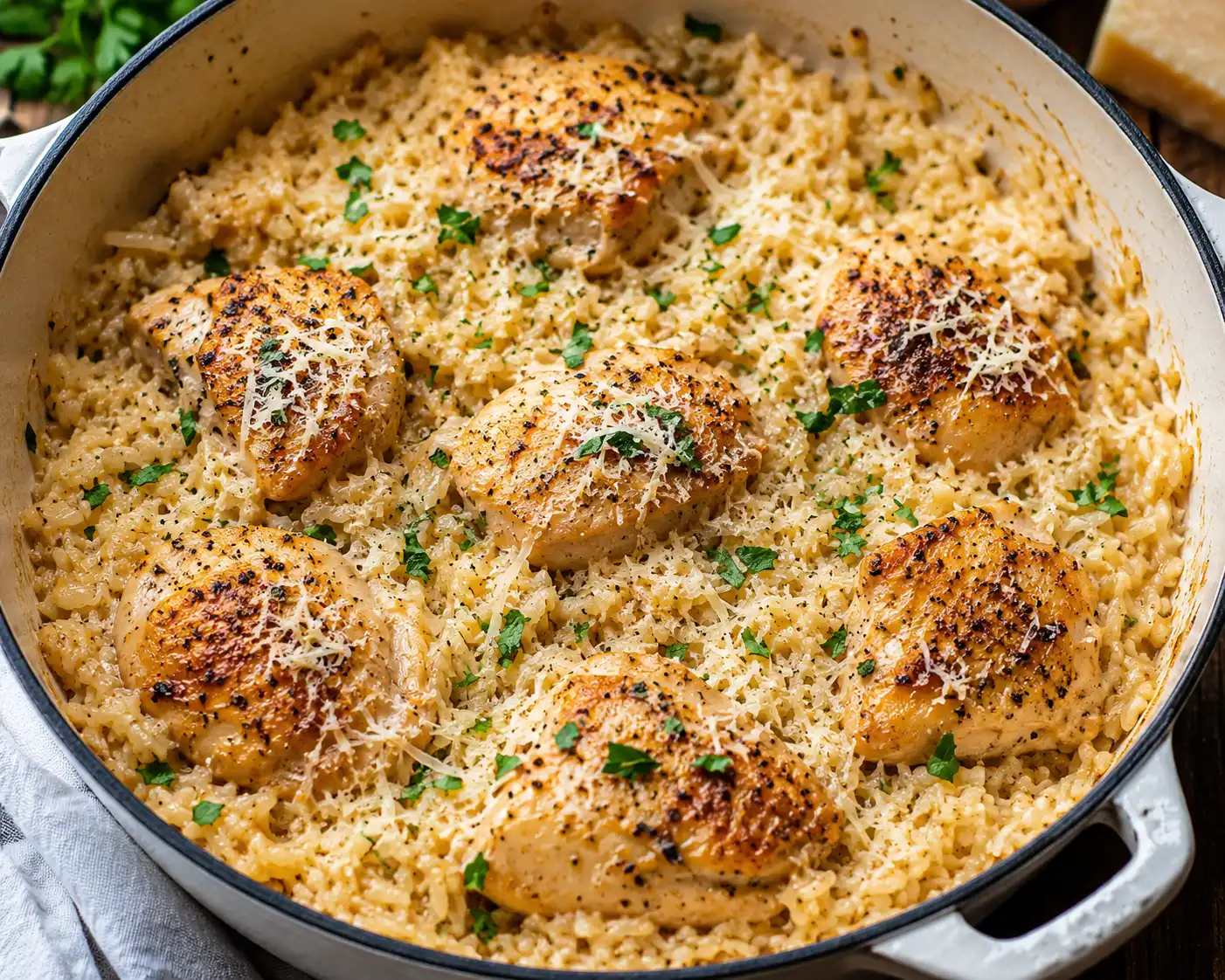
One-Pot Garlic Parmesan Chicken and Rice is the quintessential weeknight hero—a creamy, aromatic, deeply flavorful dish that delivers restaurant-quality comfort in a single vessel. Designed for simplicity without sacrificing depth, this recipe marries tender pan-seared chicken breasts or thighs with perfectly cooked rice, all enveloped in a luxuriously rich garlic-parmesan sauce infused with herbs, white wine (optional), and just the right amount of umami. It’s not just convenient—it’s transformative: minimal cleanup, maximum satisfaction, and endlessly adaptable to pantry staples, dietary preferences, and seasonal ingredients. Whether you’re a beginner cook seeking confidence or a seasoned home chef craving efficiency and elegance, this one-pot wonder consistently delivers warmth, richness, and that unmistakable savory-sweet perfume of roasted garlic and nutty aged parmesan.
The History
While “one-pot meals” trace their roots to ancient hearth cooking—where stews, pilafs, and grain-based casseroles were born from necessity and resourcefulness—the modern iteration of Garlic Parmesan Chicken and Rice emerged in the early 2010s as part of the broader “dump-and-stir” culinary movement popularized by food bloggers and minimalist cooking advocates. Its rise coincided with growing demand for time-efficient, family-friendly dinners that didn’t compromise on flavor or texture. The fusion of Italian-inspired elements—garlic, parsley, parmesan, and white wine—with American-style comfort staples like boneless chicken and long-grain rice reflects a broader trend of global pantry integration in home kitchens. Notably, chefs like Ina Garten and bloggers such as Skinnytaste and Damn Delicious helped mainstream variations featuring parmesan-infused risotto-style techniques adapted for everyday rice. Over time, the dish evolved beyond basic sauté-and-boil methods into a carefully layered process: searing for fond development, deglazing for complexity, and controlled simmering to achieve al dente rice with creamy cohesion—proving that convenience and craftsmanship can coexist beautifully in a single Dutch oven or deep skillet.
Ingredients Breakdown
Every ingredient in this recipe serves a precise functional and sensory role—no filler, no afterthoughts. Let’s explore them in detail:
- Chicken Breast or Thighs (1.5 lbs / 680g): Boneless, skinless cuts are ideal for quick, even cooking. Breasts yield lean tenderness; thighs offer richer flavor, higher fat content for enhanced moisture retention, and greater forgiveness during simmering. Uniform 1-inch cubes or thin cutlets ensure consistent doneness—crucial in one-pot timing.
- Aromatic Base – Yellow Onion (1 medium, finely diced) & Garlic (6–8 cloves, minced): Onions provide foundational sweetness and body; garlic—when sautéed gently in olive oil before browning chicken—releases volatile sulfur compounds that mellow into deep, nutty umami rather than sharp pungency. Freshly minced (not pre-minced) garlic ensures optimal enzymatic activity and flavor release.
- Rice – Long-Grain White Rice (1.5 cups / 300g), preferably Jasmine or Basmati: These varieties boast high amylose content, yielding fluffy, separate grains that absorb liquid without turning gummy. Rinsing thoroughly (3–4x until water runs clear) removes excess surface starch—critical for avoiding clumping and achieving distinct texture amid the creamy sauce. Note: Do not use instant, parboiled, or brown rice unless adjusted per Variations section.
- Liquid Components – Low-Sodium Chicken Broth (3.5 cups / 830ml) & Dry White Wine (½ cup / 120ml, optional but highly recommended): Broth supplies savory depth and gelatinous body; low-sodium versions allow precise salt control. White wine (Sauvignon Blanc, Pinot Grigio, or unoaked Chardonnay) adds bright acidity, fruit esters, and alcohol-soluble flavor compounds that lift the richness. The alcohol fully cooks off, leaving only complexity.
- Creaminess Agents – Heavy Cream (¾ cup / 180ml) & Freshly Grated Parmigiano-Reggiano (1 cup / 90g, plus extra for garnish): Heavy cream contributes unctuous mouthfeel and temperature stability—resisting curdling when added late in cooking. Authentic Parmigiano-Reggiano (not pre-grated “parmesan”) contains natural enzymes and crystalline tyrosine that melt into velvety silk while imparting profound nuttiness, saltiness, and umami. Pre-grated versions contain anti-caking agents (e.g., cellulose) that impede melting and dull flavor.
- Herbs & Seasonings – Fresh Parsley (¼ cup, finely chopped), Dried Thyme (1 tsp), Smoked Paprika (½ tsp), Black Pepper (freshly cracked), and Kosher Salt: Parsley adds grassy freshness and visual pop; thyme lends earthy, floral notes that complement poultry; smoked paprika provides subtle warmth and depth—not heat—enhancing the Maillard reaction from searing. Kosher salt ensures even seasoning; fine sea salt may oversalt due to density differences.
- Fat Medium – Extra-Virgin Olive Oil (2 tbsp) & Unsalted Butter (2 tbsp): Olive oil withstands high-heat searing; butter added later enriches flavor and promotes emulsification of the final sauce. Clarified butter may be substituted for higher smoke point if desired.
Each component is calibrated to interact synergistically: the fond from seared chicken dissolves into wine and broth, building layers of savoriness; garlic and onion create a flavor matrix; rice acts as both starch thickener and textural anchor; cream and cheese bind it all into cohesive luxury—all without flour, roux, or artificial thickeners.
Step-by-Step Recipe
- Prep & Pat Dry (5 minutes): Cut chicken into uniform 1-inch cubes or pound cutlets to ½-inch thickness. Pat *extremely* dry with paper towels—moisture is the enemy of sear. Season generously with salt, pepper, smoked paprika, and thyme. Mince garlic, dice onion, chop parsley, and grate cheese (do not skip grating fresh—pre-shredded won’t melt properly).
- Sear Chicken (6–7 minutes): Heat olive oil in a heavy-bottomed 5–6 quart Dutch oven or deep, wide skillet over medium-high heat until shimmering (approx. 375°F). Add chicken in a single layer—do not crowd. Sear undisturbed 3–4 minutes per side until deeply golden brown and just cooked through (160°F internal). Transfer to a plate; tent loosely with foil. Discard excess fat, leaving ~1 tbsp.
- Sauté Aromatics (4 minutes): Reduce heat to medium. Add onion; cook 2 minutes until translucent. Stir in garlic and cook 60–90 seconds until fragrant—do not let brown or burn. This step unlocks allicin transformation into diallyl disulfide, creating sweet, roasted nuance.
- Build Flavor Foundation (3 minutes): Pour in white wine (if using). Scrape vigorously with a wooden spoon to lift all browned bits (fond)—this is where 80% of your sauce’s depth originates. Simmer 2 minutes until reduced by half and alcohol evaporates.
- Toast Rice (2 minutes): Stir in rinsed, drained rice. Cook, stirring constantly, 1.5–2 minutes until grains turn translucent at edges and emit a toasty, popcorn-like aroma. Toasting coats each grain in oil, sealing starch and preventing mushiness during absorption.
- Simmer to Perfection (22–25 minutes): Pour in warm chicken broth. Return seared chicken (and any accumulated juices) to pot. Bring to a gentle boil, then immediately reduce heat to the *lowest possible simmer* (small bubbles barely breaking surface). Cover tightly with lid. Cook undisturbed 18 minutes—do not lift lid! At 18 minutes, check rice: it should be nearly tender with slight bite, liquid mostly absorbed. If still soupy, cook 2 more minutes; if dry, add 2 tbsp hot broth.
- Finish with Cream & Cheese (5 minutes): Remove from heat. Stir in cold heavy cream and ¾ cup grated parmesan. Cover and let rest 5 minutes—steam gently finishes cooking rice while cream warms and cheese melts into a luscious, emulsified sauce. Avoid vigorous stirring to prevent gumminess.
- Final Garnish & Serve (2 minutes): Gently fold in remaining ¼ cup parmesan and all fresh parsley. Taste and adjust seasoning—more salt? A squeeze of lemon juice brightens richness. Serve immediately in warmed bowls, topped with extra parmesan, cracked black pepper, and optional lemon zest or microgreens.
Tips
- Temperature Control is Non-Negotiable: A too-vigorous simmer will overcook rice into porridge and cause cream to separate. Use the lowest flame setting—even a heat diffuser helps. If your stove runs hot, shift pot slightly off-center.
- Rinse Rice Religiously: Skipping this invites gluey, uneven results. Rinse under cold water, swishing with fingers, until water runs completely clear—often 4–5 changes.
- Warm Broth Prevents Thermal Shock: Cold broth lowers pot temperature abruptly, extending cook time and risking undercooked rice. Heat broth separately while searing chicken.
- Rest Before Stirring: That 5-minute covered rest isn’t passive—it allows residual heat to finish cooking rice evenly while enabling starches to relax and cream to integrate seamlessly. Stirring too soon breaks grain structure.
- Acid is Your Secret Weapon: A ½ tsp fresh lemon juice or white wine vinegar stirred in at the end lifts heaviness and balances fat. Don’t skip it—it doesn’t taste “lemony,” just brighter and more dimensional.
- Resist the Urge to Stir During Simmer: Every lift of the lid releases steam and drops temperature, leading to inconsistent doneness. Trust the timing—and use a timer!
- Use a Tight-Fitting Lid: Steam retention is critical for even rice cooking. If your lid wobbles, seal the rim with parchment paper or a clean kitchen towel tucked under the lid’s edge.
- Chicken Should Be Just Cooked Pre-Simmer: Since it returns to the pot for 18+ minutes, over-searing leads to dryness. Pull chicken at 160°F—it’ll rise to 165°F safely during resting.
- Prevent Cheese Clumping: Always stir cheese in *off the heat*, in two additions, and avoid boiling after adding cream/cheese. High heat causes casein proteins to seize.
- Make-Ahead Strategy: Prep aromatics, grate cheese, and cube chicken up to 1 day ahead. Store separately in airtight containers in the fridge. Bring chicken to cool room temp before searing for optimal browning.
Variations and Customizations
This recipe is a masterclass in adaptability—designed to thrive across dietary frameworks, seasonal produce, and pantry limitations:
- Gluten-Free: Naturally compliant—just verify broth and wine labels for hidden gluten (rare, but possible in malt vinegar-based broths).
- Dairy-Free/Vegan Option: Replace butter with vegan butter or refined coconut oil; omit cream and cheese. Instead, stir in ½ cup raw cashew cream (soaked cashews + water, blended ultra-smooth) and 3 tbsp nutritional yeast + 1 tsp white miso paste for umami/cheesy depth. Add 1 tsp lemon juice and ¼ tsp garlic powder for brightness.
- Low-Carb/Keto Version: Swap rice for cauliflower rice (use frozen, thawed & squeezed *very* dry) and increase broth to 2 cups. Sauté cauli-rice 3 minutes before adding liquids. Simmer uncovered 10–12 minutes until tender. Finish with cream and parmesan as directed. Net carbs drop from ~45g to ~8g per serving.
- Vegetarian Adaptation: Substitute chicken with 1.5 cups cooked chickpeas (canned, rinsed) or 12 oz sliced cremini mushrooms (sautéed until deeply browned first). Boost umami with 1 tbsp soy sauce or tamari in broth and 1 tsp dried porcini powder.
- Protein Swaps: Try boneless pork tenderloin (cut thin), shrimp (add in last 5 minutes), turkey cutlets, or even flaked cod (add delicate fish in final 3 minutes).
- Grain Alternatives: For brown rice, use 1 cup rinsed rice + 2.5 cups broth + 45-minute simmer (add chicken in last 20 min). For wild rice blend, use 1 cup + 3 cups broth + 50-minute simmer. For quinoa, use 1 cup rinsed + 2 cups broth + 15-minute simmer (add chicken last 10 min).
- Seasonal Vegetable Add-Ins: Stir in 1 cup frozen peas (last 3 min), roasted cherry tomatoes (fold in at finish), sautéed spinach or kale (½ cup, wilted first), diced zucchini (sauté with onions), or caramelized leeks (add with garlic).
- Flavor Twists: Italian—add 2 tbsp sun-dried tomatoes + 1 tsp oregano. Mediterranean—substitute feta for parmesan + add kalamata olives + lemon zest. Herbaceous—swap thyme for tarragon or dill. Spicy—add ¼ tsp red pepper flakes with garlic or top with harissa.
- Meal-Prep Friendly: Portion into airtight containers; refrigerate up to 4 days. Reheat gently in microwave with 1 tbsp broth/water per serving, covered, stirring halfway. Freezes well for up to 3 months—thaw overnight, reheat slowly on stove with splash of cream to refresh texture.
Health Considerations and Nutritional Value
Per standard serving (⅙ of recipe, approx. 1.5 cups), this dish delivers balanced macros and functional nutrition—when prepared mindfully:
- Calories & Macronutrients: ~520 kcal | 32g protein | 38g net carbs (of which 1g fiber) | 26g total fat (15g saturated, primarily from cream/cheese/butter). Protein supports satiety and muscle maintenance; complex carbs fuel sustained energy; healthy fats aid nutrient absorption (e.g., fat-soluble vitamins A/D/E/K in cheese and herbs).
- Sodium Awareness: Approximately 680mg sodium per serving—moderate, but controllable. Using low-sodium broth, omitting added salt until tasting post-cook, and choosing unsalted butter keeps levels aligned with ADA guidelines (<2,300mg/day). Those with hypertension may further reduce by halving parmesan (still flavorful due to potency) and adding lemon zest/herbs for perceived saltiness.
- Garlic Benefits: Raw garlic offers allicin, but cooking transforms it into beneficial organosulfur compounds linked to cardiovascular support and antioxidant activity. The quantity used here (6–8 cloves) provides meaningful phytonutrient load.
- Parmesan Power: Authentic Parmigiano-Reggiano is naturally lactose-free (aged >12 months), rich in calcium (336mg/serving = 26% DV), phosphorus, and bioactive peptides shown to support bone health and blood pressure regulation.
- Broth-Based Hydration: Bone-in or collagen-rich broth adds glycine and proline—amino acids vital for gut lining integrity and joint health. Opt for organic, pasture-raised chicken broth when possible.
- Considerations for Specific Diets:
- Diabetes-Friendly: Pair with non-starchy veg (side salad, steamed broccoli) to lower glycemic load. Monitor portion size (½ cup rice base reduces carbs to ~22g).
- Heart Health Focus: Substitute half the cream with whole milk + 1 tbsp cornstarch slurry for thickening; use part-skim mozzarella blended with parmesan for lower sat-fat.
- Weight Management: Increase volume with riced cauliflower (½ batch) or add 1 cup chopped celery/zucchini to stretch servings without significant calorie addition.
- Why It’s Better Than Takeout: Eliminates hidden sugars (common in restaurant cream sauces), preservatives, excessive sodium, and unstable industrial oils. You control quality, freshness, and integrity of every ingredient—transforming indulgence into nourishment.
Ingredients
- 1.5 lbs (680g) boneless, skinless chicken breasts or thighs, cut into 1-inch cubes or pounded to ½-inch thickness
- 2 tbsp extra-virgin olive oil
- 1 medium yellow onion, finely diced
- 6–8 garlic cloves, finely minced
- 1.5 cups (300g) long-grain white rice (Jasmine or Basmati), rinsed thoroughly until water runs clear
- ½ cup (120ml) dry white wine (Sauvignon Blanc or Pinot Grigio; optional but recommended)
- 3.5 cups (830ml) low-sodium chicken broth, warmed
- ¾ cup (180ml) heavy cream, cold
- 1 cup (90g) freshly grated Parmigiano-Reggiano cheese, divided
- ¼ cup (15g) fresh flat-leaf parsley, finely chopped
- 1 tsp dried thyme
- ½ tsp smoked paprika
- 1 tsp freshly cracked black pepper
- Kosher salt, to taste (start with 1 tsp, adjust at end)
- 2 tbsp unsalted butter (optional, for finishing richness)
- Optional garnish: lemon zest, extra parsley, additional parmesan, red pepper flakes
Directions
- Pat chicken extremely dry with paper towels. Season all over with salt, pepper, smoked paprika, and thyme.
- Heat olive oil in a heavy-bottomed 5–6 quart Dutch oven or deep skillet over medium-high heat until shimmering (~375°F). Add chicken in a single layer without crowding. Sear 3–4 minutes per side until deeply golden and just cooked through (160°F internal). Transfer to a plate; tent with foil.
- Reduce heat to medium. Add diced onion; cook 2 minutes until soft. Stir in garlic; cook 60–90 seconds until fragrant but not browned.
- Pour in white wine. Scrape bottom vigorously to lift all browned bits. Simmer 2 minutes until reduced by half.
- Stir in rinsed, drained rice. Cook, stirring constantly, 1.5–2 minutes until translucent and toasted-smelling.
- Pour in warm broth. Return chicken (and any juices) to pot. Bring to a gentle boil, then immediately reduce heat to lowest possible simmer. Cover tightly.
- Simmer undisturbed for 18 minutes. Check rice: it should be just shy of tender, liquid nearly absorbed. Adjust with hot broth if needed.
- Remove from heat. Stir in cold heavy cream, ¾ cup parmesan, and optional butter. Cover and let rest 5 minutes.
- Gently fold in remaining ¼ cup parmesan and all parsley. Taste and adjust salt. Finish with lemon juice (½ tsp) if desired.
- Serve immediately in warmed bowls, garnished with extra parmesan, parsley, and lemon zest.
FAQ
- Can I use brown rice?
- Yes—but it requires adjustments: use 1 cup rinsed brown rice + 2.5 cups broth + 45-minute simmer. Add chicken in the last 20 minutes to prevent overcooking. Texture will be chewier, sauce thicker.
- Why did my rice turn out mushy?
- Most commonly: rice wasn’t rinsed enough, broth was cold, heat was too high during simmer, or lid was lifted prematurely. Also check rice age—older rice absorbs more water and breaks down easier.
- Can I make this in an Instant Pot?
- Absolutely. Use “Rice” or “Manual” setting: Sear chicken using Sauté mode. Sauté aromatics. Add rice, wine, broth. Seal lid, set to High Pressure for 8 minutes (white rice) or 22 minutes (brown). Natural release 10 minutes, then quick release. Stir in cream/cheese after pressure release.
- What if I don’t have white wine?
- Substitute with equal parts broth + 1 tsp white wine vinegar or lemon juice. Or use ½ cup apple cider vinegar (adds brightness) or non-alcoholic white wine. Avoid red wine—it will discolor and overpower.
- Can I freeze leftovers?
- Yes—cool completely, portion into freezer-safe containers with tight lids, leaving ½-inch headspace. Freeze up to 3 months. Thaw overnight in fridge. Reheat gently on stove with 2 tbsp broth/cream per serving to restore creaminess.
- My sauce is too thin—how do I fix it?
- Let it sit covered off-heat 5–10 minutes—the residual starch will continue to thicken. For immediate fix, mix 1 tsp cornstarch + 1 tbsp cold water, stir in, and simmer 1 minute. Or simmer uncovered 2–3 minutes to reduce.
- My sauce is too thick or clumpy
- Overheating after adding cream/cheese causes separation. Whisk in 2–3 tbsp warm broth or milk, off-heat, until smooth. Next time, always add dairy off-heat and never boil after.
- Is this dish spicy?
- No—it’s savory and aromatic, not spicy. Smoked paprika adds warmth, not heat. For spice, add ¼ tsp cayenne with garlic or serve with chili oil.
- Can I use pre-grated cheese?
- Not recommended. Pre-shredded cheeses contain cellulose and anti-caking agents that inhibit melting and create graininess. Freshly grated Parmigiano-Reggiano melts smoothly and tastes exponentially better.
- How do I store leftovers?
- In airtight containers in the refrigerator for up to 4 days. Reheat gently in a saucepan over low heat with a splash of broth or cream to revive texture. Microwave reheating works—cover and stir halfway.
Summary
One-Pot Garlic Parmesan Chicken and Rice is a masterful balance of simplicity and sophistication—delivering restaurant-worthy depth, creamy comfort, and flawless texture with minimal effort and zero compromise on quality or flavor.
From its humble one-pot origins to its customizable, nutritionally mindful evolution, this dish proves that the most soul-satisfying meals are often the ones that respect your time, honor real ingredients, and invite endless creativity—all while filling your kitchen with the irresistible, golden aroma of garlic, herbs, and melting parmesan.