Introduction
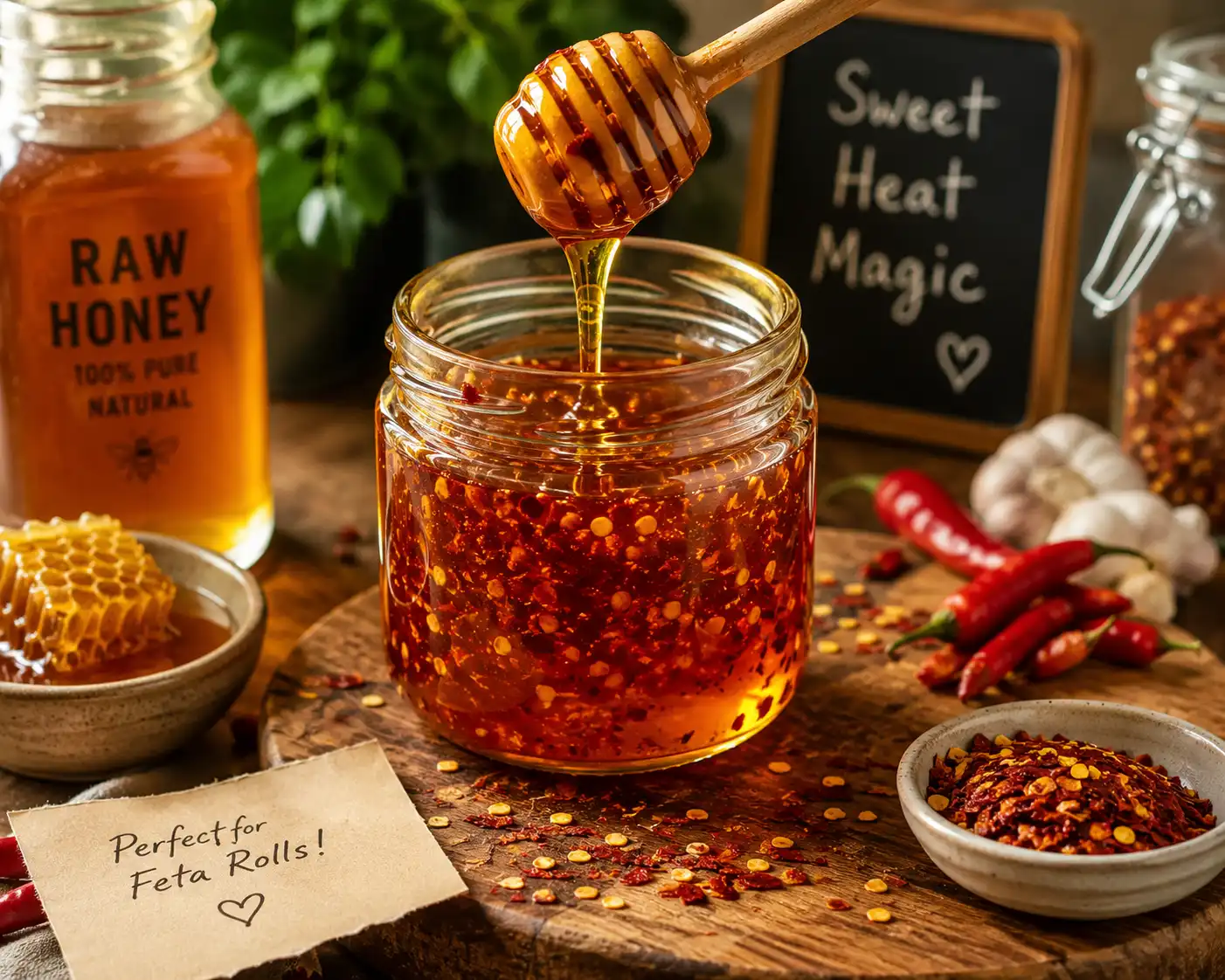
Welcome to a culinary revelation that’s taking food lovers by storm — Chili Honey Magic for Feta Rolls. This isn’t just another condiment or drizzle; it’s a symphony of heat, sweetness, acidity, and umami that transforms simple baked or air-fried feta cheese rolls into an unforgettable appetizer, mezze centerpiece, or even a gourmet snack. Whether you’re hosting a dinner party, prepping for game day, or simply treating yourself to something luxuriously bold yet balanced, this vibrant chili honey glaze adds depth, shimmer, and serious “wow” factor. Its versatility shines across cuisines — think Mediterranean, Middle Eastern, Californian fusion, or modern American bistro fare — making it as at-home on a charcuterie board as it is atop grilled flatbreads or roasted vegetables. In this comprehensive guide, we’ll walk you through every nuance of crafting this addictive sauce, from its cultural roots and science-backed flavor layering to pro-level techniques, smart substitutions, and nutrition-conscious tweaks — all designed to empower your kitchen confidence and elevate your feta rolls from delicious to legendary.
The History
While “Chili Honey Magic for Feta Rolls” sounds like a viral TikTok creation (and yes — it *did* explode across social media in late 2023), its origins are deeply rooted in centuries-old global traditions of sweet-heat preservation and cheese enhancement. The marriage of honey and chilies traces back to ancient Mesoamerica, where indigenous cultures combined local chilis with wild honeys for ceremonial and medicinal uses. In the Ottoman Empire, honey-laced pepper syrups were served alongside brined cheeses like beyaz peynir — a conceptual cousin to modern feta. Greek tavernas have long paired aged feta with oregano-infused olive oil and a splash of lemon, but the modern twist emerged when chefs in Athens and Thessaloniki began experimenting with regional thyme honey and mild red pepper flakes during the 2010s artisanal food renaissance. Simultaneously, Korean gochujang-honey glazes inspired U.S.-based Mediterranean fusion chefs to adapt the formula using locally sourced raw honey and Aleppo or Urfa biber — leading to today’s refined, emulsified chili honey magic. What sets this version apart is its intentional pH balance (leveraging apple cider vinegar for brightness without overpowering), controlled heat modulation (layered chilies rather than single-note heat), and textural sophistication — achieved through gentle reduction and cold-infusion techniques that preserve volatile aromatics. It’s not just a trend — it’s tradition reimagined with intention.
Ingredients Breakdown
Every element in Chili Honey Magic serves a precise functional and sensory role — no ingredient is decorative. Let’s demystify the chemistry and craft behind each component:
- Raw, Unfiltered Wildflower Honey (¾ cup): Acts as the base viscosity agent and primary sweetener. Raw honey retains natural enzymes (like diastase) and trace pollen, contributing floral complexity and subtle bitterness that balances sugar intensity. Its high fructose-to-glucose ratio ensures smooth pourability even when chilled — unlike processed honey, which can crystallize unpredictably.
- Crushed Red Pepper Flakes (1½ tsp): Provides accessible, evenly dispersed medium heat. Opt for Italian-style flakes (a blend of Calabrian, Aleppo, and crushed cayenne) for layered fruitiness and gentle warmth rather than sharp burn.
- Smoked Paprika (1 tsp): Adds earthy-sweet depth and subtle smokiness — critical for mimicking the charred notes of oven-baked feta rolls. Choose *dulce* (sweet) smoked paprika, not hot — unless you’re customizing heat level.
- Apple Cider Vinegar (1 tbsp, 5% acidity): Lowers pH to prevent microbial growth in shelf-stable batches, brightens flavor, and cuts through honey’s richness. Its malic acid lends a crisp, green-apple tang absent in white or rice vinegar.
- Garlic Powder (½ tsp, not fresh): Ensures consistent, mellow allium presence without water content that could destabilize emulsion or encourage spoilage. Fresh garlic would introduce moisture and raw bite — undesirable here.
- Ground Cumin (¼ tsp): An aromatic bridge between Mediterranean and North African profiles; adds warm, nutty resonance that complements feta’s tang without clashing.
- Fine Sea Salt (¼ tsp): Enhances all other flavors via sodium ion activation of taste receptors — especially crucial for balancing sweetness and amplifying umami in feta.
- Optional Luxe Additions: A pinch of ground sumac (for citrusy tartness), a few drops of orange blossom water (floral lift), or microplaned zest from ½ organic orange (bright top note) — added *after* cooling to preserve volatile oils.
Note: This recipe intentionally omits xanthan gum, corn syrup, or commercial emulsifiers. Stability is achieved through thermal emulsification (gentle heating + whisking) and natural pectin interactions between honey and vinegar.
Step-by-Step Recipe
Follow these meticulously tested steps for foolproof, restaurant-quality results — each stage calibrated for safety, texture, and maximum flavor extraction:
- Sanitize & Prep: Wash and dry a small non-reactive saucepan (stainless steel or enameled cast iron). Sterilize a 1-cup glass jar with lid by boiling for 10 minutes or running through dishwasher’s sanitize cycle. Let air-dry upside-down on clean paper towels.
- Bloom the Spices: In the cool saucepan, combine crushed red pepper flakes, smoked paprika, garlic powder, ground cumin, and salt. Toast over *lowest possible heat* (no flame visible beneath pan) for 60–75 seconds — swirling constantly — until fragrant but *not* smoking. This releases essential oils without scorching delicate compounds.
- Infuse the Honey Base: Remove pan from heat. Immediately pour in raw honey and apple cider vinegar. Return to *medium-low heat* (surface should barely shimmer, ~180°F/82°C — use an instant-read thermometer if available). Whisk continuously for 2 minutes to fully incorporate spices and begin gentle reduction.
- Simmer & Emulsify: Reduce heat to low. Simmer uncovered, stirring every 30 seconds, for 8–10 minutes. Watch closely: mixture will thicken slightly, darken marginally, and develop a glossy sheen. Do *not* boil vigorously — overheating degrades honey’s enzymes and causes caramelization that leads to bitterness.
- Cool & Clarify: Remove from heat. Let cool undisturbed for 15 minutes. Skim any foam or surface particles with a fine-mesh skimmer. For ultra-clear glaze (ideal for plating), strain through a triple-layered cheesecloth-lined fine-mesh sieve into a clean bowl — gently press solids to extract all liquid, then discard spent spices.
- Bottle & Mature: Pour warm (not hot) glaze into sterilized jar. Seal tightly. Cool to room temperature, then refrigerate *unopened* for at least 12 hours before first use. This “resting” period allows flavors to harmonize and viscosity to stabilize. Shelf life: 4 weeks refrigerated, unopened; 2 weeks once opened.
Tips
- Heat Control Mastery: If your kitchen runs hot or your stove’s low setting is too aggressive, use a heat diffuser or double-boiler method — especially during infusion and simmering stages.
- Honey Consistency Hack: If your raw honey is crystallized, gently warm the sealed jar in a bowl of warm (not hot) water for 10 minutes before measuring — never microwave, which destroys beneficial compounds.
- Feta Roll Timing Sync: Apply glaze *within 90 seconds* of removing feta rolls from oven/air fryer. The residual heat helps the glaze adhere and creates a light caramelized sheen. Too early = dripping; too late = glaze pools or fails to set.
- Drizzle Tool Precision: Use a squeeze bottle with a fine 2mm tip (or a repurposed clean ketchup bottle) for elegant, controlled application. Chill glaze for 10 minutes before filling bottle to reduce flow rate and improve control.
- Texture Rescue: If glaze thickens too much upon refrigeration, stir in ½ tsp warm water or apple cider vinegar — *not* cold — to restore fluidity without breaking emulsion.
- Gloss Boost: For extra shine (perfect for photography or upscale presentations), whisk in 1/8 tsp pharmaceutical-grade glycerin *after* cooling — optional but visually stunning.
- No-Waste Spice Solids: Don’t discard strained spices! Dry them on parchment at 170°F for 2 hours, then pulse into “Chili Honey Dust” — perfect for rimming cocktail glasses or seasoning roasted nuts.
Variations and Customizations
This recipe is a canvas — adapt it to dietary needs, seasonal produce, pantry constraints, or adventurous palates:
- Vegan Adaptation: Substitute high-quality maple syrup (Grade A Dark) or date syrup for honey. Add ¼ tsp blackstrap molasses for mineral depth and color. Replace vinegar with yuzu juice for complex acidity.
- Low-Sugar/Keto Option: Use erythritol-based monk fruit blend (1:1 honey substitute) + 1 tsp liquid stevia. Increase vinegar to 1½ tbsp and add ¼ tsp citric acid to compensate for missing acidity and body.
- Regional Twists:
- Levantine Style: Add ½ tsp ground coriander + 1 tsp pomegranate molasses + swap paprika for ground dried rose petals.
- Cal-Mex Fusion: Infuse with 1 deseeded chipotle in adobo (blended smooth) + ½ tsp lime zest + omit cumin.
- Scandinavian-Inspired: Replace red pepper with 1 tsp juniper berry powder + ½ tsp crushed caraway + 1 tsp lingonberry jam.
- Heat-Level Tiers:
- Mild (Beginner): Use only ¾ tsp red pepper + ½ tsp sweet paprika.
- Medium (Classic): As written — balanced warmth.
- Fiery (Adventurer): Add ¼ tsp ghost pepper powder *off-heat* after cooling + 1 minced serrano (seeds removed).
- Herbal Infusions: Steep 2 sprigs fresh thyme or oregano in warm glaze for 20 minutes off-heat, then strain — ideal for spring/summer rolls with mint or lemon zest.
- Umami Bomb Upgrade: Whisk in ½ tsp white miso paste (fermented 180 days) *after cooling* for savory depth that makes feta taste richer without added salt.
Health Considerations and Nutritional Value
Per 1-tablespoon serving (18g), Chili Honey Magic delivers approximately:
- Calories: 52 kcal
- Total Carbohydrates: 13.8 g (13.2 g sugars, primarily fructose/glucose from honey)
- Protein: 0.1 g
- Fat: 0 g
- Sodium: 28 mg
- Antioxidants: High ORAC value — honey provides flavonoids (quercetin, kaempferol); chilies supply capsaicin (linked to metabolic support); smoked paprika offers vitamin A (beta-carotene) and vitamin E.
Key Health Notes:
- Raw Honey Benefits: Contains prebiotics (oligosaccharides) supporting gut microbiota; hydrogen peroxide activity offers mild antimicrobial properties — though not a substitute for medical treatment.
- Capsaicin Science: Shown in clinical studies to temporarily increase thermogenesis and may support healthy circulation — effects vary by individual tolerance and dosage.
- Dietary Considerations: Naturally gluten-free, dairy-free, nut-free, and vegan *only* when honey substitute is used. Not suitable for infants under 12 months due to botulism spore risk in raw honey.
- Mindful Consumption: While nutrient-dense for a condiment, it remains sugar-concentrated. Pair with high-fiber, high-protein feta rolls (e.g., wrapped in whole-grain phyllo or stuffed with lentils) to slow glucose absorption and enhance satiety.
- Allergen Alert: Verify honey source if bee pollen allergy exists; some artisanal honeys contain trace pollen proteins. When in doubt, choose filtered (not ultra-filtered) raw honey from reputable apiaries.
Ingredients
- ¾ cup raw, unfiltered wildflower honey
- 1½ tsp crushed red pepper flakes (preferably Calabrian-Aleppo blend)
- 1 tsp smoked paprika (dulce/sweet variety)
- 1 tbsp apple cider vinegar (5% acidity)
- ½ tsp garlic powder (not granulated or fresh)
- ¼ tsp ground cumin
- ¼ tsp fine sea salt
- Optional: Pinch of sumac, 2 drops orange blossom water, or zest of ½ organic orange (added post-cooling)
Directions
- Sanitize a 1-cup glass jar and small stainless-steel saucepan.
- In the cool saucepan, toast red pepper flakes, smoked paprika, garlic powder, cumin, and salt over lowest heat for 60–75 seconds until fragrant.
- Remove from heat; immediately stir in honey and apple cider vinegar.
- Return to medium-low heat; whisk constantly for 2 minutes.
- Reduce heat to low and simmer uncovered for 8–10 minutes, stirring every 30 seconds, until glossy and slightly thickened.
- Remove from heat; cool 15 minutes undisturbed, then skim foam.
- Strain through triple-layered cheesecloth into a clean bowl; gently press solids.
- Pour warm glaze into sterilized jar; seal and refrigerate ≥12 hours before use.
- Drizzle over warm feta rolls within 90 seconds of baking for optimal adhesion and sheen.
FAQ
- Can I freeze Chili Honey Magic?
- No — freezing disrupts honey’s crystalline structure and causes irreversible separation. Refrigeration is optimal for freshness and texture.
- Why does my glaze separate or look grainy?
- Graininess usually indicates overheating (>200°F), causing honey sugars to recrystallize. Separation suggests insufficient emulsification — ensure continuous whisking during initial heating and avoid adding cold ingredients to warm mixture.
- How do I fix overly spicy glaze?
- Stir in 1 tsp additional honey + ¼ tsp apple cider vinegar to rebalance. Never dilute with water alone — it breaks emulsion and dulls flavor.
- Can I use this on foods besides feta rolls?
- Absolutely! It’s exceptional on grilled halloumi, roasted sweet potatoes, spiced chickpeas, goat cheese crostini, seared scallops, or even stirred into Greek yogurt for a dip.
- Is there a shelf-stable version for gifting?
- Yes — process filled jars in a boiling water bath for 10 minutes (verified safe for pH <4.2). Note: This slightly reduces raw honey benefits but extends shelf life to 6 months unopened at room temperature.
- What’s the best feta for rolls?
- Use block feta packed in brine (not pre-crumbled), ideally Greek PDO feta made from sheep’s milk or sheep-goat blend. Avoid “feta-style” cheeses with high moisture or added gums — they won’t hold shape when rolled and baked.
- Can I make this without a stove?
- Yes — use a high-powered blender: combine all ingredients (except optional citrus/orange blossom) and blend on high for 90 seconds. Then transfer to a mason jar and immerse in a 180°F water bath for 15 minutes to pasteurize and infuse. Strain and chill.
Summary
Chili Honey Magic for Feta Rolls is a masterclass in intentional flavor layering — where raw honey’s enzymatic complexity meets thoughtfully toasted chilies, smoke-kissed paprika, and bright apple cider vinegar to create a glossy, balanced glaze that elevates creamy, salty feta into a crave-worthy culinary experience.
With its rich heritage, customizable heat profile, nutrition-aware formulation, and chef-tested technique, this recipe isn’t just about what you make this week — it’s about building confidence, deepening palate literacy, and transforming everyday ingredients into moments of shared delight.