Introduction
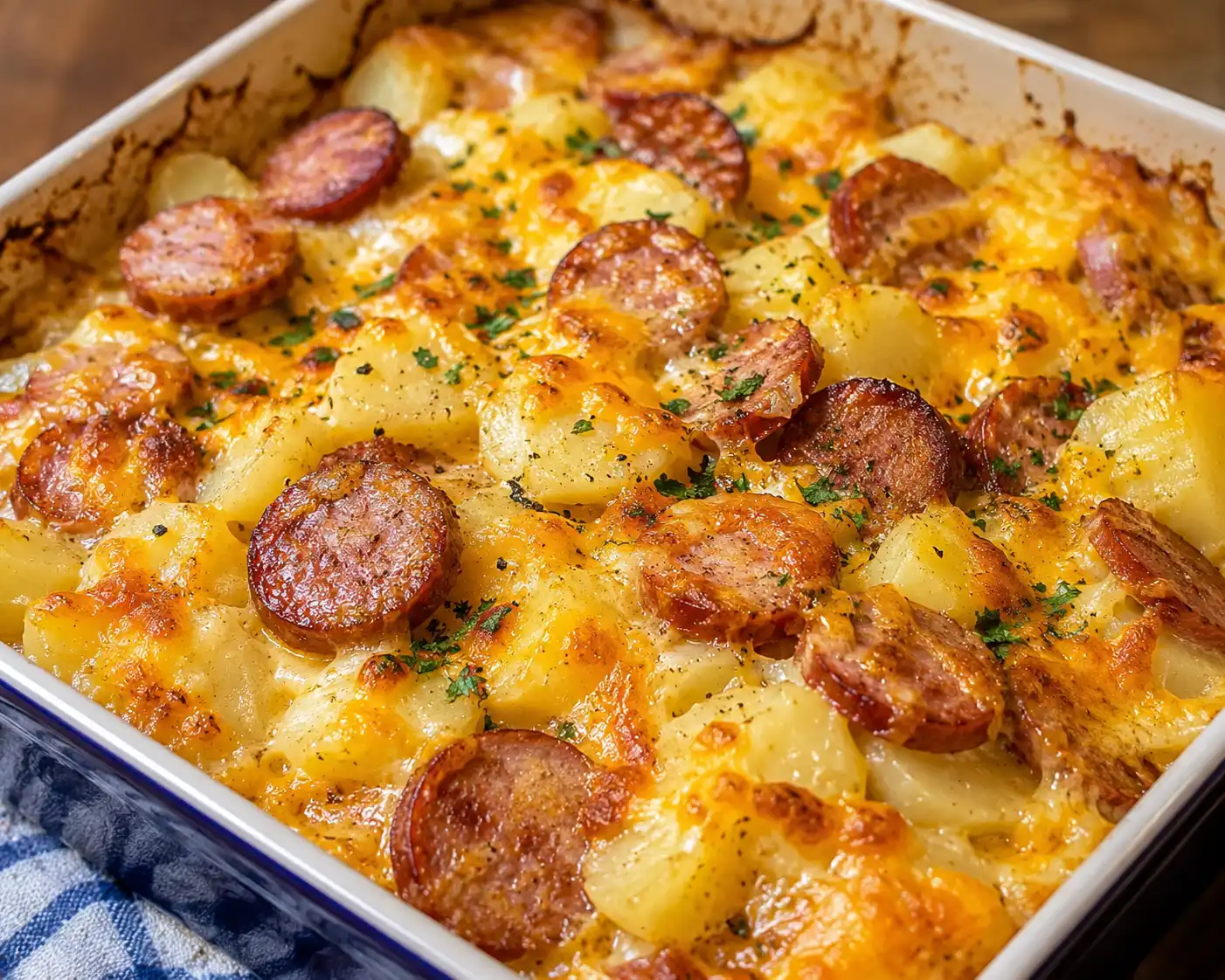
Welcome to a hearty, soul-warming masterpiece that brings together the bold, smoky richness of kielbasa sausage with the creamy comfort of golden potatoes and gooey, melty cheese—Kielbasa Sausage Cheesy Potato Casserole. This dish is more than just dinner; it’s a celebration of Polish-American culinary tradition fused with modern American casserole culture. Whether you’re feeding a hungry family after a long day, hosting a cozy Sunday supper, or preparing a make-ahead crowd-pleaser for potlucks and holiday gatherings, this casserole delivers on flavor, texture, and nostalgia—all in one generous, bubbling, golden-brown dish. With its layered symphony of savory smoked sausage, tender Yukon Gold or russet potatoes, caramelized onions, garlic-infused cream sauce, and a luxurious blend of sharp cheddar, creamy Gruyère, and tangy Parmesan, every bite offers depth, warmth, and unmistakable satisfaction. It’s rustic yet refined, simple to assemble yet impressive enough to serve at any occasion—and best of all, it reheats beautifully, making leftovers just as delicious as the first serving.
The History
The origins of Kielbasa Sausage Cheesy Potato Casserole lie at the crossroads of Eastern European heritage and mid-century American home cooking ingenuity. Kielbasa—derived from the Polish word *kłos*, meaning “sausage”—has been a staple in Slavic kitchens for centuries, traditionally made from coarsely ground pork (though beef, turkey, and veal variations exist), seasoned with garlic, marjoram, pepper, and sometimes smoked over hardwoods for robust depth. When Polish immigrants arrived in the United States in the late 19th and early 20th centuries, they brought their sausage-making traditions with them—particularly to industrial cities like Chicago, Buffalo, and Milwaukee—where kielbasa quickly gained popularity among broader communities.
Meanwhile, the American casserole emerged as a cultural phenomenon during the Great Depression and flourished post-WWII, driven by convenience, affordability, and the rise of canned soups, dairy products, and pre-sliced cheeses. Cooks began layering inexpensive, shelf-stable, and pantry-friendly ingredients into baking dishes—and potatoes, always a humble and nourishing cornerstone, became the perfect canvas. The marriage of kielbasa and potatoes was inevitable: both were economical, filling, and deeply rooted in working-class foodways. Over time, home cooks across the Midwest and Northeast began enriching the combination with sour cream, cream of mushroom soup (a mid-century hallmark), and generous shreds of cheddar—evolving into what we now recognize as the Kielbasa Sausage Cheesy Potato Casserole. Today, it stands proudly as a beloved regional classic—often served alongside rye bread, pickled vegetables, or a crisp green salad—and continues to evolve with artisanal sausages, farm-fresh dairy, and globally inspired seasonings.
Ingredients Breakdown
Every exceptional casserole begins with intentionality—knowing not just *what* goes in, but *why* each component matters. Here’s a detailed breakdown of the key ingredients and their functional and flavor roles:
- Kielbasa Sausage (1 lb, smoked, fully cooked): The savory anchor. Authentic Polish kielbasa—preferably coarse-ground, garlic-forward, and naturally smoked over hickory or oak—provides umami depth, subtle spice, and a satisfying chew. Avoid overly processed, sodium-laden versions; look for minimal ingredients (pork, water, salt, spices, natural smoke) and no artificial nitrates. Andouille or smoked chorizo can substitute for a spicier twist—but traditional kielbasa remains irreplaceable for authenticity.
- Potatoes (2.5 lbs, Yukon Gold preferred): The structural heart. Yukon Golds strike the ideal balance—waxy enough to hold shape when baked, yet creamy when cooked, with natural buttery sweetness that complements the sausage. Russets work well too (especially for ultra-creamy layers), but require careful parboiling to prevent disintegration. Red potatoes add color and firmness; fingerlings offer gourmet flair but need uniform slicing. Never skip rinsing and soaking cut potatoes—they shed excess starch, preventing gumminess and ensuring even layering.
- Cheeses (3 cups total, shredded): A carefully curated trio ensures complexity:
- Sharp Cheddar (1.5 cups): For bold, tangy backbone and superior meltability.
- Gruyère (1 cup): Adds nutty, earthy sophistication and silkiness—elevates the entire profile.
- Parmigiano-Reggiano (½ cup, freshly grated): Delivers salty, crystalline umami punch and golden crust formation.
- Aromatics & Flavor Builders: Yellow onion (1 large, finely diced), garlic (4 cloves, minced), and optional fennel bulb (½, thinly sliced) create aromatic depth. Sautéed until golden—not browned—they form the flavor foundation beneath the sausage and potatoes.
- Creamy Base (1.5 cups total): A luscious hybrid of whole milk (¾ cup), full-fat sour cream (½ cup), and Dijon mustard (1 tbsp) provides tang, richness, and binding power without heaviness. Heavy cream may replace milk for extra decadence; Greek yogurt works in a pinch (though slightly tarter).
- Herbs & Seasonings: Fresh thyme (1 tbsp chopped) and rosemary (1 tsp finely minced) lend woodsy elegance; smoked paprika (½ tsp) reinforces the kielbasa’s smokiness; white pepper (¼ tsp) adds gentle heat without visual specks. Kosher salt and black pepper are adjusted in stages—never added all at once—to build balanced seasoning.
- Optional Enhancements: A splash of dry white wine (¼ cup) deglazes the pan for extra savoriness; a handful of baby spinach or kale stirred in before baking adds nutrients and color; crispy fried shallots or toasted panko breadcrumbs (¼ cup + 2 tbsp melted butter) make a textural crown.
Step-by-Step Recipe
This meticulously crafted method ensures foolproof results—from prep to bake to rest. Follow each step closely for optimal texture, flavor integration, and browning.
- Prep & Preheat: Position oven rack in the center position. Preheat oven to 375°F (190°C). Generously grease a 9×13-inch ceramic or glass baking dish (not metal—it conducts heat too aggressively) with butter or nonstick spray. Set aside.
- Parboil Potatoes: Peel (optional—Yukon Gold skins are tender and nutrient-rich) and slice potatoes into ⅛-inch uniform rounds using a mandoline or sharp chef’s knife. Immediately submerge in cold water with 1 tbsp vinegar (to prevent oxidation). Bring a large pot of salted water to a boil. Drain and rinse potatoes, then add to boiling water. Simmer gently for 4–5 minutes—just until edges begin to soften but centers remain firm. Drain thoroughly in a colander; pat *very* dry with clean kitchen towels or paper towels. Excess moisture is the #1 cause of a soggy casserole.
- Sauté Aromatics & Sausage: In a large, heavy-bottomed skillet (cast iron preferred), heat 2 tbsp unsalted butter and 1 tbsp olive oil over medium heat. Add onions; cook 5–6 minutes until translucent. Add garlic and fennel (if using); stir 1 minute until fragrant. Push mixture to edges. Add kielbasa slices (½-inch thick, diagonal cuts for maximum surface area); sear undisturbed 2–3 minutes per side until deeply golden and slightly crisped. Remove sausage with slotted spoon; set aside on paper towel-lined plate. Reserve 1 tbsp rendered fat in pan (discard excess).
- Build Cream Sauce: Reduce heat to low. Whisk in 3 tbsp all-purpose flour into reserved fat; cook 1 minute to eliminate raw taste. Gradually whisk in milk, sour cream, Dijon, thyme, rosemary, smoked paprika, white pepper, 1 tsp kosher salt, and ½ tsp black pepper. Simmer gently 3–4 minutes, stirring constantly, until thickened to a velvety, coat-the-back-of-a-spoon consistency. Remove from heat. Stir in 1 cup cheddar and ½ cup Gruyère until melted and smooth. Let cool 5 minutes.
- Layer Thoughtfully: In prepared dish, spread ⅓ of potato slices in an even layer. Sprinkle with ⅓ of sautéed onions/garlic/fennel, ⅓ of seared kielbasa, and ¼ cup reserved cheese blend. Repeat twice more, ending with final potato layer. Pour warm cream sauce evenly over top, tilting dish gently to distribute. Gently press down with spatula to compact layers and eliminate air pockets.
- Top & Bake: Sprinkle remaining cheeses (½ cup cheddar, ½ cup Gruyère, ½ cup Parmigiano) evenly over surface. For golden crust, dot with 1 tbsp cold butter. Cover tightly with aluminum foil (tent slightly to prevent cheese sticking). Bake 45 minutes. Remove foil; bake uncovered 25–35 minutes more until top is deep golden, edges bubble vigorously, and internal temperature reaches 165°F (74°C) when tested with instant-read thermometer inserted into center.
- Rest & Serve: Crucial step! Let casserole rest 20–25 minutes before cutting. This allows starches to set, sauce to reabsorb, and layers to firm—ensuring clean, sliceable portions rather than a runny mess. Garnish with fresh chives, parsley, or microgreens.
Tips
- Uniformity Is Non-Negotiable: Use a mandoline slicer (with guard!) for perfectly even potato rounds. Uneven slices = uneven cooking = mushy spots next to crunchy ones.
- Dry Potatoes Religiously: After parboiling, lay slices in a single layer on clean towels and gently roll or press—don’t rub. Wet potatoes steam instead of bake, creating sogginess.
- Sear, Don’t Steam, the Sausage: Pat kielbasa dry before searing. High heat + space between pieces = Maillard reaction = complex flavor and textural contrast.
- Cool the Sauce Before Layering: Adding hot sauce to raw potatoes can prematurely cook them and release excess starch. Warm—not hot—is ideal.
- Understand Your Cheese Melting Points: Pre-shredded bagged cheeses contain anti-caking agents (like cellulose) that inhibit melting and create graininess. Always shred your own from a block.
- Bake in Glass or Ceramic—Not Metal: Metal pans heat faster and hotter, often burning the bottom before the center sets. If using metal, reduce temp to 350°F and extend covered time by 10 minutes.
- Rotate Midway Through Baking: Ovens have hot spots. Rotate dish 180° after 30 minutes covered to ensure even browning.
- Test Doneness Correctly: Don’t rely solely on visual cues. Insert thermometer into the deepest part—center, not edge. 165°F guarantees safety and ideal texture.
- Embrace the Rest: Skipping the rest period is the most common mistake. That 20-minute pause transforms the casserole from “delicious” to “restaurant-quality.”
- Make-Ahead Magic: Assemble up to 24 hours ahead—cover and refrigerate unbaked. Add 10–15 minutes to covered bake time if going straight from fridge to oven.
Variations and Customizations
This casserole is gloriously adaptable—whether accommodating dietary needs, seasonal produce, global flavors, or pantry constraints. Here are thoughtfully tested variations:
- Gluten-Free Version: Swap all-purpose flour for 3 tbsp sweet rice flour or certified GF 1:1 baking blend. Ensure kielbasa is GF-certified (some contain wheat fillers). Use GF Worcestershire or tamari in place of Dijon if needed.
- Low-Carb/Keto Adaptation: Replace potatoes with 2 lbs thinly sliced turnips, rutabaga, or cauliflower florets (parboil 2 minutes only). Increase cheese to 4 cups and add 2 eggs to sauce for binding. Bake same temp, but reduce covered time to 35 minutes.
- Vegetarian Twist: Omit kielbasa. Substitute 1.5 cups smoked tofu cubes (marinated in liquid smoke + soy sauce + maple syrup), 1 cup sautéed cremini mushrooms, and ½ cup caramelized leeks. Boost umami with 1 tbsp nutritional yeast in sauce.
- Spicy Southwest Style: Use spicy kielbasa or add 1 diced jalapeño (seeds removed) with onions. Stir 1 tsp chipotle powder and ½ cup roasted corn into sauce. Top with pepper jack and cotija instead of cheddar/Gruyère.
- Herb-Garden Fresh: Fold ¼ cup chopped dill, 2 tbsp lemon zest, and 1 tbsp capers into cooled sauce. Top with crumbled feta and fresh dill sprigs before baking.
- Breakfast Brunch Casserole: Add 6 whisked eggs and ½ cup half-and-half to sauce. Layer with cooked breakfast potatoes, kielbasa, and cheddar. Bake at 350°F for 55–65 minutes until set. Serve with hot sauce and avocado.
- Gourmet Mushroom & Truffle: Sauté 2 cups mixed wild mushrooms (oyster, shiitake, hen-of-the-woods) in butter until golden. Deglaze with ¼ cup dry sherry. Fold into sauce with 1 tsp white truffle oil (added *after* baking).
- Apple-Kielbasa Sweet-Savory: Thinly slice 1 tart apple (Honeycrisp or Granny Smith); sauté with onions. Add 1 tbsp brown sugar and ½ tsp cinnamon to sauce. Top with aged Gouda and toasted walnuts.
- Instant Pot / Pressure Cooker Shortcut: Sauté aromatics and sausage in IP on Sauté mode. Add parboiled potatoes and sauce. Seal lid, cook on Manual/High Pressure 8 minutes. Quick release, top with cheese, broil 3 minutes.
- Sheet Pan Roast (Crispy Alternative): Toss potato rounds, kielbasa chunks, and onions with oil, smoked paprika, and herbs. Roast at 425°F for 30 minutes. Stir in cheese and sour cream mixture; broil 4 minutes until bubbly.
Health Considerations and Nutritional Value
While undeniably indulgent, this casserole can be part of a balanced diet when enjoyed mindfully—and small tweaks significantly improve its nutritional profile without sacrificing satisfaction. A standard 12-serving batch (9×13 dish) yields approximately:
- Per Serving (1/12th): ~420–480 calories | 22–26g protein | 28–32g carbohydrates (of which 3–4g fiber) | 26–30g total fat (13–15g saturated) | 720–950mg sodium | 45–60mg cholesterol | Rich in Vitamin B12, potassium, selenium, calcium, and antioxidants from garlic/onions/thyme.
Smart Swaps for Health-Conscious Cooks:
- Lower Sodium: Choose low-sodium kielbasa (check labels—many contain >800mg sodium per serving) or make your own. Reduce added salt by 50%; boost flavor with lemon zest, smoked sea salt flakes, or herb blends.
- Heart-Healthy Fats: Replace half the butter with extra-virgin olive oil. Use reduced-fat cheddar (but retain full-fat Gruyère/Parm for flavor integrity).
- Fiber & Phytonutrient Boost: Leave potato skins on (adds 2g fiber/serving). Mix in 1 cup shredded zucchini or spinach (squeeze dry!) for vitamins A/C/K and folate.
- Protein Optimization: Kielbasa contributes high-quality complete protein—but also contains nitrates. Opt for nitrate-free, pasture-raised options. Pair with a side of lentil salad or roasted chickpeas for plant-based protein synergy.
- Portion Mindfulness: Serve in 1-cup portions alongside a large mixed greens salad with vinaigrette. This balances macros and adds volume without excess calories.
- Consider Glycemic Load: Yukon Golds have moderate GI (~54); pairing with protein/fat (kielbasa, cheese) slows glucose absorption—making this more blood-sugar friendly than carb-only dishes.
Who Should Modify or Limit? Those managing hypertension should monitor sodium closely. Individuals with lactose intolerance may tolerate aged cheeses (Gruyère, Parmesan) better than younger cheeses—but consider lactase enzyme supplements or lactose-free dairy alternatives. Gluten-sensitive folks must verify sausage and flour sources. Always consult a registered dietitian for personalized guidance.
Ingredients
- 1 pound smoked Polish kielbasa sausage, sliced ½-inch thick on the diagonal
- 2.5 pounds Yukon Gold potatoes (about 6–7 medium), peeled or unpeeled, thinly sliced ⅛-inch thick
- 1 large yellow onion, finely diced
- 4 cloves garlic, minced
- ½ small fennel bulb, very thinly sliced (optional but recommended)
- 3 tablespoons unsalted butter
- 1 tablespoon olive oil
- 3 tablespoons all-purpose flour (or gluten-free 1:1 blend)
- ¾ cup whole milk
- ½ cup full-fat sour cream
- 1 tablespoon Dijon mustard
- 1 tablespoon fresh thyme leaves, chopped
- 1 teaspoon fresh rosemary, finely minced
- ½ teaspoon smoked paprika
- ¼ teaspoon freshly ground white pepper
- 1 teaspoon kosher salt (plus more to taste)
- ½ teaspoon freshly ground black pepper
- 2 cups shredded sharp cheddar cheese
- 1 cup shredded Gruyère cheese
- ½ cup freshly grated Parmigiano-Reggiano cheese
- 1 tablespoon cold unsalted butter, diced (for topping)
- Fresh chives or parsley, for garnish
Directions
- Preheat oven to 375°F (190°C). Grease a 9×13-inch ceramic or glass baking dish with butter or nonstick spray.
- Place potato slices in a large bowl of cold water with 1 tablespoon white vinegar. Let soak 10 minutes. Drain and rinse. In a large pot of salted water, bring to a boil. Add potatoes and simmer gently for 4–5 minutes—just until slightly tender at edges. Drain thoroughly in a colander, then pat *extremely* dry with clean kitchen towels.
- In a large skillet over medium heat, melt butter with olive oil. Add onions and cook 5–6 minutes until soft and translucent. Stir in garlic and fennel; cook 1 minute more. Push to edges of pan. Add kielbasa slices in a single layer; sear 2–3 minutes per side until golden brown and slightly crisp. Transfer to a paper towel-lined plate. Reserve 1 tablespoon fat in pan; discard excess.
- Reduce heat to low. Whisk flour into reserved fat; cook 1 minute. Gradually whisk in milk, sour cream, Dijon, thyme, rosemary, smoked paprika, white pepper, 1 tsp salt, and ½ tsp black pepper. Simmer gently 3–4 minutes, whisking constantly, until thickened to a velvety sauce. Remove from heat. Stir in 1 cup cheddar and ½ cup Gruyère until melted and smooth. Cool 5 minutes.
- In prepared baking dish, layer ⅓ potatoes, ⅓ onion-garlic-fennel mixture, ⅓ kielbasa, and ¼ cup cheese blend. Repeat two more times. Pour warm sauce evenly over top. Gently press down with spatula.
- Sprinkle remaining cheeses (½ cup cheddar, ½ cup Gruyère, ½ cup Parmigiano) over surface. Dot with cold butter. Cover tightly with foil (tent slightly).
- Bake covered 45 minutes. Remove foil; bake uncovered 25–35 minutes until top is deep golden and bubbling at edges. Internal temp should read 165°F (74°C).
- Let rest 20–25 minutes before slicing. Garnish with fresh chives or parsley. Serve warm.
FAQ
- Can I use raw kielbasa?
- No—traditional kielbasa is fully cooked and smoked. Using raw sausage risks undercooking or greasiness. If you only have raw Polish sausage (biała kiełbasa), parboil it 15 minutes first, then slice and sear.
- Why do my potatoes turn gray or black?
- This is enzymatic oxidation—harmless but unappealing. Soak in cold water + vinegar or lemon juice immediately after slicing. Keep submerged until ready to use.
- Can I freeze this casserole?
- Yes! Assemble unbaked, cover tightly with plastic wrap + foil, and freeze up to 3 months. Thaw overnight in fridge, then bake as directed—add 10–15 minutes to covered time.
- What’s the best cheese substitute for Gruyère?
- Emmental, Jarlsberg, or Comté offer similar nuttiness and melt. Avoid Swiss—it’s too mild and watery. Fontina works in a pinch.
- My casserole is watery. What went wrong?
- Most likely: potatoes weren’t dried thoroughly, sauce wasn’t thickened enough, or dish was cut too soon. Also check for over-layered sauce—stick to the 1.5-cup total liquid guideline.
- Can I make this dairy-free?
- Yes—with caveats. Use unsweetened cashew cream (soaked + blended) instead of milk/sour cream; coconut-based cheddar shreds (Violife or Daiya); and nutritional yeast for umami. Texture will be softer, but flavor remains rich.
- How do I reheat leftovers without drying them out?
- Individual portions: Cover with damp paper towel; microwave 60–90 seconds. Full dish: Cover with foil; bake at 325°F for 20–25 minutes. Add 1–2 tbsp broth or milk before reheating if dry.
- Is there a slow cooker version?
- Not ideal—the prolonged moist heat makes potatoes mushy and cheese greasy. Stick to oven or Instant Pot methods for best texture.
- Can I add vegetables like broccoli or carrots?
- Absolutely! Blanch 1 cup broccoli florets or 1 cup julienned carrots for 2 minutes; drain and pat dry. Layer with potatoes. Avoid watery veggies like tomatoes or zucchini unless thoroughly squeezed.
- What wine pairs well with this casserole?
- A chilled, high-acid Riesling (off-dry) cuts through richness. For red lovers, try a fruit-forward Pinot Noir or earthy Beaujolais Villages. Non-alcoholic: Sparkling apple cider or ginger-kombucha mocktail.
Summary
Kielbasa Sausage Cheesy Potato Casserole is a masterclass in comforting, layered flavor—where smoky, garlicky kielbasa meets creamy, golden potatoes and a triple-cheese crescendo of cheddar, Gruyère, and Parmigiano, all bound in a velvety, herb-kissed cream sauce and crowned with a crackling, buttery crust.
It honors its Polish-American roots while inviting endless creativity—from keto swaps and vegetarian reinventions to globally inspired twists—making it equally at home on weeknight tables, holiday buffets, and freezer-to-oven meal prep routines.