Introduction
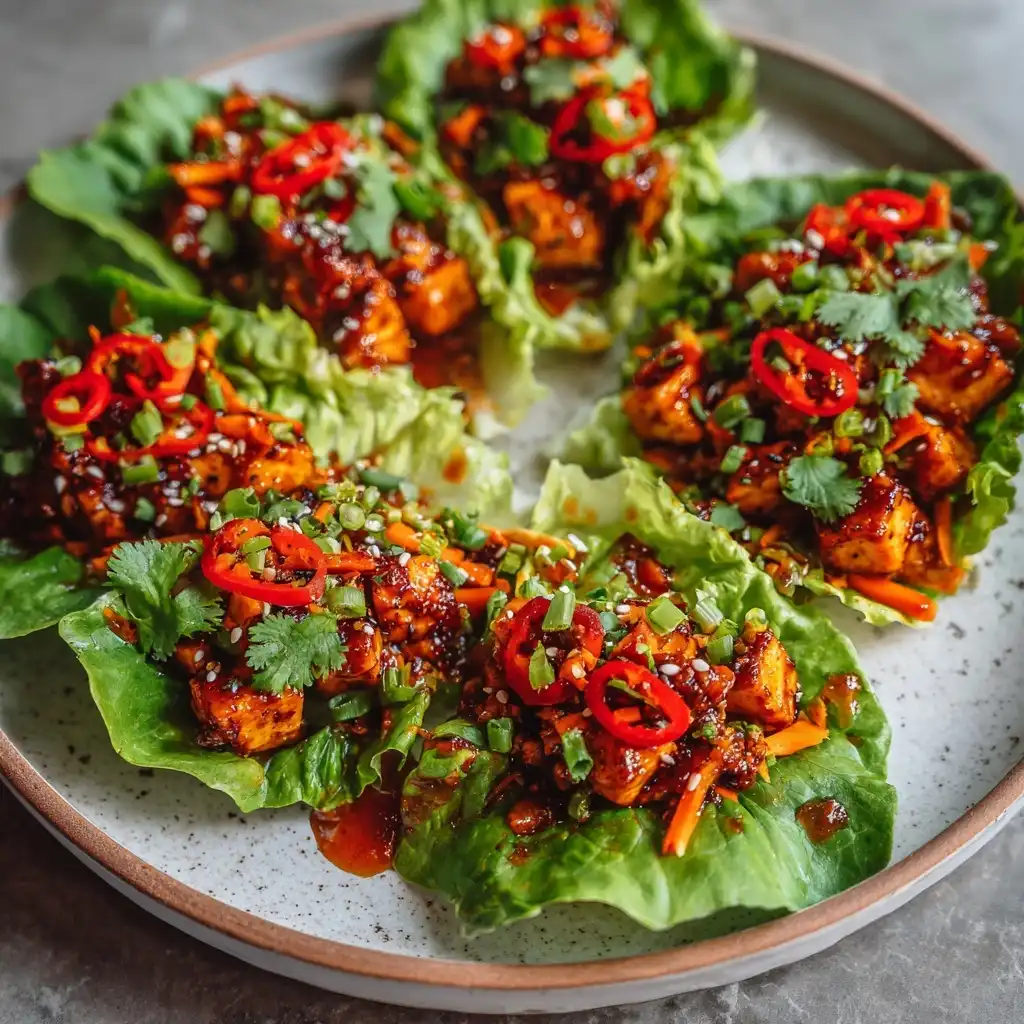
Welcome to the vibrant, bold, and refreshingly balanced world of Korean Spicy Tofu Lettuce Wraps — a modern fusion dish that marries the deep umami richness of Korean gochujang with the delicate creaminess of silken or soft tofu, all nestled in crisp, cool butter lettuce cups. This dish is more than just a meal; it’s an experience — a textural symphony of spicy-sweet heat, savory depth, cooling freshness, and subtle nuttiness. Perfect for weeknight dinners, potlucks, meal prep, or even elegant appetizers, these wraps are naturally plant-based, gluten-free (with certified tamari), low in calories yet high in protein and flavor, and endlessly adaptable to personal taste and dietary needs. Whether you’re a longtime Korean food enthusiast or new to the cuisine, this recipe invites you to explore the art of balance — where fiery heat meets soothing crunch, and tradition dances effortlessly with contemporary wellness.
The History
The Korean Spicy Tofu Lettuce Wrap is a contemporary culinary evolution rooted in centuries-old Korean traditions. At its core lies soondubu jjigae — a beloved Korean soft tofu stew known for its silky texture and complex spicy-savory broth — and ssam, the ancient Korean practice of wrapping grilled meats, fermented vegetables, and seasonings in leafy greens like red leaf lettuce, perilla (kkaennip), or steamed cabbage. Ssam was historically consumed during royal banquets and ancestral rites as a symbol of harmony, health, and respect for seasonal ingredients. In the 20th century, Korean-American chefs and home cooks began reimagining ssam with accessible, plant-forward proteins — notably tofu — especially as vegetarianism and flexitarian lifestyles gained traction across the U.S. and global food scenes. The addition of gochujang — Korea’s iconic fermented chili paste, documented as early as the Joseon Dynasty (1392–1897) — provided both authenticity and depth. Modern iterations, popularized by Korean fusion restaurants in Los Angeles, New York, and Seoul’s Hongdae district, elevated the concept by lightening the stew into a saucy, stir-fried tofu filling, emphasizing freshness, texture contrast, and visual appeal. Today, this wrap stands as a testament to Korean culinary philosophy: bo-yeok (nourishment), jeong (affectionate care in preparation), and dan (simplicity with intention).
Ingredients Breakdown
Every component in this dish plays a deliberate role — from fermentation-driven depth to enzymatic brightness — forming a holistic, layered flavor profile:
- Gochujang: Fermented Korean chili paste made from red chili powder, glutinous rice, soybeans, and salt. Its slow fermentation (often 6+ months) develops rich umami, gentle sweetness, and complex funk — the irreplaceable soul of the dish. Look for brands like Chung Jung One, Sunchang, or organic gochujang without added corn syrup for cleaner flavor.
- Soft or Silken Tofu: Unpressed, water-packed tofu with a custard-like tenderness. Its neutral base absorbs marinades beautifully while contributing essential plant-based protein (about 8g per ½ cup) and calcium. Silken tofu offers silkier texture; soft tofu holds slightly more structure when gently folded.
- Asian Pear (or Bosc Pear): A secret weapon — finely grated, it adds natural fructose for subtle sweetness, tenderizing enzymes (like bromelain analogs), and bright, floral acidity that cuts through spice and enhances gochujang’s complexity. A hallmark of premium Korean marinades and sauces.
- Garlic & Ginger: Freshly minced or grated — not powdered. Garlic contributes allicin (a potent antioxidant), while ginger’s zingy, warming compounds (gingerols) aid digestion and elevate aromatic lift.
- Toasted Sesame Oil: Cold-pressed, unrefined oil added *off-heat* to preserve its volatile, nutty-aromatic compounds. It carries scent molecules that bind to saliva proteins, amplifying perceived richness and mouthfeel.
- Lettuce Cups: Butter lettuce (Bibb or Boston) is ideal — tender, cup-shaped leaves with high water content (95%) that cool the palate and provide crisp contrast. Romaine hearts offer sturdier structure; red leaf adds peppery nuance; oak leaf lends delicate earthiness.
- Scallions & Toasted Sesame Seeds: Fresh scallion greens deliver sulfurous brightness and visual pop; toasted white sesame seeds add crunch, lignans (phytoestrogens linked to heart health), and roasted nuttiness that rounds out heat.
- Rice Vinegar & Mirin: Rice vinegar (unseasoned) provides clean, mild acidity to balance gochujang’s intensity; mirin (low-alcohol sweet rice wine) contributes subtle sweetness, gloss, and depth — its amino acids interact with gochujang’s proteins to create a velvety, cohesive sauce.
- Certified Gluten-Free Tamari or Soy Sauce: Aged, naturally brewed tamari delivers deep, rounded savoriness (rich in free glutamic acid) without wheat — essential for gluten-sensitive diners and cleaner umami.
Each ingredient is chosen not only for taste but for functional synergy — acidity balances fat, sweetness tempers heat, crunch offsets creaminess, and fermentation supports gut microbiome diversity.
Step-by-Step Recipe
- Prep the Tofu: Gently drain silken or soft tofu from its packaging. Place on several layers of paper towels or a clean kitchen towel. Cover with more towels and press lightly with a flat plate or cutting board for 5–7 minutes — just enough to remove excess surface water (do NOT squeeze or crumble). Cut into ¾-inch cubes and set aside on a dry plate.
- Prepare the Aromatics & Fruit: Finely mince 3 cloves of garlic and 1 tablespoon fresh ginger. Grate ¼ small Asian pear (about 2 tbsp) using the fine side of a box grater — include juice. Strain grated pear through a fine-mesh sieve, reserving the fragrant, cloudy juice.
- Build the Sauce Base: In a small bowl, whisk together 3 tbsp gochujang, 1 tbsp tamari, 1 tbsp rice vinegar, 1 tbsp mirin, 1 tsp brown sugar (optional, for extra caramel notes), and the reserved Asian pear juice. Set aside.
- Sauté Aromatics: Heat 1 tsp neutral oil (like grapeseed or avocado) in a nonstick or well-seasoned cast-iron skillet over medium-low heat. Add minced garlic and ginger; stir constantly for 45–60 seconds until fragrant but not browned (burnt garlic turns bitter).
- Incorporate Sauce & Simmer: Pour in the gochujang mixture. Cook, stirring continuously, for 2 minutes until thickened slightly and deeply aromatic — the raw edge of gochujang will mellow, and the sauce will darken and glisten.
- Introduce Tofu Gently: Reduce heat to low. Carefully fold in the drained tofu cubes using a silicone spatula or wooden spoon. Use a folding motion — not stirring — to avoid breaking curds. Cook for 4–5 minutes, gently turning and coating each piece, allowing the sauce to cling and infuse without collapsing texture.
- Finish & Rest: Remove from heat. Stir in 1 tsp toasted sesame oil and 1 tsp toasted sesame seeds. Let rest 2 minutes — this allows flavors to meld and tofu to absorb residual warmth without overcooking.
- Assemble the Wraps: Wash and dry butter lettuce leaves thoroughly. Arrange 2–3 leaves per serving on a platter. Spoon 2–3 tbsp warm tofu mixture into each cup. Top with thinly sliced scallion greens, additional toasted sesame seeds, and optional garnishes (see Variations).
- Serve Immediately: Present wraps family-style with small bowls of extras — extra sauce, kimchi, pickled radish, or chili threads — encouraging interactive, customizable dining.
Tips
- Pressing Matters — But Don’t Overdo It: Too much pressure crushes silken tofu; too little leaves water that dilutes sauce. Light towel-pressing strikes the ideal balance — you want tofu moist but not weeping.
- Low & Slow Is Non-Negotiable: High heat causes gochujang to scorch and turn acrid. Medium-low ensures Maillard reactions develop richness without bitterness.
- Toast Your Own Sesame Seeds: Pre-toasted seeds often taste stale or oily. Dry-toast white sesame seeds in a pan over medium-low heat for 2–3 minutes, shaking constantly, until golden and fragrant. Cool before using.
- Chill Lettuce Leaves: Store washed, spun-dry lettuce in an airtight container lined with a damp paper towel. Refrigerate 30+ minutes before serving — cold leaves heighten contrast and prevent wilting upon contact with warm filling.
- Reserve Pear Juice — Don’t Skip It: The enzymatic liquid is key to tenderizing and balancing heat. If Asian pear isn’t available, substitute 1 tsp apple juice + ¼ tsp grated green apple flesh (strained).
- Use a Silicone Spatula: Its flexibility prevents scratching nonstick surfaces and allows gentle folding that preserves tofu integrity.
- Taste Before Serving: Adjust with a splash of rice vinegar for brightness, a pinch of sugar for roundness, or a drop of toasted sesame oil for aroma — seasoning is dynamic, not static.
- Make-Ahead Friendly: Sauce base (without tofu) keeps refrigerated for 5 days. Cooked tofu filling stays delicious for 3 days chilled — gently reheat in a skillet with 1 tsp water to restore silkiness.
Variations and Customizations
This recipe is inherently modular — designed to reflect your pantry, preferences, and occasion. Here are thoughtfully curated adaptations:
- Protein-Powered: Fold in ½ cup crumbled baked tofu, marinated tempeh cubes, or finely chopped shiitake mushrooms sautéed in sesame oil and tamari for extra meaty bite and B12 (in tempeh).
- Vegetable-Forward: Add ½ cup julienned zucchini, shredded carrots, or blanched snow peas during the last 2 minutes of tofu cooking for color, crunch, and micronutrient density (vitamin A, C, K).
- Extra Heat Lovers: Stir in ½ tsp gochugaru (Korean chili flakes) with aromatics, or top wraps with homemade yangnyeom (spicy-sweet chili threads) or a drizzle of gochujang-thinned chili oil.
- Umami Bomb: Add 1 tsp nutritional yeast or ½ tsp dried kombu powder to the sauce for deep, savory depth — especially welcome in vegan versions.
- Fermentation Boost: Mix in 1 tbsp finely chopped quick-pickled cucumbers (oi sobaegi style) or 1 tsp aged kimchi brine for probiotic tang and effervescence.
- Grain-Inclusive: Serve alongside or inside wraps: warm black rice, short-grain brown rice, or quinoa for added fiber and sustained energy.
- Low-Sodium Option: Replace tamari with coconut aminos (lower sodium, mild sweetness) and reduce gochujang to 2 tbsp — compensate with ½ tsp miso paste for fermented savoriness.
- Kid-Friendly Mild Version: Substitute gochujang with 1 tbsp tomato paste + 1 tsp maple syrup + ½ tsp smoked paprika + ¼ tsp cayenne (adjust to taste); omit garlic/ginger or reduce by half.
- Luxury Upgrade: Garnish with edible chrysanthemum petals, yuzu kosho (citrus-chili paste), or a whisper of truffle-infused sesame oil.
- Meal Prep Pack: Portion lettuce cups and tofu filling separately in bento boxes with dividers. Assemble just before eating to maintain crispness and texture integrity.
Health Considerations and Nutritional Value
A single serving (2 large butter lettuce cups filled with ~¾ cup tofu mixture) delivers approximately:
- Calories: 180–210 kcal — remarkably satiating for its caloric load due to high water, fiber, and protein content.
- Protein: 12–14g — complete plant-based protein from tofu, supporting muscle maintenance, enzyme function, and satiety hormones (leptin, PYY).
- Fiber: 3–4g — primarily from lettuce, scallions, and optional veggies — promotes digestive regularity, gut microbiota diversity, and postprandial glucose stability.
- Healthy Fats: 9–11g — predominantly monounsaturated (sesame oil, tofu) and polyunsaturated (omega-3 ALA from sesame seeds), supporting cardiovascular and cognitive health.
- Vitamins & Minerals: Rich in calcium (tofu fortified with calcium sulfate), iron (non-heme, enhanced by vitamin C from pear/scallions), vitamin K (lettuce), vitamin C (pear, scallions), and B vitamins (fermented gochujang, sesame).
- Functional Compounds: Contains isoflavones (genistein, daidzein) from soy — associated with reduced inflammation, improved endothelial function, and bone density support; capsaicin from gochujang — shown to boost metabolism and possess anti-inflammatory properties; gingerols — proven anti-nausea and antioxidant agents.
Dietary Accommodations: Naturally vegan, vegetarian, dairy-free, egg-free, and nut-free. Easily made gluten-free with certified tamari. Low-FODMAP compliant when using firm tofu (instead of silken) and omitting garlic/ginger (substitute garlic-infused oil and ginger powder, used sparingly). Ideal for Mediterranean, DASH, and anti-inflammatory diets. Note: Those with soy allergies should substitute with mashed white beans or lentils blended with gochujang and pear — though texture and nutrition will differ.
Ingredients
- 1 (12–14 oz) package soft or silken tofu, water-packed
- 3 cloves garlic, finely minced
- 1 tbsp fresh ginger, finely grated
- ¼ small Asian pear (about 2 tbsp grated + juice)
- 3 tbsp gochujang (Korean fermented chili paste)
- 1 tbsp certified gluten-free tamari or soy sauce
- 1 tbsp unseasoned rice vinegar
- 1 tbsp mirin (Japanese sweet rice wine)
- 1 tsp brown sugar (optional, for depth)
- 1 tsp neutral cooking oil (grapeseed, avocado, or refined coconut)
- 1 tsp toasted sesame oil (added off-heat)
- 1 tsp toasted white sesame seeds, plus more for garnish
- 8–12 large butter lettuce leaves (Bibb or Boston), washed, dried, and chilled
- 2–3 scallions, thinly sliced (green parts only)
Directions
- Gently drain tofu and pat dry with paper towels. Cut into ¾-inch cubes and set aside.
- Grate Asian pear using fine side of grater; strain juice through fine-mesh sieve into small bowl. Reserve juice and discard pulp.
- In same bowl, whisk together gochujang, tamari, rice vinegar, mirin, and brown sugar (if using). Stir in reserved pear juice. Set sauce aside.
- Heat neutral oil in skillet over medium-low heat. Add garlic and ginger; cook 45–60 seconds until fragrant.
- Pour in sauce mixture. Cook 2 minutes, stirring constantly, until thickened and glossy.
- Reduce heat to low. Gently fold in tofu cubes using folding motion. Cook 4–5 minutes, turning carefully, until tofu is heated through and fully coated.
- Remove from heat. Stir in toasted sesame oil and 1 tsp toasted sesame seeds. Let rest 2 minutes.
- Arrange chilled lettuce leaves on serving platter. Spoon warm tofu mixture into each cup.
- Garnish generously with scallion greens and additional toasted sesame seeds.
- Serve immediately with optional sides: kimchi, pickled radish, steamed rice, or extra gochujang sauce.
FAQ
- Can I use firm or extra-firm tofu?
- Yes — but texture and absorption change significantly. Firm tofu must be pressed longer (15–20 mins) and benefits from light pan-searing first to develop crust and absorb sauce better. Silken/soft tofu yields authentic, melt-in-mouth tenderness central to the traditional experience.
- Is gochujang gluten-free?
- Traditional gochujang contains barley or wheat, but many modern brands (e.g., Chung Jung One Organic, Mother-in-Law’s, Wild Garden) are certified gluten-free. Always check labels — especially if serving celiac guests.
- Can I make this oil-free?
- Absolutely. Replace neutral oil with 2 tbsp water or unsalted vegetable broth for sautéing aromatics. The dish remains flavorful — though toasted sesame oil (added off-heat) is highly recommended for aroma and mouthfeel.
- How do I store leftovers?
- Store tofu filling and lettuce separately in airtight containers. Filling keeps 3 days refrigerated; lettuce stays crisp 2–3 days chilled. Reheat filling gently in skillet with 1 tsp water to revive texture. Never microwave lettuce — it becomes rubbery.
- What if I can’t find Asian pear?
- Substitute with 1 tbsp grated green apple + 1 tsp apple juice, or 1 tsp ripe banana puree + ¼ tsp lemon juice for sweetness and tenderizing enzymes. Avoid overly tart pears like Bartlett.
- Can I freeze this dish?
- Not recommended. Freezing breaks down tofu’s delicate protein matrix, resulting in grainy, watery texture upon thawing. Sauce base (without tofu) freezes well for up to 3 months.
- Why does my gochujang taste bitter?
- Likely due to high heat scorching. Gochujang contains sugars and fermented proteins that caramelize quickly. Always cook over medium-low and stir constantly. If bitterness occurs, balance with ½ tsp maple syrup and 1 tsp rice vinegar.
- Are there low-sodium alternatives to tamari?
- Yes — coconut aminos (65% less sodium than soy sauce), liquid aminos (check label for sodium), or a blend of ½ tsp miso paste + 1 tbsp water. All add umami without overwhelming salt.
- Can I make this kid-friendly?
- Easily! Reduce gochujang to 1 tbsp, add 1 tsp maple syrup and ½ tsp tomato paste for familiar sweetness and depth, and serve with mild dipping sauce (e.g., yogurt-gochujang swirl). Let kids assemble their own wraps — it encourages veggie acceptance.
- What’s the best lettuce for texture and stability?
- Butter lettuce is ideal — pliable yet sturdy, with high water content and mild sweetness. For stronger structure, try romaine hearts. Avoid iceberg — too watery and bland; avoid spinach — too delicate and bitter when paired with bold sauce.
Summary
Korean Spicy Tofu Lettuce Wraps are a masterclass in culinary balance — marrying the fermented depth of gochujang, the silken tenderness of soft tofu, the bright sweetness of Asian pear, and the cooling crispness of butter lettuce into a nourishing, vibrant, and deeply satisfying plant-forward meal.
Rooted in centuries-old Korean traditions of ssam and soondubu, this modern interpretation celebrates accessibility, adaptability, and intentional wellness — delivering bold flavor, functional nutrition, and joyful customization in every colorful, hand-held bite.