Introduction
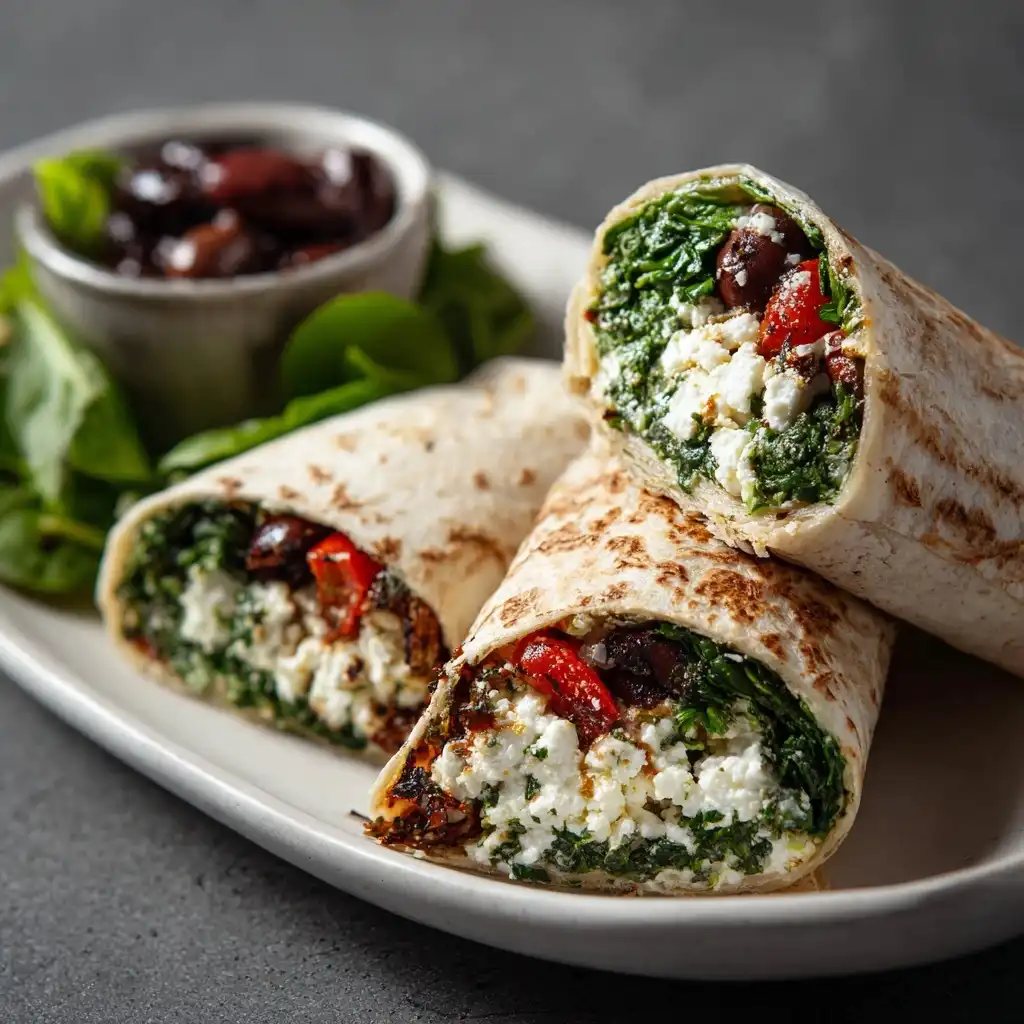
The Mediterranean Spinach Feta Wrap is a vibrant, nutrient-dense handheld meal that captures the sun-kissed essence of coastal Greece, Turkey, Lebanon, and Southern Italy—all in one satisfying, portable package. More than just a quick lunch option, this wrap embodies the heart and soul of the Mediterranean diet: fresh vegetables, briny cheeses, aromatic herbs, heart-healthy fats, and bold, balanced flavors. Whether you’re packing it for work, serving it at a summer picnic, or enjoying it as a light yet deeply flavorful dinner, this wrap delivers freshness, texture, and authenticity without compromising on convenience. Its versatility makes it ideal for meal prep, dietary customization, and crowd-pleasing versatility—equally at home on a yoga studio café menu or a family kitchen counter.
The History
While the modern “wrap” format—as a soft flatbread encasing fillings—gained global popularity in the late 20th century (with roots in Mexican burritos, Middle Eastern shawarma, and Indian paratha rolls), the spirit of the Mediterranean Spinach Feta Wrap stretches back millennia. Spinach, though native to Persia and later introduced to the Mediterranean via Arab agricultural expansion in the 9th–10th centuries, became a staple green across the region by the Renaissance. Feta cheese, protected under EU PDO (Protected Designation of Origin) status since 2002, has been crafted in Greece for over 3,000 years—traditionally made from sheep’s milk (or a blend of sheep and goat) and aged in brine, lending its signature tangy, salty, crumbly character. The marriage of spinach and feta appears historically in Greek spanakopita (spinach and feta pie), dating to at least the Byzantine era, where phyllo-wrapped layers celebrated seasonal greens and local dairy. The addition of cucumbers, tomatoes, red onion, olives, and lemon-tahini dressing reflects Levantine mezze traditions—think Lebanese tabbouleh and Turkish çoban salatası (shepherd’s salad)—where raw vegetables are treated with reverence and acidity. The wrap format itself represents a delicious fusion evolution: honoring ancient ingredients while adapting to contemporary lifestyles—proof that tradition doesn’t need to be static to remain meaningful.
Ingredients Breakdown
Every ingredient in this wrap serves a functional, sensory, and nutritional purpose—no filler, no afterthoughts. Here’s why each component matters:
- Whole-Wheat or Sprouted Grain Tortillas: Provide complex carbohydrates, fiber (3–5g per tortilla), B vitamins, and sustained energy. Sprouted varieties enhance digestibility and increase bioavailability of iron, zinc, and antioxidants.
- Fresh Baby Spinach: A nutritional powerhouse—rich in vitamin K (over 100% DV per cup), folate, magnesium, lutein, and nitrates that support vascular health. Its tender leaves hold up beautifully without wilting or bleeding.
- Crumbled Feta Cheese (PDO-certified preferred): Delivers creamy saltiness, probiotics (from traditional brining), calcium, and conjugated linoleic acid (CLA). Authentic Greek feta offers superior flavor depth and less sodium than many domestic imitations.
- Cucumber (English or Persian): Adds cool crunch and hydration (96% water), plus silica for skin and joint health, and flavonoids with anti-inflammatory properties.
- Cherry Tomatoes (halved or quartered): Burst with lycopene—a potent antioxidant enhanced by minimal heat exposure or olive oil pairing—and vitamin C for immune resilience.
- Red Onion (thinly sliced & soaked): Offers quercetin (a flavonoid linked to reduced allergy and cardiovascular inflammation) and prebiotic fibers. Soaking in cold water or lemon juice tames sharpness while preserving enzymatic benefits.
- Kalamata Olives (pitted): A cornerstone of Mediterranean fat intake—rich in monounsaturated oleic acid, polyphenols like oleuropein (shown to support healthy blood pressure), and natural sodium for electrolyte balance.
- Fresh Dill & Mint: Not mere garnishes—these herbs contain rosmarinic acid and menthol derivatives with documented antioxidant, antimicrobial, and digestive-soothing effects. Their brightness cuts through richness and elevates aroma.
- Lemon-Tahini Dressing: Combines cold-pressed extra virgin olive oil (polyphenol-rich), freshly squeezed lemon juice (vitamin C + citric acid for iron absorption), raw tahini (sesame seed paste rich in copper, zinc, and lignans), garlic (allicin precursor), and a touch of maple syrup or date paste (for pH balance and subtle sweetness). This emulsified sauce binds textures while boosting phytonutrient synergy.
- Optional Additions: Toasted pine nuts (magnesium + vitamin E), crumbled roasted red peppers (capsaicin + vitamin A), marinated artichoke hearts (fiber + cynarin), or a sprinkle of sumac (tart, antioxidant-rich Middle Eastern spice).
Step-by-Step Recipe
- Prep the Vegetables (10 minutes): Wash and thoroughly dry baby spinach. Halve cherry tomatoes. Thinly slice ¼ medium red onion and soak in ice water with 1 tsp lemon juice for 5 minutes—then drain and pat dry. Slice ½ English cucumber into thin half-moons. Pit and halve 8–10 Kalamata olives. Roughly chop 2 tbsp fresh dill and 1 tbsp fresh mint.
- Make the Lemon-Tahini Dressing (5 minutes): In a small bowl, whisk together 3 tbsp well-stirred tahini, 2 tbsp fresh lemon juice, 1½ tbsp extra virgin olive oil, 1 small minced garlic clove, ½ tsp pure maple syrup or date paste, ¼ tsp ground cumin (optional but recommended), and 2–3 tbsp ice-cold water until smooth, creamy, and pourable. Season with a pinch of flaky sea salt and freshly cracked black pepper. Set aside.
- Warm the Tortillas (2 minutes): Heat a dry stainless steel or cast-iron skillet over medium-low heat. Warm each tortilla for ~20 seconds per side—just enough to make them pliable and slightly fragrant, not crispy. Stack wrapped in a clean kitchen towel to retain steam and flexibility.
- Assemble with Intention (3 minutes per wrap): Lay a warm tortilla flat. Spread 1½ tbsp lemon-tahini dressing in an even layer, leaving a 1-inch border. Scatter 1 generous cup of spinach evenly over the center. Top with ¼ cup cherry tomatoes, 2 tbsp cucumber, 1 tbsp red onion, 6–7 olives, 3 tbsp crumbled feta, and herbs. Drizzle with an additional ½ tsp dressing.
- Roll with Precision (1 minute per wrap): Fold the bottom third up over the filling. Tuck tightly. Fold in both sides toward the center. Roll forward firmly but gently, applying slight downward pressure to compact layers and seal. If desired, lightly toast seam-side down in the skillet for 30 seconds to lock in shape.
- Rest & Serve (essential!): Let wraps rest seam-side down for 3–5 minutes before slicing in half on a sharp diagonal. This allows dressing to settle, prevents spillage, and enhances flavor melding.
Tips
- Dry Your Greens Religiously: Even a trace of moisture will make the tortilla soggy and cause tearing. Use a salad spinner and lay spinach on clean towels for 5 minutes pre-assembly.
- Layer Order Matters: Always place spinach *under* wetter ingredients (tomatoes, dressing) to act as a protective barrier. Feta goes on top of tomatoes—not underneath—to prevent clumping and maintain crumble integrity.
- Tortilla Temperature Is Non-Negotiable: Cold tortillas crack; overheated ones become brittle. Warm just until pliable—test by bending gently at the edge.
- Dressing Consistency Is Key: Too thick? It won’t coat evenly. Too thin? It leaks. Aim for the consistency of heavy cream. Adjust water ½ tsp at a time.
- Soak Onions—Don’t Skip It: Raw red onion can overwhelm. Soaking mellows sulfur compounds while preserving beneficial flavonoids.
- Prep Components Ahead, Assemble Fresh: Chop veggies, make dressing, and crumble feta up to 2 days ahead (store separately, refrigerated). Assemble within 30 minutes of serving for optimal texture.
- Wrap Tight, But Don’t Squeeze: Over-compressing bruises delicate greens and squeezes out dressing. Think “confident hug,” not “death grip.”
- Use a Sharp, Wet Knife: For clean slices, dip your serrated knife in hot water and wipe dry between cuts. Prevents dragging and crumbling.
- Serve with a Side of Contrast: Pair with chilled tzatziki for dipping, a wedge of lemon, or a small handful of toasted pita chips for textural contrast.
- Storage Hack for Meal Prep: Wrap assembled (but uncut) wraps individually in parchment paper, then in beeswax wrap or foil. Refrigerate up to 24 hours. To refresh: unwrap, microwave *very briefly* (5–8 sec) or air-fry at 325°F for 1.5 minutes—never steam or boil.
Variations and Customizations
This recipe is a living canvas—designed to evolve with seasons, pantries, and personal needs:
- Vegan Version: Swap feta for house-made almond-feta (blended almonds, lemon, nutritional yeast, miso, and capers) or crumbled tofu feta (marinated in apple cider vinegar, olive oil, garlic, oregano). Ensure tahini is 100% sesame—no added oils or sugars.
- Gluten-Free: Use certified GF chickpea flour tortillas, coconut-leaf wraps, or large butter lettuce cups (romaine hearts or Bibb) for a grain-free, low-carb alternative.
- Protein-Packed: Add 2 oz grilled lemon-herb chicken breast, flaked wild-caught salmon, spiced falafel patties, or marinated lentil-walnut “feta” crumbles.
- Low-Sodium: Choose low-salt feta (rinsed), unsalted olives, and skip added salt—rely on lemon, sumac, za’atar, and fresh herbs for brightness.
- Kid-Friendly: Omit red onion and olives; add shredded carrots, diced apples, and a mild herb vinaigrette. Let kids assemble their own mini wraps using whole-wheat pita pockets.
- Seasonal Swaps: Spring: add blanched asparagus tips and pea shoots. Summer: swap spinach for arugula and add watermelon cubes. Fall: incorporate roasted delicata squash and pomegranate arils. Winter: use massaged kale and caramelized shallots.
- Breakfast Wrap: Add a soft-scrambled egg, smashed avocado, and a sprinkle of everything bagel seasoning—swap lemon-tahini for herbed Greek yogurt.
- Grain-Incorporated: Stir 2 tbsp cooked freekeh, bulgur, or farro into the filling for chewy texture and added fiber/protein.
- Spice It Up: Add harissa paste to the dressing, Aleppo pepper flakes, or a dash of smoked paprika to the feta crumbles.
- Restaurant-Style Upgrade: Grill the assembled wrap on a plancha for charred edges, finish with microgreens and edible flowers (nasturtium, borage), and serve with a side of preserved lemon aioli.
Health Considerations and Nutritional Value
A single standard Mediterranean Spinach Feta Wrap (made with one 10-inch whole-wheat tortilla, 1.5 cups spinach, ¼ cup tomatoes, 2 tbsp cucumber, 1 tbsp red onion, 6 olives, ⅓ cup feta, herbs, and 2 tbsp lemon-tahini dressing) provides approximately:
- Calories: 380–420 kcal (varies by tortilla size and feta quantity)
- Protein: 14–17 g (from feta, tahini, and whole grains—supports satiety and muscle maintenance)
- Fiber: 8–10 g (meets ~30–40% of daily needs—enhances gut microbiome diversity and glycemic control)
- Healthy Fats: 22–26 g total, with >75% monounsaturated (olive oil, olives, tahini) and omega-3 ALA (from walnuts or flax if added)
- Vitamins & Minerals: Exceptionally high in Vitamin K (120% DV), Vitamin A (55% DV), Folate (40% DV), Calcium (25% DV), Iron (18% DV—enhanced by vitamin C from lemon/tomatoes), and Magnesium (22% DV)
- Phytonutrients: Rich in lycopene, lutein, quercetin, oleuropein, apigenin (in parsley/dill), and sesamin (in tahini)—all linked to reduced oxidative stress and chronic disease risk reduction.
Dietary Notes: Naturally low in added sugar (<1g), contains no artificial preservatives or emulsifiers, and is inherently anti-inflammatory. Ideal for Mediterranean, DASH, and MIND diet frameworks. For those managing hypertension, opt for low-sodium feta and limit olives to 3–4. Those with lactose sensitivity often tolerate authentic feta well due to minimal lactose post-aging—but vegan versions offer full inclusivity. Always consult a registered dietitian for personalized adaptations related to renal health, IBS (FODMAP considerations—soak onions, limit garlic, choose green onion tops), or autoimmune protocols (AIP-compliant versions omit nightshades like tomatoes and use coconut aminos instead of soy-based tamari if used).
Ingredients
- 2 large (10-inch) whole-wheat or sprouted grain tortillas (certified organic preferred)
- 3 cups fresh baby spinach, washed, spun dry, and chilled
- ½ cup cherry tomatoes, halved or quartered
- ¼ English cucumber, thinly sliced into half-moons
- ¼ small red onion, very thinly sliced
- 8–10 Kalamata olives, pitted and halved
- ⅓ cup authentic Greek feta cheese, crumbled (about 1.5 oz)
- 2 tbsp fresh dill, finely chopped
- 1 tbsp fresh mint, finely chopped
- Flaky sea salt and freshly ground black pepper, to taste
For the Lemon-Tahini Dressing:
- 3 tbsp well-stirred raw tahini (100% hulled sesame seeds)
- 2 tbsp freshly squeezed lemon juice (about 1 medium lemon)
- 1½ tbsp extra virgin olive oil (cold-pressed, early harvest preferred)
- 1 small garlic clove, finely minced or microplaned
- ½ tsp pure maple syrup or date paste (optional, for balance)
- ¼ tsp ground cumin (optional but highly recommended)
- 2–3 tbsp ice-cold filtered water
- Pinch of flaky sea salt
Directions
- In a small mixing bowl, combine tahini, lemon juice, olive oil, garlic, maple syrup (if using), cumin, and a pinch of salt. Whisk vigorously for 30 seconds until thick and pale. Gradually add ice-cold water, ½ tablespoon at a time, whisking continuously until smooth, creamy, and pourable—like heavy cream. Adjust seasoning. Set aside.
- Place red onion slices in a small bowl. Cover with ice water and 1 teaspoon lemon juice. Soak for 5 minutes. Drain, rinse under cold water, and pat completely dry with paper towels.
- Heat a dry stainless steel skillet over medium-low heat. Warm each tortilla for 20 seconds per side—flip once—until soft and pliable but not browned. Stack in a clean kitchen towel to retain warmth and moisture.
- Assemble each wrap: Lay one warm tortilla flat. Spread 1½ tablespoons lemon-tahini dressing evenly over surface, leaving a 1-inch border. Layer 1½ cups spinach over the center. Top with ¼ cup tomatoes, 2 tablespoons cucumber, 1 tablespoon soaked red onion, 6–7 olives, 3 tablespoons feta, and herbs. Drizzle with ½ teaspoon additional dressing.
- To roll: Fold bottom edge up over filling. Tuck tightly. Fold left and right edges inward toward center. Roll forward firmly and steadily, applying gentle downward pressure to compact layers. Seal seam by pressing lightly.
- Let rest seam-side down for 4 minutes. Using a sharp, slightly damp serrated knife, cut diagonally in half. Serve immediately—or wrap tightly for on-the-go enjoyment.
FAQ
- Can I make this wrap ahead of time?
- Yes—with caveats. Fully assembled wraps hold well refrigerated for up to 24 hours *if* tightly wrapped in parchment + beeswax or foil. For best texture, do not dress greens until 15–30 minutes before serving. Pre-chopped veggies (except tomatoes) and dressing last 3–4 days refrigerated in separate airtight containers.
- Why does my wrap fall apart?
- Most commonly: tortilla was too cold or over-toasted (lacking pliability), filling was overly wet (undried greens or excess dressing), or rolling technique lacked tucking. Also check tortilla integrity—low-quality or ultra-thin wraps tear easily. Try warming longer or switching brands.
- Is store-bought feta okay—or must it be Greek?
- Greek feta (PDO-certified) is strongly recommended for authentic flavor, texture, and lower moisture content. Many domestic “feta-style” cheeses are made from cow’s milk, higher in lactose, and packed in whey rather than brine—resulting in milder taste and mushier crumble. If Greek feta is unavailable, seek sheep/goat milk blends from artisanal producers.
- Can I freeze these wraps?
- Not recommended. Freezing degrades spinach texture (causing sogginess), separates tahini dressing, and makes tortillas rubbery upon thawing. Instead, batch-prep components and freeze cooked proteins or roasted veg separately for future assembly.
- What’s the best tortilla brand for this recipe?
- Look for: sprouted whole grains, minimal ingredients (ideally just flour, water, salt, sprouted grains), no added gums or preservatives. Top-rated options include Ezekiel 4:9 Sprouted Whole Grain Tortillas, Siete Foods Almond Flour Tortillas (GF), or Mission Carb Balance Whole Wheat (lower-carb option). Always verify gluten-free status if needed.
- Can I use frozen spinach?
- Not advised. Frozen spinach releases significant water when thawed—even after squeezing—leading to a soggy, unstable wrap. Its flavor and texture are also muted compared to fresh baby spinach. If absolutely necessary, use *fully thawed, pressed in cheesecloth until bone-dry*, and reduce other wet ingredients accordingly.
- How do I keep the feta from turning bitter?
- Bitterness usually comes from feta stored too long in brine or exposed to air. Always store opened feta submerged in fresh brine (1 tbsp salt + 1 cup water) in an airtight container. Use within 7–10 days. Rinse briefly before crumbling if brine taste is strong.
- Are Kalamata olives essential—or can I substitute?
- Kalamatas offer a distinct fruity, wine-like depth and meaty texture unmatched by generic black olives. For closest alternatives: Gaeta (Italian) or Nicoise (French). Avoid canned “ripe olives”—they’re often treated with lye and lack complexity. If omitting olives entirely, add 1 tsp capers and an extra ½ tsp lemon zest to preserve briny brightness.
- My tahini dressing seized—what went wrong?
- Tahini seizes when cold or acidic ingredients are added too quickly. Always start with room-temp tahini, add lemon juice gradually while whisking constantly, and only introduce water *after* a smooth paste forms. If seized, keep whisking—it will loosen. If still thick, add water ½ tsp at a time.
- Is this wrap suitable for weight loss?
- Yes—when portioned mindfully. Its high fiber and protein promote satiety, healthy fats stabilize blood sugar, and low energy density supports calorie awareness. Avoid oversized tortillas (>12 inches) and excessive feta/olives. Prioritize vegetable volume and lean protein additions.
Summary
The Mediterranean Spinach Feta Wrap is a masterclass in culinary harmony—uniting ancient ingredients, science-backed nutrition, and modern practicality into one vibrant, satisfying, and endlessly adaptable meal. Rooted in millennia-old traditions yet designed for today’s active, conscious lifestyle, it nourishes body and spirit without compromise.
Whether you’re seeking plant-forward fuel, gut-friendly fiber, heart-healthy fats, or simply a delicious break from routine, this wrap delivers bold flavor, layered texture, and profound wellness—one thoughtful bite at a time.