Introduction
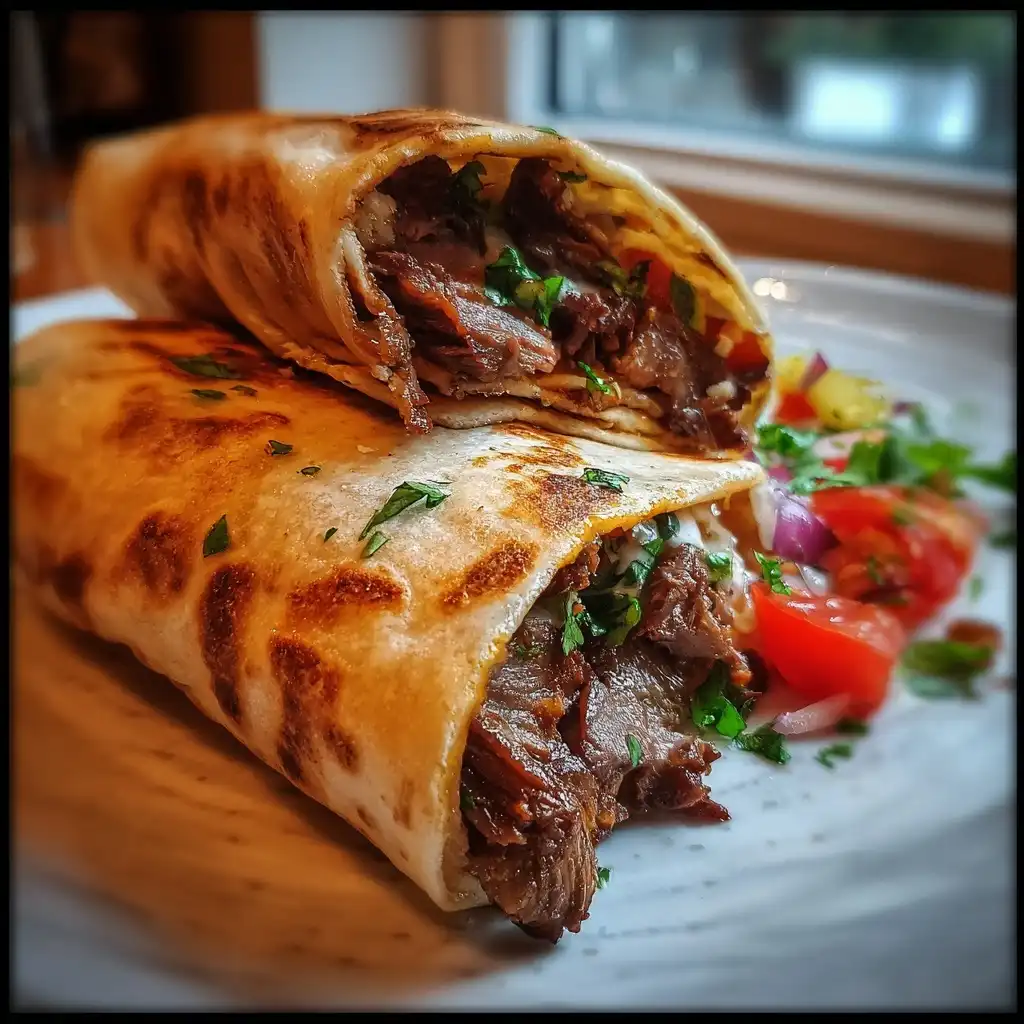
The Beef Shawarma Wrap is a vibrant, aromatic, and deeply satisfying Middle Eastern street food classic that has captivated palates across continents. Born from centuries-old traditions of slow-roasting spiced meats on vertical rotisseries, shawarma has evolved into a globally beloved handheld meal—especially in its wrap format. Unlike its chicken or lamb counterparts, beef shawarma offers a uniquely rich, robust flavor profile and tender-yet-substantial texture when prepared with care. This guide delivers an exhaustive, chef-informed deep dive into crafting authentic, restaurant-quality beef shawarma at home—without specialized equipment—while honoring cultural roots, modern nutritional awareness, and endless culinary creativity.
The History
Shawarma’s origins trace back to the Ottoman Empire in the 19th century, evolving from earlier forms of vertically roasted meats like Turkish doner kebab and Levantine shish taouk. The word “shawarma” derives from the Arabic root sh-gh-r, meaning “to turn” or “to rotate”—a direct nod to the iconic rotating spit. In Lebanon, Syria, Palestine, and Jordan, beef (often lean cuts like sirloin or top round) became a popular alternative to lamb—especially where religious dietary customs, economic accessibility, or regional cattle husbandry influenced meat preferences. As Arab diaspora communities flourished in North America, Europe, and Australia, shawarma migrated beyond souks and food carts into mainstream food trucks, gourmet delis, and home kitchens. The “wrap” iteration—typically encased in warm pita or lavash—gained traction in the late 20th century as a portable, customizable, and less messy evolution of the traditional plate service. Today, beef shawarma stands not only as comfort food but as a symbol of culinary adaptation, resilience, and cross-cultural exchange.
Ingredients Breakdown
Every exceptional beef shawarma begins with intentionality—not just in selection, but in understanding *why* each component matters:
- Beef: Use 1.5–2 lbs of lean, well-trimmed boneless beef—ideally top round, eye of round, or sirloin tip. These cuts are naturally low in fat but respond beautifully to marination and slow roasting, yielding tenderness without greasiness. Avoid heavily marbled steaks (e.g., ribeye), which can render excessively and become chewy when sliced thin.
- Yogurt Base: Full-fat plain Greek yogurt (¾ cup) acts as both tenderizer and flavor carrier. Its lactic acid gently breaks down muscle fibers, while its creamy body helps the spice rub adhere and prevents drying during cooking. Non-dairy alternatives (e.g., coconut yogurt) lack the necessary acidity and protein structure—so they’re not recommended for authenticity or texture.
- Aromatics: Freshly grated garlic (6–8 cloves) and finely minced yellow onion (½ large) deliver pungent depth and natural enzymes that further aid tenderization. Never substitute powdered garlic or onion—freshness is non-negotiable for layered aroma.
- Core Spices: A balanced blend includes ground cumin (2 tsp), smoked paprika (1½ tsp), ground coriander (1½ tsp), turmeric (1 tsp), cinnamon (½ tsp), allspice (½ tsp), and cayenne (¼–½ tsp, to taste). Toast whole spices beforehand and grind them yourself for unparalleled brightness and complexity—pre-ground versions lose volatile oils within weeks.
- Liquid Enhancers: Fresh lemon juice (3 tbsp) adds bright acidity to balance richness; extra virgin olive oil (3 tbsp) carries fat-soluble flavors and promotes caramelization; and a splash of apple cider vinegar (1 tbsp) provides subtle tang and additional tenderizing power.
- Salt & Umami Boosters: Diamond Crystal kosher salt (1½ tsp) ensures even seasoning without bitterness; a tablespoon of tomato paste adds depth, natural sweetness, and Maillard-reactive sugars; and a dash of Worcestershire sauce (½ tsp) contributes fermented umami nuance—traditionally absent but widely adopted in modern Levantine kitchens for complexity.
For the wrap assembly: high-quality, pliable whole-wheat or white pita (preferably baked same-day or revived with steam), crisp shredded romaine or iceberg lettuce, thinly sliced red onion, chopped fresh parsley and mint, and optional pickled turnips or cucumbers. Each garnish serves a functional purpose—cooling, textural contrast, enzymatic freshness, or palate-cleansing acidity.
Step-by-Step Recipe
- Prep & Slice: Partially freeze the beef for 45 minutes—this firms it enough for clean, paper-thin slicing against the grain (¼-inch thick, ~3 inches long). Thin slices maximize surface area for marinade absorption and ensure rapid, even cooking without drying out.
- Marinate (Minimum 12 Hours, Ideally 24–48): In a large non-reactive bowl, whisk together yogurt, garlic, onion, lemon juice, olive oil, vinegar, tomato paste, Worcestershire, salt, and all spices until smooth and emulsified. Fold in beef slices gently but thoroughly—coating every piece. Cover tightly and refrigerate. Rotate the bowl halfway through to redistribute marinade. Do NOT rinse the beef before marinating—it must be completely dry for optimal adhesion.
- Rest & Drain: After marinating, remove beef from fridge 30 minutes before cooking. Line a tray with triple-layered paper towels and spread slices in a single layer. Pat *very gently* to remove excess surface moisture—this is critical for browning, not steaming.
- Cook (Oven Method – Most Authentic Home Alternative): Preheat oven to 325°F (163°C) with rack positioned in the upper third. Line a rimmed baking sheet with parchment, then arrange beef in a single layer (no overlap). Roast uncovered for 45–55 minutes, flipping slices halfway, until edges curl slightly and internal temp reaches 145°F (63°C) for medium-rare tenderness—or 155°F (68°C) for fully cooked. For extra char and texture, finish under broiler for 60–90 seconds per side, watching closely.
- Rest & Slice Again: Transfer cooked beef to a cutting board, tent loosely with foil, and rest 8 minutes. Then, slice *across the grain* into fine julienne strips—this shortens muscle fibers for melt-in-your-mouth tenderness.
- Warm Wraps: Heat pita directly over a gas flame (10 sec/side) or in a dry cast-iron skillet until puffed and flecked with golden spots. Keep wrapped in a clean kitchen towel to retain steam and pliability.
- Assemble: Spread 2 tbsp garlic sauce (toum) or tahini sauce down the center of the pita. Layer ¾ cup warm beef, then generous lettuce, onions, herbs, and a squeeze of fresh lemon. Fold bottom edge up, fold sides inward, then roll tightly from bottom to top. Serve immediately—or wrap snugly in parchment + foil for carryout.
Tips
- Freeze for Future Use: Marinated, uncooked beef shawarma keeps for up to 3 months in vacuum-sealed or heavy-duty freezer bags. Thaw overnight in the fridge—never at room temperature—to preserve texture and safety.
- Low & Slow Is Key: Cooking above 350°F causes proteins to contract violently, squeezing out juices. The 325°F target mimics the gentle radiant heat of a traditional shawarma drum.
- Yogurt Quality Matters: If using store-bought Greek yogurt, strain it 1 hour in cheesecloth over a bowl to remove whey—excess water leads to steaming instead of searing.
- No Broiler? No Problem: Heat a cast-iron skillet over medium-high until smoking lightly. Add beef in batches (don’t crowd!) and sear 60 seconds per side—press gently with a spatula for maximum contact.
- Revive Stale Pita: Lightly mist with water, wrap in damp paper towels, and microwave 12 seconds. Or steam over boiling water for 45 seconds—then grill briefly for flexibility and flavor.
- Garlic Sauce Secret: Authentic toum requires emulsifying raw garlic, lemon juice, and oil *cold*—use a food processor, add oil drop-by-drop, and chill 2 hours before serving. It keeps refrigerated for 10 days.
- Don’t Skip the Rest: Skipping the post-cook rest invites dry, stringy beef. Juices need time to redistribute—cutting too soon releases them onto the board, not into your bite.
Variations and Customizations
Beef shawarma is inherently adaptable—here’s how to personalize it without sacrificing integrity:
- Dietary Adaptations: Gluten-free? Use large, soft gluten-free wraps or butter lettuce cups. Vegan? Substitute seitan or marinated king oyster mushrooms—simmered in the same spice blend and roasted until chewy and caramelized.
- Regional Twists: Lebanese-style adds a sprinkle of dried mint and sumac before wrapping. Egyptian versions often include fried eggplant and a cumin-heavy tahini sauce. Gulf-inspired shawarma features cardamom and rosewater in the marinade—and a drizzle of date syrup at the end.
- Heat Levels: Mild: Omit cayenne; add sweet paprika. Medium: Include ½ tsp cayenne + 1 deseeded jalapeño blended into the marinade. Fiery: Infuse olive oil with dried chiles de árbol, or finish with harissa-spiked toum.
- Protein Blends: Combine 75% beef + 25% ground lamb for deeper gaminess—or add ¼ cup rehydrated dried porcini mushrooms (finely ground) to the marinade for an umami-rich, vegetarian-leaning depth.
- Wrap Alternatives: Try spinach tortillas, grilled flatbread, cauliflower “tortillas,” or even crispy nori sheets for a fusion sushi-shawarma hybrid.
- Sauce Swaps: Beyond toum and tahini: zhug (Yemeni cilantro-chile), amba (mango pickle sauce), tarator (lemon-tahini-garlic), or a cooling cucumber-dill raita.
- Breakfast Shawarma: Add scrambled eggs, feta cheese, and sautéed tomatoes—served in a warm laffa bread with a dusting of za’atar.
Health Considerations and Nutritional Value
A properly crafted beef shawarma wrap is nutritionally dense, balanced, and surprisingly wholesome—when approached mindfully:
- Protein Powerhouse: A standard 1.5-cup serving delivers ~38g high-biological-value protein—supporting muscle synthesis, satiety, and metabolic health. Grass-fed beef adds conjugated linoleic acid (CLA) and higher omega-3s.
- Smart Fats: Olive oil and yogurt contribute monounsaturated fats and probiotics—linked to reduced inflammation and improved gut microbiome diversity. Avoid excessive added oils in sauces to keep calories in check (~520 kcal per full wrap).
- Spice Benefits: Turmeric (curcumin), cumin (antioxidants), and garlic (allicin) offer researched anti-inflammatory, antimicrobial, and cardiovascular-supportive properties—even after cooking.
- Fiber & Phytonutrients: Whole-wheat pita contributes 5–7g fiber; leafy greens and herbs supply vitamins A, C, K, folate, and polyphenols. Pickled vegetables add beneficial lactobacilli.
- What to Limit: Sodium can climb with store-bought sauces—make toum/tahini yourself to control salt. Avoid deep-fried garnishes (like french fries traditionally tucked inside) unless portioned intentionally. Refined white pita lacks fiber—opt for sprouted grain or 100% whole wheat.
- Medical Considerations: Those with GERD may benefit from reducing garlic/onion volume or using roasted versions. Low-FODMAP adaptations: substitute garlic-infused oil (no solids) and omit onion—add leek greens only. For kidney disease, consult a dietitian on potassium and phosphorus content—though moderate portions remain appropriate for most stages.
Note: Nutritional analysis based on 1.5 lbs top round beef, ¾ cup Greek yogurt, homemade toum (½ cup), whole-wheat pita (1 large), and standard veggie garnishes: ~520 calories, 38g protein, 22g fat (4g saturated), 42g carbs (8g fiber), 620mg sodium.
Ingredients
- 1.5 lbs (680g) lean boneless beef top round or eye of round, partially frozen
- ¾ cup (180g) full-fat plain Greek yogurt, strained if watery
- 6–8 cloves garlic, freshly grated
- ½ medium yellow onion, finely minced (about ½ cup)
- 3 tbsp fresh lemon juice (1–2 lemons)
- 3 tbsp extra virgin olive oil
- 1 tbsp apple cider vinegar
- 1 tbsp tomato paste
- ½ tsp Worcestershire sauce (vegan option: coconut aminos)
- 1½ tsp Diamond Crystal kosher salt (or 1 tsp table salt)
- 2 tsp ground cumin, toasted & freshly ground
- 1½ tsp smoked paprika
- 1½ tsp ground coriander, toasted & freshly ground
- 1 tsp ground turmeric
- ½ tsp ground cinnamon
- ½ tsp ground allspice
- ¼–½ tsp cayenne pepper (adjust to heat preference)
For Assembly:
- 4 large whole-wheat pitas or laffa breads (6–8 inches)
- 2 cups shredded romaine or iceberg lettuce
- ½ red onion, very thinly sliced
- ¼ cup chopped fresh flat-leaf parsley
- 2 tbsp chopped fresh mint
- 2 tbsp fresh lemon juice (for finishing)
- ½ cup homemade garlic sauce (toum) or tahini sauce
- Optional: pickled turnips, pickled cucumbers, crumbled feta, roasted tomatoes
Directions
- Prepare the Beef: Place beef in freezer for 45 minutes until firm but not solid. Using a sharp knife, slice *against the grain* into ¼-inch thick, 3-inch-long strips. Place in a large non-reactive bowl.
- Make Marinade: In a separate bowl, whisk together yogurt, grated garlic, minced onion, lemon juice, olive oil, vinegar, tomato paste, Worcestershire, salt, and all spices until completely smooth and uniform. Taste a tiny amount (raw garlic is potent!)—adjust salt or acid if needed.
- Marinate: Pour marinade over beef. Using clean hands or tongs, gently fold and coat every piece. Cover bowl tightly with plastic wrap or lid. Refrigerate for minimum 12 hours, ideally 24–48 hours. Flip bowl once midway.
- Drain & Dry: Remove beef from fridge 30 minutes before cooking. Line a baking sheet with triple-layer paper towels. Spread marinated beef in single layer; pat *very gently* with more paper towels to remove excess surface liquid—do not rub or press hard.
- Roast: Preheat oven to 325°F (163°C). Line a rimmed baking sheet with parchment. Arrange beef in single layer—no overlapping. Roast 45–55 minutes, flipping slices carefully at 25 minutes, until deeply aromatic, slightly curled at edges, and reaching 145°F internally. Optional: broil 60–90 sec per side for char.
- Rest & Julienne: Transfer to cutting board, tent with foil, rest 8 minutes. Slice each piece *across the grain* into fine ⅛-inch-wide strips.
- Warm Pitas: Heat a dry cast-iron skillet over medium-high. Warm each pita 30–45 sec per side until soft, pliable, and lightly spotted. Stack in a clean kitchen towel.
- Assemble Wraps: Lay pita flat. Spread 2 tbsp toum or tahini in center third. Top with ¾ cup warm beef, ½ cup lettuce, 2 tbsp red onion, 1 tbsp parsley, 1 tsp mint, and a generous squeeze of lemon. Fold bottom edge up ~2 inches, fold left and right sides inward ~1 inch each, then roll tightly upward. Wrap in parchment paper, then foil for hold.
- Serve Immediately: Cut in half diagonally. Offer extra sauce on the side. Best enjoyed within 30 minutes of assembly for optimal texture.
FAQ
- Can I cook shawarma on the stovetop only?
- Yes—but use low-medium heat and a heavy-bottomed skillet. Cook in small batches, pressing gently with a spatula. Total time: 8–10 minutes. Avoid high heat that burns spices before beef cooks through.
- Why does my shawarma taste bland?
- Most commonly: insufficient marinating time (<12 hrs), using pre-ground spices older than 3 months, skipping the garlic-onion base, or rinsing beef before marinating (removes natural enzymes and surface proteins that bind marinade).
- Can I make this ahead for meal prep?
- Absolutely. Marinate and roast beef up to 4 days ahead. Store in airtight container refrigerated. Reheat gently in skillet or microwave (covered, 30-sec bursts) with ½ tsp water to restore moisture. Assemble wraps fresh.
- Is shawarma healthy for weight loss?
- Yes—when portion-controlled and sauce-conscious. Prioritize lean beef, whole grains, abundant vegetables, and limit high-calorie sauces. One wrap fits neatly within most balanced 1,500–1,800 kcal daily plans.
- What’s the difference between shawarma, doner, and gyros?
- Shawarma (Arab world) uses vertical spit + warm spices (cumin, cardamom); doner (Turkey) emphasizes lamb/beef mix + less sweet spices; gyros (Greece) traditionally uses pork or chicken + oregano, lemon, and tzatziki. All share the rotating spit concept—but differ culturally, spicewise, and saucewise.
- Can I air-fry the beef?
- You can—but results vary. Marinate as directed. Air-fry at 375°F (190°C) in single layer for 10–12 min, shaking basket every 3 min. May dry faster—monitor closely and reduce time by 2 min if needed.
- My toum broke—how do I fix it?
- Place broken toum in blender. Add 1 tsp lemon juice and 1 tsp cold water. Blend on low 10 sec. Slowly drizzle in 2 tbsp *new* chilled oil while blending continuously until emulsified. Chill 2 hours before using.
- How do I store leftover shawarma?
- Store beef and sauce separately in airtight containers: beef lasts 4 days refrigerated or 3 months frozen; sauces last 10 days refrigerated. Never freeze toum—it separates upon thawing.
Summary
The Beef Shawarma Wrap is a masterclass in layered flavor, cultural storytelling, and practical home cooking—transforming humble ingredients into an aromatic, tender, and nutritionally robust meal through time-honored marination, precise low-temperature roasting, and thoughtful assembly.
Whether you’re honoring Levantine tradition, adapting for dietary needs, or experimenting with global fusions, this guide empowers you to craft a shawarma that’s authentically delicious, deeply nourishing, and endlessly expressive—one wrap at a time.