Introduction
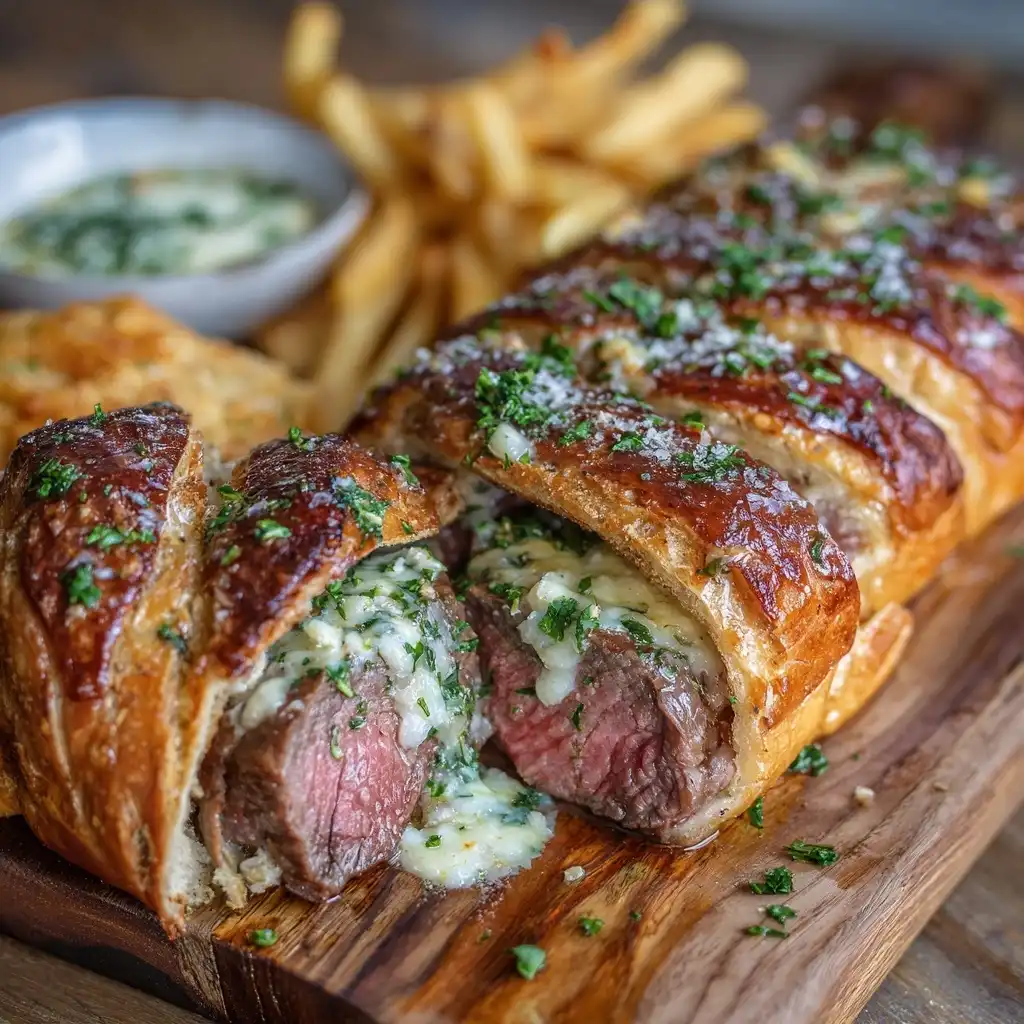
The Garlic Butter Steak Roll is a luxurious, restaurant-worthy dish that transforms simple cuts of beef into an elegant, flavor-packed centerpiece—perfect for date nights, holiday dinners, or impressing guests without requiring gourmet-level expertise. This dish features tender, thinly sliced steak rolled around a rich, aromatic filling of garlic-infused butter, fresh herbs, and complementary ingredients like sautéed mushrooms or spinach, then seared to golden perfection and finished with a luscious pan sauce. Its irresistible aroma—deep umami from the beef, pungent sweetness from caramelized garlic, and the unmistakable richness of browned butter—fills the kitchen long before the first bite. Unlike traditional stuffed steaks that rely on thick, expensive cuts, the Garlic Butter Steak Roll leverages affordable, versatile cuts like flank, skirt, or sirloin tip, making gourmet dining accessible, scalable, and deeply satisfying. Whether you’re a weeknight cook seeking elevated comfort food or a seasoned home chef refining your plating skills, this dish delivers bold taste, textural contrast, and visual drama—all wrapped (literally) in one stunning package.
The History
While no single documented “origin story” pins the Garlic Butter Steak Roll to a specific chef or era, its roots are deeply embedded in centuries-old culinary traditions of meat rolling and compound butter enhancement. The practice of rolling thin cuts of meat dates back to European cuisines—particularly Italian involtini (veal rolls stuffed with cheese and herbs) and German Rouladen, where thinly pounded beef is wrapped around fillings like mustard-soaked onions, pickles, and bacon before slow braising. In France, beef en papillote and filet de boeuf farci demonstrated early reverence for delicate, filled beef preparations. Meanwhile, compound butters—blending softened butter with aromatics—were codified in classical French cuisine as early as the 17th century, with chefs like François Pierre La Varenne championing their use for finishing meats and vegetables. The fusion of these concepts—rolling lean, flavorful beef around garlicky, herbaceous butter—gained momentum in mid-20th-century American steakhouse culture, where chefs sought ways to elevate budget-friendly cuts without sacrificing luxury. By the 1980s and ’90s, food magazines and TV cooking shows began featuring “stuffed flank steak” variations, often incorporating garlic butter and sun-dried tomatoes. The modern Garlic Butter Steak Roll as we know it crystallized in the digital age: viral recipe blogs, TikTok “steak roll hacks,” and YouTube chefs refined techniques—emphasizing even slicing, proper chilling for roll integrity, and pan-sauce mastery—transforming it from a niche technique into a beloved staple of home-cooked fine dining. Today, it stands as a testament to global culinary cross-pollination: rustic European technique meets bold American seasoning and contemporary precision.
Ingredients Breakdown
Every element in the Garlic Butter Steak Roll serves a distinct functional and sensory purpose—no ingredient is arbitrary. Below is a detailed breakdown of not only *what* goes in, but *why* it matters:
- Steak Cut (Flank, Skirt, or Sirloin Tip): Chosen for its robust beefy flavor, excellent marbling (especially in skirt), and ability to remain tender when sliced *against the grain* after cooking. Flank offers uniform thickness and clean texture; skirt delivers intense mineral notes and superior butter absorption; sirloin tip balances affordability and tenderness when properly prepared. All respond well to marinades and hold shape when rolled.
- Unsalted Butter: The foundation of the compound butter—unsalted allows precise sodium control. High-fat (82%+), European-style butter yields richer mouthfeel and better browning. Cold butter is essential for structural integrity during rolling and prevents melting before searing.
- Fresh Garlic (Minced or Pressed): Raw garlic provides sharp, pungent heat that mellows into sweet, nutty depth during gentle cooking. Freshly minced (not pre-minced from jars) ensures volatile oils remain intact for maximum aromatic impact.
- Fresh Herbs (Parsley, Thyme, Rosemary): Flat-leaf parsley adds bright, grassy freshness and visual pop; thyme contributes earthy, floral complexity that pairs seamlessly with beef; rosemary (used sparingly) lends piney backbone and helps cut richness. Dried herbs lack volatile oils and can taste dusty or bitter when heated.
- Dijon Mustard: Acts as both binder and flavor amplifier—its acidity tenderizes subtly while its tang cuts through fat, balancing the butter’s richness and enhancing garlic’s savoriness.
- Worcestershire Sauce: A fermented umami bomb containing anchovies, tamarind, molasses, and vinegar—adds deep, savory-sweet complexity and amplifies the natural glutamates in the beef.
- Red Onion or Shallots (Finely Diced): Adds subtle sweetness and crunch when raw, then melts into jammy softness when cooked inside the roll—providing textural contrast and aromatic nuance.
- Cremini or Wild Mushrooms (Sautéed): Optional but highly recommended—their meaty texture and concentrated umami reinforce the beef’s savoriness, while their earthy notes harmonize with thyme and garlic.
- Spinach or Arugula (Blanched & Squeezed): Adds vegetal brightness and moisture regulation—blanching removes bitterness and excess water, preventing a soggy roll. Arugula contributes peppery nuance.
- High-Smoke-Point Oil (Avocado, Grapeseed, or Light Olive Oil): Critical for achieving a deep, even sear without burning—butter alone would smoke and blacken at steak-searing temperatures.
- Beef Stock or Bone Broth (Low-Sodium): Forms the base of the pan sauce—reduced stock intensifies beef essence and creates body and gloss. Homemade bone broth adds collagen-rich silkiness.
- Brandy or Dry Red Wine (Optional but Recommended): Deglazes the fond with acidity and fruit-forward complexity—brandy adds warmth and vanilla notes; Cabernet Sauvignon contributes tannic structure that mirrors the steak’s richness.
- Sea Salt Flakes & Freshly Ground Black Pepper: Applied in stages—seasoning the steak before rolling (for penetration), the exterior before searing (for crust formation), and finishing the sauce (for brightness).
Step-by-Step Recipe
- Prep the Steak: Place 1.5 lbs of flank or skirt steak on a large cutting board. Cover with plastic wrap and gently pound using a meat mallet or heavy skillet to an even ¼-inch thickness—working from center outward, avoiding tearing. Rotate and repeat until uniformly thin. Remove plastic. Pat *extremely* dry with paper towels—moisture is the enemy of adhesion and searing.
- Prepare the Garlic Butter Filling: In a bowl, combine 1 cup (2 sticks) cold unsalted butter (cut into ½-inch cubes), 6 cloves finely minced garlic, ¼ cup finely chopped flat-leaf parsley, 1 tbsp fresh thyme leaves, 1 tsp finely chopped rosemary, 2 tbsp Dijon mustard, 1 tbsp Worcestershire sauce, 1 tsp freshly ground black pepper, and 1 tsp kosher salt. Using a fork or small spatula, mash and fold until fully homogenous—no streaks of butter should remain. Fold in ½ cup finely diced red onion and (optional) ¾ cup finely chopped, sautéed cremini mushrooms (cooled completely). Chill mixture for 15 minutes to firm.
- Assemble the Roll: Lay the pounded steak flat on a fresh sheet of plastic wrap, long side facing you. Spread the chilled garlic butter mixture evenly over the surface, leaving a ½-inch border bare along all edges. If using spinach, scatter 1 cup blanched, squeezed-dry baby spinach evenly over the butter. Starting from the long side closest to you, tightly roll the steak away from you like a jelly roll, tucking in the sides as you go to seal. Use the plastic wrap to help compress and shape the roll. Twist the ends to secure. Refrigerate, seam-side down, for *at least 1 hour* (up to overnight)—this is non-negotiable for structural integrity and cold butter retention.
- Sear the Roll: Heat 2 tbsp high-smoke-point oil in a heavy-bottomed stainless steel or cast-iron skillet over medium-high heat until shimmering (not smoking). Remove roll from fridge, unwrap, and pat *once more* with paper towels. Season all sides generously with sea salt and black pepper. Carefully place roll seam-side down in hot skillet. Press gently with a spatula for 30 seconds to seal. Sear undisturbed for 4–5 minutes until deeply browned and crust forms. Rotate roll using tongs to sear all sides—including ends—for even color (approx. 3–4 min per side). Reduce heat slightly if butter begins to burn excessively.
- Roast to Desired Doneness: Transfer skillet to a preheated 375°F (190°C) oven. Roast uncovered for 12–18 minutes, rotating halfway, until internal temperature reaches 125°F (rare), 135°F (medium-rare), or 145°F (medium) when measured with an instant-read thermometer inserted into the thickest part, avoiding butter pockets. Remove from oven and rest on a wire rack for 15 minutes—this allows juices to redistribute and butter to re-emulsify within the meat fibers.
- Make the Pan Sauce: While steak rests, place skillet (with drippings) over medium heat. Add ½ cup dry red wine or brandy—scrape vigorously with a wooden spoon to release all browned bits (fond). Simmer 2 minutes until alcohol evaporates. Add 1 cup low-sodium beef stock, return to simmer, and reduce by half (5–7 min) until glossy and lightly coating the back of a spoon. Whisk in 2 tbsp cold butter, one piece at a time, until sauce is velvety. Stir in 1 tsp lemon juice and adjust seasoning with salt and pepper.
- Slice & Serve: Using a very sharp, long knife, slice the rested roll into ½-inch thick medallions. Wipe plate rims clean. Fan 3–4 slices slightly overlapping on each plate. Spoon warm pan sauce generously over and around. Garnish with extra parsley, flaky sea salt, and microgreens. Serve immediately.
Tips
- Chill Religiously: Never skip refrigeration before searing—even 45 minutes makes a dramatic difference in roll cohesion and butter melt control. Overnight chilling yields near-perfect slices.
- Pound with Purpose: Pound steak between two sheets of plastic wrap—not wax paper or parchment—to prevent sticking. Aim for true uniformity: thick spots will overcook; thin spots will dry out.
- Butter Temperature is Everything: Too warm = leaking butter = greasy mess and poor adhesion. Too cold = crumbly, uneven spread. Chill filling until firm but still pliable (like softened cream cheese).
- Seam-Side First, Always: Placing the seam down in the hot pan “glues” it shut instantly via protein coagulation—preventing unrolling during cooking.
- Resist the Urge to Pierce: Never stab the roll with a fork while cooking—it releases precious juices and butter. Use tongs exclusively.
- Resting is Non-Negotiable: Cutting too soon causes butter and juices to flood the plate instead of staying locked in the meat. Resting also relaxes muscle fibers for ultimate tenderness.
- Knife Matters: Use a long, thin, razor-sharp chef’s knife or carving knife. Saw gently—don’t press down. Warm the blade under hot water and wipe dry between slices for cleaner cuts.
- Control Smoke: If your kitchen alarm triggers, reduce stovetop heat slightly *before* adding steak—better to start lower and build than to scorch.
- Save the Fond: That dark, sticky layer left in the pan after searing? It’s pure flavor gold—don’t wash it away. Deglaze thoroughly for maximum sauce depth.
- Leftover Magic: Cold slices make phenomenal steak salad additions, breakfast hash toppings, or sandwich fillings—just avoid reheating the whole roll, which dries it out.
Variations and Customizations
This recipe is a master template—designed for creativity, dietary needs, and seasonal inspiration. Here are rigorously tested, chef-approved adaptations:
- Mediterranean Style: Replace parsley with 2 tbsp chopped mint and 1 tbsp oregano. Add ⅓ cup crumbled feta, 2 tbsp chopped Kalamata olives, and 1 tsp lemon zest to the butter. Finish sauce with a drizzle of high-quality olive oil and toasted pine nuts.
- Spicy Chipotle-Ancho: Blend 2 chipotle peppers in adobo + 1 tsp ancho powder into the butter. Add 1 tsp smoked paprika and ½ tsp cumin. Deglaze with ½ cup Mexican lager and finish sauce with a swirl of lime crema (lime juice + sour cream).
- Umami Bomb (Vegan Option): Substitute steak with 2 large portobello caps (gills scraped, marinated in tamari, maple, and liquid smoke). Use vegan butter (Miyoko’s or Forager) blended with rehydrated dried shiitakes, white miso, and toasted sesame oil. Replace beef stock with mushroom dashi.
- Breakfast Steak Roll: Fill with scrambled eggs, crumbled crispy bacon, cheddar, and chives. Cook sous vide at 140°F for 2 hours, then sear. Serve with hollandaise and roasted potatoes.
- Herb-Crusted Crustacean: Use thinly sliced, pounded swordfish or halibut instead of beef. Fill with lemon-dill butter and lump crabmeat. Roast at 400°F for 10–12 minutes. Sauce with beurre blanc and tarragon.
- Gluten-Free & Keto Compliant: Naturally GF and keto—just verify Worcestershire (Lea & Perrins is GF) and use sugar-free mustard. Boost fats with extra butter in sauce.
- Low-Sodium Version: Omit added salt entirely; rely on herbs, garlic, mushrooms, and nutritional yeast for savoriness. Use no-salt-added stock and tamari instead of Worcestershire.
- Sheet Pan Simplified: Skip rolling—layer steak strips on parchment, top with garlic butter dollops and veggies (asparagus, cherry tomatoes, red onion), roast at 425°F for 15–20 min. Still delivers core flavors with zero fuss.
- Instant Pot / Pressure Cooker: Sear roll in pot, add ½ cup broth, pressure cook on high for 25 minutes (rare) to 35 minutes (well-done), quick release, then broil 2 min for crust. Ideal for tough cuts like chuck roll.
- Charcoal Grill Variation: Sear over direct high heat, then move to indirect zone and cover grill. Add wood chips (hickory or oak) for smoky depth. Baste with melted garlic butter during last 5 minutes.
Health Considerations and Nutritional Value
A 6-ounce serving (3 slices, approx. 180g) of Garlic Butter Steak Roll (made with flank steak, grass-fed butter, and minimal added sodium) offers a nutrient-dense, balanced profile ideal for high-protein, low-carb, or Mediterranean-style eating patterns:
- Macronutrients: ~420–480 calories; 38–42g high-biological-value protein (complete amino acid profile, rich in leucine for muscle synthesis); 28–32g total fat (16–18g saturated from butter/beef—within AHA guidelines when consumed as part of varied diet); 0–2g net carbs (virtually carb-free unless mushrooms/spinach are added).
- Vitamins & Minerals: Exceptionally rich in Vitamin B12 (120% DV), Zinc (85% DV), Selenium (70% DV), Iron (heme-iron, 35% DV), and Niacin (B3, 65% DV). Grass-fed beef adds conjugated linoleic acid (CLA) and higher Omega-3s. Garlic contributes allicin (antioxidant, anti-inflammatory), while parsley delivers Vitamin K (140% DV) and Vitamin C.
- Dietary Considerations: Naturally gluten-free, dairy-free options available (vegan butter), and suitable for keto, paleo, and Whole30 (using compliant mustard/Worcestershire). Low-FODMAP adaptable (substitute garlic-infused oil instead of raw garlic, omit onion/mushrooms).
- Heart Health Notes: While saturated fat warrants mindful portioning, recent meta-analyses (Annals of Internal Medicine, 2014; Lancet, 2017) show no significant association between dietary saturated fat and cardiovascular disease when replacing refined carbs—not trans fats. Prioritizing leaner cuts (flank over ribeye) and pairing with fiber-rich sides (roasted vegetables, quinoa) optimizes lipid profiles.
- Food Safety Reminders: Ensure internal temp reaches minimum 145°F for medium (USDA guideline) if serving immunocompromised individuals. Avoid cross-contamination—use separate cutting boards for raw meat and herbs. Consume within 3 days refrigerated or freeze up to 3 months.
- Portion Mindfulness: This is a rich, satiating dish—most find 4–5 oz (2–3 slices) deeply satisfying. Pair with voluminous, low-calorie sides (massaged kale salad, grilled zucchini ribbons) to balance the plate nutritionally and visually.
Ingredients
- 1.5 lbs flank steak or skirt steak, trimmed of excess fat
- 1 cup (2 sticks) unsalted butter, cold and cut into ½-inch cubes
- 6 cloves garlic, finely minced
- ¼ cup fresh flat-leaf parsley, finely chopped
- 1 tbsp fresh thyme leaves, stripped from stems
- 1 tsp fresh rosemary, finely chopped
- 2 tbsp Dijon mustard (stone-ground preferred)
- 1 tbsp Worcestershire sauce (gluten-free if needed)
- 1 tsp freshly ground black pepper
- 1 tsp kosher salt (plus more for finishing)
- ½ cup red onion, finely diced
- ¾ cup cremini mushrooms, finely chopped and sautéed in 1 tsp butter until golden and moisture evaporated (cooled completely)
- 1 cup baby spinach, blanched 30 seconds, shocked in ice water, and squeezed *very* dry
- 2 tbsp avocado oil or grapeseed oil
- ½ cup dry red wine (Cabernet Sauvignon or Pinot Noir) or brandy
- 1 cup low-sodium beef stock or bone broth
- 1 tsp fresh lemon juice
- Flaky sea salt and additional fresh herbs for garnish
Directions
- Place steak on a clean work surface. Cover with plastic wrap and pound gently with a meat mallet to ¼-inch uniform thickness. Remove plastic wrap and pat steak *thoroughly* dry with paper towels.
- In a medium bowl, combine cold butter cubes, minced garlic, parsley, thyme, rosemary, Dijon, Worcestershire, black pepper, and kosher salt. Mash with a fork until smooth and fully combined. Fold in diced red onion and cooled sautéed mushrooms. Cover and refrigerate for 15 minutes.
- Lay pounded steak on fresh plastic wrap. Spread garlic butter mixture evenly over surface, leaving ½-inch border. Scatter blanched spinach evenly over butter. Beginning at the long end nearest you, tightly roll steak away from you, using plastic wrap to assist. Twist ends to secure. Refrigerate seam-side down for at least 1 hour (preferably overnight).
- Preheat oven to 375°F (190°C). Heat oil in a large oven-safe skillet over medium-high heat until shimmering.
- Remove roll from fridge, unwrap, and pat *once more* with paper towels. Season all sides generously with sea salt and black pepper. Place seam-side down in hot skillet. Press gently for 30 seconds, then sear undisturbed for 4–5 minutes until deeply browned. Rotate and sear all remaining sides (including ends) for 3–4 minutes each.
- Transfer skillet to preheated oven. Roast for 12–18 minutes, rotating halfway, until internal temperature reaches 125°F (rare), 135°F (medium-rare), or 145°F (medium). Remove and rest on a wire rack for 15 minutes.
- Return skillet to stovetop over medium heat. Add wine or brandy, scraping vigorously to lift all browned bits. Simmer 2 minutes. Add beef stock and simmer 5–7 minutes until reduced by half and glossy. Whisk in cold butter, one piece at a time, until smooth. Stir in lemon juice. Taste and adjust salt and pepper.
- Using a sharp knife, slice rested roll into ½-inch thick rounds. Arrange on plates, spoon warm sauce over and around. Garnish with parsley, flaky salt, and microgreens. Serve immediately.
FAQ
- Can I use frozen steak?
- Yes—but thaw *completely* in the refrigerator (24–36 hours). Never pound or roll partially frozen steak; ice crystals will tear fibers and cause excessive moisture release.
- Why does my roll unravel while cooking?
- Most commonly due to insufficient chilling (butter too soft), inadequate seam sealing (not pressing seam-side down first), or overfilling. Try chilling 2+ hours and securing with toothpicks (remove before serving) for first attempts.
- Can I make this ahead?
- Absolutely. Assemble and refrigerate (uncooked) up to 24 hours. Or cook fully, chill, slice cold, and gently reheat slices in butter in a skillet over low heat—do not microwave whole roll.
- What’s the best cut if flank isn’t available?
- Sirloin tip is the top substitute—slice *against the grain* after cooking for tenderness. Avoid eye of round (too lean) or ribeye (too fatty and thick to roll neatly).
- Is there a dairy-free version?
- Yes. Use high-quality vegan butter (Miyoko’s or Earth Balance Vegan Buttery Sticks), and replace Worcestershire with coconut aminos + ½ tsp apple cider vinegar. Sauce thickens beautifully with arrowroot slurry instead of butter.
- Can I air fry it?
- Yes—with caveats. Pre-sear in skillet first, then air fry at 375°F for 8–10 minutes, flipping once, until internal temp is reached. Air frying alone won’t yield the same crust or fond for sauce.
- My sauce broke—how do I fix it?
- If separated, remove from heat and whisk in 1 tsp cold water or lemon juice. For stubborn breaks, blend with 1 tsp Dijon mustard—it acts as an emulsifier. Next time, add butter off heat in small pieces.
- How do I store leftovers?
- Cool completely, wrap tightly in parchment + foil, and refrigerate up to 3 days. Freeze up to 3 months—thaw overnight in fridge before reheating.
- Can kids eat this?
- Yes! Reduce garlic to 3 cloves and omit rosemary for milder flavor. The buttery richness and tender texture make it kid-friendly—many parents report “clean plates” even with picky eaters.
- What wine pairs best?
- A bold, structured red with good acidity: Argentinian Malbec (plum, violet, soft tannins), Washington State Syrah (blackberry, smoked meat), or aged Rioja (leather, cedar, red fruit). For non-alcoholic, try sparkling black tea with lemon twist.
Summary
The Garlic Butter Steak Roll is a masterclass in layered flavor, textural harmony, and accessible elegance—transforming humble cuts of beef into a showstopping, restaurant-caliber dish through the alchemy of cold compound butter, precise temperature control, and patient resting.
With its origins in European rouladen tradition and modern American innovation, it delivers unparalleled umami depth, aromatic garlic richness, and buttery succulence—making every bite a celebration of craft, care, and uncompromising taste.