Introduction
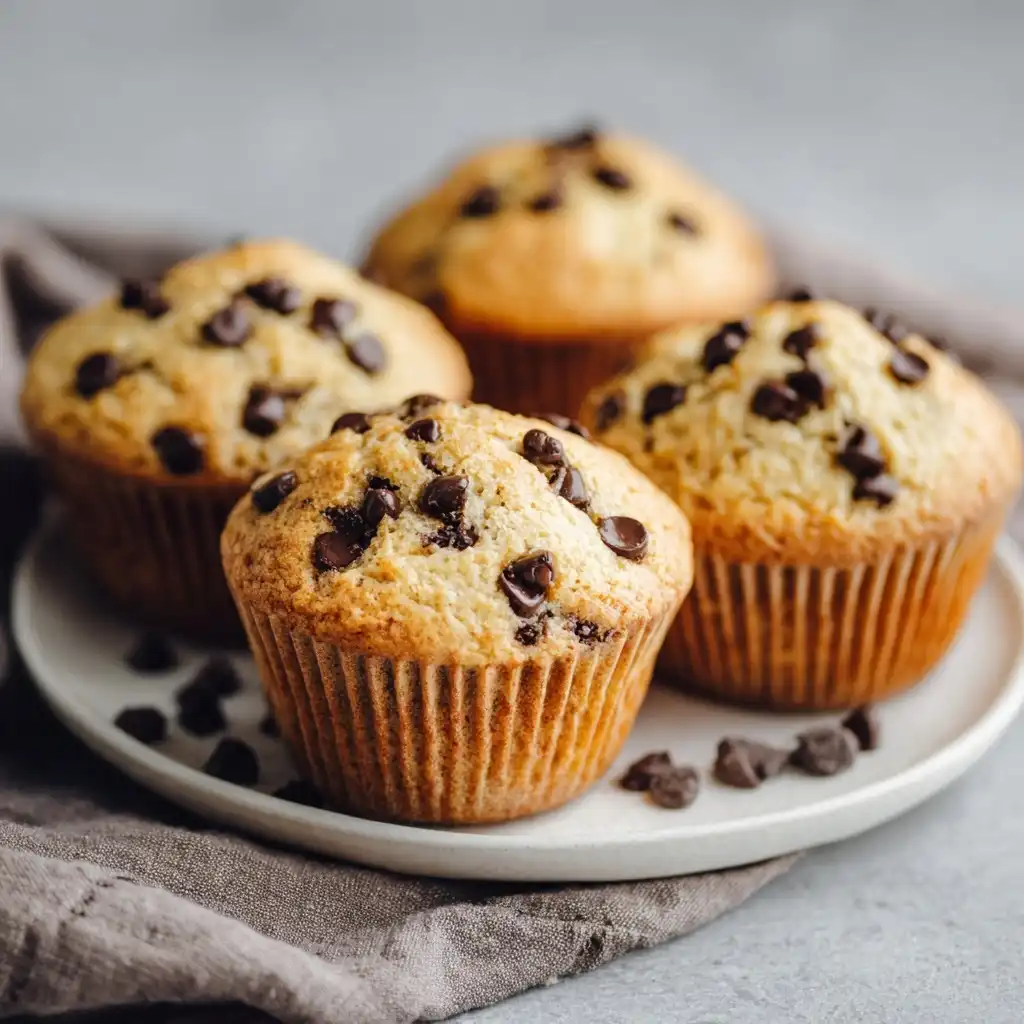
Vanilla Bean Chocolate Chip Muffins represent the perfect marriage of rustic comfort and refined elegance—a beloved bakery favorite reimagined for home bakers who crave depth, texture, and soul-warming nostalgia. Unlike standard vanilla muffins that rely solely on extract, these muffins celebrate the fragrant, floral, and subtly creamy essence of real Madagascar Bourbon vanilla beans—scraped, swirled, and suspended in a tender, golden crumb studded generously with high-quality semi-sweet or bittersweet chocolate chips. Each bite delivers a delicate balance: the warm, caramel-kissed sweetness of brown sugar, the rich earthiness of cocoa-infused butter, the bright lift of pure vanilla seeds, and the melty, gooey surprise of chocolate that pools just beneath the domed, crackled crown. Whether served warm from the oven with a smear of salted butter, packed into lunchboxes for midday joy, or gifted in parchment-lined baskets for special occasions, these muffins transcend the ordinary—they’re not just breakfast or snack fare; they’re edible hospitality, crafted with intention and layered with sensory delight.
The History
The muffin’s lineage traces back to 18th-century Britain, where “muffins” originally referred to yeast-leavened, griddle-cooked flatbreads—not the quick-bread versions we know today. The modern American-style muffin emerged in the early 19th century with the advent of chemical leaveners like pearl ash and later baking soda and powder, enabling faster, more reliable rise without yeast. By the 1850s, recipes for “cup cakes” (so named for their use of cup measurements rather than scales) appeared in cookbooks like Miss Parloa’s New Cook Book (1872), laying the groundwork for today’s standardized muffin method. Vanilla, once a rare luxury imported from Mexico and guarded by Spanish monopolies, became more accessible after Edmond Albius’s 1841 breakthrough in hand-pollinating Vanilla planifolia orchids on Réunion Island—ushering in global cultivation across Madagascar, Indonesia, and Tahiti. Chocolate chips, meanwhile, were invented serendipitously in 1938 by Ruth Wakefield at the Toll House Inn in Whitman, Massachusetts, when she substituted broken Nestlé semi-sweet chocolate bars into her butter drop cookie dough—expecting them to melt fully, only to discover the magic of retained pockets of molten chocolate. The fusion of these two iconic ingredients—vanilla bean and chocolate chip—into muffin form gained momentum in the 1980s and ’90s alongside the artisanal baking renaissance, as home cooks and boutique bakeries alike sought to elevate humble quick breads with premium, whole-food ingredients. Today, Vanilla Bean Chocolate Chip Muffins symbolize a conscious return to ingredient integrity—where every speck of black vanilla seed tells a story of terroir, labor, and botanical patience, and every chocolate chip is a testament to craftsmanship, cacao origin, and ethical sourcing.
Ingredients Breakdown
Every element in this recipe has been carefully selected—not just for flavor, but for function, texture, and synergy:
- Unsalted Butter (10 tbsp / 142g, room temperature): Provides richness, tenderness, and flakiness in the crumb. Room temperature ensures optimal creaming with sugar—trapping air for lift without overworking gluten. European-style butter (82–84% fat) yields even more luxurious mouthfeel.
- Packed Light Brown Sugar (¾ cup / 150g): Adds moisture, caramel notes, and acidity (from molasses) that activates baking soda. Its hygroscopic nature keeps muffins moist for days.
- Granulated Sugar (¼ cup / 50g): Balances molasses intensity, enhances crust formation, and contributes to fine crumb structure via controlled crystallization during baking.
- Eggs (2 large, room temperature): Act as emulsifiers, binders, and leaveners. Room temperature prevents seizing when added to warm butter-sugar mixture and improves volume retention.
- Whole Milk (½ cup / 120ml, room temperature): Adds protein and lactose for browning and tenderness. Buttermilk may be substituted (with ½ tsp baking soda removed) for extra tang and tenderness.
- Full-Fat Sour Cream (¼ cup / 60g): Critical for moisture retention, acidity (to activate leaveners), and dense-yet-tender crumb. Greek yogurt (full-fat, strained) works as a 1:1 substitute.
- Pure Madagascar Bourbon Vanilla Beans (2 plump, moist pods): The heart of the recipe. These beans boast high vanillin content, floral top notes, and a creamy, spicy finish. Avoid “Mexican” or “Tahitian” beans here—their profiles are too fruity or smoky for chocolate pairing.
- All-Purpose Flour (2 cups / 250g, spooned & leveled): Provides gluten structure without toughness. For gluten-free adaptation, a 1:1 certified GF blend with xanthan gum is recommended (do not substitute almond or oat flour alone).
- Baking Powder (2 tsp): Double-acting, aluminum-free preferred for clean flavor and consistent rise.
- Baking Soda (½ tsp): Reacts instantly with acidic components (brown sugar, sour cream, molasses) for early lift and browning.
- Fine Sea Salt (1 tsp): Enhances all flavors, tempers sweetness, and strengthens gluten network slightly.
- High-Quality Semi-Sweet Chocolate Chips (1 ¼ cups / 210g): Look for chips with ≥60% cacao and minimal added soy lecithin or artificial vanilla. Discs or chopped chocolate bars (e.g., Valrhona Guanaja, Callebaut 60/40) yield superior melt and flavor distribution. Avoid “baking chips” with wax coatings—they resist melting and dull flavor.
- Optional—but Highly Recommended: Flaky Sea Salt (Maldon or Fleur de Sel, for finishing): A tiny pinch atop each muffin before baking intensifies contrast and balances sweetness with mineral brightness.
Step-by-Step Recipe
- Preheat & Prep: Position oven rack in the center. Preheat oven to 425°F (220°C). Line a standard 12-cup muffin tin with high-quality parchment liners (or grease thoroughly with butter and dust with flour). This high initial heat creates dramatic oven spring and a beautifully domed top.
- Scrape the Beans: Split vanilla beans lengthwise with a paring knife. Use the back of the knife to scrape out every speck of fragrant, obsidian-black seeds into a small bowl. Add the spent pods to the milk and gently heat (do not boil) for 5 minutes to infuse—then cool completely and strain. Reserve both infused milk and seeds.
- Cream Butter & Sugars: In a large bowl using a stand mixer fitted with paddle attachment (or hand mixer), beat butter, brown sugar, and granulated sugar on medium-high for 3–4 minutes until pale, fluffy, and free of graininess. Scrape bowl thoroughly halfway through. This step incorporates vital air and dissolves sugar crystals for even texture.
- Add Eggs One at a Time: Beat in eggs individually, ensuring each is fully incorporated and glossy before adding the next (~30 seconds per egg). Overmixing at this stage can cause tunneling or collapse—mix only until homogenous.
- Combine Wet Infusions: Whisk together the cooled, strained vanilla-infused milk, sour cream, and reserved vanilla seeds until smooth and uniform. Set aside.
- Whisk Dry Ingredients: In a separate medium bowl, whisk together flour, baking powder, baking soda, and salt for 30 seconds to evenly distribute leaveners and aerate flour.
- Alternate Incorporation: With mixer on low speed, add one-third of dry ingredients—mix just until no flour remains. Add half of wet mixture—mix until just combined. Repeat, ending with final third of dry ingredients. Mix only until the last trace of flour disappears—do not overmix. Batter will be thick, glossy, and slightly lumpy—this is ideal. Overmixing develops gluten and yields dense, rubbery muffins.
- Fold in Chocolate: Using a silicone spatula, gently fold in chocolate chips in two additions, rotating bowl 90° after each fold. Stop as soon as chips are evenly dispersed—some streaks of batter are welcome.
- Portion & Top: Divide batter evenly among lined cups (about ¼ cup per muffin—use a #20 scoop for precision). Each cup should be filled nearly to the brim (¾–⅞ full) for maximum dome. Sprinkle tops generously with flaky sea salt.
- Bake with Temperature Shift: Place muffins in preheated oven. Immediately reduce temperature to 375°F (190°C). Bake for 5 minutes at this high heat to set the exterior and encourage dramatic rise. Then, without opening the door, reduce heat to 350°F (175°C) and continue baking for 15–18 minutes, or until a toothpick inserted into the center of a center muffin comes out with *moist crumbs* (not wet batter, not completely clean—this ensures moistness). Total bake time: 20–23 minutes.
- Cool Strategically: Let muffins cool in the pan on a wire rack for exactly 5 minutes—this allows steam to escape and sets structure. Then, carefully lift each liner and transfer muffins directly onto the rack to cool completely (≈45 minutes). Cooling in the pan past 5 minutes traps steam and leads to soggy bottoms.
Tips
- Room Temperature Is Non-Negotiable: Cold eggs or dairy cause butter to seize, resulting in curdled batter and poor emulsion. Take ingredients out 1–2 hours ahead—or place eggs in warm water for 5 minutes and dairy in a bowl over lukewarm water for 10 minutes.
- Measure Flour Correctly: Spoon flour into measuring cup and level with a straight edge. Scooping compacts flour—adding up to 25% more—and guarantees dense, dry muffins.
- Don’t Skip the Vanilla Pod Infusion: While scraping seeds adds visible flecks and aroma, steeping the pod in milk extracts vanillin-soluble compounds that deepen flavor beyond what seeds alone provide—creating a multidimensional vanilla experience.
- Chill Batter for Enhanced Flavor & Texture: For even richer flavor and tighter crumb, cover batter and refrigerate for 30–60 minutes before portioning. Cold batter holds its shape better and rises more evenly.
- Use an Oven Thermometer: Most home ovens run hot or cold. An accurate thermometer prevents underbaking (gummy centers) or overbaking (dry, crumbly tops).
- Rotate Pan Mid-Bake (If Needed): If your oven has hot spots, rotate pan 180° at the 10-minute mark—after the initial high-heat phase—to ensure even browning.
- Freeze Like a Pro: Cool completely, then wrap each muffin individually in parchment paper, place in a freezer bag, and freeze up to 3 months. Thaw at room temperature or warm in a 325°F oven for 8–10 minutes.
- Revive Stale Muffins: Wrap in foil and bake at 300°F for 10 minutes—steam trapped inside rehydrates crumb beautifully.
- Line with Parchment, Not Paper: Standard paper liners often peel away or stick. Parchment liners (like If You Care or Reynolds) provide superior release and structural support during rise.
- Reserve a Few Chips for the Top: Press 2–3 extra chips into the surface of each muffin before baking—creates visual appeal and guarantees melty chocolate in the first bite.
Variations and Customizations
This foundational recipe is endlessly adaptable—without sacrificing integrity or texture:
- Dark Chocolate & Espresso: Replace 2 tbsp flour with 2 tbsp finely ground dark roast espresso powder. Use 70% dark chocolate chips and add 1 tsp instant espresso dissolved in 1 tsp hot water to wet mixture. Deepens complexity and cuts sweetness.
- Vanilla Bean White Chocolate: Swap semi-sweet chips for high-quality white chocolate (35–40% cacao butter). Add ¼ tsp pure almond extract with vanilla seeds for nuanced warmth. Pair with toasted pecans.
- Double Vanilla Swirl: Reserve ⅓ cup batter. Stir 1 tsp extra scraped vanilla seeds + 1 tsp maple syrup into reserved portion. Pipe ribbons into filled cups and swirl gently with a skewer before baking.
- Oatmeal Vanilla Chocolate Chip: Replace ½ cup flour with ½ cup old-fashioned rolled oats (not quick oats). Soak oats in warm milk for 10 minutes before adding to wet mixture. Adds chewy texture and nutty depth.
- Gluten-Free Adaptation: Substitute 250g King Arthur Gluten-Free Measure-for-Measure Flour. Add ½ tsp xanthan gum if not included in blend. Increase milk by 1 tbsp and bake 2–3 minutes longer—GF batters require extra hydration and structural support.
- Vegan Version: Use vegan butter (Miyoko’s or Earth Balance), flax eggs (2 tbsp ground flax + 6 tbsp water, rested 10 min), unsweetened almond milk infused with vanilla pod, and coconut yogurt instead of sour cream. Ensure chocolate is dairy-free and certified vegan.
- Mini Muffin Edition: Fill mini muffin tin ⅔ full. Bake at 425°F → 375°F → 350°F as directed, but reduce total time to 11–13 minutes. Yields ~36. Perfect for parties or portion control.
- Lemon-Vanilla Chocolate Chip: Add zest of 1 large lemon to sugar before creaming. Replace 2 tbsp milk with fresh lemon juice. Brightens profile and complements chocolate’s bitterness.
- Nutty Crunch Upgrade: Fold in ½ cup toasted walnuts or hazelnuts with chocolate chips. Toast nuts at 350°F for 8–10 minutes until fragrant—cools quickly and prevents burning.
- Spiced Chai Variation: Add 1 ½ tsp homemade chai spice blend (cinnamon, cardamom, ginger, cloves, black pepper) to dry ingredients. Steep vanilla pod in warm milk along with 1 black tea bag for 5 minutes, then strain.
Health Considerations and Nutritional Value
Made with whole-food ingredients and mindful technique, these muffins offer balanced nutrition within the context of occasional indulgence. Per standard muffin (based on 12 servings, using 60% cacao chocolate and unsalted butter):
- Calories: ~320–350 kcal — moderate for a baked good, especially considering satiating fats and complex carbs.
- Macronutrients: 5g protein (from eggs, dairy, flour); 42g carbohydrates (of which 24g natural sugars—brown sugar, milk, chocolate—and 2g fiber from whole-grain optional swaps); 15g total fat (9g unsaturated, including heart-healthy oleic acid from butter).
- Vitamins & Minerals: Rich in B vitamins (B2, B12, choline) from eggs and dairy; calcium (12% DV) and phosphorus for bone health; selenium and zinc from eggs and cocoa.
- Functional Benefits: Cocoa flavanols support endothelial function and antioxidant capacity; vanilla contains vanillic acid with demonstrated anti-inflammatory properties in vitro; sour cream’s live cultures (if unpasteurized) contribute modest probiotic potential.
- Dietary Accommodations: Naturally lower in sodium (<200mg per muffin) than commercial versions; easily adapted for nut-free, soy-free, and egg-free diets. For reduced sugar: decrease brown sugar to ½ cup and add 2 tbsp unsweetened applesauce to maintain moisture—flavor remains robust due to vanilla intensity.
- Portion Mindfulness: Their satisfying richness and fiber content promote satiety—most find one muffin deeply fulfilling, especially when paired with Greek yogurt or fresh berries. Avoid labeling them “health food,” but embrace them as nutrient-dense, joyful nourishment rooted in tradition and quality.
Ingredients
- 10 tablespoons (142g) unsalted butter, room temperature
- ¾ cup (150g) packed light brown sugar
- ¼ cup (50g) granulated sugar
- 2 large eggs, room temperature
- ½ cup (120ml) whole milk, room temperature
- ¼ cup (60g) full-fat sour cream
- 2 plump Madagascar Bourbon vanilla beans
- 2 cups (250g) all-purpose flour, spooned and leveled
- 2 teaspoons aluminum-free baking powder
- ½ teaspoon baking soda
- 1 teaspoon fine sea salt
- 1 ¼ cups (210g) high-quality semi-sweet chocolate chips (60% cacao)
- Flaky sea salt (Maldon or Fleur de Sel), for finishing
Directions
- Preheat oven to 425°F (220°C) with rack in center position. Line a 12-cup muffin tin with parchment liners.
- Split vanilla beans and scrape seeds into a small bowl. Place pods in milk and gently warm over low heat for 5 minutes. Remove from heat, cool completely, then strain milk into a measuring cup. Stir vanilla seeds into cooled milk.
- In a large bowl, beat butter, brown sugar, and granulated sugar with mixer on medium-high for 3–4 minutes until pale and fluffy. Scrape bowl.
- Add eggs one at a time, beating well after each until fully incorporated and glossy.
- In a separate bowl, whisk together infused milk, sour cream, and vanilla seeds until smooth.
- In another bowl, whisk flour, baking powder, baking soda, and salt.
- With mixer on low, add ⅓ dry mixture to butter mixture—mix until just combined. Add ½ wet mixture—mix until just combined. Repeat, ending with remaining dry mixture. Mix only until no dry flour remains—batter will be thick and slightly lumpy.
- Gently fold in chocolate chips with silicone spatula in two additions until evenly distributed.
- Divide batter evenly among lined cups (fill to ⅞ full). Sprinkle tops generously with flaky sea salt.
- Bake at 425°F for 5 minutes. Without opening oven, reduce heat to 375°F and bake 5 more minutes. Reduce heat again to 350°F and bake 10–13 minutes more, until toothpick inserted in center comes out with moist crumbs.
- Cool in pan for 5 minutes. Transfer to wire rack to cool completely (45 minutes) before serving.
FAQ
- Can I use vanilla extract instead of vanilla beans?
- Yes—but it’s a compromise. Use 2 teaspoons of *double-strength* pure vanilla extract (e.g., Nielsen-Massey) in place of seeds, and omit pod infusion. You’ll lose visual appeal, textural nuance, and the layered, floral depth only whole beans deliver. For best results, combine 1 tsp extract + 1 scraped bean.
- Why do my muffins have tunnels or holes?
- Overmixing is the primary culprit—it develops excess gluten, trapping air unevenly. Also check: eggs or dairy added too cold (causing curdling), or expired leaveners causing erratic rise. Always mix batter *just* until combined.
- Can I make these ahead and freeze the batter?
- Absolutely. Portion unbaked batter into lined muffin tin, freeze solid (2 hours), then pop frozen portions into freezer bags. Bake straight from frozen—add 3–5 minutes to total bake time and tent with foil if tops brown too fast.
- My muffins sank in the center—what went wrong?
- Common causes: opening oven too early (before 15 min), underbaking (toothpick came out clean instead of with crumbs), expired leaveners, or excessive batter in cups causing overflow and collapse. Always test with moist crumbs—not clean.
- What’s the best chocolate for this recipe?
- Look for chips or chopped bars with simple ingredients: cocoa, cocoa butter, sugar, vanilla, lecithin. Avoid palm oil, artificial flavors, or “processed with alkali.” Brands like Guittard, Ghirardelli Bittersweet, or Scharffen Berger perform exceptionally well.
- Can I use oil instead of butter?
- You can substitute ⅓ cup neutral oil (avocado or grapeseed) for butter, but texture changes significantly: less richness, flatter rise, and diminished crumb tenderness. Butter is strongly recommended for authenticity and structure.
- How do I prevent chocolate chips from sinking?
- Toss chips in 1 tsp flour before folding in—this helps suspend them. Also, avoid over-thinning batter with excess liquid and don’t overmix after adding chips.
- Are these muffins suitable for kids’ lunchboxes?
- Yes—especially when made with reduced sugar (½ cup brown sugar) and paired with fruit or cheese. They hold up well at room temperature for 8–10 hours and freeze beautifully for weekly prep.
- Can I add fruit like blueberries?
- Yes—but pat 1 cup fresh blueberries *very dry*, toss in 1 tbsp flour, and fold in *last*, gently. Expect slight color bleed and adjust bake time +1–2 minutes. For best results, try our dedicated Blueberry-Vanilla Bean variation.
- What makes these muffins stay moist for days?
- Three key factors: brown sugar’s hygroscopic molasses, sour cream’s fat and acidity, and proper cooling technique (5 min in pan + full rack cooling) that locks in steam without creating sogginess.
Summary
Vanilla Bean Chocolate Chip Muffins are a masterclass in intentional baking—where ethically sourced Madagascar vanilla beans infuse every crumb with floral warmth, premium chocolate chips deliver molten luxury, and time-honored technique ensures a lofty, tender, golden-domed perfection. They honor history, celebrate ingredient purity, and invite customization without compromising soul.
Whether you’re a novice seeking foolproof joy or a seasoned baker pursuing sublime nuance, these muffins offer both comfort and revelation—one fragrant, chocolate-studded bite at a time.