Introduction
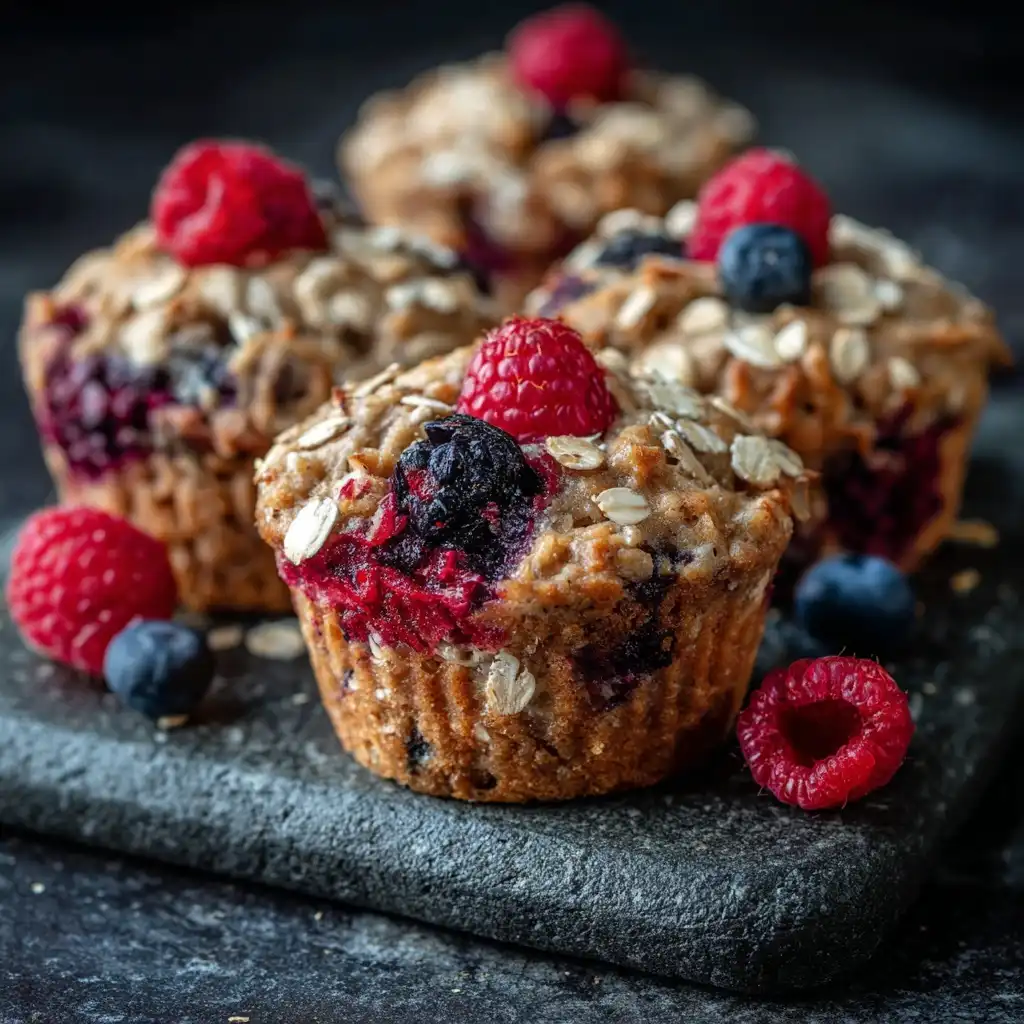
Welcome to a deliciously wholesome twist on a classic favorite—Triple Berry Oat Muffins! These moist, tender, and naturally sweetened muffins are bursting with the vibrant flavors of fresh or frozen blueberries, raspberries, and blackberries, all nestled in a hearty, fiber-rich oat base. Perfect for weekend breakfasts, grab-and-go snacks, or even as a nutrient-dense after-school treat, these muffins strike the ideal balance between indulgence and nourishment. With no refined sugar, minimal butter (or optional plant-based alternatives), and whole grain oats that lend a comforting chew and satisfying texture, they’re designed to delight both kids and adults alike—without compromising on taste or integrity.
The History
Oat muffins trace their roots back to early American and British baking traditions, where oats were prized not only for their affordability and shelf stability but also for their heartiness and versatility in rustic baked goods. As home bakers sought economical ways to stretch ingredients during times of scarcity—particularly in the 19th and early 20th centuries—oats became a staple addition to quick breads and muffins, often replacing part of the flour to add texture, nutrition, and subtle nuttiness. Berries, meanwhile, have long been celebrated across North America and Europe for their seasonal abundance, antioxidant richness, and natural sweetness—making them an intuitive pairing with oats in regional specialties like Scottish oat scones and New England berry cobblers. The modern “triple berry” concept emerged more recently, gaining traction in the 2000s with the rise of farmers’ markets, artisanal baking blogs, and health-conscious culinary movements emphasizing whole foods, phytonutrient diversity, and flavor layering. Triple Berry Oat Muffins, as we know them today, represent a harmonious fusion of tradition and innovation: honoring time-tested techniques while embracing botanical variety, mindful ingredient sourcing, and functional nutrition principles.
Ingredients Breakdown
Each component in this recipe has been thoughtfully selected—not just for flavor synergy, but for functional benefits, texture contribution, and culinary performance:
- Old-Fashioned Rolled Oats: The backbone of the muffin—providing soluble fiber (beta-glucan), gentle chew, and structural integrity without heaviness. Unlike quick oats (which can turn gummy) or steel-cut oats (too coarse), rolled oats hydrate evenly and retain pleasant texture through baking.
- Whole Wheat Pastry Flour (or All-Purpose + Whole Wheat Blend): Offers a tender crumb with added B vitamins, fiber, and minerals—more nutritious than standard all-purpose flour, yet lighter than regular whole wheat flour. A 50/50 blend ensures optimal rise and tenderness.
- Ripe Banana (Mashed): Acts as a natural binder, moisture booster, and mild sweetener. Its enzymatic activity also helps activate leavening agents and contributes subtle caramel notes when baked.
- Greek Yogurt (Plain, Unsweetened): Adds protein, acidity for lift, and creamy richness—reducing the need for excess fat while enhancing shelf life and moisture retention.
- Pure Maple Syrup or Raw Honey: Unrefined liquid sweeteners that caramelize beautifully, impart nuanced flavor, and support gentle browning. They also help retain moisture longer than granulated sugar alone.
- Unsalted Butter (or Coconut Oil / Applesauce for Vegan Option): Provides flakiness, aroma, and mouthfeel. Melted and cooled butter integrates seamlessly; coconut oil adds subtle tropical notes, while applesauce lends lightness and extra fiber.
- Eggs (or Flax Eggs): Essential for structure and emulsification. One large egg plus one yolk delivers ideal richness and binding; flax eggs (1 tbsp ground flax + 2.5 tbsp warm water per egg, rested 5 minutes) offer a reliable vegan alternative.
- Baking Powder & Baking Soda: A dual-leavening system—baking powder provides consistent lift, while baking soda reacts with the yogurt’s acidity to maximize rise and neutralize tang.
- Vanilla Extract & Ground Cinnamon: Warm, aromatic enhancers that deepen berry notes and round out sweetness without overpowering.
- Salt (Fine Sea Salt): A crucial flavor amplifier—even in small amounts, it heightens fruit brightness and balances earthy oat tones.
- Fresh or Frozen Triple Berries: Blueberries (mild, sweet-tart), raspberries (bright, floral), and blackberries (deep, jammy)—together creating a complex, layered berry profile. Frozen berries are not only convenient year-round but also release less juice mid-bake, minimizing streaking and color bleed.
- Oat Topping (Optional but Recommended): A crunchy, golden crown of oats, cinnamon, brown sugar (or coconut sugar), and cold butter—adding textural contrast, visual appeal, and nostalgic bakery-style finish.
Step-by-Step Recipe
- Prep Work (10 minutes): Preheat oven to 375°F (190°C). Line a standard 12-cup muffin tin with parchment liners or lightly grease with coconut oil or butter. In a small bowl, whisk together mashed banana, Greek yogurt, maple syrup, melted (and slightly cooled) butter, eggs, and vanilla until smooth and homogenous. Set aside.
- Dry Ingredients (5 minutes): In a large mixing bowl, combine rolled oats, whole wheat pastry flour, baking powder, baking soda, ground cinnamon, and fine sea salt. Whisk vigorously for 30 seconds to fully aerate and evenly distribute leaveners and spices.
- Combine Wet & Dry (2 minutes): Pour the wet mixture into the dry ingredients. Using a flexible silicone spatula, gently fold—just until no dry streaks remain. Do not overmix; a few lumps are perfectly acceptable and essential for tender muffins. Overmixing develops gluten and leads to dense, tough results.
- Fold in Berries (2 minutes): Gently fold in the triple berries—using frozen berries straight from the freezer (no thawing required) to prevent mushiness and color bleeding. If using fresh berries, toss them first in 1 tsp of flour to coat lightly and minimize sinking.
- Portion & Top (3 minutes): Divide batter evenly among the 12 muffin cups—fill each about ¾ full (approx. ¼ cup per muffin). For best results, use a large cookie scoop or measuring cup with a spout. Sprinkle generously with oat topping (if using): mix ¼ cup rolled oats, 1 tbsp brown sugar or coconut sugar, ½ tsp cinnamon, and 1 tbsp cold cubed butter; pinch and crumble over each muffin.
- Bake (20–24 minutes): Place muffin tin in center rack. Bake for 20 minutes, then rotate pan front-to-back for even browning. Continue baking 3–4 more minutes, or until a toothpick inserted into the center of a middle muffin comes out clean or with just a few moist crumbs (not wet batter). Tops should be golden and spring back lightly when touched.
- Cool & Set (15–20 minutes): Remove muffins from oven and let cool in the pan for 8 minutes—this allows internal structure to set and prevents collapse. Then transfer carefully to a wire rack to cool completely before storing or serving. Note: They’re delicate when hot; patience yields perfect texture.
Tips
- Freeze Your Berries: Always use frozen berries for best texture and color retention. They hold shape better and release less juice during mixing and baking—resulting in distinct berry pockets rather than purple swirls.
- Don’t Skip the Rest: Letting the batter sit for 5–10 minutes before portioning allows the oats to fully hydrate and the flour to absorb liquid, yielding a more cohesive, evenly textured crumb.
- Room-Temperature Eggs & Yogurt: Cold dairy can cause the melted butter to seize or create uneven emulsion. Let eggs and yogurt sit out for 15–20 minutes before mixing.
- Measure Oats by Weight When Possible: Volume measurements for oats vary widely based on packing. For consistency, use 120g (1 cup) rolled oats. A kitchen scale eliminates guesswork.
- Rotate Your Pan Mid-Bake: Most home ovens have hot spots—rotating at the 20-minute mark ensures uniform rise and browning, especially important for tall muffin tops.
- Underbake Slightly for Moisture: Pull muffins out when the centers *just* set—slight underbaking (as opposed to overbaking) preserves moistness and prevents dryness, which is common with high-fiber batters.
- Line with Parchment, Not Just Spray: Even with nonstick spray, parchment liners guarantee easy removal and preserve delicate bottoms—critical for oat-heavy muffins that can stick.
- Add Lemon Zest for Brightness: A scant ½ tsp finely grated lemon zest stirred into the wet mixture lifts the entire flavor profile, cutting through richness and enhancing berry freshness.
- Use Buttermilk Instead of Yogurt (Optional Swap): For extra tang and tenderness, substitute plain buttermilk for Greek yogurt—just reduce maple syrup by 1 tsp to balance acidity.
- Double the Batch & Freeze: These muffins freeze exceptionally well—cool completely, wrap individually in parchment, place in a freezer bag, and store up to 3 months. Thaw at room temperature or warm briefly in a toaster oven.
Variations and Customizations
This recipe serves as a versatile canvas—easily adapted to dietary needs, seasonal produce, pantry availability, and personal preference:
- Vegan Triple Berry Oat Muffins: Replace eggs with flax eggs (2 total), use melted coconut oil instead of butter, and swap Greek yogurt for unsweetened soy or coconut yogurt. Ensure maple syrup is certified vegan (some brands use bone char-filtered sugar in processing).
- Gluten-Free Version: Substitute oat flour (certified GF) + ½ cup almond flour + ¼ cup tapioca starch for the whole wheat pastry flour. Use certified gluten-free rolled oats throughout. Add ½ tsp xanthan gum if your blend doesn’t include it.
- Protein-Powered: Stir in 2–3 tbsp unflavored or vanilla plant-based protein powder (pea, brown rice, or hemp) into dry ingredients—and increase milk or yogurt by 1–2 tbsp to compensate for absorption.
- Low-Sugar/Keto-Friendly Adaptation: Replace maple syrup with ⅓ cup powdered erythritol or monk fruit blend + 1 tsp liquid stevia. Use almond flour instead of oat and wheat flours, and add 1 tbsp psyllium husk to bind. Note: Texture and rise will differ significantly.
- Autumn Spice Variation: Add ¼ tsp ground ginger, ⅛ tsp ground cloves, and 1 tbsp chopped toasted walnuts or pecans. Fold in 2 tbsp diced apple (tossed in lemon juice) along with berries.
- Lemon-Berry Swirl: Reserve 2 tbsp batter, stir in 1 tsp lemon zest + 1 tsp lemon juice + 1 tsp poppy seeds, then dollop over filled muffin cups and swirl gently with a toothpick.
- Overnight Oat Soak Method: Combine oats, flour, leaveners, and salt the night before; refrigerate with yogurt, banana, and ¼ cup milk. In the morning, stir in remaining wet ingredients and berries—ideal for meal-prep mornings.
- Jumbo Muffin Style: Fill a 6-cup jumbo muffin tin ¾ full and bake at 375°F for 28–32 minutes. These make impressive brunch centerpieces or satisfying portable meals.
- Mini Muffins for Kids: Fill a 24-cup mini muffin tin and bake for 12–14 minutes. Perfect for lunchboxes, toddler fingers, or portion-controlled snacking.
- Deconstructed Crumble Muffins: Layer 1 tbsp batter, 1 tsp berries, 1 tsp oat crumble, repeat—creating visible strata and maximizing crunch-to-soft ratio.
Health Considerations and Nutritional Value
Triple Berry Oat Muffins are engineered for nutritional density without sacrificing enjoyment—each muffin delivers synergistic benefits rooted in real-food ingredients:
- Fiber Powerhouse: One muffin contains approximately 4–5g of total fiber (2–3g soluble, 2g insoluble)—thanks to oats, whole wheat flour, berries, and banana. Soluble fiber supports healthy cholesterol metabolism and sustained energy; insoluble fiber promotes digestive regularity and satiety.
- Antioxidant-Rich Berries: Blueberries rank among the highest in anthocyanins; raspberries provide ellagic acid and vitamin C; blackberries deliver gallic acid and quercetin. Together, they offer broad-spectrum polyphenol support for cellular defense, cognitive health, and inflammation modulation.
- Lower Glycemic Impact: Natural sweeteners (maple syrup, banana), high-fiber grains, and protein from yogurt and eggs slow glucose absorption—making these muffins suitable for steady blood sugar management, especially when paired with a source of healthy fat (e.g., almond butter spread).
- No Refined Sugar or Artificial Additives: Free from high-fructose corn syrup, preservatives, artificial flavors, or hydrogenated oils—aligning with clean-label and whole-foods principles.
- Heart-Healthy Fats: Butter (in moderation) provides fat-soluble vitamins A, D, E, and K2; coconut oil supplies medium-chain triglycerides (MCTs); and berries contribute plant sterols—all contributing to cardiovascular resilience.
- Protein Support: At ~4–5g protein per muffin (higher with Greek yogurt and egg yolk), they offer meaningful muscle-supportive nutrition—especially valuable for breakfast or post-workout refueling.
- Nutrient Synergy: Vitamin C in berries enhances non-heme iron absorption from oats and whole wheat; calcium in yogurt improves magnesium utilization from oats; cinnamon may improve insulin sensitivity—demonstrating how ingredient pairings amplify benefits beyond isolated nutrients.
- Considerations: While naturally lower in sodium and saturated fat than many commercial muffins, those managing hypertension should monitor added salt; individuals with irritable bowel syndrome (IBS) may wish to limit raspberry quantity due to fructan content; and those with celiac disease must verify gluten-free oat certification to avoid cross-contamination.
Nutrition Facts (per standard muffin, approx. 105g, makes 12): Calories: 185 | Total Fat: 6.2g (Sat Fat: 3.4g) | Cholesterol: 42mg | Sodium: 138mg | Total Carbohydrates: 29.5g (Dietary Fiber: 4.3g | Sugars: 11.2g — naturally occurring) | Protein: 4.6g | Potassium: 187mg | Iron: 1.4mg | Calcium: 52mg | Vitamin C: 4.8mg
Ingredients
Makes 12 standard muffins
- 1 ½ cups (120g) old-fashioned rolled oats, plus ¼ cup for topping
- 1 cup (120g) whole wheat pastry flour (or ½ cup all-purpose + ½ cup whole wheat flour)
- 1 ½ tsp aluminum-free baking powder
- ½ tsp baking soda
- 1 tsp ground cinnamon
- ¼ tsp fine sea salt
- 1 large ripe banana (about ½ cup mashed)
- ½ cup (120g) plain nonfat or 2% Greek yogurt
- ⅓ cup (80ml) pure maple syrup or raw honey
- ¼ cup (60g) unsalted butter, melted and cooled (or refined coconut oil)
- 1 large egg + 1 large egg yolk (or 2 flax eggs for vegan)
- 1 ½ tsp pure vanilla extract
- 1 ½ cups (210g) mixed frozen blueberries, raspberries, and blackberries (no need to thaw)
- For Oat Topping (optional but highly recommended): ¼ cup rolled oats, 1 tbsp packed brown sugar or coconut sugar, ½ tsp ground cinnamon, 1 tbsp cold unsalted butter, cubed
Directions
- Preheat oven to 375°F (190°C). Line a 12-cup muffin tin with parchment liners or grease lightly with oil or butter.
- In a medium bowl, whisk together mashed banana, Greek yogurt, maple syrup, melted (and cooled) butter, egg + yolk, and vanilla until smooth and fully combined. Set aside.
- In a large bowl, whisk together rolled oats, whole wheat pastry flour, baking powder, baking soda, cinnamon, and salt until thoroughly blended and aerated.
- Pour wet mixture into dry ingredients. Using a silicone spatula, gently fold together until just combined and no dry flour remains—about 12–15 folds. Do not overmix.
- Let batter rest for 5 minutes to allow oats to begin absorbing moisture.
- Gently fold in frozen triple berries—being careful not to crush them. Use a light, lifting motion to distribute evenly.
- Divide batter evenly among prepared muffin cups, filling each about ¾ full (~¼ cup per cup).
- Prepare topping: In a small bowl, combine ¼ cup oats, brown sugar, cinnamon, and cold butter. Use fingers or a fork to crumble until pea-sized pieces form. Sprinkle generously over each muffin.
- Bake for 20 minutes, then rotate pan. Continue baking 3–4 more minutes, or until tops are golden brown and a toothpick inserted into center comes out clean or with moist crumbs.
- Let muffins cool in pan for 8 minutes. Carefully remove and transfer to a wire rack to cool completely before storing.
FAQ
- Can I use quick oats instead of old-fashioned oats?
- Not recommended. Quick oats absorb liquid too rapidly and break down easily, resulting in a gummy, pasty texture. Old-fashioned oats provide the ideal chew and structural support. Steel-cut oats are too coarse and won’t soften sufficiently in this bake time.
- Why do my muffins sink in the center?
- Sinking is usually caused by underbaking, opening the oven door too early (before 18 minutes), excessive leavener (double-check measurements), or overmixing the batter. Ensure your baking powder is fresh (replace every 6 months), and always test with a toothpick in the centermost muffin.
- Can I substitute all-purpose flour for whole wheat pastry flour?
- Yes—but texture and nutrition shift. All-purpose flour yields a lighter, more cake-like crumb but reduces fiber and micronutrients. For best balance, use ¾ cup all-purpose + ¼ cup whole wheat pastry flour—or add 1 tbsp ground flaxseed to boost fiber.
- My berries turned the batter purple—what went wrong?
- This is normal with raspberries and blackberries, especially if fresh or partially thawed. To minimize streaking: use frozen berries straight from freezer, toss berries in 1 tsp flour before folding in, and avoid overmixing. A little marbling is charming and harmless!
- How long do these muffins stay fresh?
- Stored in an airtight container at room temperature: up to 3 days. Refrigerated: up to 1 week (they’ll firm up slightly but retain moisture). Frozen (individually wrapped): up to 3 months. Reheat from frozen in a toaster oven at 325°F for 8–10 minutes for bakery-fresh warmth.
- Can I make these ahead for meal prep?
- Absolutely! Bake, cool completely, then freeze in labeled, dated bags. No thawing needed before eating—just warm or enjoy chilled. You can also prepare dry and wet mixes separately the night before and combine in the morning for same-day baking.
- Are these safe for babies or toddlers?
- Yes—with modifications: omit added sweetener (rely on banana and berries), use unsalted butter or avocado oil, ensure berries are cut if large (raspberries/blackberries often break apart naturally), and serve as finger food once cooled. Always supervise young children while eating.
- What if I don’t have Greek yogurt?
- Substitute plain regular yogurt (drain ¼ cup in cheesecloth for 15 mins to thicken), sour cream (slightly richer), buttermilk (reduce other liquids by 1 tbsp), or unsweetened applesauce (adds moisture but reduces protein). Avoid flavored or sweetened yogurts—they alter sweetness and acidity balance.
- Can I add nuts or seeds?
- Yes! Fold in ¼–½ cup chopped walnuts, pecans, or slivered almonds—or 2 tbsp chia, hemp, or sunflower seeds. Toast nuts first for deeper flavor and crunch. Reduce oats by 1 tbsp if adding more than ⅓ cup mix-ins to maintain batter consistency.
- Why does the recipe use both baking powder and baking soda?
- Baking powder provides baseline leavening, while baking soda reacts specifically with the acid in Greek yogurt to produce extra carbon dioxide—boosting rise, improving browning, and neutralizing any tang. Omitting either compromises volume, texture, and flavor balance.
Summary
Triple Berry Oat Muffins are a nutrition-forward, flavor-rich celebration of seasonal fruit and hearty whole grains—crafted to deliver moist tenderness, vibrant berry bursts, and wholesome satisfaction in every bite.
With customizable variations for dietary preferences, smart make-ahead strategies, and science-backed nutritional benefits, they’re more than just a muffin—they’re a joyful, intentional step toward sustainable, delicious wellness.