Introduction
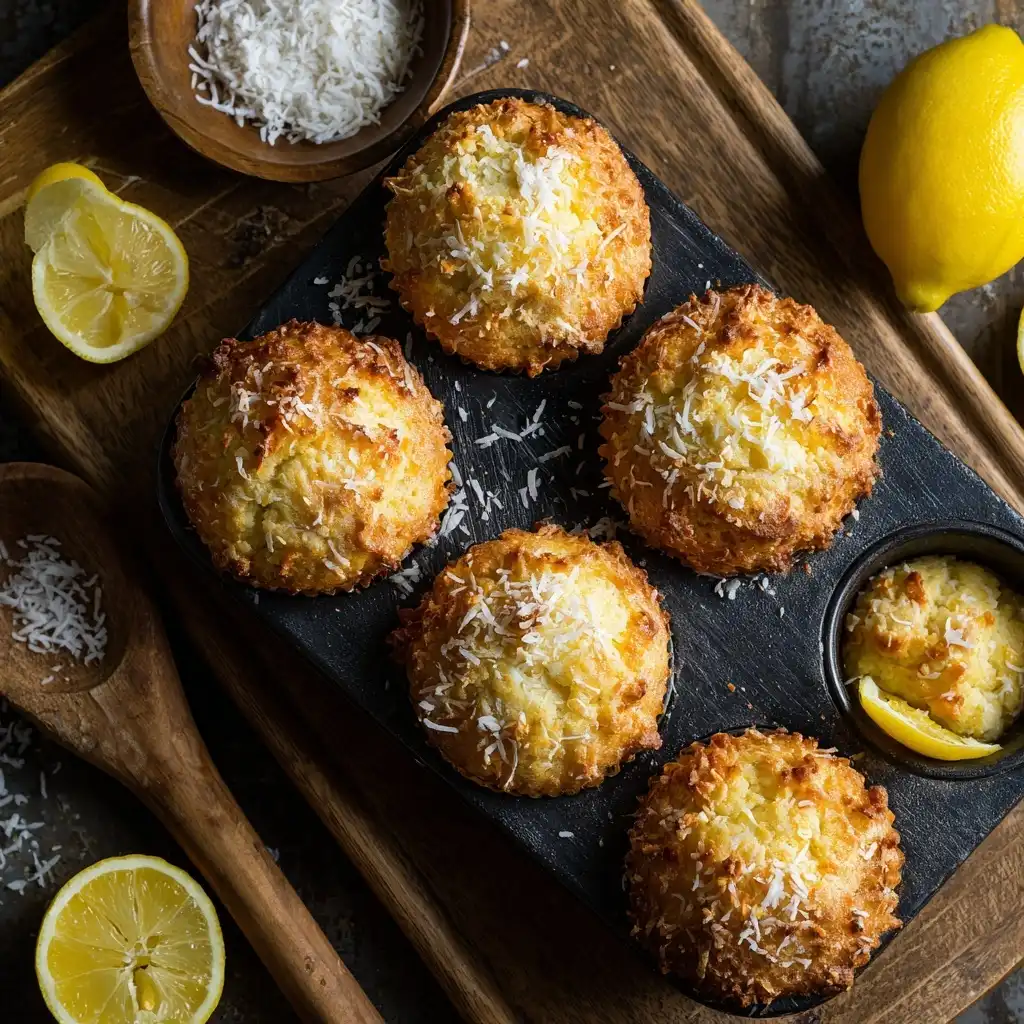
Imagine biting into a tender, golden-brown muffin that bursts with bright citrus zest and the rich, creamy sweetness of coconut—warm from the oven, fragrant with vanilla and toasted coconut flakes, and perfectly balanced between tart and sweet. Lemon Coconut Muffins are more than just a baked good; they’re a sensory celebration—a harmonious marriage of two beloved flavors that evoke sunshine, tropical breezes, and homemade comfort. Whether you’re fueling a busy weekday morning, packing a wholesome snack for school or work, or impressing guests at a spring brunch, these muffins deliver exceptional flavor, moist crumb, and elegant simplicity. Their versatility shines across seasons: refreshing in summer, uplifting in winter, and effortlessly festive year-round. This comprehensive guide dives deep—not only into how to bake flawless Lemon Coconut Muffins—but also into their cultural resonance, nutritional nuance, culinary evolution, and endless creative potential.
The History
Lemon and coconut individually boast centuries-old culinary legacies—lemons originating in northwestern India and spreading via trade routes through Persia, the Mediterranean, and eventually the Americas, while coconuts have been integral to South and Southeast Asian, Pacific Islander, African, and Caribbean cuisines since antiquity. However, the intentional pairing of lemon and coconut in baked goods is a relatively modern confluence, emerging prominently in mid-20th-century American home baking as refrigeration improved, citrus became more widely available year-round, and shredded coconut transitioned from luxury pantry item to mainstream supermarket staple. Early iterations appeared in community cookbooks and women’s magazines like Good Housekeeping and Betty Crocker’s Picture Cook Book (1950), where recipes emphasized accessibility and reliability—often using boxed cake mixes enhanced with lemon extract and flaked coconut. The 1980s and ’90s saw a rise in “gourmet muffin” culture—think café chains and artisanal bakeries—elevating the format with premium ingredients like fresh-squeezed lemon juice, unsweetened coconut milk, and toasted coconut garnishes. Today, Lemon Coconut Muffins reflect global fusion: inspired by Thai coconut–lemongrass desserts, Brazilian coconut-citrus cakes, and Australian lamingtons—but grounded in classic American muffin technique. They symbolize culinary globalization—where ancient ingredients meet contemporary wellness trends, artisanal baking science, and nostalgic comfort—all in one humble, handheld package.
Ingredients Breakdown
Every ingredient in Lemon Coconut Muffins plays a precise functional and flavor role—understanding *why* each is included unlocks mastery and empowers confident customization:
- All-Purpose Flour (2 cups / 240g): Provides essential gluten structure for lift and crumb integrity. A moderate protein content (10–12%) ensures tenderness without toughness. For gluten-free versions, a 1:1 certified GF blend with xanthan gum is recommended—not almond or coconut flour alone, which lack binding capacity.
- Granulated Sugar (3/4 cup / 150g): Sweetens, aids browning (Maillard reaction), and tenderizes by interfering with gluten formation. Organic cane sugar adds subtle molasses depth; coconut sugar offers lower glycemic impact but imparts caramel notes and darker color.
- Baking Powder (2 tsp) & Baking Soda (1/2 tsp): A dual-leavening system ensures optimal rise. Baking powder provides most lift (acid + base + heat), while baking soda neutralizes acidity from lemon juice and buttermilk (if used), enhancing spread and tenderness. Freshness is non-negotiable—test by mixing 1/4 tsp with hot water; vigorous fizzing = active.
- Salt (3/4 tsp fine sea salt): Not merely for seasoning—it sharpens all other flavors, controls yeast activity (if using sourdough starter), and strengthens gluten networks. Flaky finishing salt is reserved for topping only.
- Lemon Zest (from 2 large organic lemons): The aromatic oil-rich outer peel contains over 90% of lemon’s volatile flavor compounds—far more potent than juice alone. Microplane grating maximizes surface area and avoids bitter pith.
- Fresh Lemon Juice (1/3 cup / 80ml): Adds bright acidity to balance sweetness and activate leaveners. Bottled juice lacks complexity and may contain preservatives that dull flavor. Strain to remove pulp/seeds for smooth batter.
- Full-Fat Coconut Milk (1/2 cup / 120ml, canned, well-stirred): Imparts lush creaminess, fat for moisture, and authentic coconut flavor. Light coconut milk reduces richness and may cause dryness; avoid “coconut beverage” (diluted, often sweetened). Stirring the can thoroughly emulsifies thick cream and thinner liquid.
- Unsalted Butter (1/2 cup / 113g, melted & cooled): Adds richness, tenderness, and mouthfeel. Melted (not browned) butter integrates smoothly without overmixing risk. European-style butter (82–86% fat) yields even more luxurious crumb.
- Large Eggs (2, room temperature): Provide structure (protein coagulation), emulsification (binding fat/water), and leavening (trapped air expands). Cold eggs can seize melted butter or cause batter separation.
- Pure Vanilla Extract (1 tsp): Complements both lemon and coconut with warm, floral depth. Madagascar bourbon vanilla is ideal; avoid artificial “vanillin” for best aroma.
- Unsweetened Shredded Coconut (1 1/4 cups / 95g): Adds texture, chew, and concentrated coconut essence. Toasting before folding in deepens nuttiness. For visual appeal and crunch, reserve 2 tbsp for topping.
- Optional Additions: Lemon-infused simple syrup glaze (1/4 cup sugar + 1/4 cup lemon juice simmered 3 min, cooled), coconut cream drizzle (chilled full-fat coconut milk whipped with powdered sugar), or candied lemon peel garnish.
Step-by-Step Recipe
- Preheat & Prep: Position oven rack in center. Preheat to 375°F (190°C). Line a standard 12-cup muffin tin with parchment liners or grease generously with coconut oil. Toast 2 tbsp shredded coconut on a dry skillet over medium-low heat for 3–4 minutes until golden and fragrant; set aside for garnish.
- Dry Whisk: In a large bowl, whisk together flour, sugar, baking powder, baking soda, and salt until fully aerated and lump-free (≈30 seconds). Ensure even distribution of leaveners for consistent rise.
- Zest & Juice: Using a microplane, finely grate zest from 2 organic lemons directly into the dry mixture. Rub zest into dry ingredients with fingertips—this releases oils and distributes flavor evenly. Squeeze lemons to yield exactly 1/3 cup juice; strain and set aside.
- Wet Mix: In a separate medium bowl, whisk melted (cooled to lukewarm) butter, eggs, vanilla, coconut milk, and lemon juice until homogenous and slightly frothy (≈1 minute). No streaks of egg or separated fat should remain.
- Combine Gently: Pour wet mixture over dry ingredients. Add 1 1/4 cups shredded coconut. Using a silicone spatula, fold *just until no dry flour remains*—typically 12–15 strokes. Batter will be thick, lumpy, and shaggy. Overmixing develops gluten → tough, tunnelled muffins. Small flour pockets are preferable to overworked batter.
- Portion & Top: Divide batter evenly among 12 liners (≈3 tbsp per cup, or use a #20 scoop for uniformity). Smooth tops lightly. Sprinkle each with 1 tsp reserved toasted coconut and a tiny pinch of flaky sea salt.
- Bake Strategically: Place tin in preheated oven. Bake 18 minutes, then rotate tin front-to-back. Continue baking 4–6 minutes more, until deep golden brown, a toothpick inserted in center comes out clean *or* with moist crumbs (not wet batter), and edges pull slightly from liners. Total time: 22–24 minutes. Do not open oven before 18 minutes—temperature drop causes collapse.
- Cool Correctly: Let muffins rest in pan on a wire rack for 5 minutes—this sets structure. Then carefully transfer to rack to cool completely (≈45 minutes) before glazing or storing. Warm muffins steam themselves soggy if sealed.
Tips
- Room Temperature is Non-Negotiable: Cold eggs or coconut milk cause melted butter to re-solidify into greasy specks, leading to uneven texture and poor emulsion.
- Zest First, Juice Second: Zesting a cold lemon is easier and yields more oil; juicing afterward prevents bitterness from pith exposure.
- Measure Flour Properly: Spoon flour into measuring cup and level with straight edge. Scooping packs flour → up to 25% excess → dense muffins.
- Don’t Skip the Toast: Toasting coconut before adding enhances flavor and prevents raw, chalky texture. Toast again post-bake for extra crunch.
- Rotate Midway: Home ovens have hot spots. Rotating ensures even browning and rise—especially critical for tall muffin tops.
- Underbake Slightly, Not Over: Muffins continue cooking from residual heat. Pull them when centers are *just* set—they’ll firm up during cooling.
- Freeze Like a Pro: Cool completely, wrap individually in parchment + foil, freeze up to 3 months. Thaw overnight in fridge or 15 sec in microwave. Refresh in 350°F oven for 5 minutes.
- Scale Up Confidently: This recipe doubles flawlessly. Use two tins, staggered on center and lower racks, rotating positions halfway.
- Acid Balance Matters: If substituting buttermilk for coconut milk, reduce lemon juice to 2 tbsp to avoid excessive tang.
- Crumb Test Mastery: A “clean” toothpick means overbaked. Ideal: moist crumbs clinging to skewer, no wet batter.
Variations and Customizations
These muffins are a brilliant canvas for innovation—catering to dietary needs, seasonal produce, global inspirations, and playful experimentation:
- Gluten-Free: Replace flour with 1:1 GF blend (e.g., King Arthur Measure for Measure). Add 1/2 tsp xanthan gum if blend doesn’t include it. Increase coconut milk to 2/3 cup for added moisture.
- Vegan: Swap eggs for 2 flax eggs (2 tbsp ground flax + 6 tbsp water, rested 10 min); use refined coconut oil (neutral taste) instead of butter; ensure sugar is vegan-certified. Add 1 tsp apple cider vinegar to activate baking soda.
- Low-Sugar: Reduce granulated sugar to 1/2 cup and add 1/4 cup monk fruit-allulose blend. Compensate with extra lemon zest (3 lemons) and 1 tsp lemon oil for intensity.
- Tropical Fusion: Fold in 1/2 cup diced fresh mango, 1/4 cup macadamia nuts, and 1 tbsp lime zest. Top with crushed pineapple and toasted coconut.
- Blueberry-Lemon-Coconut: Gently fold in 1 cup fresh blueberries tossed in 1 tbsp flour. Add 1/2 tsp cinnamon to dry mix for warmth.
- Matcha-Coconut: Whisk 1 tbsp ceremonial-grade matcha into dry ingredients. Reduce lemon zest to 1 lemon; add 1/4 tsp white pepper for complexity.
- Coconut Cream Cheese Swirl: Beat 4 oz softened full-fat cream cheese, 1/4 cup sugar, and 1 egg yolk. Drop 1 tbsp onto each muffin cup before baking; swirl gently with toothpick.
- Mini Muffins: Bake in 24-cup mini tin at 375°F for 11–13 minutes. Perfect for parties, lunchboxes, or portion control.
- Savory-Sweet Herb: Omit lemon juice/zest; add 2 tbsp finely chopped fresh rosemary, 1/2 cup grated Parmesan, and 1/4 cup dried cranberries.
- Protein-Packed: Add 1/4 cup unflavored collagen peptides or vanilla whey isolate to dry ingredients. Increase coconut milk by 2 tbsp.
Health Considerations and Nutritional Value
A single standard Lemon Coconut Muffin (1/12th of this recipe) provides approximately:
- Calories: 245 kcal
- Total Fat: 12g (incl. 9g saturated from coconut milk/butter)
- Carbohydrates: 31g (incl. 18g sugars, 1g fiber)
- Protein: 3g
- Vitamin C: ~12mg (13% DV) from lemon juice/zest
- Manganese: ~0.5mg (22% DV) from coconut
- Iron & Copper: Trace amounts from coconut and whole grain flours (if substituted)
Wellness Notes: While not low-calorie, these muffins offer functional benefits: lemon zest delivers polyphenols (hesperidin, eriocitrin) with antioxidant and anti-inflammatory properties; coconut provides medium-chain triglycerides (MCTs) linked to sustained energy and satiety; and the absence of refined oils or artificial additives supports clean eating goals. For blood sugar management, pair with Greek yogurt or a handful of almonds to slow glucose absorption. Those with coconut allergies must avoid entirely (cross-reactivity with tree nuts is rare but possible). Individuals monitoring sodium should note that 3/4 tsp salt contributes ~420mg sodium—reduce to 1/2 tsp if needed (compensate with extra lemon zest for brightness). Overall, these muffins represent mindful indulgence—nutrient-dense, minimally processed, and crafted with intention rather than convenience.
Ingredients
- 2 cups (240g) all-purpose flour
- 3/4 cup (150g) granulated sugar
- 2 tsp aluminum-free baking powder
- 1/2 tsp baking soda
- 3/4 tsp fine sea salt
- Zest of 2 large organic lemons (≈2 tbsp)
- 1/3 cup (80ml) fresh lemon juice (from ~2 lemons)
- 1/2 cup (120ml) full-fat canned coconut milk, well-stirred
- 1/2 cup (113g) unsalted butter, melted and cooled to lukewarm
- 2 large eggs, room temperature
- 1 tsp pure vanilla extract
- 1 1/4 cups (95g) unsweetened shredded coconut, plus 2 tbsp for topping
- Flaky sea salt, for finishing (optional)
Directions
- Preheat oven to 375°F (190°C). Line a 12-cup muffin tin with parchment liners or grease thoroughly. Toast 2 tbsp shredded coconut in a dry skillet over medium-low heat until golden and fragrant, 3–4 minutes; set aside to cool.
- In a large bowl, whisk together flour, sugar, baking powder, baking soda, and salt. Add lemon zest and rub into dry ingredients with fingertips until fragrant and evenly distributed.
- Pour wet mixture over dry ingredients. Add 1 1/4 cups shredded coconut. Using a silicone spatula, fold gently 12–15 times until *just combined*. Do not overmix—batter will be thick and lumpy.
- Divide batter evenly among 12 prepared cups (≈3 tbsp each). Smooth tops. Sprinkle each with 1 tsp toasted coconut and a pinch of flaky salt.
- Bake for 18 minutes, rotate tin, then bake 4–6 minutes more until deeply golden, springs back when lightly pressed, and toothpick shows moist crumbs (not wet batter).
- Cool in pan for 5 minutes, then transfer to wire rack to cool completely before serving or storing.
FAQ
- Can I use sweetened shredded coconut?
- Yes—but reduce granulated sugar by 2 tbsp to prevent cloying sweetness. Note: Sweetened coconut adds extra moisture; bake 1–2 minutes longer.
- Why did my muffins sink in the center?
- Likely causes: 1) Oven temperature too low (use oven thermometer), 2) Underbaked (toothpick showed wet batter), 3) Overmixed batter (gluten overdeveloped), or 4) Leaveners expired (test baking powder/soda first).
- Can I make batter ahead of time?
- Yes—refrigerate unbaked batter up to 24 hours. Stir gently before portioning; it will thicken slightly—add 1 tsp coconut milk if too stiff. Do not freeze raw batter.
- How do I prevent coconut from sinking to the bottom?
- Toss shredded coconut with 1 tbsp of the measured flour before folding in. This light coating helps suspend it evenly.
- Are these muffins dairy-free?
- As written, no—butter is dairy. Substitute with refined coconut oil (same amount, melted) for dairy-free. Ensure sugar is vegan-certified.
- Can I use coconut flour instead of all-purpose?
- No—coconut flour absorbs 4–6x more liquid and lacks gluten. It requires egg-heavy, highly modified recipes. Stick to 1:1 GF blends for substitution.
- My muffins are dry—what went wrong?
- Most common causes: overbaking, too much flour (scooped, not spooned), insufficient fat (substituted low-fat coconut milk), or omitting coconut milk entirely.
- Can I add blueberries without turning them to mush?
- Absolutely—toss 1 cup fresh or frozen (unthawed) blueberries in 1 tbsp flour before folding in. Avoid stirring more than 5 times after adding.
- How long do they keep?
- At room temperature in an airtight container: 2 days. Refrigerated: up to 5 days. Frozen (wrapped tightly): 3 months. Reheat from frozen at 350°F for 8–10 minutes.
- Can I make them in a loaf pan?
- Yes—pour into a greased 9×5-inch loaf pan. Bake at 350°F for 50–60 minutes, until toothpick comes out clean. Cool in pan 15 minutes before removing.
Summary
Lemon Coconut Muffins are a masterclass in balanced flavor, textural harmony, and adaptable baking science—uniting zesty citrus vibrancy with tropical coconut richness in a tender, golden, bakery-worthy package.
With meticulous attention to ingredient quality, temperature control, gentle mixing, and strategic toasting, these muffins transform simple pantry staples into joyful, nourishing, and endlessly customizable treats suitable for every occasion and dietary preference.