Introduction
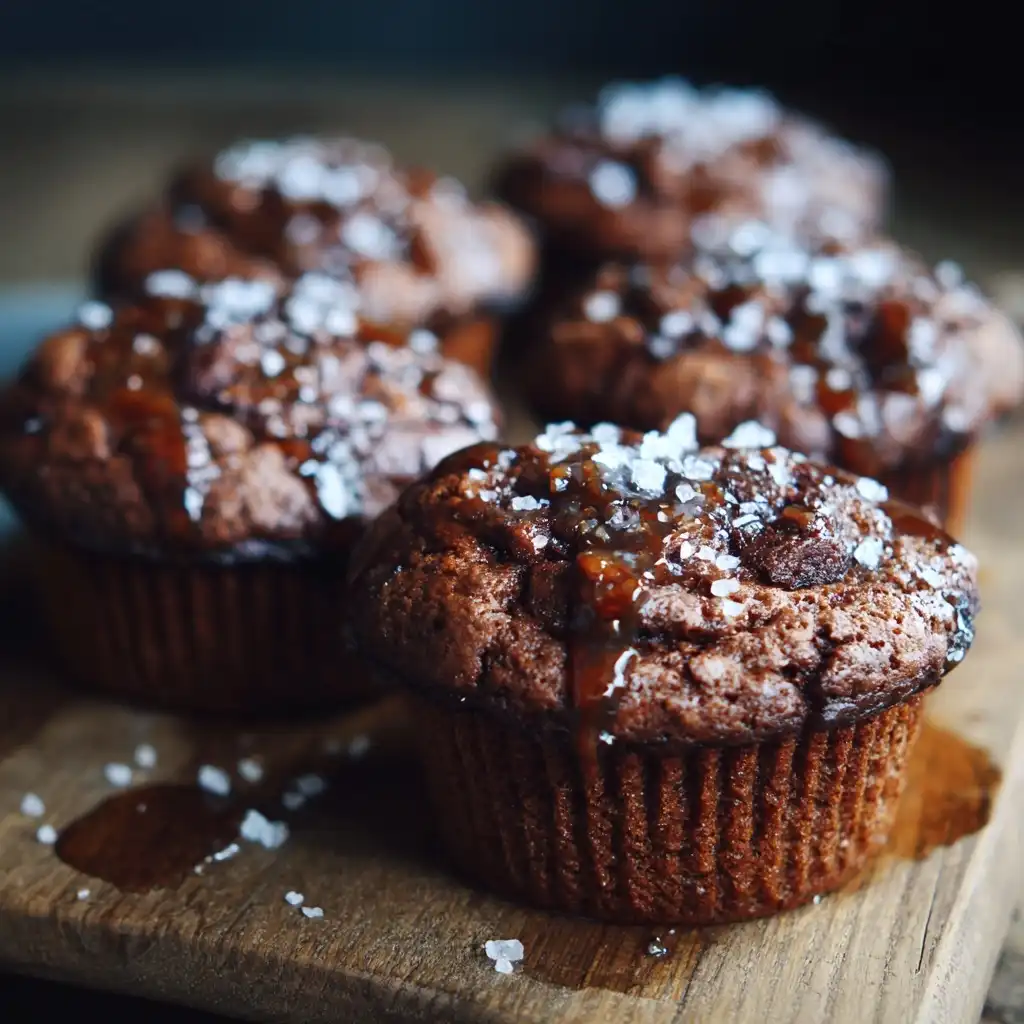
Salted caramel chocolate muffins represent the perfect marriage of indulgence and balance—rich dark chocolate, velvety salted caramel swirls, and tender, bakery-style crumb—all baked into one irresistibly moist, golden-domed treat. Far more sophisticated than a basic chocolate muffin, these decadent delights offer layers of flavor and texture: deep cocoa notes, buttery-sweet caramel with a delicate, lingering salinity, and a subtle warmth from premium vanilla and espresso (optional but highly recommended). Whether served warm with a scoop of vanilla bean ice cream for dessert, enjoyed alongside morning coffee as an elevated breakfast splurge, or gifted in a rustic paper liner bundle for special occasions, salted caramel chocolate muffins effortlessly bridge the gap between comfort food and gourmet pastry. This comprehensive guide walks you through every nuance—from historical roots and ingredient science to foolproof techniques, dietary adaptations, and nutritional insights—so you can master this beloved confection with confidence and creativity.
The History
The evolution of the salted caramel chocolate muffin is a delicious convergence of three distinct culinary traditions, each contributing essential elements to its modern identity. Salted caramel itself traces back to 19th-century Brittany, France, where sea salt harvested from coastal marshes was first deliberately combined with slow-cooked sugar and cream—creating a rich, complex sauce that balanced sweetness with mineral depth. Its global renaissance began in the early 2000s, popularized by Parisian chocolatier Pierre Hermé and later embraced by American pastry chefs like David Lebovitz. Chocolate muffins, meanwhile, have roots in early 20th-century American home baking, evolving from simple “quick breads” made with chemical leaveners like baking powder—offering accessibility and consistency long before artisanal bakeries flourished. The intentional fusion of salted caramel and chocolate within a muffin format emerged prominently in the late 2000s–early 2010s, coinciding with the rise of food blogging, Instagram-driven dessert culture, and consumer demand for “sweet-and-savory” contrasts. High-end cafés in London, New York, and Melbourne began featuring limited-edition salted caramel chocolate muffins, often incorporating house-made caramel, single-origin cocoa, and flaky sea salt garnishes. Today, the recipe stands as a hallmark of contemporary baking—symbolizing both nostalgic familiarity and modern sophistication—and continues to inspire countless riffs across professional kitchens and home ovens alike.
Ingredients Breakdown
Understanding *why* each ingredient matters—not just *what* it does—is key to achieving consistent, restaurant-quality results. Below is a meticulous analysis of every component in the salted caramel chocolate muffin batter and topping:
- All-Purpose Flour (240g / 2 cups): Provides essential gluten structure. A moderate protein content (~10–11%) ensures tenderness without toughness. For optimal lift and crumb integrity, we recommend spooning and leveling (not scooping) to avoid over-compaction.
- Unsweetened Cocoa Powder (60g / ¾ cup), Dutch-processed preferred: Imparts deep, nuanced chocolate flavor with reduced acidity. Dutch-processing alkalizes the cocoa, enhancing solubility and yielding smoother integration into batters. Natural cocoa may be substituted—but expect a slightly sharper tang and potential leavening adjustments (add ¼ tsp baking soda if using natural cocoa).
- Granulated Sugar (200g / 1 cup): Sweetens, tenderizes (by interfering with gluten formation), and aids browning via caramelization. A portion is reserved for swirling—ensuring pockets of intense, glossy caramel flavor.
- Brown Sugar (80g / ⅓ cup, packed light or dark): Adds moisture, chewiness, and molasses-derived complexity. Dark brown sugar contributes deeper toffee notes; light offers milder warmth. Its hygroscopic nature helps retain muffin softness for up to 4 days.
- Baking Powder (2 tsp) + Baking Soda (½ tsp): A dual-leavening system. Baking powder provides most of the lift during oven spring, while baking soda neutralizes acidity from cocoa and brown sugar—boosting rise, browning, and flavor development. Freshness is non-negotiable: test powder by mixing ½ tsp with hot water (should fizz vigorously); replace if >6 months old.
- Fine Sea Salt (1 tsp): Enhances all other flavors—including the subtle bitterness of cocoa and the richness of caramel. Not merely “for saltiness,” it acts as a biochemical flavor amplifier. Use fine (not flaky or kosher) for even distribution.
- Eggs (2 large, room temperature): Emulsify fat and liquid, trap air for structure, and contribute to richness and color. Room temperature eggs incorporate more efficiently and reduce batter curdling risk when adding melted butter.
- Buttermilk (240ml / 1 cup, full-fat, room temp): Acidic pH activates baking soda, adds tangy brightness that cuts chocolate’s density, and yields ultra-tender crumb thanks to lactic acid’s gentle gluten relaxation. Substitute with DIY buttermilk (1 cup whole milk + 1 tbsp lemon juice/vinegar, rested 5 min).
- Unsalted Butter (113g / ½ cup), melted & cooled: Delivers unmatched richness, mouthfeel, and flakiness in the crust. Melted (not clarified) preserves milk solids that caramelize at the edges. Cooling prevents cooking eggs upon mixing.
- Pure Vanilla Extract (2 tsp): Contains hundreds of flavor compounds that harmonize chocolate and caramel. Opt for Madagascar bourbon vanilla for creamy, floral depth—or Tahitian for fruity, anise-tinged nuance.
- Espresso Powder (1 tsp, optional but transformative): Doesn’t make muffins taste like coffee—it intensifies chocolate’s inherent bitterness and aroma without adding caffeine heaviness. Instant espresso (not regular instant coffee) is essential for solubility and potency.
- High-Quality Semi-Sweet or Bittersweet Chocolate Chips (180g / 1 cup): Use chips with ≥60% cacao for balanced sweetness and snap. Mini chips distribute more evenly; chopped chocolate bars create melty pools. Avoid “baking chips” with stabilizers—they resist melting and yield waxy texture.
- Homemade Salted Caramel Swirl (240g / 1 cup): Store-bought caramel often contains preservatives, excess corn syrup, and inconsistent salt levels. Our recommended homemade version uses granulated sugar, heavy cream, unsalted butter, and flaky sea salt—cooked to firm-ball stage (245°F/118°C) for ideal viscosity: thick enough to hold swirls, fluid enough to ripple without disappearing.
- Flaky Sea Salt (Maldon or Fleur de Sel) for finishing: Applied *after* baking, it delivers textural contrast and bursts of clean salinity that elevate each bite. Never substitute table salt—its sharp, metallic harshness overwhelms delicate caramel-chocolate harmony.
Step-by-Step Recipe
This method prioritizes control, consistency, and maximum flavor development—structured to prevent common pitfalls (tunneling, doming cracks, dense crumb, or caramel sinking). Follow precisely for best results:
- Prep & Preheat: Line a standard 12-cup muffin tin with high-quality parchment liners (or grease + flour if preferred). Position oven rack in center. Preheat to 425°F (220°C)—this high initial heat creates dramatic oven spring for tall, bakery-style domes.
- Make the Salted Caramel (if not pre-made): In a heavy-bottomed saucepan, melt 1 cup granulated sugar over medium heat, swirling *only* (no stirring) until amber-colored (approx. 8–10 min). Remove from heat; carefully whisk in ½ cup heavy cream (mixture will bubble violently). Return to low heat, stir until smooth. Whisk in 3 tbsp unsalted butter and 1 tsp flaky sea salt until fully incorporated. Cool to lukewarm (10–15 min)—it should coat the back of a spoon but remain fluid.
- Dry Whisk: In a large bowl, thoroughly whisk together flour, cocoa powder, granulated sugar, brown sugar, baking powder, baking soda, and salt until no streaks remain and dry ingredients are aerated (≈1 min). This ensures even leavening and eliminates cocoa clumps.
- Wet Mix: In a separate medium bowl, whisk eggs until frothy (≈30 sec). Whisk in buttermilk, melted/cooled butter, vanilla, and espresso powder until homogenous. No separation should occur.
- Combine Batter: Pour wet mixture into dry mixture. Using a flexible silicone spatula, fold *just until no dry flour remains* (≈12–15 strokes). Overmixing develops gluten → tough, tunnel-ridden muffins. Batter will be thick, glossy, and slightly lumpy—this is correct.
- Incorporate Chocolate: Gently fold in chocolate chips until evenly dispersed. Do not overfold—chips should retain shape.
- Portion & Swirl: Divide batter evenly among 12 liners (≈¾ full, ~65g each). Spoon 1 tbsp cooled caramel onto center of each. Using a toothpick or skewer, drag gently through batter in figure-eight or “S” motions—3–4 swipes per muffin. Avoid over-swirling; aim for visible, marbled ribbons—not uniform blending.
- Bake Hot, Then Reduce: Immediately place tin in preheated 425°F oven. Bake for 5 minutes—this sets the exterior and triggers rapid rise. WITHOUT opening oven door, reduce temperature to 350°F (175°C). Continue baking 15–18 minutes, until tops are set, springs back lightly when touched, and a toothpick inserted *between* caramel swirls (not directly into them) comes out with moist crumbs—not wet batter. Total bake time: 20–23 minutes.
- Cool Strategically: Let muffins cool in pan for 5 minutes—this allows structure to stabilize. Transfer to a wire rack. Cool completely (≈45 min) before glazing or storing. Warm muffins compress under weight and steam softens texture.
- Finish: Right before serving, sprinkle each muffin generously with flaky sea salt—pressing gently so crystals adhere.
Tips
Mastering salted caramel chocolate muffins goes beyond measurements—it’s about technique, timing, and sensory awareness. Here are field-tested, chef-vetted tips refined over hundreds of batches:
- Room Temperature is Non-Negotiable: Cold eggs or buttermilk cause melted butter to seize, creating grainy, separated batter. Set dairy and eggs out 60+ minutes ahead—or submerge eggs in warm water for 5 min and microwave buttermilk in 5-sec bursts.
- Weigh Ingredients Always: Volume measurements for flour and cocoa vary wildly (up to ±25g per cup). A digital kitchen scale ($20) eliminates inconsistency—the #1 cause of dense or dry muffins.
- Cool Caramel to “Spoon-Coating” Stage: Too hot? It melts chocolate and sinks. Too cold? It seizes into hard ribbons. Test by dipping a spoon—if caramel coats it evenly and holds a slight trail when lifted, it’s perfect.
- Swirl Last, Swirl Lightly: Add caramel *after* portioning batter. Swirling before filling causes uneven distribution. Use a clean toothpick for each muffin to prevent cross-contamination of caramel into batter.
- Resist the Peek: Opening the oven before 15 minutes collapses delicate steam pockets. Use the oven light and timer instead.
- Check Doneness Correctly: Insert toothpick in the *center edge* of the muffin—not the caramel pool. Caramel reads “wet” even when baked; crumbs indicate doneness.
- Rotate Pan Mid-Bake (if needed): If your oven has hot spots, rotate tin 180° at the 10-minute mark (after temp reduction) for even browning.
- Store Smart: Keep cooled muffins in an airtight container at room temp for 2 days, or freeze unfrosted for up to 3 months. Thaw overnight in fridge, then warm 10 sec in microwave or 5 min in 325°F oven.
- Revive Stale Muffins: Wrap individually in foil and bake at 300°F for 8–10 minutes—they’ll regain moisture and develop new caramelized edges.
- Scale with Confidence: This recipe doubles seamlessly. Use two tins, staggered on center and lower racks, rotating positions halfway through bake.
Variations and Customizations
While the classic salted caramel chocolate muffin is sublime, its versatile base welcomes endless innovation—catering to dietary needs, seasonal produce, global flavors, and creative whims. All variations maintain structural integrity and balanced sweetness/salt ratios:
- Gluten-Free: Substitute flour blend (e.g., Bob’s Red Mill 1:1 Baking Flour + ½ tsp xanthan gum). Add 1 extra tbsp buttermilk—GF flours absorb more liquid. Expect slightly denser crumb; enhance with 1 tbsp ground flaxseed for binding.
- Vegan: Replace eggs with “flax eggs” (2 tbsp ground flax + 6 tbsp water, rested 10 min), butter with refined coconut oil (neutral taste), and buttermilk with almond milk + 1 tbsp apple cider vinegar. Use dairy-free chocolate chips. Note: Vegan versions benefit from 5 extra minutes baking time.
- Protein-Packed: Add 2 scoops (60g) unflavored whey or collagen peptides to dry mix. Compensate with 2 tbsp extra buttermilk. Flavor remains clean; texture gains subtle chew.
- Orange-Infused: Add 2 tsp finely grated orange zest to wet mix + 1 tbsp Grand Marnier or Cointreau. Swirl with dark chocolate–orange caramel (infuse cream with orange peel while heating).
- Spiced Chai: Steep 2 chai tea bags in warm buttermilk for 10 min, then strain. Add 1 tsp ground cinnamon, ¼ tsp cardamom, and ⅛ tsp ground ginger to dry mix.
- Peanut Butter Swirl: Replace ¼ cup caramel with creamy, no-stir peanut butter. Swirl in same pattern—creates rich, salty-savory counterpoint to chocolate.
- Stout-Enhanced: Substitute ¼ cup buttermilk with room-temp Guinness or oatmeal stout. Adds roasted malt depth and natural carbonation for extra lift.
- Mini Muffins: Portion into 24-cup tin. Bake at 425°F for 4 min, then 350°F for 9–11 min. Perfect for parties or portion control.
- Stuffed Center: Press ½ tsp caramel + 1 chocolate square into center of each portioned batter before swirling—creates molten core.
- Maple-Bourbon Caramel: Replace 2 tbsp heavy cream in caramel with pure maple syrup; add 1 tbsp bourbon to finished caramel. Deep, smoky-sweet complexity.
Health Considerations and Nutritional Value
While undeniably indulgent, salted caramel chocolate muffins can be contextualized within a balanced diet—especially when mindfully prepared and portioned. Below is a detailed nutritional analysis per standard muffin (based on 12 servings, using full-fat ingredients and homemade caramel), followed by evidence-based health considerations:
| Nutrient | Amount per Muffin | % Daily Value (DV)* |
|---|---|---|
| Calories | 385 kcal | — |
| Total Fat | 18.2 g | 23% |
| Saturated Fat | 10.4 g | 52% |
| Cholesterol | 62 mg | 21% |
| Sodium | 295 mg | 13% |
| Total Carbohydrates | 52.3 g | 19% |
| Dietary Fiber | 2.8 g | 10% |
| Total Sugars | 32.1 g | — |
| Added Sugars | 28.4 g | 57% |
| Protein | 5.6 g | 11% |
| Iron | 2.4 mg | 13% |
| Magnesium | 48 mg | 11% |
| Antioxidants (ORAC) | ~1,200 µmol TE | — |
*Based on 2,000-calorie diet. DVs are approximate and vary by age/gender.
Key Health Notes:
- Cocoa Benefits: Rich in flavanols (epicatechin, procyanidins), linked in studies to improved endothelial function, reduced blood pressure, and enhanced cognitive blood flow. Choose cocoa with ≥70% non-alkalized flavanol retention (Dutch-processed retains ~60%, natural retains ~80%).
- Salt Paradox: While sodium intake should be moderated (<2,300 mg/day), the *type* matters. Unrefined sea salt contains trace minerals (magnesium, potassium, calcium), and the small amount used here (≈120mg per muffin) supports electrolyte balance—not hypertension risk.
- Caramel Context: Homemade caramel avoids high-fructose corn syrup and artificial preservatives found in commercial versions. Its glycemic load is moderated by fat and fiber in the muffin matrix—slowing glucose absorption versus plain candy.
- Portion Awareness: At 385 kcal, one muffin equals ~19% of a 2,000-kcal diet. Pair with Greek yogurt or berries to add protein/fiber and lower overall glycemic impact.
- Not for Medical Diets: Not suitable for strict low-sugar (diabetes), low-FODMAP (lactose in buttermilk), or low-sodium (hypertension) regimens without significant modification and RD consultation.
- Functional Upgrades: Boost nutrition by replacing ¼ cup flour with oat bran (adds beta-glucan), using blackstrap molasses instead of brown sugar (iron/calcium), or stirring in 2 tbsp chia seeds (omega-3s, fiber).
Ingredients
Makes 12 standard muffins
- 240g (2 cups) all-purpose flour, spooned & leveled
- 60g (¾ cup) Dutch-processed unsweetened cocoa powder
- 200g (1 cup) granulated sugar
- 80g (⅓ cup, packed) light or dark brown sugar
- 2 tsp baking powder
- ½ tsp baking soda
- 1 tsp fine sea salt
- 2 large eggs, room temperature
- 240ml (1 cup) full-fat buttermilk, room temperature
- 113g (½ cup) unsalted butter, melted & cooled to 100°F (38°C)
- 2 tsp pure vanilla extract
- 1 tsp instant espresso powder (optional but recommended)
- 180g (1 cup) semi-sweet or bittersweet chocolate chips (60–70% cacao)
- 240g (1 cup) homemade salted caramel, cooled to spoon-coating consistency
- Flaky sea salt (e.g., Maldon), for finishing
Directions
- Preheat oven to 425°F (220°C). Line a 12-cup muffin tin with parchment liners.
- Prepare salted caramel: In a heavy 2-qt saucepan, heat 1 cup granulated sugar over medium heat, swirling pan gently (do not stir) until sugar melts and turns deep amber (8–10 min). Remove from heat; carefully whisk in ½ cup heavy cream (mixture will bubble vigorously). Return to low heat; whisk until smooth (~1 min). Whisk in 3 tbsp unsalted butter and 1 tsp flaky sea salt. Cool 10–15 min until lukewarm and spoon-coating.
- In a large bowl, whisk together flour, cocoa powder, granulated sugar, brown sugar, baking powder, baking soda, and salt until fully combined and aerated.
- Pour wet mixture into dry mixture. Using a silicone spatula, fold gently until *just* combined and no dry flour remains (12–15 strokes). Batter will be thick and slightly lumpy.
- Fold in chocolate chips until evenly distributed.
- Divide batter evenly among lined muffin cups (≈65g each, filling ¾ full). Spoon 1 tbsp cooled caramel onto center of each. Drag a toothpick through batter in a gentle figure-eight motion 3–4 times to swirl.
- Immediately place tin in preheated oven. Bake at 425°F for 5 minutes. Without opening door, reduce temperature to 350°F (175°C). Bake 15–18 more minutes, until tops are puffed and spring back lightly, and a toothpick inserted *between* swirls comes out with moist crumbs.
- Let cool in pan for 5 minutes. Transfer to wire rack to cool completely (≈45 min).
- Right before serving, sprinkle each muffin generously with flaky sea salt.
FAQ
- Can I use store-bought caramel sauce?
- Yes—but with caveats. Most commercial brands contain stabilizers (xanthan gum, carrageenan) and excess water, causing caramel to thin out, sink, or create soggy pockets. If using, reduce quantity to 2 tbsp per muffin, chill thoroughly, and swirl minimally. Homemade is strongly preferred for texture and flavor control.
- Why did my muffins sink in the middle?
- Sinking usually indicates underbaking (moisture collapse), excessive leavening (check expiration dates), or overmixing (gluten overdevelopment). Ensure toothpick test is done *between* caramel ribbons—not in them—and avoid opening oven before 15 minutes.
- Can I make these ahead and freeze?
- Absolutely. Cool completely, wrap individually in plastic wrap + foil, and freeze up to 3 months. Thaw at room temperature 2 hours or overnight in fridge. Reheat wrapped in foil at 325°F for 10 minutes for fresh-baked texture.
- My batter looks too thick/thin—did I do something wrong?
- Thickness varies with humidity and flour brand. Ideal batter should mound softly and hold shape when scooped. If too thick, add buttermilk 1 tsp at a time. If too thin (rare), add flour ½ tsp at a time—never more than 1 tsp total.
- What’s the best chocolate for this recipe?
- Use chips or chopped chocolate with 60–70% cacao. Higher percentages (85%) may overwhelm caramel’s sweetness; milk chocolate lacks structural integrity when baked. Brands like Ghirardelli Bittersweet, Valrhona Guanaja, or Callebaut 60/40 deliver ideal balance.
- Can I omit the espresso powder?
- Yes—it’s optional. Without it, chocolate flavor will be milder and less complex. For similar depth, substitute ¼ tsp instant coffee or omit entirely.
- Why do you start at 425°F?
- The high initial heat rapidly expands air bubbles and sets the outer crumb before internal moisture migrates outward—creating dramatic domes and preventing flat, dense tops. It’s a pro technique used in top-tier bakeries.
- How do I prevent caramel from bleeding into the batter?
- Cool caramel adequately (to 90–100°F), use minimal swirls (3–4), and ensure batter isn’t overly warm when swirling. Also, avoid overfilling cups—the caramel needs space to stay suspended.
- Are these safe for kids?
- Yes—no alcohol or