Red Velvet Cream Cheese Cupcakes: A Decadent Delight
The History of Red Velvet Cream Cheese Cupcakes
The story of red velvet cupcakes begins in the early 20th century with the emergence of red velvet cake, a dessert that originated in the American South. The exact origins are shrouded in culinary mystery and myth, but many believe the color initially came from a natural reaction between cocoa powder and acidic ingredients like buttermilk and vinegar. This chemical interaction would produce a faint reddish hue due to anthocyanin pigments in non-alkalized cocoa. The vibrant red we know today, however, didn’t become standard until food coloring became widely available and affordable in the mid-20th century.
The Waldorf-Astoria Hotel in New York is often credited with popularizing red velvet cake, with tales of guests requesting the recipe after dining there and being sent a bill for it—sparking controversy and intrigue. While this may be more legend than fact, it helped cement the cake’s luxurious reputation. Over time, bakers began making smaller versions—cupcakes—which allowed for individual servings and creative frosting applications. Enter cream cheese frosting: rich, tangy, and perfectly balanced against the subtly sweet, cocoa-kissed crumb. The pairing of red velvet with cream cheese frosting became iconic, especially around holidays like Valentine’s Day and Christmas, when its bold crimson shade adds festive flair.
Today, red velvet cream cheese cupcakes are a staple at bakeries, weddings, birthdays, and family gatherings across the United States and beyond. Their striking appearance, moist texture, and luxurious flavor profile have made them beloved classics in modern baking culture. Whether enjoyed as a nostalgic treat or a gourmet indulgence, these cupcakes represent a harmonious blend of history, chemistry, and artistry.
Ingredients Breakdown: What Makes These Cupcakes Special?
The magic of red velvet cream cheese cupcakes lies not just in their appearance, but in the careful balance of ingredients that create their signature taste and texture. Each component plays a crucial role in achieving the perfect cupcake:
- All-Purpose Flour: Provides the structural base for the cupcakes. It contains gluten-forming proteins that give the batter strength while remaining tender when properly mixed.
- Cocoa Powder (Unsweetened, Natural): Adds a subtle chocolate flavor without overpowering the delicate sweetness. Natural cocoa (not Dutch-processed) is essential for the traditional red velvet acidity and color reaction.
- Baking Soda: Reacts with acidic ingredients to help the cupcakes rise and achieve a light, fluffy texture.
- Salt: Enhances all the flavors and balances the sweetness.
- Granulated Sugar: Sweetens the batter and helps retain moisture in the crumb.
- Buttermilk: A key acid ingredient that reacts with baking soda and cocoa to create lift and tenderness. Its tang also complements the cream cheese frosting.
- Vegetable Oil: Keeps the cupcakes moist and soft. Unlike butter, oil remains liquid at room temperature, contributing to a consistently tender crumb.
- Eggs: Bind the ingredients together, add richness, and contribute to structure and leavening.
- Vanilla Extract: Adds depth and warmth to the overall flavor profile.
- Distilled White Vinegar: Boosts acidity for better rise and enhances the red color through chemical reaction with cocoa.
- Red Food Coloring (Liquid or Gel): Gives the cupcakes their dramatic crimson hue. Gel coloring is preferred for intensity without thinning the batter.
For the cream cheese frosting:
- Cream Cheese (Full-Fat, Brick Style): Must be cold and firm for proper texture. It provides tanginess and body.
- Unsalted Butter: Adds smoothness and helps stabilize the frosting when whipped.
- Powdered Sugar (Confectioners’ Sugar): Sweetens and thickens the frosting, giving it a spreadable consistency.
- Vanilla Extract: Enhances flavor and rounds out the tanginess of the cream cheese.
- Salt (Pinch): Balances the sweetness and sharpness.
Every ingredient has been selected not only for flavor but for how it interacts chemically with others—making red velvet cupcakes a fascinating example of food science in action.
Step-by-Step Recipe: How to Make Perfect Red Velvet Cream Cheese Cupcakes
Ingredients
Makes 18–24 cupcakes
For the Cupcakes:
- 2 ½ cups (300g) all-purpose flour
- 2 tablespoons (10g) unsweetened natural cocoa powder
- 1 teaspoon baking soda
- ½ teaspoon salt
- 1 ½ cups (300g) granulated sugar
- 1 cup (240ml) buttermilk, room temperature
- ½ cup (120ml) vegetable oil (or canola oil)
- 2 large eggs, room temperature
- 2 teaspoons pure vanilla extract
- 1 teaspoon distilled white vinegar
- 2 tablespoons (30ml) red food coloring (gel recommended for vibrant color)
For the Cream Cheese Frosting:
- 8 oz (226g) full-fat cream cheese, cold
- ½ cup (113g) unsalted butter, softened to cool room temperature
- 4 cups (480g) powdered sugar, sifted
- 1 ½ teaspoons vanilla extract
- Pinch of salt
Directions
Step 1: Preheat and Prepare
Preheat your oven to 350°F (175°C). Line two 12-cup muffin tins with cupcake liners. Fill each liner about ⅔ full to allow room for rising without overflowing.
Step 2: Mix Dry Ingredients
In a medium bowl, whisk together the flour, cocoa powder, baking soda, salt, and granulated sugar. Ensure even distribution of leavening agents and cocoa to prevent clumping.
Step 3: Combine Wet Ingredients
In a large mixing bowl or stand mixer fitted with the paddle attachment, combine the buttermilk, vegetable oil, eggs, vanilla extract, vinegar, and red food coloring. Mix on medium speed until fully blended, about 1–2 minutes. The vinegar may cause slight curdling—this is normal and contributes to the texture.
Step 4: Combine Wet and Dry Mixtures
Gradually add the dry ingredients to the wet mixture, mixing on low speed until just incorporated. Do not overmix—stir only until no flour streaks remain. Overmixing develops gluten and leads to dense cupcakes.
Step 5: Bake the Cupcakes
Divide the batter evenly among the cupcake liners using a scoop or spoon. Tap the pans gently on the counter to release air bubbles. Bake for 18–22 minutes, rotating the pans halfway through for even baking. The cupcakes are done when a toothpick inserted into the center comes out clean or with a few moist crumbs.
Step 6: Cool Completely
Allow cupcakes to cool in the pans for 5 minutes, then transfer them to a wire rack to cool completely before frosting. Warm cupcakes will melt the frosting and cause it to slide off.
Step 7: Make the Cream Cheese Frosting
In a large bowl using a hand mixer or stand mixer with the paddle attachment, beat the cold cream cheese and softened butter together on medium speed until smooth and creamy, about 2–3 minutes. Scrape down the sides as needed.
Add the sifted powdered sugar one cup at a time, mixing on low speed to avoid a sugar cloud. Once incorporated, increase speed to medium and beat for 2–3 minutes until light and fluffy.
Mix in the vanilla extract and pinch of salt. Taste and adjust if needed—add more vanilla for depth or a bit more salt to cut sweetness.
Step 8: Frost the Cupcakes
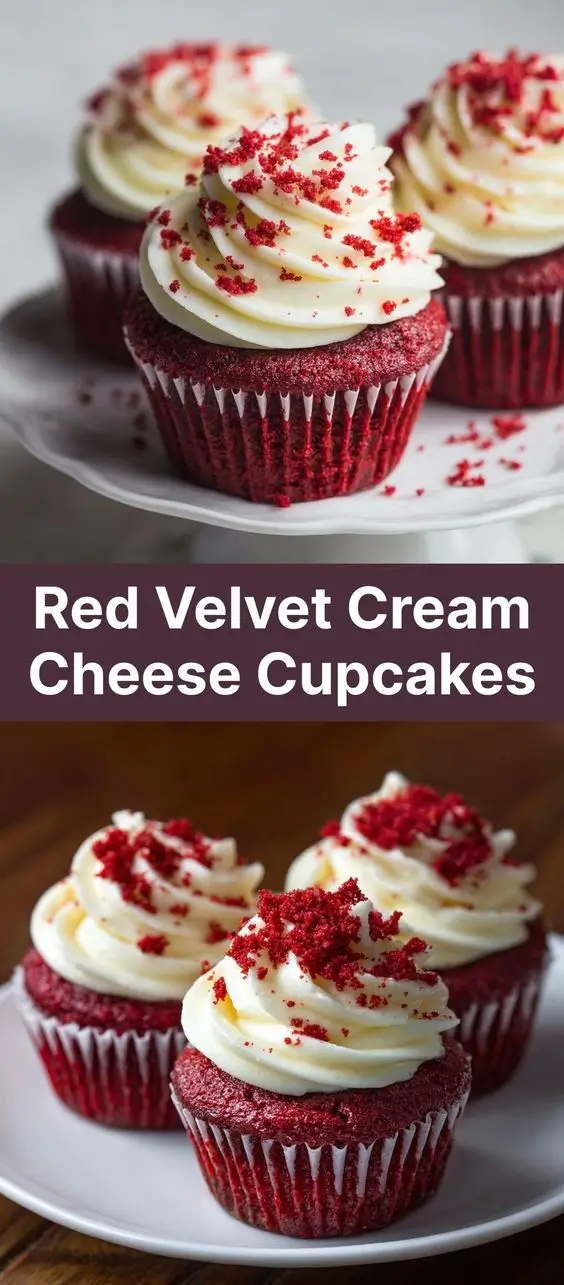
Once cupcakes are completely cooled, use a piping bag fitted with a large star tip (like Wilton 1M) to swirl the frosting generously on top. Alternatively, spread with a knife for a rustic look. For extra elegance, sprinkle with red velvet crumbs, edible glitter, or white chocolate shavings.
Step 9: Chill Before Serving (Optional but Recommended)
Place frosted cupcakes in the refrigerator for 20–30 minutes before serving to set the frosting and enhance flavor contrast. Serve chilled or at room temperature.
Tips for Baking the Best Red Velvet Cream Cheese Cupcakes
- Use Room Temperature Ingredients: Eggs and buttermilk should be at room temperature to ensure even mixing and a smooth batter. Cold ingredients can lead to separation or dense texture.
- Don’t Overmix: Mix the batter only until the ingredients are combined. Overmixing activates gluten, resulting in tough cupcakes.
- Gel Food Coloring Is Best: Liquid food coloring can alter the consistency of your batter. Gel provides intense color without adding excess liquid.
- Check Oven Temperature: Use an oven thermometer to verify accuracy. Even slight deviations can affect rise and texture.
- Frost Only When Cool: Never frost warm cupcakes. The heat will soften the cream cheese frosting, causing it to melt and slide.
- Sift Powdered Sugar: Prevent lumps in your frosting by sifting the sugar before use.
- Chill Frosting Tools: If your kitchen is warm, chill the bowl and beaters before making frosting to help maintain structure.
- Use Quality Cocoa: Choose high-quality natural unsweetened cocoa powder for the best flavor and color development.
- Line Muffin Tins Well: Double-line if necessary to prevent sticking, especially with sticky cream cheese frosting.
- Store Properly: Keep unfrosted cupcakes at room temperature for up to 2 days; frosted ones should be refrigerated.
Variations and Customizations
While classic red velvet cream cheese cupcakes are timeless, you can easily personalize them for different occasions and tastes:
- Mini Red Velvet Cupcakes: Use a mini muffin tin and reduce baking time to 10–12 minutes. Perfect for parties or tasting platters.
- Gluten-Free Version: Substitute all-purpose flour with a 1:1 gluten-free baking blend. Add ¼ teaspoon xanthan gum if not included in the mix.
- Dairy-Free Option: Replace buttermilk with almond milk + 1 tablespoon lemon juice, use vegan butter and dairy-free cream cheese alternative, and ensure chocolate-free food coloring.
- Low-Sugar Alternative: Use erythritol or monk fruit-based powdered sugar in both cake and frosting for reduced sugar content.
- Chocolate-Dipped Cupcakes: After frosting, dip the tops in melted dark or white chocolate and let harden for a crunchy shell.
- Filling Variations: Inject the center with raspberry jam, chocolate ganache, or even cookie butter for a surprise inside.
- Seasonal Themes: Top with holiday-themed sprinkles, crushed candy canes at Christmas, or heart-shaped decorations for Valentine’s Day.
- Nutty Crunch: Sprinkle chopped pecans or walnuts on top of the frosting for added texture.
- Alcohol-Infused: Add 1–2 tablespoons of bourbon or buttermilk-bourbon reduction to the batter for an adult twist.
- Marble Effect: Swirl in a bit of vanilla or chocolate batter for a marbled red velvet design.
Health Considerations and Nutritional Value
Red velvet cream cheese cupcakes are undeniably indulgent. While delicious, they are high in sugar, fat, and calories, so moderation is key—especially for those managing conditions like diabetes, heart disease, or weight concerns.
Nutritional Estimate (Per Frosted Cupcake, based on 20 servings):
- Calories: ~380–420 kcal
- Total Fat: 18–22g (Saturated Fat: 7–9g)
- Cholesterol: 55–65mg
- Sodium: 280–350mg
- Total Carbohydrates: 58–63g (Dietary Fiber: 1g, Sugars: 45–50g)
- Protein: 4–5g
Key Considerations:
- Sugar Content: High due to both granulated and powdered sugars. Consider reducing sugar slightly in the batter (down to 1 cup) or using alternatives for dietary needs.
- Cream Cheese Frosting: Rich in saturated fat and cholesterol. Light cream cheese reduces fat but may result in a softer, less stable frosting.
- Food Coloring: Artificial dyes (like Red #40) are common. Opt for natural beet juice or plant-based colorings if avoiding synthetic additives.
- Portion Control: Smaller mini cupcakes offer portion management while still delivering flavor.
- Allergens: Contains dairy, eggs, wheat/gluten, and soy (depending on oil and additives). Always label accordingly for guests.
Despite their decadence, enjoying these cupcakes occasionally as part of a balanced diet is perfectly fine. They bring joy, celebration, and comfort—with every bite a reminder that desserts can be both beautiful and meaningful.
Frequently Asked Questions (FAQ)
Why is my red velvet cupcake not red enough?
The color depends on the type and amount of food coloring used. Natural cocoa reactions alone won’t give a bright red. Use gel food coloring for vivid results—start with 1–2 tablespoons depending on desired intensity.
Can I make red velvet cupcakes ahead of time?
Yes! Bake cupcakes up to 2 days in advance and store unfrosted at room temperature in an airtight container. Frost the day of serving. You can also freeze unfrosted cupcakes for up to 3 months.
Why did my cupcakes sink in the middle?
This can happen due to underbaking, opening the oven too early, overmixing, or inaccurate oven temperature. Ensure your baking soda is fresh and don’t open the oven during the first 15 minutes.
Can I use butter instead of oil?
You can substitute half the oil with melted butter for flavor, but oil keeps the crumb moister. Using all butter may result in a denser texture.
How do I store frosted cupcakes?
Refrigerate in an airtight container for up to 5 days. Bring to room temperature before serving for best texture and flavor.
Can I freeze cream cheese frosting?
It’s not recommended to freeze frosting separately—it may separate upon thawing. Instead, freeze unfrosted cupcakes, then thaw and frost when ready.
Is red velvet just chocolate cake with food coloring?
No. While it contains cocoa, red velvet has less chocolate than a typical chocolate cake. Its unique character comes from the buttermilk-vinegar-cocoa reaction, lighter cocoa presence, and cream cheese pairing—making it a category of its own.
Can I bake this as a cake instead?
Absolutely. Pour the batter into two 9-inch round cake pans and bake at 350°F for 28–35 minutes. Adjust cooling and frosting techniques accordingly.
Why use vinegar in red velvet cupcakes?
Vinegar increases acidity, which reacts with baking soda for better rise and enhances the red hue from natural cocoa. It also tenderizes the crumb.
Are red velvet cupcakes safe for kids?
Yes, but be mindful of artificial food coloring. Some children may be sensitive to dyes like Red #40. Use natural coloring options if preferred.
Summary
Red velvet cream cheese cupcakes are a beloved dessert combining a moist, slightly tangy cocoa-infused crumb with a luxuriously creamy and tangy frosting—elevated by their stunning crimson hue and perfect for any celebration.
Baked with care and attention to ingredient balance, these cupcakes offer a harmonious blend of flavor, texture, and visual appeal that continues to captivate bakers and dessert lovers around the world.