Introduction
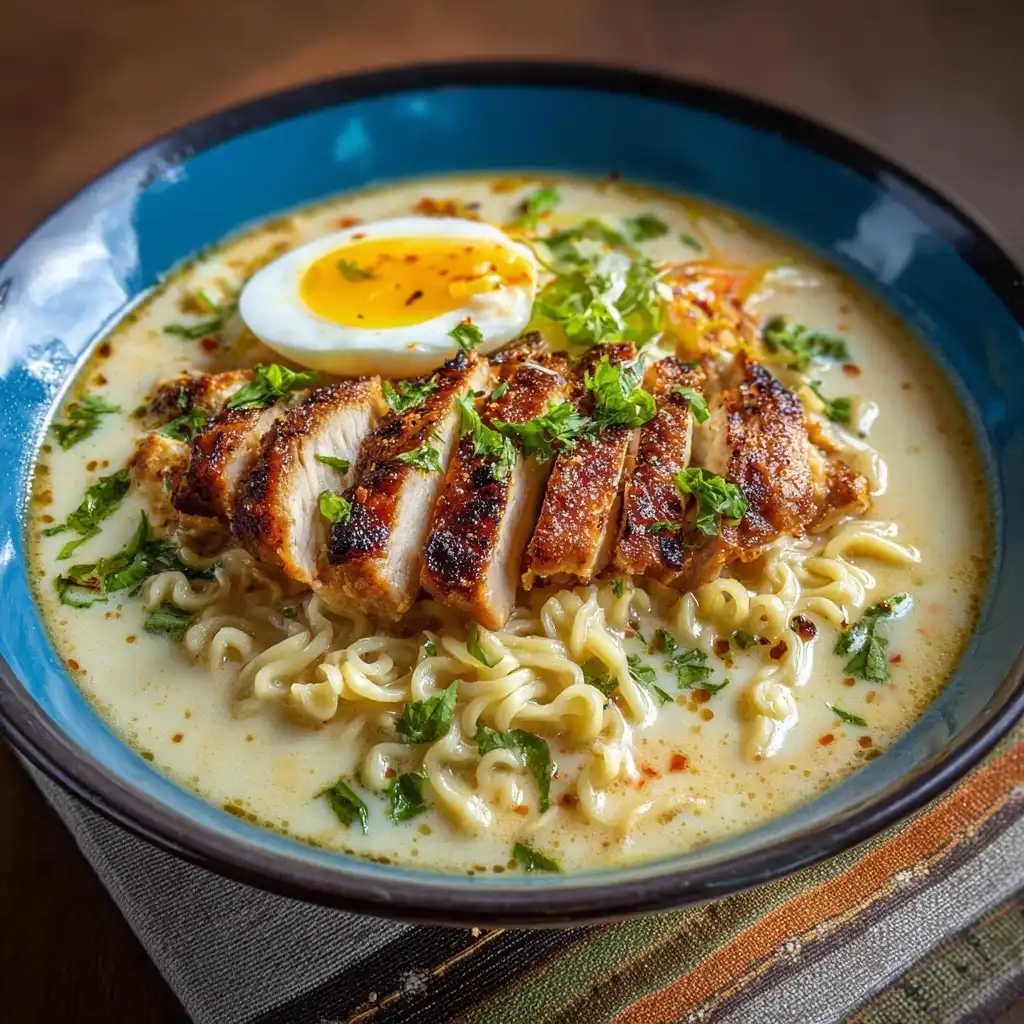
Creamy Garlic Chicken Ramen is a soul-warming, restaurant-quality fusion dish that masterfully bridges the rich umami depth of traditional Japanese ramen with the indulgent comfort of creamy Western sauces and bold, aromatic garlic notes. Unlike standard instant ramen or even many homemade versions, this recipe elevates the humble noodle bowl into a luxurious, balanced, and deeply satisfying meal—perfect for weeknight dinners, weekend treats, or impressing guests without requiring professional kitchen skills. With tender pan-seared chicken, silky-smooth garlic-infused cream sauce, savory-sweet miso and soy glaze, and springy ramen noodles enhanced by fresh aromatics and vibrant garnishes, every bite delivers layers of texture, temperature, and flavor. It’s not just ramen—it’s an experience: rich yet refined, hearty yet harmonious, deeply comforting without being heavy.
The History
The origins of Creamy Garlic Chicken Ramen lie at the dynamic intersection of culinary globalization, home-cook innovation, and social media-driven food evolution. While traditional ramen traces its roots to Chinese wheat noodles introduced to Japan in the late 19th century—and later refined into regional styles like tonkotsu, shoyu, and miso—modern “creamy” iterations emerged more recently, gaining traction in the early 2010s through Korean-Japanese fusion cafes and American food blogs experimenting with Western pantry staples. The addition of garlic butter techniques (popularized by viral “garlic shrimp pasta” trends) and dairy-based creaminess (inspired by French crème fraîche applications and Italian alfredo sensibilities) transformed classic broths into luscious, emulsified sauces. Meanwhile, health-conscious adaptations began incorporating Greek yogurt or cashew cream, and plant-based versions leveraged coconut milk and nutritional yeast. Creamy Garlic Chicken Ramen, as we know it today, crystallized around 2018–2020 on platforms like TikTok and Instagram, where short-form videos showcased quick-sear chicken, sizzling garlic, swirling cream, and glossy noodle tosses—sparking global recreations. Its rise reflects broader food culture shifts: the demand for hybrid flavors, the democratization of gourmet techniques, and the desire for meals that feel both nostalgic and novel—all while remaining approachable for home cooks with modest equipment and time.
Ingredients Breakdown
Every element in Creamy Garlic Chicken Ramen serves a distinct functional and sensory purpose—no ingredient is arbitrary. Let’s explore each component in depth:
- Ramen Noodles: We recommend using high-quality dried or fresh alkaline ramen noodles (containing kansui—a mineral alkaline solution that gives them chewy resilience and golden hue). Avoid overly soft or gummy varieties; ideal noodles hold up to creamy sauces without disintegrating. Fresh ramen offers superior texture but requires shorter cooking (1–2 minutes); dried takes 3–4 minutes. Rinsing after boiling removes excess starch and prevents clumping—critical for even sauce adhesion.
- Chicken Breast or Thigh: Boneless, skinless chicken breast provides lean protein and clean flavor, while thighs offer richer mouthfeel and forgiveness against overcooking. For optimal tenderness, slice against the grain into thin, uniform strips (¼-inch thick), then marinate briefly in soy, rice wine, and cornstarch—a technique borrowed from Chinese stir-fry traditions that protects moisture and enhances sear.
- Fresh Garlic: Not powdered or jarred—freshly minced or microplaned garlic delivers volatile sulfur compounds (allicin) responsible for pungent aroma and complex sweetness when gently cooked. Using 6–8 large cloves ensures robust presence without harshness; slow-sautéing in oil unlocks nutty, caramelized depth.
- Aromatics: Yellow onion (finely diced) builds foundational sweetness and body; scallions (both white and green parts) contribute bright, grassy top notes and visual contrast. Optional toasted sesame seeds add subtle nuttiness and textural crunch.
- Cream Base: Heavy cream (36% fat) yields the richest, most stable emulsion—but half-and-half works for lighter versions. For dairy-free integrity, full-fat canned coconut milk (not “light”) provides lush mouthfeel and natural sweetness that complements umami. Cashew cream (soaked raw cashews blended with water) offers neutral richness and added plant-based protein.
- Umami Powerhouse Trio: This trinity is non-negotiable for authentic depth:
- Miso Paste (white or yellow): Fermented soybean paste adds savory-sweet complexity, probiotics, and velvety body. Dissolve in warm broth before adding to prevent clumping.
- Soy Sauce (low-sodium preferred): Provides salt balance and amino acids (glutamates) that amplify other flavors. Tamari or coconut aminos serve as gluten-free alternatives.
- Chicken Broth (preferably low-sodium, homemade or high-quality store-bought): Acts as the liquid foundation—enhancing sauciness without diluting richness. Bone broth adds collagen for silkier texture.
- Acid & Brightness: A splash of rice vinegar or lime juice cut through fat, lifts heaviness, and balances the cream’s richness—essential for palate refreshment. Don’t skip it; it transforms “heavy” into “harmonious.”
- Finishing Touches: Furikake (Japanese seaweed-sesame seasoning), nori strips, chili crisp, pickled ginger, or a soft-boiled egg add dimension—umami, heat, acidity, or creaminess—that completes the bowl.
Step-by-Step Recipe
- Prep Work (15 minutes): Slice chicken uniformly. Mince garlic finely (use a press or microplane for maximum surface area). Dice onion. Whisk together marinade (1 tbsp soy, 1 tsp rice wine, ½ tsp cornstarch, pinch of white pepper). Marinate chicken 10–15 minutes. Cook ramen noodles according to package directions—drain, rinse under cold water, toss with 1 tsp neutral oil to prevent sticking. Keep warm.
- Sear the Chicken (4–5 minutes): Heat 1 tbsp neutral oil (avocado or grapeseed) in a wide, heavy-bottomed skillet or wok over medium-high heat. Pat chicken dry—this ensures a proper crust. Add in a single layer; don’t overcrowd. Sear 2–3 minutes per side until golden-brown and just cooked through (165°F internal temp). Remove and rest on a plate—juices will reabsorb, keeping it succulent.
- Sauté Aromatics (3 minutes): In the same skillet, reduce heat to medium. Add 1 tbsp butter or oil. Sauté diced onion 2 minutes until translucent. Add minced garlic—stir constantly for 60–90 seconds until fragrant and pale gold (do NOT brown or burn—bitterness ruins the sauce).
- Build the Cream Sauce (5 minutes): Pour in warmed chicken broth (1 cup), scraping up browned bits (fond = flavor!). Simmer 1 minute. Whisk in dissolved miso paste (1 tbsp), soy sauce (1½ tbsp), and a pinch of sugar (optional, to round acidity). Reduce heat to low. Slowly stream in heavy cream (¾ cup), whisking continuously. Simmer gently—do not boil vigorously—to thicken slightly (2–3 minutes). Sauce should coat the back of a spoon.
- Combine & Finish (2 minutes): Return chicken to skillet. Gently fold in cooked ramen noodles. Toss over low heat for 60–90 seconds until noodles are fully coated and heated through. Off heat, stir in rice vinegar (1 tsp) and black pepper. Taste and adjust: more soy for saltiness, miso for depth, vinegar for brightness, or a touch of honey for balance.
- Garnish & Serve Immediately: Divide among warmed bowls. Top generously with sliced scallions, toasted sesame seeds, nori strips, and optional chili crisp or soft-boiled egg. Serve with chopsticks and a soup spoon—encouraging both noodle twirls and broth-sipping.
Tips
- Garlic Control Is Key: Burnt garlic turns bitter and acrid. Always cook it over medium-low heat *after* onions soften—and stir constantly. If using garlic powder, reduce quantity by 75% and add only in the final minute.
- Noodle Texture Matters More Than You Think: Overcooked ramen becomes mushy and absorbs too much sauce, leaving your bowl dry. Undercooked noodles feel chalky and resist coating. Use a timer, rinse thoroughly, and toss with oil—even if serving immediately.
- Cream Stability Hack: To prevent curdling, ensure cream is at room temperature before adding, and never let the sauce return to a rolling boil after cream is incorporated. If separation occurs, whisk in 1 tsp cold butter off-heat—it re-emulsifies instantly.
- Make-Ahead Smartness: Marinate chicken overnight. Pre-chop aromatics and store in airtight containers. Cook noodles up to 2 hours ahead—keep rinsed and oiled in fridge. Reheat sauce base separately; combine with noodles and chicken just before serving.
- Skillet Choice Impacts Success: A well-seasoned cast iron or stainless steel pan retains heat evenly and promotes fond development. Nonstick works—but won’t give you the same browning depth for chicken or caramelized garlic.
- Taste As You Go—Religiously: Umami levels vary wildly between miso brands (some salty, some sweet), soy sauces differ in fermentation time, and broths range from mild to intense. Adjust in stages—not all at once.
- Resist Overcrowding the Pan: Searing chicken in batches ensures Maillard reaction—not steaming. Crowded pans drop temperature, causing chicken to release water and steam instead of sear.
- Rest the Chicken: Letting it sit 3–5 minutes post-sear allows muscle fibers to relax and reabsorb juices—resulting in noticeably moister, more flavorful bites.
- Broth Temperature Matters: Cold broth shocks hot garlic and cools the pan too fast. Warm it gently before adding—preserves aromatic volatility and maintains consistent cooking temp.
- Chop Scallions Last: Their delicate flavor fades quickly. Slice just before garnishing for maximum freshness and vivid green color.
Variations and Customizations
This recipe is intentionally modular—designed to adapt to dietary needs, seasonal ingredients, pantry limitations, or personal cravings. Here’s how to make it uniquely yours:
- Dietary Adaptations:
- Gluten-Free: Use certified GF tamari, rice-based ramen (like Lotus Foods Organic Brown Rice Ramen), and GF miso (check labels—some contain barley). Skip soy sauce entirely and boost umami with dried shiitake soaking liquid + tamari.
- Dairy-Free/Vegan: Substitute chicken with extra-firm tofu (pressed & marinated) or king oyster mushrooms (sliced thick, seared until golden). Replace cream with full-fat coconut milk + 1 tsp cornstarch slurry. Use vegan “chicken” broth and white miso (ensure no fish-derived ingredients).
- Keto/Low-Carb: Swap ramen for spiralized zucchini (“zoodles”), shirataki noodles (rinsed & dry-sautéed), or kelp noodles. Increase healthy fats—add avocado slices, toasted walnuts, or extra sesame oil. Reduce or omit sugar/miso if tracking net carbs strictly.
- Protein Swaps:
- Shrimp: Sear 30 seconds per side—add in last 60 seconds of sauce cooking. Delicate sweetness pairs beautifully with garlic-cream.
- Beef (flank or sirloin): Thinly slice against grain, marinate 20 minutes, sear fast over high heat. Adds mineral-rich depth.
- Spicy Pork: Use ground pork browned with ginger, garlic, and gochujang—transforms into a rich, Korean-inspired twist.
- Global Flavor Twists:
- Thai-Inspired: Add red curry paste (1 tsp), lime zest, cilantro, and crushed peanuts. Swap soy for fish sauce (½ tsp) and miso for fermented shrimp paste (tiny amount).
- Italian-Japanese Fusion: Stir in grated Parmesan (1 tbsp), sun-dried tomatoes, and fresh basil. Use soba noodles for earthy contrast.
- Mexican Ramen: Add chipotle in adobo (minced), cotija cheese, pickled red onions, and avocado crema. Serve with lime wedges.
- Vegetable Boosters (Beyond Scallions):
- Sautéed bok choy or napa cabbage for crunch and mild sweetness.
- Blanched snow peas or edamame for pop and protein.
- Roasted broccoli florets for nutty, caramelized depth.
- Quick-pickled daikon or carrots for tangy brightness and color.
- Heat Levels:
- Mild: White pepper + dash of sesame oil.
- Medium: ½ tsp gochugaru (Korean chili flakes) or sambal oelek stirred into sauce.
- Fiery: Drizzle of chili crisp, fresh Thai bird’s eye chilies, or a swirl of yuzu kosho (citrus-chili paste).
- Texture Layers:
- Crispy shallots (store-bought or homemade) for crunch.
- Toasted pine nuts or crushed macadamias for buttery richness.
- Thin nori ribbons for oceanic crispness.
- Quick-pickled ginger for palate-cleansing zing.
Health Considerations and Nutritional Value
Creamy Garlic Chicken Ramen can be both nourishing and mindful—when prepared with intention. Below is a balanced perspective grounded in macro/micronutrient science and culinary wellness principles:
- Protein Power: A 4-oz serving of chicken breast provides ~35g high-quality complete protein—supporting muscle synthesis, satiety, and metabolic function. Thigh meat adds monounsaturated fats and zinc. For plant-based versions, tofu or tempeh delivers comparable protein plus isoflavones linked to cardiovascular and bone health.
- Garlic Benefits—Backed by Research: Raw garlic contains allicin, shown in clinical studies to support healthy blood pressure, antioxidant activity, and immune modulation. Gentle cooking preserves beneficial organosulfur compounds while mellowing harshness—making it both palatable and physiologically active.
- Miso Magic: As a fermented food, miso contributes live probiotics (if unpasteurized and added off-heat), supporting gut microbiome diversity—a cornerstone of immunity, mood regulation, and nutrient absorption. It’s also rich in B vitamins, manganese, and copper.
- Cream vs. Health Perception: While heavy cream is calorie-dense (820 kcal/cup), its saturated fat content, when consumed in moderation as part of a varied diet, does not inherently increase heart disease risk—per recent meta-analyses (e.g., Annals of Internal Medicine, 2020). For lower-calorie options, subbing half-and-half saves ~200 kcal/cup; coconut milk adds lauric acid (antimicrobial) and medium-chain triglycerides (MCTs) for efficient energy use.
- Sodium Awareness: Traditional ramen can be sodium-heavy. Our version uses low-sodium broth and soy, allowing control—you’ll average ~750–900mg sodium per serving (well under the 2,300mg daily limit). Rinsing noodles further reduces sodium from alkaline treatment.
- Carbohydrate Quality: Alkaline ramen noodles are refined wheat-based—but pairing them with fiber-rich veggies (bok choy, broccoli), healthy fats (sesame oil, avocado), and protein slows glucose absorption, preventing spikes. Opt for whole-grain or legume-based ramen for added fiber (6–8g/serving) and phytonutrients.
- Anti-Inflammatory Alignment: Garlic, ginger (add 1 tsp grated if desired), scallions, sesame oil, and miso collectively deliver polyphenols, flavonoids, and sulfur compounds clinically associated with reduced systemic inflammation—a key factor in chronic disease prevention.
- Portion Intelligence: A full serving (1.5 cups noodles + sauce + protein + veggies) clocks in at ~650–750 kcal—nutritionally dense and satiating. Serve with a side salad or miso soup to increase volume and micronutrient intake without excess calories.
- Allergen Notes: Contains wheat (noodles, soy sauce), dairy (cream), and optionally eggs (soft-boiled garnish). Easily adapted for common allergens—see Variations section.
- Meal Timing Advantage: High-protein, moderate-fat, complex-carb profile makes this ideal for post-workout recovery or sustained afternoon energy—avoiding the crash associated with high-sugar, low-protein meals.
Ingredients
- 8 oz dried alkaline ramen noodles (or 4 servings fresh ramen)
- 1 lb boneless, skinless chicken breast or thighs, thinly sliced against the grain
- 2 tbsp neutral oil (avocado, grapeseed, or peanut), divided
- 1 medium yellow onion, finely diced
- 6–8 large garlic cloves, finely minced or microplaned
- 1 cup low-sodium chicken broth (warmed)
- ¾ cup heavy cream (or full-fat coconut milk for dairy-free)
- 2 tbsp low-sodium soy sauce (or tamari)
- 1 tbsp white or yellow miso paste (dissolved in 2 tbsp warm broth)
- 1 tsp rice vinegar or fresh lime juice
- 1 tsp cornstarch (optional, for thicker sauce)
- ½ tsp freshly ground black pepper
- Pinch of sugar (optional, to balance acidity)
- 2 green onions, thinly sliced (white and green parts separated)
- 1 tbsp toasted sesame seeds
- Optional garnishes: nori strips, chili crisp, soft-boiled egg, pickled ginger, furikake, lime wedges
Directions
- Bring a large pot of salted water to a boil. Cook ramen noodles per package instructions (typically 3–4 min for dried, 1–2 min for fresh). Drain thoroughly, rinse under cold water until cool, then toss with 1 tsp neutral oil. Set aside.
- In a small bowl, combine 1 tbsp soy sauce, 1 tsp rice wine (or dry sherry), ½ tsp cornstarch, and pinch of white pepper. Add chicken strips and marinate 10–15 minutes.
- Heat 1 tbsp oil in a 12-inch skillet or wok over medium-high heat. Pat chicken dry with paper towels. Add in single layer; sear 2–3 min per side until golden and cooked through (165°F). Transfer to a plate; cover loosely.
- Reduce heat to medium. Add remaining 1 tbsp oil. Sauté onion 2 min until soft. Add white parts of scallions and minced garlic; stir constantly 60–90 sec until fragrant and pale gold.
- Pour in warmed broth, scraping up browned bits. Simmer 1 min. Whisk in dissolved miso, remaining soy sauce, sugar (if using), and black pepper.
- Reduce heat to low. Slowly whisk in cream (or coconut milk). Simmer gently 2–3 min until slightly thickened—do not boil. Sauce should coat the back of a spoon.
- Return chicken and any accumulated juices to skillet. Gently fold in noodles. Cook 60–90 sec over low heat until heated through and fully coated.
- Remove from heat. Stir in rice vinegar and green parts of scallions. Taste and adjust seasoning.
- Divide into warmed bowls. Garnish generously with sesame seeds, nori, chili crisp, and optional soft-boiled egg. Serve immediately.
FAQ
- Can I use spaghetti or udon instead of ramen?
- Yes—with caveats. Spaghetti lacks alkalinity and chew—boil al dente and rinse well to avoid mush. Udon is thicker and starchier; reduce cooking time by 1 minute and add extra broth to loosen sauce. For best results, seek out true ramen noodles—they’re engineered for this application.
- Why does my sauce break or look greasy?
- Most often due to overheating after adding cream, using cold cream, or vigorous boiling. Always add cream off direct high heat, warm it first, and simmer gently. If broken, whisk in 1 tsp cold butter off-heat—it acts as an emulsifier.
- Can I make this ahead and reheat?
- You can prep components ahead (marinate chicken, chop aromatics, cook noodles), but assemble and serve fresh. Reheating causes noodles to absorb sauce and become gummy, and cream may separate. Best practice: reheat sauce + chicken separately, then toss with freshly warmed noodles.
- Is there a way to make it spicier without changing flavor?
- Absolutely. Add ¼ tsp cayenne or gochugaru to the marinade for subtle heat. Or finish with chili crisp—the crispy bits add texture and layered spice without overwhelming umami. Avoid hot sauces with vinegar dominance (like Tabasco) unless you want noticeable tang.
- What’s the best miso to use?
- White (shiro) miso is mildest, sweetest, and most versatile—ideal for creamy applications. Yellow (shinshu) offers balanced umami; red (aka) is saltier and stronger—use half the amount and taste carefully. Always choose unpasteurized, refrigerated miso for live cultures and freshest flavor.
- Can I freeze leftovers?
- Not recommended. Dairy-based sauces separate upon freezing/thawing, and noodles turn rubbery or disintegrate. Instead, portion and refrigerate up to 3 days—reheat gently on stove with a splash of broth.
- How do I prevent soggy noodles?
- Rinse *thoroughly* in cold water post-boil to halt cooking and remove surface starch. Toss with oil *immediately*. Never let cooked noodles sit uncovered—they steam and soften. When combining, use low heat and minimal tossing time.
- Can I make it vegetarian without tofu?
- Yes! Use shiitake mushrooms (sliced thick, seared until deeply browned) or king oyster mushrooms (ripped into “chicken-like” strands, marinated and roasted). Boost umami with extra miso, nutritional yeast (1 tsp), and dried kombu in broth.
- What wine pairs well with this dish?
- A chilled, high-acid white balances the richness beautifully: Grüner Veltliner, dry Riesling, or unoaked Chardonnay. For red lovers, try a light-bodied Pinot Noir with bright red fruit and low tannins. Avoid heavily oaked or tannic wines—they clash with garlic and cream.
- Why do you rinse the noodles? Isn’t that washing away flavor?
- Rinsing removes excess surface starch that would otherwise glue noodles together and create a gummy, uneven sauce coating. It doesn’t wash away meaningful flavor—ramen’s taste comes from the broth and toppings, not residual starch. Skipping this step is the #1 cause of clumpy, unappetizing results.
Summary
Creamy Garlic Chicken Ramen is a masterclass in modern comfort food—melding Japanese tradition, global pantry ingenuity, and chef-level technique into a deeply flavorful, nutritionally thoughtful, and endlessly adaptable weeknight triumph. With tender chicken, velvety garlic-cream sauce, springy noodles, and vibrant garnishes, it satisfies cravings while honoring balance, texture, and mindful eating.
Whether you’re a ramen purist, a busy parent, a keto explorer, or a plant-based cook, this recipe meets you where you are—offering clarity, customization, and joy in every glossy, aromatic, soul-soothing bite.