Introduction
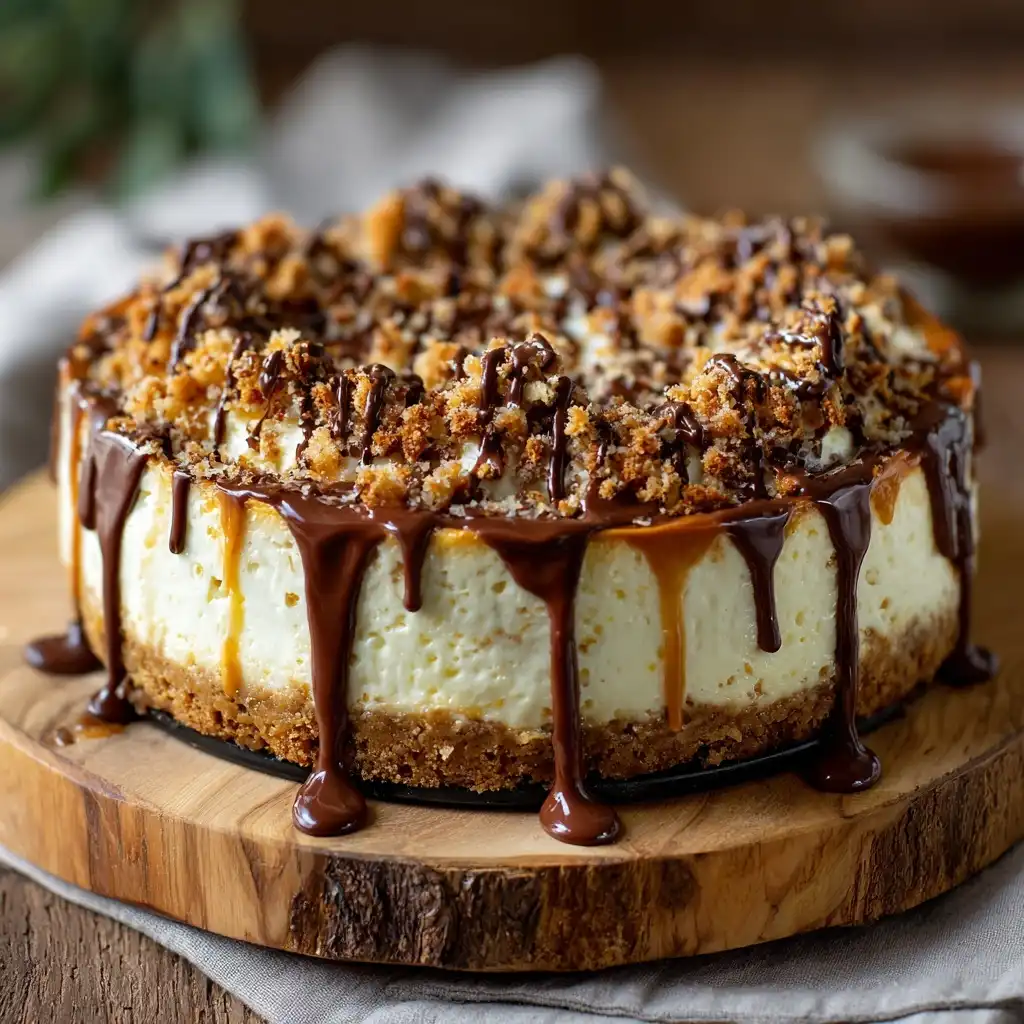
Welcome to the ultimate indulgence—Samoa Cookie Cheesecake! This decadent dessert is a luxurious fusion of two beloved treats: the rich, velvety smoothness of classic New York–style cheesecake and the bold, tropical flavors of Girl Scout Samoa cookies (now officially known as Caramel deLites in some regions, though “Samoa” remains the nostalgic, widely recognized name). Imagine a buttery graham cracker crust layered with a creamy, tangy, and luxuriously dense cheesecake filling, then crowned with luscious toasted coconut, gooey caramel drizzle, and a generous scattering of crushed Samoa cookies—including their signature chocolate-dipped, caramel- and coconut-coated shortbread base. Every bite delivers a symphony of textures and tastes: crisp, chewy, creamy, crunchy, salty-sweet, and deeply aromatic. Whether you’re recreating childhood memories of cookie season, impressing guests at a holiday gathering, or simply treating yourself to an over-the-top dessert experience, this Samoa Cookie Cheesecake is more than a recipe—it’s a celebration in slice form.
The History
The story of the Samoa Cookie Cheesecake begins not in a professional test kitchen, but in the collective imagination of home bakers, dessert enthusiasts, and devoted Girl Scout cookie fans across America. The iconic Samoa cookie itself debuted in 1973 under the name “Caramel deLites,” later rebranded as “Samoa” by ABC Bakers in 1986—a nod to the South Pacific island nation, evoking images of sun-drenched beaches, swaying palms, and tropical sweetness. Its distinctive composition—buttery shortbread topped with caramel, toasted coconut, and a dark chocolate drizzle—immediately captured hearts and became one of the top-selling varieties year after year.
As Girl Scout cookie-inspired desserts surged in popularity during the 2000s—think cookie butter brownies, Thin Mint cupcakes, and Tagalong pies—bakers began experimenting with incorporating whole cookies into cheesecakes. Early iterations appeared on food blogs and Pinterest around 2010–2012, often featuring crushed Samoas in the crust or folded into the batter. However, it wasn’t until the mid-2010s that the *full-spectrum* Samoa Cheesecake emerged: a multi-layered masterpiece honoring *every element* of the original cookie—coconut, caramel, chocolate, and shortbread—integrated thoughtfully throughout the structure. Influenced by pastry chefs like Christina Tosi (who championed cereal milk and cookie-infused desserts) and viral social media trends emphasizing “maximalist baking,” the Samoa Cheesecake evolved into its current, highly stylized form: a tall, golden-brown, crack-free centerpiece adorned with hand-toasted coconut ribbons, house-made salted caramel sauce, and meticulously arranged cookie shards. Today, it’s a seasonal staple in boutique bakeries from Seattle to Miami—and a perennial favorite for bake sales, bridal showers, and National Cheesecake Day (July 30th) celebrations.
Ingredients Breakdown
Every component of this Samoa Cookie Cheesecake serves a precise purpose—not just flavor, but function, texture, and structural integrity. Below is a detailed, chef-level breakdown of why each ingredient matters:
- Cream Cheese (full-fat, brick-style, room temperature): The backbone of any great cheesecake. Philadelphia-brand is recommended for consistency and neutral tang. Using low-fat or whipped versions introduces excess moisture and air, leading to cracks and graininess. Room temperature ensures smooth incorporation without overmixing.
- Granulated Sugar: Provides sweetness and aids in dissolving fully into the cream cheese mixture. Also contributes to the fine, velvety mouthfeel by interfering with protein coagulation during baking.
- Sour Cream & Heavy Cream: Sour cream adds brightness, acidity, and moisture; heavy cream enriches fat content for silkiness and helps prevent drying. Together, they create a custard-like tenderness that balances the density of the cream cheese.
- Large Eggs (room temperature): Act as emulsifiers and leaveners. Adding them one at a time—and mixing *just until incorporated*—prevents excess air bubbles that cause puffing and subsequent sinking/cracking.
- Vanilla Extract (pure, not imitation): Enhances caramel and coconut notes while rounding out sharp dairy flavors. A splash of Madagascar bourbon vanilla adds subtle warmth and depth.
- Sea Salt (fine, non-iodized): Critical for balancing sweetness and amplifying all other flavors. Even ¼ tsp makes a perceptible difference in complexity.
- Graham Cracker Crumbs (or Golden Oreo crumbs for variation): Forms the foundational crust. Graham crackers provide honeyed, slightly toasted notes that harmonize with caramel. For extra Samoa authenticity, substitute ¼ cup of the crumbs with finely ground Samoa cookie base (shortbread portion only, no chocolate or coconut).
- Unsalted Butter (melted): Binds the crust and adds richness. Clarified butter may be used for higher smoke point and deeper nuttiness—but standard melted butter works perfectly.
- Shredded Sweetened Coconut (unsweetened preferred for toasting control): Toasted fresh or frozen unsweetened coconut yields superior aroma, crunch, and golden color versus pre-toasted or sweetened varieties, which can burn easily and add cloying sugar.
- Homemade Salted Caramel Sauce: Store-bought caramel often contains stabilizers and artificial flavors that dull the tropical profile. A from-scratch version—made with granulated sugar, heavy cream, butter, and flaky sea salt—offers deep molasses notes, glossy sheen, and balanced salinity that cuts through richness.
- Samoa Cookies (12–14 full cookies): Used in three ways: (1) crushed for crust reinforcement, (2) finely chopped for swirls in the batter, and (3) whole or halved for elegant garnish. Always use cookies at room temperature—cold ones shatter unevenly and release excess oil when mixed.
- Dark Chocolate (60–70% cacao, chopped or tempered): Represents the signature chocolate drizzle. High-cocoa chocolate provides bitterness that offsets caramel’s sweetness and adds visual contrast. Tempering ensures a glossy, snappy finish that holds up under refrigeration.
- Optional Enhancements: A pinch of ground cinnamon or cardamom in the filling nods to traditional Samoan spice blends; a tablespoon of toasted coconut oil in the crust adds nuance; a splash of coconut rum (½ tsp) in the batter lends subtle booziness (alcohol fully bakes off).
Step-by-Step Recipe
- Prepare the Crust (Day Before or Morning Of): Preheat oven to 350°F (175°C). Pulse 1½ cups graham cracker crumbs, ¼ cup finely crushed Samoa shortbread (no chocolate/coconut), 2 tbsp granulated sugar, and ¼ tsp sea salt in a food processor until uniform. Add 6 tbsp melted unsalted butter and pulse until moist clumps form. Press firmly into bottom and 1½ inches up sides of a 9-inch springform pan lined with parchment (bottom and band). Chill uncovered for 30 minutes, then bake 10 minutes until fragrant and set. Cool completely on wire rack—do not remove from pan.
- Toast the Coconut (Same Day, 1 Hour Before Mixing Filling): Spread 1 cup unsweetened shredded coconut on a parchment-lined baking sheet. Bake at 325°F (165°C) for 8–12 minutes, stirring every 2 minutes, until golden brown and fragrant. Cool completely. Reserve ⅓ cup for topping; set remainder aside.
- Make the Salted Caramel Sauce (Can Be Made Up to 1 Week Ahead): In a heavy-bottomed saucepan, heat 1 cup granulated sugar over medium heat, whisking constantly, until melted and amber-colored (~5–7 min). Carefully whisk in ½ cup heated heavy cream (mixture will bubble vigorously). Stir in 3 tbsp unsalted butter and ½ tsp flaky sea salt until smooth. Cool to room temperature before using. Yield: ~1¼ cups.
- Prepare the Cheesecake Batter (Evening Before Baking for Best Results): Using a stand mixer fitted with paddle attachment, beat 24 oz (three 8-oz blocks) full-fat cream cheese on medium-low for 2 minutes until creamy and lump-free. Scrape bowl thoroughly. Add 1 cup granulated sugar and ½ tsp sea salt; beat 2 minutes until lightened. Add 1 cup sour cream, ½ cup heavy cream, and 2 tsp pure vanilla; mix 1 minute. Add eggs one at a time, mixing *only until yolk disappears* after each (≈15 seconds). Fold in ¾ cup reserved toasted coconut and ½ cup finely chopped Samoa cookies (chocolate side included) using a spatula—do not overmix. Batter should be thick, glossy, and free of streaks.
- Water Bath Setup (Critical Step): Wrap exterior of springform pan *tightly* with two overlapping layers of heavy-duty aluminum foil, extending well above rim to prevent leaks. Place pan inside a larger roasting pan. Pour batter into cooled crust. Gently tap pan on counter 3 times to release air bubbles.
- Bake Low and Slow: Place roasting pan on center oven rack. Carefully pour hot (not boiling) water into roasting pan until it reaches halfway up springform pan’s sides (~1½ inches). Close oven door. Bake at 325°F (165°C) for 1 hour 15 minutes—edges should be set, center still slightly jiggly like Jell-O. Turn off oven, crack door open 1 inch with wooden spoon, and let cheesecake cool undisturbed in water bath for 1 hour.
- Chill Overnight (Non-Negotiable): Remove from water bath. Run thin knife around edge to loosen. Cool on wire rack to room temperature (≈1 hour), then cover *loosely* with plastic wrap (avoid touching surface). Refrigerate minimum 12 hours—ideally 24–48 hours—for complete setting, flavor melding, and clean slicing.
- Final Assembly (2 Hours Before Serving): Unmold cheesecake: run warm towel around outside of pan, gently release latch, lift off band. Slide thin metal spatula under parchment to transfer to serving plate. Drizzle generously with cooled salted caramel (¾ cup). Sprinkle reserved toasted coconut evenly over top. Artfully arrange 6–8 whole or halved Samoa cookies around perimeter, pressing gently into filling. Melt 4 oz dark chocolate (with 1 tsp coconut oil for shine), transfer to piping bag, and pipe delicate zigzags or dots over cookies and filling. Optional: sprinkle with flaky sea salt.
Tips
- Room Temperature Is Everything: Cream cheese, eggs, sour cream, and heavy cream must all be truly room temperature (68–72°F)—leave out for 2–3 hours, not just “softened.” Cold ingredients cause lumps, curdling, and poor emulsion.
- No Overmixing—Ever: Once eggs are added, switch from mixer to spatula. Overbeating incorporates air → rising → collapsing → cracking. If batter looks slightly lumpy after eggs, fold gently—don’t force it smooth.
- Prevent Cracks Like a Pro: Use a water bath (bain-marie), avoid opening oven door during baking, cool gradually in oven, and chill thoroughly. If a small crack appears, camouflage it with caramel and coconut—it’ll taste even better!
- Crust Consistency Matters: Crust should hold together when pinched—if too dry, add ½ tsp more melted butter; if greasy, add 1 tsp more crumb. Press *very firmly* using flat-bottomed measuring cup—this prevents crumbling when sliced.
- Toast Coconut in Batches: It burns in seconds. Watch constantly, stir often, and remove from oven the *second* edges turn golden—carryover heat finishes browning.
- Use a Springform Pan With a Tight Seal: Leaks ruin water baths. Test yours beforehand with water. If leaking, double-foil method is mandatory.
- Slicing Secrets: Use a long, thin, non-serrated knife dipped in hot water and wiped dry between *every* cut. For perfect portions, chill cheesecake fully, then let sit at room temp 15 minutes before slicing.
- Make-Ahead Mastery: Crust can be baked and stored airtight 3 days ahead. Caramel keeps refrigerated 2 weeks. Toasted coconut stays crisp in airtight container 10 days. Fully assembled cheesecake lasts 5 days refrigerated—flavor improves through day 3.
- Photography Tip: For magazine-worthy shots, assemble garnishes just before photographing—coconut stays fluffy, chocolate stays glossy, and caramel glistens brightest within 30 minutes of drizzling.
Variations and Customizations
This Samoa Cookie Cheesecake is gloriously adaptable—whether you’re accommodating dietary needs, celebrating seasonal produce, or simply craving creative reinvention. Here are 12 thoughtfully tested variations:
- No-Bake Samoa Cheesecake: Replace baked crust with no-bake graham-Samoa crust (add 2 tbsp cocoa powder). Use stabilized whipped cream cheese base: blend 16 oz cream cheese, 1 cup powdered sugar, 1 tsp vanilla, and 1 cup cold heavy cream until stiff peaks form. Fold in ½ cup toasted coconut and ⅓ cup chopped cookies. Chill 8 hours. Top same as baked version.
- Gluten-Free Samoa Cheesecake: Use GF graham crackers (like Schar) + GF Samoa-style cookies (try “Girl Scout Cookie Inspired” brands such as Simple Mills or homemade GF shortbread with caramel/coconut/chocolate). Ensure all extracts and caramel ingredients are certified GF.
- Vegan Samoa Cheesecake: Base: soaked cashews (2 cups), coconut cream (1 cup), maple syrup (⅔ cup), lemon juice (3 tbsp), coconut oil (¼ cup), vanilla, and salt. Crust: GF oats, shredded coconut, dates, and coconut oil. Top with date-caramel, toasted coconut, and dairy-free chocolate.
- Mini Samoa Cheesecakes: Use a muffin tin lined with paper liners. Fill ¾ full. Bake at 325°F for 22–26 minutes. Cool in pan 10 min, then refrigerate 6+ hours. Perfect for parties—garnish individually with mini cookie halves and micro coconut flakes.
- Coconut-Rum Samoa Cheesecake: Infuse ¼ cup heavy cream with 2 tbsp dark rum and 1 tsp toasted coconut for 30 minutes before straining into batter. Add 1 tbsp rum to caramel sauce. Garnish with candied rum-soaked coconut.
- White Chocolate Samoa Cheesecake: Replace dark chocolate drizzle with high-quality white chocolate (tempered). Swirl ¼ cup melted white chocolate into batter before baking for marbled effect.
- Double-Caramel Samoa Cheesecake: Layer ⅓ cup warm salted caramel *under* batter before baking—creates a gooey, molten ribbon. Drizzle again post-chill.
- Samoa Cheesecake Bars: Bake in 9×13 pan with doubled crust. Reduce bake time to 55–65 minutes. Cut into 24 squares—ideal for potlucks and cookie exchanges.
- Tropical Twist: Add ¼ cup diced dried pineapple (rehydrated in coconut milk) and 1 tbsp lime zest to batter. Substitute mango coulis for part of caramel drizzle.
- Espresso Samoa Cheesecake: Dissolve 1½ tsp instant espresso powder into warm heavy cream before adding to batter. Pairs beautifully with dark chocolate and caramel’s bitterness.
- Spiced Samoa Cheesecake: Add ½ tsp ground ginger, ¼ tsp ground cloves, and a pinch of black pepper to crust. Complements coconut’s earthiness and adds warmth.
- Deconstructed Samoa Cheesecake Parfaits: Layer no-bake cheesecake mousse, caramel, toasted coconut, crumbled cookies, and chocolate shavings in glasses. Serve chilled with whipped cream rosettes.
Health Considerations and Nutritional Value
While Samoa Cookie Cheesecake is unapologetically indulgent, understanding its nutritional profile empowers mindful enjoyment. Per standard slice (1/12 of 9-inch cake, approx. 240g), here’s a detailed macro and micronutrient analysis based on USDA FoodData Central and recipe calculations:
- Calories: ~680 kcal — primarily from fats (42g) and carbohydrates (64g), with moderate protein (9g).
- Fats: 42g total (24g saturated, 12g monounsaturated, 2g polyunsaturated). Saturated fat comes mainly from cream cheese, butter, coconut, and chocolate. While high, natural saturated fats from whole-food sources (coconut, dairy) are metabolized differently than industrial trans fats—and the presence of fiber (from graham crackers and coconut) and antioxidants (from dark chocolate) mitigates some concerns when consumed occasionally.
- Carbohydrates: 64g (42g sugars, 0.8g fiber). Sugar derives from granulated sugar, caramel, cookies, and sweetened coconut. Notably, the recipe contains *zero added corn syrup or high-fructose corn syrup*—unlike many commercial desserts.
- Protein: 9g — modest but valuable, contributed by cream cheese, eggs, and dairy cream. Pairing with a green salad or grilled protein makes it part of a balanced meal.
- Vitamins & Minerals: Rich in calcium (22% DV), phosphorus (18% DV), vitamin A (15% DV), and riboflavin (B2, 12% DV) thanks to dairy. Toasted coconut adds manganese (30% DV) and copper (10% DV); dark chocolate contributes iron (8% DV) and magnesium (10% DV).
- Dietary Notes: Contains gluten (graham crackers, cookies), dairy (cheese, cream, butter), eggs, tree nuts (coconut), and soy (in most chocolate and some cookies). Naturally free of shellfish, peanuts, and sesame—but always verify cookie labels for allergen statements.
- Mindful Enjoyment Tips: Serve smaller slices (1/16 instead of 1/12); pair with sparkling water with lime to enhance satiety; enjoy after a walk—not before bed; savor slowly (takes 20 minutes for fullness signals to register); consider making with reduced-sugar caramel (using monk fruit or erythritol) for diabetic-friendly adaptation (note: texture may vary).
- Not a Health Food—But Not “Junk” Either: Unlike ultra-processed snacks, this cheesecake uses whole, recognizable ingredients without artificial colors, preservatives, or hydrogenated oils. Its richness promotes portion control naturally—most people feel satisfied with one modest slice. As registered dietitian Marci Clow says, “Nutrition isn’t about restriction—it’s about inclusion, balance, and joy. A Samoa Cheesecake enjoyed with gratitude is nutritionally complete in its own delicious way.”
Ingredients
- For the Crust: 1½ cups graham cracker crumbs (about 10 full sheets), ¼ cup finely crushed Samoa cookie shortbread layer only (no chocolate or coconut), 2 tablespoons granulated sugar, ¼ teaspoon fine sea salt, 6 tablespoons unsalted butter, melted
- For the Toasted Coconut: 1 cup unsweetened shredded coconut
- For the Salted Caramel Sauce: 1 cup granulated sugar, ½ cup heavy cream (heated), 3 tablespoons unsalted butter, ½ teaspoon flaky sea salt
- For the Cheesecake Filling: 24 ounces full-fat brick-style cream cheese (3 (8-oz) packages), softened to room temperature, 1 cup granulated sugar, ½ teaspoon fine sea salt, 1 cup full-fat sour cream, ½ cup heavy cream, 2 teaspoons pure vanilla extract, 4 large eggs, room temperature, ¾ cup toasted coconut (reserved from above), ½ cup finely chopped Samoa cookies (including chocolate coating)
- For the Garnish: 6–8 whole Samoa cookies, ¾ cup cooled salted caramel sauce, ⅓ cup reserved toasted coconut, 4 ounces high-quality dark chocolate (60–70% cacao), 1 teaspoon refined coconut oil (optional, for shine), Flaky sea salt (for finishing, optional)
Directions
- Prepare the Crust: Adjust oven rack to middle position and preheat oven to 350°F (175°C). In a food processor, combine graham cracker crumbs, crushed Samoa shortbread, 2 tbsp sugar, and ¼ tsp salt. Pulse until uniform. Add melted butter and pulse until mixture resembles wet sand. Press firmly and evenly into bottom and 1½ inches up sides of a 9-inch springform pan lined with parchment paper (bottom and band). Chill uncovered for 30 minutes. Bake 10 minutes until fragrant and set. Cool completely on wire rack—do not remove from pan.
- Toast the Coconut: Line a baking sheet with parchment. Spread 1 cup unsweetened shredded coconut evenly. Bake at 325°F (165°C) for 8–12 minutes, stirring every 2 minutes, until golden brown and fragrant. Transfer to plate; cool completely. Reserve ⅓ cup for garnish; set remaining ⅔ cup aside.
- Make the Salted Caramel Sauce (Optional but Recommended): In a heavy-bottomed 2-quart saucepan, heat sugar over medium heat, whisking constantly, until fully melted and deep amber (5–7 minutes). Remove from heat. Carefully whisk in hot heavy cream (mixture will bubble violently). Return to low heat; stir in butter and flaky salt until smooth. Cool completely to room temperature. Refrigerate in airtight jar up to 2 weeks.
- Prepare the Batter: Fit stand mixer with paddle attachment. Beat cream cheese on medium-low for 2 minutes until completely smooth and lump-free. Scrape bowl. Add 1 cup sugar and ½ tsp salt; beat 2 minutes until light and airy. Add sour cream, heavy cream, and vanilla; mix 1 minute until combined. Add eggs one at a time, mixing on low speed *only until yolk disappears* after each (≈15 seconds). Scrape bowl thoroughly. Using silicone spatula, gently fold in ¾ cup toasted coconut and ½ cup chopped Samoa cookies until just distributed—do not overmix.
- Water Bath Setup: Wrap exterior of springform pan tightly with two overlapping layers of heavy-duty aluminum foil, extending at least 3 inches above rim. Place pan inside a larger roasting pan. Pour batter into cooled crust. Tap pan firmly on counter 3 times to release air bubbles.
- Bake: Place roasting pan on center oven rack. Carefully pour hot (not boiling) water into roasting pan until water level reaches halfway up springform pan (~1½ inches). Close oven door. Bake at 325°F (165°C) for 1 hour 15 minutes—edges should be puffed and set, center still slightly jiggly (like Jell-O) when gently shaken. Turn off oven, crack door open 1 inch with wooden spoon, and let cheesecake cool undisturbed in water bath for 1 hour.
- Chill: Carefully remove roasting pan from oven. Lift springform pan out of water bath. Run thin knife around edge to loosen. Cool on wire rack to room temperature (≈1 hour). Cover *loosely* with plastic wrap (avoid touching surface). Refrigerate minimum 12 hours—ideally 24–48 hours.
- Assemble & Serve: Run warm damp towel around outside of pan. Release latch and carefully remove outer band. Slide thin metal spatula under parchment to lift cheesecake onto serving plate. Drizzle generously with ¾ cup cooled salted caramel. Sprinkle evenly with reserved ⅓ cup toasted coconut. Arrange 6–8 whole or halved Samoa cookies around perimeter, gently pressing into filling. Melt chocolate with coconut oil (if using) in microwave in 20-second bursts, stirring between, until smooth. Transfer to piping bag; pipe decorative zigzags or dots. Finish with flaky sea salt, if desired. Slice with hot, dry knife. Serve chilled.
FAQ
- Can I freeze Samoa Cookie Cheesecake?
- Yes! Wrap *fully chilled*, unsliced cheesecake (still in pan) tightly in plastic wrap, then in foil. Freeze up to 3 months. Thaw overnight in refrigerator, then bring to room temperature 30 minutes before serving. Texture remains excellent—caramel may soften slightly but re-chills beautifully.
- Why did my cheesecake crack?
- Most common causes: (1) Overmixing batter after adding eggs, (2) Opening oven door too early, (3) Cooling too quickly (skip the oven cooldown step), (4) Skipping the water bath, or (5) Under-chilling. All are fixable—next time, follow the water bath + gradual cooling + 24-hour chill protocol precisely.
- Can I use store-bought caramel?
- You can—but it won’t deliver the same depth. Most commercial caramels contain corn syrup, artificial flavors, and thickeners that mute coconut and chocolate notes. Our homemade version takes 10 minutes and transforms the