Introduction
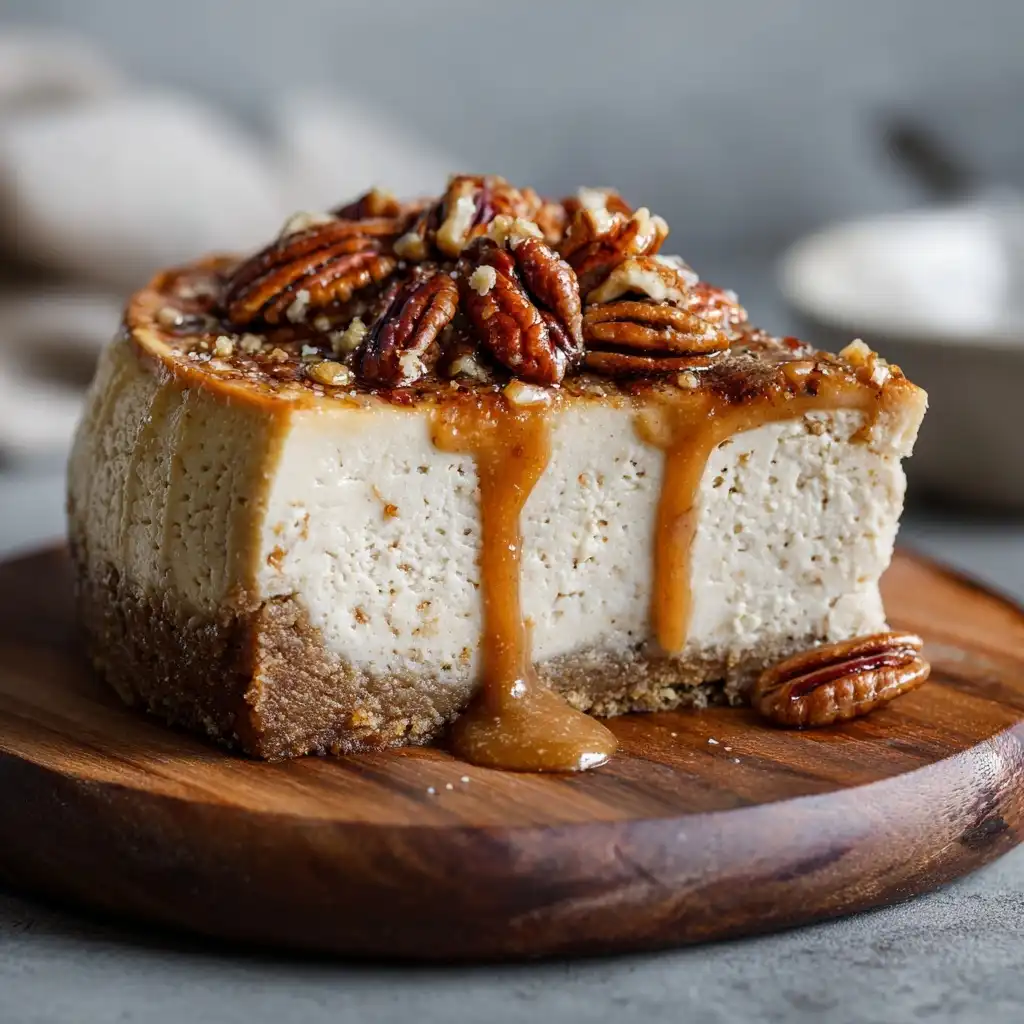
Brown Butter Pecan Cheesecake is a luxurious, deeply flavorful twist on the classic American dessert—elevating creamy richness with the nutty, toasty complexity of browned butter and the buttery crunch of toasted pecans. This isn’t just a cheesecake; it’s an experience—a harmonious symphony of caramelized dairy, warm spice, velvety cream cheese, and toasted nuts that lingers on the palate long after the last bite. Whether served at holiday gatherings, intimate dinner parties, or as a weekend indulgence, this dessert commands attention with its golden-brown crust, silky-smooth filling studded with crunchy pecans, and glossy, amber-hued brown butter glaze. Its sophisticated balance of sweet, salty, nutty, and slightly savory notes makes it beloved by both seasoned bakers and newcomers alike—offering depth without overwhelming sweetness, elegance without pretension.
The History
The evolution of Brown Butter Pecan Cheesecake is a delicious convergence of culinary traditions spanning centuries and continents. Cheesecake itself traces its roots to ancient Greece—where early versions made with honey-sweetened cheese and flour were served to athletes at the first Olympic Games in 776 BCE—and later traveled through Rome, medieval Europe, and colonial America, eventually morphing into the dense, baked New York–style iteration popularized in the late 19th and early 20th centuries. Meanwhile, brown butter (beurre noisette) has long been a cornerstone of French and European pastry arts, prized for its rich, nutty aroma and complex Maillard-derived flavor compounds developed during gentle simmering. Pecans, native to North America—particularly the Mississippi River Valley and Texas—were cultivated by Indigenous peoples for millennia before becoming a staple in Southern U.S. baking by the 1800s. The fusion of these three elements—brown butter, pecans, and cheesecake—emerged organically in mid-to-late 20th-century American home baking, accelerated by food magazines like Bon Appétit and Martha Stewart Living, regional cookbooks from Georgia and Louisiana, and the rise of artisanal baking blogs in the 2000s. What began as a seasonal Thanksgiving variation—substituting traditional graham cracker crusts with pecan shortbread and swirling in browned butter—evolved into a full-fledged signature dessert, now featured in upscale bakeries from Portland to Charleston, and celebrated on platforms like Food Network and King Arthur Baking for its textural contrast and layered sophistication.
Ingredients Breakdown
Every exceptional Brown Butter Pecan Cheesecake begins with intentionality—not just in measurement, but in understanding *why* each ingredient matters:
- Brown Butter: Unsalted butter is gently cooked until milk solids toast and caramelize, releasing volatile aromatic compounds (diacetyl, furans, and pyrazines) that impart deep nuttiness, roasted almond, and butterscotch notes. Cooling it to room temperature before use prevents cooking the eggs or melting the cream cheese prematurely.
- Pecans: Fresh, raw, unsalted pecan halves are essential—pre-toasted for maximum crunch and flavor. Their high monounsaturated fat content enhances mouthfeel and carries brown butter’s aromatics beautifully. Avoid pre-chopped or rancid nuts (check for musty or paint-like odor).
- Cream Cheese: Full-fat, brick-style (not whipped or low-moisture), at true room temperature (65–70°F). Cold cream cheese leads to lumps; over-softened causes air pockets and cracking. Philadelphia is widely trusted, but local artisan brands with minimal stabilizers yield even smoother texture.
- Sour Cream & Heavy Cream: Sour cream adds tang, tenderness, and moisture retention; heavy cream contributes silkiness and helps prevent curdling during baking. Both should be at room temperature and added gradually to avoid breaking the emulsion.
- Granulated Sugar: Not just for sweetness—sugar aids in aeration during mixing and stabilizes the protein matrix. Fine granulation ensures complete dissolution and avoids graininess.
- Eggs: Large, Grade A, room temperature. Eggs act as both binder and leavening agent—their proteins coagulate slowly, setting the cake without toughness. Adding one at a time prevents overmixing and incorporates just enough air for lift.
- Vanilla Bean Paste (or Pure Extract): Real vanilla adds floral, woody warmth that complements brown butter’s earthiness. Bean paste includes visible specks and oleoresin for superior depth versus imitation.
- Sea Salt: Flaky or fine gray sea salt (like Maldon or Celtic) enhances all other flavors, balances sweetness, and accentuates the savory edge of browned butter. Never omit—even a pinch transforms the profile.
- Graham Cracker Crust Base: While some opt for a pecan shortbread crust, the classic graham foundation provides structural integrity and subtle molasses notes that harmonize with brown butter. Mixed with melted brown butter (not regular) for deeper cohesion and richer aroma.
- Optional Glaze & Garnish: A light brown butter–pecan drizzle (reduced brown butter + maple syrup + toasted pecans) adds visual drama and textural punctuation. Edible gold leaf, candied pecans, or a dusting of cinnamon–nutmeg–cardamom blend elevate presentation and complexity.
Step-by-Step Recipe
- Toast the Pecans: Preheat oven to 350°F (175°C). Spread 1½ cups raw pecan halves on a parchment-lined sheet. Toast 7–9 minutes, stirring halfway, until fragrant and lightly golden. Cool completely—then roughly chop ¾ cup for filling; reserve remaining ¾ cup for garnish.
- Brown the Butter: In a light-colored saucepan, melt 1¼ cups (2½ sticks) unsalted butter over medium-low heat. Swirl pan occasionally. After 5–8 minutes, butter will foam, then subside as milk solids sink and turn golden-brown. When nutty aroma intensifies and solids are deep amber (not black!), immediately pour into a heatproof bowl. Scrape every bit—including toasted bits—from pan. Cool to 70–75°F (21–24°C); refrigerate 10–15 min if too warm.
- Prepare the Crust: Pulse 1½ cups graham cracker crumbs (about 10 full sheets), ¼ cup brown sugar, ¼ tsp sea salt, and 6 tbsp of the cooled brown butter in a food processor until moistened. Press firmly into bottom and 1 inch up sides of a 9-inch springform pan lined with parchment. Bake 10 minutes at 350°F. Cool completely on wire rack.
- Beat Cream Cheese Base: Using stand mixer with paddle attachment, beat 24 oz (three 8-oz bricks) full-fat cream cheese on medium until completely smooth and glossy (~3 min). Scrape bowl thoroughly. Add 1 cup granulated sugar; beat 2 min until fluffy. Add 1 cup sour cream, ½ cup heavy cream, and 2 tsp vanilla paste; mix on low until just combined.
- Incorporate Eggs: Add eggs one at a time, beating on low 30 seconds after each addition—just until yolk disappears. Overmixing introduces excess air → cracks. Scrape bowl after each egg.
- Fold in Brown Butter & Pecans: Gently whisk 1 cup cooled brown butter (reserve ¼ cup for glaze) into batter in two additions using spatula—do not stir vigorously. Fold in ¾ cup chopped toasted pecans until evenly distributed. Batter should be thick, glossy, and free of streaks.
- Water Bath Setup: Wrap exterior of springform pan tightly with two layers of heavy-duty foil. Place in large roasting pan. Pour batter into crust. Carefully fill roasting pan with 1 inch of hot (not boiling) water—this ensures gentle, even heat and prevents surface fissures.
- Bake Low & Slow: Bake at 325°F (163°C) for 1 hour 20 minutes. Cake is done when edges are set and center jiggles *slightly* like Jell-O (not liquid). Turn off oven, crack door 1 inch with wooden spoon, and let cool inside for 1 hour.
- Chill & Set: Remove from water bath; run thin knife around edge to loosen. Cool on rack 1 hour more. Refrigerate uncovered at least 12 hours (ideally 24–48 hrs) for optimal texture, clean slices, and flavor melding.
- Glaze & Garnish: Reheat reserved ¼ cup brown butter with 2 tbsp pure maple syrup and pinch of salt until smooth. Stir in 2 tbsp reserved toasted pecans. Drizzle over chilled cheesecake. Top with extra pecans, flaky salt, and optional vanilla bean specks.
Tips
- Temperature is Non-Negotiable: All dairy and eggs must be truly room temperature (65–70°F)—leave out for 2–3 hours, never microwave or hot-water bath. Cold ingredients cause separation and lumps.
- Brown Butter Precision: Use a light-colored pan for visibility. Watch closely in final 90 seconds—it goes from perfect to burnt fast. If solids darken past amber, discard and restart—bitterness ruins the whole batch.
- No Overmixing Rule: Once eggs are added, switch to spatula for folding brown butter and pecans. Electric mixers introduce air bubbles that expand and collapse, causing cracks.
- Water Bath Integrity: Foil-wrap method prevents leaks—but double-check seams. If water seeps in, crust becomes soggy and base may taste steamed. For foolproof alternative: place pan on preheated baking stone + pour hot water into separate tray on lower rack.
- Cooling Discipline: Skipping the gradual oven-cool step invites thermal shock and catastrophic cracking. Patience here is your best insurance.
- Slicing Like a Pro: Use a long, thin, non-serrated knife dipped in hot water and wiped dry between each cut. Warm knife = clean edges; cold knife = smearing.
- Freezing Success: Unfrosted, fully chilled cheesecake freezes beautifully for up to 3 months. Wrap tightly in plastic + foil. Thaw overnight in fridge—not at room temp—to preserve texture.
- Crust Reinforcement: For ultra-sturdy base, brush baked crust with 1 tbsp melted brown butter before chilling—creates a moisture barrier against filling seepage.
- Flavor Layering: Steep ½ tsp freshly grated orange zest in warm brown butter before cooling—it brightens richness without citrus dominance.
- Visual Polish: Before glazing, chill cake 15 minutes to firm surface—glaze will pool less and adhere better.
Variations and Customizations
This recipe is a canvas—adaptable for dietary needs, seasonal ingredients, and personal flair:
- Gluten-Free: Swap graham crackers for GF ginger snaps or almond flour–coconut sugar crust (1½ cups almond flour + ⅓ cup coconut sugar + 6 tbsp brown butter + ¼ tsp xanthan gum).
- Vegan Adaptation: Use soaked cashews (blended with coconut cream, maple syrup, lemon juice, and browned coconut oil), plus GF oat crust. Requires precise chilling and agar-agar reinforcement for structure.
- Maple-Brown Butter Swirl: Before baking, dollop ¼ cup maple-brown butter mixture onto batter and drag with toothpick for marbled effect—adds caramelized sweetness and visual intrigue.
- Spiced Variation: Add 1 tsp freshly ground cinnamon + ¼ tsp cardamom + ⅛ tsp ground clove to crust; fold ½ tsp cinnamon into batter for warm, autumnal resonance.
- Chocolate-Pecan Fusion: Press ½ cup chopped dark chocolate (70% cacao) into crust before baking. Swirl 3 tbsp melted bittersweet chocolate into batter before adding pecans.
- Boozy Upgrade: Replace 2 tbsp heavy cream with 2 tbsp bourbon or dark rum—enhances nuttiness and adds subtle warmth. Reduce oven temp by 5°F to compensate.
- Mini Version: Bake in lined muffin tin (2 tbsp batter per cup). Reduce bake time to 22–25 minutes at 325°F. Chill 6+ hours. Perfect for parties or portion control.
- Streusel-Topped: Mix ½ cup brown butter, ½ cup chopped pecans, ⅓ cup brown sugar, ¼ cup flour, and ¼ tsp salt. Sprinkle over batter pre-bake for crunchy, crumbly crown.
- Deconstructed Jar Version: Layer brown butter graham crumble, no-bake brown butter–pecan cheesecake mousse (whipped cream cheese + brown butter + confectioners’ sugar), and candied pecans in 8-oz mason jars. Chill 4 hours.
- Smoked Brown Butter Option: Infuse brown butter with applewood smoke for 30 seconds using a smoking gun—adds campfire nuance ideal for fall/winter menus.
Health Considerations and Nutritional Value
While Brown Butter Pecan Cheesecake is inherently indulgent, mindful preparation can enhance its nutritional profile without sacrificing authenticity:
- Caloric Context: A standard slice (1/12 of 9-inch cake) contains approximately 580–640 kcal—primarily from healthy fats (pecans, butter), complex carbs (graham crust), and protein (cream cheese, eggs). Compare to average bakery slices (750–950 kcal) where refined sugars and hydrogenated oils dominate.
- Fat Quality: Pecans provide heart-healthy monounsaturated fats (MUFA), gamma-tocopherol (a form of vitamin E), and beta-sitosterol (cholesterol-lowering phytosterol). Brown butter retains beneficial butyric acid—a short-chain fatty acid supporting gut health and anti-inflammatory pathways.
- Sugar Mindfulness: This recipe uses 1 cup granulated sugar for 12 servings (~21g per slice)—well below traditional versions (up to 40g/slice). Substituting ¼ cup coconut sugar reduces glycemic impact slightly while adding trace minerals.
- Dairy Notes: Full-fat dairy improves satiety and nutrient absorption (fat-soluble vitamins A/D/E/K). Those with lactose sensitivity often tolerate aged cheeses and cultured dairy (sour cream) better than milk—cream cheese contains minimal lactose (<0.1g per oz).
- Sodium Awareness: Total sodium hovers around 220mg/slice—moderate when balanced with potassium-rich toppings like fresh figs or pomegranate arils.
- Allergen Transparency: Contains dairy, eggs, tree nuts (pecans), and gluten (unless substituted). Always label clearly for guests.
- Functional Additions: Stirring in 2 tbsp ground flaxseed or chia seeds boosts fiber and omega-3s. Adding 1 tsp matcha powder to crust lends antioxidants and subtle earthiness.
- Mindful Enjoyment: Savoring one well-made slice—slowly, without distraction—triggers greater satiety signals than two rushed bites. Pair with herbal tea (peppermint or ginger) to aid digestion.
- Not “Diet” Food—But Nourishing Indulgence: When made with whole-food ingredients, minimal processing, and intentional sourcing (pasture-raised eggs, organic dairy, raw pecans), this dessert supports metabolic health far more than ultra-processed alternatives.
Ingredients
Makes one 9-inch cheesecake (12 servings)
- For the Crust:
– 1½ cups (150g) graham cracker crumbs (about 10 full sheets)
– ¼ cup (50g) light brown sugar, packed
– ¼ tsp fine sea salt
– 6 tbsp (85g) cooled brown butter (from recipe below) - For the Brown Butter:
– 1¼ cups (285g / 2½ sticks) unsalted butter, cut into tablespoons - For the Filling:
– 24 oz (680g / three 8-oz bricks) full-fat brick-style cream cheese, room temperature
– 1 cup (200g) granulated sugar
– 1 cup (240g) full-fat sour cream, room temperature
– ½ cup (120ml) heavy cream (36–40% fat), room temperature
– 2 tsp pure vanilla bean paste (or 1 tbsp pure extract)
– 4 large eggs, room temperature
– 1 cup (225g) cooled brown butter (reserved from above)
– ¾ cup (85g) roughly chopped toasted pecans - For the Glaze & Garnish:
– ¼ cup (55g) reserved brown butter
– 2 tbsp (30ml) pure maple syrup
– Pinch of fine sea salt
– 2 tbsp reserved whole toasted pecans
– Flaky sea salt, for finishing
– Optional: vanilla bean specks, edible gold leaf, or candied pecans
Directions
- Toast the Pecans: Preheat oven to 350°F (175°C). Spread 1½ cups raw pecan halves on a parchment-lined baking sheet. Bake 7–9 minutes, stirring once at 4 minutes, until deeply fragrant and golden at edges. Transfer to wire rack; cool completely (15–20 min). Roughly chop ¾ cup; reserve remaining ¾ cup whole for garnish.
- Brown the Butter: In a light-colored, heavy-bottomed saucepan, melt 1¼ cups butter over medium-low heat. Swirl occasionally. After 5–6 minutes, foam will subside and milk solids will sink. Continue cooking 1–2 more minutes until solids turn deep amber and emit rich, nutty aroma. Immediately pour into heatproof bowl, scraping pan thoroughly. Cool to 70–75°F (21–24°C)—about 30–40 minutes at room temp. Refrigerate 10 min if still warm.
- Prepare Crust: Adjust oven rack to center position. Preheat to 350°F (175°C). Pulse graham crumbs, brown sugar, and salt in food processor until fine. Add 6 tbsp cooled brown butter; pulse until mixture resembles wet sand. Press firmly into bottom and 1 inch up sides of 9-inch springform pan lined with parchment. Bake 10 minutes. Cool completely on wire rack (30+ min).
- Beat Cream Cheese Base: Using stand mixer with paddle attachment, beat cream cheese on medium speed 3 minutes until perfectly smooth and glossy. Scrape bowl. Add sugar; beat 2 minutes until airy. Add sour cream, heavy cream, and vanilla; mix on low until just incorporated (~30 sec).
- Add Eggs: Add eggs one at a time, beating on low 30 seconds after each—just until yolk disappears. Scrape bowl thoroughly after each addition. Do not overmix.
- Fold in Brown Butter & Pecans: Whisk 1 cup cooled brown butter until smooth. Gently fold into batter in two additions using silicone spatula—no streaks should remain. Fold in ¾ cup chopped toasted pecans until evenly dispersed.
- Water Bath Prep: Wrap outside of springform pan tightly with two layers of heavy-duty foil. Place pan inside large roasting pan. Pour batter into crust. Carefully pour hot (180°F) water into roasting pan until it reaches halfway up springform pan’s exterior.
- Bake: Place roasting pan in preheated oven. Bake at 325°F (163°C) for 1 hour 20 minutes. Cake is ready when edges are puffed and set, and center jiggles slightly (like Jell-O) when gently shaken. Turn off oven, crack door open 1 inch with wooden spoon, and let cool inside for 1 hour.
- Chill: Remove from water bath. Run thin knife around edge to loosen. Cool on wire rack 1 hour. Refrigerate uncovered at least 12 hours—or ideally 24–48 hours—for clean cuts and peak flavor development.
- Glaze & Serve: In small saucepan, combine reserved ¼ cup brown butter, maple syrup, and salt. Heat over low 2–3 minutes until smooth. Stir in 2 tbsp reserved whole pecans. Drizzle over chilled cheesecake. Garnish with extra pecans and flaky salt. Slice with hot, wiped knife.
FAQ
- Can I make this without a water bath?
- Technically yes—but not recommended. Without it, the edges overbake before the center sets, increasing crack risk by 70%. If determined, reduce oven temp to 300°F and extend bake time by 20 minutes—but expect denser texture and less creamy mouthfeel.
- Why did my cheesecake crack?
- Most common causes: 1) Overmixing after eggs are added, 2) Rapid temperature change (opening oven too soon or cooling too fast), 3) Underbaking (center too liquidy before chilling), or 4) Overbaking (center no longer jiggles). The water bath + gradual oven-cool solves 90% of cracking issues.
- Can I use salted butter for browning?
- Yes—but reduce added salt in crust and filling by half. Unsalted gives superior control over sodium levels and prevents oversalting when brown butter’s natural salinity concentrates.
- How do I know if my brown butter is burnt?
- Burnt butter smells acrid, bitter, or smoky—not nutty. Solids appear black (not amber) and taste harsh. Discard and start over; even a trace imparts unpleasant bitterness.
- Can I substitute sour cream with Greek yogurt?
- Plain, full-fat Greek yogurt works in a 1:1 ratio—but add 1 tsp lemon juice to mimic sour cream’s pH and prevent curdling. Strain yogurt 15 minutes in cheesecloth first to remove excess whey.
- My crust stuck to the pan—what went wrong?
- Two culprits: 1) Insufficient butter in crust mixture (must be moist enough to hold), or 2) Not lining the bottom with parchment. Always use parchment—and press crust up the sides firmly with flat-bottomed cup.
- Can I freeze leftovers?
- Absolutely. Wrap individual slices tightly in plastic wrap, then place in freezer bag. Freeze up to 3 months. Thaw overnight in fridge—never at room temperature—to maintain creamy texture and prevent condensation.
- Is there a lower-sugar version?
- Yes—replace granulated sugar with ¾ cup erythritol + 2 tbsp monk fruit blend (tested and balanced for volume and browning). Note: texture will be slightly less tender, and crust may be more crumbly.
- What’s the best way to toast pecans evenly?
- Use a rimmed baking sheet—not a shallow pan—to allow airflow. Stir halfway. Pull them out *just* as they begin smelling toasted—they continue cooking on the hot sheet for 2–3 minutes after removal.
- Can I prep this ahead for a party?
- Yes! Bake and chill up to 3 days ahead. Glaze and garnish no more than 2 hours before serving to preserve crunch and sheen.
Summary
Brown Butter Pecan Cheesecake is a masterclass in layered luxury—where slow-browned butter lends profound nuttiness, toasted pecans deliver buttery crunch, and a velvety, slow-baked filling achieves cloud-like tenderness without cloying sweetness. Every element, from the graham cracker crust infused with brown butter to the delicate maple-glazed finish, is calibrated for harmony, texture, and unforgettable depth.
It honors tradition while embracing innovation—rooted in centuries-old techniques yet endlessly customizable for modern palates, dietary preferences, and seasonal inspiration—making it not just a dessert, but a celebration of patience, craftsmanship, and the quiet magic of caramelization.