Introduction
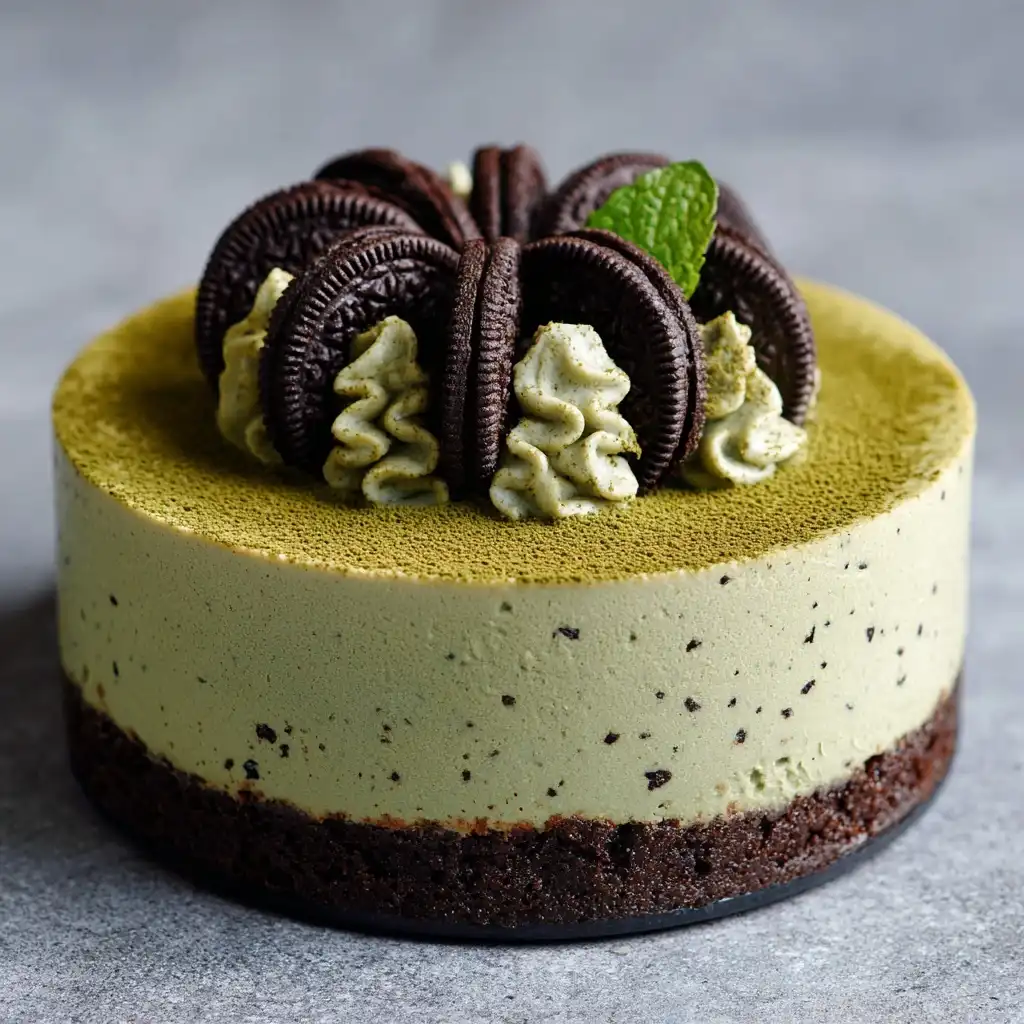
Welcome to the ultimate fusion of East-meets-West decadence: the Matcha Oreo Cheesecake. This isn’t just another dessert—it’s a meticulously crafted, multi-layered symphony of earthy, creamy, crunchy, and subtly sweet flavors that delights the palate and soothes the soul. Imagine the velvety richness of New York–style cheesecake, elevated with the refined, grassy umami of premium ceremonial-grade matcha green tea, all anchored by a deeply satisfying, bittersweet Oreo cookie crust. Whether you’re a matcha connoisseur, an Oreo devotee, or simply someone who appreciates bold, balanced flavor profiles, this dessert bridges tradition and innovation in every forkful. It’s elegant enough for dinner parties, comforting enough for cozy Sunday afternoons, and Instagram-worthy enough to stop scrollers mid-feed—without sacrificing authenticity or integrity.
The History
The Matcha Oreo Cheesecake is a delicious testament to culinary globalization and generational reinterpretation. Its roots stretch across continents and decades: cheesecake traces back over 2,000 years to ancient Greece, where honey-sweetened cheese cakes were served to athletes at the first Olympic Games in 776 BCE. The modern American baked cheesecake evolved in the late 19th century, notably popularized by Arnold Reuben in the 1920s and later perfected by New York bakeries like Junior’s and Lindy’s. Meanwhile, Oreos, introduced by Nabisco in 1912, became America’s best-selling cookie—its iconic “twist, lick, dunk” ritual ingrained in pop culture. Matcha, on the other hand, has been ceremonially prepared and revered in Japan since the 12th century, gaining global traction only in the early 2000s as part of the wellness and artisanal food movements. The convergence of these three icons didn’t happen overnight. It emerged gradually—in Tokyo cafés serving matcha tiramisu, Brooklyn bakeries experimenting with Japanese-inspired desserts, and home bakers sharing viral #MatchaDessert recipes on Pinterest and TikTok around 2015–2017. The Matcha Oreo Cheesecake crystallized as a cultural shorthand for mindful indulgence: honoring tradition while embracing playful, boundary-pushing creativity. It reflects our contemporary desire for both depth (matcha’s complexity) and nostalgia (Oreo’s childhood comfort), all wrapped in the timeless luxury of cheesecake.
Ingredients Breakdown
Every element of this cheesecake serves a precise purpose—flavor, texture, structure, or balance. Here’s why each ingredient matters:
- Oreo Cookie Crust: Not just any cookies—full-strength, original Oreos (with filling intact) deliver essential fat, sweetness, and that unmistakable vanilla-cocoa-creaminess. The filling adds moisture and emulsifying power, helping the crust bind without excessive butter. Using 30–32 standard Oreos yields ~2 cups of finely crushed crumbs—the ideal ratio for a sturdy, flavorful base that won’t crumble under the dense filling.
- Unsalted Butter (melted): Acts as the binding agent for the crust while contributing rich mouthfeel and subtle dairy notes. Clarified butter can be used for higher heat tolerance, but standard unsalted butter is preferred for its nuanced flavor.
- Cream Cheese (full-fat, room temperature): The backbone of the filling. Must be truly room temperature (68–72°F) to ensure smooth incorporation—cold cream cheese causes lumps no amount of mixing can fully resolve. Philadelphia-brand is recommended for consistent density and neutral tang; avoid low-fat or whipped varieties, which destabilize the structure and mute flavor.
- Granulated Sugar: Provides sweetness and also aids in aeration during beating—critical for achieving lightness within density. A portion is reserved for the swirl layer to control sweetness distribution.
- Sour Cream & Heavy Cream: These dairy components are non-negotiable for texture. Sour cream adds subtle acidity and moisture, preventing dryness; heavy cream contributes fat and silkiness, enhancing melt-in-the-mouth quality and improving crack resistance during baking.
- Large Eggs (room temperature): Act as natural emulsifiers and structural agents. Adding them one at a time ensures full incorporation and minimizes air entrapment—which leads to cracks. Room temperature eggs blend more evenly into the warm (but not hot) batter.
- Premium Ceremonial-Grade Matcha Powder: This is the soul of the dessert. Culinary-grade matcha will yield dull color and bitter, hay-like off-notes. Ceremonial grade—stone-ground from shade-grown Tencha leaves, vibrant jade-green, with natural sweetness and marine umami—is essential. Sifted matcha dissolves cleanly and imparts a luminous hue and layered flavor: top notes of fresh spinach and edamame, mid-palate creaminess, and a clean, lingering finish. Typical用量: 2–3 tablespoons (12–18g), adjusted for intensity and brand potency.
- Vanilla Extract (pure, alcohol-based): Enhances aromatic complexity and rounds out matcha’s vegetal edges. Avoid imitation vanilla—it introduces harsh, synthetic notes that clash with matcha’s delicacy.
- Sea Salt (fine, non-iodized): A small amount (¼ tsp) heightens all other flavors and balances sweetness without tasting salty—a critical counterpoint to matcha’s natural bitterness.
- Optional Garnishes: Whipped matcha cream (heavy cream + matcha + powdered sugar), crushed toasted white chocolate, edible gold leaf, freeze-dried raspberry dust, or a delicate mint sprig—all elevate visual appeal and add textural contrast or complementary acidity.
Step-by-Step Recipe
- Prepare the Springform Pan (24 hours ahead for best results): Grease the bottom and sides of a 9-inch springform pan with unsalted butter. Line the bottom with parchment paper cut to fit perfectly. Then, wrap the *entire exterior* of the pan—including the bottom and seams—with two overlapping layers of heavy-duty aluminum foil. This prevents water seepage during the crucial water bath step. Chill the pan in the freezer for 15 minutes before crust assembly—cold metal helps set the crust faster.
- Make the Oreo Crust: Pulse 32 original Oreos (filling included) in a food processor until reduced to fine, sand-like crumbs—about 60 seconds. Add 6 tbsp (85g) melted unsalted butter and pulse 5–6 times until the mixture resembles wet sand and holds together when pinched. Transfer to the chilled pan and press *firmly and evenly* using the back of a flat-bottomed measuring cup or glass. Focus pressure on the edges first to create a slight upward lip (~¼ inch high), then compact the center. Refrigerate for *at least 60 minutes*—or freeze for 20 minutes—to fully set before baking.
- Preheat & Prep Water Bath: Position oven rack in the lower third. Preheat oven to 325°F (163°C). Place a large, deep roasting pan (larger than your springform) on the rack. Fill it halfway with hot tap water (~2 inches deep)—this preheats the water bath environment and stabilizes temperature.
- Prepare the Matcha Swirl Layer: In a small bowl, whisk together ½ cup (120g) full-fat sour cream, 2 tbsp (12g) ceremonial matcha, 2 tbsp (25g) granulated sugar, and 1 tsp pure vanilla extract until completely smooth and vivid green. Set aside.
- Make the Cheesecake Batter: In a large stand mixer fitted with the paddle attachment, beat 24 oz (680g / four 8-oz bricks) softened cream cheese on medium-low for 2 minutes until creamy and lump-free. Scrape down bowl and paddle thoroughly. Add 1 cup (200g) granulated sugar and beat 2 more minutes until fluffy and pale. Scrape again. Add 1 cup (240g) full-fat sour cream and ½ cup (120ml) heavy cream; beat 1 minute until homogenous. Add 4 large room-temperature eggs, one at a time, beating on low just until yolk disappears (≈15 seconds per egg). Scrape bowl after each addition. Finally, beat in 1 tsp pure vanilla and ¼ tsp fine sea salt. Batter should be thick, glossy, and free of streaks.
- Layer & Swirl: Pour the plain batter over the chilled crust and smooth the top with an offset spatula. Gently spoon the matcha swirl mixture in 6–8 dollops evenly spaced across the surface. Use a thin skewer or toothpick to drag through the dollops in a slow figure-eight motion—*do not overmix*. Aim for elegant, marbled ribbons—not a uniform green layer.
- Bake in Water Bath: Carefully place the foil-wrapped springform pan into the preheated water bath. The water should reach halfway up the pan’s sides. Bake for 1 hour 20 minutes. The cheesecake is done when the edges are puffed and set, but the center 3 inches still jiggles *slightly* like Jell-O when gently nudged—not liquidy, not firm. Turn off oven, crack the door open 2 inches with a wooden spoon, and let cool inside for 1 full hour. This gradual cooling prevents thermal shock and cracking.
- Chill & Set (Non-Negotiable): Remove from water bath, discard foil, run a thin knife around the inner edge to loosen, and cool completely on a wire rack (≈2 hours). Refrigerate, *uncovered*, for *minimum 12 hours*—ideally 24–48 hours. This extended chill allows proteins to fully relax, starches to hydrate, and flavors to harmonize. Cutting too soon yields a soft, gummy texture and muted matcha notes.
- Unmold & Serve: Run a warm, thin knife around the perimeter again. Release springform clasp and carefully lift off the outer ring. Slide a large, flexible offset spatula underneath the parchment to lift the cake onto a serving plate. Peel away parchment. Slice with a hot, dry knife wiped between cuts for clean edges.
Tips
- Matcha Freshness is Everything: Store ceremonial matcha in an airtight, opaque container in the freezer (not fridge)—it degrades rapidly with light, heat, and oxygen. Use within 3 months of opening for peak vibrancy.
- No Substitutions for Room-Temperature Ingredients: Cold cream cheese = lumps. Cold eggs = curdled batter. If rushed, place cream cheese cubes on a plate and microwave at 10% power for 8 seconds per cube. Float eggs in warm (not hot) water for 5 minutes.
- Straining is Key: After mixing batter, pass it through a fine-mesh sieve into a clean bowl. This catches any undissolved matcha granules or stubborn cream cheese bits—guaranteeing silken texture.
- Water Bath Safety: Always place the springform *into* the roasting pan *before* adding water. Never pour boiling water directly onto cold foil—it risks tearing. Use hot tap water instead.
- Crack Prevention Protocol: Beyond the water bath and gradual cooling: add 1 tbsp cornstarch to the batter (optional but effective); avoid opening the oven during the first 75 minutes; and never overbeat the eggs—they introduce excess air.
- Freezing for Longevity: Once fully chilled and sliced, individual portions freeze beautifully for up to 3 months. Wrap tightly in plastic wrap + foil, thaw overnight in fridge—not at room temp—to preserve texture.
- Acidity Balance Hack: If your matcha tastes overly bitter, stir ¼ tsp lemon juice into the swirl mixture before adding—it brightens without sourness.
- Visual Appeal Tip: For dramatic contrast, dust the top with matcha *just before serving* using a fine-mesh sieve—prevents dulling during storage.
Variations and Customizations
This recipe is a canvas—adaptable to dietary needs, seasonal ingredients, and personal whims:
- Vegan Matcha Oreo Cheesecake: Replace cream cheese with blended raw cashews (soaked 6 hrs), coconut cream, silken tofu, and lemon juice. Use vegan Oreos (check for dairy-free status) and coconut oil in the crust. Set with agar-agar instead of gelatin.
- No-Bake Version: Combine cream cheese, powdered sugar, matcha, and whipped coconut cream or stabilized heavy cream. Fold in crushed Oreos. Pour over chilled crust and refrigerate 8+ hours. Texture is lighter, airier—ideal for summer.
- Matcha White Chocolate Swirl: Melt 4 oz high-quality white chocolate, cool slightly, then whisk with 1 tbsp matcha and 1 tbsp warm cream. Drizzle over batter and swirl for a sweeter, creamier accent.
- Sakura-Infused: Steep 1 tsp dried, food-grade sakura blossoms in the heavy cream for 20 minutes before straining and using in batter. Adds delicate floral notes and pale pink undertones.
- Black Sesame Addition: Mix 2 tbsp roasted black sesame paste into the matcha swirl layer for nutty depth and striking gray-green marbling.
- Yuzu-Kissed: Replace 1 tbsp vanilla with yuzu juice and zest in both batter and swirl—adds citrus brightness that lifts matcha’s earthiness.
- Mini Jar Cheesecakes: Portion into 8–10 oz mason jars. Reduce bake time to 30–35 minutes. Perfect for gifts or portion control.
- Gluten-Free Adaptation: Use certified GF Oreos (like Glutino or Kinnikinnick) and verify matcha is processed in a GF facility. Add 1 tsp xanthan gum to crust for binding.
- Protein-Boosted: Stir 2 scoops unflavored collagen peptides or whey isolate into dry ingredients—adds satiety without affecting taste or texture.
- Umami-Rich Savory-Sweet: Add ½ tsp toasted nori powder to the matcha swirl—unexpected, deeply savory, and utterly addictive for adventurous palates.
Health Considerations and Nutritional Value
While undeniably indulgent, this cheesecake can be contextualized within a balanced lifestyle—especially when made mindfully:
- Matcha Benefits: Ceremonial matcha delivers 137x more EGCG (a potent antioxidant) than regular green tea. It contains L-theanine—an amino acid that promotes calm alertness without jitters—and chlorophyll for natural detox support. One slice provides ~45–60mg caffeine—less than a cup of coffee—plus sustained energy release.
- Oreo Realities: Traditional Oreos contain palm oil and high-fructose corn syrup. Opt for organic versions (like Newman’s Own) or make homemade “Oreo-style” cookies with almond flour, cocoa, maple syrup, and coconut oil to reduce processed sugars and inflammatory fats.
- Cheesecake Nutrition (per standard slice, 1/14th): Approx. 420–460 kcal | 28g fat (16g sat) | 38g carbs (26g sugar) | 6g protein | 0.5g fiber. Vitamin K (from matcha), calcium (dairy), and selenium (eggs) are notable micronutrients.
- Dietary Modifications:
- Lower-Sugar: Reduce granulated sugar to ¾ cup total; use monk fruit or erythritol blends (1:1 substitute) in crust and swirl. Note: sugar plays a functional role in texture—don’t eliminate entirely from batter.
- Lower-Fat: Substitute half the sour cream with Greek yogurt (full-fat, strained) and use ⅓ less butter in crust. Expect slightly denser texture.
- Keto-Friendly: Use almond flour crust, erythritol, full-fat dairy, and increase matcha to 3 tbsp for flavor impact. Net carb count drops to ~6g/slice.
- Mindful Enjoyment Guidelines: Serve smaller portions (1/16th instead of 1/12th). Pair with ginger-mint tea to aid digestion. Enjoy as part of a meal—not on an empty stomach—to moderate blood sugar response. Prioritize quality ingredients over quantity: one slice made with ceremonial matcha and real dairy offers far more phytonutrient value than three slices of mass-produced alternatives.
Ingredients
For the Oreo Crust:
- 32 original Oreo cookies (with filling), finely crushed (≈2 cups crumbs)
- 6 tablespoons (85g) unsalted butter, melted and cooled slightly
- ¼ teaspoon fine sea salt
For the Cheesecake Filling:
- 24 ounces (680g / four 8-oz packages) full-fat brick-style cream cheese, at room temperature
- 1 cup (200g) granulated sugar, divided
- 1 cup (240g) full-fat sour cream, at room temperature
- ½ cup (120ml) heavy cream (36–40% fat), at room temperature
- 4 large eggs, at room temperature
- 1 teaspoon pure vanilla extract
- ¼ teaspoon fine sea salt
For the Matcha Swirl:
- ½ cup (120g) full-fat sour cream
- 2 tablespoons (12g) high-quality ceremonial-grade matcha powder, sifted
- 2 tablespoons (25g) granulated sugar
- 1 teaspoon pure vanilla extract
For Serving (Optional but Recommended):
- Whipped matcha cream: 1 cup heavy cream + 1 tbsp matcha + 2 tbsp powdered sugar, whipped to soft peaks
- Fresh raspberries or blackberries
- Crushed toasted white chocolate or matcha shortbread crumbles
- Edible flowers (violets, pansies) or micro mint
Directions
- Prep the Pan: Grease a 9-inch springform pan with butter. Line the bottom with parchment paper. Wrap the *entire exterior* tightly with two layers of heavy-duty aluminum foil. Freeze for 15 minutes.
- Make the Crust: In a food processor, pulse Oreos until fine crumbs form. Add melted butter and salt; pulse until mixture resembles wet sand. Press firmly into chilled pan, building a slight rim. Refrigerate 60 minutes—or freeze 20 minutes.
- Preheat Oven & Water Bath: Preheat oven to 325°F (163°C). Place large roasting pan on lower oven rack. Fill halfway with hot tap water.
- Prepare Swirl: Whisk swirl ingredients until smooth and vibrant green. Set aside.
- Make Batter: Using stand mixer, beat cream cheese 2 min until smooth. Add ¾ cup sugar; beat 2 min until fluffy. Scrape bowl. Add sour cream and heavy cream; beat 1 min. Add eggs one at a time, beating 15 sec each. Beat in vanilla and salt. Strain batter through fine-mesh sieve.
- Assemble: Pour batter over crust. Dollop swirl mixture evenly. Swirl gently with skewer—6–8 figure-eights only.
- Bake: Place pan in water bath. Bake 1 hr 20 min until edges are set, center 3″ jiggles slightly. Turn off oven, crack door, cool 1 hr inside.
- Chill: Cool on rack 2 hrs. Refrigerate uncovered ≥12 hrs (ideally 24–48 hrs).
- Unmold & Serve: Loosen edges with warm knife. Release springform. Lift cake onto plate. Peel parchment. Dust with matcha. Slice with hot, dry knife.
FAQ
- Can I use culinary-grade matcha?
- No—it will produce a dull brownish-green color, a harsh, astringent bitterness, and lack the nuanced sweetness and umami essential to this dessert. Ceremonial grade is non-negotiable for optimal flavor, color, and texture.
- Why does my cheesecake crack?
- Most commonly: rapid temperature change (opening oven too soon, cooling too fast), overmixing eggs, or skipping the water bath. Ensure gradual cooling, avoid overbeating, and always use the water bath—even if it feels tedious.
- Can I make this ahead?
- Absolutely—and it’s highly recommended. Cheesecakes improve dramatically after 24–48 hours of chilling. Fully assembled, it keeps refrigerated for 5 days or frozen (well-wrapped) for 3 months.
- My matcha swirl disappeared or turned muddy!
- This happens when batter is over-swirled or too warm. Keep swirl mixture cool, use a *cold* batter, and swirl minimally—6–8 gentle passes maximum. Also, ensure matcha is well-sifted and fully dissolved before adding.
- Is there a way to make it gluten-free?
- Yes—use certified gluten-free Oreos (verify label), ensure matcha is GF-certified, and consider adding ½ tsp xanthan gum to the crust for cohesion. All other ingredients are naturally GF.
- Can I omit the sour cream?
- Not advised. Sour cream contributes vital acidity, moisture, and fat that balance richness and prevent graininess. Greek yogurt (full-fat) may substitute 1:1, but expect slightly tangier, denser results.
- How do I store leftovers?
- Keep covered with plastic wrap pressed directly onto the cut surface to prevent drying. Refrigerate up to 5 days. For longer storage, freeze individual slices wrapped in parchment + foil.
- What if I don’t have a springform pan?
- You can use a 9-inch cake pan lined with *overhanging* parchment (to lift out), but unmolding will be trickier. Avoid glass or ceramic—they conduct heat unevenly and increase cracking risk.
- Can I add fruit?
- Yes—but strategically. Fold ½ cup finely chopped *dried* cherries or apricots into the batter *after* eggs. Fresh berries add excess moisture and sink; instead, serve alongside or as a compote garnish.
- Why does my crust crumble when I cut?
- Too little butter, insufficient chilling, or pressing too lightly. Ensure 6 tbsp butter, freeze crust before baking, and press *very firmly*—use a flat-bottomed cup and apply downward pressure for 30 seconds per section.
Summary
The Matcha Oreo Cheesecake is a masterclass in intentional fusion—where centuries-old Japanese tea ceremony meets American snack-food nostalgia, all unified by the luxurious, timeless architecture of baked cheesecake.
It rewards patience, honors ingredient integrity, and delivers an experience that is simultaneously grounding and exhilarating: earthy yet sweet, rich yet refreshing, nostalgic yet profoundly new—with every bite inviting quiet contemplation and joyful celebration in equal measure.