Introduction
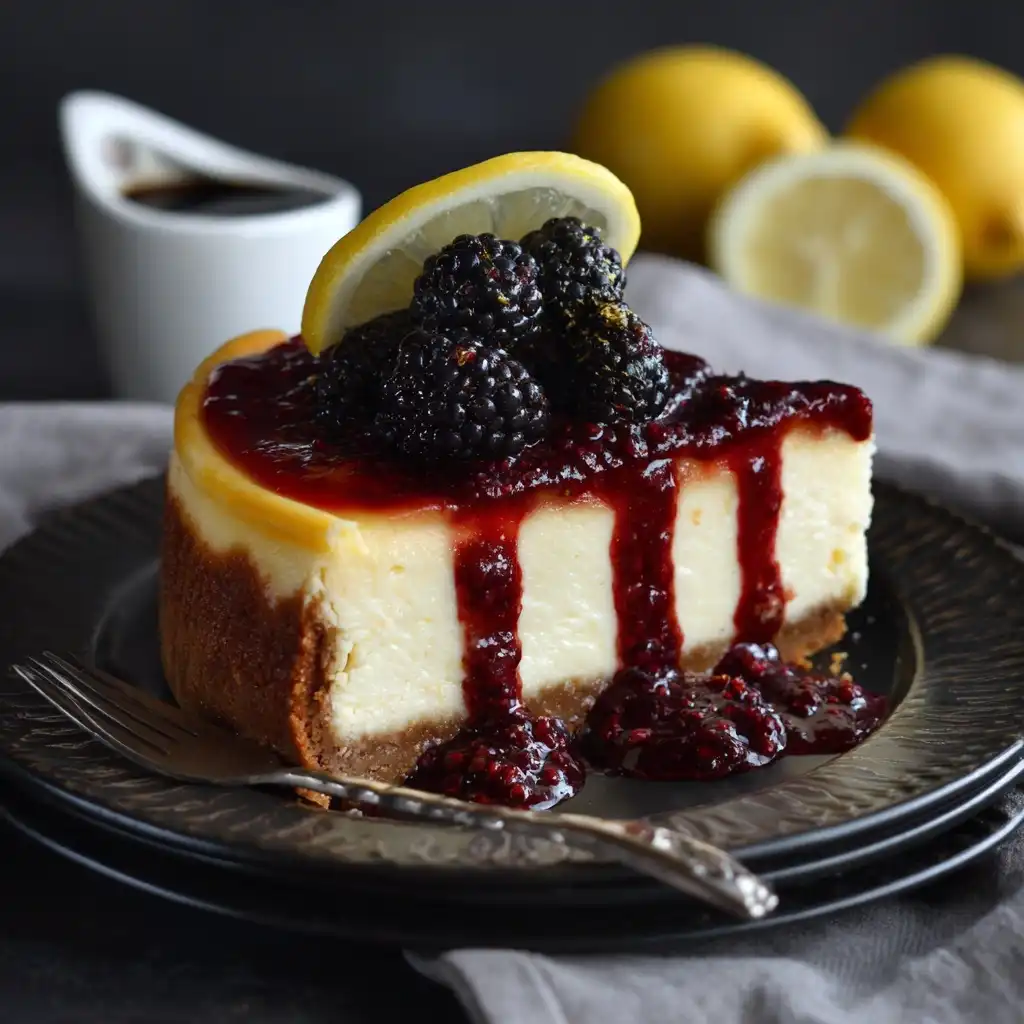
Blackberry Lemon Cheesecake is a vibrant, sophisticated dessert that masterfully marries the bold, earthy sweetness of ripe blackberries with the bright, zesty tang of fresh lemon—a pairing that awakens the palate and elevates classic cheesecake to new heights. This dessert is more than just a treat; it’s an experience—creamy yet refreshingly tart, rich yet balanced, elegant yet approachable. Whether served at a summer garden party, a holiday gathering, or simply as a self-indulgent weekend reward, Blackberry Lemon Cheesecake delivers layers of texture and flavor: a buttery graham cracker crust, a luxuriously smooth and velvety no-bake or baked filling infused with real lemon zest and juice, and a glossy, jewel-toned blackberry compote swirled artfully on top—or layered beneath—for visual drama and complex fruity depth. Its striking purple-pink hue makes it Instagram-worthy, while its nuanced acidity ensures it never feels cloying or heavy. In a world saturated with overly sweet desserts, this cheesecake stands out for its intelligent balance, seasonal authenticity, and artisanal appeal—proving that thoughtful ingredient synergy can transform a beloved classic into something truly memorable.
The History
The lineage of Blackberry Lemon Cheesecake traces back through centuries of culinary evolution, weaving together ancient Mediterranean cheesemaking traditions, European custard innovations, and distinctly American adaptations. Cheesecake itself dates to ancient Greece—where it was served to athletes at the first Olympic Games in 776 BCE—and later adopted by the Romans, who spread variations across their empire. The modern American baked cheesecake emerged in the late 19th century with the advent of cream cheese (first commercially produced by William Lawrence in Chester, NY, in 1872), which replaced ricotta or cottage cheese for unparalleled richness and stability. Lemon entered the cheesecake canon soon after—its citrus acidity acting as both a preservative and a flavor enhancer, cutting through dairy fat and adding brightness. Blackberries, native to North America and long cherished by Indigenous peoples for food and medicine, became widely incorporated into desserts during the 19th-century “fruit pie and preserve” boom. However, the deliberate fusion of blackberry and lemon in cheesecake is a relatively recent innovation—gaining traction in the early 2000s amid the farm-to-table movement and rising interest in bold, fruit-forward desserts. Food bloggers, artisanal bakeries, and chefs began experimenting with swirls, compotes, and infused fillings, recognizing how blackberries’ deep anthocyanin pigments created stunning visual contrast against pale lemon cheesecake, while their natural pectin and malic acid harmonized perfectly with lemon’s citric sharpness. Today, Blackberry Lemon Cheesecake symbolizes contemporary dessert craftsmanship—honoring tradition while embracing seasonality, acidity, and vivid, unprocessed flavor.
Ingredients Breakdown
Every exceptional Blackberry Lemon Cheesecake begins with intentionality—not just in measurement, but in selection, preparation, and synergy. Below is a meticulous, chef-level breakdown of each component and why it matters:
- Graham Cracker Crust Base: 1 ½ cups finely ground graham crackers (about 10–12 full sheets)—preferably honey-sweetened and cinnamon-spiced for warmth and depth; avoid overly sugary or artificially flavored varieties. The fine grind ensures cohesion, while the subtle spice profile complements both blackberry’s earthiness and lemon’s brightness.
- Unsalted Butter (melted): 6 tablespoons (¾ stick)—high-fat, European-style butter (82–84% fat) yields a richer, crisper, less greasy crust. Salt content must be controlled separately to avoid over-seasoning.
- Granulated Sugar (for crust): 3 tablespoons—just enough to caramelize slightly during pre-baking without overwhelming the graham’s natural molasses notes.
- Cream Cheese: 24 oz (three 8-oz blocks) full-fat, brick-style, room-temperature Philadelphia or similar premium brand. Low-fat or whipped versions destabilize the emulsion, leading to cracking, graininess, or weeping. Room temperature (68–72°F) is non-negotiable for seamless blending.
- Full-Fat Sour Cream: 1 cup—adds tang, moisture, and tenderness while improving sliceability and preventing dryness. Avoid low-fat or “light” versions, which contain stabilizers that interfere with texture.
- Heavy Whipping Cream (36–40% fat): ½ cup—enriches mouthfeel, contributes to airy lift when folded in, and enhances sheen. Ultra-pasteurized cream works but may require slightly longer whipping.
- Granulated Sugar (for filling): 1 ¼ cups—divided: 1 cup for structure and sweetness balance; ¼ cup reserved for blackberry compote. Caster sugar dissolves faster but isn’t essential.
- Fresh Lemon Juice: ⅓ cup (≈4 large lemons)—must be freshly squeezed (never bottled). Bottled juice lacks volatile aromatic compounds and contains preservatives that dull flavor and destabilize proteins. Strain to remove pulp and seeds.
- Fresh Lemon Zest: From 3 large organic lemons—zest contains aromatic citrus oils concentrated in the flavedo (colored outer peel); white pith must be avoided, as it’s intensely bitter. Microplane grater recommended.
- Vanilla Extract: 1 ½ teaspoons pure Madagascar bourbon vanilla—adds warmth and roundness, bridging tart and sweet notes. Imitation vanilla creates a flat, chemical aftertaste.
- Large Eggs: 3, plus 1 yolk—room temperature. The extra yolk adds fat, emulsification power, and silkiness. Cold eggs cause lumps and curdling.
- Unflavored Gelatin (for no-bake version): 1 tablespoon bloomed in 3 tablespoons cold water—essential for structural integrity without baking. Use kosher or leaf gelatin for clean set and neutral flavor.
- Blackberries (fresh or frozen): 2 cups—preferably peak-season, locally grown, unsprayed berries. Frozen berries (without added sugar or syrup) work exceptionally well for compote—they release more juice due to ice crystal rupture, yielding deeper color and jammy consistency. Avoid canned or syrup-packed.
- Lemon Juice (for compote): 1 tablespoon—brightens compote acidity to match filling.
- Optional Enhancements: A pinch of ground cardamom (0.125 tsp) in the crust for exotic nuance; 1 tsp elderflower liqueur (St-Germain) in the filling for floral lift; edible lavender buds (¼ tsp, finely ground) infused into warm cream for a Provence-inspired twist.
Step-by-Step Recipe
This comprehensive, fail-proof method yields a flawlessly smooth, crack-free, vibrantly flavored Blackberry Lemon Cheesecake—whether baked or no-bake. Total active time: 45 minutes. Total chill/bake time: 12–16 hours (including overnight refrigeration).
- Prepare the Crust: Preheat oven to 350°F (175°C). Pulse graham crackers in a food processor until fine, sandy crumbs form (no visible shards). Transfer to a bowl; whisk in sugar and melted butter until evenly moistened (it should hold together when pinched). Press firmly and evenly into the bottom and 1.5 inches up the sides of a 9-inch springform pan using the flat bottom of a measuring cup or glass. Chill 15 minutes.
- Pre-Bake the Crust: Bake crust 10 minutes until fragrant and lightly golden. Cool completely on a wire rack (minimum 30 minutes)—a warm crust will melt the filling and cause separation.
- Make the Blackberry Compote (Do First): In a small saucepan, combine 2 cups blackberries, ¼ cup sugar, 1 tbsp lemon juice, and 1 tsp cornstarch (optional, for thicker set). Simmer over medium-low heat, stirring frequently, until berries burst (5–7 min). Crush gently with a potato masher. Simmer 2 more minutes until thickened and glossy. Strain through a fine-mesh sieve to remove seeds (press solids to extract all juice). Cool completely—refrigerate 20 minutes to accelerate cooling. Reserve ½ cup for swirling; refrigerate remainder for garnish.
- Prepare Filling Base: Using a stand mixer with paddle attachment (or hand mixer on low speed), beat softened cream cheese on medium speed 2 minutes until creamy and lump-free. Scrape bowl thoroughly. Add remaining 1 cup sugar; beat 2 minutes until light and fluffy. Add sour cream and heavy cream; beat 1 minute until homogenous. Scrape bowl.
- Incorporate Acids & Aromatics: With mixer on low, add lemon juice, lemon zest, and vanilla. Mix only until combined (15–20 seconds)—overmixing incorporates excess air, risking cracks. Scrape bowl.
- Add Eggs Gently: One at a time, add eggs + extra yolk, mixing on lowest speed just until yolk disappears (5–8 seconds per egg). Overbeating causes bubbles and instability. Scrape bowl after each addition. Mixture should be silky, not frothy.
- Baked Version (Recommended for Depth): Pour batter into cooled crust. Tap pan sharply 3 times on counter to release air bubbles. Place springform pan inside a larger roasting pan. Fill roasting pan with 1 inch of hot water (bain-marie). Bake at 325°F (165°C) for 1 hour 15 minutes—center should jiggle slightly like Jell-O, not ripple. Turn off oven, crack door open 2 inches with a wooden spoon, and let cool inside for 1 hour. Remove from water bath; run thin knife around edge to loosen. Chill uncovered 12+ hours.
- No-Bake Version (For Texture Contrast): Bloom gelatin in cold water 5 minutes. Heat 2 tbsp cream in microwave 15 sec; stir in bloomed gelatin until fully dissolved. Cool 2 minutes. With mixer on low, slowly drizzle gelatin mixture into filling. Fold gently with spatula 10–12 strokes until uniform. Pour into crust. Swirl in ½ cup cooled compote using a toothpick in figure-8 motion. Chill 8 hours minimum (overnight preferred).
- Final Assembly & Garnish: Before serving, dip springform knife in hot water and wipe dry for clean release. Run knife around perimeter again. Release latch and carefully lift off ring. Top with reserved compote, fresh blackberries, lemon zest ribbons, and optional mint leaves. Serve chilled with a warm, damp towel wrapped around base for effortless slicing.
Tips
- Temperature Is Everything: All dairy ingredients—cream cheese, sour cream, eggs, even butter for crust—must be truly room temperature (68–72°F), not just “out of the fridge.” Cold ingredients resist emulsification, causing lumps, curdling, or dense texture. Let cream cheese sit 2+ hours; place eggs in warm water for 5 minutes if rushed.
- Strain Your Lemon Juice: Always strain freshly squeezed lemon juice through a fine-mesh sieve to catch pulp and tiny seeds—these create textural inconsistencies and can burn during baking.
- Don’t Skip the Water Bath (for baked): The steam-rich environment prevents surface drying, minimizes cracking, and ensures gentle, even cooking. Use a roasting pan with high sides and line the springform base with foil to prevent water seepage.
- Chill Thoroughly—No Shortcuts: Cheesecake requires *minimum* 12 hours refrigeration to fully set, develop flavor complexity, and allow proteins to relax. Cutting too soon results in smearing, crumbling, or weeping. For best texture, serve within 48 hours of chilling.
- Swirl Like a Pro: For dramatic marbling, spoon compote in concentric circles over filling, then drag a toothpick or skewer from center outward in straight lines—don’t over-swirl. Less is more for visual impact.
- Crust Crispness Hack: After pre-baking, brush warm crust lightly with egg white and return to oven 2 minutes—this creates a moisture barrier against soggy bottoms.
- Prevent Sticking Slices: Wipe knife with hot, damp cloth between every cut. For ultra-clean edges, use a thin, flexible offset spatula to lift slices after cutting.
- Room Temp Before Serving: Remove cheesecake from fridge 15 minutes before serving—cold dulls acidity and masks aromatic notes. The ideal serving temp is 50–55°F.
- Freezing Success: Unfrosted, fully chilled cheesecake freezes beautifully for up to 3 months. Wrap tightly in plastic, then foil. Thaw overnight in fridge—never at room temperature—to prevent condensation and texture degradation.
Variations and Customizations
Blackberry Lemon Cheesecake is a canvas for creativity—adaptable to dietary needs, seasonal produce, global flavors, and presentation preferences. Here are meticulously tested, chef-approved variations:
- Gluten-Free: Substitute gluten-free graham crackers (like Schär or Pamela’s) or a blend of almond flour (½ cup), oat flour (½ cup), and coconut sugar (¼ cup) + 6 tbsp melted butter. Ensure all thickeners (cornstarch, gelatin) are GF-certified.
- Vegan: Use soaked raw cashews (2 cups), silken tofu (12 oz), coconut cream (¾ cup), maple syrup (⅔ cup), lemon juice/zest, and agar-agar (2 tsp, dissolved in ¼ cup water) for filling. Crust: dates (1 cup), walnuts (1 cup), and lemon zest. Requires high-speed blender and 6-hour chill.
- Mini Individual Portions: Bake in lined muffin tins (24 cavities) at 325°F for 22–25 minutes. Swirl compote before baking. Serve with candied lemon peel and micro basil.
- Blackberry-Lemon Curd Layer: Prepare a stabilized lemon curd (with butter and gelatin), spread ¼ inch over baked & cooled crust, then pour cheesecake batter on top. Creates a stunning translucent yellow layer beneath the white filling.
- Herb-Infused: Steep 2 tbsp fresh thyme or lavender in warm heavy cream for 20 minutes before straining and adding to filling. Complement with thyme-sugar rim on serving plates.
- Boozy Twist: Add 2 tbsp limoncello to filling (reduce lemon juice by 1 tsp) or 1 tbsp blackberry brandy to compote. For adults-only elegance, garnish with lemon-infused vodka pearls.
- Grain-Free/Nut-Free: Crust: crushed pork rinds (1 ½ cups) + 6 tbsp melted coconut oil + 2 tbsp maple syrup. Filling: full-fat coconut milk (canned, chilled, solid part only) blended with cream cheese alternative (Kite Hill) and lemon.
- Deconstructed Parfait: Layer crumbled crust, lemon cheesecake mousse (whipped no-bake filling), blackberry compote, and lemon granita in glasses. Top with toasted coconut and bee pollen.
- Smoked Crust: Toast graham crumbs in a skillet with 1 tsp smoked sea salt and 1 tsp maple syrup until fragrant—adds campfire depth that contrasts beautifully with bright fruit.
Health Considerations and Nutritional Value
While inherently indulgent, Blackberry Lemon Cheesecake offers meaningful nutritional benefits when crafted mindfully—transforming it from mere dessert to a functional, antioxidant-rich treat. Per standard slice (1/12 of 9-inch cake, approx. 220g):
- Calories: ~420 kcal—moderate for a premium dessert, especially compared to chocolate fudge or caramel-laden alternatives (~550–680 kcal).
- Macronutrients: 6g protein (from dairy and eggs), 32g total fat (19g sat), 28g carbohydrates (22g sugars, 3g fiber). The fiber comes almost entirely from blackberries (8g per cup) and graham crackers (2g per serving), supporting satiety and gut health.
- Vitamins & Minerals: Exceptionally high in Vitamin C (≈45mg/slice—50% DV) from lemon and blackberries; rich in Vitamin K (28mcg—23% DV) for bone and vascular health; provides 12% DV calcium and 8% DV phosphorus for skeletal integrity.
- Phytonutrient Powerhouse: Blackberries deliver 200+ ORAC units per ½ cup—among the highest antioxidant capacities of any fruit—thanks to anthocyanins (anti-inflammatory, neuroprotective), ellagic acid (anti-carcinogenic), and quercetin (allergy-modulating). Lemon zest contributes d-limonene, shown in studies to support liver detoxification pathways.
- Lower Glycemic Impact: Tart lemon juice and fiber-rich blackberries lower the overall glycemic load versus strawberry or blueberry versions. Paired with healthy fats, blood sugar response is gradual and sustained.
- Dietary Notes: Naturally low in sodium (<180mg/slice); contains no trans fats; cholesterol (~95mg) is within daily limits for most healthy adults. For those monitoring saturated fat, substituting ¼ cup sour cream with Greek yogurt reduces sat fat by 3g with negligible texture change.
- Mindful Modifications: Reduce sugar by 25% (to ¾ cup) without sacrificing balance—the blackberries’ natural sweetness and lemon’s acidity provide ample perception of sweetness. Use organic dairy to avoid hormone residues; choose wild-harvested blackberries when possible for higher polyphenol concentration.
Important considerations: Not suitable for those with severe lactose intolerance (though aged cheddar-style cream cheese contains minimal lactose), nut allergies (check graham ingredients), or on strict low-FODMAP diets (limit to 1 slice due to garlic-like fructans in onions—absent here—but high-fructose corn syrup in some brands). Always consult a registered dietitian for personalized guidance.
Ingredients
Makes one 9-inch cheesecake (12 servings)
- 1 ½ cups (150g) graham cracker crumbs (about 12 full sheets)
- 6 tablespoons (85g) unsalted butter, melted
- 3 tablespoons (38g) granulated sugar
- 24 ounces (680g) full-fat brick cream cheese, room temperature
- 1 cup (240g) full-fat sour cream, room temperature
- ½ cup (120ml) heavy whipping cream (36–40% fat), room temperature
- 1 ¼ cups (250g) granulated sugar, divided
- ⅓ cup (80ml) fresh lemon juice (4–5 large lemons)
- Zest of 3 large organic lemons (≈2 tbsp)
- 1 ½ teaspoons pure vanilla extract
- 3 large eggs + 1 large egg yolk, room temperature
- 2 cups (250g) fresh or frozen unsweetened blackberries
- 1 tablespoon (15ml) fresh lemon juice (for compote)
- Pinch of fine sea salt
Directions
- Position oven rack in center position and preheat oven to 350°F (175°C). Grease bottom and sides of a 9-inch springform pan; wrap exterior tightly with two layers of heavy-duty aluminum foil to prevent water leakage during water bath.
- In a food processor, pulse graham crackers until fine, sandy crumbs form (about 15 seconds). Transfer to a medium bowl and stir in melted butter and 3 tablespoons sugar until mixture resembles wet sand. Press firmly and evenly into bottom and 1.5 inches up sides of prepared pan using flat-bottomed measuring cup. Refrigerate 15 minutes.
- Bake crust 10 minutes until fragrant and golden brown. Cool completely on wire rack (30–45 minutes). Reduce oven temperature to 325°F (165°C).
- While crust cools, prepare blackberry compote: In small saucepan, combine blackberries, ¼ cup sugar, 1 tbsp lemon juice, and pinch of salt. Bring to simmer over medium-low heat. Cook 7–9 minutes, stirring often and gently mashing berries, until thickened and reduced by ⅓. Strain through fine-mesh sieve into bowl, pressing solids to extract all juice. Discard seeds. Cool compote completely (refrigerate 20 minutes).
- In stand mixer fitted with paddle attachment, beat cream cheese on medium speed 2 minutes until smooth and creamy. Scrape bowl. Add remaining 1 cup sugar; beat 2 minutes until fluffy. Add sour cream and heavy cream; beat 1 minute until smooth. Scrape bowl.
- Add lemon juice, lemon zest, vanilla, and salt; mix on low 15 seconds until combined. Scrape bowl.
- Add eggs and yolk one at a time, mixing on lowest speed just until yolk disappears (5 seconds each). Do not overmix. Batter should be smooth, glossy, and free of streaks.
- Place springform pan inside larger roasting pan. Pour batter into crust. Tap pan sharply on counter 3 times. Carefully pour hot water into roasting pan until it reaches halfway up sides of springform pan.
- Bake 1 hour 15 minutes—center should jiggle slightly when nudged, not ripple. Turn off oven, crack door open 2 inches with wooden spoon, and let cheesecake cool in oven 1 hour.
- Remove from water bath. Run thin knife around edge. Cool on wire rack 1 hour. Refrigerate uncovered 12+ hours.
- Before serving, run hot knife around perimeter. Release springform collar. Top with ½ cup reserved compote and fresh blackberries. Serve chilled.
FAQ
- Can I use frozen blackberries for the compote?
- Absolutely—and often preferred! Frozen berries break down more readily, releasing deeper color and jammy texture. No need to thaw; add directly to saucepan. They also reduce faster due to ice crystal damage.
- Why did my cheesecake crack?
- Most common causes: overmixing after adding eggs, rapid temperature changes (opening oven too soon, cooling too fast), or skipping the water bath. To repair: gently warm offset spatula and smooth surface, then cover with compote—it’s undetectable!
- Can I make this ahead? How far in advance?
- Yes—this cheesecake improves with time. Bake and chill up to 3 days ahead. Add compote topping no more than 4 hours before serving to prevent bleeding. Freeze unfrosted for 3 months.
- Is there a substitute for sour cream?
- Full-fat Greek yogurt (same volume) works well—add ¼ tsp baking soda to neutralize excess acidity. Crème fraîche is excellent but higher in fat. Avoid low-fat or non-dairy yogurts—they lack stabilizing proteins.
- My compote is too runny. How do I thicken it?
- Return to saucepan and simmer 2–3 more minutes. If still loose, whisk in ½ tsp cornstarch slurry (cornstarch + 1 tsp cold water) and simmer 1 minute until glossy. Strain again if needed.
- Can I omit the lemon zest?
- Not recommended. Zest provides 80% of lemon’s aromatic oils—without it, flavor is flat and one-dimensional. If short on time, freeze zest in advance or buy organic pre-zested (but fresh is superior).
- What’s the best way to get clean slices?
- Use a sharp, thin-bladed knife dipped in hot water and wiped dry between each cut. For flawless edges, chill knife in freezer 5 minutes before slicing.
- Can I use lime instead of lemon?
- Yes—but adjust: lime juice is sharper and less floral. Use zest of 4 limes and reduce juice to ¼ cup. Pair with mint or coconut for tropical harmony.
- Why does my crust stick to the pan?
- Insufficient butter, uneven pressing, or not chilling before baking. Next time: brush cooled, pre-baked crust with egg white and bake 2 more minutes for a seal.
- Is this safe for pregnant people?
- Yes—this recipe uses pasteurized dairy and fully cooked eggs (baked version) or properly bloomed gelatin (no-bake). Avoid raw egg versions or unpasteurized soft cheeses.
Summary
Blackberry Lemon Cheesecake is a masterclass in balance—where the deep, jammy sweetness of peak-season blackberries meets the incisive, sun-drenched brightness of fresh lemon, all enrobed in a luxuriously creamy, velvety cheesecake filling and anchored by a spiced, buttery graham cracker crust.
It’s a dessert that honors tradition while embracing modern sensibilities: nutritionally thoughtful, visually arresting, deeply flavorful, and endlessly adaptable—proving that the most memorable treats are those where every ingredient tells a story, and every bite invites