Introduction
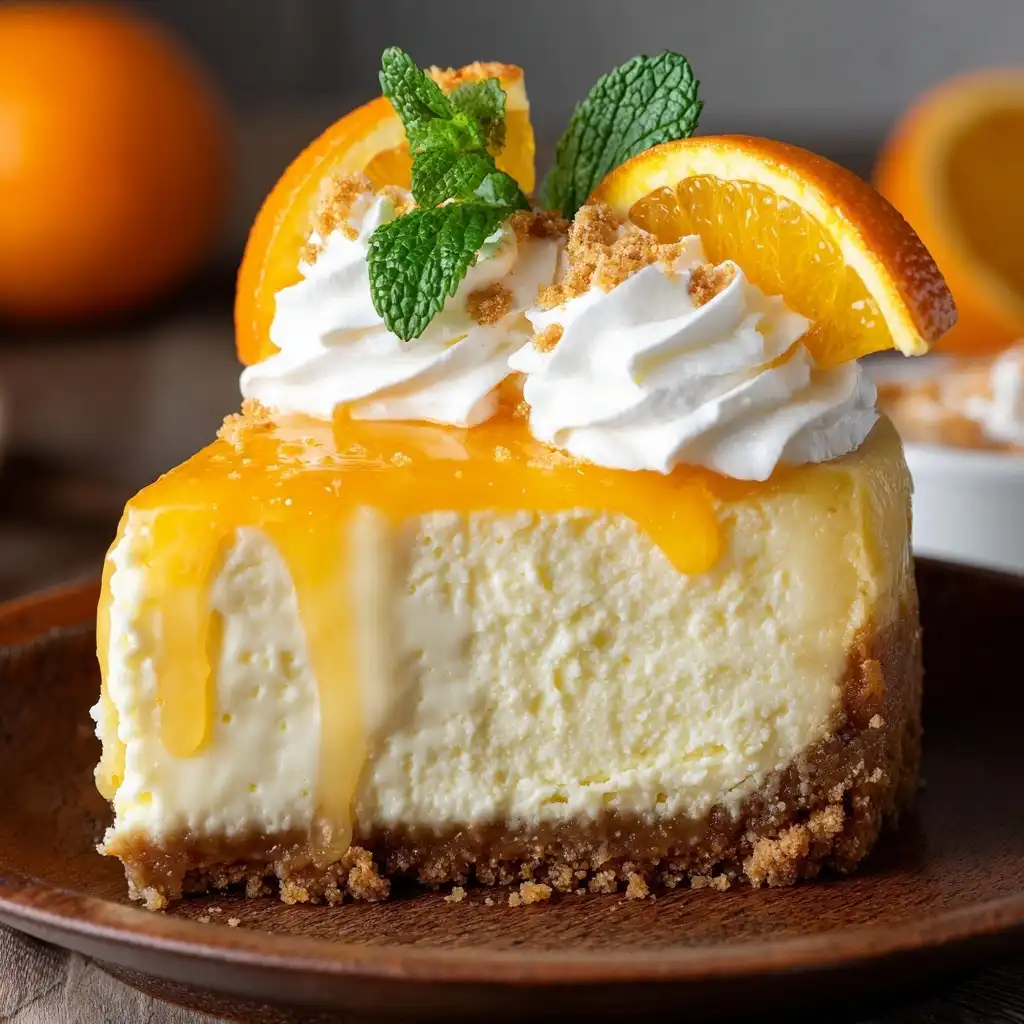
Step into a nostalgic dream with the Orange Creamsicle Cheesecake — a luscious, no-bake (or lightly baked) dessert that captures the joyful essence of childhood summers in every velvety bite. This elegant yet approachable confection bridges the bright, zesty tang of fresh orange with the cool, creamy sweetness of vanilla ice cream — all suspended in a rich, cloud-like New York–style cheesecake base. Whether served at a backyard barbecue, a holiday gathering, or as a self-indulgent weeknight treat, this dessert doesn’t just satisfy cravings — it evokes memories: sticky fingers, melting popsicles dripping down wrists, the unmistakable *crunch-snap* of a frozen creamsicle bar breaking in half. More than just a fusion of flavors, it’s a sensory time machine — and now, it’s yours to recreate with restaurant-quality finesse, right in your own kitchen.
The History
The story of the Orange Creamsicle Cheesecake begins not in a pastry lab, but on the sun-drenched sidewalks of early 20th-century America. Its lineage traces back to Frank Epperson, who — at age 11 in 1905 — accidentally invented the Popsicle when he left a soda mixture with a stirring stick outside overnight. Decades later, in 1923, Epperson patented the “Epsicle,” which soon evolved into the iconic Creamsicle: a smooth, creamy vanilla ice cream core enrobed in a vibrant orange sherbet shell — first introduced by the Callaway Dairy Company and later popularized nationally by Good Humor. The name “Creamsicle” is a portmanteau of *cream* and *Popsicle*, and its enduring appeal lies in its perfect balance — citrus brightness cutting through dairy richness, cold texture contrasting with subtle sweetness.
Fast forward to the 1980s and ’90s, when American home bakers began reimagining frozen treats as decadent, set desserts. Cheesecake — long revered for its luxurious mouthfeel and structural versatility — became the ideal canvas. Early iterations appeared in regional cookbooks and church bulletins, often featuring orange Jell-O or canned mandarin segments. But it wasn’t until the rise of food blogs, Instagram aesthetics, and ingredient-conscious baking in the 2010s that the Orange Creamsicle Cheesecake matured: swapping artificial flavorings for real orange zest and juice, elevating cream cheese with cultured sour cream or crème fraîche, and embracing graham cracker or vanilla wafer crusts infused with orange oil. Today, it stands as a beloved modern classic — a testament to how innovation honors tradition, one creamy, citrus-kissed slice at a time.
Ingredients Breakdown
Every extraordinary Orange Creamsicle Cheesecake rests on three foundational pillars: the crust, the filling, and the finish. Below is an in-depth, chef-level analysis of each component — including *why* each ingredient matters, functional roles, and sourcing insights:
For the Crust:
- Graham Cracker Crumbs (1 ½ cups / ~150g): Provides structure, subtle honeyed sweetness, and a gentle crunch. Opt for plain, uncoated graham crackers — avoid cinnamon or chocolate varieties unless intentionally customizing. For enhanced depth, lightly toast crumbs in a dry skillet before mixing.
- Granulated Sugar (¼ cup / 50g): Balances the natural bitterness of whole-wheat graham crackers and aids in caramelization during pre-baking.
- Unsalted Butter (6 tbsp / 85g), melted and cooled: Acts as binder and fat source; imparts richness and ensures crispness. Use European-style butter (82–84% fat) for superior flavor and texture.
- Finely Grated Orange Zest (from 1 medium navel orange): A game-changer. Contains aromatic citrus oils that infuse the crust with bright top notes — never substitute with dried zest.
- Optional: 1 tsp Orange Extract or ½ tsp Orange Blossom Water: Adds complexity without excess moisture; use sparingly to avoid bitterness.
For the Cheesecake Filling:
- Cream Cheese (24 oz / 680g), full-fat, room temperature: The backbone. Must be truly softened (65–70°F) — cold cream cheese causes lumps; overheated causes separation. Philadelphia is reliable, but consider Vermont Creamery or Nancy’s for higher butterfat and tang.
- Full-Fat Sour Cream (1 cup / 240g): Adds acidity, moisture, and subtle tang that balances sweetness and prevents chalkiness. Avoid low-fat or “light” versions — they contain stabilizers that interfere with setting.
- Heavy Whipping Cream (¾ cup / 180ml), cold: Provides airy lift and silkiness. Ultra-pasteurized is fine, but pasteurized (not ultra) yields slightly better whip stability if folding in separately.
- Pure Vanilla Extract (2 tsp), preferably Madagascar Bourbon: Deepens warmth and rounds out citrus notes. Alcohol-based extracts emulsify better than imitation or paste-only versions.
- Freshly Squeezed Orange Juice (⅓ cup / 80ml), strained: Key for authenticity. Use navel or Cara Cara oranges for balanced acidity and low bitterness. Never use bottled juice — it lacks volatile aromatics and often contains preservatives that inhibit setting.
- Finely Grated Orange Zest (from 2 large oranges, ~2 tbsp): Concentrated flavor powerhouse. Zest *before* juicing; use a microplane for fine, non-bitter ribbons (avoid white pith).
- Powdered Sugar (1 ¼ cups / 150g), sifted: Dissolves seamlessly, adds sweetness without graininess, and contributes to smooth texture. Sifting prevents clumping in the batter.
- Unflavored Gelatin (1 ½ tsp / ~3.75g), bloomed: Critical for no-bake versions. Ensures clean slices and prevents weeping. Bloom in 2 tbsp cold water for 5 minutes, then dissolve gently over low heat or in microwave (5–8 sec bursts). Not needed for baked versions.
- Pinch of Fine Sea Salt (⅛ tsp): Enhances all other flavors and mitigates cloying sweetness.
For the Finish & Garnish:
- Whipped Cream (1 cup heavy cream + 2 tbsp powdered sugar + 1 tsp vanilla + ½ tsp orange extract): Light, billowy topping that mirrors the “cream” half of the creamsicle.
- Orange Supremes or Thin Orange Slices: Fresh, jewel-toned garnish. Supremes (membrane-free citrus segments) add juicy bursts.
- Crushed Freeze-Dried Orange Powder (1–2 tsp): Intense, tart, vibrant finish — sprinkle just before serving.
- Edible Gold Flakes or Candied Orange Peel (optional): Elevates presentation for special occasions.
Step-by-Step Recipe
This meticulously tested method yields a flawlessly smooth, sliceable, no-bake Orange Creamsicle Cheesecake with professional-grade texture and layered citrus nuance. Total active time: 45 minutes. Chill time: minimum 12 hours (ideally 24–48 hours).
Step 1: Prepare the Crust
- In a food processor, pulse 1 ½ cups graham cracker crumbs, ¼ cup sugar, and 1 tsp orange zest until uniform. Alternatively, place in a zip-top bag and crush with a rolling pin.
- Transfer to a medium bowl. Add 6 tbsp melted, cooled unsalted butter and stir with a fork until all crumbs are evenly moistened and resemble wet sand.
- Press mixture firmly and evenly into the bottom and 1 inch up the sides of a 9-inch springform pan lined with parchment paper (bottom only). Use the flat bottom of a measuring cup or glass for even compaction.
- Refrigerate uncovered for 30 minutes to set. (Optional but recommended: Bake at 350°F for 10 minutes for extra crispness. Cool completely before filling.)
Step 2: Bloom & Dissolve Gelatin (No-Bake Only)
- In a small heatproof bowl, combine 1 ½ tsp unflavored gelatin with 2 tbsp cold water. Let sit 5 minutes until gelatin is fully hydrated and spongy (“bloomed”).
- Place bowl over a small saucepan of barely simmering water (double boiler), or microwave in 5-second bursts, stirring between, until gelatin is completely dissolved (~20–30 seconds total). Set aside to cool slightly — do not let solidify.
Step 3: Whip the Heavy Cream
- In a chilled metal or glass bowl, combine ¾ cup cold heavy cream, 2 tbsp powdered sugar, and 1 tsp vanilla. Using a hand mixer or stand mixer with whisk attachment, whip on medium-high until soft peaks form (~2–3 minutes). Do not overwhip. Transfer to a separate bowl and refrigerate.
Step 4: Beat the Cream Cheese Base
- In the bowl of a stand mixer fitted with paddle attachment (or large bowl with hand mixer), beat room-temperature cream cheese on medium speed for 1 minute until smooth and creamy — scraping down sides and paddle frequently.
- Add sour cream and beat 1 more minute until fully incorporated and glossy.
- Gradually add sifted powdered sugar in 3 additions, beating on low after each until just combined. Increase to medium for 30 seconds to eliminate grittiness. Scrape bowl thoroughly.
- Add vanilla, salt, freshly squeezed orange juice, and 2 tbsp finely grated orange zest. Mix on low until just blended — about 20 seconds. Overmixing here can cause air bubbles or curdling.
- If making no-bake: With mixer on low, slowly drizzle in the cooled, dissolved gelatin. Mix just until invisible — ~15 seconds. Stop immediately.
- If making baked: Skip gelatin. Proceed to Step 5.
Step 5: Fold in Whipped Cream & Final Assembly
- Using a large silicone spatula, gently fold one-third of the whipped cream into the cream cheese mixture to lighten it. Use a “figure-8” motion, cutting down the center, sweeping across the bottom, and folding over — do not stir or swirl.
- Add remaining whipped cream in two additions, folding just until no white streaks remain. A few small pockets are okay — overfolding deflates air and yields denser texture.
- Immediately pour batter into chilled, prepared crust. Smooth top with an offset spatula or the back of a spoon dipped in hot water.
- Tap pan firmly on counter 3–4 times to release air bubbles. Run a thin knife around the inner edge to prevent cracking.
- Cover loosely with plastic wrap (avoid touching surface) and refrigerate for minimum 12 hours — 24–48 hours is optimal for full set, clean slicing, and flavor melding.
Step 6: Baking Option (Alternative Method)
- Preheat oven to 325°F (163°C). Place springform pan on a foil-lined baking sheet.
- Prepare filling *without gelatin*. Pour into crust.
- Create a water bath: Wrap the *outside* of the springform pan tightly with 2 layers of heavy-duty foil. Place pan inside a larger roasting pan. Pour hot water into roasting pan until halfway up sides of springform.
- Bake 75–90 minutes until edges are set but center jiggles slightly like Jell-O (internal temp should read 150°F). Turn off oven, crack door open 2 inches, and let cool inside for 1 hour.
- Remove from water bath, cool on wire rack 1 hour, then refrigerate covered for minimum 8 hours — ideally overnight.
Step 7: Unmold & Garnish
- Run a thin, flexible knife under hot water, wipe dry, and carefully loosen cake from pan sides. Release springform collar.
- Slide a thin metal spatula under crust to lift onto a serving platter.
- Top with freshly whipped cream, orange supremes, a dusting of freeze-dried orange powder, and optional candied peel.
- For clean slices: Wipe knife with hot water and dry between cuts.
Tips
- Temperature is Non-Negotiable: All dairy ingredients (cream cheese, sour cream, heavy cream) must be at true room temperature (65–70°F) — take them out 2–3 hours ahead. Cold = lumps; warm = greasy separation.
- Zest First, Juice Second: Always zest your oranges before juicing — the oils reside in the outer peel, and juicing makes zest slippery and harder to grate cleanly.
- Sift Your Sugar: Powdered sugar clumps easily. Sifting ensures seamless integration and eliminates gritty texture.
- Scrape Religiously: Use a flexible silicone spatula and scrape bowl, beater, and spatula after every step — especially after adding juice and zest.
- No Overmixing: Once cream cheese is smooth, mix only as much as needed. Overbeating incorporates too much air, causing cracks or collapse during chill.
- Chill Your Tools: Chill mixing bowls, whisks, and spatulas for 15 minutes before whipping cream — ensures stable peaks.
- Patience Pays Off: Do not rush chilling. Under-chilled cheesecake will slide, smear, or fail to hold shape. Overnight is ideal; 48 hours yields best texture and flavor harmony.
- Freeze for Longer Storage: Tightly wrap unfrosted, chilled cheesecake (without garnish) in plastic + foil. Freeze up to 3 months. Thaw overnight in fridge before serving.
- Fix a Weepy Cheesecake: If surface beads with moisture, gently dab with paper towel, then re-cover and chill 1 more hour. Often caused by temperature shock or under-chilling.
- Prevent Crust Sogging: Ensure crust is fully chilled (or baked and cooled) before adding filling. A thin layer of melted white chocolate brushed on the cooled crust creates a moisture barrier.
Variations and Customizations
This recipe is a master template — endlessly adaptable to dietary needs, seasonal produce, and creative whims. Here’s how to make it your own:
Dietary Adaptations:
- Gluten-Free: Substitute gluten-free graham crackers or vanilla wafers (like Kinnikinnick or Glutino). Verify all extracts and gelatin are GF-certified.
- Lower-Sugar / Keto: Replace powdered sugar with ⅔ cup powdered erythritol + ¼ tsp stevia glycerite. Use full-fat coconut cream instead of sour cream (add ½ tsp lemon juice for acidity). Swap graham crust for almond flour + coconut oil + orange zest crust.
- Vegan: Use high-fat cashew cream (soaked, blended, strained), silken tofu, coconut cream, and agar-agar (1 tsp dissolved in 2 tbsp water, boiled 1 min) instead of gelatin. Sweeten with maple syrup or date paste. Crust: vegan gingersnaps + coconut oil + orange zest.
- Lightened Version: Substitute half the cream cheese with 12 oz low-fat Neufchâtel cheese. Keep full-fat sour cream and heavy cream for texture integrity — reducing those causes graininess.
Flavor Twists:
- Blood Orange Swirl: Reserve ¼ cup filling. Fold in 2 tbsp blood orange marmalade + 1 tsp zest. Drop spoonfuls onto filled pan and marble with a skewer.
- Lavender-Orange: Infuse heavy cream with 1 tsp culinary lavender buds (steep 20 min, strain). Add ¼ tsp dried lavender to crust.
- Spiced Creamsicle: Add ¼ tsp ground cardamom + pinch of ground ginger to crust and filling.
- Coconut Creamsicle: Replace ¼ cup heavy cream with coconut cream; add 1 tsp coconut extract to filling; top with toasted coconut flakes.
- Espresso-Orange: Dissolve 1 tsp instant espresso powder in orange juice before adding. Garnish with dark chocolate curls.
Texture & Presentation Upgrades:
- Crunch Layer: Press ½ cup crushed shortbread cookies or amaretti into the top of the filling before chilling.
- Orange Curd Layer: Spread ¾ cup homemade orange curd over chilled crust before adding filling — creates a stunning tangy ribbon.
- Chocolate-Orange Crust: Mix 2 tbsp cocoa powder + 1 tbsp orange zest into graham crumb mixture.
- Mini Individual Cheesecakes: Use a 12-cup muffin tin lined with parchment liners. Reduce chill time to 6–8 hours. Perfect for parties.
- Boozy Version: Add 1 tbsp Grand Marnier or Cointreau to filling with orange juice — enhances aroma without overpowering.
Health Considerations and Nutritional Value
While undeniably indulgent, the Orange Creamsicle Cheesecake can be contextualized within a balanced diet — especially when made with mindful ingredient choices. Below is a detailed nutritional and wellness analysis per standard slice (1/12 of 9-inch cake, no garnish):
Nutritional Profile (Approximate):
- Calories: 380–420 kcal
- Total Fat: 28–32g (18–22g saturated)
- Carbohydrates: 26–30g (22–26g sugars, primarily from added sugar and natural fruit sugars)
- Protein: 6–8g
- Fiber: 0.3–0.5g (low, unless using whole-grain graham or added psyllium)
- Vitamin C: ~15–20mg (15–25% DV) from fresh orange juice and zest
- Calcium: ~60–80mg (6–8% DV) from dairy components
- Cholesterol: ~85–100mg
Functional Health Notes:
- Real Citrus Benefits: Fresh orange zest and juice deliver bioactive compounds — hesperidin (a flavonoid with anti-inflammatory properties), limonene (studied for antioxidant activity), and vitamin C essential for collagen synthesis and immune support.
- Probiotic Potential: Full-fat sour cream and cultured cream cheese contain live cultures (if unpasteurized post-culturing), supporting gut microbiome diversity — though levels vary by brand and processing.
- Healthy Fats: While high in saturated fat, the fats from dairy and butter provide satiety signals and aid absorption of fat-soluble vitamins (A, D, E, K) naturally present in orange zest.
- Portion Mindfulness: At ~400 calories/slice, this dessert aligns with USDA’s “occasional treat” guidance. Serving alongside fresh berries or a small green salad balances the plate nutritionally.
- Allergen Awareness: Contains dairy (cream cheese, sour cream, heavy cream), eggs (if using baked version with whole eggs), and gluten (in standard graham crackers). Vegan/GF adaptations address these directly.
- Added Sugar Context: Contains ~22g added sugar/slice — within the American Heart Association’s recommended max of 25g/day for women and 36g/day for men. Opting for lower-sugar crust or natural sweeteners reduces this significantly.
- Not Low-Carb or Diabetic-Friendly (as written): High in net carbs. Diabetics should consult a dietitian before consuming; keto versions require strict macro tracking.
Mindful Enjoyment Guidelines:
- Pair with herbal tea (peppermint or chamomile) to aid digestion.
- Enjoy after a balanced meal — protein and fiber slow glucose absorption.
- Share generously — social eating enhances satisfaction and reduces overconsumption.
- Listen to hunger/fullness cues: One well-savored slice satisfies more than two rushed ones.
Ingredients
Makes one 9-inch cheesecake (12 servings)
- For the Crust:
• 1 ½ cups (150g) graham cracker crumbs (about 12 full sheets)
• ¼ cup (50g) granulated sugar
• 6 tbsp (85g) unsalted butter, melted and cooled
• 1 tsp finely grated orange zest (from 1 medium orange) - For the Filling:
• 24 oz (680g) full-fat brick-style cream cheese, room temperature
• 1 cup (240g) full-fat sour cream, room temperature
• ¾ cup (180ml) cold heavy whipping cream
• 2 tsp pure vanilla extract
• ⅓ cup (80ml) freshly squeezed orange juice, strained
• 2 tbsp (12g) finely grated orange zest (from 2 large oranges)
• 1 ¼ cups (150g) powdered sugar, sifted
• 1 ½ tsp (3.75g) unflavored gelatin (for no-bake version only)
• 2 tbsp cold water (for blooming gelatin)
• ⅛ tsp fine sea salt - For Garnish:
• 1 cup heavy cream, chilled
• 2 tbsp powdered sugar
• 1 tsp vanilla extract
• ½ tsp orange extract (optional but recommended)
• Fresh orange supremes or thin slices
• Freeze-dried orange powder, for dusting
• Candied orange peel or edible gold flakes (optional)
Directions
- Make the Crust: In a bowl, combine graham cracker crumbs, sugar, and 1 tsp orange zest. Stir in melted butter until evenly moistened. Press firmly into bottom and 1 inch up sides of a 9-inch springform pan. Refrigerate 30 minutes (or bake at 350°F for 10 minutes, then cool completely).
- Bloom Gelatin (No-Bake Only): Sprinkle gelatin over 2 tbsp cold water in a small bowl. Let sit 5 minutes. Gently melt in microwave (5–8 sec bursts) or over double boiler until clear. Set aside to cool slightly.
- Whip Cream: In a chilled bowl, whip ¾ cup cold heavy cream, 2 tbsp powdered sugar, and 1 tsp vanilla to soft peaks. Refrigerate.
- Beat Cream Cheese Base: Using a mixer, beat cream cheese until smooth (1 min). Add sour cream; beat 1 min more. Gradually add powdered sugar, beating on low, then medium for 30 sec. Add vanilla, salt, orange juice, and 2 tbsp zest; mix on low 20 sec. For no-bake: Slowly drizzle in cooled gelatin; mix 15 sec.
- Fold & Fill: Gently fold ⅓ of whipped cream into cream cheese mixture. Fold in remaining cream until just combined. Pour into chilled crust. Tap pan, smooth top, and refrigerate uncovered 12+ hours (24–48 ideal).
- Unmold & Serve: Loosen edges with hot knife. Remove ring. Top with freshly whipped cream (1 cup cream + 2 tbsp sugar + 1 tsp vanilla + ½ tsp orange extract), orange supremes, and freeze-dried orange powder. Slice with hot, dry knife.