Introduction
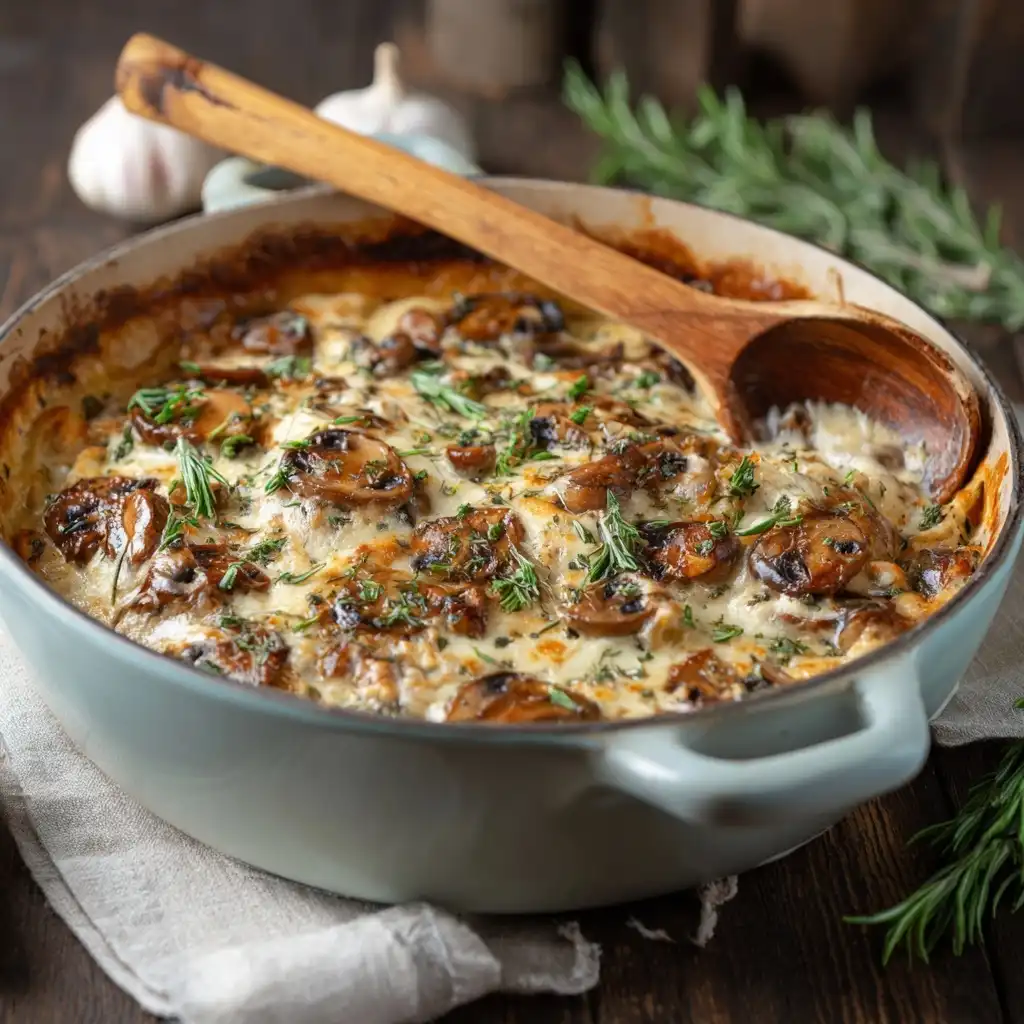
Creamy Mushroom Casserole is a soul-warming, deeply savory comfort dish that bridges rustic European traditions with modern American home cooking. With its luscious, velvety sauce, tender sautéed mushrooms, and golden baked crust, it’s the kind of casserole that earns second helpings, holiday invitations, and handwritten recipe requests. Whether served as a hearty vegetarian main course, a rich side dish alongside roasted meats, or a make-ahead centerpiece for potlucks and family gatherings, this casserole delivers layered umami depth, creamy texture, and aromatic warmth in every bite. Its simplicity belies its sophistication — no fancy techniques required, just thoughtful layering of flavor and careful attention to texture balance.
The History
The origins of Creamy Mushroom Casserole trace back to mid-20th-century America, when casseroles emerged as culinary cornerstones of post-war domestic life — economical, scalable, and perfectly suited to evolving kitchen technologies like the electric oven and canned condensed soups. However, its true lineage runs much deeper: mushroom-based baked dishes appear in 19th-century French gratins, English vol-au-vents, and Eastern European goulash-inspired oven-baked preparations where wild foraged fungi were slow-cooked with dairy and breadcrumbs. In the U.S., the iconic “cream of mushroom soup” (first commercially introduced by Campbell’s in 1934) became the accessible, shelf-stable binder that democratized mushroom casserole preparation across suburban kitchens. Over decades, home cooks elevated it beyond convenience — swapping canned soup for from-scratch béchamel, incorporating wild varieties like oyster and shiitake, adding artisanal cheeses and herb-infused breadcrumbs, and adapting it for dietary preferences (gluten-free, dairy-free, vegan). Today, Creamy Mushroom Casserole stands as both a nostalgic heirloom and a canvas for culinary creativity — a testament to how humble ingredients, when treated with care and curiosity, evolve into enduring classics.
Ingredients Breakdown
Every exceptional Creamy Mushroom Casserole begins not with measurements alone, but with intention behind each component. Below is a detailed, chef-informed breakdown of why each ingredient matters — and how substitutions impact flavor, texture, and structure:
- Mushrooms (24–28 oz total): A blend is essential. Cremini (baby bellas) provide earthy depth and meaty texture; white button offer mild sweetness and moisture control; shiitake contribute bold umami and chew; and a small handful of dried porcini (soaked & finely chopped) adds profound savoriness and a subtle leathery aroma. Avoid pre-sliced “mixed mushroom blends” unless you’ve inspected them — many contain high-water varieties like enoki or wood ear that dilute flavor and release excess liquid.
- Aromatics (1 large yellow onion, 4–5 garlic cloves, 2 shallots): Yellow onion builds foundational sweetness and body; shallots lend delicate allium complexity without harshness; garlic must be minced fresh (not powdered) and added late in sautéing to preserve its floral pungency.
- Fat (6 tbsp unsalted butter + 2 tbsp olive oil): Butter contributes richness and Maillard browning; olive oil raises the smoke point and adds fruit-forward notes that complement mushrooms’ earthiness. Never use only butter — it can burn during extended mushroom cooking.
- Dry White Wine (½ cup dry Sauvignon Blanc or Pinot Grigio): Not optional — it deglazes the fond, concentrates flavor, and cuts through creaminess. Avoid “cooking wine”; use something you’d drink. The alcohol fully evaporates, leaving bright acidity and aromatic lift.
- Flour (¼ cup all-purpose, or gluten-free 1:1 blend): Used to thicken the sauce. Wisked into melted butter first (a roux), it prevents lumping and ensures silky mouthfeel. For gluten-free versions, ensure your blend contains xanthan gum or add ¼ tsp separately.
- Dairy Components:
- Whole milk (1½ cups): Adds body without heaviness. Low-fat milk yields a thin, chalky sauce; avoid ultra-pasteurized (UHT) milk — it can curdle under heat.
- Heavy cream (½ cup): Added at the end for luxurious sheen and unctuous finish. Do not boil after adding — gentle simmer only.
- Grated Gruyère (1 cup) + sharp white cheddar (¾ cup): Gruyère melts smoothly and imparts nutty, caramelized notes; cheddar adds tang and structural integrity. Pre-grate yourself — store-bought shreds contain anti-caking starches that hinder melting.
- Herbs & Seasonings:
- Fresh thyme (2 tbsp leaves, stripped from stems): Earthy, lemony, and floral — essential for balancing richness. Dried thyme lacks nuance and can taste dusty.
- Fresh parsley (¼ cup, flat-leaf, finely chopped): Stirred in just before baking for brightness and color contrast.
- Nutmeg (¼ tsp freshly grated): A whisper enhances dairy’s sweetness and rounds out savory notes — never skip.
- Kosher salt & freshly ground black pepper: Salt early (in sauté stage) to season mushrooms from within; pepper added at the end preserves volatile oils.
- Topping (1½ cups panko breadcrumbs + 3 tbsp melted butter + 2 tbsp grated Parmigiano-Reggiano + 1 tsp fresh rosemary, finely minced): Panko offers superior crunch and even browning. Toasting the crumbs in butter first (with cheese and herbs) deepens flavor and prevents sogginess. Avoid regular breadcrumbs — they compact and steam instead of crisp.
Step-by-Step Recipe
- Prep & Soak Dried Mushrooms (30 min ahead): Place ½ oz dried porcini in a small bowl. Cover with 1 cup boiling water. Steep 20 minutes. Strain through a fine-mesh sieve lined with cheesecloth (reserve liquid). Finely chop rehydrated porcini. Discard sediment; reserve ¾ cup strained liquid for sauce.
- Preheat & Prep Pan: Position oven rack in center position. Preheat oven to 375°F (190°C). Generously butter a 3-quart oval or rectangular ceramic or glass baking dish (approx. 13″x9″x2″). Set aside.
- Sauté Aromatics: In a wide, heavy-bottomed Dutch oven or stainless steel skillet over medium heat, melt 2 tbsp butter with olive oil. Add onions and shallots. Cook, stirring occasionally, until softened and translucent (8–10 min). Add garlic; cook 1 minute until fragrant — do not brown.
- Cook Mushrooms in Batches: Increase heat to medium-high. Add half the fresh mushrooms (do not crowd pan). Sprinkle with ½ tsp salt. Cook undisturbed 3–4 min until deeply browned on one side. Stir, then cook 3–4 more min until moisture evaporates and edges crisp. Transfer to a large bowl. Repeat with remaining mushrooms and another ½ tsp salt. This step is non-negotiable — proper browning = maximum umami.
- Build the Roux & Sauce Base: Reduce heat to medium-low. Melt remaining 4 tbsp butter in same pan. Whisk in flour. Cook, whisking constantly, 2 min until golden and nutty (do not let darken). Gradually whisk in reserved porcini liquid, then white wine. Simmer 2 min until slightly thickened and alcohol smell dissipates.
- Enrich with Dairy: Slowly whisk in warm whole milk (pre-warmed in microwave 45 sec to prevent lumps). Bring to gentle simmer. Cook 4–5 min, whisking often, until thick enough to coat the back of a spoon. Remove from heat. Whisk in heavy cream, Gruyère, cheddar, thyme, nutmeg, and parsley. Taste and adjust salt/pepper.
- Combine & Season: Gently fold mushroom mixture into sauce. Transfer to prepared baking dish. Smooth top with spatula. At this stage, casserole can be covered and refrigerated up to 24 hours (add 5–10 min to bake time if chilled).
- Prepare Topping: In small skillet, melt 3 tbsp butter over medium heat. Add panko, rosemary, and Parmigiano. Toast 4–5 min, stirring constantly, until golden and fragrant. Cool 2 min.
- Bake: Sprinkle topping evenly over casserole. Bake uncovered 35–42 min until bubbling vigorously at edges and topping is deep golden brown. Rotate pan halfway through for even browning.
- Rest & Serve: Remove from oven. Let stand 12–15 minutes before serving — this allows sauce to re-emulsify and set slightly for cleaner slices. Garnish with extra thyme sprigs and flaky sea salt.
Tips
- Patience Pays Off: Never rush mushroom browning. Crowding the pan steams instead of sears — use two skillets if needed. That deep mahogany color equals concentrated flavor.
- Warm Your Dairy: Cold milk added to hot roux causes lumps. Warm milk gently (do not boil) before incorporating.
- Taste Before Baking: Sauce should taste slightly saltier and more intensely flavored than desired final dish — flavors mellow and dilute slightly during baking.
- Watch the Oven: Ovens vary wildly. Use an oven thermometer. If topping browns too fast, loosely tent with foil — but remove last 8 minutes for crispness.
- Rest Is Non-Negotiable: Cutting too soon releases steam and causes sauce to weep. Resting lets proteins relax and starches fully gel.
- Leftover Magic: Refrigerate leftovers up to 4 days. Reheat individual portions in skillet over low heat with splash of milk to revive creaminess — microwaving makes sauce grainy.
- Freezing Notes: Freeze unbaked casserole (without topping) up to 3 months. Thaw overnight in fridge, add fresh topping, and bake as directed (+5 min).
- Acidity Balance: If sauce tastes flat after baking, stir in ½ tsp lemon juice or white wine vinegar before serving — it lifts richness without tasting “sour.”
Variations and Customizations
This casserole thrives on personalization. Below are rigorously tested, chef-approved adaptations — each preserving structural integrity while transforming flavor profiles:
- Vegan Version: Replace butter with refined coconut oil or vegan butter; use unsweetened oat or cashew milk (warmed); substitute roux with 2 tbsp cornstarch slurry (mixed with cold milk); swap cheeses for nutritional yeast (¼ cup) + 2 tbsp white miso paste + 1 tsp lemon zest; top with toasted pepitas and smoked paprika.
- Gluten-Free: Use certified GF all-purpose flour or brown rice flour for roux; ensure panko is GF-certified (or use crushed gluten-free crackers); verify wine and broth are GF (most are, but check labels).
- Protein-Packed: Fold in 1½ cups cooked lentils, 1 cup crumbled tempeh “bacon,” or 12 oz diced roasted chicken breast (added with mushrooms). Adjust liquid downward by ¼ cup if using very moist proteins.
- Wild Mushroom Focus: Replace ⅔ of cremini with foraged or specialty mushrooms: chanterelles (add last 2 min to preserve texture), hen-of-the-woods (sauté longer for tenderness), lobster mushrooms (delicate seafood notes). Reduce salt slightly — wild varieties are naturally saltier.
- Herb-Forward Garden Style: Double thyme, add 1 tbsp chopped tarragon and 2 tsp chives. Replace Gruyère with goat cheese (½ cup, stirred in off-heat) for tangy brightness.
- Smoky & Spiced: Add 1 tsp chipotle powder + ½ tsp ground cumin to roux; top with crumbled cotija and pickled red onions.
- Low-Carb/Keto: Omit panko topping; replace with crushed pork rinds + grated aged cheddar + everything bagel seasoning. Use full-fat dairy only; thicken with 1 tbsp xanthan gum whisked into cold cream before adding to sauce.
- Breakfast Casserole Twist: Stir in 6 beaten eggs + ¼ cup sour cream before baking; top with crispy fried shallots and chive oil.
Health Considerations and Nutritional Value
A single 1-cup serving (approx. 320g) of this Creamy Mushroom Casserole provides approximately:
- Calories: 425–460 kcal
- Protein: 18–21g (excellent source — primarily from dairy and mushrooms’ inherent protein)
- Fat: 28–32g (of which 16–18g saturated — from butter, cheese, cream. Balanced by monounsaturated fats from olive oil and bioactive compounds in mushrooms.)
- Carbohydrates: 19–22g (mostly complex carbs from mushrooms and minimal added starch; fiber ~3g per serving — supports gut health)
- Vitamins & Minerals: Rich in B vitamins (especially riboflavin B2, niacin B3, and pantothenic acid B5), selenium (a potent antioxidant abundant in mushrooms), potassium (supports blood pressure regulation), and vitamin D (especially if mushrooms were UV-exposed — up to 400 IU/serving).
Key Health Notes:
- Mushrooms Are Functional Foods: Contain beta-glucans (immune-modulating polysaccharides), ergothioneine (a cytoprotective amino acid), and conjugated linoleic acid (CLA) — linked to reduced inflammation and cellular protection.
- Dairy Nuances: Full-fat dairy in moderation is associated with neutral or even beneficial cardiovascular outcomes in recent meta-analyses. Fermented cheeses (like aged Gruyère) contain probiotics and bioactive peptides.
- Considerations: Naturally high in sodium (approx. 580–650mg/serving). Reduce salt by 25% and boost herbs/spices for flavor without compromising safety. Those with lactose sensitivity may tolerate this well — aging reduces lactose in hard cheeses, and prolonged cooking breaks down residual lactose in milk.
- Heart-Healthy Swaps: Replace half the butter with avocado oil; use 2% milk instead of whole (adds 2g protein, reduces sat fat by 4g); increase mushrooms by 50% and decrease cheese by ¼ cup — maintains umami while lowering calories and sodium.
Ingredients
- ½ oz dried porcini mushrooms
- 24 oz mixed fresh mushrooms (cremini, white button, shiitake), stems trimmed, wiped clean, sliced ¼” thick
- 1 large yellow onion, finely diced
- 2 shallots, finely diced
- 4 garlic cloves, minced
- 6 tbsp unsalted butter, divided
- 2 tbsp extra-virgin olive oil
- ½ cup dry white wine (Sauvignon Blanc or Pinot Grigio)
- ¼ cup all-purpose flour (or gluten-free 1:1 blend)
- 1½ cups whole milk, warmed
- ½ cup heavy cream
- 1 cup grated Gruyère cheese
- ¾ cup sharp white cheddar, grated
- 2 tbsp fresh thyme leaves, stripped from stems
- ¼ cup fresh flat-leaf parsley, finely chopped
- ¼ tsp freshly grated nutmeg
- Kosher salt and freshly ground black pepper
- 1½ cups panko breadcrumbs
- 3 tbsp unsalted butter, melted
- 2 tbsp grated Parmigiano-Reggiano
- 1 tsp fresh rosemary, finely minced
Directions
- Soak dried porcini in 1 cup boiling water for 20 minutes. Strain through cheesecloth-lined sieve; reserve ¾ cup liquid. Finely chop porcini.
- Preheat oven to 375°F (190°C). Butter a 3-quart baking dish.
- In large skillet, heat 2 tbsp butter + olive oil over medium. Sauté onion and shallots 8–10 min until soft. Add garlic; cook 1 min.
- Increase heat to medium-high. Cook mushrooms in two batches with ½ tsp salt each, until deeply browned and moisture evaporates (6–8 min per batch). Transfer to bowl.
- Reduce heat to medium-low. Melt remaining 4 tbsp butter. Whisk in flour; cook 2 min. Whisk in reserved porcini liquid and wine; simmer 2 min.
- Gradually whisk in warm milk. Simmer 4–5 min until thickened. Remove from heat. Whisk in cream, cheeses, thyme, parsley, nutmeg, and pepper.
- Gently fold mushrooms into sauce. Transfer to baking dish.
- In small skillet, melt 3 tbsp butter. Add panko, rosemary, and Parmigiano. Toast 4–5 min until golden. Cool 2 min.
- Sprinkle topping over casserole. Bake 35–42 min until bubbly and golden.
- Rest 12–15 min before serving.
FAQ
- Can I make this ahead?
- Absolutely. Assemble completely (without topping), cover tightly, and refrigerate up to 24 hours. Add topping just before baking. For longer storage, freeze unbaked casserole (without topping) up to 3 months. Thaw overnight in fridge, add fresh topping, and bake as directed — adding 5–10 minutes if going straight from fridge to oven.
- Why did my sauce break or look greasy?
- This usually occurs from overheating the dairy (especially cream) or adding cold milk to hot roux. Always warm milk before adding, and never boil the sauce after adding cream. If separation happens, immediately remove from heat and vigorously whisk in 1 tbsp cold butter or 2 tsp cold cream — the emulsifiers will help re-bind it.
- Can I use canned mushrooms?
- Not recommended. Canned mushrooms are waterlogged, lack textural integrity, and have muted, metallic flavor. Their excess liquid will thin the sauce and prevent proper browning — the cornerstone of this dish’s flavor.
- My topping got soggy. How do I fix it?
- Sogginess means moisture rose and condensed under foil or the topping wasn’t toasted enough. Always toast panko in butter until deeply golden *before* sprinkling. Never cover while baking — unless absolutely necessary for browning control — and remove foil for the final 8–10 minutes. A convection setting (if available) also improves crispness.
- Is there a way to reduce the calorie count significantly?
- Yes — but prioritize flavor retention. Try: using 2% milk instead of whole (saves ~35 kcal/serving); replacing half the cheese with ½ cup blended silken tofu + 1 tbsp nutritional yeast (cuts sat fat by ~6g); increasing mushrooms by 30% to bulk up volume without calories; and skipping the butter in the topping (use olive oil spray + air-fry the panko separately). Total reduction: ~120 kcal/serving, with minimal sacrifice.
- What wine pairs best with this casserole?
- A medium-bodied, high-acid white shines: unoaked Chardonnay, Albariño, or dry Riesling cut through the richness. For red lovers, choose a lighter Pinot Noir with bright red fruit and earthy notes — avoid tannic or oaky wines that clash with mushrooms.
- Can I cook this on the stovetop only?
- You can create a stovetop “creamy mushroom skillet” by omitting the topping, reducing bake time, and finishing with a flame-kissed broil under the oven’s broiler for 2–3 minutes — but true casserole texture (even heat penetration, cohesive set, golden crust) requires oven baking.
- How do I know when it’s done baking?
- Look for vigorous, steady bubbling around the entire perimeter and a deep, uniform golden-brown crust. Insert a knife into the center — it should slide in with slight resistance (not runny, not stiff). Internal temperature should read 165°F (74°C) on an instant-read thermometer.
Summary
Creamy Mushroom Casserole is a masterclass in umami layering, textural contrast, and comforting elegance — where deeply caramelized mushrooms meet a velvety, herb-kissed cheese sauce and crowned with shatteringly crisp, rosemary-flecked panko. It honors tradition while inviting endless innovation, delivering restaurant-worthy depth with weeknight accessibility.
Whether you’re feeding a crowd, meal-prepping with purpose, or simply craving a bowl of pure, earthy solace, this casserole proves that the most memorable meals aren’t defined by complexity — but by reverence for quality ingredients, patience in technique, and love in the layers.