Introduction
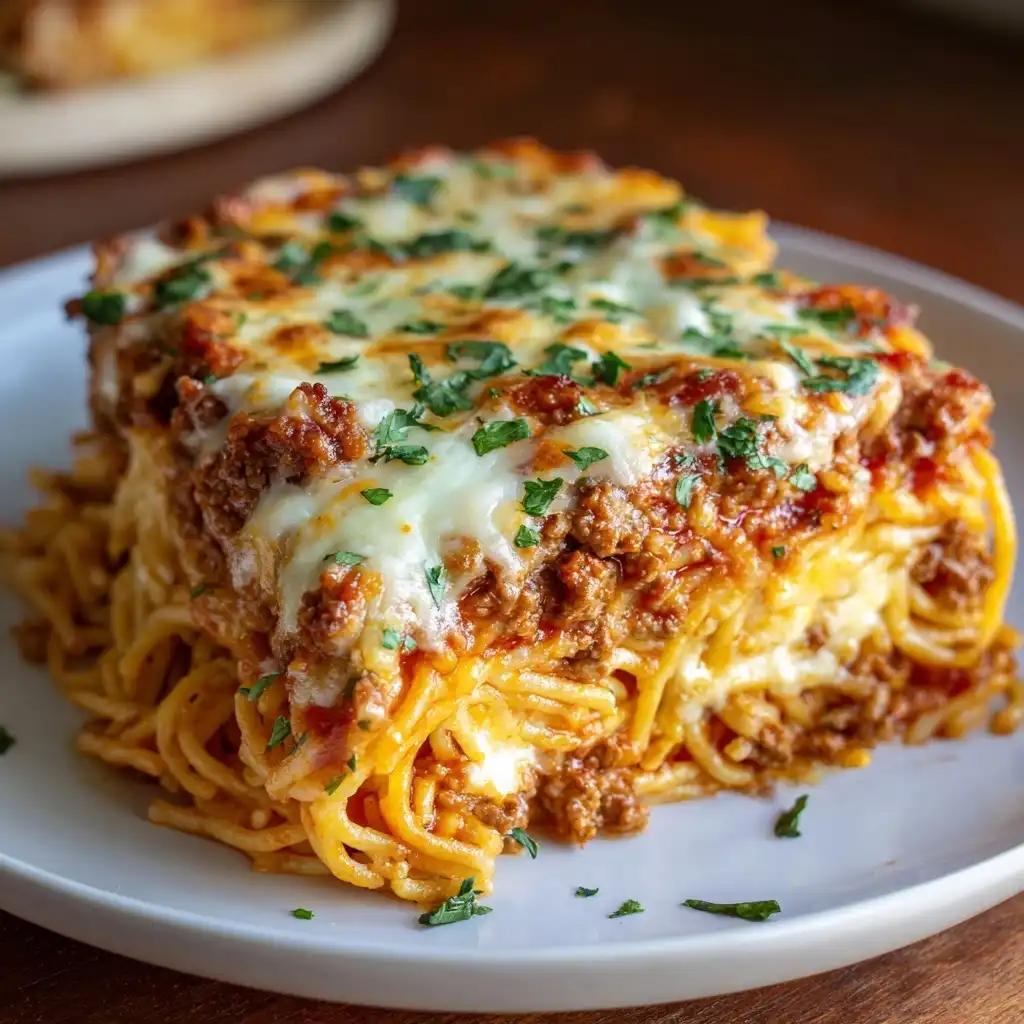
Baked Spaghetti Casserole is the ultimate comfort food—a rich, hearty, and deeply satisfying fusion of classic Italian-American flavors baked to golden perfection. Unlike traditional stovetop spaghetti, this casserole transforms al dente pasta, savory meat sauce, creamy cheese layers, and aromatic herbs into a cohesive, oven-baked masterpiece with crisp edges, tender interiors, and irresistible melty pockets of mozzarella and ricotta. It’s the kind of dish that fills your kitchen with warm, nostalgic aromas—tomato simmering with garlic and oregano, buttery breadcrumbs toasting, and cheese bubbling gently under the broiler. Whether served at Sunday family dinners, potlucks, holiday buffets, or weeknight meals that demand both ease and elegance, Baked Spaghetti Casserole delivers unmatched versatility, crowd-pleasing appeal, and make-ahead convenience. Its enduring popularity lies not only in its decadent taste but also in its remarkable adaptability—gluten-free, vegetarian, low-carb (zucchini noodle), high-protein, keto-friendly, and even dairy-free versions all thrive within its flexible framework.
The History
The origins of Baked Spaghetti Casserole trace back to the mid-20th century American culinary landscape—a time when home cooks embraced convenience, innovation, and post-war optimism reflected in layered, oven-baked “hot dishes.” While spaghetti itself has ancient roots in Mediterranean and Asian noodle traditions—and evolved through Arab, Persian, and Sicilian influences—the casserole format emerged as a distinctly American phenomenon. In the 1940s and 1950s, cookbooks like those from the Betty Crocker and Pillsbury Bake-Off competitions championed one-dish meals designed for efficiency, affordability, and family feeding. Spaghetti, once considered exotic, became widely accessible thanks to mass-produced dried pasta and canned tomato products. Home economists and community recipe contributors began layering cooked spaghetti with meat sauce, cottage or ricotta cheese, and shredded cheddar or mozzarella—often topped with buttered breadcrumbs—then baking it until set and golden. By the 1960s, the dish appeared regularly in church cookbooks, women’s magazines, and regional American cookery collections, particularly across the Midwest and South, where casseroles were synonymous with hospitality. Over decades, it absorbed regional inflections: Italian-American families added fresh basil and Parmigiano-Reggiano; Texan versions incorporated jalapeños and pepper jack; Midwestern iterations used evaporated milk for creaminess; and California adaptations featured sun-dried tomatoes and goat cheese. Today, Baked Spaghetti Casserole stands as a beloved culinary heirloom—simultaneously timeless and endlessly reinvented.
Ingredients Breakdown
Understanding each component deepens both technique and flavor. Here’s an exhaustive breakdown of every ingredient’s role, sourcing notes, and functional purpose:
- Spaghetti (16 oz / 454 g): Traditional choice is enriched semolina wheat spaghetti (e.g., De Cecco, Barilla, or Rustichella d’Abruzzo). Opt for bronze-die extruded pasta for superior sauce adhesion. For gluten-free versions, brown rice or lentil-based spaghetti (like Jovial or Banza) hold up well when slightly undercooked. Whole wheat spaghetti adds fiber and nuttiness but requires careful boiling to avoid gumminess.
- Olive Oil (2 tbsp): Used for sautéing aromatics and enriching the sauce. Extra virgin olive oil contributes fruity, peppery notes—ideal for finishing—but light olive oil or avocado oil is preferable for high-heat browning of meat to prevent bitterness.
- Yellow Onion (1 large, finely diced): Provides foundational sweetness and depth. Soaking diced onions in cold water for 5 minutes before use reduces sharpness if raw bite is undesirable in the final bake.
- Garlic (4–5 cloves, minced): Adds pungent, savory complexity. Roasted garlic (1 head, roasted until soft and caramelized) can replace half the raw garlic for mellower, umami-rich nuance.
- Ground Beef (1 lb / 454 g, 80/20 or 85/15): Fat content is critical—too lean yields dry, crumbly texture; too fatty creates greasiness. A blend of ground beef and Italian sausage (½ lb each) adds spice and juiciness. Grass-fed, pasture-raised beef offers richer flavor and higher omega-3s.
- Tomato Sauce (24 oz / 680 g): Prefer San Marzano DOP-certified canned whole tomatoes, hand-crushed with their juice. Avoid pre-seasoned “spaghetti sauce” with added sugar, citric acid, or preservatives. For depth, add 2 tbsp tomato paste, cooked in oil until brick-red and fragrant (“soffritto stage”).
- Canned Crushed Tomatoes (15 oz / 425 g): Adds body, acidity, and natural pectin for thickening. Fire-roasted varieties introduce smoky dimension.
- Dry Red Wine (½ cup / 120 ml): Such as Chianti or Sangiovese—deglazes the pan, lifts fond, and tenderizes meat proteins. Substitute unsalted beef broth if avoiding alcohol.
- Fresh Basil (¼ cup chopped, plus whole leaves for garnish): Added at the end of sauce cooking to preserve volatile oils and bright aroma. Thai basil offers anise-like lift; lemon basil adds citrusy freshness.
- Fresh Oregano (1 tbsp chopped): Earthier and more medicinal than dried—use sparingly. Dried oregano (1 tsp) may substitute but lacks vibrancy unless bloomed in oil first.
- Granulated Sugar (1 tsp): Balances acidity—not for sweetness, but to round harsh tannins in tomatoes. Substitutes: ½ tsp honey, maple syrup, or grated carrot (cooked into sauce).
- Kosher Salt & Freshly Ground Black Pepper: Salt early (in sauce and pasta water) for even seasoning; coarse black pepper adds floral heat. Avoid table salt—it contains anti-caking agents and overpowers.
- Ricotta Cheese (15 oz / 425 g, whole-milk, small-curd): Key for creaminess and structure. Drain excess whey by placing in cheesecloth-lined sieve for 15 minutes. Part-skim works but yields drier texture. For vegan version: blended silken tofu + lemon juice + nutritional yeast mimics tang and body.
- Mozzarella Cheese (3 cups shredded, low-moisture, part-skim or whole-milk): Melts evenly without excessive oil separation. Fresh mozzarella (torn, not shredded) adds luxury but releases more water—pat dry and use sparingly in layers. Avoid pre-shredded cheese containing cellulose (anti-clumping agent) which inhibits melt.
- Parmigiano-Reggiano (1 cup freshly grated): The “umami bomb”—nutty, salty, crystalline. Never substitute with domestic “Parmesan.” Use microplane for fine, fast-melting texture.
- Eggs (2 large): Bind ricotta mixture, preventing separation during baking. Pasture-raised eggs yield richer yolk color and flavor.
- Nutmeg (¼ tsp freshly grated): Warm, sweet-spicy accent that harmonizes dairy and tomato. Pre-ground loses potency within weeks.
- Butter (3 tbsp, unsalted): For breadcrumb topping—adds richness and browning capacity. Ghee works for dairy-free or higher smoke point.
- Panko Breadcrumbs (1 cup): Japanese-style for maximum crunch and lightness. Substitute: crushed butter crackers (Ritz), gluten-free cornflake crumbs, or almond flour for keto.
- Fresh Parsley (¼ cup chopped): Bright, grassy finish—stirred in just before baking or sprinkled on top after.
Step-by-Step Recipe
- Preheat & Prep: Position oven rack in center position. Preheat oven to 375°F (190°C). Lightly grease a 9×13-inch (23×33 cm) glass or ceramic baking dish with olive oil or non-stick spray. Set aside. Bring a large Dutch oven or stockpot (6–8 qt) of water to a rolling boil. Add 2 tbsp kosher salt—water should taste like mild seawater.
- Cook the Pasta: Add spaghetti and stir immediately to prevent sticking. Cook for 2 minutes less than package instructions (e.g., if box says 12 minutes, cook 10). Stir every 2 minutes. Drain thoroughly in a colander—do NOT rinse (rinsing removes starch needed for sauce adherence). Toss hot pasta with 1 tbsp olive oil to prevent clumping. Spread in a single layer on parchment-lined sheet trays to cool slightly (5–7 min). This step prevents mushiness during baking.
- Build the Sauce Base: In a large skillet or Dutch oven over medium heat, warm 2 tbsp olive oil. Add diced onion and sauté 5–6 minutes until translucent and soft—not browned. Add minced garlic and cook 1 minute until fragrant (do not burn). Push aromatics to one side; increase heat to medium-high. Add ground beef and sausage (if using). Break apart with wooden spoon, cooking until no pink remains (~6–8 min). Drain excess fat, leaving ~1 tbsp for flavor.
- Deepen Flavor: Stir in tomato paste. Cook 3–4 minutes, stirring constantly, until paste darkens to brick-red and smells sweet and roasted. Pour in red wine (or broth), scraping up all browned bits (fond). Simmer 2 minutes until alcohol evaporates. Add crushed tomatoes, hand-crushed San Marzano tomatoes with juice, dried oregano, sugar, 1 tsp salt, and ½ tsp black pepper. Reduce heat to low. Partially cover and simmer gently for 30 minutes, stirring every 5–7 minutes. Uncover and simmer 15 more minutes to thicken. Stir in fresh basil and oregano. Taste and adjust: more salt? A splash of balsamic vinegar for brightness? A pinch of red pepper flakes for heat? Cool sauce slightly (10 min) before combining with pasta.
- Prepare Ricotta Mixture: In a large bowl, combine drained ricotta, 2 eggs, ½ cup Parmigiano-Reggiano, 1 tsp salt, ¼ tsp freshly grated nutmeg, and ¼ tsp black pepper. Whisk vigorously until smooth and airy—no lumps. Fold in 1 cup shredded mozzarella and chopped parsley. Refrigerate while assembling (prevents overheating).
- Layer the Casserole: In prepared baking dish, spread 1 cup of sauce evenly on bottom (prevents sticking and adds moisture). Add half the cooled spaghetti in an even layer. Spoon half the ricotta mixture over pasta—use an offset spatula to gently spread without tearing noodles. Top with 1 cup sauce. Repeat layers: remaining spaghetti → remaining ricotta mixture → remaining sauce. Smooth top surface. Sprinkle evenly with remaining 1½ cups mozzarella and ½ cup Parmigiano-Reggiano.
- Prepare Breadcrumb Topping: In small skillet, melt 3 tbsp butter over medium-low heat. Add panko and toast 4–5 minutes, stirring constantly, until golden and fragrant. Remove from heat; stir in 2 tbsp grated Parmigiano-Reggiano and pinch of black pepper. Let cool 2 minutes before sprinkling evenly over cheese layer.
- Bake: Cover dish tightly with aluminum foil (tent slightly to prevent cheese from sticking). Bake 25 minutes. Remove foil and bake uncovered 20–25 minutes longer, until top is deeply golden, edges are bubbling vigorously, and internal temperature reaches 165°F (74°C) when measured with instant-read thermometer inserted into center. For extra browning, switch to broil for 1–2 minutes—watch closely!
- Rest & Serve: Remove from oven and let rest uncovered for 20 full minutes. This allows starches to set, cheese to re-emulsify, and layers to stabilize—critical for clean slices. Garnish with fresh basil leaves, extra Parmigiano-Reggiano, and drizzle of high-quality olive oil. Serve with garlic bread and simple arugula salad dressed in lemon vinaigrette.
Tips
- Undercook the Pasta Relentlessly: This is the #1 secret. Even 30 seconds too long in boiling water leads to disintegration in the oven. Always err toward al dente—pasta will absorb liquid and soften further during baking and resting.
- Drain Ricotta Like a Pro: Line a fine-mesh sieve with two layers of cheesecloth or paper towel. Spoon ricotta in, refrigerate 15–30 minutes. Discard whey—you’ll gain creaminess, not wateriness.
- Season Every Layer: Salt the pasta water generously. Season the meat while browning. Adjust sauce at the end. Salt the ricotta mixture. Even the breadcrumb topping benefits from flaky sea salt just before baking.
- Cool Components Before Assembly: Hot pasta + hot sauce + warm ricotta = scrambled eggs and weeping cheese. Allow each element to cool to lukewarm (not cold) before layering.
- Use a Thermometer: Don’t guess doneness. Insert into center—165°F ensures safety and optimal texture. Underbaked = soupy; overbaked = rubbery cheese and dried-out noodles.
- Rest Is Non-Negotiable: Cutting too soon releases steam and causes structural collapse. Twenty minutes allows starch retrogradation—transforming loose casserole into sliceable, restaurant-quality portions.
- Grease the Dish Strategically: Rub oil up the sides at least 1 inch high—prevents dry, burnt edges and makes cleanup effortless.
- Rotate During Baking: At 15-minute mark, rotate dish 180° for even browning—especially important in conventional ovens with hot spots.
- Broil With Caution: Only broil after full bake time. Keep oven door ajar slightly and stand watch—browning happens in seconds, not minutes.
- Freeze Smart: Assemble unbaked casserole, cover tightly with foil + plastic wrap. Freeze up to 3 months. Thaw overnight in fridge, then bake as directed—add 10–15 minutes covered time.
Variations and Customizations
Baked Spaghetti Casserole is a canvas—not a formula. Below are meticulously tested variations, each preserving structural integrity and balanced flavor profiles:
- Vegan Version: Replace spaghetti with brown rice or chickpea pasta. Use lentil-walnut “meat” (sautéed green/brown lentils + toasted walnuts + tamari + smoked paprika). Sauce: fire-roasted tomatoes + miso paste (1 tbsp) + nutritional yeast (3 tbsp) for umami. Ricotta: blend 1 block silken tofu + 2 tbsp lemon juice + 3 tbsp nutritional yeast + 1 tsp white miso + ½ tsp garlic powder + salt. Mozzarella: store-bought vegan shreds (Miyoko’s or Daiya) or homemade cashew mozz (soaked cashews + tapioca starch + lemon + salt, blended and chilled). Breadcrumb topping: gluten-free panko + olive oil + nori flakes.
- Low-Carb/Keto: Replace spaghetti with spiralized zucchini (salted, squeezed dry), blanched shirataki noodles (rinsed and dry-sautéed), or thinly sliced cabbage ribbons. Increase cheese ratio—add ½ cup cream cheese to ricotta mix. Use sugar-free marinara or make your own from tomato purée + herbs + xanthan gum (¼ tsp) for thickness. Top with pork rind crumbs instead of panko.
- Gluten-Free: Use certified GF spaghetti (Jovial, Barilla GF, or Tinkyada). Ensure all sauces, cheeses, and seasonings are GF-certified (some Parmigiano-Reggiano contains wheat-based enzymes—check label). Thicken sauce with arrowroot (1 tsp mixed with cold water) instead of flour.
- Vegetarian: Omit meat; add 1 cup cooked lentils + 1 cup sautéed cremini mushrooms + ½ cup chopped spinach (wilted and squeezed). Boost umami with 1 tsp soy sauce or tamari in sauce and 2 tbsp sun-dried tomatoes (chopped, oil-packed).
- Spicy Arrabbiata Style: Infuse olive oil with 2 dried red chiles before sautéing onions. Add 1 tbsp Calabrian chile paste to sauce. Stir 1 tsp chipotle powder into ricotta mixture. Top with pickled jalapeños before serving.
- Greek-Inspired: Swap ricotta for Greek yogurt + feta blend (1 cup yogurt + ½ cup crumbled feta + 1 tbsp dill + lemon zest). Use lamb instead of beef. Sauce: tomatoes + cinnamon + allspice + mint. Top with toasted pine nuts and kalamata olives.
- Seafood Medley: Replace meat with 1 lb cooked, flaked white fish (cod, haddock) + ½ cup shrimp + ¼ cup scallops. Use light white wine in sauce. Ricotta mixture: add lemon zest, dill, and a touch of saffron-infused milk. Top with lemon-herb breadcrumbs.
- Breakfast Casserole Twist: Use spaghetti squash noodles or GF pasta. Replace meat with crumbled cooked breakfast sausage. Ricotta mix: fold in 3 beaten eggs + ¼ cup heavy cream + cheddar. Top with crispy bacon and chives.
- Instant Pot + Oven Hybrid: Brown meat and sauté aromatics in Instant Pot. Add tomatoes, wine, herbs, and ½ cup water. Pressure cook 15 minutes. Quick release. Meanwhile, boil pasta. Combine and assemble. Bake as usual—cuts total hands-on time by 40%.
Health Considerations and Nutritional Value
A standard 12-serving batch (9×13 dish) yields approximately:
- Calories: ~425 per serving (1⅓ cups)
- Protein: 24 g (excellent source—beef, eggs, ricotta, mozzarella)
- Total Fat: 18 g (of which 9 g saturated—primarily from cheese and meat)
- Carbohydrates: 42 g (mostly complex carbs from pasta; fiber ~3 g/serving)
- Sodium: ~680 mg (moderate—reduced by using low-sodium tomatoes, no-salt-added cheese, and limiting added salt)
- Vitamins & Minerals: Rich in calcium (cheese), iron (beef), vitamin A (tomatoes, cheese), B12 (dairy/meat), lycopene (bioavailable when cooked with oil), and selenium (pasta, meat).
Health-Conscious Adjustments:
- Lower Sodium: Use no-salt-added canned tomatoes, unsalted butter, low-sodium ricotta, and omit added salt in ricotta mixture—rely on herbs, garlic, and nutritional yeast for savoriness.
- Heart-Healthy Fats: Replace half the mozzarella with reduced-fat provolone or part-skim string cheese. Use lean turkey or plant-based crumbles. Drizzle finished dish with omega-3-rich walnut oil.
- Fiber Boost: Add 1 cup finely grated carrots or zucchini to sauce (undetectable but nutritionally significant). Mix ¼ cup ground flaxseed or psyllium husk into ricotta for soluble fiber.
- Digestive Support: Include fermented elements: top with kimchi or sauerkraut before serving, or stir 2 tbsp plain kefir into ricotta mixture for probiotics.
- Anti-Inflammatory Focus: Load sauce with turmeric (½ tsp), ginger (1 tsp grated), and extra virgin olive oil (2 tbsp). Use pasture-raised beef higher in conjugated linoleic acid (CLA).
- Allergen Notes: Naturally nut-free and soy-free (if cheese labels confirm). Contains gluten (pasta), dairy (multiple cheeses, ricotta, butter), and eggs. Vegan/GF versions eliminate these accordingly.
Who Should Modify or Limit Intake? Individuals with GERD may reduce tomato acidity with added carrots or baking soda (¼ tsp). Those managing diabetes should pair with non-starchy vegetables and monitor portion size. People with lactose intolerance often tolerate aged cheeses (Parmigiano-Reggiano) and low-moisture mozzarella better than ricotta—consider lactase enzyme supplementation or lactose-free ricotta.
Ingredients
- 16 oz (454 g) spaghetti (regular, whole wheat, or gluten-free)
- 2 tbsp extra virgin olive oil, plus more for greasing
- 1 large yellow onion, finely diced
- 4–5 garlic cloves, minced
- 1 lb (454 g) ground beef (80/20), or blend with Italian sausage
- 24 oz (680 g) canned San Marzano whole tomatoes, hand-crushed with juice
- 15 oz (425 g) canned crushed tomatoes
- 2 tbsp tomato paste
- ½ cup (120 ml) dry red wine (Chianti or Sangiovese) or unsalted beef broth
- ¼ cup fresh basil leaves, chopped (plus whole leaves for garnish)
- 1 tbsp fresh oregano, chopped (or 1 tsp dried)
- 1 tsp granulated sugar or honey
- 2 tsp kosher salt, divided (1 tsp for pasta water, 1 tsp for sauce)
- 1 tsp freshly ground black pepper, divided
- 15 oz (425 g) whole-milk ricotta cheese, drained
- 2 large eggs
- 1 cup (100 g) freshly grated Parmigiano-Reggiano, divided
- 3 cups (340 g) shredded low-moisture mozzarella, divided
- ¼ tsp freshly grated nutmeg
- ¼ cup fresh parsley, chopped
- 3 tbsp unsalted butter
- 1 cup panko breadcrumbs
Directions
- Preheat oven to 375°F (190°C). Grease a 9×13-inch baking dish with olive oil.
- Bring 6 quarts water to boil. Add 2 tbsp kosher salt. Cook spaghetti 2 minutes under package time. Drain, toss with 1 tbsp olive oil, and spread to cool on parchment-lined sheets.
- In a large skillet, heat 2 tbsp olive oil over medium. Sauté onion 5–6 min until soft. Add garlic; cook 1 min. Push aside; add beef. Brown thoroughly, breaking apart. Drain excess fat, leaving 1 tbsp.
- Add tomato paste; cook 3–4 min until brick-red. Pour in wine, scrape fond. Simmer 2 min. Add crushed and whole tomatoes, oregano, sugar, 1 tsp salt, ½ tsp pepper. Simmer covered 30 min, then uncovered 15 min. Stir in basil. Cool 10 min.
- In bowl, whisk ricotta, eggs, ½ cup Parmigiano, 1 tsp salt, ¼ tsp pepper, nutmeg. Fold in 1 cup mozzarella and parsley. Refrigerate.
- Spread 1 cup sauce in dish. Layer half spaghetti → half ricotta mix → 1 cup sauce. Repeat. Top with remaining 1½ cups mozzarella and ½ cup Parmigiano.
- Melt butter; toast panko 4–5 min until golden. Stir in 2 tbsp Parmigiano and pinch pepper. Sprinkle over cheese.
- Cover tightly with foil. Bake 25 min. Uncover; bake 20–25 min until golden and bubbling (165°F internal temp). Broil 1–2 min for extra crispness (watch closely).
- Rest uncovered 20 minutes. Garnish with basil, extra Parmigiano, and olive oil. Slice and serve.
FAQ
- Can I make this ahead of time?
- Absolutely. Assemble up to 24 hours in advance, cover tightly, and refrigerate. Add 5–10 minutes to covered bake time. For longer storage, freeze unbaked casserole up to 3 months—thaw overnight before baking.
- Why does my casserole turn out watery?
- Three main causes: 1) Pasta overcooked before baking—always undercook; 2) Ricotta not drained—excess whey pools; 3) Sauce too thin—simmer uncovered longer to reduce. Also, skipping the 20-minute rest releases trapped steam.
- Can I use cottage cheese instead of ricotta?
- Yes—with caveats. Small-curd, full-fat cottage cheese works best. Blend until smooth or press through sieve to remove lumps. Add 1 extra egg for binding. Expect slightly tangier, looser texture.
- What’s the best cheese for melting?
- Low-moisture mozzarella is ideal—melts smoothly without greasing. Avoid pre-shredded brands with cellulose. For