Introduction
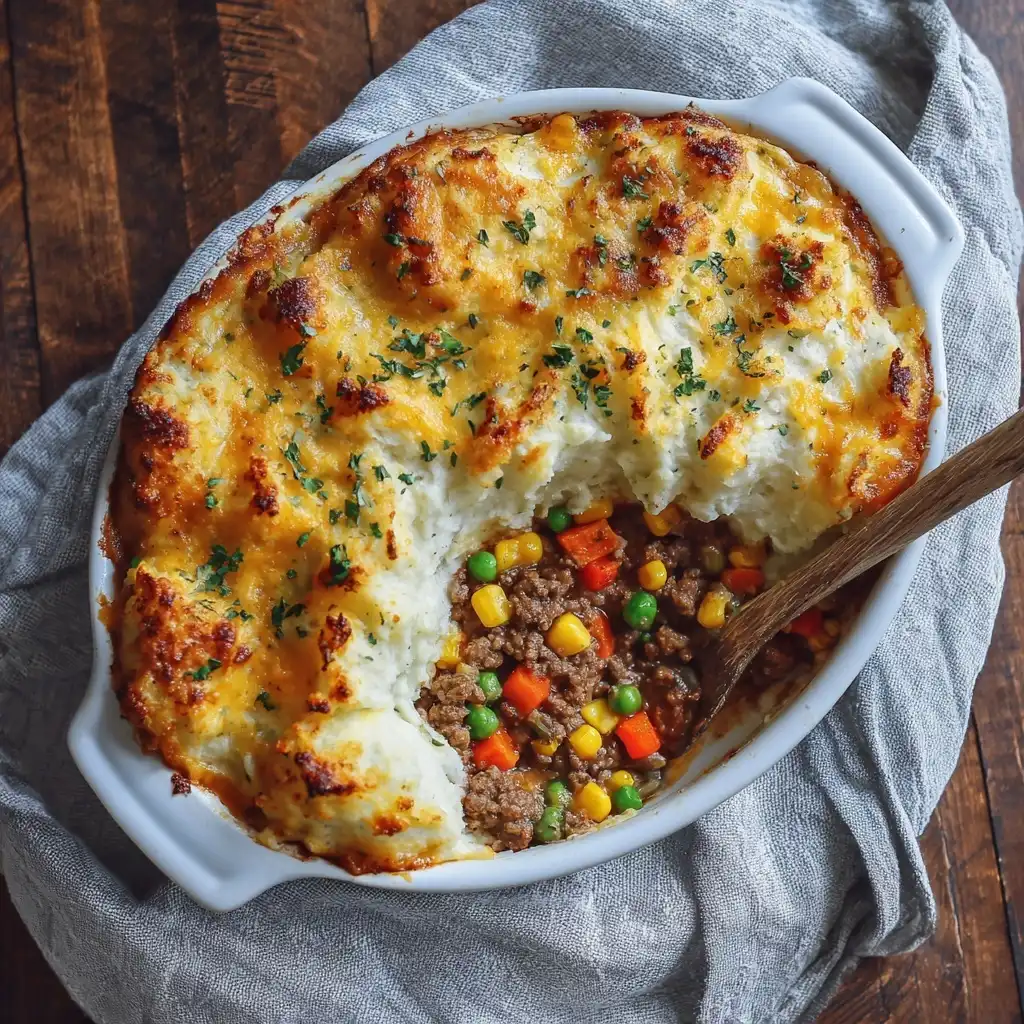
Shepherd’s Pie Casserole is a beloved, hearty, and deeply comforting dish that reimagines the classic British pub favorite for modern home cooks seeking convenience without compromising on flavor or tradition. Unlike the traditional version—typically baked in individual ramekins or a single shallow baking dish—this casserole adaptation embraces the generous, family-style format: layered, generously portioned, and engineered for easy assembly, make-ahead flexibility, and crowd-pleasing versatility. It bridges rustic heritage with contemporary kitchen practicality—think tender ground lamb (or beef), savory herb-infused gravy, caramelized vegetables, and a luxuriously creamy, golden-browned mashed potato crown—all unified in one deep, oven-safe vessel. Whether served at Sunday suppers, holiday gatherings, potlucks, or cozy weeknight dinners, this Shepherd’s Pie Casserole delivers soul-warming satisfaction, nostalgic familiarity, and customizable creativity in every forkful.
The History
Tracing its origins to late 18th- and early 19th-century rural Britain, Shepherd’s Pie emerged not as a gourmet creation but as a resourceful, frugal means of repurposing leftover roasted lamb or mutton—hence the name “shepherd’s,” referencing those who tended sheep. The term “pie” was used loosely, as the dish contains no pastry crust; instead, it features a topping of mashed potatoes acting as both insulator and textural contrast. By the Victorian era, the dish had become a staple in working-class households across England, Scotland, and Ireland—where it was sometimes called “cottage pie” when made with beef (since cows were tended by “cottage dwellers,” not shepherds). Over time, regional variations flourished: Irish versions often included carrots and peas more consistently; Scottish renditions sometimes added turnips or swede (rutabaga) to the mash; and Welsh adaptations occasionally incorporated leeks or ale into the gravy. The casserole format, however, is a distinctly 20th-century American innovation—born from the rise of oven-safe glassware (like Pyrex), suburban home kitchens, and the mid-century embrace of “one-dish meals” championed by women’s magazines and TV cooking shows. This evolution transformed Shepherd’s Pie from a humble leftovers dish into a celebratory centerpiece—structured, scalable, and ideal for feeding multigenerational families. Today’s Shepherd’s Pie Casserole honors that lineage while inviting modern reinterpretations rooted in accessibility, nutrition, and global flavor influences.
Ingredients Breakdown
Every exceptional Shepherd’s Pie Casserole begins with intentionality—not just in selection, but in understanding the functional role each ingredient plays:
- Protein: Traditionally, ground lamb provides authentic depth and richness, with its distinctive earthy-sweet fat profile. Ground beef (85/15 or 90/10 lean-to-fat ratio) offers a more accessible, widely loved alternative—especially in North America. For lighter options, ground turkey or chicken work well when bolstered with umami-rich additions like tomato paste or soy sauce. Plant-based crumbles (soy, lentil, or mushroom-based) deliver compelling texture and savory notes for vegan adaptations.
- Aromatics & Vegetables: Onions (yellow or white) form the foundational base, softened to sweetness. Carrots add natural sweetness, color, and beta-carotene; celery contributes herbal depth and crunch; garlic delivers pungent aroma and complexity. Frozen peas and corn are pantry-friendly staples—but fresh or thawed frozen peas shine brightest in terms of texture and vibrancy. Mushrooms (cremini or shiitake) deepen savoriness and mimic meaty umami when finely diced and sautéed until deeply browned.
- Liquid & Flavor Builders: Low-sodium beef or lamb stock forms the gravy’s backbone—rich, gelatinous, and deeply savory. Tomato paste adds acidity, sweetness, and body; Worcestershire sauce contributes fermented tang and anchovy-derived umami; Dijon mustard lends subtle sharpness and emulsifying power. A splash of dry red wine (like Cabernet Sauvignon or Pinot Noir) or robust stout (e.g., Guinness) enhances complexity—its tannins and maltiness cutting through richness. Bay leaves, thyme, and rosemary provide aromatic warmth and earthy nuance.
- Mashed Potato Topping: Yukon Gold potatoes reign supreme here—their naturally buttery, waxy-starchy balance yields creamy yet structured mash that browns beautifully. Russets offer fluffier texture but can dry out if overworked; red potatoes hold shape well but lack richness. Full-fat dairy (whole milk, half-and-half, or heavy cream) ensures lush mouthfeel; real butter (unsalted, for control) adds silkiness and flavor; sour cream or cream cheese introduces tang and stability. A pinch of white pepper and freshly grated nutmeg elevate the seasoning beyond mere salt.
- Finishing Touches: Sharp cheddar, Gruyère, or Parmesan adds salty, nutty complexity and a gorgeous, blistered crust. Fresh parsley or chives impart bright, grassy contrast just before serving. Optional: a light brush of melted butter or egg wash over the potato layer encourages deeper browning and sheen.
Step-by-Step Recipe
- Prep & Preheat: Position oven rack in the lower third. Preheat oven to 375°F (190°C). Generously grease a 9×13-inch (or equivalent 4–5 quart) ovenproof casserole dish (glass, ceramic, or enameled cast iron recommended).
- Cook the Potatoes: Place peeled, cubed Yukon Gold potatoes (about 2 lbs / 900g) in a large pot. Cover with cold, salted water by 1 inch. Bring to a boil over high heat, then reduce to a gentle simmer. Cook 15–20 minutes, or until fork-tender. Drain thoroughly in a colander, return to warm pot, and let steam dry for 1–2 minutes. Mash with warm milk (¾ cup), melted butter (6 tbsp), sour cream (¼ cup), salt, white pepper, and nutmeg until smooth and creamy—not gluey. Set aside, covered with a clean kitchen towel to retain heat and moisture.
- Sauté Aromatics: In a large, heavy-bottomed Dutch oven or skillet over medium heat, warm 2 tbsp olive oil or unsalted butter. Add 1 large diced yellow onion, 2 medium diced carrots, and 2 ribs diced celery. Sauté 6–8 minutes, stirring occasionally, until softened and translucent. Add 4 minced garlic cloves and cook 1 minute more—fragrant but not browned.
- Brown the Protein: Increase heat to medium-high. Add 1.5 lbs (680g) ground lamb or beef. Break apart with a wooden spoon and cook 6–8 minutes, stirring frequently, until no pink remains and edges begin to crisp. Drain excess fat if needed (retain ~1 tbsp for flavor).
- Build Flavor Depth: Stir in 2 tbsp tomato paste and cook 2 minutes, stirring constantly, until it darkens slightly and smells sweet and roasted. Pour in ½ cup dry red wine or stout, scraping up all browned bits (fond) from the pan bottom. Simmer 2–3 minutes until mostly evaporated.
- Simmer the Filling: Add 2 cups low-sodium beef or lamb stock, 1 tbsp Worcestershire sauce, 1 tsp Dijon mustard, 2 bay leaves, 1 tsp dried thyme, ½ tsp dried rosemary (crushed), 1 tsp kosher salt, and ½ tsp black pepper. Bring to a gentle simmer. Reduce heat to low, cover partially, and simmer 15–20 minutes, stirring occasionally, until thickened to a rich, glossy gravy that coats the back of a spoon.
- Incorporate Vegetables: Stir in 1.5 cups frozen peas, ½ cup frozen corn (optional), and 8 oz (225g) finely chopped cremini mushrooms (if using). Simmer uncovered 5 minutes to meld flavors and evaporate any excess liquid. Taste and adjust seasoning—add more salt, pepper, or a splash of vinegar for brightness if needed. Discard bay leaves.
- Layer the Casserole: Transfer filling to the prepared casserole dish, spreading evenly. Spoon warm mashed potatoes over top in dollops. Use an offset spatula or the back of a spoon to gently spread into an even layer, sealing edges to prevent gravy seepage. Create decorative ridges with a fork for increased surface area and optimal browning.
- Add Cheese & Bake: Sprinkle evenly with 1 cup shredded sharp cheddar (or Gruyère/Parmesan blend). Optional: brush lightly with melted butter or egg wash. Bake uncovered for 30–35 minutes, until filling is bubbling vigorously at edges and potato topping is deeply golden, puffed, and lightly crisped.
- Rest & Serve: Remove from oven and let rest 15–20 minutes—this allows the filling to settle, prevents scalding, and makes slicing cleaner. Garnish generously with freshly chopped parsley or chives. Serve warm, directly from the dish, with crusty bread or a simple green salad on the side.
Tips
- Texture Control: Over-mixing mashed potatoes activates excess starch, leading to gluey, dense results. Use a potato ricer or hand masher—not a mixer or food processor—for optimal fluffiness and creaminess.
- Gravy Consistency: If your filling seems too thin after simmering, mix 1 tsp cornstarch with 1 tbsp cold water (slurry) and stir in during the last 2 minutes of simmering. If too thick, whisk in 1–2 tbsp warm stock.
- Make-Ahead Mastery: Assemble up to 2 days ahead: prepare filling and mash separately, cool completely, refrigerate in airtight containers, then layer and bake just before serving (add 5–10 extra minutes if going straight from fridge to oven). Alternatively, fully bake, cool, refrigerate, and reheat covered at 325°F (165°C) for 45–60 minutes, then uncover and broil 2–3 minutes for crust revival.
- Freezer-Friendly Strategy: Assemble unbaked casserole (without cheese), wrap tightly in plastic + foil, freeze up to 3 months. Thaw overnight in fridge, top with cheese, and bake as directed—adding 10–15 minutes to total time.
- Browning Boost: For ultra-crisp, caramelized potato tops, switch oven to broil for the final 2–4 minutes—but watch closely! Rotate dish halfway and move to upper rack only during broiling.
- Flavor Layering Secret: Sauté mushrooms separately until deeply browned and their liquid has fully evaporated—then stir in at the end. This concentrates umami and prevents watery filling.
- Acid Balance: A final ½ tsp apple cider vinegar or lemon juice stirred into the hot filling just before layering brightens richness and lifts all other flavors—don’t skip this step!
- Uniform Sizing: Cut carrots and celery into small, uniform ¼-inch dice so they cook evenly with onions and integrate seamlessly into the gravy.
- Stock Quality Matters: Use high-quality, low-sodium stock—or better yet, homemade bone broth—to avoid overwhelming saltiness and ensure deep, clean flavor.
- Resting Is Non-Negotiable: Cutting into the casserole too soon causes the filling to gush out. That 15-minute rest lets starches set and temperatures equalize for perfect, scoopable portions.
Variations and Customizations
This Shepherd’s Pie Casserole is a canvas—not a rigid formula. Here are inspired, tested adaptations spanning dietary needs, global flavors, and seasonal ingenuity:
- Irish Stout & Cheddar: Replace red wine with ½ cup Guinness stout; add 1 tbsp molasses for depth; top with aged Irish cheddar and a dusting of smoked paprika before baking.
- Mediterranean Lamb: Use ground lamb, add ½ cup crumbled feta, ¼ cup chopped Kalamata olives, 2 tbsp chopped fresh oregano, and 1 tsp lemon zest to filling; finish with crumbled feta and mint.
- Vegetarian “Shepherdless” Pie: Swap meat for 1.5 cups cooked brown lentils + 1 cup finely chopped walnuts (toasted); boost umami with 1 tbsp soy sauce + 1 tsp nutritional yeast; add roasted eggplant and zucchini.
- Spicy Southwest: Use ground beef or chorizo; add 1 tsp chipotle powder, ½ cup roasted corn, ¼ cup pickled jalapeños, and black beans; top with pepper jack and cilantro.
- Herb-Roasted Root Vegetable: Replace peas/corn with 1.5 cups roasted parsnips, sweet potatoes, and beets; infuse mash with roasted garlic and sage butter.
- Breakfast-for-Dinner: Add 4 beaten eggs to cooled filling before layering; top with hash brown crust instead of mash; bake until eggs are set.
- Gluten-Free: Ensure Worcestershire is GF-certified (many contain barley); use tamari instead of soy sauce; thicken gravy with arrowroot instead of flour-based slurry.
- Dairy-Free: Substitute unsweetened almond or oat milk, vegan butter, and dairy-free sour cream in mash; use nutritional yeast for cheesy depth; omit cheese topping or use vegan shreds.
- Keto/Low-Carb: Replace potatoes with cauliflower mash (steamed riced cauliflower blended with cream cheese, butter, garlic powder, and xanthan gum for binding); increase healthy fats with avocado oil and full-fat dairy.
- Deconstructed Individual Pies: Portion filling and mash into greased muffin tins; top with cheese; bake 20–25 minutes for adorable, portion-controlled servings—ideal for meal prep or kids’ lunches.
- Seafood “Fisherman’s Pie”: Substitute salmon or cod (flaked, poached in court bouillon), add leeks, dill, and capers to creamy dill-infused potato topping.
- Breakfast Hash Pie: Incorporate crispy breakfast sausage, caramelized onions, roasted Brussels sprouts, and a potato-cheddar-egg crust.
Health Considerations and Nutritional Value
A well-balanced Shepherd’s Pie Casserole can be a nutrient-dense, satisfying meal—especially when thoughtfully composed. A standard serving (1/6 of a 9×13-inch casserole made with lean beef, whole vegetables, and moderate dairy) typically provides approximately:
- Calories: 420–520 kcal
- Protein: 28–34g (excellent source—supports muscle maintenance and satiety)
- Fiber: 6–9g (from carrots, peas, onions, celery, and optional lentils or whole-grain potato skins—promotes digestive health and glycemic control)
- Vitamins & Minerals: Rich in Vitamin A (carrots, sweet potato variations), Vitamin C (peas, parsley garnish), B6 & B12 (meat), potassium (potatoes, tomatoes), iron (red meat or lentils), and folate (leafy greens or fortified grains).
- Healthy Fats: Primarily unsaturated from olive oil and dairy; omega-3s possible with grass-fed lamb or added flaxseed in vegan versions.
Smart Swaps for Specific Goals:
- Lower Sodium: Use no-salt-added stock, omit added salt in filling, rely on herbs, citrus, and vinegars for flavor; rinse canned beans thoroughly.
- Heart-Healthy: Choose lean ground turkey or 95% lean beef; replace half the butter in mash with mashed avocado or Greek yogurt; add flax or chia seeds to potato layer.
- Blood Sugar Friendly: Increase non-starchy veg volume (spinach, kale, broccoli); use cauliflower mash or sweet potato mash; add cinnamon and ginger to balance carbs.
- Gut-Friendly: Incorporate fermented elements—kimchi stirred into filling, miso in gravy, or sauerkraut garnish; add prebiotic fiber (onions, garlic, leeks, asparagus).
- Allergen-Conscious: Naturally nut-free and soy-free (with GF Worcestershire); easily dairy-free or gluten-free with substitutions noted above.
Note: While traditionally hearty, portion control remains key—pair with a large side salad or steamed greens to increase volume and micronutrient density without excess calories. Always consult a registered dietitian for personalized guidance, especially with chronic conditions like hypertension, diabetes, or kidney disease.
Ingredients
Makes 12 generous servings
- For the Mashed Potato Topping:
- 2 lbs (900g) Yukon Gold potatoes, peeled and cut into 1.5-inch cubes
- 1 cup whole milk, warmed
- 6 tbsp unsalted butter, melted
- ¼ cup full-fat sour cream
- 1 tsp fine sea salt, plus more to taste
- ½ tsp freshly ground white pepper
- ¼ tsp freshly grated nutmeg
- 1 cup shredded sharp cheddar cheese (or Gruyère/Parmesan blend)
- For the Savory Filling:
- 2 tbsp olive oil or unsalted butter
- 1 large yellow onion, finely diced (about 1.5 cups)
- 2 medium carrots, peeled and finely diced (about 1 cup)
- 2 ribs celery, finely diced (about ¾ cup)
- 4 garlic cloves, minced
- 1.5 lbs (680g) ground lamb or 85/15 ground beef
- 2 tbsp tomato paste
- ½ cup dry red wine (e.g., Cabernet Sauvignon) or stout (e.g., Guinness)
- 2 cups low-sodium beef or lamb stock (preferably homemade or high-quality carton)
- 1 tbsp Worcestershire sauce (gluten-free if needed)
- 1 tsp Dijon mustard
- 2 bay leaves
- 1 tsp dried thyme
- ½ tsp dried rosemary, crushed
- 1 tsp kosher salt, plus more to taste
- ½ tsp freshly ground black pepper
- 1.5 cups frozen peas, thawed and drained
- ½ cup frozen corn kernels, thawed and drained (optional)
- 8 oz (225g) cremini mushrooms, finely chopped (optional, but highly recommended)
- Fresh parsley or chives, for garnish
Directions
- Preheat & Prep: Adjust oven rack to lower third position. Preheat oven to 375°F (190°C). Generously grease a 9×13-inch (or 4–5 quart) ovenproof casserole dish with butter or nonstick spray.
- Cook Potatoes: Place cubed potatoes in a large pot. Cover with cold, salted water by 1 inch. Bring to a rolling boil over high heat. Reduce heat to maintain a gentle simmer. Cook 15–20 minutes, until potatoes pierce easily with a fork but hold shape. Drain thoroughly in a colander. Return to warm pot; let sit, uncovered, 1–2 minutes to steam off excess moisture. Mash with warm milk, melted butter, sour cream, salt, white pepper, and nutmeg until smooth and velvety. Cover with a clean kitchen towel and set aside.
- Sauté Base: In a large Dutch oven or heavy skillet over medium heat, warm olive oil. Add onion, carrots, and celery. Sauté 6–8 minutes, stirring occasionally, until softened and fragrant. Add garlic; cook 1 minute more until aromatic.
- Brown Meat: Increase heat to medium-high. Add ground lamb or beef. Cook 6–8 minutes, breaking apart with a wooden spoon, until fully browned and slightly crisped. Drain excess fat, reserving ~1 tbsp in pan.
- Deepen Flavor: Stir in tomato paste. Cook 2 minutes, stirring constantly, until paste darkens and smells richly caramelized. Pour in wine or stout, scraping vigorously to release all browned bits (fond) from pan bottom. Simmer 2–3 minutes until liquid is nearly evaporated.
- Simmer Gravy: Add stock, Worcestershire, Dijon, bay leaves, thyme, rosemary, salt, and black pepper. Bring to a gentle simmer. Reduce heat to low, partially cover, and simmer 15–20 minutes, stirring occasionally, until thickened to a luscious, clingy gravy.
- Finish Filling: Stir in peas, corn (if using), and mushrooms (if using). Simmer uncovered 5 minutes. Taste and adjust seasoning—add a splash of vinegar or lemon juice for brightness if desired. Discard bay leaves.
- Assemble: Transfer hot filling to prepared casserole dish. Spread evenly. Spoon warm mashed potatoes over top in large dollops. Gently spread with an offset spatula or back of spoon into an even layer, sealing edges. Use a fork to create decorative ridges across surface.
- Bake: Sprinkle evenly with shredded cheese. Optional: lightly brush potato surface with melted butter or egg wash. Bake uncovered 30–35 minutes, until filling bubbles vigorously at edges and potato topping is deeply golden and crisp in spots.
- Rest & Serve: Remove from oven. Let rest 15–20 minutes before slicing. Garnish generously with fresh parsley or chives. Serve warm, straight from the dish.
FAQ
- Can I use instant mashed potatoes?
- While convenient, instant potatoes often contain added sodium, preservatives, and gums that compromise texture and browning. For best results—and superior flavor—use real potatoes. However, if necessary, opt for high-quality, butter-flavored instant mash, prepared with full-fat dairy and extra butter, and consider adding grated cheese or roasted garlic for depth.
- Why does my filling bubble over during baking?
- Overfilling the dish or using a pan smaller than recommended is the most common cause. Also, insufficient simmering time may leave too much liquid in the gravy. Always simmer filling until thick and glossy before layering—and leave at least 1 inch of headspace in your casserole dish.
- Can I make this vegetarian without sacrificing heartiness?
- Absolutely. Combine 1 cup cooked brown or green lentils, 1 cup finely chopped walnuts (toasted), 1 cup diced mushrooms, and ½ cup cooked quinoa or farro. Sauté mushrooms first until deeply browned, then build gravy with vegetable stock, miso paste, soy sauce, and smoked paprika for umami depth.
- My mashed potatoes sank into the filling—what went wrong?
- This usually occurs when the filling is too hot or too wet, or the potato layer isn’t sealed properly at the edges. Let the filling cool slightly (5–10 minutes) before topping. Ensure gravy is thick enough to coat the back of a spoon. Press potato layer firmly against dish sides to create a seal.
- What’s the best way to reheat leftovers?
- For best texture, reheat covered with foil at 325°F (165°C) for 25–35 minutes (until heated through), then uncover and broil 2–3 minutes for crust revival. For single servings, microwave in 30-second intervals, covered, stirring filling gently between bursts—topping may soften, but flavor remains intact.
- Can I add cheese to the mashed potatoes?
- Yes! Fold in ½ cup grated sharp cheddar, Gruyère, or Parmesan into the warm mash before layering. This adds richness and helps the topping hold structure. Just reduce the amount sprinkled on top accordingly.
- Is Shepherd’s Pie really “pie” if it has no crust?
- Historically, yes—in British culinary terminology, “pie” referred to any savory dish with a starchy topping (e.g., fish pie, cottage pie). The mashed potato layer functions as both insulating lid and structural element, protecting the filling while contributing essential texture and flavor. So while it defies pastry-based expectations, it honors centuries-old naming conventions rooted in function over form.
- How do I prevent a soggy bottom layer?
- Ensure your filling is properly reduced—no pooling liquid should remain. Pat thawed frozen vegetables *very* dry with paper towels before adding. Avoid assembling and refrigerating overnight *before* baking unless you plan to add 5–10 extra minutes to compensate for chill-induced condensation.
- Can I use sweet potatoes for the topping?
- Yes—with delicious results! Roast or boil sweet potatoes, then mash with warm coconut milk, cinnamon, ginger, and a touch of maple syrup. Pair with a spiced lamb filling (cumin, coriander, harissa) for a globally inspired twist. Note: Sweet potato mash browns faster—reduce initial bake time by 5 minutes and monitor closely.
- What wine pairs best with Shepherd’s Pie Casserole?